>

Martyred for the Gospel

Martyred for the Gospel
The burning of Tharchbishop of Cant. D. Tho. Cranmer in the town dich at Oxford, with his hand first thrust into the fyre, wherwith he subscribed before. [Click on the picture to see Cranmer's last words.]

Daily Bible Verse

Monday, August 31, 2009

Dr. Albert Mohler Addresses Southern Baptist Theological Seminary on the Future of the SBC


This video is a bit lengthy. However, Albert Mohler's tracing of the history of the Southern Baptist Convention's initial organization and cooperation is helpful in understanding of how the SBC got to the place it is today. Unfortunately, the Southern Baptist Convention seems to be in decline as many other Evangelical denominations are. Could it be that a focus on business methods and church growth techniques involving "efficiency" have in fact contributed to a decline in the teaching and preaching of the Gospel and hence a decline in true conversions and biblical Christianity? Is true growth based on programs and techniques borrowed from business? Or is growth based on "making disciples" as commanded by Christ? This is a vital issue for any local congregation or denomination eeking to evangelize the community at hand and the world at large.


As an aside, Mohler was expected to be born in October of 1959, the same month and year I was born. We be old:)

Re: Transgenderism: How Am I Different From the Pharisees?


Linsey,

The difference between biblical Christianity and the Pharisees of the New Testament is that the Pharisees had begun to go beyond what was written in the Hebrew Scriptures. They added traditions of men as being equal to God's Word and instead of focusing on being justified before God on the basis of faith alone they were advocating a justification based on their own inherent goodness, merits and works. They loved to show off in public places and to brag about how perfectly they kept the law. But Jesus pointed out to them over and over again in parables, discussions, and debates about the law that they were not good and that they had not kept the law at all.


In fact, the point of the law is not that it is a means of justification of sinners before God. On the contrary, the law convicts us as sinners and reveals to us our true spiritual condition before God. So we can never be good enough to earn or merit salvation at all. Law keeping, being nice to others, loving your neighbor and all those things are commanded by God and we have a duty and obligation to do so as your question implies. You rightly point out that I am obligated to love even those who are unlovable by the worlds standards--the homeless, the poor, the criminal, the alien--and Scripture tells me that I am even obligated to love my enemies! How radical is that??? But the real question is DO I? And again, as you quite rightly point out--NO I DO NOT LIVE UP TO THAT STANDARD AS I SHOULD! But the OBLIGATION to do so is not now nor will it ever be removed! So I'm in a dilemma as you again rightly point out. The law condemns me as a sinner!!! I deserve hell!!! What will I ever do to live up to the standard? And this is precisely the point--God's standard is higher than any human standard. So if I cannot even live up to the standard as YOU see it, how in the world will I ever live up to the standard that an Almighty and perfect God has???


And here's the rub... God does not lower His standards so you can appear to keep them. You see, this is the error of the Pharisees. They thought they were keeping the law. But Jesus pointed out over and over again that they were hypocrites who were only fooling themselves. But Jesus Himself did keep the law perfectly. He absolutely never sinned even once in his entire life. In fact, the New Testament says that Jesus had the authority to override the sabbath laws for He was Lord of the Sabbath. Jesus, wishing to point out that being good and law-keeping cannot be the basis of our justification said:

Matthew 5:17-20 (ESV)


17 "Do not think that I have come to abolish the Law or the Prophets; I have not come to abolish them but to fulfill them. 18 For truly, I say to you, until heaven and earth pass away, not an iota, not a dot, will pass from the Law until all is accomplished. 19 Therefore whoever relaxes one of the least of these commandments and teaches others to do the same will be called least in the kingdom of heaven, but whoever does them and teaches them will be called great in the kingdom of heaven. 20 For I tell you, unless your righteousness exceeds that of the scribes and Pharisees, you will never enter the kingdom of heaven.

Matthew 5:43-48 (ESV)


43 "You have heard that it was said, 'You shall love your neighbor and hate your enemy.' 44 But I say to you, Love your enemies and pray for those who persecute you, 45 so that you may be sons of your Father who is in heaven. For he makes his sun rise on the evil and on the good, and sends rain on the just and on the unjust. 46 For if you love those who love you, what reward do you have? Do not even the tax collectors do the same? 47 And if you greet only your brothers, what more are you doing than others? Do not even the Gentiles do the same? 48 You therefore must be perfect, as your heavenly Father is perfect.


Now, Jesus is telling us what we "ought" to do. But He also knows that it will cut us to the heart because we all know that we do not live up to this standard and that we never can do so "perfectly" and "absolutely" in this life. But the paradox and conflict within us as sinners is that God REALLY EXPECTS US TO DO SO!


Well, you say, how can God expect us to do the impossible??? Good question. He expects us to do the impossible, i.e., be absolutely sinless, because He wants the law to crush us and to so devastate our own self justification and self righteousness that we come to see ourselves as what we really are--objects of God's wrath fit for eternal destruction. There is no one who is good or good enough to deserve salvation. We all without exception fall short of the mark and are by nature evil.


The Apostle Paul puts it like this:


Romans 7:13-20 (ESV)


13 Did that which is good, then, bring death to me? By no means! It was sin, producing death in me through what is good, in order that sin might be shown to be sin, and through the commandment might become sinful beyond measure. 14 For we know that the law is spiritual, but I am of the flesh, sold under sin. 15 For I do not understand my own actions. For I do not do what I want, but I do the very thing I hate. 16 Now if I do what I do not want, I agree with the law, that it is good. 17 So now it is no longer I who do it, but sin that dwells within me. 18 For I know that nothing good dwells in me, that is, in my flesh. For I have the desire to do what is right, but not the ability to carry it out. 19 For I do not do the good I want, but the evil I do not want is what I keep on doing. 20 Now if I do what I do not want, it is no longer I who do it, but sin that dwells within me.


In other words, law keeping often only stirs up more disobedience in us. We struggle to keep the law but only wind up sinning more because sin dwells within us in the heart, the soul, and the flesh. Our nature has been corrupt since the fall.


So to answer your question, how am I different from the Pharisees? The answer is that all of us are like the Pharisees, including yourself. We all have a tendency to see everyone else's sins but not our own. This is the deception of thinking that we ourselves are somehow better than everyone else--they deserve hell but I do not. The difference between a biblical Christian and the world or "natural" religion is this: We know that God has supernaturally revealed the law and the Gospel to us. The purpose of the law is not to show us how to be saved but to show us that we are totally and completely helpless to save ourselves! And the purpose of the Gospel is to show us that salvation is completely and absolutely a free gift. It cannot be merited, earned, or deserved in any way whatsoever. In other words, the Gospel is given to us out of the pity and mercy of God. He commands us to do what He knows we cannot do--obey perfectly--to reveal to us that we are hopelessly in rebellion against Him and that we cannot live up to the law. At that point, we cast ourselves on the mercy of the heavenly court. We plead our guilt and ask for His forgiveness. And He then relents. But He cannot do so without satisfying the demands of the law and the due penalty for the violation of His law, which is death. So He sends Jesus to fulfill the law perfectly for us and that obedience becomes credited to us as if we had actually lived up to it. AND Jesus dies on the cross to pay the eternal penalty for our sins in our place. We are freed from the demands of the law and from the due penalty.


But we are not free to sin as if there were now no law. So here is where we have a duty to live for God, but knowing that we will fail often. But we are forgiven sinners and freed from the obligation to be saved by law keeping and being perfectly good and loving, etc. So now we are free to live a gentle, loving and kind life as a Christian out of gratitude to God for saving us, despite the fact that He should by all rights have damned us to an eternity in hell!


This is how I am different from a Pharisee. I am freed from the law but not freed from the law. I am free from the law as a means of saving myself by good works. If that were possible, Christ died on the cross in vain. But I am not free from the obligation to love others, including trans-sexuals, etc. But that does not mean that I must accept the evil behavior itself anymore than I must accept the evil behavior of a Muslim terrorist. I am obligated to love the person and hate their sin. But God himself has no such obligation because He is the Judge, Jury and Executioner. He can justly damn whoever He chooses because He IS sinless and meets the qualifications to do so! He can damn not just me or you but anyone simply because of Adam's original sin and on the basis of our own actual sins. We have nothing to make us worthy of salvation. It is a sovereign act of mercy on God's part.


I fall short of the mark but I try. I pray for more of God's grace. If I come across as "unloving" as you say, perhaps it is because I am at that point emphasizing God's law. God does not lower His standards for me or for you. He requires us to love our neighbor as ourselves and to even love our enemies. But I emphasize the law not because I think I'm better than you or because I think I myself live up to it perfectly. By no means! I emphasize the law to devastate your own sense of self righteousness so that you too can see that only mercy can save you! This is the difference between Christianity and the Pharisees and all other forms of natural religion which teaches that good works can save you. Only Christianity teaches salvation by grace alone.


I am able to love you because I know that God can and does forgive ALL sin. Even a serial killer may ask for God's pardon and God will freely give it. But the one sin which is unforgivable is unbelief and blasphemy of the Holy Spirit--which is essentially saying you can save yourself by your own inherent goodness. This is the sin of idolatry--making yourself equal with God. It's the same lie satan told in the garden: "You can be like God."


Trying is not good enough. You're right. I don't try hard enough to love as I ought. But that's why I need grace! I deserve hell probably more than any trans-sexual does! But that's why God unconditionally elects sinners for salvation. He knows that left to ourselves we will only bring greater damnation to ourselves. The difference between a "saved" sinner and a lost sinner is that saved sinners ask for God's help to repent and to change when they fail or sin. The lost sinner seeks the world's approval of their sin as if it were not sin at all. But this is not what the moral law of God reveals. The law reveals that we DID sin and we are guilty and without hope if we have no Savior to deliver us from our sins. Jesus Christ is Lord and Savior of all who will believe. Even if we fail continually, God continues to forgive us when we repent--and eventually we by grace overcome habitual sins. In this life we will never stop sinning completely but we can move forward and live a Christian life, never reaching perfection until we die.


Romans 8:1-9 (ESV)


1 There is therefore now no condemnation for those who are in Christ Jesus. 2 For the law of the Spirit of life has set you free in Christ Jesus from the law of sin and death. 3 For God has done what the law, weakened by the flesh, could not do. By sending his own Son in the likeness of sinful flesh and for sin, he condemned sin in the flesh, 4 in order that the righteous requirement of the law might be fulfilled in us, who walk not according to the flesh but according to the Spirit. 5 For those who live according to the flesh set their minds on the things of the flesh, but those who live according to the Spirit set their minds on the things of the Spirit. 6 For to set the mind on the flesh is death, but to set the mind on the Spirit is life and peace. 7 For the mind that is set on the flesh is hostile to God, for it does not submit to God's law; indeed, it cannot. 8 Those who are in the flesh cannot please God. 9 You, however, are not in the flesh but in the Spirit, if in fact the Spirit of God dwells in you. Anyone who does not have the Spirit of Christ does not belong to him.


Finally, I want to address your last question. You asked if love and compassion and empathy is the heart of the Gospel? The biblical answer is no. The heart of the Gospel is that humanity is fallen, lost and condemned by the holiness of God and that His law reveals that we are in need of a Savior. The heart of the Gospel is that God loves sinners enough to send His Son to die for their sins and to save those sinners to whom He will give mercy. We love because He first loved us. Not everyone receives mercy but anyone who wants to be saved will be lavished with God's love, mercy, kindness and forgiveness. (See Romans 5). Being loving, compassionate and empathetic is indeed our moral obligation but even that obligation only reveals that we do not love as we ought! Hence, the need for grace to do better as Christians, knowing it is grace that saves us in the first place!


May God reveal to you the love Jesus had for His sheep when before the foundation of the world He decided to lay down His life for His people,


Charlie


----- Original Message -----
Sent: Monday, August 31, 2009 12:27 AM
Subject: Re: transgenderism: A Biblical Response

Charlie,

Thank you for taking the time to reply.

Your knowledge of scripture and theology is impressive. I don't disagree with much of what you say, technically. I am also not upset with you. Perhaps I could learn from you, which is why I am emailing.

I do have a couple of questions for you, though. I mean them in earnest, honestly, and without malice.

My first question is, what makes you different from the Pharasies in the Bible? I am not accusing you of being one, I'm just saying at this point I guess I'm too foolish to be able to tell the difference.

Another question is, when do you actually practice love and grace, compassion and empathy? I mean this specifically.... where does it show in your life? Is this not the heart of the gospel? I'm not saying you don't, I'm just saying again that I can't find it in your writing.

- LL

Sunday, August 30, 2009

Charismatics and Pentecostals Jump on Board the New Perspectives Bandwagon: A New Wind of False Doctrine

Amos Yong, a charismatic theologian at Regent University, in his book review of Don Garlington's, In Defense of the New Perspective on Paul: Essays and Reviews (Eugene, OR: Wipf and Stock, 2005), comments on Assembly of God scholar Frank Macchia's new book:

What I have observed is not that Renewal (by which I mean pentecostal-and-charismatic, broadly speaking) biblical scholarship has engaged the NPP--they might well have, but I am not as up-to-date in this area--but that pentecostal theologians and, especially, systematicians have made some recent proposals at least consistent with, if not presuming of, some of the basic NPP proposals as defended by Garlington. For instance, one of the main points in Frank D. Macchia's Baptized in the Spirit: A Global Pentecostal Theology (Zondervan, 2006) concerns the interconnectedness between the doctrines of justification and sanctification. For Macchia, the pentecostal theological emphasis on the Spirit means that justification can never be merely a forensic imputation of alien righteousness, but must also be a pneumatological impartation of the righteousness of Christ resulting in a transformed life. As an extension of this idea (although actually preceding Macchia's book by two years), pentecostal systematician Veli-Matti Kärkkäinen--although he prefers to call himself an ecumenical theologian--has argued in his One with God: Salvation as Deification and Justification (Liturgical, 2004) that justification is intimately tied in not only with sanctification but also with full salvation understood as glorification. More specifically, drawing from the new Finnish Lutheran scholarship that has unveiled an emphasis in the early Luther on salvation understood as linking justification and what the Eastern Orthodox tradition has called theosis (deification, or union with God), Kärkkäinen claims that such a holistic soteriology is consistent with the pentecostal pneumatological focus on the Spirit's work from conversion through to sanctification and final union with God in Christ. While both Macchia and Kärkkäinen interact with the NPP, they have done so (thus far) only in passing. Yet it is interesting to note that pentecostal systematicians are coming to similar theological conclusions as is Garlington, even if the latter approaches St. Paul from the intersection of an evangelical Reformed perspective and a covenantal monist hermeneutic arguably in the background of apostolic Christianity.

This raises the question of whether or not Renewal biblical scholars might also find in the NPP new approaches to the Pauline corpus that may open up uncharted paths of inquiry. I hazard to guess that engaging the NPP will lead to an expansion of the traditional Renewal focus on Luke-Acts so that Luke will be read together with Paul rather than either against Paul or only after bracketing the Pauline witness. The NPP, at least as interpreted by Garlington, seems congenial to Renewal sensibilities and commitments. Only the ongoing conversation will determine what else the NPP can offer not only to Renewal biblical scholarship, but also to the wider domain of Christian biblical interpretation. [Amos Yong: Book Review: In Defense of the New Perspective on Paul: Essays and Reviews: As appearing in the Fall 2007 issue of the PNEUMA REVIEW]


It is becoming increasingly obvious that the pentecostal/charismatic movement will latch on to anyone or any doctrine which will legitimize their "experience" in the eyes of the academic and theological world. First they grab hold of any liberal theologian who will endorse them, i.e. Harvey Cox, Jurgen Moltmann, Wolfhart Pannenberg, et. al., and now they are likewise jumping on the Federal Vision/New Perspectives on Paul bandwagon. Peter Althouse, a professor of theology at Southeastern University is an expert on Moltmann's theology, for example.

Amazingly, even John Wesley, the theological father of the wesleyan-holiness movement which gave rise to classical pentecostalism, would not have sold out justification by faith alone as his 52 Standard Sermons demonstrate. Wesley clearly upheld the distinction between justification and sanctification:


1. But what is it to be "justified?" What is "justification?" This was the Second thing which I proposed to show. And it is evident, from what has been already observed, that it is not the being made actually just and righteous. This is "sanctification;" which is, indeed, in some degree, the immediate fruit of justification, but, nevertheless, is a distinct gift of God, and of a totally different nature. The one implies what God does for us through his Son; the other, what he works in us by his Spirit. So that, although some rare instances may be found, wherein the term "justified" or "justification" is used in so wide a sense as to include "sanctification" also; yet, in general use, they are sufficiently distinguished from each other, both by St. Paul and the other inspired writers. [John Wesley, Justification by Faith, Sermon 5]


Yet we have Frank Macchia, a leading Assemblies of God scholar, committing the Roman Catholic error of turning justification from an imputed righteousness to an infused righteousness. The wickedness of sinful men never ceases to amaze me. The Wesleyan/Arminian theology of entire sanctification seems to inevitably lead to a denial of the very Gospel itself if this new trend in Pentecostal theology is any indication at all.

As Luther said, the doctrine of justification by faith alone and its forensic and imputed nature is the very essence of the Gospel by which a church stands or falls. By this definition then, Frank Macchia has publicly declared himself as a heretic who promotes the merits of an infused righteousness which is "a pneumatological impartation of the righteousness of Christ resulting in a transformed life." In other words, the new wind of pentecostal heresy is that righteousness and sanctification are no longer distinct, a distinction which even John Wesley acknowledged. Now, according to pentecostal theologians, justification is the righteousness of Christ "imparted" and "resulting in a transformed life." Apparently, Macchia is not the first to confuse sanctification with justification in the pentecostal camp since Yong also refers to Veli-Matti Kärkkäinen, who is apparently Finnish. Veli-Matti Kärkkäinen conflates justification with sanctification by appealing to the Eastern Orthdox doctrine of deification. If salvation is absolutely holistic, as Yong seems to favorably speak of the Finnish pentecostal theology, then a biblical and pauline emphasis on a forensic and imputed justification on the basis of faith--which is itself a divinely bestowed gift which enables belief, repentance and conversion--is thrown out. Instead we have the Holy Spirit infusing righteousness into the soul and in effect the doctrine of sanctification is lost or confused with justification.

Furthermore, I have to ask, is it any wonder that John Piper, another charismatic, is now endorsing Doug Wilson, who equivocates on justification in another area? That is, Wilson says that justification is "bigger" than the punctiliar imputation of justification of the individual who has faith. Wilson's doctrine is that at the final judgment, our "justification" is bigger than that and includes a "vindication" and an adoption of believers as sons of God, presumably based on how faithful they were to the covenant. This too is just another compromise of the doctrine of justification by faith and faith alone.

Even more alarming, Don Garlington's review of Piper's book, The Future of Justification: A Response to N. T. Wright. (Wheaton, Crossway, 2007) reveals that John Piper himself seems to have a tendency in this direction, which might explain why Piper is inviting Doug Wilson to speak at an upcoming Desiring God conference. While Garlington himself is an advocate of the New Perspectives on Paul, he correctly identifies at least two of John Piper's errors in his book against N. T. Wright. First, Piper seems to be saying that justification is completed in the final judgment:

In the Conclusion (184), Piper clarifies that the book’s title is intended to draw attention to where the doctrine of justification may be going, as well to “the critical importance of God’s future act of judgment when our justification will be confirmed.” [The Future of Justification: A Response to John Piper's Treatment of the New Perspective on Paul. A Review by Don Garlington].


Why do we need to have our justification "confirmed" in the final judgment if we are completely justified at the moment we are regenerated and effectually called to faith by the Holy Spirit? It is at this point of conversion and faith that we are completely righteous and completely justified by faith and by the imputation of Christ's righteousness to us. I will give Piper the benefit of the doubt but it seems that his view that justification by faith needs to be confirmed in the last judgment is an equivocation on the view that we are completely justified by faith alone.

Another problem in Piper is his unwillingness to say that N. T. Wright, and by implication Garlington himself, is a heretic:

". . . if Wright’s portrayal of the gospel is what Piper claims, then how could the former not be under the curse of Galatians 1:8-9, if his portrayal is so disfigured that it becomes difficult to recognize it as biblically faithful? Is that not, more or less, what Paul thought of the “other gospel” of his opponents in Galatia? Of course, Wright is hardly under the curse, but these are strong terms and, as we will see immediately below, Piper does not carry them through uniformly." [Garlington].


Of course, Wright is under the curse of Galatians 1:8-9 and so is Garlington! I would add to that list of outright heretics, Frank Macchia, who seems quite willing to say that our justification is an imparted and infused righteousness along the lines of the Roman Catholic doctrine of infused righteousness, and Veli-Matti Kärkkäinen, who likewise thinks that justification, deification/sanctification, and glorification are all indistinguishable parts of the "whole" soteriological transformation. This is nothing short of justification by works or merits on the part of man. One cannot see how this is different from semi-pelagianism and maybe even outright pelagianism since the New Perspectives on Paul waters down the doctrinal distinctions between Christianity and other religions. Is Jesus the unique Son of God who died for the sins of the elect or is He merely a Spirit-filled man who gives us an example and good advice on how to be saved? What would Jesus do? The real question is not what would Jesus do but what has Jesus done?

The implications of the New Perspectives and Federal Vision errors go beyond just the charismatic movement. How does this relate to the Anglican Communion and Evangelicals within the Anglican churches? It is telling that false bishops like Leonard Riches and Royal Grote of the Reformed Episcopal Church are quite willing to sell their Evangelical heritage down the river for the sake of union with Anglo-Catholics and other high churchmen who deny the doctrine of justification by faith alone and its forensic and legal declaration of an imputed righteousness (see 2 Corinthians 5:21). This is precisely why I think Michael Horton is not nearly so concerned about the doctrine of justification as an imputed righteousness as he pretends. Surely Horton would have mentioned the doctrine of justification by faith alone in The White Horse Inn interview with David Virtue about the formation of the Anglican Church in North America? How can Evangelical Anglicans like J. I. Packer and Gerald Bray ignore the implications of selling out the five solas of the Protestant Reformation to the so-called Anglican (read Lambeth) quadrilateral?

Sadly, with the advent of pentecostalism, the church growth movement, and now the NPP and FV errors we are seeing a mass apostasy into works righteousness before our very eyes. In my rector's sermon from Jonah 1:1ff this morning he said that when we see something wrong we ought to have the courage to speak out. Well, I'm speaking out--no more compromise. The Gospel is all of grace from beginning to end. To compromise with even "orthodox" Anglo-Catholics is to sell out the Gospel to a false gospel of idolatry, merits, and heresy.

Sean, I don’t know how I missed your comment above:


“The FV is damnable stuff. Interestingly, while Wright’s NPP is another cleverly dressed up outright denial of the Gospel, and in spite of Piper’s refutation of Wright’s position, Piper doesn’t think Wright is advancing another gospel either. I sometimes wonder if the only antichrist men like Piper could identify and mark is if he wore a Miter, a papal stole, and people were lining up to kiss his …., er, ring. My guess is even Rome doesn’t teach another gospel in Piper’s confused mind. I suppose if you’re systematically dedicated to paradox as Piper seems to be, perhaps even Pope Benny and Mother T can be considered brothers and sisters in Christ too. +8-0″ [See Comment #1169, John Piper and His Heretical Friends].


I cracked up when I read this! I am continually dealing with this sort of stupidity and equivocation in Anglian circles. Even so-called “Evangelical” Anglicans will say that Anglo-Catholics who are “conservative” on moral issues like homosexuality and holding to a prima scriptura as opposed to a sola scriptura position on Scriptural authority are somehow “Christian” and, by implication, “saved”–even if they outright deny all five of the solas of the Reformation!

Re: Transgenderism: A Biblical Response


Linsey or whoever you really are,


The law of God is blind justice and has absolutely nothing to do with compassion. While it is true that God is a God of love (1 John 4:7-8), the flip side is that God is also a judge and a lawgiver. The law of God is meant to show us that we are sinners in the hands of an angry God. (See John 3:36, 1Thess1:10; 2:16; Romans 1:18; Romans 3:20; Galatians 2:17-18). God can justly send every single human being who has lived since Adam's fall straight to hell. If you really were a Calvinist as you claim below, you would know that Jesus died only for those chosen from the mass of sinful humans to be saved (See John 10:15; John 10:25-29). The rest God passes over and leaves to their own wicked and depraved nature. God is just and holy in condemning those who deserve no mercy and not one of us deserves any mercy at all. Mercy is God's choice but not His obligation.


The minute you sell out the truth for the love of individual human beings you have committed the idolatry of loving the creature more than the Creator. The ten commandments summarize the command to love God first in the first four commandments and to love our neighbor in the next six commandments. (See Exodus 20:1-20). Perhaps if you understood the doctrine of God better you would know that it is love to tell someone the truth about their spiritual condition before an absolutely holy God rather than allowing them to continue in rebellion against God with no warning of the coming judgment.


I might add that God has mercy on whom He wills to have mercy apart from anything good in the sinful creature. (See Romans 9:8-18). And in the final judgment the Scriptures teach that Jesus will return to "judge" the world. (See 2 Thessalonians 1:7-8). If transgendered people are born with self-deception into their particular sin, it is because God has turned them over to do what is abominable and sinful of their own willful choice. God can and does give even homosexuals, lesbians and transgendered sinners the grace to change. But He does not always do so and when He does not He is just in turning them over to their own wickedness. (See Romans 1:18-25; Romans 5:12-14, 18).


I do pray that the lost will be saved but I certainly do not lie awake at night crying for them. I do pray that God's will be done for them. There is much suffering in the world. God decreed that it should be this way for His own purposes. (See Isaiah 45:7). However, I believe that God has a greater good in mind in doing so. God is completely just in sending the curse of evil into the world as a punishment upon Adam and Eve and all of the human race. The bottom-line, however, is that you have a choice to either accept Jesus Christ or reject Him. If you reject Him, it is because you are wicked and a slave to sin and everything evil. The fault lies with you rather than with God because He never forces anyone to do evil.


The bottom-line for me is that I fear God more than I fear the United States government, atheists, socialists, or any other politically correct movement meant to destroy religious freedom in this country. I fear the one who can destroy the body and the soul in hell more than I fear the one who can destroy only my freedom, liberty or my life here on earth. (See Matthew 10:27-29). I do not spend a great amount of time debating homosexuals, lesbians, transgendered people or pansexuals because those are only symptoms of the problem and not the problem itself. If you will search my blog you will notice I have posted only two or three entries on that topic. However, for some reason it seems to have generated much heat. Perhaps the anger it has caused is another evidence of rebellion against a just and Holy creator who made you what you are? Even Michael Jackson could not change his race from negroid to caucasian through surgery. It is rather silly that you could attempt to push your own self-deception on society by simply having plastic surgery. What is even more ridiculous is the silly idea that you can fool God who assigned you your gender at birth! God planned you to be the gender and race you are before you were ever formed in your mother's womb. What is more, the wicked go astray from the womb. (See Psalm 58:2-4).


As a Christian I am obligated to believe the entire Bible, not just the parts which speak about love. Too often Arminians, semi-pelagians, and a host of others attempt to get around the fact that Scripture teaches both God's absolute sovereignty and the accountability of sinful human beings before God. Scripture teaches both God's mercy and lovingkindness and God's wrath, justice, and hatred for the unrepentant and unconverted sinner. We ought to embrace all Scripture for all Scripture is inspired of God (2 Timothy 3:15-17).


Do not think that I will compromise Holy Scripture for the sake of alleviating your anger against me for speaking what Scripture says. I fear God more than you or any other human being on this earth. Perhaps you should consider making reconciliation with your Creator? A good place to begin is to read the Holy Bible from cover to cover taking it as it stands. Perhaps God will grant you the light to see the complete view of God as sovereign, just, and loving. He is Judge and He is also love.


May God grant you the grace to believe the law and the Gospel,

Charlie


----- Original Message -----
From: "Linsey Loll" <linseyloll@comcast.net>
Sent: Sunday, August 30, 2009 4:45 AM
Subject: transgenderism

>I read your writing "The Transgender Myth".
>
> I am a Christian who subscribes to Reformed theology very strongly.
> Technically, we probably agree on most things. However your writing
> on transgenderism disturbed me a great deal. I guarantee you that
> you are incorrect in some of your assumptions, and that you could
> stand to learn a lot more about the subject. But what bothered me
> the most, is that I couldn't detect any measurable amount of love,
> compassion, empathy, or grace in anything I read that you wrote on the
> subject. I can also guarantee you that these people suffer
> tremendously, and not because they choose to, or are in some kind of
> sinful rebellion. The issue itself may be a sin or not, but I don't
> care about debating that. You know what Jesus answered when He was
> asked what the greatest commandment was. The Pharasies were
> technically correct in many areas of following the law, but they
> missed the heart of it entirely, so much so that Jesus called them a
> "brood of vipers". I'd rather be transgendered and overflowing
> with love for God and my fellow sinful human brother and sister, than
> to be technically correct about following the law, but devoid of love
> and compassion. I hope you'd make the same choice. If you would, I
> hope you can write with a little more compassion and grace in the
> future.
>
> - LL
>
> P.S. Your vote/poll tonight is another example.... pointing out that
> God hates the people and not just the sin? (Psalm 5: 5-6). Even if
> true, do you rejoice in this? Or do you lay awake nights crying with
> compassion and love for these lost people? Say what you want about
> reformed theology and "limited atonement", ect.... but I believe
> that's exactly what Jesus did.... cried with compassion and love for
> them, and gave His own life for them. Would you do that?
>
>
>
>
>
>

Saturday, August 29, 2009

The Ugley Vicar: What is Wrong with Evangelicalism?

[The following are comments I posted in response to the article linked below].

This article (The Ugley Vicar: What is Wrong with Evangelicalism?) exemplifies why Anglicanism is a failure and why Evangelicalism at large is a form of "Christless Christianity." Michael Horton has effectively argued that DOCTRINE IS WHAT IT MEANS TO BE A CHRISTIAN. You cannot be a Christian while believing doctrines which are directly opposed to Holy Scripture. This is why confessional statements are absolutely necessary to nail down where we stand on the systematic understanding of Scriptural teaching.

Also, the Evangelical pente-lateral is sola gratia, sola fide, sola scriptura, solus Christus, and soli Deo gloria. The idea that "private judgment" is a problem is not only an inaccurate understanding of what the doctrine actually teaches but along with that misunderstanding throws out the doctrine of sola scriptura! Private judgment does not mean we can make the Bible say whatever we like and start our own cult. What it does mean is that Scripture teaches that Scripture itself is sufficient for all matters of doctrine, faith and practice. The 39 Articles uphold this principle as well. (See Article 6). Private judgment means that we as a church study the Scriptures together and allow the Holy Spirit to illuminate the Word for us. While we may and do err in that process and should always be reforming, it does not mean that we are free to do what works (pragmatism) or believe what we like (enthusiasm).

I believe the Reformed Confessions are a great place to start. Anyone who has read and studied them and compared them with the Scriptures cannot come away unchanged, in my opinion. Having read the Bible from cover to cover all my life, when I began to read the WCF and the 39 Articles and other Reformed confessions (extended creeds), I knew that this is what Evangelicalism is supposed to be.

I strongly disagree with Ugley Vicar's thesis that Evangelicalism is about experience rather than doctrine. That is an Anabaptist argument borrowed by the Pentecostals and the Charismatics. I would suggest if that is your view you are more theologically liberal than anything else. A bible believing Evangelical knows better!

Charlie J. Ray said...

Ugley Vicar said, "According to Newman, however, the inevitable outcome of private judgement is that I become the judge and arbiter of what should be believed, rather than the recipient of the message of salvation."

"And of course he is right, too! All of us in full-time ministry know from tedious experience that just because we say so doesn’t mean people are going to take our word for it that a particular doctrine or interpretation of the Bible is true."

"And far from preventing people being blown about by every wind of doctrine, the exercise of private judgement, as Newman observed, leads precisely to constant changes and reversals in the beliefs not only of individuals but whole denominations. Thus, once upon a time, every Christian knew homosexuality was wrong and every denomination would have upheld that principle."

"Yet today, both individuals and denominations condemn as sin and error what formerly was held to be truth and righteousness —but not in Rome."

This is another example of Ugley Vicar's misunderstanding of the doctrines of sola scriptura, perspicuity of Scripture, and private judgment. Private judgment can only be understood in the context of the other two doctrines. What Vicar wants us to buy is that Christianity is an experience and evangelism is enthusiasm. But that isn't the biblical message at all. The Apostles went about turning whole world upside down with the "teachings" of Jesus Christ. Their Gospel message was a doctrinal one which their opponents well understood. While their doctrine was based on the OT Scriptures, the teachings of Christ, AND their firsthand witness/experience of his life, ministry, miracles and resurrection/ascension, they never rejected Scripture and doctrine as the locus of their theology.

Furthermore, following a church hierarchy like blind sheep is the very thing which has led to the crisis we see in the Anglican Communion today. When bishops and archbishops are the primary focus of authority, then when those same leaders abandon Scripture for their own opinions we see apostasy. In fact, I would argue that this is why The Episcopal Church USA is apostate today. It was not Evangelical in doctrine since the 19th century but Anglo-Catholic! The Newman theory was dominant and it was Anglo-Catholic pageantry and idolatry which has given way to a christless theology of praxis, pragmatics, and experience.

While it is true that other mainline Protestant denominations go astray as well, the bottom-line is that when Scripture is abandoned for some other locus or center of theology and doctrine, the ultimate result is theological pluralism and relativism. It seems to me that Ugley Vicar is offering us the same poison-laced Koolaide. Evangelicalism is just outreach with no doctrinal content??? That is not only anti-intellectual, it is unbiblical and anti-Evangelical/anti-Christian!

Sincerely,

Charlie


P.S. It never ceases to amaze me that idiots still think sinful men in high offices of the church can do a better job than Almighty God can do in, with and through the Holy Scriptures! If that be the case, then why pray tell is the Archbishop of Canterbury a wolf in sheep's clothing, masquerading as an archbishop while all the while pushing the immorality and rebellion of homosexuality? Rowan Williams himself has ordained an openly homosexual priest before he became an archbishop. Having a papist or Anglo-Catholic theology of church authority guarantees one thing: when the head bishop is a liar then the whole church becomes apostate. What we need is a recovery of the idea that the local congregation (Article 19) is the locus of church authority and the final authority is Holy Scripture! Episcopal polity has safeguarded absolutely NOTHING. So what's the point of emphasizing a polity that is a dismal failure?!!

Friday, August 28, 2009

Calvinist Versus Arminian Witnessing: Founders Online

You definitely need to check out these two clips at the Founders Ministries blog: Calvinist witnessing and Arminian witnessing.

Fw: [God's Hammer] New Comment On: John Piper and his Heretical Friends (Revised)

 
----- Original Message -----
 
Sent: Friday, August 28, 2009 3:54 PM
 
Subject: RE: [God's Hammer] New Comment On: John Piper and his Heretical Friends (Revised)

Could some of the confusion for Baptists also be found in this sort of language (esp. as it's misunderstood and mis-taught by sacerdotalists, FV-ers, etc.?):
 
WCF 27:3: The grace which is exhibited in or by the sacraments rightly used, is not conferred by any power in them; neither does the efficacy of a sacrament depend upon the piety or intention of him that does administer it: but upon the work of the Spirit, and the word of institution, which contains, together with a precept authorizing the use thereof, a promise of benefit to worthy receivers.
 
This could easily been read to mean that the Spirit (w/ the instituting word), inevitably makes it happen.
 
 
And here, I imagine, it gets REALLY dicey for Baptists:
 
WCF 28:1: Baptism is a sacrament of the New Testament, ordained by Jesus Christ, not only for the solemn admission of the party baptized into the visible Church; but also to be unto him a sign and seal of the covenant of grace, of his ingrafting into Christ, of regeneration, of remission of sins, and of his giving up unto God, through Jesus Christ, to walk in the newness of life.* Which sacrament is, by Christ's own appointment, to be continued in His Church until the end of the world.
 
WCF 28:6: The efficacy of Baptism is not tied to that moment of time wherein it is administered; yet, notwithstanding, by the right use of this ordinance, the grace promised is not only offered, but really exhibited, and conferred, by the Holy Ghost, to such (whether of age or infants) as that grace belongs unto, according to the counsel of God's own will, in His appointed time.
 

* IF he's elect, of course ("such... as that grace belongs unto").
 
Yours,
Hugh McCann

Q1: What is your only comfort in life and in death?
A. That I, with body and soul, both in life and in death, am not my own, but belong to my faithful Savior Jesus Christ, who with His precious blood has fully satisfied for all my sins, and delivered me from all the power of the devil; and so preserves me that without the will of my heavenly Father not a hair can fall from my head; indeed, that all things must work together for my salvation, and, therefore, by His Holy Spirit, He also assures me of eternal life, and makes me sincerely willing and ready from now on to live unto Him. {Heidelberg Catechism, Lord's Day 1}


> Date: Fri, 28 Aug 2009 19:31:34 +0000
> To: hughmc5@hotmail.com
> From: donotreply@wordpress.com
> Subject: [God's Hammer] New Comment On: John Piper and his Heretical Friends (Revised)
>
> There is a new comment on the post "John Piper and his Heretical Friends (Revised)".
> http://godshammer.wordpress.com/2009/06/23/john-piper-and-his-heretical-friends/
>
> Author: Sean Gerety
> Comment:
> <i>Sean, are not baptized children of believers in the Covenant? Are they not Christians?</i>
>
> Pat, how many times and ways do I have to say the same thing? No, God did not make any covenant with all baptized children of believers. See the WLC above. Baptized infants of believers may be Christians and may be of God's elect, but becoming a Christian is by being born again and believing the Gospel and that is a reality whether or not someone is able to profess their faith in terms that some Baptist minster would accept. P&amp;R baptism rightly understood pictures election. Similarly for Baptists those who profess faith in the Christ and His Gospel may be Christians and may be of God's elect. You take them at their word. We take them at their parent's word.
>
> In any case, I think Charlie did a good job of explaining the P&amp;R view that you still fail to even acknowledge much less seem to grasp.
>
> <i> So, I don't care what prominent Baptists believe. It's not what I believe, and to me, it has nothing to do with being a Baptist.</i>
>
> Then you hardly speak for Baptists.
>
> You said "teaching an age of accountability has nothing with being Baptist," but this is simply false as I've demonstrated. Further, I provided one of the central arguments why Baptists in general (you excepted) believe as they do. I admit Baptists are generally confused since, like you, they seem to believe that P&amp;R folks baptize infants because we think baptism somehow unites infants to Christ, saves them, makes them Christians, or some other nonsense. At best it is a sign that reflects the spiritual reality, at the very least it is recognizing infants and children of believers as being part of the visible church. That doesn't mean that they are necessary part of God's chosen seed or members of the Covenant.
>
> Have you not read the WCF concerning Baptism specifically 28.5:
>
> "Although it be a great sin to contemn or neglect this ordinance, yet grace and salvation are not so inseparably annexed unto it, as that no person can be regenerated, or saved, without it; <b>or, that all that are baptized are undoubtedly regenerated.</b>"
>
> See all comments on this post here:
> http://godshammer.wordpress.com/2009/06/23/john-piper-and-his-heretical-friends/#comments
>
>

Neo-Calvinism: The New Road to Rome

I recently came across a blog hosted by numerous former Calvinists who are now converts to Roman Catholicism. Not surprisingly, one of them posted an article suggesting that the "new" Calvinism has an incipient form of Roman Catholicism in it. Even more to the point, the author is citing an article, "The New Calvinism," The Banner, by Rev. Alvin Hoksbergen of the Christian Reformed Church to substantiate his point. According to Tom Brown, the author of the blog article, Hoksbergen claims that double predestination is almost never preached from the pulpit anymore. This may be true in the Christian Reformed Church, which is becoming more liberal as time goes on, but it is not true of the more conservative Evangelical Reformed churches.


Although I strongly disagree with the Called to Communion blog, the posted article proves my point that the doctrine of common grace leads to other compromises. Semi-pelagianism in all its ugly forms leads to Rome or worse. What is ironic here is that Vatican II opened the door for theological pluralism and natural religion. That is, a view of religion that all religions lead to heaven because they do good and follow Christ without really knowing they follow Christ.

Tom Brown's closing remark shows clearly why the doctrine of common grace is wrong:

Calvin and the confessional Reformed denominations centrally teach that God, by his sovereign grace, unconditionally chose some, and not others, from before all time to salvation. A “new Calvinism” that leaves this position behind in favor of emphasizing the Christian’s call to bless the world is something other than Calvinism. If it is something that wants to marvel at God’s sovereignty and grace, while calling us to holiness and leaving room for debate on the conditions or rigidity of election, then it is far closer to the catholic position on election and predestination that existed before Calvin taught. In that sense, Rev. Hoksbergen is actually calling Reformed pastors to preach in the way of Roman priests prior to the Reformation. ["'Calvinism' Sans Double Election," by Tom Brown. Called to Communion Blog.]

While Brown's article is insightful, he misrepresents classical Calvinism as does Hoksbergen's article in The Banner. No truly reformed minister I know of would be ashamed to preach the doctrine of God's sovereignty or the doctrine of the accountability of mankind for their willful choices. What stands out, however, is that Hoksbergen thinks the focus of Christianity should be on the here and now rather than the hereafter because he is apparently ashamed of the doctrine of a final judgment and an eternal destination of either heaven or hell. Even Evangelical pastors do not like to preach on the doctrine of hell.

Since Brown pointed it out first, let me point out the obvious here. If Hoksbergen's view is an incipient form of Roman Catholicism and Hoksbergen thinks the focus is the here and the now rather than the hereafter, then perhaps Brown is admitting indirectly that Vatican II sold out the transcendental metaphysical doctrines of the Roman Catholic Church to the this worldly focus of mankind on earth? I think that semi-pelagianism in all its forms leads eventually to pelagianism which in turn leads to a form of practical atheism. No truly born again Christian ought to be ashamed to boldly preach the full biblical message, even if that message is unpopular. I would include the doctrine of predestination in that. No biblical doctrine should be avoided by any Evangelical or Reformed minister in the pulpit.

While I do not agree with everything David Broughton Knox has said during his ministry on earth, he makes a valid point regarding Vatican II here:

The possibility of salvation through the light of nature is no longer a private opinion amongst Roman Catholics but has been endorsed by the Second Vatican Council. In paragraph 16 of its Constitution On the Church, which was promulgated in November 1964, the Second Vatican Council declared:


"The plan of salvation also includes those who acknowledge the Creator. In the first place among these there are the Moslems . . . Those also can attain a salvation who through no fault of their own do not know the Gospel of Christ or His Church, yet sincerely seek God and moved by grace strive by their deeds to do His will as it is known to them through the dictates of conscience. Nor does Divine Providence deny the helps necessary for salvation to those who, without blame on their part, have not yet arrived at an explicit knowledge of God and with His grace strive to live a good life."


It is difficult to see how in practice this is distinguishable from Pelagianism. [From: Thirty-Nine Articles: The Historic Basis of Anglican Faith. "Chapter Four: Predestination."]


One might want to contrast the Vatican II quote with Article 18 of the Thirty-Nine Articles, which follows closely on the heels of Article 17 dealing with the doctrine of predestination:

Article XVIII

Of obtaining eternal salvation only by the name of Christ

They also are to be had accursed that presume to say that every man shall be saved by the law or sect which he professeth, so that he be diligent to frame his life according to that law and the light of nature. For Holy Scripture doth set out to us only the name of Jesus Christ, whereby men must be saved. [See Acts 4:11-12].


It seems to me that the doctrine of common grace has been one of the motivating factors behind the conversion of the authors of the Called to Communion blog, though a better nomenclature would be "called to Rome." Unfortunately, the Reformed churches are not unified on this issue. In my opinion, the wholesale sellout of the doctrines of grace begins with the three points of common grace. Perhaps we ought to reconsider endorsing such an unbiblical doctrine in the first place? Not only is common grace not substantiated in Scripture but it is not substantiated in Calvin's Institutes either.


For those who wonder what is wrong with the doctrine of common grace I would recommend reading "Grace Uncommon," by Rev. Barry Gritters. The implications of common grace toward pelagianism should not be taken lightly in my opinion. Furthermore, the rebellious nature of human beings naturally dislikes the idea of the sovereignty of God. We like to imagine that we are the captains of our own destiny. But the truth is that without God's irresistible grace we are without hope. Left to ourselves we would all choose hell. Even the idea of a universal atonement is a compromise with natural religion because it wishes to tone down God's sovereignty on that point so that Christianity is made more appealing to the world at large. It is on this point that many of the Sydney Anglicans, including the departed David Broughton Knox, miss the mark.


Anglicanism at large is infected with this incipient pelagianism in the move Rome-ward evidenced by the Anglo-Catholic movement. What Anglicanism and even Presbyterianism needs more than having a package of marketable doctrines for the world, including the idea of a general atonement or whatever else seems palatable to the lost, is a commitment to teach only the propositional truths of Holy Scripture wherever that leads--even if it means rejecting common grace and a general atonement. Rev. Barry Gritters' observation seems fitting as a closing remark:

The Free-Offer's Denial of Predestination

The "free offer of the gospel" is the teaching that God offers salvation to all men when the gospel is preached promiscuously to all. The free offer teaches that God graciously and sincerely offers salvation to all who hear the preaching, and honestly and sincerely desires to save all of them.

The adoption of the first point of common grace in 1924 was an official adoption (albeit in a backhanded way) of the teaching of the "free offer of the gospel."

Sometimes it is said that the Protestant Reformed put this teaching into the CRC's mouth. It is said that the teaching of the "free offer" was only part of the study committee's report. But the free offer was more than that. It was part of the official decision of Synod (see Appendix I). Besides, the defenders of common grace never tire of defending the free offer. Thus, this paper, an analysis of the three points of common grace, takes up a defense of the Reformed faith against the "free offer of the gospel" taught in the first point.

We believe that the "free offer" must lead to a denial of the Reformed teaching of predestination. [From Grace Uncommon].


Thursday, August 27, 2009

Moore College Chapel: "Not Ashamed"

Phillip Jensen - Romans 1:16 from Audio Advice on Vimeo.

As you can tell, I like the Sydney Anglicans. This is a clip of Phillip Jensen speaking at Moore Theological College, Sydney, Australia.

The Foolish Atheist: A Response to the Christian Response

At the God's Hammer website there is a written response to an Australian atheist's video critique of Dr. John Robbin's assertion that in John 1:1 that the term for "Word" is "Logos" in Greek and therefore God is reason. While I do not think this excuses atheists in their unbelief, Kelly Jones quite rightly points out that this is a categorical error and a confusion of two distinct entities. First off, God is a person. He is not pure logic in and of itself. This would turn God from a personal being into an "it." Logic itself can be described in purely mathematical and philosophical theorems and statements. Dr. Robbins' error here is in confusing one of God's attributes as an absolutely omniscient and omnipotent being with God Himself as a person. Furthermore, Scripture has a lot more to say about God than merely that He is of the very essence of pure reason and pure logic in His very nature and being and that reason or logic is one of the many attributes of God's nature or being. Scripture also says God is love, God is judge, etc. Most Christian theologians take John 1:1 as a reference to Jesus Christ as the personal manifestation of the Word, the second person of the Godhead prior to the incarnation of Christ.

I think a more precise statement would be that all reason, logic, and scientific or philosophical truth is God's truth since all knowledge humans possess originates from God who is the source of all being, including our ability to think and reason. Thus, Robbins' point is well taken that we exist because God exists first. This is essentially a variation on the ontological argument, which I find convincing even if an unbelieving atheist does not. Robbins is also correct that atheists merely presuppose the non-existence of God and cannot prove He does not exist.

On the other hand, atheists also commit categorical errors like placing the idea of an absolutely perfect source of being in the same category with "mythology" or "fairy tales." This is so far from the truth that the argument itself approaches the absurd. Ms. Jones cannot explain the source of logic, mathematics, reason or even of the human ability to conceive of these noumenal manifestations within human consciousness. Where does consciousness itself originate? As the author of the God's Hammer site points out, logical positivism is a circular argument itself, thus Kelly Jones is logically inconsistent in pointing out circular logic which she herself utilizes in trying to discount the existence of God. The fact of the matter is that mind, thought, memory, etc., are all greater than merely biological functions of the brain. This remains a mystery as to how consciousness and thought can arise out of biological matter and in fact says little about how the universe itself exists. Atheism is therefore logically inconsistent in condemning Christianity as "circular logic."

To see the video posted at YouTube and the response written at God's Hammer go to Foolish Atheist.

Tuesday, August 25, 2009

Re: Wearing the Disguise of Faithfulness


Dear Dr. Mohler....


If we take this trend and put it together with Dr. Michael Horton's thesis that Evangelical churches are just as "christless" as the mainline liberal denominations, it is not beyond the imagination that before long Evangelicals will be accommodating to the culture along these same lines.


Unfortunately, the pelagian idea that God loves sinners but hates the sin misses the mark! God hates homosexuals as unpopular as that idea may be. Not only does He hate homosexuals (those who are not converted), but God hates ALL unconverted sinners! (See John 3:36; Romans 5:9; Ephesians 2:3). This is the message that the Bible teaches, which even Martin Luther preached! Unless and until Evangelicalism is willing to place Scriptural authority above the misplaced and unbalanced emphasis on God's love, there will continue to be an erosion of visible churches into apostasy. I noticed in your article you say that the first group of Lutherans upholding scriptural authority says


"'that same-gender sexual behavior is sinful, contrary to the Bible teaching and their understanding of natural law.' These Lutherans believe that same-sex acts represent 'the grave danger of unrepentant sin.' Therefore, these Lutherans would call those struggling with same-gender attraction to a celibate lifestyle."


This first group of so-called "conservatives" demonstrates clearly the theological root of the problem. The minute we have this idea that God loves everyone equally in the same way and throw out the equally biblical doctrine that unconverted sinners are themselves the very objects of God's wrath, we have opened the door to idolatry, that is, loving self more than loving God. We have opened the door to theological pluralism.


It is my contention that semi-pelagianism and arminianism are inroads in the direction of pelagianism, which in turn leads to antinomianism like that of the ELCA's latest decision and that of The Episcopal Church. As you point out in your blog entry, Wearing the Disguise of Faithfulness, theological pluralism does not work. We need to nail down biblical doctrine and preach it boldly! The doctrines of the Protestant Reformation are clearly augustinian and not semi-pelagian.


Sincerely in Christ,


Charlie J. Ray


I have a blog at Reasonable Christian dot blogspot dot com.


The Eleventh Sunday after Trinity.

The Collect.

O GOD, who declarest thy almighty power most chiefly in shewing mercy and pity; Mercifully grant unto us such a measure of thy grace, that we, running the way of thy commandments, may obtain thy gracious promises, and be made partakers of thy heavenly treasure; through Jesus Christ our Lord. Amen.

Anglican Church League: Wearing the Disguise of Faithfulness

Wearing the disguise of Faithfulness

Posted on August 25, 2009
Filed under Opinion

"The inevitability of the votes to allow the affirmation of homosexual unions and the calling of homosexual ministers is rooted in decisions made prior to those crucial votes. The actions in Minneapolis would be inconceivable but for the fact that the denomination has for decades allowed increasing theological pluralism to mark its membership and its leadership…"

Al Mohler writes on the Evangelical Lutheran Church in America's decisions last week,

The Eleventh Sunday after Trinity.

The Collect.

O GOD, who declarest thy almighty power most chiefly in shewing mercy and pity; Mercifully grant unto us such a measure of thy grace, that we, running the way of thy commandments, may obtain thy gracious promises, and be made partakers of thy heavenly treasure; through Jesus Christ our Lord. Amen.

Sunday, August 23, 2009

The Future of Anglicanism: David Virtue Interview on The White Horse Inn

The White Horse Inn:  Mike Horton Interviews David Virtue. You will not want to miss this interview with David Virtue, the editor of VirtueOnline. I'm disappointed that Mike Horton did not press David Virture more on the issue of Tractarianism and Anglo-Catholicism in the new province of the Anglican Church in North America. However, the discussion with the retired bishop of South Carolina, C. Fitzsimons-Allison on justification and imputation is much more profitable. Bishop Fitzsimons-Allison is indeed a solid Christian on the doctrines of grace and a true southern gentleman.

In Christ,

Charlie

REC Bishop Leonard Riches Presides Over the Investiture of Anglo-Catholic Archbishop


How did I miss this video? Perhaps because of a lack of interest in what I see as the genesis of yet another "denomination" or "province" which is built on the shifting sands of man-made "traditions" and the semi-pelagian gospel of works which is no gospel at all.

If there be any doubt that the Reformed Episcopal Church has sold its birthright for a pot of stew, this video should silence all the naysayers. Take a long look at the Anglo-Catholic vestments of the cope, the mitre, the white rochet and red chimere. Also, notice that Leonard Riches is wearing a red cap called a zuchetto. These are not vestments worn by the English Reformers but by compromisers with the Tractarians, Anglo-Catholics, Laudians and various other high churchmen. The Reformed Episcopal Church has forgotten the Declaration of Principles and the Scriptures. Bishop Charles Cheney and the other founders of the REC are rolling over in their graves!

Be that as it may, God retains a remnant within the REC which has not compromised the doctrines of grace. How long they will survive under the lordship of bishops who have sold out the doctrines of grace for a gospel of merits and works remains to be seen.

This video only proves to me that I in fact did the right thing by resigning my ordination as a deacon with the REC back in 2003 or so. Any denomination which thinks that the Gospel is somehow compatible with the false gospel of good works as a means of meriting God's forgiveness through the false sacrament of penance is not a true representative of the Gospel of our Lord and Savior Jesus Christ. Any denomination or province which advocates the five false sacraments condemned in the Thirty-Nine Articles of Religion is indeed preaching a false gospel (see Article Twenty-Five). As my rector likes to say, natural religion is appealing to those who seek worldly approval.

May God have mercy!

[Postscript:  The red chimere is never worn by any of the English Reformers who were martyred.  I guess that makes them "Puritans" by papist standards.]

For more posted videos click here.

Sermon Notes: The Apostle Paul on Regeneration and Justification


(This sermon was delivered today at Christ Church Longwood in Longwood, Florida).

A sermon by Charlie J. Ray. (For the audio, click here and look for the list: Sermons.

The Apostle Paul's Doctrinal Aside on Regeneration and Justification in Titus 3:1-11


Texts: Isaiah 54:1-10; Psalm 31; Titus 3:1-11; John 3:1-15


Introduction:


Why do good people go to HELL and bad people go to HEAVEN?


That was the question that a church once used to advertise a course that they were running. They requested some posters to be printed and sent the details to the printing company. When they received the posters they saw that the statement had been changed to: "Why do good people go to HEAVEN and bad people go to HELL." So they rang the Printers and said "
You've got it the wrong way round!" "No we haven't," said the Printers, "it's you that have it wrong!"

That was a story that I heard recently, and it shows how so many people have it the wrong way round. The Church in question had it right! It was the Printers that had it wrong! "How come?", you may ask. "Of course good people go to heaven and the bad go to hell - who'd want to spend eternity in a heaven filled with bad people - that would be hell!" Well, if your idea of getting to heaven is by doing things, for example, doing works, saying prayers at set times, keeping the rules, etc., then I can see how you have the idea that only the good go to heaven. To me that sounds like a lot of hard work, and you never know if you've done enough!


(From an anonymous pastor...)


I. The Problem.
But Paul is not dealing here with a long discussion of the doctrine of salvation or of justification. The book of Titus is not a book of theology or systematic theology. It is not a legal manual on the law. Rather it is a first century letter written by the Apostle Paul to Titus, the leading pastor of the congregations in Crete and the purpose of the letter is to deal with problems taking place in the church. In other words, this is not a missionary letter meant to convert the lost but rather a pastoral letter which Paul intends to encourage Titus and to instruct him in how to deal with the issues taking place in Crete. So Paul is dealing with ethical and moral problems among members of the church who are supposed to be Christians and therefore only mentions doctrine in relation to the moral problems taking place there.

a.  But why does Paul say this?

"The pastoral Epistles are primarily practical rather than theological. The emphasis lies rather on the defense of doctrine than on its explication or elaboration. The distinctively doctrinal passages comprise only a small part of the whole; Timothy and Titus had already been instructed." Expositor's Bible Commentary, NT.


Reforming a local church or congregation is a long and arduous task even in the first century! Paul devotes three entire epistles or letter in the New Testament to dealing with ethical and doctrinal problems in the churches at Ephesus and Crete under the leadership of Timothy and Titus.


b. It would be easy to misunderstand Paul and to think that Christianity is about being a good person. But is that really the point Paul is making here?


II. Six Degrees of Separation: Myth or Reality?


A recent theory involving mathematics, statistics and relationships has been popularized and romanticized in the media. The theory is called six degrees of separation. An article in Wikipedia gives us a few helpful details:


a. John Guare's Six Degrees of Separation

Main articles: Six Degrees of Separation (play) and Six Degrees of Separation (film)

American playwright, John Guare, wrote a play in 1990, and later released a film in 1993 that popularized it. It is Guare's most widely-known work.

The play ruminates upon the idea that any two individuals are connected by at most five others. As one of the characters states,

I read somewhere that everybody on this planet is separated by only six other people. Six degrees of separation between us and everyone else on this planet. The President of the United States, a gondolier in Venice, just fill in the names. I find it A) extremely comforting that we're so close, and B) like Chinese water torture that we're so close because you have to find the right six people to make the right connection... I am bound to everyone on this planet by a trail of six people.


b. While this romantic ideal of being only six personal relationships away from any other person on earth is appealing, in actual practice it is not as easy as all that. You have to know the right six people to get to that other person you want to contact and it is even more difficult if the person you want to contact is isolated from the rest of society by social buffer zones such as the President of the United States, who has the Secret Service and the FBI protecting access to him.


III. What Degree of Separation Do We Have from God?


a. Now that is an interesting question. Are we not all children of God? (See John 1:11-12). If we listen to the popular culture, the answer would be yes. We're all just basically good people. Homosexuals are just nice people who were born that way and just cannot help themselves. Of course, everyone else who sins is not born that way, we just choose to do the wrong thing because we have free will. Homosexuals are the one exception to free will, of course. They just can't help themselves--they don't have free will because their sexual orientation isn't freely chosen and therefore they are not responsible for their sexual immorality according to man's opinion. So in popular opinion, being good is what gets us to heaven and no one is really bad. People are just basically good people who make bad choices. Right?


b. So in popular opinion there is a balance sheet of good on one side of the sheet and bad on the other. Every time we do something wrong we must do something else good to make up for it. And if you do something really, really bad you must do a lot of good things to make up for it. Even the criminal justice system is based on this idea. "Don't do the crime unless you're willing to do the time." Prisons used to be called "penitentiaries", an idea coming from the concept of "doing penance" for one's sins. So we must do the time, then make restitution to the best of our ability as the civil and criminal laws of the land require. But is this God's understanding of being good? What does the Bible have to say about this idea of balancing good and bad? Not according to Paul. Paul's view is that ANY sin at all makes us sinners worthy of God's justice and wrath: " For all who have sinned without the law will also perish without the law, and all who have sinned under the law will be judged by the law. For it is not the hearers of the law who are righteous before God, but the doers of the law who will be justified." (Romans 2:12-13, ESV)1 We'll get to that in a moment.


c. Regarding our civil relationships, which applies to relationships between Christians as well, this is all well and good. We have a duty to treat our neighbor as we ourselves would want to be treated and our outward gentleness and humility and tolerance goes a long way toward witnessing to others about Christ.


IV. But What Is the REAL Problem?


a. As I said before, Paul is dealing with a practical problem in the church where some folks are living in sin and acting hateful. In short, their level of sanctification is not what it ought to be. That is, they might be Christians but they are acting like those in the pagan world.


b. Now we might assume from all this that Christianity is really about being good and being like Christ in that we are humble and gentle and always should show perfect courtesy. There is nothing wrong with this in and of itself if we understand that Paul is here dealing with our duty as Christians to live a holy life reflecting the love of God toward others.


c. However, in a recent lecture in Australia, Robert Forsyth, an Evangelical bishop in the Sydney Diocese of the Anglican Church made this comment, which he calls, An Aside on Moralism:


One reason for the crisis in the Anglican Communion is that I think that one of the shadow identities was of an Anglicanism that contented itself with broad low grade theology with an emphasis on good works and good behaviour, rather than theological truth. It may well be that such a concern for providing a faith that at least people are to be good has been a long term feature of Anglicanism, at least going as far back as the Reformation with a bruised England recovering from the disastrous 30 years War of the Roses. [23] Certainly there have been other occasions where theological or social conflict may well have led Anglicanism to agree that, whatever else the Christian faith has to offer, first and foremost it is, as the words of the famous Victorian children's hymn [24] also describe the death of Jesus, "to make us good."


But what happens when the taken for granted moral consensus collapses and becomes as fraught as theology? [25] Moralism as a way to keep peace fails. . . .


V. Your Sins Have Separated You From God.

The problem is that the Episcopal Church and even many Evangelical churches and ministers have focused on morality rather than the law and the Gospel. Dr. Michael Horton has called this phenomenon in American churches, "Christless Christianity." And even though we normally think of this as liberal mainline denominations which do not uphold the authority of Holy Scripture, Horton says this applies to Evangelical churches as well! Isn't that surprising? Instead of focusing on right doctrine and the Gospel, churches are focusing on morality, self improvement programs, marriage seminars and self esteem. Dr. Robert Schuller even redefined sin as a problem of low self esteem! (See quotes from Schuller at Self Esteem: The New Reformation). But is that REALLY the problem? But Isaiah 59:1-2 says:

"Behold, the Lord's hand is not shortened, that it cannot save, or his ear dull, that it cannot hear; but your iniquities have made a separation between you and your God, and your sins have hidden his face from you so that he does not hear." (Isaiah 59:1-2, ESV)


a. In Titus Paul is dealing with moral problems but what is surprising is that after giving a long diatribe about proper behavior and right living, Paul reminds the Christians at Crete of what he has already taught them through his ministry and what he has handed on to Titus. And we absolutely must not miss Paul's main point here. In fact, no less than 4 times in the pastoral epistles Paul mentions "sound doctrine" in connection with right behavior. And what is sound doctrine?


b. Paul's Aside on God's Mercy. The focus is on Titus 3:4-7.


"But when the goodness and loving kindness of God our Savior appeared, he saved us, not because of works done by us in righteousness, but according to his own mercy, by the washing of regeneration and renewal of the Holy Spirit, whom he poured out on us richly through Jesus Christ our Savior, so that being justified by his grace we might become heirs according to the hope of eternal life." (Titus 3:4-7, ESV)


VI. The New Birth and the Doctrine of Justification by Faith Alone


a. The first thing we must realize is that God is not simply a God of love, although Scripture does in fact teach that God is love and commands Christians to love each other 1 John 4:7-8 says:

"Beloved, let us love one another, for love is from God, and whoever loves has been born of God and knows God. Anyone who does not love does not know God, because God is love." (1 John 4:7-8, ESV)


b. But Scripture has much more to say about God. God is also a law giver and a judge.

"Enter not into judgment with your servant, for no one living is righteous before you." (Psalm 143:2, ESV)


God's standards of justice are perfect since He is a perfect being who is absolutely holy and just. In our own eyes we seem like nice people but compared to God no matter how lily white we may think we are we are not lily white enough to be justified before God on the day of judgment. And even if we take it from the side of practical Christian living, we always have more room to grow in Christ and to be more lily white than we are. We never arrive, which is WHY our justification at the Judgment Day can NEVER be based on our good works, merits or performance!!! Rather our justification at the last judgment is based on the good works of Christ and His sinless life lived for us in our place!


"For by works of the law no human being will be justified in his sight, since through the law comes knowledge of sin." (Romans 3:20, ESV)


"For we hold that one is justified by faith apart from works of the law." (Romans 3:28, ESV)


"And to the one who does not work but believes in him who justifies the ungodly, his faith is counted as righteousness," (Romans 4:5, ESV)


"yet we know that a person is not justified by works of the law but through faith in Jesus Christ, so we also have believed in Christ Jesus, in order to be justified by faith in Christ and not by works of the law, because by works of the law no one will be justified. But if, in our endeavor to be justified in Christ, we too were found to be sinners, is Christ then a servant of sin? Certainly not!" (Galatians 2:16-17, ESV)


VII. The Dinstinction Between Law and Gospel


The Proper Distinction Between Law and Gospel. Dr. Carl Ferdinand Wilhelm Walther (1811-1887)


"In the first place, then, Law and Gospel differ as regards the manner of their being revealed to man. Man was created with the Law written in his heart. True, in consequence of the Fall this script in the heart has become quite dulled, but it has not been utterly wiped out. The Law may be preached to the most ungodly person and his conscience will tell him, That is true. But when the Gospel is preached to him, his conscience does not tell him the same. The preaching of the Gospel rather makes him angry. The worst slave of vice admits that he ought to do what is written in the Law. Why is this? Because the Law is written in his heart. The situation is different when the Gospel is preached. The Gospel reveals and proclaims nothing but free acts of divine grace; and these are not at all self-evident. What God has done according to the Gospel He was not obliged to do, as though He could not possibly have remained a just and loving God if He had not done it. God would still have been eternal Love if He had allowed all men to go to perdition." (First Evening Lecture, Thesis I). [Walther].


"The Old Testament is sometimes spoken of to-day as though in it salvation is by law; while in the New salvation is by grace. This is a grave error. The Old Testament itself teaches (Psalm 143:2) that by the works of the law shall no flesh be justified. Salvation is all of grace, in the Old Testament as in the New. Jehovah is depicted as taking the part of the near kinsman, the goel. He redeemed Israel, not only from temporal trouble but from sin." David Broughton Knox. Selected Works. Volume 2: Church and Ministry. (Kingsford: Matthias Media, 2003). Pp. 13-14.


a. Open Water

In the movie Open Water, 2003, an American man and his wife go scuba diving on a commercial boat which takes groups of divers to the Great Barrier Reef:


Open Water is a 2004 film based on the true story of an American couple, Tom and Eileen Lonergan, who in 1998 went out with a scuba diving group, Outer Edge Dive Company, on the Great Barrier Reef, and were accidentally left behind because the dive-boat crew failed to take an accurate headcount.[1] None of the 26 other divers or five crew members noticed that the couple was missing. . . .

Before filming began, the Lonergans' experience was re-created for an episode of ABC's 20/20, and the segment was repeated after the release of Open Water. Clips from the film were also featured on NBC in Troubled Waters, a Dateline episode (July 7, 2008) with Matt Lauer interviewing two professional divers, Richard Neely and Ally Dalton, who were left adrift at the Great Barrier Reef by a dive boat on May 21, 2008.

b. Suppose your boat sinks and you are stranded in the middle of the ocean. Someone who could not swim would drown immediately. A good swimmer would make it a few miles. An Olympic swimmer might make it 10 or 20 miles. But eventually everyone stranded will succumb to their weakness and drown because the shore is too far away to make it. This is our dilemma from the point of divine justice. None of us are righteous enough to make it on our own. None of us are strong enough to satisfy the impossible demands of God's absolute moral law.


VIII. Natural Religion Understands Law But Not Gospel


Our natural inclination is to focus on being good. Paul does tell us to be good in the book of Titus because this is a sign of being a true Christian. But Paul is also careful to remind us that being good is NOT the basis of our justification or our salvation. Rather, the basis of our salvation and justification is the free gift of God. Even our faith is not a work but a gift! Billy Graham once said that salvation is 99% God and 1% our response. But this is not true. To make our salvation depend on good works even by 1% is to leave us without hope. The Gospel is that apart from anything good within us, God imparts to His elect the gift of faith (Ephesians 2:8), enabling them to believe and then imputes to them the righteousness of Christ, the true basis of our justification in the final judgment.


Dr. James Packer, the famous Evangelical Anglican scholar and clergyman puts it like this:


"The new birth or regeneration is an inner recreating of fallen human nature by the Holy Spirit. It changes the disposition from lawless, godless self-seeking into one of trust and love, of repentance for past rebelliousness and unbelief, and loving compliance with God's law henceforth. It enlightens the blinded mind to discern spiritual realities and liberates and energizes the enslaved will for free obedience to God.

The use of the figure of new birth to describe this change emphasizes two facts about it. The first is its decisiveness. The regenerate man has forever ceased to be the man he was; his old life is over and a new life has begun; he is a new creature in Christ, buried with him out of reach of condemnation and raised with him into a new life of righteousness.

The second fact emphasized is that regeneration is due to the free, and to us, mysterious, exercise of divine power. Infants do not induce or cooperate in their own procreation and birth; no more can those who are dead in trespasses and sins prompt the quickening operation of God's Spirit within them." James Packer, Your Father Loves You, (Harold Shaw Publishers, 1986).

Conclusion:


Some believe that we are merely sick with sin. God does His part by providing the medicine to cure the sickness and we do our part by taking the medicine. But the Bible says that we are dead in our trespasses and sins. Dead men are unable to take the medicine so medicine does dead men no good! What we need is a resurrection from the dead, a new birth. God does all this for us by making us believe in the first place and then justifying the ungodly by the faith He first gives us. While baptism is not in itself the new birth, it is the outward sign, a visible preaching of God's Word. It is the sign of an inward grace which produces our faith in the first place. What Paul is telling us in Titus 3 is to live sanctified and holy lives as a testimony to others. But never forget that the basis or bottom line for our salvation is the mercy of God alone, not our level of sanctification or the amount of good works we do! Grace does not make sense to the world. Even the wicked recognize the need to do good but grace can only be comprehended by those who have been born again and renewed by the Holy Spirit.


1 The Holy Bible : English standard version. 2001. Wheaton: Standard Bible Society.


The Eleventh Sunday after Trinity.

The Collect.

O GOD, who declarest thy almighty power most chiefly in shewing mercy and pity; Mercifully grant unto us such a measure of thy grace, that we, running the way of thy commandments, may obtain thy gracious promises, and be made partakers of thy heavenly treasure; through Jesus Christ our Lord. Amen.
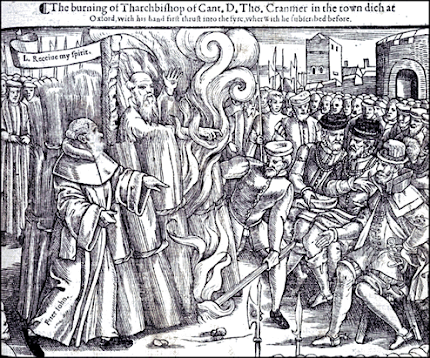
Support Reasonable Christian Ministries with your generous donation.