>

Martyred for the Gospel

Martyred for the Gospel
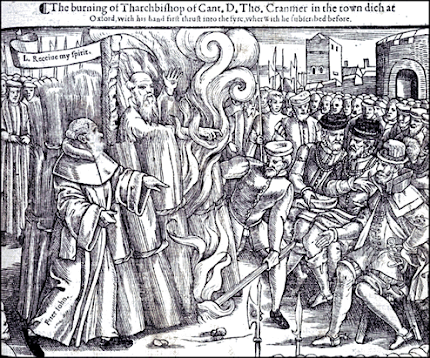
The burning of Tharchbishop of Cant. D. Tho. Cranmer in the town dich at Oxford, with his hand first thrust into the fyre, wherwith he subscribed before. [Click on the picture to see Cranmer's last words.]

Daily Bible Verse

Sunday, April 29, 2012

Logic and the Reformed Symbols

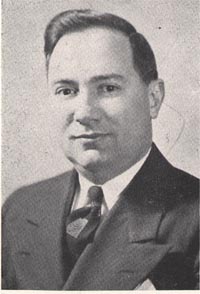
The late Gordon H. Clark.
 [3/17/2013.  My views about Clark's alleged Nestorianism have changed.  I no longer believe Clark erred in his book, The Incarnation.  I do stand by the authority of the creeds and confessions insofar as they reflect the teaching of Scripture.

Note #2.   On my blog I have decided not to delete earlier articles, even when my views change.  I no longer believe that Clark's view is wrong or Nestorian.  However, the problem still remains as to exactly how the union in the one man, Jesus Christ takes place.  The word for "person" in English is "hypostasis" in Greek, while in Latin it is "persona."  As Clark points out in The Incarnation, these terms did not mean faculty psychology the way the modern era views this.   What needs to be done is a better hammering out of the union between the human person of Jesus Christ and the divine Logos.  Clark solved the problem from the aspect of not confusing the two natures/persons.  But I think more work needs to be done on the union aspect.  Any remarks below criticizing Clark's view I will let stand even though I'm no longer convinced that Clark was wrong or that he was a NestorianCharlie, June 15, 2013.]

Recently the God's Hammer blog again brought up the issue of the infallibility and inerrancy of Scripture versus the Reformed contention that church councils and synods may and do err.   (See:  Calvin on the Human Fallibility in the Councils).  While Sean Gerety does not reject the Reformed Confessions as authoritative, he does post comments by Hugh McCann, who apparently thinks that Scripture is the only authority and that creeds and confessions "necessarily err" and have no authority whatsoever.  As Forrest Gump once said, "Stupid is as stupid does."  The Anabaptist position rejects the authority of creeds and confessions, not the Reformed position.  I find it odd that a so-called Clarkian blog would post Anabaptist comments without any rebuke whatsoever.

I call it as I see it.  The fact is without an interpretation Scripture is without any authority.  Although all interpretations of Scripture are necessarily fallible and may be in error, it does not follow that no creed or confession has any secondary authority for matters of church discipline.  If that be the case then we could not prosecute heretics or condemn heresies since there would be no agreement on a logical or rational basis for determining what is necessary and essential for unity of belief and doctrine in the local congregation and in the denominations at large.

Either the Trinity is essential doctrine or it is not.  Simply because certain Clarkians wish to throw out the Nicene creed, the Definition of Chalcedon, and the Athanasian creed does not make their opinions infallible.  It is highly selective for Clarkians to open the door to Nestorianism while condemning Federal Visionists and Arminians on the basis of the Reformed confession.  Why?  Because the Westminster Standards uphold the Definition of Chalcedon and the theology of both the Nicene creed and the Athanasian creed.

That can easily be demonstrated here:

3. It belongeth to synods and councils, ministerially to determine controversies of faith, and cases of conscience; to set down rules and directions for the better ordering of the public worship of God, and government of His Church; to receive complaints in cases of maladministration, and authoritatively to determine the same: which decrees and determinations, if consonant to the Word of God, are to be received with, reverence and submission; not only for their agreement with the Word, but also for the power whereby they are made, as being an ordinance of God appointed thereunto in His Word.1

1 Acts 15:15,19,24,27,28,29,30,31; Acts 16:4; Matt. 18:17-20  Westminster Confession of Faith, Chapter 31:3.


As indicated, the confession says that synods and councils do have authority, albeit that authority is subject to Scriptural authority.  Furthermore, the Confession upholds that Jesus Christ is one person:

2. The Son of God, the second person in the Trinity, being very and eternal God, of one substance and equal with the Father, did, when the fulness of time was come, take upon Him man's nature,1 with all the essential properties and common infirmities thereof, yet without sin;2 being conceived by the power of the Holy Ghost, in the womb of the Virgin Mary, of her substance.3 So that two whole, perfect, and distinct natures, the Godhead and the manhood, were inseparably joined together in one person, without conversion, composition, or confusion.4 Which person is very God, and very man, yet one Christ, the only Mediator between God and man.5
See also: WLC 36-37 | WSC 21-22


In light of the above, the onus or burden of proof lies with Clarkians to prove that Gordon H. Clark and John Robbins did not violate the Westminster Confession of Faith by adopting the two person view that Jesus Christ is not two natures united in one Person but rather two persons united in some yet to be described and "mysterious" way.  Ironically, Clark's view leaves us without any propositional or logical explanation for how Jesus Christ can be unified as both God and man.  The problem dealt with by the early church was how Jesus could be both God and man at the same time without dividing God and man.  Both the Westminster Standards and the Three Forms of Unity uphold that Jesus MUST be both God and man in order to be the mediator of the new covenant and to pay the penalty for sins:


Article 19: Of the Hypostatic Union or of the Two Natures in the Person of Christ

We believe that by this conception the person of the Son of God is inseparably united and joined with the human nature,[1] so that there are not two sons of God, nor two persons, but two natures united in one single person. Each nature retains its own distinct properties: His divine nature has always remained uncreated, without beginning of days or end of life (Heb 7:3), filling heaven and earth.[2] His human nature has not lost its properties; it has beginning of days and remains created. It is finite and retains all the properties of a true body.[3] Even though, by His resurrection, He has given immortality to His human nature, He has not changed its reality,[4] since our salvation and resurrection also depend on the reality of His body.[5]
 
However, these two natures are so closely united in one person that they were not even separated by His death. Therefore, what He, when dying, committed into the hands of His Father was a real human spirit that departed from His body.[6] Meanwhile His divinity always remained united with His human nature, even when He was lying in the grave.[7] And the divine nature always remained in Him just as it was in Him when He was a little child, even though it did not manifest itself as such for a little while.

For this reason we profess Him to be true God and true man: true God in order to conquer death by His power; and true man that He might die for us according to the infirmity of His flesh.

[1] Jn 1:14; Jn 10:30; Rom 9:5; Phil 2:6, 7. [2] Mt 28:20. [3] 1 Tim 2:5. [4] Mt 26:11; Lk 24:39; Jn 20:25; Acts 1:3, 11; Acts 3:21; Heb 2:9. [5] 1 Cor 15:21; Phil 3:21. [6] Mt 27:50. [7] Rom 1:4.  (Belgic Confession of Faith).

Article 18 of the Belgic confession asserts that Jesus has a "reasonable human soul".  If Gordon H. Clark meant only that the Logos has assumed a truly human soul into the Godhead via the incarnation there would be no objection.  But exactly what Clark meant is still a mystery.  Ironically, Gordon H. Clark equated the Westminster Standards with biblical Christianity.


I do not have my copy of Christian Philosophy with me but I believe in that book Clark says that the Westminster Standards are the best systematic exposition of the propositional truths of the inerrant and infallible Scriptures. I can, however, show that John Robbins thought that the Westminster Standards were the best summary of Scriptural teaching:

Three very useful guides for studying the Bible are the Westminster Standards, consisting of the Westminster Confession of Faith, the Larger Catechism, and the Shorter Catechism, all written in the 1640s. The Westminster Confession remains the best summary of the Bible yet written. The Confession summarizes in 33 short chapters the teaching of Scripture on everything from Scripture itself to the Last Judgment. Dr. Gordon Clark’s commentary on the Confession, What Do Presbyterians Believe? is the best short introduction to what the Bible teaches. You as a young Christian should read What Do Presbyterians Believe? and the Scripture verses cited in it very early in your studies. This will give you an introduction to the whole system of truth taught in Scripture and will enable you to see the forest, not merely the trees. The Catechisms will help you grasp the definitions of important terms in Scripture, such as justification, adoption, predestination, and alone, as well as understand such basic items as the Ten Commandments and the Lord’s Prayer. A useful study guide to the Westminster Confession is Dr. W. Gary Crampton’s Study Guide to the Westminster Confession.  (See:  A Guide for Young Christians).

It is highly hypocritical for Clarkians to condemn other heresies like the Federal Vision, Arminianism, Oneness Pentecostalism, et. al., while selectively exempting departures from the Reformed symbols by Gordon H. Clark, John Robbins, and Robert L. Reymond.   Clark and Robbins denied the unity of the person of Christ as both God and man while Reymond denies the eternal generation of the Son of God from the Father.  Reymond's position is wrong because he overlooks the fact that the Nicene creed and the Athanasian creed both assert the aseity of the Son of God.

Scripture upholds the unity of Jesus Christ and the Logos as one Person: 

 In the beginning was the Word, and the Word was with God, and the Word was God. 2 He was in the beginning with God. 3 All things were made through Him, and without Him nothing was made that was made. (John 1:1-3 NKJ)

 And the Word became flesh and dwelt among us, and we beheld His glory, the glory as of the only begotten of the Father, full of grace and truth. 15 John bore witness of Him and cried out, saying, "This was He of whom I said,`He who comes after me is preferred before me, for He was before me.'" (John 1:14-15 NKJ)

 No one has seen God at any time. The only begotten Son, who is in the bosom of the Father, He has declared Him. (John 1:18 NKJ)

 For there is one God and one Mediator between God and men, the Man Christ Jesus, (1 Timothy 2:5 NKJ)

If Jesus Christ is really two persons and not one person, then logically He cannot be ONE mediator between God and men.  Ironically, then, Clark's view is hopelessly irrational and raises more problems than it solves.  It is true that God cannot suffer on the cross.  But it is equally true that the hypostatic union cannot be severed.  What Clark did not explain or define is how his alleged two persons view avoids the logical problem of separating Christ from Christ.  Either Christ is God in the flesh OR what we have is a mere man who possesses divine propositions.  A further problem with Clark's view is that he makes no distinction in The Incarnation between communicable and incommunicable attributes/propositions.  The divine propositions are not communicable to men.  But in the case of Jesus Christ these divine propositions are there and they are in union with Him as one Person according to the Westminster Confession and the Belgic Confession.  I could add the Anglican Formularies here but the Puritans irrationally reject the Anglican Formularies as Reformed theology, which assertion is absolutely untrue.  Simply because the Anglo-Catholics have attempted to pervert the teaching of the 39 Articles of Religion and the 1662 Book of Common Prayer, it does not follow that these documents are not Reformed.  Article 17, for example teaches the doctrine of double predestination.

In conclusion, then, I assert that although the Reformed symbols "may" err, no one is allowed an exception to subscription to what are essential doctrines of the Christian faith.  If Clarkians wish to prove that the Westminster Standards, Three Forms of Unity, and the Anglican Formularies are in error when they endorse the union of Christ as both God and man in one Person then Clarkians must follow due process of canon law to do so.  Otherwise, their position is essentially Anabaptist and not Reformed.  Reformed theology, according to the Westminster Confession (31:3) says that the church does have authority to hold Reformed synods and councils and that these councils and synods have the authority to settle doctrinal controversies.  Unfortunately, even Reformed synods err as the liberal mainline Presbyterian denominations demonstrate.  Even more recently the Presbyterian Church in America and the Orthodox Presbyterian Church have refused to discipline ministers who teach the Federal Visionist heresies.  But Clarkians who condemn other heresies--while committing their own theological errors without any solid logical propositions settling all the problems raised by their views--are contradicting the axiom that Scripture IS the Word of God and the axiom that the Westminster Standards are the best summary of the teaching of the infallible and inerrant Holy Scriptures.  (2 Timothy 3:15-17; 2 Peter 1:19-21; 2 Peter 3:15-16; Jeremiah 23:29).  While I consider myself a Clarkian because I uphold Scripture as consisting of logical and doctrinal propositions, I am not obligated to contradict the Reformed articles of faith or the doctrines they uphold.  Although Scripture is the infallible and inerrant Word of God, Scripture of necessity requires an interpretation and a systematic exposition which functions as a rule of faith.  In short, some sort of doctrinal consensus on what Scripture teaches is absolutely necessary if there is to be one faith, one baptism and one religion (Ephesians 4:4-6; Philippians 1:27; 1 Timothy 4:13).

Even Gordon H. Clark and John Robbins acknowledged this.  Without an interpretation Scripture remains incomprehensible and therefore irrational.  Scripture requires a rational and reasonable interpretation and cannot function as revelation without a systematic exposition of the propositions revealed within the canon of Scripture.  Salvation itself is impossible without special revelation that is coherent, comprehensive, congruent, rational, and logical in verbal and propositional form.  Would that the internet proponents of Clark's theology and apologetics were as logical as Clark himself was.  Verbal plenary inspiration and special revelation in propositional form must be known to be of value to the church and to individual members of the church.

Addendum:  Demolishing the Stronghold of a False Christology, audio sermon by Dr. Robert L. Reymond.  Dr. Reymond clearly upholds the Definition of Chalcedon in this sermon and says that it is dangerous to reject the christology of the Definition.  In light of that, my association of Dr. Reymond with Dr. Clark and Dr. Robbins above may have been hasty and misplaced.


Fading Lines in the Sand « God's Hammer

Ironically, the lines in the sand are fading at God's Hammer as well. Apparently the Reformed Confessions only apply when they contradict Van Tilian theology or the Federal Visionists. Everything else is open season--at least according to the Anabaptist theology of Hugh McCann, who has open access at God's Hammer.  I guess he kissed the pope's ring?

Fading Lines in the Sand « God's Hammer

Back to the Basics of Reformed Worship: Reformed Chameleons?

Back to the Basics of Reformed Worship: Reformed Chameleons?

Law Givers Promote Sin and Despair: Martin Luther

It is impossible for human nature to fulfill the law . . .   Martin Luther


Does that mean that Christ promotes sin? This is a Hebraism that Paul also uses in 2 Corinthians 3. To promote sin is to be a lawgiver or someone who leads us to the law, which teaches good works and love and that we must suffer afflictions and follow the example of Christ and the saints. Someone who teaches and requires this is promoting the law, sin, wrath, and death, for by teaching this he is only terrifying and afflicting people’s consciences and giving them over to sin. It is impossible for human nature to fulfill the law; indeed, in those who are justified and have the Holy Spirit, the law at work in the members of their body fights against the law of their mind (Romans 7:23). What will it not do in wicked people, then, who do not have the Holy Spirit? Therefore, a person who teaches that righteousness comes through the law does not understand what he is saying, and much less does he keep the law; rather, he is deceiving himself and others and laying on them a burden they cannot bear, requiring and teaching impossible things, and in the end he brings himself and his disciples to despair.


The real point of the law is to accuse and condemn those who live in complacency, so that they see themselves to be in danger of sin, wrath, and eternal death and may be terrified and brought to the brink of despair. Being like that, they are under the law, for the law requires perfect obedience to God and condemns all those who do not achieve this. It is certain that there is no one living who is able to do this. The law therefore does not justify but condemns (see Deuteronomy 27:26; Galatians 3:10).


Paul has good reason in 2 Corinthians 3 to call the ministry of the law the ministry of sin, for the law accuses consciences and reveals sin, which without the law is dead. Now the knowledge of sin terrifies the heart, drives us to despair, kills, and destroys (Romans 7:11). (I am speaking here not about the speculative knowledge of hypocrites but about true knowledge, by which we see God’s wrath against sin and feel a true taste of death.) That is why Scripture calls these teachers of the law and works oppressors and tyrants. Just as the slave drivers in Egypt oppressed the Israelites with physical servitude (Exodus 5), so these lawgivers drive people into wretched spiritual bondage of soul and in the end bring them to despair and utter destruction. They know neither themselves nor the force of the law. Nor is it possible for them to have a quiet conscience during great internal terror and the agony of death even if they have observed the law, loved their neighbors, done many good works, and suffered great affliction, for the law always terrifies and accuses, telling us we never did all that the law commands and that those who have not done everything contained in the law are cursed. So the conscience still has these terrors, which get worse and worse. If such teachers of the law are not raised up by faith and the righteousness of Christ, they are driven to despair.

This was also notably indicated when the law was given, as we can see in Exodus 19–20. Moses brought the people out of the tents to meet the Lord, so that they might hear him speak to them out of the dark cloud. A little earlier the people had promised to do all that God had commanded, but now they were afraid and fell back, saying to Moses, “Who can bear to see the fire and hear the thunder and the sound of the trumpet? If you talk to us, we will listen; but do not let God speak to us or we will die.” So the right place of the law is to lead us out of our tents—that is, out of the complacency in which we live—and stop us from trusting in ourselves and bring us into God’s presence, to reveal his wrath to us and to set our sins before us. Here the conscience feels that it has not satisfied the law, nor is it able to satisfy it, nor to bear the wrath of God, which the law reveals when it brings us into God’s presence like this—that is, when it makes us afraid, accuses us, and sets our sins before us. Here it is impossible for us to stand; and being thoroughly afraid, we flee and cry out with the Israelites, “We will die, we will die! Do not let the Lord speak to us! You speak to us!”


To teach that faith in Christ does not justify us unless we observe the law is to make Christ a minister of sin—that is, a teacher of the law, teaching the very same doctrine that Moses did. Thus Christ is no Saviour, no giver of grace, but a cruel tyrant who, like Moses, requires things that none of us can do. But the Gospel is a preaching of Christ who forgives sins, gives grace, and justifies and saves sinners. There are commandments in the Gospel, but they are not the Gospel but expositions of the law, and they depend on the Gospel.


Luther, M. (1998). Galatians. The Crossway classic commentaries (94–95). Wheaton, Ill.: Crossway Books.


--
Glory be to the Father, and to the Son : and to the Holy Ghost; As it was in the beginning, is now, and ever shall be : world without end. Amen.

Wednesday, April 25, 2012

Saint Mark's Day Collect and Lessons


Saint Mark's Day.

The Collect.
O ALMIGHTY God, who hast instructed thy holy Church with the heavenly doctrine of thy Evangelist Saint Mark; Give us grace, that, being not like children carried away with every blast of vain doctrine, we may be established in the truth of thy holy Gospel; through Jesus Christ our Lord. Amen.

7 But to each one of us grace was given according to the measure of Christ’s gift. 8 Therefore He says:


“When He ascended on high,

He led captivity captive,


And gave gifts to men.”
[a]

9 (Now this, “He ascended”—what does it mean but that He also first[b] descended into the lower parts of the earth? 10 He who descended is also the One who ascended far above all the heavens, that He might fill all things.)

11 And He Himself gave some to be apostles, some prophets, some evangelists, and some pastors and teachers, 12 for the equipping of the saints for the work of ministry, for the edifying of the body of Christ, 13 till we all come to the unity of the faith and of the knowledge of the Son of God, to a perfect man, to the measure of the stature of the fullness of Christ; 14 that we should no longer be children, tossed to and fro and carried about with every wind of doctrine, by the trickery of men, in the cunning craftiness of deceitful plotting, 15 but, speaking the truth in love, may grow up in all things into Him who is the head—Christ— 16 from whom the whole body, joined and knit together by what every joint supplies, according to the effective working by which every part does its share, causes growth of the body for the edifying of itself in love.  (Ephesians 4:7-16).


“I am the true vine, and My Father is the vinedresser. 2 Every branch in Me that does not bear fruit He takes away;[a] and every branch that bears fruit He prunes, that it may bear more fruit. 3 You are already clean because of the word which I have spoken to you. 4 Abide in Me, and I in you. As the branch cannot bear fruit of itself, unless it abides in the vine, neither can you, unless you abide in Me.

5 “I am the vine, you are the branches. He who abides in Me, and I in him, bears much fruit; for without Me you can do nothing. 6 If anyone does not abide in Me, he is cast out as a branch and is withered; and they gather them and throw them into the fire, and they are burned. 7 If you abide in Me, and My words abide in you, you will[b] ask what you desire, and it shall be done for you. 8 By this My Father is glorified, that you bear much fruit; so you will be My disciples.

9 “As the Father loved Me, I also have loved you; abide in My love. 10 If you keep My commandments, you will abide in My love, just as I have kept My Father’s commandments and abide in His love.
11 “These things I have spoken to you, that My joy may remain in you, and that your joy may be full.  (John 15:1-11)

Tuesday, April 24, 2012

Is Carl (Trueman) Losing His Edge? D. G. Hart Thinks So

Is Carl (Trueman) Losing His Edge?

Faith Without Works Justifies: Martin Luther

The Holy Scriptures, especially the New Testament, often mention faith in Christ and say that whoever believes in him is saved, does not perish, is not judged, has eternal life, and so on (see John 3:16 and 5:24). Saying that people who believe in him are condemned because they have faith without works is to pervert everything, making Christ a destroyer and a murderer, and Moses a saviour. I admit that our adversaries do not use these exact words, but this is in fact what they teach. They say that faith in Christ does not make us free from sin, but only faith combined with love. This is to say that Christ leaves us in our sins and in the wrath of God and makes us guilty of eternal death, whereas if you keep the law, faith justifies you because it has works, without which faith is no help. Therefore, works justify, and not faith, they claim. What pernicious and cursed teaching this is!

Paul bases his argument on an impossibility. If we are justified in Christ and yet are still sinners and can be justified only by some means other than Christ—namely, by the law—then Christ cannot justify us but only accuses and condemns us. And it then follows that Christ died in vain, and this passage and others (such as John 1:29 and 3:16) are not true. The whole Scripture is then false when it tells us that Christ is the justifier and Saviour of the world. If we are still sinners after we have been justified by Christ, it follows that those who fulfill the law are justified without Christ. If this is true, then we are heretics, professing the name and Word of God outwardly but in reality denying Christ and his Word. It is therefore great impiety to say that faith does not justify unless it is combined with works of love. If faith and works together justify us, then Paul’s words are not true when he says we are justified by faith in Christ and not by observing the law (verse 16).

Luther, M. (1998). Galatians. The Crossway classic commentaries (93–94). Wheaton, Ill.: Crossway Books.

Friday, April 20, 2012

God Knows the Future and Determines Every Detail Through His Providence


God knows every twist and turn in the road.  (Luke 9:57).


Who Knows What the Future Holds?
by Charlie J. Ray

As I listened to a lecture on predestination in the Old Testament given at Covenant College by the late Dr. Gordon H. Clark and recorded some years ago, I noted that one of the moderators joked about Dr. Clark's contention that all things that happen are predetermined right down to even our evil acts. I found it odd that a Presbyterian school would question that doctrine but the moderator made a remark that a football player thought that he and Dr. Clark had a divine appointment to meet in the parking lot after the lecture. The contention of some of the students was that God's sovereignty over everything down to the last detail would remove human responsibility. But Dr. Clark's answer was that knowledge makes human free agents accountable to God and responsible for their actions and choices—even if their actions were predetermined by God Himself. Romans 1:18-21 reveals that the Apostle Paul thought that general revelation or natural revelation did indeed give men enough knowledge about God to make them without excuse and fully accountable to God—even if salvation is impossible without special revelation (Romans 10:7-17; Acts 4:10, 12; John 5:24, 25; John 14:6; Matthew 1:21).

It seems silly to me for anyone to trust in themselves to persevere to the end. Why would I say that? Well, first of all anyone reflecting on their pre-conversion experience must acknowledge that although they had a general knowledge about God most folks think that they are just fine and good people go to heaven. So what does the Arminian have to offer in addition to that view? Pragmatically nothing at all. After all for the Arminian it is keeping God's laws—albeit a lowered standard that men can attain by their own “free will”--that ultimately decides who will go to heaven or hell. Basically a general offer of salvation and a general atonement only makes salvation a possibility for all. Since Jesus died for all then all must save themselves by believing the Arminian gospel of faith plus good works. Unfortunately even modern Lutherans are essentially Arminians since the vast majority of them no longer believe Luther's doctrine of the bondage of the will. Rather modern Lutherans believe there is a common grace given to all men without exception—this is nothing more than the semi-pelagianism of Rome masquerading as Lutheran or Reformed theology.

If God simply provides prevenient grace for all and the death of Christ for all, including those already in hell, then ultimately it is not faith in Christ that saves or even the justification of Christ that saves but it is the sinner who must save himself by working up a faith of his own. How this is possible when the Bible clearly says that sinners are spiritually dead in their trespasses and sins and are in fact slaves to sin and unable to choose Christ in the first place is indeed a mystery (Ephesians 2:1, 2, 3, 4, 5; Romans 5:8; Colossians 2:13; John 8:33, 34; Romans 6:17, 18).

Faith is itself a gift of God (Ephesians 2:8, 9). If we could give ourselves faith we would have something to boast about. But even our conversion and repentance are gifts of God, not something we do in and of ourselves (John 1:13; John 3:3-8; Acts 11:18). If common grace gave actual power to change then salvation would be universal and no one would be lost whatsoever. Salvation is not by “chance” but by God's divine degree (Proverbs 16:33). The truth is conversion is God's action upon His elect people chosen before the foundation of the world (Ephesians 1:4, 5, 11; Titus 3:5, 6, 7). If men had the ability to convert themselves who would want to go to hell? The reason they do not believe is because God has justly blinded them and rendered them unable to believe (John 12:40). A god who is unable to overcome sin and actually save anyone at all is a powerless and helpless god who is not God by any definition (Isaiah 45:20).

Trying to persuade dead men by mere reason is like trying to preach conversion and repentance in the graveyard. Dead men cannot and will not hear that the Law condemns them as unworthy sinners and justly damned to an eternity in hell. Dead men cannot and will not hear that God promises to save all who believe His Gospel and that Christ alone justifies. The catch here is that the “whosoever will” is limited to believers, not “potential” believers. Those who believe the Gospel do so because God opens their heart (Acts 16:14) and gives them repentance (Acts 11:18). Those who say that the doctrine of sovereign grace gives the reprobates an excuse that they are unable to believe have forgotten that Paul says they are without excuse (Romans 1:18, 19, 20, 21). Simply because they are commanded to believe (Mark 1:15; 16:16) but refuse to do so does not obligate God to grant them the ability to believe. Since they freely and willfully refuse and have enough knowledge from both general and special revelation they are accountable to God for their own unbelief (James 1:13, 14, 15). Only God can give good gifts to His elect and bring forth the fruit of faith and conversion (James 1:16, 17, 18; John 6:37, 44, 65).

The fact of the matter is that Scripture teaches that salvation is all of God (Exodus 14:13; 2 Chronicles 20:17; Lamentations 3:26). It is not our strength or our efforts that save us but literally God's sovereign will (Isaiah 31:1; Zechariah 4:6).

Furthermore, since God knows the future He determined it (Isaiah 46:9, 10; Deuteronomy 29:29). Nothing happens but by God's divine appointment (Hebrews 9:27). Even the crucifixion of Christ was predicted in the Old Testament (Psalm 22:1ff; Isaiah 53:1ff) and every single detail happened just as God had predetermined it, even down to Judas Iscariot and Pontius Pilate (Acts 2:22, 23; 4:27, 28). God knows His elect from before birth (Psalm 139:13, 16; Jeremiah 1:5; Galatians 1:15) and even every single thought they will think before they think it (Psalm 139:4). In fact, God knows all the days that His elect will live and the exact number of them and everything that will happen to them (Psalm 139:16).

God does not just have a general knowledge of the future or even a knowledge of many different possible outcomes. He knows exactly what will happen because in fact He determined it (1 Peter 2:8; Romans 9:11, 12, 13; Proverbs 16:33; Matthew 1:20, 21, 22, 23; John 1:47, 48). The idea that God provides a general grace that fails to save the vast majority of those it is supposed to provide salvation for is foreign to Scripture. Mere possibility is no guarantee that anyone at all will be saved. The doctrines of grace and the Scriptures, however, show that every single elect person God intended to save before creation will in fact be saved and all the sins of the elect were paid for on the tree by Jesus Himself (1 Peter 2:24; Revelation 13:8). All of the elect will be called from the four corners of the earth and it is not possible that even one of them will be deceived (Matthew 24:24, 31; Mark 13:22, 27).

It is not true that Calvinists need not evangelize because God's appointed instruments and means are the preaching of the Gospel and special revelation. Not one of the elect will be saved apart from God's normative means (Romans 10:7-17; Matthew 28:18-21). In fact famous missionaries like William Carey and Stanley Livingston were Calvinists.

The bottom line is that double predestination is a great comfort for believers because they know that the works of the law do not apply to them. All the promises of God in Christ are yes and amen! (2 Corinthians 1:20). Predestination is only discouraging for those who continually refuse to believe that they cannot earn or merit salvation and that salvation is completely a free gift of God. Those who refuse to accept that salvation is all of God thrust themselves into eternal insecurity and fear for their souls. The 39 Articles of Religion makes this doctrine clear in Article 17, which is itself drawn from the most certain warrant of Holy Scripture. (See Article 17).

God knows the obstacles ahead in the road. But nothing can separate God's elect from His love or His promises (Romans 8:28-33).


Thursday, April 19, 2012

Martin Luther: Do Not Mix Law With Grace

Martin Luther comments on Galatians 2:18,

By the grace of Christ we believe in justification, and we are sure that we are justified and accounted righteous before God purely by faith in Christ. Therefore, we do not mix the law and grace, faith and works, but keep them completely separate. Every Christian should carefully maintain this difference between the law and grace, not in letters and syllables, but in practice and inner experience, so that when people say good works should be done, and the example of Christ is to be followed, we may be able to judge rightly and say, “All these things I will do gladly. But what follows from this? Will you be saved and obtain everlasting life? Not so. I agree that I ought to do good works, to suffer trouble and affliction patiently, and to shed my blood, if necessary, for Christ’s cause. But I am not justified by this, nor do I obtain salvation by it.”
 
We must not let good works come into the matter of justification, as do those people who say that doers of good works, even by those being punished for their sins, deserve everlasting life. These people comfort those who are brought to the place of execution, telling them they must suffer this shameful death willingly and patiently, and that if they do so, they will merit forgiveness of sins and everlasting life. What a horrible claim this is, that thieves, murderers, robbers should be so wretchedly seduced in extreme anguish and distress, that at the very point of death they should refuse the Gospel and sweet promises in Christ, which are the only thing that can bring comfort and salvation, and should be commanded to hope for pardon of their sins if they willingly and patiently endure this death for their mischievous deeds! This simply heaps destruction and perdition on people who are already most wretchedly afflicted; by giving false confidence in their own death, it leads them onto an open road to hell.
 
Thus such hypocrites clearly show they understand not a thing about grace, the Gospel, or Christ. Rejecting Christ, they attribute more to human traditions than to the Gospel. But Paul says we are justified only by faith in Christ, without the law. After we are justified and possess Christ by faith and know we have his righteousness and life, there is no doubt that we will not be idle but will produce good fruit just as a good tree does. Believers have the Holy Spirit, and where the Holy Spirit lives, he will not allow people to be idle but stirs them up to piety and godliness and true religion, to the love of God, to the patient suffering of affliction, to prayer, to thanksgiving, to the exercise of love toward everyone.


Luther, M. (1998). Galatians. The Crossway classic commentaries (97). Wheaton, Ill.: Crossway Books.

Wednesday, April 18, 2012

Martin Luther: Quote of the Day

Galatians 2:17

To teach that faith in Christ does not justify us unless we observe the law is to make Christ a minister of sin—that is, a teacher of the law, teaching the very same doctrine that Moses did. Thus Christ is no Saviour, no giver of grace, but a cruel tyrant who, like Moses, requires things that none of us can do. But the Gospel is a preaching of Christ who forgives sins, gives grace, and justifies and saves sinners. There are commandments in the Gospel, but they are not the Gospel but expositions of the law, and they depend on the Gospel.

As the law reveals sin, it so terrifies us that it shows us our sin and God’s wrath and strikes into us a terror of death and damnation. From it our conscience learns that we have not kept God’s commandments, and so God is angry with us. If he is angry with us, he will destroy and condemn us forever. And our conscience thinks this to be an infallible consequence: “I have sinned, and therefore I must die.” And so it follows that the ministry of sin is the ministry of wrath and condemnation, for after sin has been revealed, there soon follows the wrath of God, death, and damnation. And thus many people who cannot bear the judgment and wrath of God (which the law sets before their eyes) kill, hang, or drown themselves.


Luther, M. (1998). Galatians. The Crossway classic commentaries (95). Wheaton, Ill.: Crossway Books.

Tuesday, April 17, 2012

Predestination in the Old Testament - Gordon Clark - YouTube


Predestination in the Old Testament - Gordon Clark - YouTube

The God of Arminianism Cannot Be GOOD! Gordon H. Clark - YouTube


The God of Arminianism Cannot Be GOOD! Gordon H. Clark - YouTube

Easter Sunday Gaff: PCUSA Pastor Goofs the Sermon


I visited Murrysville First Presbyterian Church on Easter Sunday, April 8th, 2012 in Murrysville, Pennsylvania.  The pastor made a gaff on John 19:33 and said that "It is finished," was from a Hebrew word, "Tetelesthai."  However, the word is from the Greek New Testament and the root word is "teleo" for "finish" or "complete."  The parsing is 3rd person, perfect passive indicative of "teleo".  Here's the analysis information from the analysis window in Bibleworks 9.0:

from τελέω

[GING] τελέω
τελέω1. bring to an end, finish, complete Mt 7:28; 11:1; 13:53; Lk 2:39; 2 Ti 4:7; Rv 11:7. Come to an end Rv 20:3, 5, 7. Find consummation 2 Cor 12:9.—2. carry out, accomplish, keep Lk 18:31; Ac 13:29; Ro 2:27; Gal 5:16; Js 2:8.—3. pay Mt 17:24; Ro 13:6. [pg 198]

--  Glory be to the Father, and to the Son : and to the Holy Ghost; As it was in the beginning, is now, and ever shall be : world without end. Amen.

Another PCA False Teacher Cleared « God's Hammer

It looks like the PCA is on a continuing slide into neo-legalism, Arminianism and an eventual liberalism. This track to liberalism has been well documented in the PCUSA and the CRC. The PCA was supposed to be a conservative alternative to the PCUSA but now the PCA is itself headed down that same road. The exoneration of Federal Vision proponents like Jeffrey Meyers is just another indication of the malady which afflicts the denomination. Another PCA False Teacher Cleared « God's Hammer

Friday, April 13, 2012

Martin Luther: Quote of the Day: The Law/Gospel Distinction

From Luther's commentary on Galatians 2:14,

14. When I saw that they were not acting in line with the truth of the gospel. This is a wonderful example of such excellent men and pillars of the church. Only Paul has his eyes open and sees the offense of Peter, Barnabas, and the other Jews who were hypocrites along with Peter. On the other hand, they do not see their own offense; rather, they think they are right to bear with the weakness of the Jews. So it was very necessary for Paul to criticize them and not hide their offense. So he accuses Peter, Barnabas, and the others of swerving from the truth of the Gospel. It is significant that Peter is accused by Paul as someone who had fallen from the truth of the Gospel. He could not be more grievously reprehended, and yet he suffered it patiently and no doubt acknowledged his offense. Peter, Barnabas, and other Jews had the Gospel but were not walking uprightly according to it. They preached the Gospel but established the law, though this would abolish the Gospel.

Anyone who can judge rightly between the law and the Gospel should thank God and know that he is a true theologian. In times of temptation, I confess that I myself do not know how to do this as I ought. The way to discern the one from the other is to place the Gospel in heaven and the law on the earth, to call the righteousness of the Gospel heavenly and the righteousness of the law earthly, and to put as much difference between the righteousness of the Gospel and of the law as God has made between heaven and earth, between light and darkness, between day and night. If it is a question of faith or conscience, let us utterly exclude the law and leave it on the earth; but if we are dealing with works, let us light the lantern of works and of the righteousness of the law. The sun and light of the Gospel and grace should shine in the day, and the lantern of the law in the night.

So if your conscience is terrified with the sense of sin, remember that you are still on earth. Let the donkey labor there and carry the burden laid upon him; that is, let the body and its members be subject to the law. But when you climb up to heaven, leave the donkey with its burden on the earth, for the conscience has nothing to do with the law or its observance or earthly righteousness. Thus the donkey remains in the valley, but the conscience climbs the mountain with Isaac, knowing nothing at all of the law or its observance, but only looking to the remission of sins and pure righteousness offered and freely given to us in Christ.

Conversely, in civil matters obedience to the law must be severely required. There nothing must be known concerning the Gospel, conscience, grace, forgiveness of sins, heavenly righteousness, or Christ himself, but only Moses, with the law and its observance. If we keep this distinction carefully, neither the one nor the other will pass its bounds. The law will remain outside heaven—that is, outside the heart and conscience; and conversely, the liberty of the Gospel will remain outside the earth—that is, outside the body and its members. As soon as the law and sin come into heaven (that is, into the conscience), let them be thrown out straightaway, for the conscience, being terrified by God’s wrath and judgment, ought to know nothing of the law and sin, but only Christ. And on the other hand, when grace and liberty come into the earth (that is, into the body), then say, “You should not live in the dregs and garbage heap of this physical life; you belong to heaven.”

This distinction between law and Gospel was confused when Peter persuaded the believing Jews that they must be justified by the Gospel and the law together. Paul would not allow this, and so he reproved Peter, not so Peter might be reproached, but so he might again establish a clear distinction between the two—namely, that the Gospel justifies in heaven, and the law on earth.


Luther, M. (1998). Galatians. The Crossway classic commentaries (82–84). Wheaton, Ill.: Crossway Books.

Unconfessional Reformed Anathemas

I've been thinking lately about the state of Christ's church on earth.  The Roman Catholic Church is a synagogue of satan and the pope is an antichrist.  The Eastern churches are synergistic and semi-pelagian.  The Arminians teach a form of semi-pelagian synergism that is essentially a works based religion where election and perseverance are conditional on man and not on God's mighty power and sovereignty.

Even worse the so-called "Reformed" churches these days are to one degree or another liberal.  Most have either deleted or added to the classical confessions of faith which are supposed to provide a catholic or universal basis for Christian doctrine and fellowship.  Most modern Reformed churches have either caved to a form of semi-neo-orthodoxy or semi-Arminianism (read three points of common grace, God's unfulfilled desire to save the reprobate, the well meant offer).

So-called "calvinistic" Baptists or "particular" Baptists are unconfessional and essentially Anabaptist since they place as much emphasis on personal revelations and leadings of the "spirit" as they do on Scripture.  Basically, Baptists have more in common with Pentecostals than with Presbyterians or Anglican Reformed believers.  Any emphasis on "believers" baptism is an outright denial of unconditional election since this ignores the fact that God elects prior to the foundation of the world, not at the moment someone receives Christ by faith.  Credo-baptism has more in common with decisional conversion or the altar call conversion of Charles Finney than with the paedo-baptism taught by the foreshadow of infant circumcision in the Old Testament.  The overemphasis on individual conversion ignores that God works through the church as His normative appointed instrument or means of saving His elect.  The OT church was the nation of Israel and the NT church was established at the day of Pentecost and the outpouring of the Holy Spirit.  (Acts 2:1-4; 38-39).

Anglicans are no better.  The vast majority of them are either Arminian or Anglo-Catholic or liberal.  The odds of finding a biblical Anglican congregation is about nil.  

Although I greatly admire the Primitive Baptists, they think that God's elect can remain in false churches or religions and that the elect do not need conversion.  This makes about as much sense as universalism.  All roads lead to God?   (Acts 4:10, 12; John 14:6; John 5:24-25; John 6:37-44, 65).  God has appointed preaching as the normative means for saving His elect.  (Romans 10:7-17).  How this escapes the Primitive Baptists I do not know.  But again, Baptists are closer to the Anabaptists than to truly Reformed theology.

And when I point out the Reformed confessions in a theological discussion on Facebook I am indirectly called "impatient" and "intolerant" by those who claim to be intolerant of heresy and Arminianism.  It seems to me that "belonging" to a social club is more important than biblical truth for most "Reformed" believers.

As I have said before, if I have to stand alone for the truth expressed in Scripture and the Reformed confessions, so be it.  If the semi-Arminian "Calvinists" wish to condemn traditional and classical Calvinism as "hyper-Calvinism" so be it.  Unfortunately, not one of the Reformed confessions makes common grace or the free offer of the Gospel a doctrinal standard.  Those are Arminian doctrines, not Reformed doctrines.

 But when He saw the multitudes, He was moved with compassion for them, because they were weary and scattered, like sheep having no shepherd. 37 Then He said to His disciples, "The harvest truly is plentiful, but the laborers are few. 38 "Therefore pray the Lord of the harvest to send out laborers into His harvest." (Matthew 9:36-38 NKJ)

Thursday, April 12, 2012

Predestinarian Network - Seven Post Reformation Heresies

Predestinarian Network - Seven Post Reformation Heresies

Predestinarian Network - Confession of a Hyper-Calvinist

The closet Arminians who pretend to be "Calvinists" love to call consistent Calvinists "hyper-Calvinists." So be it. Either salvation is all of God or man plays some part in his own salvation. If the latter then basically man must save himself since the deciding factor is man and not God. The Bible, on the other hand, teaches that God decided who will be saved before the foundation of the world and He will bring it to pass. (Ephesians 1:4, 5, 11; Romans 9:11, 12, 13).
Predestinarian Network - Confession of a Hyper-Calvinist

Pharisees, Tradition, and Ecstatic Enthusiasm

I was reminded recently why I am no longer a Pentecostal.  Have nothing to do with those who place their trust in their own ability to keep God's law, do their own miracles, or invent their own personal revelations.  Scripture alone is the final authority in all matters of faith, practice, and doctrine.  When the Pharisees look to their own experiences, revelations, and enthusiasm they contradict the plain teaching of God's written Word, the only revelation that matters.  All else is human opinion.  (2 Corinthians 4:6).

I had a Pentecostal minister friend from years back ask me to support a mission trip to South America.  I told him that I do not support Pentecostal ministries anymore because I regard the Arminian and Pentecostal traditions as false religions.  He was very surprised to learn that.  But I felt good that I had taken a stand that should have been taken years ago.  I have lost many friends over my faith in the absolute sovereignty of God and of a grace of salvation that is absolutely free.  But so be it.

I made the mistake of asking an elderly charismatic Baptist friend to do the memorial service for my nephew.  He conveniently had an excuse.  Thanks be to God!  God has a way of correcting us in moments of weakness.  In the end a preacher of sovereign grace officiated at the graveside memorial service for Neil Moreno Ray, Jr.  Bubba will be greatly missed.  But I have good reason to believe that I will see him again in heaven.  Why?  Because election is unconditional and God knows who belongs to Him.  (Ephesians 1:4, 5, 11; 2 Timothy 2:19).

Sunday, April 08, 2012

Collects, Epistles, and Gospels -- Easter Day or Resurrection Day Collect and Propers

Easter-Day.
At Morning Prayer, instead of the Psalm, O come, let us sing, &c. these Anthems shall be sung or said.

CHRIST our passover is sacrificed for us : therefore let us keep the feast; Not with the old leaven, nor with the leaven of malice and wickedness : but with the unleavened bread of sincerity and truth. 1 Cor. v. 7

    Christ being raised from the dead dieth no more : death hath no more dominion over him. For in that he died, he died unto sin once : but in that he liveth, he liveth unto God. Likewise reckon ye also yourselves to be dead indeed unto sin : but alive unto God through Jesus Christ our Lord. Rom. vi. 9

    Christ is risen from the dead : and become the first-fruits of them that slept. For since by man came death : by man came also the resurrection of the dead. For as in Adam all die : even so in Christ shall all be made alive. 1 Cor. xv. 20.

    Glory be to the Father, and to the Son : and to the Holy Ghost; As it was in the beginning, is now, and ever shall be : world without end. Amen.
 
The Collect.

ALMIGHTY God, who through thine only-begotten Son Jesus Christ hast overcome death, and opened unto us the gate of everlasting life; We humbly beseech thee, that, as by thy special grace preventing us thou dost put into our minds good desires, so by thy continual help we may bring the same to good effect; through Jesus Christ our Lord, who liveth and reigneth with thee and the Holy Ghost, ever one God, world without end. Amen.
 
The Epistle. Coloss. 3. 1.

IF ye then be risen with Christ, seek those things which are above, where Christ sitteth on the right hand of God. Set your affection on things above, not on things on the earth. For ye are dead, and your life is hid with Christ in God. When Christ, who is our life, shall appear, then shall ye also appear with him in glory. Mortify therefore your members which are upon the earth; fornication, uncleanness, inordinate affection, evil concupiscence, and covetousness, which is idolatry: For which things' sake the wrath of God cometh on the children of disobedience: In the which ye also walked some time, when ye lived in them.

The Gospel. St. John 20. 1.
 
THE first day of the week cometh Mary Magdalene early, when it was yet dark, unto the sepulchre, and seeth the stone taken away from the sepulchre. Then she runneth, and cometh to Simon Peter, and to the other disciple, whom Jesus loved, and saith unto them, They have taken away the Lord out of the sepulchre, and we know not where they have laid him. Peter therefore went forth, and that other disciple, and came to the sepulchre. So they ran both together: and the other disciple did outrun Peter, and came first to the sepulchre. And he stooping down, and looking in, saw the linen clothes lying; yet went he not in. Then cometh Simon Peter following him, and went into the sepulchre, and seeth the linen clothes lie, And the napkin, that was about his head, not lying with the linen clothes, but wrapped together in a place by itself. Then went in also that other disciple, which came first to the sepulchre, and he saw, and believed. For as yet they knew not the scripture, that he must rise again from the dead. Then the disciples went away again unto their own home.

Collects, Epistles, and Gospels -- Easter season.

Friday, April 06, 2012

The Collects and Lessons for Good Friday

Good Friday.

The Collects.
ALMIGHTY God, we beseech thee graciously to behold this thy family, for whom our Lord Jesus Christ was contented to be betrayed, and given up into the hands of wicked men, and to suffer death upon the cross, who now liveth and reigneth with thee and the Holy Ghost, ever one God, world without end. Amen.

ALMIGHTY and everlasting God, by whose Spirit the whole body of the Church is governed and sanctified; Receive our supplications and prayers, which we offer before thee for all estates of men in thy holy Church, that every member of the same, in his vocation and ministry may truly and godly serve thee; through our Lord and Savior Jesus Christ. Amen.

O MERCIFUL God, who hast made all men, and hatest nothing that thou hast made, nor wouldest the death of a sinner, but rather that he should be converted and live; Have mercy upon all Jews, Turks, Infidels, and Hereticks, and take from them all ignorance, hardness of heart, and contempt of thy Word; and so fetch them home, blessed Lord, to thy flock, that they may be saved among the remnant of the true Israelites, and be made one fold under one shepherd, Jesus Christ our Lord, who liveth and reigneth with thee and the Holy Spirit, one God, world without end. Amen.

The Collect from the First Day of Lent is to be read every day in Lent after the Collect appointed for the Day.
The Epistle. Hebrews 10:1ff
THE law having a shadow of good things to come, and not the very image of the things, can never with those sacrifices which they offered year by year continually make the comers thereunto perfect. For then would they not have ceased to be offered? because that the worshippers once purged should have had no more conscience of sins. But in those sacrifices there is a remembrance again made of sins every year. For it is not possible that the blood of bulls and of goats should take away sins. Wherefore when he cometh into the world, he saith, Sacrifice and offering thou wouldest not, but a body hast thou prepared me: In burnt offerings and sacrifices for sin thou hast had no pleasure. Then said I, Lo, I come (in the volume of the book it is written of me,) to do thy will, O God. Above when he said, Sacrifice and offering and burnt offerings and offering for sin thou wouldest not, neither hadst pleasure therein; which are offered by the law; Then said he, Lo, I come to do thy will, O God. He taketh away the first, that he may establish the second. By the which will we are sanctified through the offering of the body of Jesus Christ once for all. And every priest standeth daily ministering and offering oftentimes the same sacrifices, which can never take away sins: But this man, after he had offered one sacrifice for sins for ever, sat down on the right hand of God; From henceforth expecting till his enemies be made his footstool. For by one offering he hath perfected for ever them that are sanctified. Whereof the Holy Ghost also is a witness to us: for after that he had said before, This is the covenant that I will make with them after those days, saith the Lord, I will put my laws into their hearts, and in their minds will I write them; And their sins and iniquities will I remember no more. Now where remission of these is, there is no more offering for sin. Having therefore, brethren, boldness to enter into the holiest by the blood of Jesus, By a new and living way, which he hath consecrated for us, through the veil, that is to say, his flesh; And having an high priest over the house of God; Let us draw near with a true heart in full assurance of faith, having our hearts sprinkled from an evil conscience, and our bodies washed with pure water. Let us hold fast the profession of our faith without wavering; (for he is faithful that promised;) And let us consider one another to provoke unto love and to good works: Not forsaking the assembling of ourselves together, as the manner of some is; but exhorting one another: and so much the more, as ye see the day approaching.

The Gospel. St. John 19:1ff

THEN Pilate therefore took Jesus, and scourged him. And the soldiers platted a crown of thorns, and put it on his head, and they put on him a purple robe, And said, Hail, King of the Jews! and they smote him with their hands. Pilate therefore went forth again, and saith unto them, Behold, I bring him forth to you, that ye may know that I find no fault in him. Then came Jesus forth, wearing the crown of thorns, and the purple robe. And Pilate saith unto them, Behold the man! When the chief priests therefore and officers saw him, they cried out, saying, Crucify him, crucify him. Pilate saith unto them, Take ye him, and crucify him: for I find no fault in him. The Jews answered him, We have a law, and by our law he ought to die, because he made himself the Son of God. When Pilate therefore heard that saying, he was the more afraid; And went again into the judgment hall, and saith unto Jesus, Whence art thou? But Jesus gave him no answer. Then saith Pilate unto him, Speakest thou not unto me? knowest thou not that I have power to crucify thee, and have power to release thee? Jesus answered, Thou couldest have no power at all against me, except it were given thee from above: therefore he that delivered me unto thee hath the greater sin. And from thenceforth Pilate sought to release him: but the Jews cried out, saying, If thou let this man go, thou art not Caesar's friend: whosoever maketh himself a king speaketh against Caesar. When Pilate therefore heard that saying, he brought Jesus forth, and sat down in the judgment seat in a place that is called the Pavement, but in the Hebrew, Gabbatha. And it was the preparation of the passover, and about the sixth hour: and he saith unto the Jews, Behold your King! But they cried out, Away with him, away with him, crucify him. Pilate saith unto them, Shall I crucify your King? The chief priests answered, We have no king but Caesar. Then delivered he him therefore unto them to be crucified. And they took Jesus, and led him away. And he bearing his cross went forth into a place called the place of a skull, which is called in the Hebrew Golgotha: Where they crucified him, and two other with him, on either side one, and Jesus in the midst. And Pilate wrote a title, and put it on the cross. And the writing was JESUS OF NAZARETH THE KING OF THE JEWS. This title then read many of the Jews: for the place where Jesus was crucified was nigh to the city: and it was written in Hebrew, and Greek, and Latin. Then said the chief priests of the Jews to Pilate, Write not, The King of the Jews; but that he said, I am King of the Jews. Pilate answered, What I have written I have written. Then the soldiers, when they had crucified Jesus, took his garments, and made four parts, to every soldier a part; and also his coat: now the coat was without seam, woven from the top throughout. They said therefore among themselves, Let us not rend it, but cast lots for it, whose it shall be: that the scripture might be fulfilled, which saith, They parted my raiment among them, and for my vesture they did cast lots. These things therefore the soldiers did. Now there stood by the cross of Jesus his mother, and his mother's sister, Mary the wife of Cleophas, and Mary Magdalene. When Jesus therefore saw his mother, and the disciple standing by, whom he loved, he saith unto his mother, Woman, behold thy son! Then saith he to the disciple, Behold thy mother! And from that hour that disciple took her unto his own home. After this, Jesus knowing that all things were now accomplished, that the scripture might be fulfilled, saith, I thirst. Now there was set a vessel full of vinegar: and they filled a sponge with vinegar, and put it upon hyssop, and put it to his mouth. When Jesus therefore had received the vinegar, he said, It is finished: and he bowed his head, and gave up the ghost. The Jews therefore, because it was the preparation, that the bodies should not remain upon the cross on the sabbath day, (for that sabbath day was an high day,) besought Pilate that their legs might be broken, and that they might be taken away. Then came the soldiers, and brake the legs of the first, and of the other which was crucified with him. But when they came to Jesus, and saw that he was dead already, they brake not his legs: But one of the soldiers with a spear pierced his side, and forthwith came there out blood and water. And he that saw it bare record, and his record is true: and he knoweth that he saith true, that ye might believe. For these things were done, that the scripture should be fulfilled, A bone of him shall not be broken. And again another scripture saith, They shall look on him whom they pierced.

Primitive Baptist Rebuke

I was praying about getting a minister to officiate at the graveside service for my nephew, Neil Moreno Ray, Jr.  Since I'm a classical and hardcore Calvinist, I wanted to find a Calvinist minister.  Many of my family members are buried at Payne's Creek Primitive Baptist Church in Bowling Green, Florida.  My brother decided to lay Bubba to rest there so I called a couple of the elders or pastors in the local Primitive Baptist churches. 

The first minister I called was Elder Lloyd Cunningham, pastor of Corinth Primitive Baptist Church in Berea, Florida.  As I described to him our situation and that my nephew may have been murdered or that he might have killed himself, Brother Cunningham rebuked me gently and said that there is no mention of suicide in the Bible.  In fact, God gives life and God takes it away.  No one can take their own life except that God takes their life.  (Job 12:10; Acts 17:28).  As I thought about it I realized that Brother Cunningham was absolutely right.  If someone takes their own life they are not the ones doing it because only God can take someone's life.  It is the Lord who gives and the Lord who takes away.  (Job 1:21).   God sends both grace to regenerate (John 3:3-8; 6:44, 65) and grace to repentance (Acts 11:18).  Only God can open the heart to the Gospel (Acts 16:14).  And it is God who elects (Romans 9:11-13; Ephesians 1:4, 5, 11) and God who reprobates (1 Peter 2:8; Romans 9:13, 17).

It is God who puts it into a man's heart to do what he does and yet God is not the agent who acts.  As the late Gordon H. Clark said, when a man shoots his wife it was God's will that he do so.  Yet man is a responsible moral agent and will give an account to God for everything he has done.   (Deuteronomy 29:29; Ezekiel 18:25-27; Isaiah 14:24; 46:10).  Nothing happens by mere chance.  (Proverbs 16:33; Proverbs 21:1).  God can send madness (Daniel 4:30-37; Deuteronomy 28:28) or God can send the light (Ephesians 1:18).  He can send blindness and hardness of heart as well.  (Matthew 13:13-17; Acts 28:26-28; Exodus 4:21).

Too many so-called Calvinists these days are not Calvinists at all.  They are closet Arminians.  While I may be hurting because of what happened to my nephew, ultimately God took Bubba's life.  Anyone who does not agree with that should logically become an atheist.  Why?  Because God is God and He does whatsoever He pleases (Psalm 115:3; Ephesians 1:11).  God answers to no one, not even me or you.  (Romans 3:4-9; 9:20; Job 40:1-4).

The Thirty-nine Articles of Religion confirm that the Church of England at one time believed in absolute predestination and the double decree to both election and to reprobation.  Not many Anglican ministers preach the Bible or the doctrines of the 39 Articles, which draw their most certain warrant from the Holy Scriptures.  Article 17 teaches the double decree and absolute predestination:
XVII. Of Predestination and Election.
PREDESTINATION to life is the everlasting purpose of God, whereby, before the foundations of the world were laid, He hath constantly decreed by His counsel secret to us, to deliver from curse and damnation those whom He hath chosen in Christ out of mankind, and to bring them by Christ to everlasting salvation as vessels made to honour. Wherefore they which be endued with so excellent a benefit of God be called according to God's purpose by His Spirit working in due season; they through grace obey the calling; they be justified freely; they be made sons of God by adoption; they be made like the image of His only-begotten Son Jesus Christ; they walk religiously in good works; and at length by God's mercy they attain to everlasting felicity.

    As the godly consideration of Predestination and our Election in Christ is full of sweet, pleasant, and unspeakable comfort to godly persons and such as feeling in themselves the working of the Spirit of Christ, mortifying the works of the flesh and their earthly members and drawing up their mind to high and heavenly things, as well because it doth greatly establish and confirm their faith of eternal salvation to be enjoyed through Christ, as because it doth fervently kindle their love towards God: so for curious and carnal persons, lacking the Spirit of Christ, to have continually before their eyes the sentence of God's Predestination is a most dangerous downfall, whereby the devil doth thrust them either into desperation or into wretchlessness of most unclean living no less perilous than desperation.

    Furthermore, we must receive God's promises in such wise as they be generally set forth in Holy Scripture; and in our doings that will of God is to be followed which we have expressly declared unto us in the word of God.
I believe that even someone like my nephew can be one of God's elect since salvation is all of God's sovereign grace and choice.  I shared the Morning Prayer Service with Bubba from the 1662 Book of Common Prayer a couple of months back.  There is a very clear presentation of the first use of the moral law and a clear presentation of the Gospel promises in those readings.   Only God can open blinded eyes or raise the spiritually dead to new life in Christ (2 Corinthians 5:17-21).  I can only trust that God broke through to Bubba and spoke to him during our time together that Sunday morning.  Salvation truly is an amazing grace.


ALMIGHTY God, Father of our Lord Jesus Christ, Maker of all things, judge of all men; We acknowledge and bewail our manifold sins and wickedness, Which we, from time to time, most grievously have committed, By thought, word, and deed, Against thy Divine Majesty, Provoking most justly thy wrath and indignation against us. We do earnestly repent, And are heartily sorry for these our misdoings; The remembrance of them is grievous unto us; The burden of them is intolerable. Have mercy upon us, Have mercy upon us, most merciful Father; For thy Son our Lord Jesus Christ's sake, Forgive us all that is past; And grant that we may ever hereafter Serve and please thee In newness of life, To the honour and glory of thy Name; Through Jesus Christ our Lord. Amen.

Then shall the Priest (or the Bishop, being present,) standing up, and turning himself to the people, pronounce this Absolution.
ALMIGHTY God, our heavenly Father, who of his great mercy hath promised forgiveness of sins to all them that with hearty repentance and true faith turn unto him; Have mercy upon you; pardon and deliver you from all your sins; confirm and strengthen you in all goodness; and bring you to everlasting life; through Jesus Christ our Lord. Amen.

Then shall the Priest say,
Hear what comfortable words our Saviour Christ saith unto all that truly turn to him.
COME unto me all that travail and are heavy laden, and I will refresh you. St. Matth. xi. 28.  (Matthew 11:28).
    So God loved the world, that he gave his only-begotten Son, to the end that all that believe in him should not perish, but have everlasting life. St. John iii. 16  (John 3:16).
Hear also what Saint Paul saith.
    This is a true saying, and worthy of all men to be received, That Christ Jesus came into the world to save sinners. 1 Tim. i. 15.  (1 Timothy 1:15).
Hear also what Saint John saith.
    If any man sin, we have an Advocate with the Father, Jesus Christ the righteous; and he is the propitiation for our sins. 1 St. John ii. 1.  (1 John 2:1).  (From the Lord's Supper, 1662 BCP).

Support Reasonable Christian Ministries with your generous donation.