


If, therefore, we are taught, and if we believe, that we ought not to know the necessary prescience of God, and the necessity of the things that are to take place, Christian faith is utterly destroyed, and the promises of God and the whole Gospel entirely fall to the ground; for the greatest and only consolation of Christians in their adversities, is the knowing that God lies not, but does all things immutably, and that His will cannot be resisted, changed, or hindered. --Martin Luther
This mystery of his will God discovered to but a small number under the Old Testament; under the New, (the distinction between various peoples having been removed), he reveals himself to many, without any distinction of people. The cause of this dispensation is not to be ascribed to the superior worth of one nation above another, nor to their making a better use of the light of nature, but results wholly from the sovereign good pleasure and unmerited love of God. Hence they, to whom so great and so gracious a blessing is communicated, above their desert, or rather notwithstanding their demerits, are bound to acknowledge it with humble and grateful hearts, and with the apostle to adore, not curiously to pry into the severity and justice of God's judgments displayed to others, to whom this grace is not given. Canons of Dordt, 3rd & 4th Heads of Doctrine, Article Seven
The above is from the Canons of Dordt, The Third and Fourth Heads of Doctrine, Article Seven. I find the wording of this article particularly interesting, especially considering the objections to double predestination which are frequently raised by modern Lutherans, Amyraldian Anglicans, modern Arminians, and various other theological parties which are sympathetic to semi-pelagianism.
Their usual objection goes something like this: "God elects those who come to faith but we shouldn't preach double predestination because it might cause people to question God's goodness. It's better to leave some things to the theologians rather than preaching this from the pulpit." (See also, Deuteronomy 29:29). Unfortunately, that is not the view of the Dutch divines or even of the English divines. The 39 Articles of Religion clearly and explicitly teach double predestination in Article 17:
Article XVII
Of Predestination and Election
Predestination to life is the everlasting purpose of God, whereby, before the foundations of the world were laid, He hath constantly decreed by His counsel secret to us, to deliver from curse and damnation those whom He hath chosen in Christ out of mankind, and to bring them by Christ to everlasting salvation as vessels made to honour. Wherefore they which be endued with so excellent a benefit of God be called according to God's purpose by His Spirit working in due season; they through grace obey the calling; they be justified freely; they be made sons of God by adoption; they be made like the image of His only-begotten Son Jesus Christ; they walk religiously in good works; and at length by God's mercy they attain to everlasting felicity.
As the godly consideration of Predestination and our Election in Christ is full of sweet, pleasant, and unspeakable comfort to godly persons and such as feel in themselves the working of the Spirit of Christ, mortifying the works of the flesh and their earthly members and drawing up their mind to high and heavenly things, as well because it doth greatly establish and confirm their faith of eternal salvation to be enjoyed through Christ, as because it doth fervently kindle their love towards God: so for curious and carnal persons, lacking the Spirit of Christ, to have continually before their eyes the sentence of God's Predestination is a most dangerous downfall, whereby the devil doth thrust them either into desperation or into wretchlessness of most unclean living no less perilous than desperation.
Furthermore, we must receive God's promises in such wise as they be generally set forth in Holy Scripture; and in our doings that will of God is to be followed which we have expressly declared unto us in the word of God.
While it is true that the focus of the Scriptures and of Article 17 is divine election, it cannot be overlooked that Scripture and Article 17, in agreement with Scripture, teaches that God decrees reprobation. In fact the Article clearly says that reprobation is a "sentence" passed by God:
so for curious and carnal persons, lacking the Spirit of Christ, to have continually before their eyes the sentence of God's Predestination is a most dangerous downfall, whereby the devil doth thrust them either into desperation or into wretchlessness of most unclean living no less perilous than desperation.
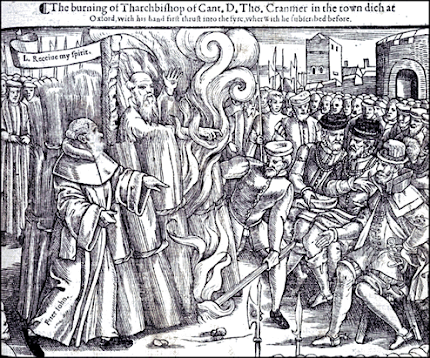
There is no avoiding of the fact that the English divines, including Archbishop Thomas Cranmer who was a complete Augustinian and the author of the substance of these articles, said that reprobation is a "sentence" passed by God. There is no other reason for the wording of the article except to understand that this is a deliberate decree on God's part. And notice as well that the decree precedes the outworking of that decree. Those who refuse to repent understand that God has predetermined them to reprobation and to be damned. Although God is not thereby responsible for their rebellion, the fact that they refuse to repent shows clearly that God has hardened their hearts and decreed them to damnation. This is why it is a "sentence" and not merely a foreseen allowance.
The weight of Scripture favors election but Scripture does teach the decree to reprobation, which the English divines follow. To argue that Scripture allows other views is to attack not only Scripture but the Articles which follow Scriptural teaching on this point. To argue that the Articles are ambivalent is equivalent to arguing that the Scriptures are unclear and ambivalent, which in turn leads to theological liberalism.
That Scripture teaches the doctrine of a divine decree to reprobation is beyond dispute:
and "A stone of stumbling, and a rock of offense." They stumble because they disobey the word, as they were destined to do. (1 Peter 2:8 ESV)
What if God, desiring to show his wrath and to make known his power, has endured with much patience vessels of wrath prepared for destruction, (Romans 9:22 ESV)
For certain people have crept in unnoticed who long ago were designated for this condemnation, ungodly people, who pervert the grace of our God into sensuality and deny our only Master and Lord, Jesus Christ. (Jude 1:4 ESV)
though they were not yet born and had done nothing either good or bad--in order that God's purpose of election might continue, not because of works but because of him who calls-- 12 she was told, "The older will serve the younger." 13 As it is written, "Jacob I loved, but Esau I hated." (Romans 9:11-13 ESV)
The semi-pelagians think that somehow it is dishonoring to God and brings reproach on the Gospel to acknowledge from the pulpit and in public that God in fact has predetermined and decreed before the creation of the world that a huge mass of human beings would be reprobated and condemned to eternal hell--and all before they were born! But Paul answers that objection well:
As it is written, "Jacob I loved, but Esau I hated." 14 What shall we say then? Is there injustice on God's part? By no means! 15 For he says to Moses, "I will have mercy on whom I have mercy, and I will have compassion on whom I have compassion." 16 So then it depends not on human will or exertion, but on God, who has mercy. 17 For the Scripture says to Pharaoh, "For this very purpose I have raised you up, that I might show my power in you, and that my name might be proclaimed in all the earth." 18 So then he has mercy on whomever he wills, and he hardens whomever he wills. 19 You will say to me then, "Why does he still find fault? For who can resist his will?" 20 But who are you, O man, to answer back to God? Will what is molded say to its molder, "Why have you made me like this?" 21 Has the potter no right over the clay, to make out of the same lump one vessel for honorable use and another for dishonorable use? 22 What if God, desiring to show his wrath and to make known his power, has endured with much patience vessels of wrath prepared for destruction, 23 in order to make known the riches of his glory for vessels of mercy, which he has prepared beforehand for glory-- (Romans 9:13-23 ESV)
One is forced to ask what sort of god is it who does not know the future; has no control over the past, present or the future; cannot supernaturally intervene in the natural world (deism); and who is open to learn from what happens in history (open theism). Those who advocate some sort of compromise to soften God's absolute sovereignty over both natural calamities and human choices (Isaiah 45:7; Proverbs 21:1) unwittingly open the door to an idolatrous theology from below that focuses on man and this world rather than the eternal realm of a sovereign God who answers to no one (Daniel 4:35).
As much as many Evangelicals would like to compromise God's providence for the sake of evangelism, watering down God's word to persuade the wicked reprobate (Romans 9:13) is like trying to give medicine to a dead man. Dead men will not believe no matter how hard we try to persuade them. Even the venerable Martin Luther had sense enough to see that there is no free will and apart from God's irresistible grace no one will believe in the first place:
Sect. 9.—THIS, therefore, is also essentially necessary and wholesome for Christians to know: That God foreknows nothing by contingency, but that He foresees, purposes, and does all things according to His immutable, eternal, and infallible will. By this thunderbolt, "Free-will" is thrown prostrate, and utterly dashed to pieces. Those, therefore, who would assert "Free-will," must either deny this thunderbolt, or pretend not to see it, or push it from them. . . .
. . . You openly declare that the immutable will of God is to be known, but you forbid the knowledge of His immutable prescience. Do you believe that He foreknows against His will, or that He wills in ignorance? If then, He foreknows, willing, His will is eternal and immovable, because His nature is so: and, if He wills, foreknowing, His knowledge is eternal and immovable, because His nature is so.
From which it follows unalterably, that all things which we do, although they may appear to us to be done mutably and contingently, and even may be done thus contingently by us, are yet, in reality, done necessarily and immutably, with respect to the will of God. For the will of God is effective and cannot be hindered; because the very power of God is natural to Him, and His wisdom is such that He cannot be deceived. And as His will cannot be hindered, the work itself cannot be hindered from being done in the place, at the time, in the measure, and by whom He foresees and wills. If the will of God were such, that, when the work was done, the work remained but the will ceased, (as is the case with the will of men, which, when the house is built which they wished to build, ceases to will, as though it ended by death) then, indeed, it might be said, that things are done by contingency and mutability. But here, the case is the contrary; the work ceases, and the will remains. [From: The Bondage of the Will: The Sovereignty of God.
For Anglicans to argue that the 39 Articles leave open the question of divine decrees to election and reprobation is essentially a semi-pelagian argument which would deny in toto Articles 9-18. As even Luther saw, there is no such thing as free will and to attempt to base one's apologetics or evangelism on the persuasion of determined dead men is basically a waste of time. Odd how many Evangelicals side with Erasmus and against Luther on the issue of free will! I remember debating a former professor of mine online by the name of Lawson Stone. Lawson is an Old Testament professor at Asbury Theological Seminary. I objected to his essentially neo-orthodox doctrine of Genesis 1-11 and its irrationality, to which Lawson responded that it must have been predestined that he would make the error of which I was accusing him--along with the hyper-Arminianism of Asbury's holiness theology. I could not help but smile because although Lawson intended the remark to be a jab at predestination he actually spoke the truth. Although God does not violate the will of sinful man or force man to sin, it is equally true that God is in absolute control of all that happens. (See Westminster Confession, Of God's Eternal Decree). The Scriptures teach this plainly enough. (See 1 Kings 22:19-23, 30-35). It goes without saying that the current state of apostasy in the Anglican Communion around the world has also been decreed for God's own purposes (Romans 9:17-18). Those who reject the plain teaching of Scripture and exalt fallen reason above God's revelation have "before their eyes" only "the sentence of God's Predestination" to their "most dangerous downfall".
That the Anglican divines of Cranmer's time were Augustinian and not semi-pelagian is plain enough from the fact that we find no explicit statements advocating Arminianism or Amyraldianism in any of the confessions of faith of that time period. However, we have at least two documents in addition to the 39 Articles that explicitly teach the sovereignty of God and the bondage of the will, being the Lambeth Articles of 1595 and the Irish Articles of Religion.
Objectors to the doctrine of reprobation try to twist it around and say that we should not preach the decrees of God because it will hurt the Gospel message. But that is not how Luther saw it and it certainly was not how the Anglican divines saw it or how the Dutch divines saw it. What they said instead was preach the doctrine and do not question what the Scriptures say about the decree to reprobation! It is irreverent to place the concerns of sinful rebels above the truths clearly taught in the Holy Scriptures, including the doctrine of reprobation. Although we from below do not know who is elect or who is reprobate with any certainty until that person has died either in the faith or outside the faith, we are no less responsible to preach the entirety of the Scriptures in expositional form. That would include ALL Scripture from Genesis to Revelation. We cannot offer our people a Readers Digest version of the Bible for to do so would in fact be teaching only a partial counsel from God's will and not the full revelation. The Bible absolutely says that all Scripture is inspired of God and not just the parts that agree with our particular theological biases (2 Timothy 3:16-17; 2 Timothy 2:15; 2 Peter 1:19-21). We cannot offer our people an expurgated Bible or sermon series.
Luther put it well when he rebuked Erasmus:
Wherefore, their ridiculous play upon words, that all things take place from the necessity of the consequence, but not from the necessity of the thing consequent, amounts to nothing more than this—all things take place of necessity, but all the things that do take place are not God Himself. But what need was there to tell us this? As though there were any fear of our asserting, that the things done were God Himself, or possessed divine or necessary nature. This asserted truth, therefore, stands and remains invincible—that all things take place according to the immutable will of God! which they call the necessity of the consequence. Nor is there here any obscurity or ambiguity. In Isaiah he saith, "My counsel shall stand, and My will shall be done." (Isaiah 46:10) And what schoolboy does not understand the meaning of these expressions, "Counsel," "will," "shall be done," "shall stand?" (Ibid.)
According to Luther, if God does not determine even the reprobation of those who reject the Gospel message, neither can there be any assurance of salvation for any of the elect at all. Such thinking would mean that God's will is contingent and that therefore salvation itself is contingent:
And how can you be certain and secure, unless you are persuaded that He knows and wills certainly, infallibly, immutably, and necessarily, and will perform what He promises? Nor ought we to be certain only that God wills necessarily and immutably, and will perform, but also to glory in the same; as Paul, (Romans 3:4) "Let God be true, but every man a liar." And again, "For the word of God is not without effect." (Romans 9:6) And in another place, "The foundation of God standeth sure, having this seal, the Lord knoweth them that are His." (2 Timothy 2:19) And, "Which God, that cannot lie, promised before the world began." (Titus 1:2) And, "He that cometh, must believe that God is, and that He is a rewarder of them that hope in Him." (Hebrews 11:6)
If, therefore, we are taught, and if we believe, that we ought not to know the necessary prescience of God, and the necessity of the things that are to take place, Christian faith is utterly destroyed, and the promises of God and the whole Gospel entirely fall to the ground; for the greatest and only consolation of Christians in their adversities, is the knowing that God lies not, but does all things immutably, and that His will cannot be resisted, changed, or hindered. (Ibid.)
Therefore, the true Anglican must stand with Luther, Calvin, Zwingli, Bullinger, Cranmer, Ridley, Hooper and a host of other Reformers on the doctrine of God's absolute sovereignty in salvation. To do otherwise is in fact to undermine the very Gospel itself. Salvation is completely a gift of God's mercy from beginning to end and God owes no one salvation. The whole point of Article 17 is not that we deserve God's grace but that God could have justly damned us from before the creation of the world. The fact that He has given us grace to believe shows that we are not under the sentence of His decree to reprobation. This doctrine should be preached from every Anglican pulpit because it is the very foundation of the Gospel message and the golden chain of salvation (Romans 8:28-30). Those who say that the Gospel is minimalist and why cannot we all get along are really saying that we should preach an expurgated version of the Bible and an expurgated message of the cross, which is no message at all:
For Christ did not send me to baptize but to preach the gospel, and not with words of eloquent wisdom, lest the cross of Christ be emptied of its power. 18 For the word of the cross is folly to those who are perishing, but to us who are being saved it is the power of God. 19 For it is written, "I will destroy the wisdom of the wise, and the discernment of the discerning I will thwart." 20 Where is the one who is wise? Where is the scribe? Where is the debater of this age? Has not God made foolish the wisdom of the world? 21 For since, in the wisdom of God, the world did not know God through wisdom, it pleased God through the folly of what we preach to save those who believe. 22 For Jews demand signs and Greeks seek wisdom, 23 but we preach Christ crucified, a stumbling block to Jews and folly to Gentiles, 24 but to those who are called, both Jews and Greeks, Christ the power of God and the wisdom of God. 25 For the foolishness of God is wiser than men, and the weakness of God is stronger than men. (1 Corinthians 1:17-25 ESV)
Whatsoever comes to pass happens precisely because God has determined it to be that way. That in no way removes personal guilt since God has created man with free moral agency. We are Anglicans because we believe that we are born in original sin and not merely with a clean slate as the Pelagians falsely teach. The only solution to the fall of man in general and the elect in particular is God's particular and irresistible grace:
Predestination to life is the everlasting purpose of God, whereby, before the foundations of the world were laid, He hath constantly decreed by His counsel secret to us, to deliver from curse and damnation those whom He hath chosen in Christ out of mankind, and to bring them by Christ to everlasting salvation as vessels made to honour. (See Romans 9:21-23) Article 17
This is the Gospel. To make man's salvation contingent on his own sinful efforts is to leave man in bondage to his own sin and to doom him to perdition. (See Article 9 and Article 10). If God does not literally elect and save us we will not be saved. This is why the minimalist view of the Anglican Formularies should be soundly rebuked. Essentially, what they wish to do is to preach another gospel. I would include the Amyraldian position in that assessment since it virtually collapses into Arminianism upon a closer examination. The fact is, if God chooses some out of fallen mankind (Ephesians 1:4-5, 11), the obvious implication is God has "decreed" to pass over the reprobate and leave them in their own rebellion by nature (Ephesians 2:3).
May the peace of God be with you. (Romans 5:1-2)
(See also, Double or Nothing: Luther's Doctrine of Predestination.
(See also, Double or Nothing: Luther's Doctrine of Predestination.


 Posts
Posts


