>

Martyred for the Gospel

Martyred for the Gospel
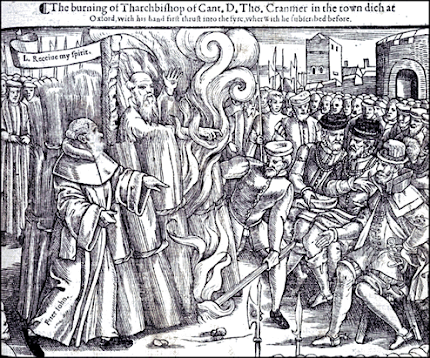
The burning of Tharchbishop of Cant. D. Tho. Cranmer in the town dich at Oxford, with his hand first thrust into the fyre, wherwith he subscribed before. [Click on the picture to see Cranmer's last words.]

Daily Bible Verse

Showing posts with label Greg Bahnsen. Show all posts

Saturday, January 27, 2018

Dr. Greg Bahnsen's Rejection of Logic


"The fact that a word must mean one thing and not its contradictory is the evidence of the law of contradiction in all rational language. This exhibition of the logic embedded in Scripture explains why Scripture rather than the law of contradiction is selected as the axiom." -- Dr. Gordon H. Clark


Bahnsen’s Rejection of Logic

Are there multiple logics in God’s eternal mind and His omniscience? According to the late Dr. Greg Bahnsen, a student of the late Dr. Cornelius Van Til, the answer is yes:

It is plainly the case that non-Christians have a different notion of what constitutes consistency than the biblical Christian. They might both agree in distinguishing truth from falsehood (i.e., in avoiding violation of the law of contradiction) while they are diametrically opposed on whether or not it is consistent for God to love only some unto salvation and not effect universal salvation. The Christian and non-Christian will react differently to the position that the all-glorious God has allowed glory to be brought to His name in the historical process; while the believer glorifies God and enjoys Him forever, the unbeliever mocks that very possibility. They also differ in their reactions to the fact that all non-Christian epistemologies are hybrids of rationalism and irrationalism; the unbeliever seems insouciant about the incongruity, for example, of his opinion that in religious matters “nobody can know for certain,” yet “Christianity is false.” The naturalist would consider a supernatural revelation incoherent to a rational system, but the supernaturalist would consider the absence of such revelation incoherent. Yet in all these cases the disputants can agree to the formal law of non-contradiction as a guiding principle. This does not point to any inconsequential nature in logical consistency, nor does it amount to a recommendation of irrationality; but it does demonstrate why Clark’s emphasis on the apologetical value of coherence is misplaced. The law of contradiction does not preclude the possibility of many logics!

Greg L. Bahnsen, Presuppositional Apologetics: Stated and Defended, ed. Joel McDurmon (Powder Springs, GA; Nacogdoches, TX: American Vision; Covenant Media Press, 2008), 167.


Needless to say if there are many logics, then logic itself must be irrational and illogical. Also, how does Bahnsen define logic anyway? In this paragraph Bahnsen seems to conflate a rational worldview or rational system with logic itself. It is true that an epistemology is internally consistent with its own starting axioms. However, as Clark pointed out, logic itself is immutable in God’s omniscient mind. If Scripture is not a logically consistent, coherent, and rational revelation of God and it cannot be systematized as a propositional system of truth, then the Bible has no meaning. Bahnsen correctly shows that pragmatically everyone accepts the law of contradiction since he is contradicting Clark’s apologetics. But does this mean that Van Til’s assertion that all Scripture is apparently contradictory is itself a violation of Bahnsen’s own contention that everyone accepts the law of contradiction? If all Scripture is apparently contradictory then for all practical purposes the “apparent” contradictions in Scripture have no solution this side of heaven and the practical result is neo-orthodoxy and irrationalism.


Ironically, in the same chapter where he is critiquing Clark he accuses Clark of promoting relativism and possibility, yet Bahnsen asserts a “possibility of many logics.” And if the law of contradiction means anything at all it means that there can be only one system of logic that is consistent with the law of contradiction. To say that the law of contradiction is basic to logic and then assert that there are many possible systems of logic is inherently a violation of the law of contradiction that Bahnsen claimed to support. Again, an epistemological system is different from logic itself. The question is whose epistemological system is most logical and most biblical, not which logic you capriciously choose.  The practical result of saying there are many logics is to affirm that truth is relative, not absolute.  But as Gordon Clark pointed out, Christianity is built on the axiom of universal truth, not induction.  Particular observations can never result in any universal law or any universally applicable moral law.  This would effectually rule out the Decalogue or Ten Commandments.  Bahnsen's reasoning is flawed at the foundations.


Furthermore, Bahnsen's contention that Clark elevates logic or even the law of contradiction above Scripture or as more primitive than Scripture is contradicted by Clark's own writings:


Nor need we waste time repeating Aristotle’s explanation of ambiguous words. The fact that a word must mean one thing and not its contradictory is the evidence of the law of contradiction in all rational language. This exhibition of the logic embedded in Scripture explains why Scripture rather than the law of contradiction is selected as the axiom. Should we assume merely the law of contradiction, we would be no better off than Kant was. His notion that knowledge requires a priori categories deserves great respect. Once for all, in a positive way--the complement of Hume’s negative and unintentional way--Kant demonstrated the necessity of axioms, presuppositions, or a priori equipment. But this sine qua non is not sufficient to produce knowledge. Therefore the law of contradiction as such and by itself is not made the axiom of this argument.


Dr. Gordon H. Clark.  "God and Logic".  The Trinity Review.  November/December 1980.


It is abundantly clear from the quote above that Dr. Clark did not make logic a magisterial ruler over and above Scripture.  In fact, Clark taught just the opposite.  Scripture says that God is Logic and it is clear that for Scripture to say anything meaningful it must be rationally understandable.  Since Scripture is embedded with logic it must be that Scripture itself teaches logic.


Moreover, because Christ is the Logos who “gives [epistemological] light to every man who comes into the world” (John 1:9), we are to understand that there is a point at which man’s logic meets God’s logic. In fact, John 1:9 denies that logic is arbitrary; it also denies polylogism, i.e., that there may be many kinds of logic. According to John, there is only one kind of logic: God’s logic. And the Logos gives to every image bearer of God the ability to think logically.

Dr. Gary W. Crampton.  "Review of 'Logic', by Dr. Gordon H. Clark."

Addendum:  The fact that mankind is born in God's image with the a priori equipment to be able to think intelligently and communicate in logically consistent language does not contradict the axiom of Christianity being the Holy Scriptures.  (2 Timothy 3:16-17; Matthew 4:4; 2 Peter 1:19-21).  That's because Scripture is a written revelation from God in verbally expressed words and propositions.  Animals cannot think, read or understand words.  The conclusion then is that there must be innate abilities given, in the image of God, to humanity.  Man is the image of God.  (See:  "The Image of God in Man", by Dr. Gordon H. Clark.  Journal of the Evangelical Theological Society12:4 (Fall 1969).  Pp. 215-222.  Also:  "Image of God",  by Dr. Gordon H. Clark. [1973. In Baker’s Dictionary of Christian Ethics. Carl F. H. Henry, ed. Washington D.C.: Canon Press.]


Wednesday, January 24, 2018

Bahnsen's Misquote of Clark Out of Context


WCF 2.1  There is but one only living and true God, who is infinite in being and perfection, a most pure spirit, invisible, without body, parts, or passions; . . .


In his book, Presuppositional Apologetics, Greg Bahnsen completely misrepresents the position of Dr. Gordon H. Clark:

Indeed, by contrast, one could easily be led to believe that logic per se is his transcendental rather than Scripture. Instead of the attempt to be independent of God’s Word, “the denial of the law of contradiction, or even the failure to establish it as a universal truth, was the downfall of secular philosophy.”30 For the absolute presuppositionalist, God and His revelation guarantee the possibility of epistemological fruitfulness, for He who is the truth has deigned to give us a revelation of knowledge. Clark, on the other hand, concludes his chapter on epistemology in A Christian View of Men and Things by saying that it “has tried to show by an application of the law of contradiction—a law that is not merely formal but is itself an integral part of the system of truth—that truth exists and that knowledge is possible.”31 The impression that the truth of Scripture is not the grounding for logic, but that the law of contradiction is methodologically more primitive than Scripture for Clark, is apparently confirmed when he says,


Just how it could be possible to formulate reasons prior to any logic remains unexplained. It seems evident to me that any set of reasons or any argument for creation ought to make use of and therefore presuppose logic.32

The issue here is not whether, de facto, one makes instrumental use of the law of contradiction in all his thinking (that is readily granted), but whether, in principium, logic or the truth of Scripture is your absolute presupposition. Clark’s comment either makes an illegitimate separation of epistemology from metaphysics or posits logic as prior to the presupposition of Scripture. (Both errors will be treated infra.)


Greg L. Bahnsen, Presuppositional Apologetics: Stated and Defended, ed. Joel McDurmon (Powder Springs, GA;Nacogdoches, TX: American Vision;Covenant Media Press, 2008), 144.


First off, Dr. Clark deduces from Scripture that man is God's image.  (John 1:9; Genesis 1:27, 9:6; 1 Corinthians 11:7).  Since God is Logic according to John 1:1 where the Greek word Logos is used, it follows that the law of contradiction is how God thinks.  And since man is God's image, man's ability to think logically is innate in man.  The Scriptures are propositional revelation to man and are therefore inherently logical as the very thoughts and propositions God knows and reveals to man.  Logic is logically prior to the Scriptures because God by divine simplicity is Logic along with all the other predicates that can be deduced from Scripture and describe who God is.  Moreover, God is logically prior to Scripture.  God is also holy, just, omnipotent, omnipresent, and omniscient.  But none of these things are parts of God, rather they tell us what God is and nothing in God's nature can be divorced from Him.  Definitions matter and a logical proposition is stated in a subject and a predicate joined by a copula.  Without definitions we could know nothing about God.

Thus, Clark does not make logic prior to revelation in Scripture but deduces from Scripture what God has revealed about Himself, namely that Logic is not created but Logic is God just as God is Love and Love is God.  God is Logic.  It logically follows then that logic is inherent in God by way of divine simplicity and the indivisible nature of God.  Logic is how God thinks.  

If only these Van Tilians would understand that their own position must use logic because without logic understanding is impossible.


 (WCF 2:1-2 WCS)


Monday, February 17, 2014

Misunderstanding on the Part of Greg Bahnsen

Wherever five “advanced thinkers” assemble, at least six theories as to inspiration are likely to be ventilated. They differ in every conceivable point, or in every conceivable point save one. They agree that inspiration is less pervasive and less determinative than has heretofore been thought, or than is still thought in less enlightened circles. They agree that there is less of the truth of God and more of the error of man in the Bible than Christians have been wont to believe. They agree accordingly that the teaching of the Bible may be, in this, that, or the other,—here, there, or elsewhere,—safely neglected or openly repudiated. So soon as we turn to the constructive side, however, and ask wherein the inspiration of the Bible consists; how far it guarantees the trustworthiness of the Bible’s teaching; in what of its elements is the Bible a divinely safe-guarded guide to truth: the concurrence ends and hopeless dissension sets in. They agree only in their common destructive attitude towards some higher view of the inspiration of the Bible, of the presence of which each one seems supremely conscious.

Benjamin B. Warfield, The Works of Benjamin B. Warfield: Revelation and Inspiration (vol. 1; Bellingham, WA: Logos Bible Software, 2008), 51.


"Many good things could be said about Dr. Clark, but his philosophical work was not always a strength. And occasionally his philosophical shortcomings were detrimental for his theological constructions. Take one illustration. Clark insisted that we cannot know anything on the basis of sensation and that our knowledge is restricted to the content of the Bible.[1] Philosophically, this is outrageous. On this view, Clark could not even "know" what the Bible taught since he relied upon sensation - reading, hearing - to learn it."   --  Greg Bahnsen   [See: Letter:  (Response to John Robbins) in Journey 3:1 (Jan.-Feb., 1988)].


It is indeed odd that many good things can be said about Dr. Gordon H. Clark when the entire Reformed world, for all practical purposes at least, thinks that Dr. Cornelius Van Til is the patron saint of neo-Calvinism.  Dr. Clark consistently defended propositional truth, biblical inerrancy, and the plenary verbal view of inspiration.  Van Til, on the other hand, advocated a view of limited inerrancy that is summarized in Van Til's statement that "all Scripture is apparently contradictory."  In response to Bahnsen's contention that knowledge is based on sensation, I would like to know what 2 + 2 smells, tastes, sounds, feels, and looks like?  Or perhaps mathematics are not based on sensation at all?  It might be that mathematics and logic are thought processes that do not depend on the senses at all?


Furthermore, one has to wonder if the Bible is a mass of paper and ink to seen and felt?  Or just perhaps the Bible is composed in written language and it is the words, concepts, propositions and passages of Scripture that convey revelatory information to the human mind?  Does God speak in words or does revelation occur through the senses?   Do dogs do mathematics or write Shakespeare?  I think not.

As for Bahnsen's contention that Dr. Gordon H. Clark's view is outrageous in regards to knowledge, his remarks are completely out of context.  Dr. Clark's view is that all other epistemological systems end up in skepticism.  He did not say that they know nothing at all.  He said that knowledge or epistemology must begin with Scripture as the beginning point or axiom.  The scientific model that knowledge can be derived from the senses is based on the fallacy of induction.  Universal laws cannot be deduced from inductive evidences or "facts."  Furthermore, Clark never said that all knowledge is restricted to the Bible.  He said that all knowledge begins with Scripture as the axiom or starting point.  All other epistemological systems begin with some extra-biblical starting point such as empiricism, which axioms always end in skepticism.

The idea that sensation is a necessary medium for conveying information ignores the fact that it is the mind that processes information, logical propositions, and the special revelation recorded in the Scriptures.  It is the language of the Bible that counts, not paper and ink.  Although written words are mediated to the mind through sight and reading, dogs cannot read.  Cats cannot even know what a book is.  Since God is a spiritual being (John 4:24), the image of God in man cannot be the physical body.  The soul is created in the image and likeness of God and is spiritual.  Since God is Logic (John 1:1) then it follows that the architecture of God's mind is logical in nature.  Man likewise is innately endowed with the ability to think, reason, and conceive because man is the image of God.  Only men can sin.  Animals cannot think or sin or even do good or evil.  Inherent in logic is the law of contradiction.  Without the law of contradiction irrationalism is the result.

The problem with Van Til is that he said that logic is not inherently an attribute of God.  Logic, according to Van Til, is something God created for man.  Although G. H. Clark does say that God is not subject to any law, Clark also contended that logic is the very architecture of God's mind.  For Van Til to say that God is rational and logical is to confuse the creature with the Creator.  God, for Van Til, transcends logic.  If so, then for all practical purposes revelation is impossible.  If God cannot communicate truth to man at any single point then the Bible is not revelation.  It is merely an analogy with no particular point of reference in common with God.  The Bible, on the other hand, affirms that God actually speaks univocally.  If God speaks univocally in Scripture, then it logically follows that Van Til's view has more in common with neo-orthodoxy and irrationalism than with biblical Christianity.  Van Til in short was an heretic.

The Bible clearly says that God speaks finally in the Scriptures and in Jesus Christ:

 Then God spoke to Noah, saying, (Genesis 8:15 NKJ)

 And God spoke all these words, saying: (Exodus 20:1 NKJ)

 God, who at various times and in various ways spoke in time past to the fathers by the prophets, 2 has in these last days spoken to us by His Son, whom He has appointed heir of all things, through whom also He made the worlds; (Hebrews 1:1-2 NKJ)
Even more to the point, the apostle Paul says that all Scripture is inspired or breathed out by God:

All Scripture is given by inspiration of God, and is profitable for doctrine, for reproof, for correction, for instruction in righteousness, (2 Timothy 3:16 NKJ)
Those who want to hedge on the doctrine of verbal plenary inspiration will say that Scripture is not univocally the very words of God but only an analogy of revelation.  To do so, they say, is to confuse the creature with the Creator.  This is nothing more than the neo-orthodox view couched in the language of Thomas Aquinas.  Dr. R. Scott Clark, for example, wishes to put doubt in the minds of believers by insisting with Van Til that at no single point does Scripture coincide with God's words and thoughts:

. . . even those in the Reformed confessional tradition who rejected the modernist translation project have also wrestled with the proper way to do theology after modernity. Some confessionalists carried on the classic approach to theology, but we have often seemed to forget gradually our own grammar, logic, and rhetoric. Confessional Reformed theology, however, works with some basic beliefs about the nature of relations between God and his creation, beliefs that are derived from Scripture and shape theological method. Chief among these is the notion that God is the “beginning of being” (principium essendi) and, as such, the “beginning of knowing” (principium cognoscendi). A corollary to this doctrine is the notion that human knowledge of God is analogical. (P. 123).    (Religious Uncertainty: R. Scott Clark's Recovering the Reformed Confession

As the late Dr. Gordon H. Clark contended, this would make God completely unknowable.  Furthermore, logically speaking if we can know nothing God knows then it follows that we cannot know anything that is true.  God is truth.  His Word is truth.  (John 17:17).  Conversely, if we know anything that is true, then God must know that same truth just as we know it.  This is not to say that we are omniscient or that we know all that God knows.  Certainly only God knows intuitively and directly all there is to know.  But if God knows 2 + 2 = 4 and we know that same truth, it logically follows that at that point our knowledge coincides with God's knowledge.  The only other possibility is that we cannot know anything for sure and that we have no knowledge that God also knows.  Surely if God is omniscient it logically follows that God knows all of our thoughts just as we know them?  (Psalm 139:2, 4).

The theology of analogy, in short, is a smoke screen for relativism, skepticism, and the absolute transcendence of the Creator such that He is unknowable.  Van Tilian theology reduces to subjectivism, existentialism, and neo-orthodoxy.  All their cries of foul when this is pointed out to them are a tacit admission of their lack of grounding in the Scriptures.  Scott  Clark's quest for religious uncertainty is duly noted.  For R. Scott Clark anyone who actually believes what B. B. Warfield and other classical Reformed scholars say about Scripture as the univocal revelation of God in written words and propositions is in fact a "rationalist," the dirty word for Bible believing Christians.

By the Van Tilian standards, as I pointed out in another post, Martin Luther would be a rationalist since he attempted to refute the semi-pelagians (and by implication the Arminians and Federal Visionists of today) by saying that God's immutability means that God's foreknowledge of the future proves that there is no such thing as libertarian free will in Adam before the fall, in the angels, or in God:

I SHALL here draw this book to a conclusion: prepared if it were necessary to pursue this Discussion still farther. Though I consider that I have now abundantly satisfied the godly man, who wishes to believe the truth without making resistance. For if we believe it to be true, that God fore-knows and fore-ordains all things; that He can be neither deceived nor hindered in His Prescience and Predestination; and that nothing can take place but according to His Will, (which reason herself is compelled to confess;) then, even according to the testimony of reason herself, there can be no "Free-will"—in man,—in angel,—or in any creature!  -- Martin Luther, The Bondage of the Will:  Conclusion.


Of course, after the fall, Adam did forfeit freedom from the curse of original sin such that his human nature became totally corrupt.  The image of God in man was completely corrupted, though not lost.  (Genesis 6:5; Psalm 51:4-5; Psalm 58:3; Job 14:4; Job 15:14).  I should also point out that Luther did not reject logic or reason or appeal to paradox.  He attempted to solve the apparent contradiction by showing that God's foreknowledge logically entails predestination--otherwise God nor anyone else could know the future!  (Acts 2:23; Acts 4:27-28).  Even as human beings we can know that if we rob a bank the odds are that we are going to be convicted of a crime and go to prison.  That foreknowledge hinders the citizen from committing crimes.  (Romans 13:3-4).   It logically follows that God's immutability means that whatever happens was predetermined by God and that God's immutability means that nothing other than what has happened could have happened at all.  (Proverbs 16:33; Malachi  3:6; James 1:17).

In fact, Dr. Gordon H. Clark argued that God predetermines the elect through the means of Scripture and revelation.  Those who have not heard the Gospel or the law of God are unable to believe it or to obey the moral law.  (2 Thessalonians 1:8; 1 Peter 4:17).  Conversion of the elect depends on their hearing the Gospel first.  (Romans 10:14-17; Acts 4:10, 12; Matthew 22:14).  The distinction between the general call of the Gospel and the effectual calling of the elect is one that escapes Arminians and Van Tilians.  And this distinction implies that those who have not heard have no opportunity whatsoever.  (Romans 9:11-16).


R. Scott Clark derisively refers to Bible believing Christians and classical Calvinists as "rationalists" on the one hand because they believe that the Bible is literally and univocally the very words of God in propositional form, and, on the other hand, for being hyper-Calvinists because they disagree with the semi-Arminian paradox of common grace and the free offer of the Gospel. Scripture teaches that ultimately God is the cause of all that comes to pass, including election and reprobation, faith and unbelief. That does not remove human responsibility because ignorance and the lack of ability to obey the Gospel or the law of God is no excuse (Romans 1:18-28). 

The Westminster Confession of Faith says:


 God, from all eternity, did, by the most wise and holy counsel of His own will freely, and unchangeably ordain whatsoever comes to pass: yet so, as thereby neither is God the author of sin, nor is violence offered to the will of the creatures; nor is the liberty or contingency of second causes taken away, but rather established. (WCF 3:1 WCS)

 Although God knows whatsoever may or can come to pass upon all supposed conditions, yet hath He not decreed anything because He foresaw it as future, or as that which would come to pass upon such conditions. (WCF 3:2 WCS)

 By the decree of God, for the manifestation of His glory, some men and angels are predestinated unto everlasting life, and others foreordained to everlasting death. (WCF 3:3 WCS)
As much as it grieves me to say this, it seems to me that the majority of so-called Reformed denominations and seminaries today are indeed hostile to Calvinism in its biblical form and in its purest expression.  The followers of Van Til and their derisive attitude toward Gordon H. Clark, the Protestant Reformed Churches, and others who advocate a more biblical Calvinism is evidence enough that they are in fact apostates from the confessional faith.  The recent trend in the Presbyterian Church in America to endorse the Federal Vision error is just a natural and logical conclusion to their acceptance of Arminian heretics into communicant membership in their Reformed congregations.  The doctrinal standards for communicant membership are the same standards for both ministers and lay members.  No Arminian should be accepted into church membership unless and until he or she repents of their heretical doctrines.


To God alone be the glory!

Charlie


Support Reasonable Christian Ministries with your generous donation.