>

Martyred for the Gospel

Martyred for the Gospel
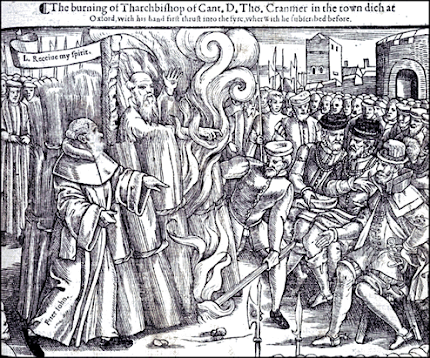
The burning of Tharchbishop of Cant. D. Tho. Cranmer in the town dich at Oxford, with his hand first thrust into the fyre, wherwith he subscribed before. [Click on the picture to see Cranmer's last words.]

Daily Bible Verse

Showing posts with label John MacArthur. Show all posts

Wednesday, November 13, 2024

My Evaluation of Grace Central Church, Gilbert SC


Being recently retired from secular employment, I have been looking to join with a local congregation.  My employment was a traveling job and kept me away from home.  I lean in the direction of a good Evangelical presbyterian church.  The only churches in my area in that category are either Presbyterian Church in America (PCA), or Associate Reformed Presbyterian (ARP).  The choices are few.  Lexington PCA near me in Lexington, SC is part of the Tim Keller social justice nonsense and the Revoice movement, which legitimizes sexual orientation as an inborn predisposition rather than a sympton of total depravity.

The ARP churches are mixed.  The small ones are not much better than the large PCA church I just mentioned.  First Presbyterian Church in Columbia, SC has traditional worship and is fairly conservative, though there are few signs of compromise.  One minister suggested that Jesus didn't really fast for forty days in the desert; instead Jesus took other sustenance along the way.  Also, the ARP churches ordain women to the office of deacon, a clear violation of the qualifications for deacons as the husband of one wife.

So when I heard about Grace Central Church in Gilbert, SC, I thought why not give it a try.  The church purports to be in the same line as John MacArthur.  The pastor, Bud Moss, reports that he is a graduate of The Master's Seminary in California.  

I have visited there several times without any problems.  The worship was from the hymn book published by The Master's Seminary.  The sermons are fairly exegetical, though I detected a few times that the pastor was not adequately prepared.

What troubles me most are a few red flags.  First, the church has no doctrinal statement posted on the church website, other than a few brief distinctives here:

Distinctives:  Grace Central Church


 . . .We offer the following 7 Distinctives of Grace Central Church.


The Sovereignty of God


Grace Central Church affirms God’s sovereignty over all things (Psalm 115:3). Therefore, we will maintain a high view of God and a low view of man in terms of our worship, our view of salvation, and our philosophy of ministry.


The Sufficiency of Scripture


Grace Central Church affirms that Scripture is inerrant, infallible, and sufficient (Psalm 19:7-14). Therefore, we will feature expository preaching and biblical counseling.


Biblical Eldership


Grace Central Church affirms what the Bible teaches about church leadership (1 Timothy 3:1-7). Therefore, we will be ruled and served by a plurality of biblically-qualified elders.


Church Membership


Grace Central church affirms the importance of Christians being added to a local body of believers (Acts 2:41;47). Therefore, we will practice formal church membership.


Church Discipline


Grace Central Church affirms the Scriptural mandate to keep the church pure and free from the leaven of unrepentant sin (Matthew 18:15-20). Therefore, we will practice church discipline.


The Family


Grace Central Church affirms God’s creation of the family, and His designation of the roles within the family. Therefore, we will encourage families to obey God’s design for husbands, wives, parents, and children.


Evangelizing Children


Grace Central Church affirms God’s sovereignty over salvation and man’s responsibility to preach the gospel. Therefore, we will preach the gospel to our children while trusting the Lord’s sovereignty over their salvation.


I for one do not trust churches with bulletin lists of preferences, rather than a somewhat detailed doctrinal statement.  You will notice that there is no mention of believer's baptism versus infant baptism.  There is no mention of continuationism or cessationism in regards to the gifts of the Holy Spirit.  In fact, I encountered one guy who said that he was formerly a member of a Calvary Chapel church.  The young man then claimed that Grace was a non-denominational church, to which I responded that there is no such thing as a non-denominational church.  This is my first red flag.  Any church that claims to be non-denominational is basing its ministry on a blatant violation of the 9th commandment, "Thou shalt not bear false witness . . ."

Although there is an indirect admission that the church is dispensational, to learn this information you would have to hear the pastor preach on his views on eschatology.  Furthermore, there is no mention in the doctrinal statements about any commitment to the trinity, the incarnation of Christ as both God and man, no mention of the doctrine of sola Scriptura or any of the other four solas of the Protestant Reformation.

There is no mention of Lordship Salvation, though this emphasis on sanctification is one of John MacArthur's primary emphases.  Also, where is the mention of justification by faith alone?  MacArthur himself does not have a detailed doctrinal statement on his website, but anyone can listen to his sermons and gather that he has at least some commitment to the doctrines of the London Baptist Confession of Faith, 1689.

Last Sunday, the pastor, Bud Moss, preached a sermon on pride and attacked anyone who didn't agree with his church as proud Pharisees.  He also attacked presbyterians as either postmillennialists or amillennialists, while affirming his own views on the rapture, the premillennial rapture, and a thousand year reign of Christ.  Apparently, Moss did not realize that some presbyterians, including the late Dr. Gordon H. Clark, agree with a premillennial return of Christ.  Furthermore, the Westminster Confession itself does not specifically mention the rapture.  It does, however, mention the return of our Lord and Savior Jesus Christ to judge the world, but does not specify exactly whether it is premillennial, amillennial or postmillennial:

III. As Christ would have us to be certainly persuaded that there shall be a day of judgment, both to deter all men from sin, and for the greater consolation of the godly in their adversity; so will he have that day unknown to men, that they may shake off all carnal security, and be always watchful, because they know not at what hour the Lord will come; and may be ever prepared to say, Come, Lord Jesus, come quickly. Amen.  WCF  33:3.

I was more than willing to join the church and support it if I were in fact welcome there.  But after learning that I am not welcome there, I won't be returning.  In fact, in the sermon on pride, Moss suggested that if you believe anything other than what he teaches, you should find another church.  His sermon sounded more like some of the Pentecostal sermons I have heard decades ago that suggested that you should never question the pastor's sermons because that would violate the principle of "touch not mine anointed".  ( 1 Chronicles 16:22; Psalm 105:15). You can listen to the sermon here:  The Pain of Pride Part 2.

In this sermon the pastor, following the Pentecostal view, suggested that we should never question the doctrinal positions of other churches because they are doing the Lord's work: 

And Jesus said unto him, Forbid him not: for he that is not against us is for us. (Lk. 9:50 KJV)

Unfortunately, Jesus also said that whoever is not for him is against him:

He that is not with me is against me; and he that gathereth not with me scattereth abroad. (Matt. 12:30 KJV)

I for one do not equate berating other Christians with exegetical preaching.  It's also sinful to accuse other Christians of being proud for having differing views of what the Bible teaches on non-essential matters.  It was interesting to note that Moss admitted that there is no such thing as a non-denominational church, while doubling down on the fact that his church is a non-denominational church. 

I understand that planting a new church requires strong leadership.  Pastors do not want to deal with anyone who is knowledgeable about the Bible and might question certain aspects of the ministry.  But if a pastor is that insecure, what's the point of starting a new church?  I noticed that there is little emphasis on studying the Bible for oneself.  The other problem I have with the church is the use of a modern translation for preaching.  I am not sure if the preferred translation is the ESV or the Legacy Bible.  Either way, it is based on highly questionable textual criticism.  If I were to use a modern translation it would be the New King James Version.  However, I still prefer the KJV.

Another issue for me is that it seems that church discipline is only about moral issues, not doctrinal issues.  Suppose a church member was pushing a heresy or causing disruption over a doctrinal distinction?  Would that be cause for church discipline?

I will close here.  This is an impromptu response.  I could have missed a few other complaints I had about the church.  In short, I would not feel comfortable with recommending this church.  I would prefer either a Reformed Baptist church or one of the more traditional Presbyterian churches in the Lexington or West Columbia area. 


Monday, May 02, 2016

Lordship Salvation, John MacArthur, and Zane Hodges


Galatians 2:16–17
(NKJV)

16 knowing that a man is not justified by the works of the law but by faith in Jesus Christ, even we have believed in Christ Jesus, that we might be justified by faith in Christ and not by the works of the law; for by the works of the law no flesh shall be justified. 17 “But if, while we seek to be justified by Christ, we ourselves also are found sinners, is Christ therefore a minister of sin? Certainly not!


Someone asked me a question in regards to a comment posted by David Bishop on Facebook.  The question has to do with what is wrong with the Lordship Salvation view of John MacArthur and the Once Saved Always Saved view of Zane Hodges.  This is David Bishop's comment below:
Via David Bishop

Lordship Salvation was an overreaction to Zane Hodges' Antinomian false gospel. The problem with Lordship Salvation is that it swung too far over into the opposite direction and became a false gospel for all the opposite reasons Zane Hodges' gospel was false. Lordship Salvation so far to the right of Hodges that it became an attempt to redefine faith, repentance and salvation, with the result that it denies the gospel of God's sovereign grace. Zane Hodges was an Arminian theologian and textual critic who defined salvation as coming to believe for one instance in time the singular proposition that "Jesus promised eternal life to all believe in Him." And when I say singular proposition, I literally mean singular proposition. For example, Hodges once gave an illustration in which a man marooned on an island comes across a tiny portion of John 5 in which the only part of the text still legible to him are the words, "Jesus promised eternal life to all who believe in Him." Hodges insisted that if this marooned man believed this one single statement AND NOTHING MORE, then he would be saved. Furthermore, if the marooned man later stopped believing this and started to believe there is no God, or even that Muhammed was God, then he would still saved. Why? Because he had believed for one instance in time. This is why I call Hodges' false gospel, "tattoo Christianity", because Hodges believed that once you got your "tattoo" then that was it, you were going to Heaven. You could go off and become an Atheist, a Buddhist, whatever, and you would still be saved because you had gotten your tattoo. Now, John MacArthur attempted to answer Hodges, but what he answered him with was a Neonomian false gospel every bit as false as Hodges. JMac argued that faith was not just intellectually agreeing with God that all the Biblical propositions about Christ and His crosswork are true, but rather faith is also striving to become less sinful as proof that you have submitted to Christ's Lordship. The basis for his argument was the entirely irrational and self refuting idea that the words "heart" and "mind" as used in the Bible represent two entirely different ways of knowledge and belief. In other words, just like the Danish philosopher who inspired Karl Barth, JMac insisted that a composite of head knowledge plus heart knowledge equals truth knowledge. Neither he, nor Kierkegaard understood that the word "heart" is a polysemy. In other words, it is a word that can be used in many different ways - the heart of the galaxy, the heart of the matter, the heart is an organ, you broke my heart, etc. Imagine, if you will, that we did indeed have a second organ inside our body besides the one in our skull that was capable of knowledge. How would we ever know whether we were only head knowing rather than also head [heart?] knowing? We would need a third organ that could tell the difference. JMac and the Lordship folks today never consider this fact. Instead, they just keep repeating their nonsense and insist anyone who disagrees with them must agree with Hodges. Faith in Scripture simply means to agree with God about what He has said concerning His only begotten Son and His Son's crosswork. Now, lots of people can know what God has said, but only those who have been imputed righteous and have been born of the Spirit will agree with God that what He has said is true. Lordship Salvation flatly rejects this, and this is why I reject Lordship Salvation.

From a Clarkian Scripturalist perspective there are several major problems with Bishop's response, the main one being his view that "head" knowledge and "heart" knowledge are two different ways of knowing.  But the problem here is that the typical definition of "head" knowledge as defined by modern Evangelicals in general is that they mean intellectual knowledge by the term "head knowledge."  They define heart knowledge as a deep felt conviction or an emotional intuition or some other ineffable sensation that cannot be intellectually formulated.  But the Bible never makes such a distinction between the intellect and the heart.  In fact, emotions produce no knowledge.  Emotions are nothing more than bodily sensations, and, therefore, cannot know anything.  The Bible, on the other hand, says that the heart thinks.  (Genesis 6:5; 1 Chronicles 28:9, 29:18; Job 17:11; Proverbs 23:7; Jeremiah 23:20; Daniel 2:30, 7:28; Hebrews 4:12).  In other works, the head, heart, and soul are very much identified as the intellectual seat of consciousness according to the Bible.  This is not to say that the soul has no emotional sensations but overall the Bible represents the heart as the inner soul of man that thinks.  (Proverbs 23:7).  There are exceptions where the Bible says that the heart experiences emotions but Jesus himself said that out of the heart proceeds evil thoughts.  (Matthew 15:19; Mark 7:21).

In regards to the MacArthur and Hodges dispute, I agree somewhat with Bishop's assessment.  But Hodges was not just an Arminian in regards to conversion.  He was also a dispensationalist in his theology, which is another theological system altogether from what the propositions in the Bible would indicate.  MacArthur, although he now identifies as a Calvinist, was at one time also a dispensationalist.  Unfortunately, MacArthur adheres to no detailed Reformed confession of faith such as the London Baptist Confession of Faith, 1689.  For that reason MacArthur has often made serious errors, including confusing justification and sanctification in the first edition of his book, The Gospel According to Jesus.  MacArthur contended in that book that final justification depends on the obedience of the believer and not justification by faith alone.  (See:  The Gospel According to John MacArthur, Trinity Review.  See also:  Justification and Judgment, Trinity Review).  The problem with MacArthur is his continual confusion of justification and sanctification and MacArthur's view of Lordship Salvation is essentially the same thing as the Federal Visionist view that the believer's final justification or vindication depends not just on imputed righteousness but also the works of the believer.  This is the view espoused by John Piper as well in his doctrine of final "vindication" by works.  (See:  John Piper Invites Doug Wilson).

Where I differ with David Bishop above is that he seems to be denying the Reformed confessional view that sanctification is a necessary result of regeneration and saving faith.  The Westminster Confession of Faith 1:6 advocates a system of theology that is logically deduced from the propositions in the Bible.  (See:  The Westminster Confession of Faith and Logic, Trinity Review).

Saving faith is indeed mere intellectual assent.  (See:  Saving Faith:  Trinity Review).  That is, the first thing that happens is an intellectual understanding of the Bible and the Gospel message.  But saving faith is only possible after regeneration or the effectual call.  (John 3:3-8; 6:44, 65).  Understanding what the Bible says and believing what it says are two different things, as most any unbeliever can understand that the Bible says that Christ died on the cross for our sins.  But he refuses to believe what he understands the Bible says because it is foolishness to him.  (1 Corinthians 1:18).

Furthermore, it must not be forgotten that the Westminster Confession has chapters that are numbered in descending order of importance.  The three most important doctrines in the WCF are 1)  Scripture, 2) the Trinity, and 3) Predestination or Of God's Divine Decree.  Saving faith is chapter 14 while regeneration is in chapter 10, justification is in chapter 11, adoption is chapter 12, sanctification is chapter 13, repentance is chapter 15, good works is chapter 16, chapter 17 is perseverance and assurance is chapter 18.  It is good to understand that the Puritan divines at Westminster wanted to emphasize these doctrines as they relate to one another in the system of propositional truth they deduced in summary form from the Scriptures.  Of course all Scripture is God's written word and there could be much more deduced from the Scriptures than what the WCF says (2 Timothy 3:16).  The Reformed confessions, though more thorough than any other confessions of faith today, are only a summary of Scripture in brief.  Christians are obligated to learn as much Scripture as possible and to understand the Scriptures in relationship to all the other Scriptures.  (2 Timothy 2:15; 3:15-17; John 10:35; John 5:39; Acts 17:11).  In short, to isolate saving faith as intellectual assent from everything else the Bible says is wrong.

Moreover, sanctification is a lifelong process of repentance and struggle against sin.  Assurance of salvation comes from God's promises to save His elect, from the eternal predestination of the elect, from eternal justification, and from conversion, justification and sanctification.  (See WCF chapter 18).  True conversion always has the goal of producing justifying faith and a progressive sanctification.  According to Dr. Clark, the effectual call and perseverance of the saints are both monergistic acts of God.  The WCF says the same thing.  (See WCF chapters 10 and 17).  But sanctification and repentance have to do with our will cooperating with God's commands.  Of course, even our synergistic cooperation with God's commands is also caused by God working in us. (Philippians 2:12-13).

I am not sure what Bishop means here:

Now, John MacArthur attempted to answer Hodges, but what he answered him with was a Neonomian false gospel every bit as false as Hodges. JMac argued that faith was not just intellectually agreeing with God that all the Biblical propositions about Christ and His crosswork are true, but rather faith is also striving to become less sinful as proof that you have submitted to Christ's Lordship.

A true and living faith does produce a progress in Christian maturity and a striving to live more and more like Christ:

XII. Of Good Works.
ALBEIT that good works, which are the fruits of faith and follow after justification, cannot put away our sins and endure the severity of God's judgement, yet are they pleasing and acceptable to God in Christ, and do spring out necessarily of a true and lively faith, insomuch that by them a lively faith may be as evidently known as a tree discerned by the fruit.

Thirty-nine Articles of Religion, Article XII.

Bishop's view seems to ignore that sanctification is also a part of the system of theology deduced from Scripture.  The Westminster Confession of Faith makes it clear that the result of saving faith is indeed repentance and sanctification as a matter of cooperation of man's will with God's revealed commands in Scripture.  (Deuteronomy 29:29; Romans 6:1-2; Philippians 2:12-13, 3:10-15).  Only faith can make our good works acceptable to God.  (Hebrews 11:6; Romans 1:17; Habakkuk 2:4).  But this does not mean that we have a license to sin.  (Jude 1:3-5).  The problem with MacArthur is that he confuses justification with sanctification, not that sanctification itself is not a necessary evidence of a valid profession of faith.

Additionally, the neo-orthodox view of Scripture is that Scripture is not literally the words of God but only an analogy or framework of God's revelation since nothing God knows can be known by man and nothing man knows is what God knows.  But does God know that 2 +2 = 4 or that David was the king of Israel?  There are no contradictions in the Bible so there is therefore no contradiction between imputed righteousness and a progressive sanctification.  (Hebrews 6:1-6; Romans 4:1-5; Romans 6:1-2, 12:1-2; Galatians 2:16-17).  I'm not sure how Bishop equates MacArthur's confusion of the head with the heart as some third way of knowing the Scriptures.   However, Dr. Gordon H. Clark clearly says that adding trust to faith or assent is a tautological and circular argument.  Faith, trust and assent are all the same thing and all are an intellectual belief of what is known from the Scriptures.  If the Scriptures are not univocally the words of God, how could anyone believe what God has said?  In other words, if revelation is not communicable from God to man, then the Bible is not God's literal Word.  A reflection or analogy of revelation is not revelation and if the two never meet then the result is the neo-orthodox view of Scripture, which is essentially the view espoused by Westminster Seminary, California and Westminster Seminary, Philadelphia, Pennsylvania.  It is also the view taught by Dr. Michael Horton and Dr. R.  Scott Clark of Westminster Seminary, California.


Saving faith is wrought in the heart and therefore faith itself is not the basis of justification.  Instead, justification is objective and outside of us.  It is the cross work of Christ and his active obedience.  What Christ did in the place of the elect is that He lived a perfectly sinless life by actively obeying God's moral law in every detail and never sinning by omission, commission, or ignorance whatsoever.  Additionally, Christ passively obeyed God by dying for all the sins of all the elect to pay the eternal penalty of God.  The substitutionary atonement of Christ is the basis of our justification, not our faith.

It is therefore imperative that Christians study the Bible in detail and learn as much of Scripture as possible.  A good place to start is with the Westminster Larger Catechism with the proof texts:


Question 68
Are the elect only effectually called?

All the elect, and they only, are effectually called: (Acts 13:48) although others may be, and often are, outwardly called by the ministry of the word, (Matt. 22:14) and have some common operations of the Spirit; (Matt. 7:22, Matt. 13:20–21, Heb. 6:4–6) who, for their willful neglect and contempt of the grace offered to them, being justly left in their unbelief, do never truly come to Jesus Christ. (John 12:38–40, Acts 28:25–27, John 6:64–65, Ps. 81:11–12)


Question 70
What is justification?

Justification is an act of God’ s free grace unto sinners, (Rom. 3:22,24–25, Rom. 4:5) in which he pardoneth all their sins, accepteth and accounteth their persons righteous in his sight; (2 Cor. 5:19,21, Rom. 3:22,24,25,27,28) not for any thing wrought in them, or done by them, (Tit. 3:5,7, Eph. 1:7) but only for the perfect obedience and full satisfaction of Christ, by God imputed to them, (Rom. 5:17–19, Rom. 4:6–8) and received by faith alone. (Acts 10:43, Gal. 2:16, Phil. 3:9)


Question 72
What is justifying faith?

Justifying faith is a saving grace, (Heb. 10:39) wrought in the heart of a sinner by the Spirit (2 Cor. 4:13, Eph. 1:17–19) and word of God, (Rom. 10:14–17) whereby he, being convinced of his sin and misery, and of the disability in himself and all other creatures to recover him out of his lost condition, (Acts 2:37, Acts 16:30, John 16:8–9, Rom. 5:6, Eph. 2:1, Acts 4:12) not only assenteth to the truth of the promise of the gospel, (Eph. 1:13) but received and rested upon Christ and his righteousness, therein held forth, for pardon of sin, (John 1:12, Acts 16:31, Acts 10:43) and for the accepting and accounting of his person righteous in the sight of God for salvation. (Phil. 3:9, Acts 15:11)


Question 73
How doth faith justify a sinner in the sight of God?

Faith justifies a sinner in the sight of God, not because of those other graces which do always accompany it, or of good works that are the fruits of it, (Gal. 3:11, Rom. 3:28) nor as if the grace of faith, or any act thereof, were imputed to him for his justification; (Rom. 4:5, Rom. 10:10) but only as it is an instrument by which he receiveth and applieth Christ and his righteousness. (John 1:12, Phil. 3:9, Gal. 2:16)


Question 75
What is sanctification?

Sanctification is a work of God’ s grace, whereby they whom God hath, before the foundation of the world, chosen to be holy, are in time, through the powerful operation of his Spirit (Eph. 1:4, 1 Cor. 6:11, 2 Thess. 2:13) applying the death and resurrection of Christ unto them, (Rom. 6:4–6) renewed in their whole man after the image of God; (Eph. 4:23–24) having the seeds of repentance unto life, and all other saving graces, put into their hearts, (Acts 11:18, 1 John 3:9) and those graces so stirred up, increased, and strengthened, (Jude 20, Heb. 6:11–12, Eph. 3:16–19, Col. 1:10–11) as that they more and more die unto sin, and rise unto newness of life. (Rom. 6:4,6,14, Gal. 5:24)


Question 77
Wherein do justification and sanctification differ?

Although sanctification be inseparably joined with justification, (1 Cor. 6:11, 1 Cor. 1:30) yet they differ, in that God in justification imputeth the righteousness of Christ; (Rom. 4:6 ,8) in sanctification of his Spirit infuseth grace, and enableth to the exercise thereof; (Ezek. 36:27) in the former, sin is pardoned; (Rom. 3:24–25) in the other, it is subdued: (Rom. 6:6,14) the one doth equally free all believers from the revenging wrath of God, and that perfectly in this life, that they never fall into condemnation (Rom. 8:33–34) the other is neither equal in all, (1 John 2:12–14, Heb. 5:12–14) nor in this life perfect in any, (1 John 1:8,10) but growing up to perfection. (2 Cor. 7:1, Phil. 3:12–14)


The Westminster Larger Catechism: With Scripture Proofs. (Oak Harbor, WA: Logos Research Systems, Inc., 1996).

There could be much more said, but this is my off the cuff response to David Bishop's remarks, which I think were unclear and ambiguous at several points.  Sovereign grace does not mean once saved always saved, as he said.  Bishop is also correct that sovereign grace is not merited or earned by our obedience.  But saving faith does result in a process of growing in knowledge of Scripture, spiritual maturity, and struggling against sin.  (Hebrews 5:12-13; 1 Peter 2:2).   Even the plowing of the wicked is sinful.  (Proverbs 21:4).  But the good works of the elect are acceptable on the basis of their faith and not on the basis of merits.  (Hebrews 11:6).  The perseverance of the saints means they may and often do fall into sin but they are never totally forsaken and God always preserves them in faith and brings them to repentance.  (Jude 1:24-25 KJV; 2 Timothy 1:12 KJV).


[MacArthur was a pastor.  He often spoke ex tempore, so he could have said things that are ambiguous at times about the final judgment.]


Tuesday, October 29, 2013

Mark Driscoll Attacks Cessationists at Their Own Conference


I am no big fan of John MacArthur because of the fact that he is not a confessional Calvinist and because he gets much wrong in regards to the doctrine of justification by faith alone.  (See: The Gospel According to John MacArthur).  However, MacArthur's cessationist views are to be commended.  I find it ironic that MacArthur is attacked for standing against heresy in the realm of the charismatic movement while his compromises on justification by faith alone go under the radar.  

Apparently, Mark Driscoll just could not let it go.  He had to crash the party because his books cannot stand alone.  Click here for the rest of the story.

Support Reasonable Christian Ministries with your generous donation.