>

Martyred for the Gospel

Martyred for the Gospel
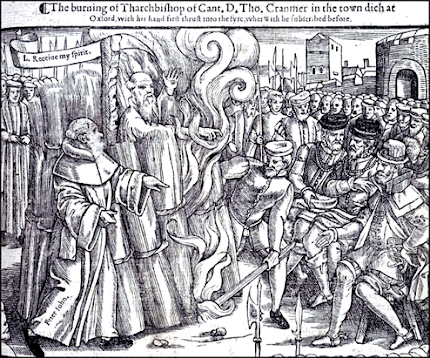
The burning of Tharchbishop of Cant. D. Tho. Cranmer in the town dich at Oxford, with his hand first thrust into the fyre, wherwith he subscribed before. [Click on the picture to see Cranmer's last words.]

Daily Bible Verse

Showing posts with label Pelagianism. Show all posts

Tuesday, November 13, 2012

It's Official: The Southern Baptist Convention Has Affirmed Pelagianism

[The Southern Baptist Convention has updated the Baptist Faith and Message.  You can read the updated edition here:  Baptist Faith and Message.  The statement is semi-pelagian, not Pelagianism.  September 14, 2026 update.]


Why do you not understand My speech? Because you are not able to listen to My word.  -- Our Lord Jesus Christ.  John 8:47


For those of you who want to know, which might not be very many, the Southern Baptist Convention's over-reaction to Calvinism in their ranks not only denies their fundamental roots in Calvinism but also fully affirms the doctrine of Pelagianism:

Article Two: The Sinfulness of Man

We affirm that, because of the fall of Adam, every person inherits a nature and environment inclined toward sin and that every person who is capable of moral action will sin. Each person’s sin alone brings the wrath of a holy God, broken fellowship with Him, ever-worsening selfishness and destructiveness, death, and condemnation to an eternity in hell.

We deny that Adam’s sin resulted in the incapacitation of any person’s free will or rendered any person guilty before he has personally sinned. While no sinner is remotely capable of achieving salvation through his own effort, we deny that any sinner is saved apart from a free response to the Holy Spirit’s drawing through the Gospel.

Genesis 3:15-24; 6:5; Deuteronomy 1:39; Isaiah 6:5, 7:15-16;53:6; Jeremiah 17:5,9, 31:29-30; Ezekiel 18:19-20; Romans 1:18-32; 3:9-18, 5:12, 6:23; 7:9; Matthew 7:21-23; 1 Corinthians 1:18-25; 6:9-10;15:22; 2 Corinthians 5:10; Hebrews 9:27-28; Revelation 20:11-15  [Posted at:  SBC Today].
Closely related to this is the so-called Reformed Baptist view that "all" children who die in infancy are elect.  The late Roger Nicole held that view.  Nicole was a particular or Calvinist Baptist.  But the Bible only affirms that the children of born again believers are promised salvation if they die in infancy.  In fact, the children of believers are marked with the sign of baptism not because they are regenerated by baptism but because God's covenant of grace promise is to save the infants of believers who die in infancy.  All others are a matter of speculation.   (Cf. Acts 2:38-40; Acts 4:10, 12; Acts 16:14, 15).

Looks like sinners are not born sinful; they merely become sinners by following Adam's bad example.  Unfortunately, that is not what the Bible teaches:

Of Original or Birth Sin

Original sin standeth not in the following of Adam (as the Pelagians do vainly talk), but it is the fault and corruption of the nature of every man that naturally is engendered of the offspring of Adam, whereby man is very far gone from original righteousness, and is of his own nature inclined to evil, so that the flesh lusteth always contrary to the spirit; and therefore in every person born into this world, it deserveth God's wrath and damnation. And this infection of nature doth remain, yea, in them that are regenerated, whereby the lust of the flesh, called in Greek phronema sarkos (which some do expound the wisdom, some sensuality, some the affection, some the desire of the flesh), is not subject to the law of God. And although there is no condemnation for them that believe and are baptized, yet the Apostle doth confess that concupiscence and lust hath itself the nature of sin. 

(Cf.  Romans 3:10-23; Psalm 51:3-4; Psalm 58:3; Genesis 6:5; Romans 5:12-21; Jeremiah 17:9; Ecclesiastes 9:3; Matthew 15:19; Mark 7:21-22; Jeremiah 13:23).

Only the new birth can open the eyes of those who are in bondage to sin.  (Cf.  John 3:3-8; Ezekiel 11:19; 36:26).   The Southern Baptist Convention has unwittingly gone over to liberalism via Pelagianism.  It's not that far away.

The Founders Ministries site shows clearly that the SBC was at one time solidly Calvinist:  Abstract of Principles.  From the looks of things that leaves out any possibility of my ever joining another Southern Baptist congregation.  I suppose that could change if they retract the heresy printed above but that is not likely to happen.  Next thing you know the SBC will be back in the same old moderate theology or liberal theology it rejected a few years back.  It is only a matter of time, folks.

Ironically, the writer concedes that there were Calvinist connections in the SBC from early on:

While some earlier Baptist confessions were shaped by Calvinism, the clear trajectory of the BF&M since 1925 is away from Calvinism. For almost a century, Southern Baptists have found that a sound, biblical soteriology can be taught, maintained, and defended without subscribing to Calvinism. [Ibid.]

That will be as close as you will see of any admission of an association of the Southern Baptist Convention ever being part of the dreaded "Calvinism".  Looks like heresy has come full circle once again.


John 8:31–47 (NKJV) — 31 Then Jesus said to those Jews who believed Him, “If you abide in My word, you are My disciples indeed. 32 And you shall know the truth, and the truth shall make you free.” 33 They answered Him, “We are Abraham’s descendants, and have never been in bondage to anyone. How can You say, ‘You will be made free’?” 34 Jesus answered them, “Most assuredly, I say to you, whoever commits sin is a slave of sin. 35 And a slave does not abide in the house forever, but a son abides forever. 36 Therefore if the Son makes you free, you shall be free indeed. 37 “I know that you are Abraham’s descendants, but you seek to kill Me, because My word has no place in you. 38 I speak what I have seen with My Father, and you do what you have seen with your father.” 39 They answered and said to Him, “Abraham is our father.” Jesus said to them, “If you were Abraham’s children, you would do the works of Abraham. 40 But now you seek to kill Me, a Man who has told you the truth which I heard from God. Abraham did not do this. 41 You do the deeds of your father.” Then they said to Him, “We were not born of fornication; we have one Father—God.” 42 Jesus said to them, “If God were your Father, you would love Me, for I proceeded forth and came from God; nor have I come of Myself, but He sent Me. 43 Why do you not understand My speech? Because you are not able to listen to My word. 44 You are of your father the devil, and the desires of your father you want to do. He was a murderer from the beginning, and does not stand in the truth, because there is no truth in him. When he speaks a lie, he speaks from his own resources, for he is a liar and the father of it. 45 But because I tell the truth, you do not believe Me. 46 Which of you convicts Me of sin? And if I tell the truth, why do you not believe Me? 47 He who is of God hears God’s words; therefore you do not hear, because you are not of God.”


Wednesday, June 20, 2012

Pelagianism: » The Recent SBC Statement on Salvation: A Point of Concern

It looks like at least one particular Baptist has put his finger on the real issue at stake in the dispute between Arminianism and Calvinism: the denial of the doctrine of the bondage of the will, a key doctrine of the Protestant Reformation and the Holy Scriptures.
In the denial section of article two, the authors write,
We deny that Adam’s sin resulted in the incapacitation of any person’s free will or rendered any person guilty before he has personally sinned.
The assertion about free will is controversial, but in my opinion the statement about guilt that appears at the end of this sentence is more troubling, for it appears to be nothing less than a denial of what Scripture teaches about the doctrine of original sin. The authors of this statement (and those who have signed it) assert that Adamic guilt is not imputed to Adam’s descendants. This is quite a remarkable claim. In the absence of qualification, even Arminius would likely have objected to this assertion. The authors apparently believe that sinners are only guilty for the actual sins which they commit. The net result of this is that humans are not born guilty and liable to condemnation but rather only become such when they actually sin. 

--John Aloisi


Click here to read the whole story:   » The Recent SBC Statement on Salvation: A Point of Concern

Saturday, June 09, 2012

Does Arminianism Teach the Gospel?


Does Arminianism Teach the Gospel? An Assessment of Evangelical Ecumenicalism

Not too long ago Dr. Michael Horton initiated a teaching series called “Christless Christianity”, in which he made the vague assertion that many of the churches in Evangelicalism are actually pelagian rather than Christian. His critique of the church growth movement, Joel Osteen, and many of the television evangelists was well received by most of the Reformed Evangelicals and neo-Calvinists. But is Mike Horton and the White Horse Inn consistent in its accusation that Evangelicalism is infected with pelagianism? That is a matter that is questionable as this article will briefly examine.

First of all, it should be noted that pelagianism as defined by Horton is something along the lines of Charles Finney's theology which denies total depravity, the bondage of the will, and even a Wesleyan Arminian definition of depravity. But is this a sufficient definition of pelagianism? I think not. In fact, the semi-pelagian position is nothing more than pelagianism disguised in a more subtle form. The Wesleyan doctrine of prevenient grace in effect cancels out the doctrine of depravity and defaults back to pelagianism since the deciding factor is not God's irresistible grace but rather “libertarian free will”. In short, the Arminian rationalism defaults to a pelagian definition of “free will”. The famous hymn, “O For a Thousand Tongues”, written by Charles Wesley includes these lines:

He breaks the power of canceled sin,
He sets the prisoner free;
His blood can make the foulest clean,
His blood availed for me.

He speaks, and, listening to His voice,
New life the dead receive,
The mournful, broken hearts rejoice,
The humble poor believe.

Hear Him, ye deaf; His praise, ye dumb,
Your loosened tongues employ;
Ye blind, behold your Savior come,
And leap, ye lame, for joy.

Wesley is not referring to a Calvinist view of “canceled sin” as in a post conversion reversal of the bondage of the will that hinders or prevents the elect from becoming a Christian. No, for Wesley “canceled sin” refers to a general grace given to all mankind so that man is no longer in bondage to sin but only has a “bent toward sinning” that can easily be overcome by the will simply by believing the Gospel in one's own strength and obedience. For Wesley the deaf can make themselves hear and the dead can raise themselves from the grave. The lame can make themselves walk again and prisoners set themselves free by their own free will. But is this what the Bible teaches? 

To give a sampling of the Scriptures on this issue let's take a look at just a few verses in particular:


Can the Ethiopian change his skin or the leopard its spots? Then may you also do good who are accustomed to do evil. (Jeremiah 13:23 NKJ)
Why should you be stricken again? You will revolt more and more. The whole head is sick, And the whole heart faints. (Isaiah 1:5 NKJ)
For though you wash yourself with lye, and use much soap, Yet your iniquity is marked before Me," says the Lord GOD. (Jeremiah 2:22 NKJ)
Who can say, "I have made my heart clean, I am pure from my sin "? (Proverbs 20:9 NKJ)

In short, Wesleyan Arminianism and other forms of Arminianism are nothing more than pelagianism masquerading as biblical Christianity. The Wesleys understood that Arminianism and Calvinism were mutually exclusive gospels and this is precisely why they vociferously attacked Augustus Toplady and other consistent Calvinists in the Church of England during the Second Great Awakening. It is on this point that the Calvinist, George Whitefield, was inconsistent and allowed his friendship with the Wesleys to cloud his judgment and his thinking on this issue. The fact of the matter is that pelagianism and augustinianism are mutually exclusive theologies. This battle between the Gospel of sovereign grace and the gospel of libertarian free will goes all the way back to the fourth century.

What I am saying is that Mike Horton is inconsistent when he invites Arminians like William Willimon to his radio program, The White Horse Inn. Horton also has high praise for the Arminian heretic, Thomas Oden. The problem with Horton and other neo-Calvinists is that they use their Calvinism as a cloak for what is really nothing more than lip service to Calvinism. Horton and other neo-Calvinists are really advocates of irrationalism to the point that there really is no logical consistency in their theology and they have essentially sold out to postmodernism, neo-orthodoxy, and a theology of paradox. In such thinking there is no need for non-contradiction or propositional truth since all that matters is one's subjective experience of what God is doing. In other words, it is God's acts in history rather than God's very words in Holy Scripture that matters most. That is neo-orthodoxy in a nutshell.

It is truly ironic that Horton would advocate a movement toward theological orthodoxy and attack pelagianism in the Evangelical movement when he himself has openly endorsed pelagianism via his approval of Arminianism and even Anglo-Catholic denominations like the Anglican Church in North America. If Arminianism is a damnable heresy as the Canons of Dort clearly indicate, then how can Horton blatantly ignore the doctrinal standards of his own denomination, which standards are the Three Forms of Unity: Belgic Confession, Heidelberg Catechism, Canons of Dort?

Good question!

Sincerely in Christ,

Charlie J. Ray


Monday, February 13, 2012

The Doctrines of Grace in the 1662 Book of Common Prayer

The collect for the second Sunday before Lent should be noted carefully.  (See Wikipedia:  Collect).  The emphasis is not on what we do but on God's mercy.  The Lordship salvation crowd, like the Arminians, love to focus on what we do and on our good works rather than on Christ and what He did for us on the cross.  The collect says:

O LORD God, who seest that we put not our trust in any thing that we do; Mercifully grant that by thy power we may be defended against all adversity; through Jesus Christ our Lord. Amen.

Most people literally cannot appreciate anything that is absolutely free.  The principle applies to giving children a gift rather than having them earn the money to buy what they want.  For example, if a parent buys a new car for a teenage son, he will not take as much care of the car than if the son had worked a part time job to pay for the car himself.  Most people cannot understand that a free gift is not necessarily "cheap grace".  It may have cost the parent a significant amount of money to purchase the new car for the son.  The same principle applies to the sacrifice of Jesus Christ on the cross for the sins of all the elect in the whole world and since the foundation of the world to the end of the world.  He shed His precious blood to redeem the elect from all their sins of the past, the present and the future.  (1 Peter 1:18, 19, 20; Ephesians 1:3-11).  Therefore, the idea that salvation is a free gift apart from our obedience, merits, good works, or progression in sanctification or consecration to God is not cheap grace.  It cost our Savior everything.  (Galatians 6:14, 15, 16).

Unfortunately the idea that we must earn our own way is wrongly applied to salvation by most religions of the world.  (Romans 4:4).  Even in Christianity this idea has crept in.  The semi-pelagianism of Rome, Eastern Orthodoxy, and of the Arminians says that man must "do" his part and then God does His part in man's salvation.  Unfortunately this is impossible for two reasons:  1)  The debt we all owe God on an individual basis is greater than we could ever repay. (Matthew 18:23-27). 2)  All mankind is fallen in Adam and is totally unable do anything whatsoever to obey God or please God.  (Romans 5:12-14; Romans 3:10-20, 23; Romans 8:8).  The Gospel, however, naturally follows from the moral law of God.  The moral law is impossible for sinners to fulfill.  Why?  God requires absolute obedience from cradle to grave.  (Matthew 5:17-21; Romans 10:1-5;   The only man who was sinless is Jesus Christ. (Hebrews 4:15). The 39 Articles of Religion reflect this biblical teaching in Article XV:

CHRIST in the truth of our nature was made like unto us in all things, sin only except, from which He was clearly void, both in His flesh and in His spirit. He came to be the lamb without spot, Who by sacrifice of Himself once made, should take away the sins of the world: and sin, as S. John saith, was not in Him. But all we the rest, although baptized and born again in Christ, yet offend in many things: and if we say we have no sin, we deceive ourselves, and the truth is not in us.  (Hebrews 2:14, 17;Hebrews 4:15; 1 Peter 2:22; 1 Peter 1:19; Hebrews 7:27; Hebrews 9:12, 26; John 1:29; 1 John 3:5; James 3:2; 1 John 1:8).


It is easy to see the hand of Archbishop Thomas Cranmer in this collect and in the 39 Articles of Religion, which Archbishop Matthew Parker edited from 42 Articles penned by Cranmer .  Cranmer sought to teach the doctrines of grace and justification by faith alone through the liturgy of the English church.  He reformed the Roman Catholic liturgy and made it completely Protestant.  Even more radically, the Bible and the English liturgy were now available in English translation.  In the fifteenth century the official language of the English government was French and Latin and the language of the English church was Latin.

The idea that there is a via media between Rome and the English Reformation is simply a propaganda device used by Anglo-Catholics and Tractarians to lead Protestants back to Rome.  The King James Bible in conjunction with the 1662 Book of Common Prayer and its earlier editions, beginning with the 1549 Book of Common Prayer, the least reformed edition, revolutionized English society in that it now made religion available to all the people from the plow boy to the king.  With the advent of a new respectability for the English language, the translation of the Bible into the vernacular, and the liturgy being both in English and revised in accordance with the English Bible there was a widespread literacy in both reading and religion.  With a new emphasis on a proper reading of the church fathers in line with the apostolic teaching of the New Testament the English reformers sought to correct centuries of superstition and man-made traditions that were not supported by the Bible.

The teaching of the collect from Sexagesima is a reflection of the teaching from Titus 3:5:

But when the kindness and the love of God our Savior toward man appeared, 5 not by works of righteousness which we have done, but according to His mercy He saved us, through the washing of regeneration and renewing of the Holy Spirit, 6 whom He poured out on us abundantly through Jesus Christ our Savior, 7 that having been justified by His grace we should become heirs according to the hope of eternal life. (Titus 3:4-7 NKJ)


The other doctrine taught in this collect is that God is sovereign over every adversity we face in life.  This doctrine is as hard to accept as the doctrine of grace alone as the basis for our salvation.  The pride of men will not allow them to acknowledge that even their very life depends on God allowing them to live.  (Acts 17:28; Genesis 2:7; Job 12:10).  God controls all the adversities we face in life.  (Isaiah 45:7; Amos 3:6; Lamentations 3:38).  In fact, why would we pray if God cannot actually control nature and adversity in our lives?  (Philippians 4:6, 7).  Furthermore, why pray for the conversion of the lost if God cannot actually soften hardened hearts or open the eyes of rebellious sinners in bondage to sin?  (Romans 9:15, 16; Acts 16:14; Daniel 4:34; Ephesians 1:18).

Although it is hard to accept, God is sovereign in the salvation of His elect and in the damnation of the lost.  Romans 9:18, 19, 20, 21).  He will have mercy on whom He will have mercy.  The pelagian tendency to human self-righteousness (Romans 10:1, 2, 3) is inherent in the human nature.  But we must face the fact that God brought us into the world and He will take us out of it at His own good pleasure and in His time.  (Psalm 115:3; Hebrews 9:27; Ecclesiastes 3:1, 11; 1 Timothy 6:7).

May the peace of God be yours,

Charlie  (Romans 5:1, 2)


(See also:  The Story of the Book of Common Prayer and Celebrating 350 Years of the Book of Common Prayer.  Even the idea that we should read and mark our Bibles was advised by the Book of Common Prayer:  Second Sunday in Advent).

Saturday, November 27, 2010

Herman Hoeksema: What Is Pelagianism?


[The following is an excerpt from Reformed Dogmatics, Volume 1, by Herman Hoeksema.  Hoeksema was one of the ministers who was defrocked by the Christian Reformed Church for refusing to accept the doctrine of the Three Points of Common Grace.  It is well that the ministers and churches of the Protestant Reformed Church in America stood their ground.  Currently the Christian Reformed Church is a mix of Amyraldianism and broad Evangelicalism at best and outright theological liberalism and modernism at worst.  The problem of pelagianism has troubled the American Evangelical movement since the revivalism of Charles Finney in the 19th century.  But exactly what is pelagianism?  I found the following explanation by the late Professor Herman Hoeksema to be a succinct and perspicuous accounting of pelagianism.  I hope you will agree.  Charlie.]


"The fundamental error of Pelagianism in all its forms is always that it denies any other righteousness and holiness than that which is the result of the choice and act of the will of man."  Herman Hoeksema.

By these three spiritual virtues that originally adorned the nature of man, the rectitude of his whole being in relation to God and all things is denoted.  By holiness is  meant not any acquired purity, but that original rectitude of his nature according to which he was consecrated to God in love with all his heart, mind, soul, and strength.  Adam's whole soul yearned after the living God and had its delight in his favor and fellowship.  Man's righteousness was not an imputed righteousness, nor was it acquired.  Rather,  man's righteousness was the virtue of his whole nature by which, according to the judgment of God, he was wholly in harmony with the will of God; he was fully capable of doing the will of God, and doing God's will was his delight.  Man's knowledge of God was not a mere intellectual or natural knowledge of the Most High so that he knew who and what God is, nor was it a ready-made system of theology or dogmatics with which Adam was endowed from the beginning.  Instead, man's knowledge of God was that original rectitude of his mind by virtue of which he immediately and spontaneously knew God, both through the revelation of all the works of God round about him and through the direct word of God addressed to him in paradise.  Through this positive knowledge of God, Adam had a living contact with the Most High, the fellowship of friendship that was his life.

In one word, Adam was good.  He was so made that he was quite capable of serving the Lord his creator, of being his representative in all the world--his prophet, to know and to glorify him; his priest, to consecrate himself in all things unto him; his servant-king, to rule in righteousness over the works of God's hand--and of living in perfect fellowship with the Most High.

In this respect the truth differs radically from the Pelagian error.  According to the Canons of Dordt, the Pelagians teach:

. . . that the spiritual gifts, or the good qualities and virtues such as goodness, holiness, righteousness, could not belong to the will of man when he was first created, and that these, therefore, could not have been separated therefrom in the fall.
. . . that in spiritual death the spiritual gifts are not separate from the will of man, since the will in itself has never been corrupted, but only hindered through the darkness of the understanding and the irregularity of the affections; and that, these hindrances having been removed, the will can then bring into operation its native powers, that is, that the will is itself able to will and to choose, or not to will and not to choose, all manner of good which may be presented to it.(8)

The fundamental error of Pelagianism in all its forms is always that it denies any other righteousness and holiness than that which is the result of the choice and act of the will of man.  Hence righteousness and holiness cannot be virtues with which the nature of man was originally endowed.  Man could be either righteous or unrighteous, holy or unholy, according as he chose to be.  Only the deed of righteousness makes a man righteous.  According to the same fundamental principle, man could never become corrupt in nature.  It may have become more difficult for him to choose for righteousness and holiness because of the fall; but essentially he is the same as he was before the fall, a beingg who can either be righteous or unrighteous by the choice of his own free will.  Grace may "give him a lift" in his efforts to be righteous after the fall, but never is it a radical change of his nature.  Over and against this Pelagian corruption, which is as superficial as it is pernicious, stands the plain truth of the word of God that God created man after his own image, in true knowledge, righteousness, and holiness.

[From Reformed Dogmatics, Volume 1, 2nd Edition, by Herman Hoeksema.  (Grandville:  Reformed Free Publishing Association, 2004), pp. 298-300. For more information about the doctrine of common grace see, The Myth of Common Grace, by Garrett P. Johnson.]

8.  Canons of Dordt, 3 & 4, Rejection of Errors, 2, 3 in The Psalter with Doctrinal Standards, Liturgy, Church Order, and added Chorale Section, Reprinted and revised edition of the 1912 United Presbyterian Psalter (PRC) (Grand Rapids:  Eerdmans, 1995), 70.

--
Reasonable Christian Blog Glory be to the Father, and to the Son : and to the Holy Ghost; Answer. As it was in the beginning, is now, and ever shall be : world without end. Amen. 1662 Book of Common Prayer

Wednesday, September 08, 2010

Ashley Null Speaks About Pelagianism

Ashley Null: The Constant Danger of Pelagianism

How might we better help people get in touch with their history when very little history is really taught in schools these days?

Well, I suppose one place to start is to help the Church better ...understand the Reformation so that we can tell our story to people more accurately.


The whole point of the Reformation is that the Church shouldn’t put on people burdens that they cannot bear. After all, just because you know something is right, that doesn’t mean you can do it. Apart for  [sic]  (from) the working of the Holy Spirit, our wills are bound to the deceitful devices and desires of our hearts.


Therefore, biblical preaching must always guard against an incipient Pelagianism which would turn God’s promise to renew us into tasks we must perform in order to please him. The Bible clearly states many dos and don’ts for human behaviour. However, just because our minds may understand how a Christian should live, that doesn’t mean that our wills can automatically fall in line.


As I said earlier, reason is not king in human beings, the heart is. Therefore, to change your actions, you must change your desires. But your desires will change, only if the Holy Spirit who wrote the Bible also writes his laws on your heart. Of course, biblical preaching must expound the dos and don’ts faithfully. Yet, if we hold up a standard, but do not make clear the means God has provided by which that standard may be met, we discourage people rather than being bearers of good news.


As we preach, we must constantly remind people that a new way of living is something God has promised to work in us, even as he continues to forgives [sic] (forgive) us our many short-comings along the way. As we preach, we must constantly remind people to turn in Christ through his Word and Sacraments, so that he can make the changes in them that they cannot make on their own. After all, true holiness is actually ever-increasing active dependence on God and his promises.


This Pelagian tendency is the reason why many people find Cranmer’s prayer book off putting. Pelagianism says that repentance is the work you must do to please God. When you abase yourself enough, when you feel guilty enough, when you have changed your ways enough, then God will decide you are worthy of being forgiven, then God will permit you to be called his child. When an Anglican Church preaches Pelagianism from the pulpit, people will hear it echoed in the penitential ethos of Cranmer’s liturgy.


So when the Confession asks people to acknowledge that they are ‘miserable sinners’, they hear, ‘If I grovel enough in self-loathing, then maybe God will accept me’. No wonder some people think that Cranmer’s God wants to make people miserable!


Sadly, that is the exact opposite of what Cranmer intended people to hear. He would want people to understand that repentance is a divine gift which God is pleased to work in them, not their work by which they make themselves pleasing to God. Indeed, they are already miserable because of their sins, but by coming to God they can experience real freedom.


Their sins may have put them under divine judgement and enslaved them to destructive habits which do not satisfy, but God has promised to rescue them. He will do for them what they cannot do for themselves. Because of Jesus, God will pardon them from their sin’s guilt and deliver them from its power. He will draw them into a new way of living, and he will make something beautiful out of the brokenness of their lives. Cranmer’s liturgy focusses  [sic] (focuses) on repentance, because this divine gift is truly good news.


Today our whole culture talks about addictions and how to break their power. The Church, however, often fails to realise that sin is the ultimate addiction, slowly destroying people, even as it draws them further and further away from God and their true selves. Cranmer and his fellow Reformers made no such mistake. They could face up to the gravity of sin, because they realised the superior power of God’s grace.


Human beings may be instinctively addicted to always having to prove their worth, but the cross of Christ shatters that lie. Human beings may fear they can never make the changes in their lives that are expected of Christians, but the Resurrection of Christ conclusively testifies to his power to make all things new. Human beings may feel rootless and estranged, but Christ has promised to prepare an eternal home for his people, even as he prepares them for it.


I think if the Church preaches these Reformations truths, people will hear good news indeed.


Monday, May 31, 2010

Another Review of Bruce Almighty: Pelagianism Rehashed

"..Only thing you can't do is override anyone's free will..... so he has another interview with God who explains that 'people don't need Us to intervene in their lives. They have the power to answer their needs and problems themselves. We just have to help them see how.'"

Let's see.  We don't really need God?  We can do it ourselves if we just figure out how???  God is a self help fellow up in heaven hoping people make themselves live forever, solve their own problems, and become their own little gods?  (Psalm 82:6-7).


Martin Luther, the founder of the Lutheran church wrote an entire book called, The Bondage of the Will.  He wrote against the views of the Roman Catholic scholar Erasmus who believed in free will.   In that book, Luther says:

Therefore, it is not irreligious, curious, or superfluous, but essentially wholesome and necessary, for a Christian to know, whether or not the will does any thing in those things which pertain unto Salvation. Nay, let me tell you, this is the very hinge upon which our discussion turns. It is the very heart of our subject. For our object is this: to inquire what "Free-will" can do, in what it is passive, and how it stands with reference to the grace of God. If we know nothing of these things, we shall know nothing whatever of Christian matters, and shall be far behind all People upon the earth. He that does not feel this, let him confess that he is no Christian. And he that despises and laughs at it, let him know that he is the Christian's greatest enemy. For, if I know not how much I can do myself, how far my ability extends, and what I can do God-wards; I shall be equally uncertain and ignorant how much God is to do, how far His ability is to extend, and what He is to do toward me: whereas it is "God that worketh all in all." (1 Corinthians 12:6.) But if I know not the distinction between our working and the power of God, I know not God Himself. And if I know not God, I cannot worship Him, praise Him, give Him thanks, nor serve Him; for I shall not know how much I ought to ascribe unto myself, and how much unto God. It is necessary, therefore, to hold the most certain distinction, between the power of God and our power, the working of God and our working, if we would live in His fear.


From, The Bondage of the Will, by Martin Luther.

In another place in the book, Luther states without any ambiguity that the sovereignty of God overrides free will:

Sect. 9.—THIS, therefore, is also essentially necessary and wholesome for Christians to know: That God foreknows nothing by contingency, but that He foresees, purposes, and does all things according to His immutable, eternal, and infallible will. By this thunderbolt, "Free-will" is thrown prostrate, and utterly dashed to pieces. Those, therefore, who would assert "Free-will," must either deny this thunderbolt, or pretend not to see it, or push it from them.


From, The Bondage of the Will:  The Sovereignty of God, by Martin Luther.

The two movies, Bruce Almighty and Evan Almighty, are so blasphemous that I do not know how any Christian could endorse either movie.  I have not seen Evan Almighty but I did see Bruce Almighty on cable.  The idea that we can become God is closer to Mormonism than to biblical Christianity.  The incommunicable attributes of God can never be possessed by any sinful human being.  Only Jesus possessed the incommunicable attributes of God and even He voluntarily submitted Himself to the Father's will by not exercising them except occasionally and for the purpose of authenticating the Gospel message.


Exactly what are the "incommunicable attributes" of God.  They are the very essence of who and what God is by His very nature.  God is eternally self-existent and has no beginning or end in linear time.  We call this His aseity.  God is omnipotent or all powerful.  God is omniscient or all knowing.  God is omnipresent or everywhere present.  To call a mere man who is also a sinner Almighty is to commit blasphemy.  The Athanasian Creed says that God is Almighty.  The Father is Almighty, the Son is Almighty and the Holy Spirit is Almighty but there are not three Almighties but only one Almighty.  Anyone who has ever said the Athanasian Creed on Trinity Sunday knows that calling any man Almighty other than Jesus Christ, who is God the Son, the second Person of the Trinity is blasphemy.  

"You shall have no other gods before me. 4 "You shall not make for yourself a carved image, or any likeness of anything that is in heaven above, or that is in the earth beneath, or that is in the water under the earth. 5 You shall not bow down to them or serve them, for I the LORD your God am a jealous God, visiting the iniquity of the fathers on the children to the third and the fourth generation of those who hate me, 6 but showing steadfast love to thousands of those who love me and keep my commandments. (Exodus 20:3-6 ESV)

"Hear, O Israel: The LORD our God, the LORD is one. (Deuteronomy 6:4 ESV)


Moreover, the idea that men have free will is a return to pelagianism.  Pelagianism is the idea that men are not born sinful but only become sinners by following Adam's example of rebellion.  But Scripture clearly says that men are corrupt from birth (Psalm 58:3; Psalm 51:3-5; Genesis 6:5; Jeremiah 17:9; Romans 3:23).  The desire for man to have the incommunicable attributes of God--not merely magical powers which are transferrable--goes all the way back to the Garden of Eden (Genesis 3:4-5).  Incommunicable means that God cannot communicate to a mere creature the nature, essence or attributes of an infinitely powerful and wise Deity.  To do so would mean God is not really the ultimate Being after all.  The entire premise of both movies would mean that God is not one God but two since there is God and there is Bruce Almighty.  In the sequel we have yet another blasphemous god called Evan Almighty.  In both cases the absurdity of it all renders the entire premise of both movies as being so ridiculous that no genuine Christian could possibly suspend their disbelief long enough to see the movie.  While I did watch Bruce Almighty on cable, I thought the movie was so utterly ridiculous and so void of any entertainment value that I wondered how any Christian could endorse it?


In Christ,


Charlie

  Glory be to the Father, and to the Son : and to the Holy Ghost;

    Answer. As it was in the beginning, is now, and ever shall be : world without end. Amen.


Saturday, May 29, 2010

Re: Arminianism: A form of the Pelagian heresy.

Doctrine is what makes a Christian, not behavior.  Behavior is ethics and morality.  All religions have morality but only Christianity has the "faith once delivered to the saints."  Jude 1:1-4.  


Again you want to combine faith and works.  It is either faith or works.  It cannot be both.  

Justification is the ground of our salvation.  Sanctification is an imperfect evidence to other men that we are Christians.  The first is absolutely necessary to salvation, sanctification follows naturally AFTER justification.  Before justification good works count for nothing.  After justification they please God but can never be the basis for our salvation since they are imperfect.  

See Articles 9-18 in the 39 Articles.


Article XII


Of Good Works


Albeit that good works, which are the fruits of faith and follow after justification, cannot put away our sins and endure the severity of God's judgement, yet are they pleasing and acceptable to God in Christ, and do spring out necessarily of a true and lively faith, insomuch that by them a lively faith may be as evidently known as a tree discerned by the fruit.

Anglo-Catholics do not accept this doctrine.  Instead they wish to believe that their good works contribute to their standing before God.


Article XV


Of Christ alone without Sin


Christ in the truth of our nature was made like unto us in all things, sin only except, from which He was clearly void, both in His flesh and in His spirit. He came to be the lamb without spot, Who by sacrifice of Himself once made, should take away the sins of the world: and sin, as S. John saith, was not in Him. But all we the rest, although baptized and born again in Christ, yet offend in many things: and if we say we have no sin, we deceive ourselves, and the truth is not in us.


If we say we have no sin, we deceive ourselves, and the truth is not in us. 9 If we confess our sins, he is faithful and just to forgive us our sins and to cleanse us from all unrighteousness. 10 If we say we have not sinned, we make him a liar, and his word is not in us. (1 John 1:8-10 ESV)


Also, the 1662 confession of sin and the prayer of humble access back this up:


DEARLY beloved brethren, the Scripture moveth us, in sundry places, to acknowledge and confess our manifold sins and wickedness; and that we should not dissemble nor cloak them before the face of Almighty God our heavenly Father; but confess them with an humble, lowly, penitent, and obedient heart; to the end that we may obtain forgiveness of the same, by his infinite goodness and mercy. And although we ought, at all times, humbly to acknowledge our sins before God; yet ought we chiefly so to do, when we assemble and meet together to render thanks for the great benefits that we have received at his hands, to set forth his most worthy praise, to hear his most holy Word, and to ask those things which are requisite and necessary, as well for the body as the soul. Wherefore I pray and beseech you, as many as are here present, to accompany me with a pure heart, and humble voice, unto the throne of the heavenly grace, saying after me;


A general Confession to be said of the whole Congregation after the Minister, all kneeling.
 

ALMIGHTY and most merciful Father; We have erred, and strayed from thy ways like lost sheep. We have followed too much the devices and desires of our own hearts. We have offended against thy holy laws. We have left undone those things which we ought to have done; And we have done those things which we ought not to have done; And there is no health in us. But thou, O Lord, have mercy upon us, miserable offenders. Spare thou them, O God, who confess their faults. Restore thou them that are penitent; According to thy promises declared unto mankind in Christ Jesu our Lord. And grant, O most merciful Father, for his sake; That we may hereafter live a godly, righteous, and sober life, To the glory of thy holy Name. Amen.


The Absolution, or Remission of sins, to be pronounced by the Priest alone, standing; the people still kneeling.

ALMIGHTY God, the Father of our Lord Jesus Christ, who desireth not the death of a sinner, but rather that he may turn from his wickedness, and live; and hath given power, and commandment, to his Ministers, to declare and pronounce to his people, being penitent, the Absolution and Remission of their sins : He pardoneth and absolveth all them that truly repent, and unfeignedly believe his holy Gospel. Wherefore let us beseech him to grant us true repentance, and his Holy Spirit, that those things may please him, which we do at this present; and that the rest of our life hereafter may be pure, and holy; so that at the last we may come to his eternal joy; through Jesus Christ our Lord.


Morning Prayer


Notice the morning and evening prayers are said DAILY.  If you do not sin daily, then why does the prayer book have the confession of sin done daily instead of occasionally?  Also, repentance is a gift granted to us, not something we work up by our own efforts.  We pray for God's particular grace to be given to enable us to choose the right path.

And the prayer of humble access:

Then shall the Priest, kneeling down at the Lord's Table, say in the name of all them that shall receive the Communion this Prayer following.


WE do not presume to come to this thy Table, O merciful Lord, trusting in our own righteousness, but in thy manifold and great mercies. We are not worthy so much as to gather up the crumbs under thy Table. But thou art the same Lord, whose property is always to have mercy: Grant us therefore, gracious Lord, so to eat the flesh of thy dear Son Jesus Christ, and to drink his blood, that our sinful bodies may be made clean by his body, and our souls washed through his most precious blood, and that we may evermore dwell in him, and he in us. Amen.


Again, salvation is by mercy alone and not by our own worth, merits, earnings, working or anything else.  God owes us absolutely nothing no matter how "holy" we "think" we are.  So, I have to disagree with you again, Bruce.  Works do not prove a thing other than that you owe God more than you ever repay and even AFTER conversion your works fall short of the mark.  This is why salvation is ALL of grace from beginning to end.  Perhaps you should revisit that famous Anglican hymn written by John Newton?  Amazing Grace!


Article XIV


Of Works of Supererogation


Voluntary works besides, over and above, God's commandments which they call Works of Supererogation, cannot be taught without arrogancy and impiety. For by them men do declare that they do not only render unto God as much as they are bound to do, but that they do more for His sake than of bounden duty is required: Whereas Christ saith plainly, When ye have done all that are commanded to you, say, We be unprofitable servants.


"Will any one of you who has a servant plowing or keeping sheep say to him when he has come in from the field, 'Come at once and recline at table'? 8 Will he not rather say to him, 'Prepare supper for me, and dress properly, and serve me while I eat and drink, and afterward you will eat and drink'? 9 Does he thank the servant because he did what was commanded? 10 So you also, when you have done all that you were commanded, say, 'We are unworthy servants; we have only done what was our duty.'" (Luke 17:7-10 ESV)

If you were merely arguing that sanctification is the necessary proof of genuine faith that has already justified us by faith and faith alone, I could agree with you, Bruce.  But we both know that is NOT what you are arguing here.  What you are really saying is that Anglo-Catholics, Roman Catholics and the Eastern Orthodox are saved because they do good works. But the English Reformers said that Scripture teaches that they cannot be saved unless they repent of self-righteousness, self-effort, and depending on their own works to justify them before God.  Such sinful and false confidence is as antinomian as the worst sinner simply because they reject the righteousness of Christ imputed to the believer as the ONLY basis for our justification now and in the judgment.


Brothers, my heart's desire and prayer to God for them is that they may be saved. 2 For I bear them witness that they have a zeal for God, but not according to knowledge. 3 For, being ignorant of the righteousness of God, and seeking to establish their own, they did not submit to God's righteousness. 4 For Christ is the end of the law for righteousness to everyone who believes.
(Romans 10:1-4 ESV)


The moral law serves a guide to Christians in how they are to live.  It is not the basis for their justification or salvation and never will be.  I fail to see what you think is "cheap" about grace?  Jesus Christ shed His precious blood to redeem us from our sins and to pay the eternal penalty of our sins.  The grace of God cost Him the life of His Son who bore the curse of the law for us in our place.  


knowing that you were ransomed from the futile ways inherited from your forefathers, not with perishable things such as silver or gold, 19 but with the precious blood of Christ, like that of a lamb without blemish or spot. (1 Peter 1:18-19 ESV)


Salvation is not about "transformation".  That is to confuse sanctification with justification.  Salvation is the fact that God by His sheer mercy saves those who outright deserve hell.  (Romans 9:14-18).  All deserve hell, not just a few.  (Romans 3:10-12, 23).

Sincerely yours in Christ,


Charlie


Sent: Saturday, May 29, 2010 12:22 PM
Subject: Re: Arminianism: A form of the Pelagian heresy.

Nice video.  True as far it goes. 
But a bit biased-- not entirely balanced scripturally or theologically.
Extreme Arminianism is indeed heretical when it denies the sovereignty and grace of God, denies predestination, or when it endorses the Pelagian heresy or salvation by works. Romans 8 and 9 are clear. 

But balance is required is you truly believe in sola scriptura.

There is a continuum of belief, where walking the middle of road with Jesus Christ includes beliefs in the ultimate sovereignty of God, the impossibility of humans overcoming their own sin and its consequences without God's grace and spiritual power.  But scriptural truth also endorses human accountability due to (howsoever limited and not entirely free) human choice and behavior.  "Choose this day…"   Scripture is clear that when it comes to this issue, it is not "either…or"  but it is "both…and".  

Just because grace must come first, and then faith, it does not eliminate the importance of love and obedience which must follow from all true faith.  Jesus, in the Gospel of John, and Paul in 1 Cor 13 are clear about this point (not to mention James).

[ heresies of Pelagianism & works justification  / /…mild Arminianism  /  the orthodox + middle /  mild Calvinism ...   / /    heresies of  cheap grace & Gnosticism]

So while I agree that Arminianism can easily cross that heresy line into denial of original sin and/or being proud of your own works,  so also there is the opposite extreme that crosses the line into other forms of heresy:  cheap grace, passivity, Gnosticism (intellectualism, worshipping the abstract concept of faith rather than the heart-reality), and a hard loveless judgmentalism that is repugnant to God.  You cannot only be proud of your works, you can also be proud of your faith—which is perhaps more spiritually dangerous.  You cannot only judge other people due to their behavior, you can also judge them due to their stated beliefs.   Like it or not, such judgmental attitudes are  not helpful.   But if one were to judge accurately, one would examine what people do more than what they say.  Which proves one's faith the most, what one says that he believes (which could be a lie or a self-deception)   or how he lives his life?   The latter is hard to fake.

True, I do not need to prove my faith; if it is real, God knows it because He put it there and sustains it.   But we are to live as a testimony to our faith, and if I am a hypocrite whose behavior is the opposite of what I say I believe, then my witness is destroyed (and perhaps my faith is not real after all).   Jesus said that we would know the tree by its fruit.  Listen to the words, yes, but also look to see if I am following through by my loving obedience to God and my love toward neighbor.  

What is the connection between faith and faithfulness?   It is God, through Jesus Christ and the power of the Holy Spirit that transforms us;  He changes our hearts, our minds, and eventually, our behavior as well.

- Bruce Atkinson


On Fri, May 28, 2010 at 8:04 AM, Charlie J. Ray <cranmer1959@hotmail.com> wrote:
  Glory be to the Father, and to the Son : and to the Holy Ghost;
    Answer. As it was in the beginning, is now, and ever shall be : world without end. Amen.

Support Reasonable Christian Ministries with your generous donation.