>

Martyred for the Gospel

Martyred for the Gospel
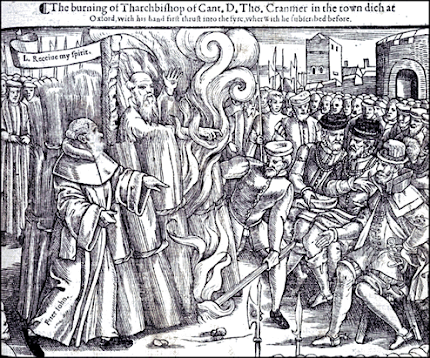
The burning of Tharchbishop of Cant. D. Tho. Cranmer in the town dich at Oxford, with his hand first thrust into the fyre, wherwith he subscribed before. [Click on the picture to see Cranmer's last words.]

Daily Bible Verse

Showing posts with label Cornelius Van Til. Show all posts

Wednesday, April 30, 2025

Book Review: God Without Parts: Part 1


"In summary, knowledge of the divine attributes, no less than of the divine proper names, involves a knowledge of God's inmost essence.  Our knowledge is not exhaustive, to be sure, since God's incomprehensibility, which evangelicals affirm, means that we know no more concerning the divine nature than what God intends and enables us to know by revelation.  Although Luther and Calvin speak of the incomprehensibility of God's essence--it is unknowable by a priori speculation concerning divinity--they do not deny authentic knowledge of God's essential nature on the basis of scriptural revelation."  

Carl F. H. Henry.  God, Revelation, and Authority.  Vol. 5.  1982.  2nd edition.  (Wheaton:  Crossway, 1999).  P. 140.


Book Review:  God Without Parts:  Divine Simplicity and the Metaphysics of God’s Absoluteness

By James E. Dolezal


[James E. Dolezal.  God Without Parts:  Divine Simplicity and the Metaphysics of God’s Absoluteness.  (Eugene:  Pickwick, 2011).


I read this book some time ago.  I had intended to review it earlier but never seemed to find the time.  Honestly, I had never considered this doctrine before since it is only briefly mentioned in chapter 2 of the Westminster Confession of Faith.  I had assumed that it was simply a rejection of the patripassionism view that was made popular by Jürgen Moltmann.  That being said, I will be reviewing this book from the point of view of the apologetics and theology of the late Dr. Gordon H. Clark.

The first indication of trouble is a remark by Paul Helm in the foreward to the book: 

God the Creator is one God, and not creaturely. Because God is timeless he is changeless, immutable. Not simply in the sense that he has chosen to be so, or covenanted this, proposals which offer a rather unstable account of God’s changelessness and are probably incoherent. He is metaphysically changeless. Such changelessness in turn entails divine impassibility, an idea frequently misunderstood and derided. But impassibility is not to be confused, as it often is, with impassivity or with dispassion. Although it may seem paradoxical, the stress on impassibility is meant to safeguard the fullness of God’s character. He is eternally impassioned, unwaveringly good, not moody or fitful as he is buffeted by the changes of his life, some of them, perhaps, unexpected changes.

Dolezal, James E. God without Parts: Divine Simplicity and the Metaphysics of God's Absoluteness. Pickwick Publications, An Imprint of Wipf and Stock Publishers. Kindle Edition.

The late Dr. Gordon H. Clark held that the body has emotions and sensations, but the mind itself thinks in terms of propositions.  Since God has no body, God cannot literally have any emotions.  Emotions as defined by Dr. Clark were outbursts of bodily sensations.  Since God is a spirit, He has no bodily sensations or emotions or passions.  (John 4:24 KJV).  Dr. Clark referred to the emotions attributed to God in the Bible as anthropopathisms.  Just as God has no physical body parts such as a nose or mouth or hands or feet, God cannot and does not have emotions or passions of any kind whatsoever.  The idea that God has body parts attributed to Him metaphorically in Scripture is called anthropomorphism.  The problem with the comment of Helm above is that he contradicts the doctrine of God’s impassibility by using another word that is practically synonymous to affirm that God does indeed have passivity or emotions.  Oddly, Helm only holds that God has good feelings of love, not feelings of wrath or anger as Scripture clearly says.  The most obvious passage of Scripture that affirms that God has anthropopathic wrath or anger is Romans 1:18-21 KJV.  Evangelicals are too caught up in the idea of God’s benevolence and beneficence to face the reality that God cannot be manipulated by our tears, sufferings, or situational case studies. 

There is no partiality with God.  (Romans 2:11-14 KJV).  He does what He pleases in the heavens.  (Psalm 115:3).  The Lord God Almighty has no problem whatsoever with condemning the wicked to hell.  (Matthew 7:21-23; Psalm 6:8; 2 Timothy 2:19 KJV).  Apparently, Dolezal holds to this view, although it is not unusual.  Even the late Dr. Robert L. Reymond held to the idea that even though God is dispassionate, He must also have some kind of feelings for the elect.  However, Dr. Gordon H. Clark defined love, as seen from the human perspective, as obedience to God.  If you love me, obey my commandments.  (John 14:15 KJV).  On the other hand, God’s love for humanity is seen in His unconditional election to save some humans in His supralapsarian and logical order of the dual or double decree to election and reprobation.  This double decree is the first decree in the logical order according to the supralapsarian view.

A further problem with asserting that God has feelings or emotions of any kind, including feelings of love or beneficence, is that such emotions would violate God’s absolute immutability.  Although certain portions of Scripture seem to indicate this, the anthropopathism actually points toward God’s eternal volition to save His elect: 

The LORD hath appeared of old unto me, saying, Yea, I have loved thee with an everlasting love: therefore with lovingkindness have I drawn thee. (Jeremiah 31:3 KJV).

Even the term lovingkindness is a Hebrew word that indicates mercy or grace or favor rather than an emotion.  God never breaks His covenantal promises to save His elect people and elect persons within the congregation of Israel.

In the preface to the book, Dolezal presupposes an analogical view of Scripture rather than a propositional view of Scripture.  In a recent podcast, I prematurely advocated that my listeners read Dolezal’s book.  (See:  Reasonable Christian: Divine Simplicity, Logic, and the Foreknowledge of God).  It has been some time since I had read the book or listened to Dolezal’s YouTube videos on the topic.  Unfortunately, this goes directly back to the Clark/Van Til controversy of the 1940’s.  It seems to me that history is repeating itself.  Dolezal reveals his beginning axioms for his book in the preface:

The classical doctrine of simplicity, as espoused by both traditional Thomists and the Reformed scholastics, famously holds forth the maxim that there is nothing in God that is not God. If there were, that is, if God were not ontologically identical with all that is in him, then something other than God himself would be needed to account for his existence, essence, and attributes. But nothing that is not God can sufficiently account for God. He exists in all his perfection entirely in and through himself. At the heart of the classical DDS is the concern to uphold God’s absolute self-sufficiency as well as his ultimate sufficiency for the existence of the created universe.

The pages that follow set forth both metaphysical and theological arguments in favor of divine simplicity. Along the way I seek to answer some of the leading recent critics of the doctrine—most notably those objecting from within the modern school of analytic philosophy. The assumption that God and creatures are correlatives within a univocal order of being dominates this school of philosophy and is arguably the chief reason why their criticisms of the DDS fail to hit the mark. By appealing to God’s simplicity, I aim to show that God and the world are related analogically and that the world in no sense explains or accounts for God’s existence and essence. If God were yet another being in the world, even if the highest and most excellent, then the world itself would be the framework within which he must be ontologically explained.

Ibid., Dolezal. Kindle Edition.

The problem here is that Dolezal presupposes that reformed epistemology is essentially Thomistic and that God’s knowledge and man’s knowledge do not coincide at any single point.  This results in the parallel lines analogy where truth is seen to be twofold, and the creature’s knowledge and God’s knowledge do not meet anywhere.  The two parallel lines continue into infinity with no meeting anywhere at any single point whatsoever.  Logic must be curbed, and the Bible must never be explained, nor should any apparent contradiction or paradox be resolved.  A further problem with Dolezal’s remark is that he does not define what the “world” is.  Does he mean creation?  Or does he mean epistemology or truth?  Even the philosopher Arthur Holmes once remarked that all truth is God’s truth.  In other words, if humans know anything that is true, then surely God knows that same truth.  I have argued elsewhere that Gordon H. Clark did not confuse the creature with the Creator when he insisted that the Bible is the univocal word of God; that is because Clark distinguished between God’s omniscience as intutive and man’s knowledge as discursive or limited to thinking one thought after another. 

Van Til insisted that logic is created and that man’s knowledge of logic is merely human logic.  The implication of this is that God’s logic and man’s logic must be different and that logical contradictions do not require any resolutions; instead, the paradoxes should just be left standing and at any points of cognitive dissonance in preaching to congregations the minister should just appeal to mystery.  Van Til went so far as to say that all Scripture is apparently contradictory, or at least that is what John Frame said in one of his lectures on Van Til.  (See:  Gordon H. Clark lecture:  John Frame and Cornelius Van Til, page 4).  Clark says that Van Til took vows to uphold the system of doctrine in the Westminster Confession of Faith.  Unfortunately, the Van Tilians get around this by saying that the Westminster Confession is an analogical system of doctrine, not a propositional system of doctrine.  But this would seem to contradict the WCF in paragraph 1:6, which says: 

The whole counsel of God, concerning all things necessary for His own glory, man's salvation, faith and life, is either expressly set down in Scripture, or by good and necessary consequence may be deduced from Scripture: . . .  (WCF 1:6 WCS)

Another way of saying this is that logic is the science of necessary inference.  Plainly, the Westminster divines were not appealing to Thomist philosophy when they wrote section 1:6.  This is an appeal to propositional logic, not analogical philosophy.  In other words, Gordon H. Clark was correct to say that the WCF is a system of propositions which is logically deduced from the propositions in the Bible and that that system is deduced by necessary inference.

Dolezal’s argument that this is an issue of being or essence misses the mark because no one on the Clarkian side of the issue is saying that the human nature or essence is participating in the divine essence whatsoever.  This is an argument about Reformed epistemology, not an argument about divine simplicity per se.  Dolezal confuses categories by saying that this is an ontological issue or an issue of the divine being versus the limitation of the human being or nature.  The issue here is one that focuses on not only divine simplicity but also the issue of special revelation and the epistemological issue of how do we know God at all?  If God is totally transcendent, and there is no point at which we can know God, then the obvious conclusion is that even the Bible is merely human information, not special revelation from God.  A shadow of God’s truth is not the truth itself.  In other words, God’s truth and man’s truth as revealed “analogically” in the Bible are totally separated and do not coincide at any single point whatsoever.

As this will be an extended review of Dolezal’s book, I will end here and continue the review in subsequent posts.  I would like to close with a quote from one of Dr. Gordon H. Clark’s students, Dr. Carl F. H. Henry.  Both Clark and Henry did uphold the doctrine of divine simplicity and this is evidenced by the following:

Evangelical theology insists on the simplicity of God. By this it means that God is not compounded of parts; he is not a collection of perfections, but rather a living center of activity pervasively characterized by all his distinctive perfections. The divine attributes are neither additions to the divine essence nor qualities pieced together to make a compound. Peter Bertocci has well said that God “never was, nor will ever be, ontologically divisible” (The Person God Is, p. 219). God’s variety of attributes does not conflict with God’s simplicity because his simplicity is what comprises the fullness of divine life. Augustine wrote of God’s “simple multiplicity” or “multifold simplicity.” 

For this very reason the statement “God is”— if we know what we are saying— exhausts all that a course in theology can teach concerning him. If we give the subject “God” and the predicate “is” their true and full sense, we must speak of God’s essence, names, attributes, and triunity, and do so expressly on the basis of his revelatory self-disclosure addressed to his created and fallen creatures. If we say “God is” on any other basis than God’s self-revelation our predications have no sound epistemic ground. Augustine declares that “in God to be is the same as to be strong or to be just or to be wise.”


Henry, Carl F. H. God, Revelation and Authority (Set of 6) (Kindle Locations 59369-59380). Crossway. Kindle Edition. 

This is a quote from Vol. V.  I could not locate the exact page number, but it is from chapter 6, “God’s Divine Simplicity and Attributes.”  Pp. 127-140.  [The exact quote comes from page 131].

Part 2 will be posted in the next installment.


Monday, April 28, 2025

Divine Simplicity and Gordon H. Clark


In a recent podcast I did on the doctrine of divine simplicity, someone complained that I was confusing James Dolezal's doctrine of divine simplicity with that of the late Dr. Gordon H. Clark.  I have read both of Dolezal's books, and I did recommend the one based on his doctoral dissertation.  I have hesitated to review Dolezal's book because of the time it would take to critique his work.  I did have a few problems with Dolezal's remarks because at times it sounds as if he is making contradictory remarks such as love is the same thing as God's justice or wrath.  But I will save my critique for a later time.  (See:  Reasonable Christian: Divine Simplicity, Logic, and the Foreknowledge of God,  YouTube, April 23, 2025.)

However, someone commented on my podcast that Clark apparently did not believe in divine simplicity:

In outlining Dolezal's position, you said: "God is not composed of parts or composite parts."


Clark believed: "...we shall define person as a composite of truths. A bit more exactly, since all men make mistakes and believe some falsehoods, the definition must be a composite of propositions. As a man thinketh in his (figurative) heart, so is he. A man is what he thinks.


Since technical terms are used to avoid ambiguity, and since the Trinity consists of Three Persons, the definition will fail if it does not apply to God. That it does apply appears more or less clearly in verses that call God the Truth." (Gordon Clark, The Incarnation).


Clearly, Dolezal's position is different from that of [elder] Clark.

Although this is a complicated subject, my brief response shares a quote from pages 54 to 55 in the paperback edition of Clark's book, The Incarnation.  To be fair, Clark never finished his book because he died shortly after nearly completing it.  I'm not happy with John Robbins's adding the final chapter because he seems to have missed the whole argument.  That being said, here is my response to the comment on the Reasonable Christian podcast on YouTube:

I do not think the difference is as clear as you say.  First of all, Clark was referring to the three Persons, who are all equally God.  You took the quote out of context.  Since all three of the Persons of the Godhead are equally omniscient, and all three Persons are the same God, it logically follows that all three Persons know exactly the same propositions, and they know those propositions intuitively.  That is, they do not think one thought or one proposition after another.  They know the entire system of propositions as one complete and intuitive system, not in partial or discursive thoughts.  The only difference between the three Persons is when those three Persons think propositions that pertain only to their own identity within the Godhead.  The Father cannot think, "I am the Son," or "I am the Holy Spirit."  The Athanasian Creed makes this plain enough.  The Athanasian Creed is included in the 1662 Book of Common Prayer, by the way.


Dolezal did his doctoral work under the supervision of his advisor, Scott Oliphint.  Oliphint has had his own theological contradictions in recent years, including a book where he said that God changes according to "covenantal properties" in order to relate to humans.


The Bible says that God is Truth.  Since all three Persons are equally God, does it mean that the Father is Truth, but the Son and the Holy Spirit is not Truth?  Gordon H. Clark stated clearly that God thinks in propositions.  If not, how could God communicate special revelation to humanity in the written propositions in the Bible?  God is Logic.  John 1:1.  That is divine simplicity.


You quoted Clark's book out of context.  The entire quote says:


"Therefore, since God is Truth, we shall define person, not as a composite of sensory impressions, as Hume did, but, rejecting with him the meaningless term substance, we shall define person as a composite of truths. A bit more exactly, since all men make mistakes and believe some falsehoods, the definition must be a composite of propositions. As a man thinketh in his (figurative) heart, so is he. A man is what he thinks."


"Since technical terms are used to avoid ambiguity, and since the Trinity consists of Three Persons, the definition will fail if it does not apply to God. That it does apply appears more or less clearly in verses that call God the Truth." 


"Deuteronomy 32:4, 'a God of truth.' Psalm 25:5, 10, 'Lead me in Thy truth…. All the paths of the LORD are mercy and truth.' Psalm 31:5, 'O LORD God of truth.' Psalm 108:4, 'Thy truth reacheth unto the clouds.' Isaiah 25:1, 'Thy counsels of old are faithfulness and truth.' Isaiah 65:16, 'the God of truth…the God of truth.' John 1:14, 'the Word…full of grace and truth.' John 4:23-24, '…worship the Father in spirit and in truth…must worship him in spirit and in truth.' John 14:6, 'I am…the truth.' John 15:26, 'The Spirit of truth.' John 16:13, 'The Spirit of truth.' First John 5:6, 'The Spirit is truth.'''


"Aside from whatever objections will be immediately raised against this uncommon conclusion, theologians will complain that this reduces the Trinity to one Person because, being omniscient, they all have, or are, the same complex. This objection is based on a blindness toward certain definite Scriptural information. I am not at the moment referring only to the eternal generation of the Son and the eternal procession of the Spirit. I am referring to the complex of truths that form the Three Persons. Though they are equally omniscient, they do no[t] know all of the same truths. Neither the complex of truths we call the Father nor those we call the Spirit, has the proposition, “I was incarnated.” This proposition occurs only in the Son’s complex. Other examples are implied. The Father cannot say, “I walked from Jerusalem to Jericho.” Nor can the Spirit say, “I begot the Son.” Hence the Godhead consists of three Persons, each omniscient without having precisely the same content. If this be so, no difficulty can arise as to the distinctiveness of human persons. Each one is an individual complex. Each one is his mind or soul. Whether the propositions be true or false, a person is the propositions he thinks. I hope that some think substance to be a subterfuge."


Gordon H. Clark. The Incarnation (Kindle Locations 802-822). The Trinity Foundation. Kindle Edition.

Gordon H. Clark.  The Incarnation.  (Jefferson:  Trinity Foundation, 1988).  Pp. 54-55.


It seems clear enough that in the first sentence of the quotation Clark affirms the doctrine of divine simplicity by stating that God is truth.  Then Clark quotes several portions of Scripture to affirm that God is truth.  And, if you will recall, Clark affirms the creedal affirmation that God is one God, yet three Persons.  God is therefore one in one sense and three in another sense.  This is not a contradiction and even R. C. Sproul said so.  

Cornelius Van Til, on the other hand, said that God is both one Person and Three Persons.  His defenders try to second guess Van Til and excuse his error by saying that Van Til was only referring to the doctrine of perichoresis.  But I will save that discussion for another blog post and another podcast. 


Monday, December 02, 2024

Is the Doctrine of Common Grace Biblical or Confessional?


Is the Doctrine of Common Grace Biblical or Confessional?


“To the reprobate the preaching of the gospel is no favor because as it increases their knowledge, it increases their responsibility and condemnation. Better if they had never heard the gospel. One can reply, nonetheless, that in some cases the preaching of the gospel may restrain an evil man from some of his evil ways. Since therefore sins are not all equal, and since some are punished with many stripes, but others with few, the preaching of the gospel results in the lessening of the punishment. Thus preaching would be a small favor, a modicum of grace. We note it and pass on.”  Dr. Gordon H. Clark  (See:  A Place for Thoughts:  Gordon Clark on “Common Grace,” by Doug Douma).


To discuss the issue of the reputedly “reformed” doctrine of common grace is a convoluted and complicated matter.  Often it is hard for the layperson to understand exactly what the controversy is about.  Basically, it comes down to a controversial doctrinal statement issued by the Christian Reformed Church in 1924 at Kalamazoo, Michigan.  That document outlined what is identified as the Three Points of Common Grace.  You can access a direct quote of the three points and subsequent critique of the three points at the Protestant Reformed Churches in America website here:  The Three Points of Common Grace.

The first thing I would like to point out is that common grace often is used to justify accommodation with Arminianism, and worse, liberal theology.  The point of compromise here is that even theological liberals and other reprobate persons allegedly can do civil good by practicing the discipline of liberal scholarship.  But, this is hard to understand because the agenda of theological liberals and other ungodly scholars is to undermine the Bible, not to support it as special revelation from God.  A good example of this is the apostasy of Bart Ehrman, who attended Princeton Theological Seminary in order to study textual criticism.  Ehrman was once an Evangelical Christian who attended Moody Bible Institute in Chicago, Illinois.  Being weak in his faith, he decided that the Bible could not be trusted because of the many errors in the extant Greek manuscripts of the New Testament.  The Evangelical position is that God has providentially preserved what was contained in the original autographs, even though the originals are no longer extant.

This is a significant issue because if we no longer have the original autographs, then logically speaking none of the extant manuscripts are without error or infallible.  Using the axioms or principles of reasoned eclecticism, the Bible is alleged to be a reconstruction of the original autographs and only in that sense can any modern translation of the Bible be considered infallible or inerrant.  Any apparent errors are to be attributed to the translation from the original languages or to errors in transmission of the original Greek or Hebrew manuscripts which are only preserved in copies of the copies passed down through hundreds and thousands of years.  The debate then degenerates into which manuscripts are best and who has the logical upper hand in making those determinations?  In short, the science of textual criticism is alleged to be a part of the common grace of God since many of the men who invented the basic principles of the science were either part of the Renaissance or the Enlightenment.  From there we get the 19th century scholars of Westcott and Hort, who then influenced subsequent schools of textual criticism that went in other directions.

One of the opponents of the reasoned eclecticism approach to textual criticism used to be part of the reasoned eclecticism approach.  His name is Maurice Robinson.  His main objection to that approach is that the reasoned eclecticism approach often creates verses by splicing together fragments and variants to create verses that do not exist in any extant manuscripts whatsoever. 

Another issue with common grace is the third point mentioned above that the reprobate can do civic good.  Theological liberals prior to the first world war were optimistic that the entire world could be harmonized into a peaceful global community.  Where have we heard that one before?  After WWI, that optimism changed to pessimism.  Now, apparently, the pendulum has swung in the opposite direction.  Part of the blame for this would be the theology of Abraham Kuyper, the Dutch Reformed theologian turned politician.  Kuyper gave his Stone Lectures at Princeton Theological Seminary in 1898.  The vast majority of modern Reformed denominations support the compromised theology of the Three Points of Common Grace.  This compromise can be traced all the way back to the Stone Lectures.  It could even be argued that the Stone Lectures were the genetic cause of the eventual fall of the Presbyterian Church in the United States into apostasy.  The Old Princeton stalwarts became infatuated with creating a Calvinist cultural reformation worldwide such that eventually the emphasis on solid biblical and systematic theology fell to the wayside in order to facilitate missions and evangelism at the cost of special revelation and biblical truth.  

Even otherwise solid theologians like Benjamin B. Warfield and Charles Hodge were caught up in theological compromise.  Warfield advocated for reasoned eclecticism and the Westcott and Hort approach to New Testament textual criticism, while Hodge fell to the compromise that Christ in some sense died not only for the elect, but also for the reprobate.  Hodge’s reasoning was that common grace was somehow purchased on the cross for the entire world, not just for the irresistible grace and the efficacious atonement which propitiated the wrath of God against the elect.

A postmillennialist view of reforming the culture seems to lead inevitably towards an overly optimistic agenda to transform the culture.  I would contend that this naivete has led to accommodation to culture instead of a prophetic calling out of the culture, which is in manifold rebellion against the moral law of God as summarized in the Decalogue or Ten Commandments.  A further problem with this is that this postmillennialism is combined with a theonomic view of evangelization and mission, which leads to a co-belligerent cooperation with papists, Arminians, Lutherans and various other opponents of a Reformed worldview.  As the saying goes, a little leaven leaveneth the whole lump. 

While it is true that Old Princeton was for a time a bastion of conservative and reformed theology, a small compromise leads to later generations which compromise a little more, and so on until three or four generations later there is a major compromise that leads to apostasy.  It was only a period of forty years or so until the 1940s when the foreign mission board of the Presbyterian Church of the United States went in a completely liberal direction, and J. Gresham Machen and his followers were forced out of the PCUS for refusing to support the foreign mission board.  Machen, along with Gordon H. Clark, Cornelius Van Til and others helped to found Westminster Theological Seminary in Philadelphia, Pennsylvania.  Unfortunately, Van Til, Ned Stonehouse, and John Murray decided to oppose Dr. Gordon H. Clark’s ordination with the newly formed Orthodox Presbyterian Church because of Clark’s disagreement with common grace, the free offer of the Gospel, and the well meant offer of the Gospel. Van Til, Stonehouse, and Murray rejected propositional revelation as the basis for systematic theology.  They redefined Francis Turretin’s doctrine of archetypal and ectypal knowledge so that they unwittingly affirmed some aspects of neo-orthodoxy.  Their emphasis on an analogical system of theology in the Westminster Standards went well beyond the traditional view of Scripture as the analogy of faith, meaning that Scripture interprets Scripture.  Van Til said that all Scripture is apparently contradictory.  Gordon Clark’s response to this in an audio lecture cuts to the heart of the issue:

What are we to make of his statement that “all teaching of Scripture is apparently contradictory?” Now, Van Til said omnipotence is not self-contradictory, but creation and responsibility are contradictory. And, also, he said all teaching of scripture is apparently contradictory. Which would of course include the idea of omnipotence. 

I might say that the statement “David was King of Israel” is not apparently contradictory to me. 

[Audio Transcript:  (From the Gordon Conwell Lectures on Apologetics, 1981.)  “John Frame and Cornelius Van Til.”  P. 11.  Posted at:  The Gordon H. Clark Foundation.]

I would contend that the doctrine of common grace is a contradiction of the biblical doctrine of divine sovereignty by implication.  The implication of the doctrine is that God gives a non-salvific grace to those whom He has decreed to reprobation before the foundation of the world.  This is a mere charade if it is intended to solve the problem of evil.  For billions of human beings of all ages suffer the effects of the fall of Adam, yet God does not relieve their suffering.  So, this would contradict the proponents of common grace who misuse the doctrine of providence to show that God loves the reprobate.  (Matthew 5:43-48 KJV).  But, David, says that we should hate those who blaspheme God:

Surely thou wilt slay the wicked, O God: depart from me therefore, ye bloody men. 20 For they speak against thee wickedly, and thine enemies take thy name in vain. 21 Do not I hate them, O LORD, that hate thee? and am not I grieved with those that rise up against thee? 22 I hate them with perfect hatred: I count them mine enemies. 23 Search me, O God, and know my heart: try me, and know my thoughts: 24 And see if there be any wicked way in me, and lead me in the way everlasting. (Ps. 139:19-24 KJV)

I would contend that it is extremely naïve to promote common grace as any kind of good whatsoever.  The Protestant Reformed Churches in America have rightly pointed out that this doctrine leads to Arminianism and Pelagianism.  It looks the other way when the Bible specifically says that the wicked are the enemies of God:

The foolish shall not stand in thy sight: thou hatest all workers of iniquity. 6 Thou shalt destroy them that speak leasing: the LORD will abhor the bloody and deceitful man. (Ps. 5:5-6 KJV)

The LORD trieth the righteous: but the wicked and him that loveth violence his soul hateth. (Ps. 11:5 KJV)

 As it is written, Jacob have I loved, but Esau have I hated. (Rom. 9:13 KJV)


Saturday, April 20, 2019

Scott Oliphint's Covenantal Properties: Divine Simplicity Under Attack?


Oddly enough, Dr. Scott Oliphint was the doctoral advisor for James Dolezal who did his doctoral work at Westminster Theological Seminary.  I have read the laity version of Dolezal's book on divine simplicity, and I am now reading his doctoral thesis as well.  Recently, Dr. Scott Oliphint has been charged with violating his ordination vows and taking an unconfessional view of the doctrine of God, so I went out and bought a copy of Oliphint's 2011 edition of God with Us.  This book is where Oliphint makes his controversial remarks that seem to lead in the direction of Open Theism and God's mutability.

I have been critical of the Van Tilian view that God has emotions and feelings because to reject the  proposition that the Bible contains anthropopathisms would imply that God is not immutable after all.  God cannot be subject to emotions because He has no body.  And if one rejects the doctrine of divine immutability--the doctrine that God is not a composite being composed of parts--a doctrine of complexity and finitude in regards to the doctrine of God soon follows.  The doctrine of divine simplicity means that God is all that He is.  Honestly, I had not studied this doctrine in detail prior to reading Dolezal's work.  Personally, although Dolezal is not a Clarkian in his theology or philosophy, I find Dolezal's book to be a refreshing recovery of a classical doctrine that all believers in God's sovereign grace should uphold.  I highly recommend both of Dolezal's books, and I also recommend that fellow Clarkians read them along with Oliphint's book, which has gotten him into trouble.  Unfortunately, Oliphint's book has been purchased back from Crossway by Westminster Theological Seminary, Philadelphia because, apparently, most of the faculty there is in support of Oliphint and wishes that he was not on trial with his presbytery.

I cannot comment in-depth on the books I have mentioned, but I will be reviewing Dolezal's two books and Oliphint's book as well.  Fortunately, Oliphint's book is still available for around $10 at the Barnes and Noble website in Nook format.  I would advise you to purchase your copy before the book is taken down.  You can purchase Oliphint's book here:  God with Us: Divine Condescension and the Attributes of God.  I have only read the first three chapters, but I have some significant criticisms of the book that go beyond just what Dolezal and others are saying because I am also a student of the late Dr. Gordon H. Clark.  It seems to me that Oliphint wants to downplay the differences between Open Theism and the traditional Reformed view that God is simple and immutable.  He speaks in almost glowing terms of Open Theists like the Greg Boyd and the late Clark Pinnock, who made the change from Calvinism to Arminianism and then to Open Theism.  Part of the problem is that Westminster Seminary agrees with the theology of paradox and with John Murray's rejection of the doctrine of anthropopathisms in the Bible.  Murray said that God has feelings.  But this would imply that God in not immutable after all and that God has emotions that can be manipulated by human interaction.  (Malachi 3:6; James 1:13-17).  In fact, in a chapel sermon delivered on March 27th, 2019 at WTS, Dr. Peter Lillback defended Oliphint and even cited John Murray's defense of God's emotions:  


Westminster Shorter Catechism Question #4 asks, “What is God?” The Answer is “God is a spirit, infinite, eternal and unchangeable, in his being, wisdom, power, holiness, justice, goodness and truth.” Here we see the connection and distinction between what have been well termed the communicable and incommunicable attributes of God. God in His aseity is infinite, eternal and unchangeable. Yet these properties of absolute deity inform his communicable properties, as we see in the phrase, “in his”. This phrase modifies the entire list of the seven identified communicable attributes. Clearly there are not two Gods—an absolute God and a God who relates. There is one God who has attributes uniquely His own attributes which in turn fully inform these attributes that He has given to his creation. Thus we love because God loves. But God’s love is far different from our finite, temporal and changeable love. His love is an infinite love, an eternal love, an immutable love.

This complex of attributes are more fully identified in Westminster Confession of Faith Chapter II, paragraph one that tells us that

There is but one only, living and true God, who is infinite in being and perfection, a most pure spirit, invisible, without body, parts or passions, immutable, immense, eternal, incomprehensible, almighty, most wise, most holy, most free, most absolute, working all things according to the counsel of His own immutable and most righteous will, for His own glory; most loving, gracious, merciful, long-suffering, abundant in goodness and truth, forgiving iniquity, transgression and sin, the rewarder of those that diligently seek Him; and withal, most just, and terrible in His judgments, hating all sin, and who will by no means clear the guilty.

This passage is clear that this “one only, living and true God” who is “immutable” and “most absolute” is simultaneously the same God who is “working all things according to the counsel of His own immutable and most righteous will”. Thus in His working with His creation and His creatures, He is “most loving, gracious, merciful, long-suffering abundant in goodness and truth.” He is “forgiving”, and a “rewarder” yet also “terrible in His judgments.” This “most absolute” and “immutable” divine being who is “without body, parts or passions” is nevertheless revealed as the One God who can be characterized by both emotions and actions. Thus He is characterized as “hating all sin” and One “who will by no means clear the guilty”.

We might stumble over the Confession’s statement that affirms hatred in God. Yet, Westminster’s great founding theologian insisted that this was thoroughly biblical. John Murray wrote,

p. 22 “We must, therefore, recognize that there is in God a holy hate that cannot be defined in terms of not loving or loving less. Furthermore, we may not tone down the reality or intensity of this hate by speaking of it as “anthropopathic” or by saying that it “refers not so much to the emotion as to the effect”. The case is rather, as in all virtue, that this holy hate in us is patterned after holy hate in God.”

p. 35 “. . . It is unnecessary, and it weakens the biblical concept of the wrath of God, to deprive it of its emotional and affective character . . . Wrath is the holy revulsion of God’s being against that which is the contradiction of his holiness . . . To question the reality of wrath as an “attitude of God towards us” and construe it merely as “some process or effect in the realm of objective facts” is to miss the meaning of God’s holiness as he reacts against that which is the contradiction of himself.”

John Murray, The Epistle to the Romans, vol. 2, The New International Commentary on the Old and New Testament (Grand Rapids, MI; Cambridge, U.K.: Wm. B. Eerdmans Publishing Co., 1968), 22, 35.

And of course, God’s love is a real act of the “most absolute” and “immutable” God who has chosen to act in history. The stalwart defender of the Westminster Standards, Charles Hodge put it this way as he spoke about the absolute God of the universe and His engagement with His creatures through prayer:

The God of the Bible, who has revealed Himself as the hearer of prayer, is not mere intelligence and power. He is love. He feels as well as thinks. Like as a father pitieth his children, so the Lord pitieth them that fear Him. He is full of tenderness, compassion, long-suffering, and benevolence. This is not anthropomorphism. These declarations of Scripture are not mere “regulative truths.” They reveal what God really is.

Charles Hodge, Systematic Theology, vol. 3 (Oak Harbor, WA: Logos Research Systems, Inc., 1997), 699.


From:  Statement from Dr. Peter Lillback on The Doctrine of God and Westminster Theological Seminary.

The rejection of God's divine simplicity and divine immutability by Charles Hodge and John Murray does not remove the fact that these serious errors lead eventually to the Arminian and even the Open Theism error.  This is why Scott Oliphint is genuinely troubled by the arguments of the Arminians and Open Theists.  He wants to reconcile the contradictions by appealing to covenantal properties as a way to sidestep divine simplicity and God's timeless immutability.  In addition, I think that WTS has had Arminian tendencies for many decades because of the emphasis on the three points of common grace, a Thomistic emphasis on the twofold view of truth as analogical, ectypal, and archetypal.  What we are seeing now is the chickens coming home to roost.  It began with Van Til's rejection of Gordon H. Clark's view of truth as propositional, and that the Bible can be summarized in a propositional system of truth deduced from Scripture. 

The best summary of the system of doctrinal truth in the Bible is the Westminster Confession of Faith.  Because of Van Til's theology of paradox and the complete inscrutableness of God there can be no coincidence between the theology in God's mind and the theology in the Bible other than by analogy.  But if two parallel lines have no contact into infinity, it logically follows that ectypal theology knows nothing of archetypal theology and vice versa.  It is by means of Van Til's rejection of logic and propositional revelation that Oliphint has begun to turn WTS in the direction of Open Theism.  While Oliphint himself rejects Open Theism, his theology is opening the door for future generations of ministers at WTS to embrace that heretical path.  Common grace inevitably leads to accepting empiricism and general revelation as corrections on special revelation in Scripture.  You can see how Oliphint himself places general revelation on equal par with special revelation in this video:  AP213 Principles of Christian Apologetics

Gordon H. Clark, on the other hand, consistently held that Scripture alone is the word of God.  (2 Timothy 3:16).  Furthermore, Clark said that truth is univocal in that the Bible is directly, not indirectly, truly and verily the words of God.  If God cannot know anything we know, and we cannot know anything God knows at any single point, then it logically follows that the Bible is not God's written word but only a weak reflection of it.

Ironically, the Van Tilians accused Clark of violating the Creator/creature distinction and of prying into God's secret being.  Now we see Oliphint prying into the secret being of God and contending that God has added covenantal properties to His being, so that He can now interact with creation mutably.  Additionally, I would add that I wonder how Hodge, Murray, Van Til, and Oliphint know that God has emotions?  If the Bible is not archetypal revelation, then how do they know that God has emotions?  Are they prying into God's secret being?

I will, as time permits, try to review the three books in question in the near future.  You can purchase Dolezal's books at Amazon in either paperback or ebook format for Kindle.  The links are:  James E. Dolezal, All That Is in God:  Evangelical Theology and the Challenge of Classical Theism.  The second book is:  God without Parts:  Divine Simplicity and the Metaphysics of God's Absoluteness.

For a posted critique of Oliphint's book by James Dolezal see:  Objections to K. Scott Oliphint's Covenantal Properties Thesis.

Anyone who would like to see a PDF copy of the charges against K. Scott Oliphant can contact me by email and I will gladly email that to you.  My email address is cranmer1959@gmail.com.

Tuesday, May 01, 2018

John Frame's Rejection of the Bible as Logical and Propositional Revelation


. . . The purpose of apologetics is to produce as detailed a system, detailed a system as possible to meet the systems of logical positivism or mechanism in physics, or other non­-Christian systems. And the only way that you can have any systematic knowledge is to begin with indemonstrable axioms.   -- Dr. Gordon H. Clark


John Frame’s Rejection of the Bible as Logical and Propositional Revelation


It is amazingly time consuming to transcribe audio into a readable transcript.  However, sometimes the time involved is worth the effort in order to bring greater clarity to the Clarkian Scripturalist point of view.   This is most easily demonstrated by showing how Clark’s deprecators misrepresent his position.  It is difficult to discern whether the misrepresentation is deliberate or unintentional but the straw man must be deconstructed either way.  One of the foremost proponents of the apologetics of the late Dr. Cornelius Van Til was one of his students, Dr. John Frame.  In an audio interview with Dr. Frame posted on YouTube under the title, “What Is Presuppositional Apologetics?:  An Interview with John M. Frame, D. D. [2006],”  Dr. Frame says the following:

Student:  Dr. Frame, how would you differ from Gordon H. Clark and for Van Til?

Dr. Frame:  Well, I don’t think I differ from Van Til much at all but uh some people think that I do.  I use different terminology from and uh I think that Van Til was a little bit confused on some points uh….   For example, the way that he uh tried to describe detail uh the opposition between believer and unbeliever.  I think he is right about that opposition but I’m not entirely sure that he described it in the best possible way.  If you get book on Van Til, you’ll notice that there are a few areas where I think that uh his thought can be improved but in general I think it’s pretty good.  Gordon Clark is also … was also a very fine thinker.  Of course both these men are with the Lord now.   Uh but Gordon Clark was uh a very sharp philosopher uh a very logical thinker uh, a very clear writer uh.  I think a clearer writer than Van Til.  But uh I think that Gordon Clark uh… Well what Gordon Clark tries to do is to say that uh Christian faith is kind of like uh uh an axiomatic system of geometry and that the Bible is like an axiom.  And uh from the Bible you can prove other things uh about the Gospel.  But there’s no way to test the Bible.  You see Clark called himself a presuppositionalist as Van Til did.  Uh Clark says there’s no way to prove the Bible uh except by showing that it’s logically consistent and showing that it uh is rich enough to answer the questions which uh we have about God and ourselves and uh our need of salvation.  Now uh I think the problem with Clark is that uh that he uh almost sets up logic as having an authority equal to or greater than the Bible.  Now when I say that I’m not trying to deprecate logic.  Usually Clark’s disciples say I’m disparaging logic or that I’m looking down on logic or that I want to be fideistic or irrational.  There’s nothing like that at all.  Logic is something wonderful.  It’s a great gift that God has given to us.   But uh, uh I think that uh human logic is fallible.  You know.  We make mistakes.  In our logical reasoning just as we make mistakes in our seeing and our hearing and our touching so we make mistakes in logic.  Uh, and uh even people who are professional philosophers who have worked out systems of logic, even they have made mistakes.  So no human logic is absolutely infallible.  And uh only God, heh, has a perfectly, uh perfectly infallible logic.  And I think that Clark and even more his disciples uh, have tended to, uh, to say that, uh, unless you agree that, uh, Clark’s system of logic or Aristotle’s system of logic is absolutely infallible, uh, you, uh, you really despise logic.  And, uh, I don’t think that’s right.  Uh, and uh, I think that only the Bible is infallible, uh, only the Bible is God’s word, uh, to us and we need to, uh, to you know, put logic in its place.  Now of course the Bible needs to be read in a logical way.  The Bible is full of therefores.  Uh, the Bible recommends all kinds of logical arguments to us.  Uh, but, uh, human logic does not have the same authority as God’s revelation does.  

[The question and answer transcribed occurs from the 59:25 minute mark to the 1:03:44 minute mark in the YouTube video.]

It will take some time to unpack the errors in this audio statement by John Frame.  However, it seems to me that despite his superficial laudatory remarks about Clark that Frame persists in saying that Clark elevates logic above Scripture and that Clark thought he himself was infallible in his use of logic.  Frame is wrong on both points and he ought to know better if he indeed has any training in philosophy or logic at all.  At first glance, Frame’s critique of Clark seems on the mark.  But is Frame’s own apologetic method based on mere human logic and fallibility?  If the Bible is not inherently logical, how would anyone read the Bible and understand anything it has to say?

At the outset Frame confuses Clark’s view of the Bible with geometry.  The Christian faith is not like an “axiomatic system of geometry” but rather the Christian faith is a system of propositional truth which is logically deduced from the propositional revelation recorded in the Bible.  Even where direct propositions are not readily seen in Scripture, such as in metaphors and analogies, there are logical propositions embedded in the text.  For knowledge to be possible knowledge must be coherent and systematic where all the parts of the system fit together in harmony.  Language, for example, would be completely meaningless without grammatical rules and standard usage.  Word definitions and syntactical constructions all work together to convey meaningful propositional statements to the human mind.  All knowledge must be propositional in order for thinking to occur.  The fact of the matter is that everyone starts somewhere.  Even Frame, earlier in the lecture said that everyone uses circular arguments.  Unfortunately, this would mean that everyone is using a logical fallacy of circular reasoning or the petitio principii.  But an axiom is not a circular argument or the petitio principii for the simple reason that axioms by definition are not demonstrable or provable.  Even in geometry there is no way to prove the axiom that a straight line extends into infinity in two different directions.  It is an axiom of geometry from which theorems can be made and demonstrated.  But the axiom itself is indemonstrable.

As used in mathematics, the term axiom is used in two related but distinguishable senses: "logical axioms" and "non-logical axioms". Logical axioms are usually statements that are taken to be true within the system of logic they define (e.g., (A and B) implies A), often shown in symbolic form, while non-logical axioms (e.g., a + b = b + a) are actually substantive assertions about the elements of the domain of a specific mathematical theory (such as arithmetic). When used in the latter sense, "axiom", "postulate", and "assumption" may be used interchangeably. In general, a non-logical axiom is not a self-evident truth, but rather a formal logical expression used in deduction to build a mathematical theory. To axiomatize a system of knowledge is to show that its claims can be derived from a small, well-understood set of sentences (the axioms).

From:   Wikipedia:  Axiom:  As Used in Logic and in Mathematics.  [Emphases mine].

John Frame misunderstands Clark when he says that the Bible is “like” an axiom.  I do not see how taking the Bible as a starting point for an epistemological system makes the Bible “like” your usage of the term axiom.  Saying the Bible is like an axiom is something similar to saying the Bible is like a book.  Either the Bible is a book or it is not book but it is not “like” a book at all.  Either the Bible IS an axiom or a logical starting point for your logical epistemological system or it is NOT your axiom.  Using the word “like” in a simile is not a proper use of the literary term simile if you are making a tautological statement like, " A simile is like a simile."  In addition, Clark never tries to prove the Bible from logic.  On the contrary, Clark uses the axiom of Scripture to establish an epistemological system which makes the Christian worldview possible.

Moreover, Clark viewed the Westminster Confession of Faith as a dogmatic system of propositions which is logically deduced from the propositional revelation in the Bible.  Since propositions can be arranged into a logical system it follows that the Westminster Confession is a summary in systematic form of a very limited number of propositions deduced from the Bible by good and necessary consequence.  (See WCF 1:6).  So Frame is wrong again when he says that Clark tries to prove the Bible is true by using logic.  What Clark does is to show how the Bible is logically consistent, coherent and harmonious without violating the law of contradiction.  Clark says that the law of contradiction is basic to logic.  A and non-A cannot both be true at the same time.  One is true and the other is false.  For the Bible to say anything meaningful to us it cannot contain actual contradictions or violate the law of contradiction.  Does the Bible say to commit adultery and not commit adultery and both are true?  Of course not.  It is not true that Clark makes logic equal to Scripture or above Scripture because it is from Scripture that Clark deduces that God is Logic (John 1:1); man thinks logically because God is logic.  Furthermore, the Logos is the light that enlightens every man with the ability to reason and think logically (John 1:9).  Scripture is embedded with logic and propositions because God breathed out the Scriptures and God in His simplicity IS Logic.  (2 Timothy 3:16; John 1:1; John 10:35).  

But can the Bible be “tested”?   Yes.  The Bible can be tested to be logically consistent and without any contradictions by solving apparent contradictions through rational explanations.  This is only possible if one accepts the plenary verbal view of the inspiration of Scripture and the absolute inerrancy and infallibility of Scripture.  The students and advocates of Van Til’s theology claim to believe the Bible is primary and that the Bible is infallible and inerrant and fully inspired.  But their theology is inconsistent since they deny that Scripture is propositional revelation and inherently logical.  For Frame the Bible is inspired only in the sense that it is revealed through mere human logic.  Van Til said that all Scripture is apparently contradictory and that human logic is created, not innate in the image of God in man as a creation of God.  Also, Van Til denied that Scripture is univocally the very word of God but is instead only an analogical revelation of God.  Van Til thought he was correcting the theology of Thomas Aquinas but in reality he was adopting Aquinas’s two fold view of truth as analogical, which Aquinas borrowed from Aristotle.  Some of Van Til’s followers, including Scott Oliphant, go so far as to say that the Bible is not propositional revelation because that would make the Reformed view Thomistic.   However, the real debate between Van Til and Clark was over the univocal versus analogical view of truth in Scripture.  Van Til’s view, according to Clark, amounts to irrationalism and neo-orthodoxy.   For Clark, the Bible IS univocally the very word of God.  For Van Til the Bible is not really God’s word but something revealed through mere human logic, a created logic.  Worse, Van Til viewed Scripture as analogical and at best the Westminster Confession of Faith is an analogical system of dogmatic theology, not a system of propositional truth deduced from Scripture.  For Van Til what the Bible says is mere human knowledge and nothing God revealed in the Bible is what God knows because man can know nothing, absolutely nothing, that God knows.  Does God know that Jesus Christ is the savior of all mankind, those elected from all eternity?

It is true that Francis Turretin distinguished between ectypal knowledge and archetypal knowledge, the latter being known only to God.  It is also true that Turretin acknowledged both propositional revelation and analogical statements in Scripture.  But Turretin was influenced by Thomas Aquinas and the Van Tilians are imbibing Thomistic skepticism by way of Turretin.  But this is an aside which I will have to address in future posts.  The real issue here is whether or not God is Logic.  If God is simple and everything predicated of God in Scripture is who God is in His simplicity, without body, parts or passions and that God is eternally immutable (WCF 2:1), then it logically follows that logic is not “human” logic nor is logic created.  Rather logic is God’s very nature.  Just as God is love so God IS logic.  Logic is how God thinks and it is also why man is God’s image and therefore thinks rationally and logically.  This is by no means elevating logic above Scripture.  Instead it is a statement deduced from the Bible that God’s logic is not created because God is Himself Logic.  (John 1:1).

Another error Frame makes here is saying that Clark claimed that his system of logic is infallible or that Aristotle’s system of logic is infallible.  This is an equivocation at best.  If all logic is fallible then logic itself is in error.  Since God IS Logic, it would follow logically that God Himself can err.  That’s obviously false.  What Clark said was not that humans cannot err or that he himself or Aristotle could not err.  On the contrary, Clark openly acknowledged that he had make mistakes in logic before.  Aristotle erred as well when he tried to prove the unmoved mover.  Frame has obviously not read Clark carefully because Clark never claimed infallibility for himself or his system of apologetics.  What Clark did say was that it is possible for humans to produce infallible documents.  That does not mean that a human is himself infallible.  The Apostle Paul was only infallible when he was inspired of God to write Scripture.  In other situations he obviously could and did err.  Suppose for example that someone wrote out the multiplication tables to 100 without making any mistakes.  Would that not be an infallible document?  But can I as a human being make mistakes or commit errors?  Obviously I could mistakenly overlook something in writing out the multiplication tables.  But if I did not make such a mistake the resulting document would be without error and infallibly so.  It follows therefore that much of Aristotle's system of logic is without error even if Aristotle himself was a fallible human being and did make a few mistakes here and there in his philosophy.

The problem with Frame is he thinks the Bible is not logical revelation and he thinks that the Bible is not subject to logical consistency.  That’s also why Frame agrees with Van Til that all Scripture is apparently contradictory.  In other words, all Scripture is apparently in error if we follow Frame’s logic to its conclusion.

In closing I will quote Clark from a question and answer session at the end of his lecture, “A Contemporary Defense of the Bible”:

Questioner: Ok, my problem is that if, it seems to me that if you’re going to be uncertain of something then you’re a skeptic. So unless you’re saying that we all must be skeptics, and if I understand your writings correctly, it is only in the system of faith that has come out of the Reformation, or the Scriptures, that we have any certainty that we can have certainty of knowledge, that we can know truth.

Clark: You said two things. One of which I sorta agree with and the other I don’t. As I just finished saying, certainty doesn’t impress me. Because, as I say, I just used a facetious example, but you can think of all sorts of examples of people being certain of the most ridiculous things. But as a matter of truth, that is quite different. I am interested in truth, I am not interested in certainty. That is just a psychological quirk. And furthermore, as I have said, the problem of apologetics is to present a detailed system of truth. So that it all fits together. I don’t say that a person can achieve this perfectly. I’m quite well aware of that. We all make mistakes. But our aim is to produce an intelligible system. And this requires axiomatization in my opinion. And the axioms themselves are the teachings of Scripture. So I would be interested in truth in the insisting on absolute unchangeable truth. But people have been certain that the moon is made of green cheese.


Audio:  Trinity Foundation:  A Contemporary Defense of the Bible.  (See: MP3 Download Lectures).

As further evidence that Clark did not claim that humans are infallible:

Section 5 even uses the word infallible. [WCF 1:5]. It says that our full assurance of the infallible truth and divine authority of these books is the work of the Holy Spirit. Can there be error in infallible truth? To the same end Section 9 teaches that the infallible rule of interpretation of Scripture is the Scripture itself. Can it now be maintained that the Presbyterian standards admit the existence of error, of mistakes, of false teaching in the Bible? And if not, what can be thought of Presbyterian ministers who do not believe in the full truthfulness of the Scriptures? Though they may believe that the word of God is to be found somewhere in the Bible, and perhaps only in the Bible, yet what can their ordination vows have meant to them, if they reject the very basis on which all the remainder of the Confession rests?

Clark, Gordon H.  Articles on the Westminster Confession of Faith.  (Kindle Locations 100-107). Kindle Edition.

Here Clark affirms the full inerrancy and infallibility of Scripture, which Frame cannot do since the Bible is apparently revealed in mere “human” logic.  The Word of God is breathed out by God and cannot therefore err through human logic.  But if the Bible is not mere human logic in the propositional statements written there, what kind of logic did God use in inspiring the biblical writers and what logic did the biblical writers use to write down the infallible and inerrant words?  If the words of Scripture and God’s knowledge do not coincide at any single point then the obvious conclusion is that nothing in the Bible is what God knows.  Does God know that David was the king of Israel?

And Clark acknowledges the noetic effects of sin:

It is the heart that thinks. Sin thus interferes with our thinking. It does not, however, prevent us from thinking. Sin does not eradicate or annihilate the image. It causes a malfunction, but man still remains man. The Bible stresses the malfunctioning of the mind in obviously moral affairs because of their importance. But sin extends its depraving influence into affairs not usually regarded as matters of morality – arithmetic, for example. One need not suppose that Adam and Eve understood calculus; but they surely counted to ten. Whatever arithmetic they did, they did correctly. But sin causes a failure in thinking, with the result that we now make mistakes in simple addition. Such mistakes are pedantically called the “noetic” effects of sin. But moral errors are equally noetic. When men became vain in their imaginations and their foolish hearts were darkened; when they professed to be wise, but became fools; when God gave them over to a reprobate mind – their sin was first of all a noetic, intellectual, mental malfunction. Regeneration and the process of sanctification reverse the sinful direction of the mind’s malfunctioning: The person is renewed in knowledge after the image of him that created him.
                                                                                                                                                 
Gordon H. Clark.  In Defense of Theology.  (Kindle Locations 1086-1095). Kindle Edition.

For Dr. Clark, epistemological systems are the basis for every worldview and the Christian worldview begins with the Scriptures as the axiomatic starting point for the Christian system of knowledge:

Clark:  . . . As I mentioned last night too, the purpose of apologetics is to produce as detailed a system, detailed a system as possible to meet the systems of logical positivism or mechanism in physics, or other non­-Christian systems. And the only way that you can have any systematic knowledge is to begin with indemonstrable axioms. Even empiricism makes the unproven assumption that experience can give you truth. And that assumption, which cannot be proved, is an assumption that I just reject. And instead of saying sensation connects us with reality I say we are immediately connected with the mind of God. We live and move and have our being in Him. And God illuminates our minds and gives us our ideas.  


In conclusion then I say that not only does Frame misunderstand Clark but he completely misses the whole point of the Bible as our final authority.  Without  the image of God as taught by the Bible it would be impossible for humans to think or understand the Bible at all.  Man is the image of God.  (1 Corinthians 11:7). It is because God is Logic that we can accept the Bible as Scripture and understand what it says.  John Frame’s comments above blatantly contradict the doctrine of biblical infallibility and the doctrine of plenary verbal inspiration.


Support Reasonable Christian Ministries with your generous donation.