>

Martyred for the Gospel

Martyred for the Gospel
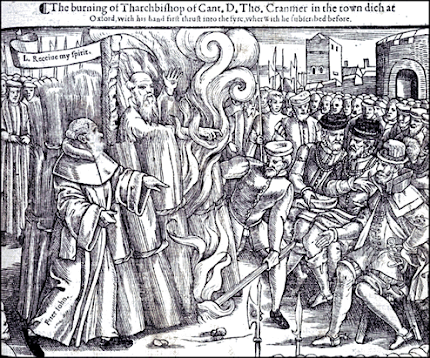
The burning of Tharchbishop of Cant. D. Tho. Cranmer in the town dich at Oxford, with his hand first thrust into the fyre, wherwith he subscribed before. [Click on the picture to see Cranmer's last words.]

Daily Bible Verse

Showing posts with label theological liberalism. Show all posts

Saturday, June 06, 2026

The 2026 Edition of the PRCA Theological Journal: Common Grace


Recommended Article:  "John Bolt, Common Grace, the PRCA, and Theological Modernism"

 by David J. Engelsma

Protestant Reformed Theological Journal.  Vol. 59, No. 2., 2026.  Pp. 49-65.


Reviewed by Charlie J. Ray


In a time when supposedly Evangelical and Reformed denominations are compromised with the pragmatic church growth movement and other theological heresies, Dr. David J. Engelsma's article is a breath of fresh air.  The Presbyterian Church in America, the Associate Reformed Presbyterian Church, and the Orthodox Presbyterian Church are the Presbyterian denominations with which I am most familiar because I grew up in Florida, and now I live in South Carolina.  All of these denominations downplay their doctrinal standards because they wish to be evangelistic and mission minded.  While the PCA does not ordain women to the church offices of teaching elder or deacon, there is no vow taken for membership that even mentions the Westminster Standards.  The ARP ordains women deacons in violation of 1 Timothy 3:8-12 KJV.   (See:  Reasonable Christian:  Should Women Be Ordained to the Office of Deacon?)

The ARP First Presbyterian Church in Columbia, South Carolina has had three Reformed ministers from the supposedly conservative Ligonier Ministries movement of the late Dr. R.C. Sproul.  Yet, all three agreed with the session to ordain women to the male only office of deacon.  The present minister is Dr. Neil Stewart, who told me that if I objected to women deacons that I should probably not join as a member.  The other two pastors were Derek Thomas and Sinclaire Ferguson.

Moreover, the dangers of the pragmatic church growth movement are that the emphasis is on keeping the peace and unity at the cost of doctrinal purity and true Christian discipleship.  As Dr. Engelsma points out in this article, it all began with the adoption of the Three Points of Common Grace in 1924 by the Christian Reformed Church.  Practically all of the Presbyterian denominations quickly unofficially adopted the Three Points of Common Grace because the colleges and seminaries teach this doctrine as if it were an official doctrinal standard.  The doctrine then trickled down to the denominations and churches.  (See my open letter to the pastor of an ARP church plant in Lexington, South Carolina:  Lexington ARP.  The response I got from Jeff Tell by email was short and to the point:  I hope you can find a perfect church.)

Theological modernism shows up most clearly in the rejection of doctrinal standards and in the adoption of modern translations of the Bible that are based on the liberal biases of lower and higher biblical criticism.  Dr. Engelsma mentions that modernism began in the CRC before the ministers of the PRCA were expelled from the CRC.  At least one seminary professor at Calvin Theological Seminary, Ralph Janssen, who taught Old Testament, was expelled for teaching that the Pentateuch was not historical narrative.  Janssen taught what could be called a neo-orthodox view of Genesis 1-11, a view that is popular among fake Evangelicals today.

The failure of theological liberalism to see that humanity is not good was clearly visible during the first world war.  Apparently, the liberals doubled down.  The following quote from Engelsma's articles is pertinent to this point:

In 1924, the attack of modernism upon Christian orthodoxy was raging. The highly regarded and influential German heretic, von Harnack, published his popular attack on orthodox Christianity in 1900, Das Wesen des Christentums (What is Christianity?). In 1903, the Presbyterian Church (USA) revised the Westminster Confession of Faith to affirm a love of God for all humans. The unbelieving, modernistic Auburn Affirmation was published in 1924—in 1924! Harry Emerson Fosdick preached his popular sermon, “Shall the Fundamentalists Win?” in 1922. 

And the CRC itself wrestled with sheer modernism in the Janssen case, Calvin Seminary Professor Ralph Janssen being deposed in 1922. 

In the ecclesiastical atmosphere of this theological and spiritual struggle, the CRC adopted the doctrine of common grace, affirming a oneness of the church and the world in a common grace of God.  (Engelsma, pp. 62-63).

The current controversy over the issue of lower textual criticism and the reasoned eclecticism of the approach to textual variants and fragmentary apographs of the Greek New Testament is related to this compromise with common grace as well.  Unfortunately, the modern science of textual criticism is a dismal failure in regard to the stated goal of objectively reconstructing the precise wording of the original autographs.  (See:  Reformation Bible Society).

I highly recommend this article if you are at all concerned with the theological modernism and liberalism that is creeping into Evangelical churches today.  Even more concerning is the leftward drift of the Reformed churches due to the heresy of common grace:

From the Netherlands, the infection of modernism in the form of a common grace uniting church and world has spread to the CRC. It threatens all the supposedly “conservative” Reformed and Presbyterian churches that have been influenced by Kuyper and the CRC to embrace the doctrine of a common grace of God. They have the essence of modernism at their vitals. This is, in reality, the issue for the churches of NAPARC, not the issue of women in church office, which is merely a symptom of the real issue, and not the most important, but the issue of common grace, which obliterates the antithesis between church and world.  (Engelsma, p. 63).

You can read Dr. David Engelsma's article by clicking here:  Protestant Reformed Theological Journal, Vol. 59, 2026.  Then click the download button to download and read the PDF version of the journal.  Dr. Engelsma's article is on pages 49-65.

The peace of God be with you. 

Tuesday, March 25, 2025

Should Women Be Ordained to Ministry? Deacons or Otherwise? Part 3


Should Women Be Ordained to Ministry? Deacons or Otherwise? Part 3


As the twentieth century has seen a great increase in the control that national governments exercise over their citizens, so too with ecclesiastical organizations there is a trend toward centralization, bureaucracy, and an indifference toward inalienable rights.  Well publicized gatherings of Protestant prelates parade in robes, and the press reports the colorful pageantry.  Impressive imitation of popery!  And the same eventual results are to be expected.

God alone is Lord of the conscience, and hath left it free from the doctrines and commandments of men, which are, in anything, contrary to His Word, or beside it, in matters of faith or worship. So that to believe such doctrines, or to obey such commands out of conscience, is to betray true liberty of conscience: and the requiring of an implicit faith, and an absolute and blind obedience, is to destroy liberty of conscience, and reason also.  . . . [WCF 20:2 WCS].

The changing majorities of a Council or General Assembly which push a conjectural translation of the Bible one year and another year issue Sunday School lessons whose conjectures are still worse, may boast that their theology is not static but dynamic.  A different doctrine every decade—while the orthodox fuddy-duddies keep on believing the same thing all the time!

But what moral chaos there is, when the law of God is abandoned for the latest style of unbelief.  It used to be [Albrecht] Ritschl’s value judgments; now it is paradox; next it will be—who can guess?

The law of God is stable because God is unchangeable.  Those who believe God do not need to change their moral principles with the passing years.  Nor will they change their worship, push the Bible to one side, put an altar in the center, pray to the saints and the Virgin, nor . . . engage a troupe of ballet dancers to fill an empty pulpit.

Dr. Gordon H. Clark.  Essays on Ethics and Politics.  John Robbins, ed.  (Jefferson:  Trinity Foundation, 1992).  Pp. 21-22.


I make the above point because it seems that the larger a denomination becomes, the more centralized its ecclesiastical polity becomes.  I am currently attending a new church plant in Lexington, South Carolina.  It is already becoming apparent that the pastor and the elders do not want any sort of dissent as that would cause a problem with “the peace, purity, and prosperity of this congregation as long as” I am “a member of it.”  I am referring to the Associate Reformed Presbyterian Church as a denomination.  The general synod in 1969 made the decision to allow the ordination of women as deacons; however, it was determined that each session or church within the denomination could decide whether or not to ordain women to the church office of the deaconate or deacon.  

This is a strong indication that there are liberals within the denomination who wish to have women ordained to every church office.  [See:  Women in the Life of the Church: A Position Paper Approved by the General Synod of the Associate Reformed Presbyterian Church:   June 2005”.]  I was shocked to see that one of the authors and signatories on this document was Rev. William B. Evans.  Evans recently announced that he was leaving the ARPC and joining the PCUSA.  His reason is detailed in a blog article he posted here:  A Change in Ecclesial Affiliation for the Ecclesial Calvinist!  Obviously, Mr. Evans is one of the liberals whom I mentioned.  He argues in 2005 that the reason for decline in the ARPC is holding true to the fundamentals.  In order for the denomination to grow, it must accommodate to the times and the culture:

By 2010 or so, however, I sensed that the ARP Church had lost its sense of identity and direction.  When I served as Moderator of the ARP General Synod in 2005 I warned the body that a dire situation awaited if the church did not recover a coherent identity and sense of mission.  Serving on the subsequent General Synod Vision and Strategic Planning Committees reinforced the sense that we were wandering in the weeds and on the edge of precipitous decline.  As a church historian I knew the story well—that ARP identity had historically been predicated on certain praxis distinctives (exclusive psalmody, non-instrumental worship, strict Sabbatarianism, and closed communion), and that by the mid-20th century all of that had dissolved and the church was searching for a new identity.  From 2004 until 2012 I had written/edited the ARP Adult Quarterly Sunday-school curriculum, but beginning in 2012 I began to pull back from my denominational involvements to concentrate on scholarly writing and research.

During this time, I also noticed that the ARPC was becoming more rigidly conservative (largely because of the decline of Erskine Theological Seminary and the rising influence of Reformed Theological Seminary in Charlotte, NC) even as I was growing older and a bit more flexible theologically.  A clarifying moment occurred in the last few years when I chaired a Synod committee to study the issue of women serving in the diaconate in the ARPC.  The Committee presented a sensible report noting that the current policy of allowing women in the ARPC to serve as deacons has worked well for decades, that Scripture can reasonably be read either way, and that no one’s conscience is bound by the current policy.  The floor debate on the report was disheartening, and it was evident that a large minority of the court wanted to do away with women on the diaconate completely.  Particularly clarifying for me was an obviously premeditated speech by a younger minister asserting that those in favor of women in the diaconate were capitulating to the feminist and transgender agenda!  No one called him to task, and I realized at that point that the Overton window had shifted to such a point that I was in the wrong church!

It is here that Evans’s theological compromise is revealed openly.  He straightforwardly admits that he has become “more flexible” with age.  Ironically, his views seem to be inflexible when it comes to acknowledging the plain teaching of Scripture, which he claims can be “read either way.”  I am speculating that the sections in the position paper of 2005 dealing with arguments from the other side were all written by Evans because he agrees with them.  The paper quotes Evans as saying:

While traditionalists have often been tolerant of progressive thinking, they themselves are often not tolerated once women’s ordination is instantiated in a denomination.  That has been the trend in the Church of Scotland, the PCUSA and elsewhere.  The pattern here is for conservatives to be grandfathered for a time, but sooner or later ordination requirements are rewritten to include support for women’s ordination.  This is due primarily, not to liberal meanspiritedness, but to the logic of Reformed polity.  The offices of minister and elder are the foundation of the polity, and everybody has to own the polity, to accept the ground rules of the game.   Reformed churches cannot tolerate the presence of those who would challenge, even implicitly, the legitimacy of a large group of officeholders.  (ARPC Position Paper, p. 14).

Ironically, Evans laments the fact that Ligonier Ministries has had a profound effect on the denomination because many of the ministers are coming from Reformed Theological Seminary, Charlotte, North Carolina instead of Erskine Theological Seminary in Due West, South Carolina or the campus in Columbia, South Carolina.

There are other issues with the denomination, including other liberal professors at Eskine University and Erskine Theological Seminary.  The church plants that I have observed in the greater Columbia, South Carolina area have mostly followed the pragmatic approach of the church growth movement rather than the biblical mandate to make disciples.  In short, the Westminster Standards are a mere afterthought, an option.  No need to instruct the congregation in the doctrines of the Bible as summarized by the Westminster Standards.

The late Dr. Gordon H. Clark brought up another issue in regards to the ordination of a young man to the ministry:

In addition to these elements of liberty, which particularly concern us in our individual lives, Christian liberty includes liberty of conscience in the face of tyrannical ecclesiastical organizations.  Some years ago a young man presented himself to a Presbytery for ordination.  As he was known to believe that the boards and agencies of that church were infiltrated with modernism, he was asked if he would support the boards regardless of what they did.  When the young man declined to make any such blind promise, the Presbytery refused to ordain him.  [Clark, p. 21]

The church plant that I am attending in Lexington, South Carolina has a new members class.  I am facing a similar decision.  The last vow of the seven vows requires me to promise “loving obedience” and to submit myself “to the government and discipline of this church, promising to seek the peace, purity, and prosperity of this congregation as long as” I am “a member of it.”  But can I do that?  The appointed pastor of the church plant is Jeff Tell.  He is apparently following the accommodation tactics of church growth pragmatism and the leftist theology of the late Tim Keller among others, including James K.A. Smith.

Moreover, the question of the ordination of women as deacons seems to have an obvious answer when considering that the Bible is the final authority in all matters of belief, doctrine, theology, ethics, morality, worship, and practice.  (2 Timothy 3:16-17; 1 Peter 1:24-25; 2 Peter 1:19-21).  As I mentioned already in the first post, the most plain and perspicuous Scriptures against the ordination of women should apply first.  Without going into extensive and detailed exegesis of the passages, I will now show that women should not be ordained to any church office whatsoever, as ordination in the church is restricted to men only.

First, the final authority must be the Bible, not church synods.  When the doctrinal standards of the Bible and the Westminster Confession of Faith are minimized due to either cultural relativism or ecclesiastical tyranny, it becomes necessary for the laity to stand against such accommodation to culture.  The Bible makes it very clear that the deaconate is restricted to men only, just as the offices of teaching and ruling elders are restricted to men only:

2 A bishop then must be blameless, the husband of one wife, . . . (1 Timothy 3:2 KJV).

12 Let the deacons be the husbands of one wife, . . . (1 Timothy 3:12 KJV)

I should point out that the Bible nowhere makes a distinction between ruling elders, who handle the administration of the church, and teaching elders who handle the preaching of the word and the administration of the two gospel sacraments.  If elders do not teach or preach, following the logic of the liberals, it would seem that the door is wide open for women to become ruling elders as well as deacons.  If any object that the deacons are only to serve tables and not to handle the preaching of the word, it should be pointed out that the deacons in the book of Acts were handpicked by the apostles.  (Acts  6:1-8).  Furthermore, the most prominent deacon mentioned in the pericope is Stephen.  He is said to perform miracles:

And Stephen, full of faith and power, did great wonders and miracles among the people. (Acts 6:8 KJV)

In other words, the office of deacon is more than just visiting widows, doing pastoral visits, or serving communion.  Even then, women should not be serving communion at the Lord’s table.  None of the men chosen by the apostles were women:

And the saying pleased the whole multitude: and they chose Stephen, a man full of faith and of the Holy Ghost, and Philip, and Prochorus, and Nicanor, and Timon, and Parmenas, and Nicolas a proselyte of Antioch: (Acts 6:5 KJV)

The clincher for this argument is that Stephen was stoned after he preached a sermon to the Jews who disagreed with the Gospel message of the apostles:

Then there arose certain of the synagogue, which is called the synagogue of the Libertines, and Cyrenians, and Alexandrians, and of them of Cilicia and of Asia, disputing with Stephen. 10 And they were not able to resist the wisdom and the spirit by which he spake. 11 Then they suborned men, which said, We have heard him speak blasphemous words against Moses, and against God. 12 And they stirred up the people, and the elders, and the scribes, and came upon him, and caught him, and brought him to the council, 13 And set up false witnesses, which said, This man ceaseth not to speak blasphemous words against this holy place, and the law: 14 For we have heard him say, that this Jesus of Nazareth shall destroy this place, and shall change the customs which Moses delivered us. 15 And all that sat in the council, looking stedfastly on him, saw his face as it had been the face of an angel. (Acts 6:9-15 KJV)

After Stephen preached the council condemned him to death by stoning.  (Acts 7:1-8:1).  Saul was there and participated in the council and the stoning of Stephen.  Does this sound like an office for women?  I think not.

As for the other passages of Scripture, most of the women mentioned are spoken of as being in the company of their husbands.  Priscilla and Aquila are emphasized by Pentecostals as a husband and wife team.  (Acts 18:2). But were they?  Pentecostals like to point out that Priscilla is mentioned first in the text.  (Acts 18:18; Romans 16:3).  But in the other occurrences, Aquila is mentioned first.  (Acts 18:2, 26; 1 Corinthians 16:19).  The Pentecostal argument that seems strongest is also weak:

And he began to speak boldly in the synagogue: whom when Aquila and Priscilla had heard, they took him unto them, and expounded unto him the way of God more perfectly. (Acts 18:26 KJV)

This is a one-time occurrence in the Bible.  As one commentator once said, a doctrine that is mentioned only once in the Bible and is contradicted by other verses is probably a weak doctrine.  Of course, how many times does God need to say something for it to be true?

Here ends this post.  In part 4 I will discuss the biblical evidence for Junia being among the apostles.  Also, I will discuss the four prophesying daughters of Philip.

Here are the links to Part 1 and Part 2 of this blog series.

Monday, December 02, 2024

Is the Doctrine of Common Grace Biblical or Confessional?


Is the Doctrine of Common Grace Biblical or Confessional?


“To the reprobate the preaching of the gospel is no favor because as it increases their knowledge, it increases their responsibility and condemnation. Better if they had never heard the gospel. One can reply, nonetheless, that in some cases the preaching of the gospel may restrain an evil man from some of his evil ways. Since therefore sins are not all equal, and since some are punished with many stripes, but others with few, the preaching of the gospel results in the lessening of the punishment. Thus preaching would be a small favor, a modicum of grace. We note it and pass on.”  Dr. Gordon H. Clark  (See:  A Place for Thoughts:  Gordon Clark on “Common Grace,” by Doug Douma).


To discuss the issue of the reputedly “reformed” doctrine of common grace is a convoluted and complicated matter.  Often it is hard for the layperson to understand exactly what the controversy is about.  Basically, it comes down to a controversial doctrinal statement issued by the Christian Reformed Church in 1924 at Kalamazoo, Michigan.  That document outlined what is identified as the Three Points of Common Grace.  You can access a direct quote of the three points and subsequent critique of the three points at the Protestant Reformed Churches in America website here:  The Three Points of Common Grace.

The first thing I would like to point out is that common grace often is used to justify accommodation with Arminianism, and worse, liberal theology.  The point of compromise here is that even theological liberals and other reprobate persons allegedly can do civil good by practicing the discipline of liberal scholarship.  But, this is hard to understand because the agenda of theological liberals and other ungodly scholars is to undermine the Bible, not to support it as special revelation from God.  A good example of this is the apostasy of Bart Ehrman, who attended Princeton Theological Seminary in order to study textual criticism.  Ehrman was once an Evangelical Christian who attended Moody Bible Institute in Chicago, Illinois.  Being weak in his faith, he decided that the Bible could not be trusted because of the many errors in the extant Greek manuscripts of the New Testament.  The Evangelical position is that God has providentially preserved what was contained in the original autographs, even though the originals are no longer extant.

This is a significant issue because if we no longer have the original autographs, then logically speaking none of the extant manuscripts are without error or infallible.  Using the axioms or principles of reasoned eclecticism, the Bible is alleged to be a reconstruction of the original autographs and only in that sense can any modern translation of the Bible be considered infallible or inerrant.  Any apparent errors are to be attributed to the translation from the original languages or to errors in transmission of the original Greek or Hebrew manuscripts which are only preserved in copies of the copies passed down through hundreds and thousands of years.  The debate then degenerates into which manuscripts are best and who has the logical upper hand in making those determinations?  In short, the science of textual criticism is alleged to be a part of the common grace of God since many of the men who invented the basic principles of the science were either part of the Renaissance or the Enlightenment.  From there we get the 19th century scholars of Westcott and Hort, who then influenced subsequent schools of textual criticism that went in other directions.

One of the opponents of the reasoned eclecticism approach to textual criticism used to be part of the reasoned eclecticism approach.  His name is Maurice Robinson.  His main objection to that approach is that the reasoned eclecticism approach often creates verses by splicing together fragments and variants to create verses that do not exist in any extant manuscripts whatsoever. 

Another issue with common grace is the third point mentioned above that the reprobate can do civic good.  Theological liberals prior to the first world war were optimistic that the entire world could be harmonized into a peaceful global community.  Where have we heard that one before?  After WWI, that optimism changed to pessimism.  Now, apparently, the pendulum has swung in the opposite direction.  Part of the blame for this would be the theology of Abraham Kuyper, the Dutch Reformed theologian turned politician.  Kuyper gave his Stone Lectures at Princeton Theological Seminary in 1898.  The vast majority of modern Reformed denominations support the compromised theology of the Three Points of Common Grace.  This compromise can be traced all the way back to the Stone Lectures.  It could even be argued that the Stone Lectures were the genetic cause of the eventual fall of the Presbyterian Church in the United States into apostasy.  The Old Princeton stalwarts became infatuated with creating a Calvinist cultural reformation worldwide such that eventually the emphasis on solid biblical and systematic theology fell to the wayside in order to facilitate missions and evangelism at the cost of special revelation and biblical truth.  

Even otherwise solid theologians like Benjamin B. Warfield and Charles Hodge were caught up in theological compromise.  Warfield advocated for reasoned eclecticism and the Westcott and Hort approach to New Testament textual criticism, while Hodge fell to the compromise that Christ in some sense died not only for the elect, but also for the reprobate.  Hodge’s reasoning was that common grace was somehow purchased on the cross for the entire world, not just for the irresistible grace and the efficacious atonement which propitiated the wrath of God against the elect.

A postmillennialist view of reforming the culture seems to lead inevitably towards an overly optimistic agenda to transform the culture.  I would contend that this naivete has led to accommodation to culture instead of a prophetic calling out of the culture, which is in manifold rebellion against the moral law of God as summarized in the Decalogue or Ten Commandments.  A further problem with this is that this postmillennialism is combined with a theonomic view of evangelization and mission, which leads to a co-belligerent cooperation with papists, Arminians, Lutherans and various other opponents of a Reformed worldview.  As the saying goes, a little leaven leaveneth the whole lump. 

While it is true that Old Princeton was for a time a bastion of conservative and reformed theology, a small compromise leads to later generations which compromise a little more, and so on until three or four generations later there is a major compromise that leads to apostasy.  It was only a period of forty years or so until the 1940s when the foreign mission board of the Presbyterian Church of the United States went in a completely liberal direction, and J. Gresham Machen and his followers were forced out of the PCUS for refusing to support the foreign mission board.  Machen, along with Gordon H. Clark, Cornelius Van Til and others helped to found Westminster Theological Seminary in Philadelphia, Pennsylvania.  Unfortunately, Van Til, Ned Stonehouse, and John Murray decided to oppose Dr. Gordon H. Clark’s ordination with the newly formed Orthodox Presbyterian Church because of Clark’s disagreement with common grace, the free offer of the Gospel, and the well meant offer of the Gospel. Van Til, Stonehouse, and Murray rejected propositional revelation as the basis for systematic theology.  They redefined Francis Turretin’s doctrine of archetypal and ectypal knowledge so that they unwittingly affirmed some aspects of neo-orthodoxy.  Their emphasis on an analogical system of theology in the Westminster Standards went well beyond the traditional view of Scripture as the analogy of faith, meaning that Scripture interprets Scripture.  Van Til said that all Scripture is apparently contradictory.  Gordon Clark’s response to this in an audio lecture cuts to the heart of the issue:

What are we to make of his statement that “all teaching of Scripture is apparently contradictory?” Now, Van Til said omnipotence is not self-contradictory, but creation and responsibility are contradictory. And, also, he said all teaching of scripture is apparently contradictory. Which would of course include the idea of omnipotence. 

I might say that the statement “David was King of Israel” is not apparently contradictory to me. 

[Audio Transcript:  (From the Gordon Conwell Lectures on Apologetics, 1981.)  “John Frame and Cornelius Van Til.”  P. 11.  Posted at:  The Gordon H. Clark Foundation.]

I would contend that the doctrine of common grace is a contradiction of the biblical doctrine of divine sovereignty by implication.  The implication of the doctrine is that God gives a non-salvific grace to those whom He has decreed to reprobation before the foundation of the world.  This is a mere charade if it is intended to solve the problem of evil.  For billions of human beings of all ages suffer the effects of the fall of Adam, yet God does not relieve their suffering.  So, this would contradict the proponents of common grace who misuse the doctrine of providence to show that God loves the reprobate.  (Matthew 5:43-48 KJV).  But, David, says that we should hate those who blaspheme God:

Surely thou wilt slay the wicked, O God: depart from me therefore, ye bloody men. 20 For they speak against thee wickedly, and thine enemies take thy name in vain. 21 Do not I hate them, O LORD, that hate thee? and am not I grieved with those that rise up against thee? 22 I hate them with perfect hatred: I count them mine enemies. 23 Search me, O God, and know my heart: try me, and know my thoughts: 24 And see if there be any wicked way in me, and lead me in the way everlasting. (Ps. 139:19-24 KJV)

I would contend that it is extremely naïve to promote common grace as any kind of good whatsoever.  The Protestant Reformed Churches in America have rightly pointed out that this doctrine leads to Arminianism and Pelagianism.  It looks the other way when the Bible specifically says that the wicked are the enemies of God:

The foolish shall not stand in thy sight: thou hatest all workers of iniquity. 6 Thou shalt destroy them that speak leasing: the LORD will abhor the bloody and deceitful man. (Ps. 5:5-6 KJV)

The LORD trieth the righteous: but the wicked and him that loveth violence his soul hateth. (Ps. 11:5 KJV)

 As it is written, Jacob have I loved, but Esau have I hated. (Rom. 9:13 KJV)


Saturday, February 10, 2024

Compromise Leads to Persecution


"It’s easy to decry right-wing scaremongering in the abstract, far more difficult to give advice to real people who have to make decisions that could cost them their careers."  Carl R. Trueman

At last Carl Trueman has to face the reality of the layperson in the pews.  Yes, your mealy-mouthed pontifications about not making enemies with the world and how grace is common to all has come home to roost. Celebrity preachers are more concerned with how many members attend and contribute monetarily to their own careers than with the real rubber meets the road reality that Christian persecution is here to stay.  

Stand on the deontological standards of God's moral law and be fired from your job, lose your family, and wind up homeless.  That's quite a price to pay for being true to the biblical worldview, is it not, Mr. Trueman?  Not a word about Alistair Begg's real motivations for accommodating to the woke agenda, right, Mr. Trueman?   (Acts 5:29).

I am continually amazed at how proficient the sophists among the fake Evangelical elite are at dodging the ethical and moral implications of their pontifications from the bully pulpits of media platforms, social media, and their paid positions in woke Evangelical colleges and seminaries.  The celebrity preachers are unwilling to sacrifice their careers by telling the hard truth.  So, their advice to you is to compromise as well.  

After all, how can Evangelicalism survive without church members who have paying jobs and can contribute huge amounts of mammon?  The point is that the Evangelical elites can continue in their lavish lifestyles, while the rest of us toil away in blue collar jobs.  Perhaps the hard sayings of Jesus were not so much rabbinical hyperbole as actual and practical applications of God's moral law?  If evangelism and mission is about accommodation to the world, count me out.  However, if evangelism and mission is about challenging the world and challenging the religious Pharisees of easy believism, common grace, and the well meant offer?  Count me in.

For what shall it profit a man, if he shall gain the whole world, and lose his own soul? 37 Or what shall a man give in exchange for his soul? 38 Whosoever therefore shall be ashamed of me and of my words in this adulterous and sinful generation; of him also shall the Son of man be ashamed, when he cometh in the glory of his Father with the holy angels. (Mk. 8:36-38 KJV)

And did you notice that Trueman likes to fellowship with Romanists by publishing in their magazine, "First Things"?  Why would a genuine Protestant Evangelical give credibility to a publication which promotes compromise and accommodation to a false religion that the Protestant Reformers referred to as a "synagogue of Satan"?  This pretty much sums up the problem of Evangelicalism today.  Who will stand for the truth?

The late Dr. Gordon H. Clark succinctly stated the problem of accommodating to secular views of the civil magistrate:  

My thesis is that secularism necessarily implies dictatorship and totalitarian rule.  For example, Aristotle pointedly objects to Plato's communism; but his own theory defines the state as the partnership or "community" which includes all goods.  The result is state control of religion and of all human good, nothing excepted.

It is only the Hebrew-Christian revelation, as exemplified in the condemnation of King Ahab's violation of Naboth's private property, that justifies both the authority of a state and the limitations on that authority.

The Confession in section i states that it is God who has ordained civil magistrates.  Their authority comes from him; therefore, they cannot rightfully act as dictators; their just powers are only those which God has assigned them.  What those powers are and what they are not is indicated here and there throughout the Bible; and appeals to the Bible must settle such questions as pacifism and capital punishment, as well as the principle of private property.

Dr. Gordon H. Clark.  What Do Presbyterians Believe?  The Westminster Confession Yesterday and Today.  1965.  2nd Edition.  (Unicoi: The Trinity Foundation, 2001).  Pp. 207-208. 

Dr. Clark would have never agreed with the radical two kingdoms view or with the so-called Christian libertarian movement in the political realm.  The reason is clearly stated in his commentary on the civil magistrate.  There is no such thing as neutrality.  While I would not say that Clark was a theonomist--mostly because the theonomy movement is predominately based on the theology of paradox of Van Til and his followers--it is clear that Clark advocated for a Christian worldview which included political activism on the part of both denominations and church members who are genuinely Christian.

It is increasingly clear that the leftists in America have a double standard for justice.  Their idea of justice is based on secular humanism and rights that the economically and racially oppressed can demand that the government enforce from the top down.  When critical race theory and cultural Marxism become the basis for American jurisprudence and the civil magistrate, the result is the totalitarianism that Clark predicted.  Anyone can see that losing one's ability to support his family is persecution.  The Democrats are determined to take away the divine rights of Christians to worship and believe whatever they wish, and the enforcement of it is to remove their divine right to self-defense by the second amendment, their right to free speech and freedom from government oppression of religion, i.e. the free exercise of religion.  The government run by the left wants to confiscate private property and redistribute wealth to so-called oppressed groups, including those who are not even citizens of the United States of America.  Open borders, the radical LGBTQIA+ movement, the radical reinterpretation of history,  and the removal of statues and books with which the leftists disagree are all symptomatic of an outright attack on the Christian worldview and the U.S. Constitution, which drew heavily from biblical principles of divine justice, not the Marxist social justice of the critical race theorists and the human secularists.

Christians who actually believe that God determines right and wrong should become not just evangelists for the Gospel, but also political activists who stand against the pharisaical Evangelical elites who have joined with the social justice warrior movement.  I find it strange that R. Scott Clark claims to be more concerned about the Gospel than political activism, yet he writes extensive articles criticizing John MacArthur.  MacArthur just happens to agree with a Reformed piety that actually calls for obedience to the Gospel and obedience to the moral law.  But Scott Clark is more concerned with appeasing the world than with standing against immorality.  Perhaps it is because Scott Clark is more concerned for pragmatic church growth than with faithfulness to the whole counsel of God?  (Acts 20:27).  Carl Trueman's article is posted at the Heidelblog for good reason.  (See:  Can Christians Attend Gay Weddings?).  Why is this even an issue?  Both Trueman and R. S. Clark are compromisers of the kind that I totally dislike.  These fake Evangelicals in the celebrity elite crowd are leading entire denominations into theological and political compromise, which eventually will end with God's judgment falling on them and on the nation.


Thursday, March 22, 2012

Farewell Rowan Williams | Theological Theology


Mark me down as among the churlish. How could Mark Thompson wish an enemy of the Gospel well? What Thompson should do is pray for the conversion of that son of belial. Rowan Williams is deliberately "oblique" for the simple reason that he doesn't believe in absolute truth. The only absolute truth for that theologically illegitimate miscreant is that everything is relative. Sadly Evangelicals like Mark Thompson and Michael Horton agree with Williams more than disagree with him. After all, truth is analogical, is it not?

Unfortunately, the archbishop's replacement could be worse.  

 Click here to read Thompson's glowing accolades of the Archbishop of Canterbury: Farewell Rowan Williams | Theological Theology

Sunday, February 05, 2012

Last temptation of Castro: Get Religion, February 4, 2012 « Conger

It looks like Fidel Castro was never singled out for excommunication from the Roman Catholic Church. There was a general excommunication of atheistic communists pronounced in 1962 by Pope John XXIII. Fidel renounced his faith and so excommunicated himself. It seems that Fidel in his old age wants to return to the religion taught to him by the Jesuits who raised him. He even attended mass in 1998 when Pope John Paul II visited Cuba but did not receive the eucharist.

George Conger thinks this is a remarkable story because Fidel will be received back into communion. Presumably this means that Fidel Castro will take the eucharist when Pope Benedict XVI visits Cuba in March. Although the law of God is written in all men's hearts and they feel the guilt of breaking that law, only the Lord Jesus Christ Himself could pay the penalty for even one sin. How confessing sins to a priest, who is a false mediator, and taking an idolatrous communion that worships the communion elements as the literal body and blood of Christ can exonerate a terrible sinner is beyond me. The Bible says that there is only one mediator between God and men, Jesus Christ (1 Timothy 2:5).

The problem today is that due to the influence of Anglo-Catholicism, neo-orthodoxy, and theological liberalism the ecumenical movement has corrupted the Gospel in Evangelical circles. Even Billy Graham, the Baptist evangelist, compromised the Gospel by accepting Roman Catholics and the Eastern Orthodox Church representatives as genuinely converted Christians. Graham invited representatives of those churches to his crusades so that new converts could be directed to Roman Catholic parishes or Eastern Orthodox parishes.  (See:  Are Billy and Franklin Graham Leading Souls to Heaven or Hell?).

If semi-pelagianism and salvation by merits or works is a false religion--and it is--then Fidel's return to the Catholic Church is not a good thing. It is merely returning from atheism to a false religion. There is only one Gospel and that Gospel was officially condemned by the Roman Catholic Church in the canons of the Council of Trent.

To read the rest of the story at George Conger's blog, click here: Last temptation of Castro: Get Religion, February 4, 2012 « Conger


Thursday, January 26, 2012

WHI-1070 | Christianity & the New Liberalism - White Horse Inn Blog

Is Christianity primarily about what God is doing in your life right now, or what he did one afternoon two-thousand years ago? Is the idea of Jesus “in your heart” more important than Jesus “in the manger” or “on the cross”? Do you value your own personal experience of faith more than what God accomplishes externally through the proclamation of the gospel? In the not-too-distant past, theological liberals were the ones answering yes to questions like these, but increasingly American evangelicals are moving in this direction. On this program, the hosts discuss this troubling trend and offer some challenges to this “new liberalism” of our time (originally broadcast March 23, 2008).


Click here to listen to this episode of The White Horse Inn.


WHI-1070 | Christianity & the New Liberalism - White Horse Inn Blog

Wednesday, November 10, 2010

Touching the Third Rail! – Why Are Reformed Christians in the U.S. Obsessed With Politics?

Touching the Third Rail! – Why Are Reformed Christians in the U.S. Obsessed With Politics? [Click on the title to see the commentary at the Aquila Report].

I'm appalled at Brits who pretend to understand American Christianity, particularly Carl Trueman and Paul Levy. First off, neither of them understands the American Revolution and the fierce American opposition to governmental interference in private matters like free speech, freedom of religion, and individual freedom. As the federal government continues to usurp the rights of state governments to manage their own affairs, so the cultural divide widens. That is particularly true in the South where the wounds remaining from the American Civil War are still festering and slowly healing. What Trueman and Levy do not get is that Christians from the Bible belt feel the heat of government intrusions into matters of religious freedom. The Democratic Party's platform is essentially atheistic and relativistic and seeks to promote homosexuality, abortion, premarital and extramarital sex via its morally irresponsible cultural and social policies.


Trueman and Levy want Christians to shut up and stay out of politics because they are essentially liberals on both the political and the theological level. It is simply ludicrous to suppose that Christian churches should not be involved in politics, particularly when the government is increasingly curtailing the rights of Christians and Christian churches to voice their opinions on issues like abortion, homosexual/transgender issues, and sexual morality and ethics. For example it is now a "hate crime" for anyone to openly condemn homosexuality as a "sin" in Canada and from the looks of it the same sort of political interference in the individual's freedom of speech and freedom of religion will become law in the United States.


Furthermore, every American citizen was at one time required to take classes educating them about the dangers of atheistic materialism inherent in the communist and socialist worldview. The Democratic Party is increasingly opposed to Christianity and instead has adopted a form of socialism and secularism that is every bit as dangerous as the socialism espoused by the communists of the early 20th century. If Europe and Australia is our example, godlessness and atheism are the result of Trueman and Levy's point of view. Their celebration of hedonism in government simply reveals their true motives are not Christian but secular and materialistic. The Christian and the Christian church are not neutral but actively promoting the kingdom of God by focusing not only on the temporal and earthly extension of the kingdom but by preaching the Gospel and furthering the eternal kingdom which is unseen.


Moreover, Trueman and Levy are naive if they believe that the separation of church and state means that the state gets to dominate the Christian and the Christian church. It is true that Christians have been martyred over the centuries but that does not mean that Christians were beaten into submissive silence on moral issues and on theological issues. Trueman and Levy seem to have forgotten that John the Baptist was beheaded for daring to criticize Herod for marrying his brother Philip's wife, Herodias, which John the Baptist said was "unlawful". (Mark 16:17-29). I guess John should have taken the advice of Trueman and Levy? If individual Christians are members of the Christian church, then it follows naturally that both individual Christians and Christian churches should speak out against immoral government policies. What if William Wilberforce and John Newton had taken the position that Christian churches should not be involved in politics? Do you really believe the slave trade would have been ended in 19th century England? I suppose by Trueman and Levy's view Wilberforce should have simply acted alone and hoped for the best? But the English and the American abolitionist movement was promoted by Christian individuals supported by their churches. As the preacher of Ecclesiastes puts it:


And though a man might prevail against one who is alone, two will withstand him--a threefold cord is not quickly broken. (Ecclesiastes 4:12 ESV)


I am not a theonomist nor am I a reconstructionist. That does not mean, however, that Christians or churches should hide in a corner somewhere and pretend the world is not an enemy of the Gospel. If the Protestant Reformation is any example then we as Christians cannot afford to sit back and hope that the enemies of the Gospel will simply leave us be. As I write this article Christians are being martyred all over the world. Does Trueman and Levy think this will not happen in the United States, the United Kingdom, Canada or Australia? Christians and churches should stand together and unite against those who hate the Gospel, that much is clear.


I disagree with ecumenicalism on the Evangelical side of things and on the liberal mainline side of things. As Michael Horton has pointed out, many Evangelical churches are simply preaching a form of neo-pelagianism. But that does not mean that we as Christians cannot operate on a level of co-belligerence that refuses to confuse the Gospel with a social gospel or a civil religious compromise with false churches which promote a false gospel of good works or a false gospel of theological relativism. Conservative Christians should unite against the intrusion of the government into private affairs of the Christian churches and the freedom of religion. If the UK, Canada and Australia are any indication it is imperative that churches be involved in the political process. Otherwise we wind up with a nation with no conscience and genocide is the result. Never forget what happened when Christians did nothing to stop the genocide of the Jews in Nazi Germany. What if American Christian churches had done nothing to end Jim Crow laws and racial segregation? Would the American Civil Rights laws have been passed giving black Americans equal rights? I think not. Simply put Trueman and Levy are naive at best and dissimulators with a hidden agenda at worst.


Finally, it seems to me that many churches are already involved in political issues. If conservative Christian churches do not speak out against immorality, then the liberal left version of theonomy--which is basically sanctified godlessness and atheism--then the cultural war is lost by default. Albeit the Gospel is not to be confused with the moral law or with cultural transformation (the error of both theonomists and liberals), it does not follow that churches which preach the true Gospel are to shut up and stay out of politics. No thank-you, Trueman. Maybe you should move back across the pond. We Americans do not need your gutless accommodation to the world.


One has to wonder why Trueman wrote a book on political issues if he really believes that Christian churches should stay in their corner or holed up in solitude? It seems to me that Trueman is irrational if he thinks there is some sort of dichotomy between the individual Christian and the unity of Christians we call a congregation or a church. We all stand together or we all fall together. Church history seems to indicate that well enough.


See what kind of love the Father has given to us, that we should be called children of God; and so we are. The reason why the world does not know us is that it did not know him. (1 John 3:1 ESV)


The peace of God be with you,

Charlie J. Ray


Tuesday, December 22, 2009

Wresting the Wheel from God: Theological Roots of the Current Crisis in Christianity

This is an article from a theologically conservative pastor in the Evangelical Lutheran Church of America at the Word Alone website. His observations and insights are a worthy read for anyone seeking to reform liberal mainline congregations.

Friday, November 06, 2009

Bishop N. T. Wright: Reason Takes Precedence in the Homosexuality Debate


Obviously, Wright knows that following sinful desires is absolutely wrong but instead of sticking with Scripture as the final authority and church tradition as a secondary authority against homosexual behavior, he wishes to appeal to reason as the ultimate authority. Hence, he says that homosexuality is open for debate but polygamy or heterosexual promiscuity is not. Clearly, Wright's agenda is to muddy the waters with gray areas and ambiguity and relativism just as any theological liberal would. For Wright God's law is open for revision by modern standards of political correctness and modern cultural relativism. Wright reveals himself as a false prophet here and all should view him with extreme skepticism.

Thursday, August 10, 2006

Was Karl Barth One of God's Elect?

Dear John,

Since I don't have access to Barth's writings online and since I don't have any of his works in my personal library, due to financial considerations, I am forced to utilize online resources to answer your charges. As further evidence that I am rationally justified in rejecting Barth as a genuine Christian, I would suggest that you read the following online article, written by a "non-Evangelical" scholar, by the way. The author argues convincingly for Barth's "inclusivist, universalist, and pluralistic" views on soteriology. Thus, to say that Barth is a born-again Christian despite his rejection of the binding authority of Holy Scripture is self-contradictory:

"To conclude, it has been the author’s intention to argue that in contrast to the prevailing interpretation of Barth as one of the most significant advocates of exclusivism to argue that there are ample resources within the Barthian schema to construct an inclusivist soteriology. Given the aseity of God and Barth’s rejection of modern foundationalism one is a priori committed to an inscrutable God wholly reliant on the miraculous operation of the Spirit in what may be termed a revelatory epistemology. Thus Hart, (1999: 130) can write of Barth that 'the doctrines of election and the Holy Spirit serve to underwrite something very close to a committed pluralism'. Consequently, while one may be sure of their own convictions as true it is simply not verifiable apart from a divine work. This, in turn, leads to a recognition that knowledge of God may indeed extend further than that of one particular religious grouping. Secondly, Barth’s doctrine of election, means that far from an exclusivism, concludes that all humanity regardless of creed is actually justified before God and it is only the bi-polar aspect of revelation that prevents this descending into a pluralistic universalism. Finally, the emphasis in Barth on Humanity’s gracious participation in divine life through the Trinitarian life of God opens up the possibility that, while not cognitively asserting faith in God through the reconciling work of Christ, one can still respond to special revelation through the Spirit’s omnitemporal operation."

From: http://www.quodlibet.net/gillingham-barth.shtml

I might also point out that Barth's theology is overtly connected to Kantian philosophy because of influences upon him as a student at Marburg:

"Crucial as a backdrop to Barth’s revelatory theology as it developed is the work of Immanuel Kant and especially the neo-Kantians he studied under at Marburg. For Kant the only basis for knowledge is the phenomena consequently God is not a suitable subject for epistemology relegated instead to the arena of faith (Ward, 1997: 115; Fisher, 1988: 7-122). Marrying this concept with the post-lapsarian noetic consequences, resulting in utter alienation from God, Barth was able to conclude that humanity is in an impossible predicament in that God is, humanly speaking, a thoroughly non-cognitive entity, and therefore, noumena. There is consequently no natural knowledge of God (Barth, CD1/2: 257; Hart, 2000: 42).

"The only hope for reconciliation then, is naturally impossible viz. miraculous."

The above is from: Is Barth’s Theology Necessarily Exclusivist? © Richard Gillingham in, Quodlibet Journal: Volume 5 Number 2-3, July 2003 http://www.quodlibet.net/

"While Bolich's effort to secure a fair hearing for Barth among American evangelicals is long overdue, questions must be raised about his approach and emphases. In the first place, it is misleading to claim that Barth's theology moved in an 'ever more orthodox' direction, as though he would have been satisfied to be located somewhere between the options of liberalism and bona fide orthodoxy. A fiercely independent thinker, he resisted accommodation to the unexamined assumptions of evangelicalism (never clearly spelled out here) as much as it resists other theological and political "isms."

From: http://theologytoday.ptsem.edu/jan1981/v37-4-bookreview7.htm

This second article makes it clear that Barth totally rejected any identification with Evangelicalism and judging by the implications of his theology itself, one is rationally justified in rejecting the possibility of his salvation. It seems to me that Barthian theology, if adopted by Evangelicalism, is a concession back toward a middle ground with theological liberalism and postmodernism. Instead of conceding to Kantian philosophy, as most of modern neo-orthodoxy and postmodern theology does, Evangelicals should be attempting to forge their own responses from a completely different model and philosophical presupposition. It seems to me that there are errors within the Kantian framework and inconsistencies with that worldview that Evangelicals could exploit to their advantage.

One suggested approach is the challenge issued to the materialistic assumptions of modern science by the philosophy of science work of Thomas Kuhn in, The Structure of Scientific Revolutions. Essentially, even science is not totally objective, thus this harsh dichotomy between the phenomenal and the noumenal is not as hard as previously supposed by theologians and philosophers of every flavor.

Again, if you and your "gang" would stop attacking me indirectly and interact on a more objective level, the disagreements might not have escalated to the point they did. It is rather obvious that Evangelicals have a strongly and mixed review of Barth and it shouldn't surprise you that many of us don't think he was "saved." While that might seem to be irrelevant to you, it is entirely relevant from both the point of orthodoxy and from the point of view of how "critically" we are to read Barth's works. There is no such thing as total objectivity. I prefer to err on the side of faith and orthodoxy.

"'The purpose of Bolich's book is "to show how the person and work of Karl Barth can provide inspiration and direction for a healthy renewing and reforming of evangelical theology today.' American evangelicalism is undergoing an identity crisis, and in the author's judgment Barth's theology offers resources to help resolve this crisis. This volume reviews previous evangelical responses to Barth, including negative (Van Til, Clark, Gerstner, Pinnock, Schaeffer, Montgomery) as well as positive critics (Carnell, Daane, Brown, Bloesch, Ramm, Bromiley). Aligning himself with the latter group, the author emphasizes that to listen and learn from Barth, 'it is not necessary to accept every, or even any, thought of Barth without revision or qualification.'"

From: http://theologytoday.ptsem.edu/jan1981/v37-4-bookreview7.htm.

I align myself with orthodoxy and the church and those Evangelical theologians who aren't afraid to challenge neo-orthodoxy and other aberrant views. It should be noted also that even those giving Barth's theology positive merit do not give him blanket approval nor do they make papal pronouncements of his absolution before God and Evangelicalism as though they knew for a fact whether or not he were genuinely one of God's elect.

Peace,

Charlie

Support Reasonable Christian Ministries with your generous donation.