>

Martyred for the Gospel

Martyred for the Gospel
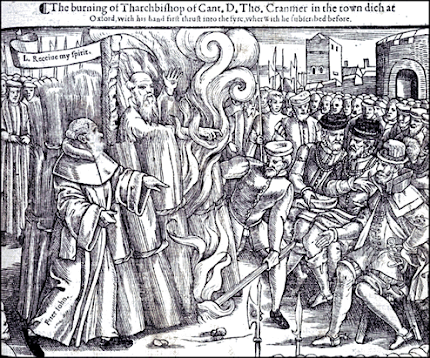
The burning of Tharchbishop of Cant. D. Tho. Cranmer in the town dich at Oxford, with his hand first thrust into the fyre, wherwith he subscribed before. [Click on the picture to see Cranmer's last words.]

Daily Bible Verse

Showing posts with label Evidentialism. Show all posts

Tuesday, October 18, 2016

Presuppositionalism Versus Evidentialism and Historiography


LAMED. For ever, O LORD, thy word is settled in heaven. (Psalm 119:89 KJV)


John Warwick Montgomery is a Lutheran and a historian. His apologetics method is to try to establish the "probability" of the truth of the Bible and the resurrection.  [I have apparently erred in using the word "late" here because it seems that John Warwick Montgomery is still among the living.  Thanks to one of my blog readers who pointed this out to me in the comments below.] However, probabilities are by their very nature uncertain. Probabilities do not yield truth or certainty. The propositional truth of Scripture is not a matter of empirical evidences, historical probabilities or rational arguments for the truth of the Bible. According to Dr. Gordon H. Clark evidentialism, historiography, and rationalism all lead to skepticism, not faith. And in fact, since all epistemology begins with unproven axioms, why would the historian fault the Christian for starting with the unproven axiom of Scripture. The Christian worldview is deduced logically from Scripture and we know the historical accounts in the Bible are true because the Bible is inspired of God.


Although I disagree with Montgomery's evidentialism and historicism as the beginning axiom for his Christian apologetic, he is certainly correct that the agnostic is wrong for presupposing the starting axiom of indecision. The atheist is equally wrong for presupposing that the relativism of science and empiricism establishes the worldview of atheism. Both agnosticism and atheism begin with unproven axioms as well.


We know Jesus lived because the Bible says so. There are little to no external evidences for the existence of Jesus.


You can read the quote from Montgomery here:


"Today, especially in university circles, agnosticism has become immensely fashionable. The days of the hidebound atheist appear to be past, but his agnostic replacement is in many ways even farther from the intellectual mainline. The atheist at least has recognized the necessity of taking a position on ultimate matters. The agnostic, however, frequently makes a demi-god out of indecision. Actually— as Heidegger, Sartre and other contemporary existentialists stress— all life is decision, and no man can sit on the fence. To do so is really to make a decision— a decision against decision. Historians, and indeed all of us, must make decisions constantly, and the only adequate guide is probability— since absolute certainty lies only in the realms of pure logic and mathematics, where, by definition, one encounters no matters of fact at all. I have tried to show that the weight of historical probability lies on the side of the validity of Jesus’ claim to be God incarnate, the Savior of man, and the coming Judge of the world. If probability does in fact support these claims— and can we really deny it, having studied the evidence?— then we must act in behalf of them. When Jesus said that he would spew the lukewarm out of his mouth (Revelation 3: 16), he was saying that action on his claims is mandatory. “He who is not with me is against me,” he plainly taught."

Montgomery, John Warwick. History, Law and Christianity: A Vigorous, Convincing Presentation of the Evidence for a Historical Jesus (Kindle Locations 800-809). New Reformation Press. Kindle Edition.

Sunday, August 14, 2011

William Lane Craig, R. C. Sproul, Sr., and Evidentialism

Someone messaged me in FaceBook with the following question.  You can read my response below.

       B.: Hey man, what do you think about William Lane Craig. He argues that objective moralism can not exist without the existence of God.


    Charlie J. Ray

        That's the moral argument for God's existence, B. My own apologetics is not evidentialist. That's William Lane Craig's approach. Craig is an Arminian [Molinist], which presents problems in and of itself. A Reformed man who is an evidentialist is R.C. Sproul, Sr.  Sproul follows the classical arguments for the existence of God: 1) The ontological argument. We can conceive of no higher being than God so we could not even conceive such a being unless He actually exists. 2) The cosmological argument. Everything has a cause. Tracing the chain of cause and effect back to the beginning of time God is the first cause of the universe and all that exists. 3) The teleological argument. The universe and all the creatures in it are so complex that they must have been designed by an intelligent designer. That designer is God.  (See Classical Apologetics,).

        The moral argument is a variation on the ontological argument since it insists that there is a higher being who is the very highest moral being we could conceive. Therefore if we can conceive of these high moral standards, God must exist.

        The other major approach in apologetics is the distinction between presuppositionalism and evidentialism. Cornelius Van Til was the most prominent Reformed theologian who advocated presuppositional apologetics. The problem with Van Til is that he begins with reason, as do the evidentialists, rather than Scripture. Van Til also makes the Creator/creature distinction so absolute that Scripture itself is not God's actual words but rather an analogy of God's thoughts. This comes dangerously close to the neo-orthodox view that the Bible is not God's Word but only "contains" God's Word. R. C. Sproul, Sr., would take the same evidentialist approach as Craig. They use reason to try to persuade people to believe in God and go from there to Christian doctrine like Scripture.

        I am a presuppositionalist. I reject both Van Til's presuppositionalism and Sproul's evidentialism. I follow the apologetics of Gordon H. Clark. Clark's most famous student was Carl F. H. Henry, one of the leading Evangelical theologians of the 20th century. Henry was also a Calvinist. Anyway, Clark called his presuppositionalism Scripturalism. Clark said the only way we can know God is through Holy Scripture, which is God's divine revelation from God to man. The Bible is presupposed to be God's revelation. There is no amount of reason or evidence that could prove this to an unbeliever. The Christian can and does believe the evidences and the reasons for faith. But this is not the beginning point. Anselm said, "Faith seeks understanding." In other words a person has to believe before he or she will accept the evidences for God's existence. The three classical arguments for God's existence (Aquinas) cannot win anyone over who has not already come to a position of faith. The same can be said of Van Til's presuppositional view that begins with God's existence and the trinity and then proceeds to Scripture.

        Clark realized that Scripture is the beginning point because the Scriptures tell us everything we need to know to be saved (2 Timothy 3:15). If they will not believe Moses and the prophets they will not believe even if someone were raised from the dead (Luke 16:28-31). It is through the preaching of the moral law that the elect are convicted of their depravity and their position before God as miserable sinners (Romans 3:20; 7:7; Galatians 3:23-26). It is only through the preaching of the Gospel that elect persons are converted and irresistibly drawn to saving faith (Romans 10:8-11, 14-17; John 6:37-39, 44, 65). Regeneration or the new birth is an act of God on the unbelieving and unconverted elect person. Only after regeneration will they have faith since faith itself is a gift of God (John 3:3-8; Ephesians 2:8-9). Election precedes the creation of the world and election is particular, not general (Ephesians 1:4, 11; Romans 9:11-13, 17-18).

        Also, for Clark and his student, Carl Henry, Scripture is not merely an analogy of God's Word. Scripture is the very words and thoughts of God given to us on a human level. For example for both God and man 2 + 2 = 4. God understands this on our level just as we understand God's same thoughts on this mathematical truth claim. When we read Scripture we are thinking God's words and thoughts after Him. Scripture is given in logical form which can be understood by even unbelievers even if they refuse to believe it. Scripture makes propositional truth claims that must be assented to and believed for salvation. Christ died for the sins of His elect is a truth claim. It is either true or it is false. It's called the law of non-contradiction. A cannot be both A and non-A at the same time. So if the Bible proclaims that God is one God and three persons (Deuteronomy 6:4; 2 Corinthians 13:14; Matthew 28:19), [we are obligated to believe that truth claim].

        Van Til's error was in confusing the incomprehensibility of God with God's divine revelation to man in Scripture. The two are not the same at all. The verbal plenary view of inspiration presupposes that every word of God in Scripture is fully and completely inspired, not just the parts or concepts with which we agree. There are no contradictions or paradoxes in God's Word. If Scripture were contradictory it would undermine our faith in a God who is absolutely perfect and non-contradictory.

        Sola Scriptura!

        Charlie

(See also:  The Trinity Foundation and the God's Hammer blog).


--
Reasonable Christian Blog Glory be to the Father, and to the Son : and to the Holy Ghost; Answer. As it was in the beginning, is now, and ever shall be : world without end. Amen. 1662 Book of Common Prayer

Support Reasonable Christian Ministries with your generous donation.