>

Martyred for the Gospel

Martyred for the Gospel
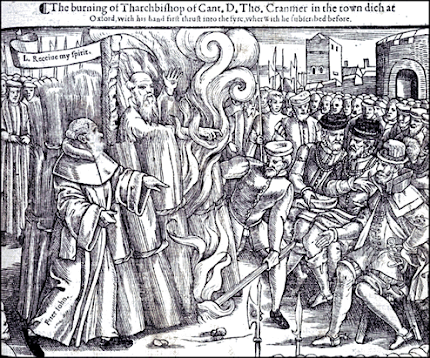
The burning of Tharchbishop of Cant. D. Tho. Cranmer in the town dich at Oxford, with his hand first thrust into the fyre, wherwith he subscribed before. [Click on the picture to see Cranmer's last words.]

Daily Bible Verse

Showing posts with label Presuppositional Apologetics. Show all posts

Tuesday, December 10, 2024

My YouTube Channel: Reasonable Christian

The Bible and the Bible alone is the word of God.  2 Timothy 3:16


I'm not an expert in making and uploading videos.  However, this is my first video uploaded to the Reasonable Christian channel in YouTube:  Reasonable Christian Apologetics channel.
Tuesday, October 18, 2016

Presuppositionalism Versus Evidentialism and Historiography


LAMED. For ever, O LORD, thy word is settled in heaven. (Psalm 119:89 KJV)


John Warwick Montgomery is a Lutheran and a historian. His apologetics method is to try to establish the "probability" of the truth of the Bible and the resurrection.  [I have apparently erred in using the word "late" here because it seems that John Warwick Montgomery is still among the living.  Thanks to one of my blog readers who pointed this out to me in the comments below.] However, probabilities are by their very nature uncertain. Probabilities do not yield truth or certainty. The propositional truth of Scripture is not a matter of empirical evidences, historical probabilities or rational arguments for the truth of the Bible. According to Dr. Gordon H. Clark evidentialism, historiography, and rationalism all lead to skepticism, not faith. And in fact, since all epistemology begins with unproven axioms, why would the historian fault the Christian for starting with the unproven axiom of Scripture. The Christian worldview is deduced logically from Scripture and we know the historical accounts in the Bible are true because the Bible is inspired of God.


Although I disagree with Montgomery's evidentialism and historicism as the beginning axiom for his Christian apologetic, he is certainly correct that the agnostic is wrong for presupposing the starting axiom of indecision. The atheist is equally wrong for presupposing that the relativism of science and empiricism establishes the worldview of atheism. Both agnosticism and atheism begin with unproven axioms as well.


We know Jesus lived because the Bible says so. There are little to no external evidences for the existence of Jesus.


You can read the quote from Montgomery here:


"Today, especially in university circles, agnosticism has become immensely fashionable. The days of the hidebound atheist appear to be past, but his agnostic replacement is in many ways even farther from the intellectual mainline. The atheist at least has recognized the necessity of taking a position on ultimate matters. The agnostic, however, frequently makes a demi-god out of indecision. Actually— as Heidegger, Sartre and other contemporary existentialists stress— all life is decision, and no man can sit on the fence. To do so is really to make a decision— a decision against decision. Historians, and indeed all of us, must make decisions constantly, and the only adequate guide is probability— since absolute certainty lies only in the realms of pure logic and mathematics, where, by definition, one encounters no matters of fact at all. I have tried to show that the weight of historical probability lies on the side of the validity of Jesus’ claim to be God incarnate, the Savior of man, and the coming Judge of the world. If probability does in fact support these claims— and can we really deny it, having studied the evidence?— then we must act in behalf of them. When Jesus said that he would spew the lukewarm out of his mouth (Revelation 3: 16), he was saying that action on his claims is mandatory. “He who is not with me is against me,” he plainly taught."

Montgomery, John Warwick. History, Law and Christianity: A Vigorous, Convincing Presentation of the Evidence for a Historical Jesus (Kindle Locations 800-809). New Reformation Press. Kindle Edition.

Tuesday, February 10, 2015

Is It Wrong for Christians to Argue? Quote of the Day: Dr. Gordon H. Clark


“But when they did not find them, they dragged Jason and some brethren to the rulers of the city, crying out, “These who have turned the world upside down have come here too.” (Acts 17:6, NKJV) 


In his commentary on the book of Philippians, Dr. Clark said the following in reference to Philippians 1:16, 17, 18:


Verse 16 continues the sentence in verse 15.  [Philippians 1:15, 16].  Those who had been emboldened to preach publicly were divided into two groups.  Some preached from good motives; some did not.  The former loved both Paul and the Gospel.  They knew and were inspired by the fact that Paul was completely devoted to the defense of the Gospel.
The word for defense is apologia: in technical theology, apologetics.  Some misguided Christians today repudiate argumentation.  The New Testament does not.  Not only is apologia in 1 Peter 3:15; it is also in Acts 22:1, 1 Corinthians 9:3, 2 Corinthians 7:11, and Philippians 1:7, as we recently saw.  Mark 9:10 has the disciples "questioning one with another" (suzeteo)--they were acting properly.  In Mark 12:28 a scribe had heard Jesus arguing with the Sadducees.  Acts 6:9 has some people disputing with Stephen and clearly Stephen disputed with them, as 6:10 [Acts 6:10] very forcefully indicates.  Barnabus in Acts 9:29 defends the recently converted Paul by telling the suspicious disciples that Paul disputed against the Grecians.  Well, these verses should be enough to silence those who think that a Christian should not argue.
 Dr. Gordon H. Clark.  Philippians.  (Hobbs:  The Trinity Foundation, 1996).  Page 28.
 See also:  Philippians.

For liberals and those who promote ecumenical reunion above Scriptural truth, arguing and polemics are the unforgivable sin for Christian fellowship.  But the reality is that those who are teaching heresy or those who contend out of selfish ambition are the ones who are creating the divisions.  The faith once delivered to the saints is to be "earnestly" contended for.  (Jude 1:3).

Tuesday, March 19, 2013

B. B. Warfield on Inspiration: An Inherent Flaw of His Position

These we first prove authentic, historically credible, generally trustworthy, before we prove them inspired. And the proof of their authenticity, credibility, general trustworthiness would give us a firm basis for Christianity prior to any knowledge on our part of their inspiration, and apart indeed from the existence of inspiration.  -- Benjamin B. Warfield

[Charlie's comments: The problem with Warfield's statements above and below is that it presupposes that empirical evidences can prove the Bible's authenticity.  As the late Dr. Gordon H. Clark clearly argued basing our faith on sensations, historical evidences, or the proofs of our knowledge of Christianity would ultimately result in skepticism.  We do not prove the Scriptures to be true based on reason or historical evidences or general trustworthiness.  History is relative and can be revised and rewritten.  History is man's opinion and can be rewritten.  The only basis for theological knowledge of God, the incarnation of Jesus Christ, and the way of salvation is through the divine revelation of God in the fully inspired and verbal inerrancy of Scripture.  The Scriptures claim to be the inspired word of God (2 Timothy 3:16; 2 Peter 1:19-21).  As Warfield concedes, the Scriptures themselves teach the doctrine of plenary verbal inspiration and inerrancy (1 Thessalonians 2:2-3).  The beginning point of all Christian faith is Scripture, not reason or historical proofs.  Reason leads to skepticism.  The idea that Christianity stands on the trustworthiness of evidences and Christian tradition ultimately leads to skepticism and agnosticism.  I totally disagree with Warfield's comments below.  Without inspiration of Scripture there would be no Christianity, contra Warfield.  The axiom of Christianity is, "Scripture is the Word of God."  

The inspiration of Scripture is not an afterthought as Warfield contends:  "We do not think that the doctrine of plenary inspiration is the ground of Christian faith, but if it was held and taught by the New Testament writers, we think it an element in the Christian faith;. . ."  No, the revelation of God comes to us in the written words of Scripture and if we had no other evidence for the life, ministry, crucifixion, and resurrection of Christ Jesus that would be enough.  As the Westminster Confession of Faith clearly states:

Chapter 1: Of the Holy Scripture. 
6.  The whole counsel of God concerning all things necessary for His own glory, man’s salvation, faith and life, is either expressly set down in Scripture, or by good and necessary consequence may be deduced from Scripture: unto which nothing at any time is to be added, whether by new revelations of the Spirit or traditions of men. (2 Tim. 3:15–17, Gal. 1:8–9, 2 Thess. 2:2) Nevertheless, we acknowledge the inward illumination of the Spirit of God to be necessary for the saving understanding of such things as are revealed in the Word: (John 6:45, 1 Cor 2:9–12)

The Westminster Confession of Faith (Oak Harbor, WA: Logos Research Systems, Inc., 1996).
While Warfield clearly contributed many solid theological insights to the Reformed theological tradition, this is not one of them.]


Let it not be said that thus we found the whole Christian system upon the doctrine of plenary inspiration. We found the whole Christian system on the doctrine of plenary inspiration as little as we found it upon the doctrine of angelic existences. Were there no such thing as inspiration, Christianity would be true, and all its essential doctrines would be credibly witnessed to us in the generally trustworthy   p 210  reports of the teaching of our Lord and of His authoritative agents in founding the Church, preserved in the writings of the apostles and their first followers, and in the historical witness of the living Church. Inspiration is not the most fundamental of Christian doctrines, nor even the first thing we prove about the Scriptures. It is the last and crowning fact as to the Scriptures. These we first prove authentic, historically credible, generally trustworthy, before we prove them inspired. And the proof of their authenticity, credibility, general trustworthiness would give us a firm basis for Christianity prior to any knowledge on our part of their inspiration, and apart indeed from the existence of inspiration. The present writer, in order to prevent all misunderstanding, desires to repeat here what he has said on every proper occasion—that he is far from contending that without inspiration there could be no Christianity. “Without any inspiration,” he added, when making this affirmation on his induction into the work of teaching the Bible53—“without any inspiration we could have had Christianity; yea, and men could still have heard the truth and through it been awakened, and justified, and sanctified, and glorified. The verities of our faith would remain historically proven to us—so bountiful has God been in His fostering care—even had we no Bible; and through those verities, salvation.” We are in entire harmony in this matter with what we conceive to be the very true statement recently made by Dr. George P. Fisher, that “if the authors of the Bible were credible reporters of revelations of God, whether in the form of historical transactions of which they were witnesses, or of divine mysteries that were unveiled to their minds, their testimony would be entitled to belief,   p 211  even if they were shut up to their unaided faculties in communicating what they had thus received.”54 We are in entire sympathy in this matter, therefore, with the protest which Dr. Marcus Dods raised in his famous address at the meeting of the Alliance of the Reformed Churches at London, against representing that “the infallibility of the Bible is the ground of the whole Christian faith.”55 We judge with him that it is very important indeed that such a misapprehension, if it is anywhere current, should be corrected. What we are at present arguing is something entirely different from such an overstrained view of the importance of inspiration to the very existence of Christian faith, and something which has no connection with it. We do not think that the doctrine of plenary inspiration is the ground of Christian faith, but if it was held and taught by the New Testament writers, we think it an element in the Christian faith; a very important and valuable element;56 an element that appeals to our acceptance on precisely the same ground as every   p 212  other element of the faith, viz., on the ground of our recognition of the writers of the New Testament as trustworthy witnesses to doctrine; an element of the Christian faith, therefore, which cannot be rejected without logically undermining our trust in all the other elements of distinctive Christianity by undermining the evidence on which this trust rests. We must indeed prove the authenticity, credibility and general trustworthiness of the New Testament writings before we prove their inspiration; and even were they not inspired this proof would remain valid and we should give them accordant trust. But just because this proof is valid, we must trust these writings in their witness to their inspiration, if they give such witness; and if we refuse to trust them here, we have in principle refused them trust everywhere. In such circumstances their inspiration is bound up inseparably with their trustworthiness, and therefore with all else that we receive on trust from them.

On the other hand, we need to remind ourselves that to say that the amount and weight of the evidence of the truth of the Biblical doctrine of inspiration is measured by the amount and weight of the evidence for the general credibility and trustworthiness of the New Testament writers as witnesses to doctrine, is an understatement rather than an overstatement of the matter. For if we trust them at all we will trust them in the account they give of the person and in the report they give of the teaching of Christ; whereupon, as they report Him as teaching the same doctrine of Scripture that they teach, we are brought face to face with divine testimony to this doctrine of inspiration. The argument, then, takes the form given it by Bishop Wordsworth: “The New Testament canonizes the Old; the INCARNATE WORD sets His seal on the WRITTEN WORD. The Incarnate Word is God; therefore, the inspiration of the Old Testament is authenticated by God Himself.”57


Benjamin B. Warfield, The Works of Benjamin B. Warfield, Volume 1: Revelation and Inspiration (Bellingham, WA: Logos Bible Software, 2008), 209-12.

Friday, November 26, 2010

YouTube - Debate: Does the Universe have a purpose?

YouTube - Debate: Does the Universe have a purpose? A debate between Dr. William Lane Craig and Dr. Richard Dawkins


This debate is a case in point that classical apologetics from below via the method of Thomas Aquinas is a dismal failure. Any apologetics from below is doomed since God can only be known personally through special revelation, not natural revelation or general revelation. Natural revelation leads "naturally" to atheism or agnosticism.


Thursday, November 25, 2010

What_is_Apologetics.mp3 (audio/mpeg Object)

What_is_Apologetics.mp3 (audio/mpeg Object)

Gordon H. Clark's discussion of and definition of apologetics is given in this lecture. The question and answer session at the end of the lecture is extremely interesting, particularly when Clark refutes empiricism and the idea that the five senses can be trusted as a reliable source of propositional truth. His example of the judicial/legal system as being frequently wrong stands out here. If the judicial system can be so often wrong, the implications for empirical science and the philosophy of science are astounding. Thomas Kuhn's book, The Structure of Scientific Revolutions, comes to mind here. Science, according to true believers, is self-correcting. However, as paradigms are continually shifting based on changing empirical evidences, it seems that science along with the legal system is frequently wrong. So what is a reliable source of propositional truth and revelation? Good question! Dr. Clark's lecture will force you to rethink your doctrine of general or natural revelation. Click on the title of this article or click here to listen to this lecture: What is Apologetics?


Support Reasonable Christian Ministries with your generous donation.