>

Martyred for the Gospel

Martyred for the Gospel
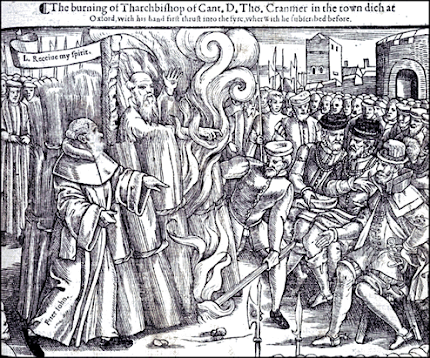
The burning of Tharchbishop of Cant. D. Tho. Cranmer in the town dich at Oxford, with his hand first thrust into the fyre, wherwith he subscribed before. [Click on the picture to see Cranmer's last words.]

Daily Bible Verse

Showing posts with label Pietism. Show all posts

Thursday, January 16, 2025

The Free Offer of the Gospel, Common Grace, and Pragmatic Church Growth: Part 4


Woe unto you, scribes and Pharisees, hypocrites! for ye compass sea and land to make one proselyte, and when he is made, ye make him twofold more the child of hell than yourselves. (Matthew 23:15 KJV)

Now the serpent was more subtil than any beast of the field which the LORD God had made. And he said unto the woman, Yea, hath God said, Ye shall not eat of every tree of the garden? (Genesis 3:1 KJV)

“The classical approach judges the validity of any experience on the basis of previously established theological principles. In contrast, Church Growth leans toward a phenomenological approach which holds theological conclusions somewhat more tentatively and is open to revising them when necessary in the light of what is learned through experience.”  C. Peter Wagner 


The Free Offer of the Gospel, Common Grace, and Pragmatic Church Growth:  Part 4


Drawing from my own personal history with the Pentecostal/Charismatic movement in the mid-1980s, I can tell you that the biggest concern for the Pentecostal/Charismatic movement was the growth and spread of the third wave or the Charismatic movement, not classical Pentecostalism.  As I have stated in previous posts, there was a huge split within the Assemblies of God denomination over precisely this distinction between classical Pentecostalism, which emphasized Wesleyan holiness and Christian perfection along with the baptism of the Holy Spirit and the spiritual gifts, and the Charismatic movement, which emphasized the gifts of the Spirit and church growth above all else.  C. Peter Wagner, Charles Kraft, and others associated with Fuller Theological Seminary pushed this sociological and business model of church growth using ecstatic experiences and emotional appeals to recruit naïve converts into the Pentecostal/Charismatic movement.

While I was a student at Asbury Theological Seminary, I was curious enough as a Pentecostal minister to study the church growth model as it was being taught at Asbury.  Although as a student at Southeastern College of the Assemblies of God, Lakeland, Florida--now known as Southeastern University--I was taught the penal substitutionary view of the atonement, the church growth class at Asbury advocated for the governmental theory of the atonement.  But instead of emphasizing the fact that Jesus satisfies the penalty for sin, the professor at that time emphasized the fact that Jesus died on the cross to demonstrate His love for lost persons.  The emphasis is that the atonement satisfies for the sins of all persons, not just the elect.  Thus, the Pentecostals and the Wesleyans will tell you that Jesus died for you because He loves you.  But is it true that Jesus died for everyone who has ever been born and will be born until the parousia or the return of Christ?  Does God really love everyone without exception, good and evil, elect and reprobate?  That seems to be the emphasis of the church growth movement.  I would contend that it is also the emphasis of the neo-Calvinist, neo-reformed movement as it has deviated from the classical Calvinism of the earliest Reformers and of the Westminster divines.  After all, common grace says that God loves the reprobate, although not savingly.  The Old Princeton theologian, Charles Hodge, said that Christ in some sense died for everyone without exception.  According to Hodge, Christ died to purchase common grace for the reprobate and all humanity.

Although tracing the roots of a movement can be open to the genetic fallacy, I think it is a legitimate endeavor to show how the church model began.  The so-called “father” of the church growth movement was missionary to India named Donald McGavran.  McGavran was associated with and supported by the Disciples of Christ, a mainline denomination which has been liberal since at least the modernist controversies of the 1920s.  The basic approach of the Disciples of Christ is no creed but Christ.  In fact, the denomination is even further away from the Churches of Christ and the Christian Church, all being descended from the Cane Ridge Revival of the Second Great Awakening.  At its beginning the movement emphasized the theology of no creed but the Bible.  So, it is a step away from the Bible to say that there is no creed but Christ.  (See:  History of the Disciples of Christ).

Rather than go into the details, of which there are many, I will focus on the basics of the church growth movement.  A critical evaluation of the movement by David J. Valleskey, a Lutheran professor of evangelism is available in PDF format here:  The Church Growth Movement: An Evaluation.  Although the article was written in 1990, it is still pertinent and applicable to today.

Following the principles of the church growth movement and its sociological approach, Tim Keller, a minister in the Presbyterian Church in America, a split from the Presbyterian Church in the United States of America, started a church in New York City.  Keller, allegedly a conservative Presbyterian with a commitment to the Westminster Confession of Faith, the Larger and Shorter Catechisms, did everything possible to distance himself from the biblical standards summarized by the Westminster standards.  In fact, Keller openly denied the doctrine of creation ex nihilo and asserted that God could have created the earth and humanity by way of theistic evolution.  Keller further advocated for the LGBTQIA+ view that sexual orientation is not inherently sinful, but only acting on the allegedly inborn sexual orientation is sinful.  This flies the face of the biblical view that humanity became sinful because of Adam’s original sin and that since the time of Adam’s fall every person on earth is totally corrupt through and through, also known as total depravity.

Keller adopted his own catechism by editing out the controversial doctrines of predestination, unconditional election, special providence, effectual call, and biblical inerrancy.  In fact, the inspiration and inerrancy of the Bible is not even mentioned in Keller’s New City Catechism.  Basically, following the principles of the Disciples of Christ and the Second Great Awakening, Keller decided that Calvinism and the Westminster standards are divisive doctrines that must be avoided in order to facilitate the growth of his church plant.  For Keller the correct way to preach is to appeal to pragmatic applications because secular society and much of Christianity today rejects truth.  People want to know how things “work”.  This is another twist on the church growth principle of appealing to felt needs.  What causes conversions is not biblical truth but how does this apply to me?

We live in a society in which people are skeptical of any kind of truth at all. In contrast to earlier eras, which accepted revealed truth or honored reason and scientific truth, many people today can’t simply receive a set of teachings without seeing how Christianity “works,” how it fleshes out in real life.

 This has implications for all of us. For Christians who are surrounded by today’s secular culture, it is important to hear the preacher dealing winsomely and intelligently with the problems of non-believers on a regular basis. This helps them address their own doubts and is also excellent “training” in sharing their faith. The evangelism programs of earlier eras do not always adequately prepare Christians for dealing with the wide range of intellectual and personal difficulties people have today with the Christian faith.

In a similar way, when the preacher speaks to believers, the non-Christians present come to see how Christianity works in real-life situations. For example, if you are preaching a sermon on the subject of materialism, and you directly apply the gospel to the materialism of Christians, you are doing something that both interests and profits non-Christians. Many listeners will tend to make faith decisions on more pragmatic grounds. Instead of examining the faith in a detached intellectual way, they are more likely to make a faith commitment through a long process of mini-decisions, by “trying it on” and by seeing how it addresses real problems.

Tim Keller.  Preaching in a Secular Culture.”  (See also:  The Gospel Coalition:  Preaching Christ in a Postmodern World).

According to Keller, the way to evangelize is preach the Gospel in a way that appeals to both Christians and non-Christians.  But the problem here is that Keller never defines what he means by the term “the Gospel”.  Does he mean the whole biblical revelation from Genesis to Revelation?  Does he mean the dialectical distinction between law and Gospel as advocated by the dialectical theologians of apparent contradictions and paradox?  Secondly, even granting that Keller means the Bible, why is he focused on what works rather than what is true?  One of the principles of the church growth movement as stated by the charismatic theologian and church growth expert, C. Peter Wagner, is that theology must be adapted to the audience.  That sounds a lot like relativism.  David J. Valleskey makes at least two insightful criticisms of the church growth approach:

We will keep on the right track if we remember two things. First, we need to remember that sociological research and principles do not build the Church. They serve a ministerial, supportive role, not a magisterial role.  Only the Holy Spirit, through the means of grace, builds the Church.

Sociological principles, therefore, must never assume a position of greater importance than the proclamation of the Word and administration of the Sacraments.  Nor dare they even be placed on the same level as Word and Sacrament.  The Church doesn’t grow when proper sociological conditions are met.  The Church doesn’t grow when proper sociological conditions are met and law and gospel are preached.  The Church grows when law and gospel are preached (Isaiah 55:10, 11).  The second thing we need to remember is that the Church Growth Movement tends to ignore the first thing we need to remember. C. Peter Wagner writes,

“Church growth...looks to social sciences as a cognate discipline,” . . . that is, a discipline which is allied with rather than subservient to theology. Wagner actually goes further than that. He says,

The classical approach judges the validity of any experience on the basis of previously established theological principles. In contrast, Church Growth leans toward a phenomenological approach which holds theological conclusions somewhat more tentatively and is open to revising them when necessary in the light of what is learned through experience.

Wagner’s thesis, it would appear, is that if your theology at present doesn’t have room for a factor that causes churches to grow, then it is time to revise your theology. Test by the results rather than by the Scriptures.  

Valleskey, “The Church Growth Movement: An Evaluation”, p. 19.

I am not saying that the classical Lutheran distinction between the moral law of God and the good news of the Gospel is dialectical theology.  However, in the postmodern era, this is often the approach of the neo-Calvinists and the neo-reformed who wish to distance themselves from the unpopular doctrines of double predestination and the distinction between general providence and special providence.  They wish to redesignate the doctrine of general providence as “common grace” and redefine the Gospel in terms of the semi-Calvinist compromise between Pelagianism and the doctrines of sovereign grace.  Tim Keller takes this even further by redefining the biblical standards according to what works.  Pragmatism is not a source for universal and absolute truth.  In fact, it is a compromise with utilitarianism on several levels.  It is basically saying that whatever works is best for the majority of the people affected by pragmatic decisions; in other words, the numerical growth of the confessional churches is profitable both for the congregation and for the denomination at large.  Who could argue that making converts is a bad thing?  The question is to which worldview are you making converts?  To a postmodernist Christianity or to a biblical worldview which is deduced from the infallible and inerrant Scriptures?

A further problem with Keller’s approach is that he presupposes that no one today makes any truth claims.  As the title of the course implies, in a postmodern world, truth changes from one person to the next so that we must accommodate to the relativism of today by appealing to what works rather than what is true.  This is an indirect attack on the Bible which says flatly that the written Word of God is true:  Sanctify them through thy truth: thy word is truth. (John 17:17 KJV).

Pragmatism, according to the late Dr. Gordon H. Clark, was devised by William James and John Dewey.  Dewey and James were also advocates for sociology and the utilitarian ethics which sought for the good of the most people.  In ethical terms, the end justifies the means.  So according to the church growth model, the congregations are growing, it works, and the end result justifies “retelling the Gospel” or relativizing the theology of the Bible to meet felt needs and to show non-Christians that Christianity is pragmatic and works for you in your situation.  This could also be applied to situational ethics.  (See:  Gordon H. Clark.  Pragmatism.”  Posted at the Gordon H. Clark Foundation.

Keller’s approach has no problem with ignoring the confessional standards or even re-interpreting the standards in ways that pragmatically work in the goal of making a congregation grow.  In other words, it is perfectly fine to not tell practicing homosexuals that their thoughts, words and deeds will condemn them on the day of the final judgment.  Instead, the church growth advocate should downplay the final judgment, the moral law of God and simply focus on some positive aspect of Christianity to drawn the homosexual into the body of Christ, even if that person is at first unrepentant.  After all, Presbyterianism acknowledges that the congregation is a mixture of truly regenerate believers and those who are unregenerate.

In times past I spent lots of time listening to The White Horse Inn, hosted at that time by Michael Horton and Rod Rosenblatt.  That podcast has since that time lost many of its listeners.  Horton, who pretended to be an outspoken opponent of the church growth movement, actually advocated for ignoring hypocrisy and unbelief in the congregation rather than arguing for true conversions and progressive sanctification.  For Horton, this evokes implications of the Anabaptist and pietist movements rather than communal covenant theology:

. . . Nevertheless, there was a general tendency among groups [of Anabaptists] . . . to (1) identify the true church exclusively with regenerate believers, (2) emphasize personal holiness (understood as complete separation from the world) rather than preaching and sacrament, as the mark of the church, and (3) display a marked spirit-matter dualism applied to outward forms and ministry of the church as well as the state.

Michael Horton.  The Christian Faith:  A Systematic Theology for Pilgrims On the Way.  (Grand Rapids:  Zondervan, 2011).  P. 748.

I do not object to the distinction between the visible church and the invisible church because this is a distinction taught in the Bible and affirmed by the Westminster Confession of Faith, 1647.   In particular the Larger Catechism says:

WLC 61  Are all they saved who hear the gospel, and live in the church? A. All that hear the gospel, and live in the visible church, are not saved; but they only who are true members of the church invisible.

WLC 62  What is the visible church? A. The visible church is a society made up of all such as in all ages and places of the world do profess the true religion, and of their children.

 (WLC 1:61-63 WCS)

But does this justify Horton’s implied suggestion that prayer, Bible study, catechism, and devotions are irrelevant to what goes on in the main worship services of the church?  Quoting Louis Berkhof, Horton comments:

. . . “The Pietists, on the other hand, manifested a tendency to disregard the visible church, seeking a Church of believers only, showing themselves indifferent to the institutional Church with its mixture of good and evil, and seeking edification in conventicles.”  . . . This is not quite fair.  After all, most pietists did not separate from the established churches, but created a church-within-a-church (ecclesiola in ecclesia).  Nevertheless, by treating the inner ring of the conventicle as the place where genuine discipleship occurs, in contrast to the official ministry of the church, pietism tended to marginalize the importance of that official ministry.  Neither reforming the church nor separating from it, pietism endured the outward forms while locating genuine Christian fellowship and nurture elsewhere.  By identifying the true church with the nucleus within the church that could be recognized as truly regenerate, pietism tended toward an overrealized eschatology, as if the invisible church could become fully visible before the consummation.  Ibid., p. 749.

Horton argues that the goal of the church is not toward true conversion, because that would be Anabaptist or pietist heresy!  Instead, the goal of the church should be to make as many members as possible by way of the outward ministries of preaching and the administration of the sacraments.  Make members and let God sort them out seems to be his theology of evangelism.  Horton downplays discipleship and catechism instruction because that would create an inner circle of pietistic elites.

Tim Keller took this approach to its logical conclusion, namely that truth does not matter.  What matters most is what works.  Ironically, Horton’s radical two kingdoms view of church and state is itself an overrealized eschatology since he does not believe that there will be a literal millennial reign of Christ on the earth.  Instead, he believes in the amillennial view of Christ’s return as indefinite and impending, not imminent.

Here ends part 4.  In part 5 I will continue my critique of the church growth movement and how Tim Keller relativized the doctrinal standards and the Bible to fit with the sociological and pragmatism model for church growth.

The next post is Part 5.

You can follow previous posts on this topic here:  Part 1, Part 2, Part 3.  


Wednesday, January 30, 2013

The First Use of the Moral Law: The World's Ruined: Sanctimonious sanctification...

This is a faithful saying and worthy of all acceptance, that Christ Jesus came into the world to save sinners, of whom I am chief. 16 However, for this reason I obtained mercy, that in me first Jesus Christ might show all longsuffering, as a pattern to those who are going to believe on Him for everlasting life. (1 Timothy 1:15-16 NKJV)

Someone posted this link to Jack Miller's blog, The World's Ruined, over at the Facebook group, Anglo-Reformed.  Here's a quotable quote from that article:

One can put to memory these biblical truths.  And yet, like the man who forgets his image upon walking away from a mirror, we can too easily fall back into a false assumption that our works are somehow in the mix as necessary for a right standing before God.  Why is it that that is our bent?  Simply said, by nature we are sinners, self-justifying sinners.  We not only fall short of God's moral law, we have woven into our nature the depraved hutzpah to self-justify our sinful persons before God, others, and ourselves. It's as natural as breathing.  That is what sinners do.  Fish swim.  Dogs bark.  Sinners self-justify.  We, who are made in God's image, created to be holy, though redeemed are yet still fallen.  And in and of ourselves - holy we are not!  The tension between that which we are and what we know we should be still bewitches us.  So by nature we still tend towards minimizing our sin and working to sell ourselves as good enough.  [Click here to read the article:  The World's Ruined: Sanctimonious sanctification...
The sad truth is that many Presbyterians these days dwell so much on the law that they forget that the Westminster Standards are a complete package and a systematic whole. Anglicans are equally guilty of misreading their own Formularies.  Propositions taken out of context from the rest of the system of doctrine can lead to error. What is more to the point is that the Westminster Confession draws some of its theology from the Thirty-nine Articles of Religion including the latter part of this section:

We cannot by our best works merit pardon of sin, or eternal life at the hand of God, by reason of the great disproportion that is between them and the glory to come; and the infinite distance that is between us and God, whom, by them, we can neither profit, nor satisfy for the debt of our former sins, but when we have done all we can, we have done but our duty, and are unprofitable servants: and because, as they are good, they proceed from His Spirit, and as they are wrought by us, they are defiled, and mixed with so much weakness and imperfection, that they cannot endure the severity of God's judgment. (WCF 16.5)  [This reminds me of the Prayer of Humble Access in the 1662 BCP's service for the Lord's Supper as well].
Compare what the Westminster Confession says with Articles 11-12 of the Thirty-nine Articles:


Article XI

Of the Justification of Man

We are accounted righteous before God, only for the merit of our Lord and Saviour Jesus Christ by faith, and not for our own works or deservings. Wherefore that we are justified by faith only is a most wholesome doctrine, and very full of comfort; as more largely is expressed in the Homily of Justification.


Article XII 

Of Good Works

Albeit that good works, which are the fruits of faith and follow after justification, cannot put away our sins and endure the severity of God's judgement, yet are they pleasing and acceptable to God in Christ, and do spring out necessarily of a true and lively faith, insomuch that by them a lively faith may be as evidently known as a tree discerned by the fruit. 
Notice that Article 11 says that justification by faith alone "is a most wholesome doctrine and very full of comfort."  Ironically, despite the aversion to the preaching of God's decrees to election and reprobation and the doctrine of double prestination, Article 17 upholds predestination as a doctrine that brings assurance and comfort to those who believe and dread to those who are driven to greater depths of depravity: 

As the godly consideration of Predestination and our Election in Christ is full of sweet, pleasant, and unspeakable comfort to godly persons and such as feel in themselves the working of the Spirit of Christ, mortifying the works of the flesh and their earthly members and drawing up their mind to high and heavenly things, as well because it doth greatly establish and confirm their faith of eternal salvation to be enjoyed through Christ, as because it doth fervently kindle their love towards God: so for curious and carnal persons, lacking the Spirit of Christ, to have continually before their eyes the sentence of God's Predestination is a most dangerous downfall, whereby the devil doth thrust them either into desperation or into wretchlessness of most unclean living no less perilous than desperation.   Article 17
Those ministers who refuse to preach the doctrine of predestination are essentially robbing God's people of a great comfort in their salvation.  I have argued in a recent article to be published at Testamentum Imperium that the doctrine of justification by faith alone is inseparable from the doctrine of eternal perseverance and the eternal salvation and security of God's elect individuals.   Grace is not a license to sin but it must be remembered also that the doctrine of unconditional election is not an election based on foreseen good works, merits or faith.  Nor is reprobation based on foreseen evil deeds that a person will later commit (Romans 9:11-13).  

According to the infralapsarian view of the logical order of the decrees, God regarded the whole human race as fallen and so unconditional election cannot be based on foreseen good works or merits.  The supralapsarian view is perhaps more consistent with Romans 9:11-13 since reprobation is not based on foreseeing the human race as fallen either.  Election and reprobation are both sovereign decrees of God and are therefore beyond prying into the secret will and being of God (Deuteronomy 29:29).  Ironically, the infralapsarians and followers of Van Til's theology insist that God bases His unconditional election on foreseeing all men as fallen.  Paul, on the other hand, insists that the only difference between Jacob and Esau is God's sovereign choice (Cf. Romans 9:11-18).  

The great comfort of this doctrine is that believers can know that, despite their many sins prior to their regeneration and conversion, all are covered by the particular atonement of Christ for all the sins of the elect--including their sins committed after their conversion and baptism!  Those who fall temporarily into grievous sins need not fear "losing their salvation," although they may lose their assurance of salvation for a time.  Assurance ultimately comes from the vicarious substitution of Christ for the elect in both His active obedience in living a sinless life and in His passive obedience by dying on the cross to pay the eternal penalty for all the sins of His elect sheep (John 10:11, 15-16, 26-30).

It is a great mistake to emphasize personal piety above a correct understanding of biblical doctrine.  Pietism almost always degenerates into legalism, moralism, and--eventually--liberalism.  The first use of the moral law still applies after regeneration and conversion because the law continually reminds us that we deserve hell simply on the basis of original sin and all actual sins we have committed and will commit in the future (Romans 3:9, 20, 23; 6:23; 7:7).  As Jack Miller so ably points out above, focusing on sanctification without understanding its basis in justification by faith alone--and I would argue unconditional election in the ordo salutis--is to encourage self-righteousness and a Pharisaical attitude.  I am reminded of Charles Spurgeon who said, "But for the grace of God I could have been lost as well," or something to that effect.

God could justly cut off anyone in the church and we should never forget that salvation is all of grace from beginning to end.  Lordship salvation and every other form of pietism invented by the Anabaptists and other groups is therefore not biblical.  We don't need more law.  What we need is to be reminded more of grace.  Mixing law with Gospel is not the answer.  I often feel way more convicted by my personal sins when I hear a sermon that properly distinguishes the law and Gospel than I have ever felt when someone has preached a moralistic, law-focused sermon.  After all, our natural propensity is to say to ourselves, "I'm not as bad as that other guy over there."

I highly recommend that you read Jack Miller's article as well.

This is a faithful saying and worthy of all acceptance, that Christ Jesus came into the world to save sinners, of whom I am chief. 16 However, for this reason I obtained mercy, that in me first Jesus Christ might show all longsuffering, as a pattern to those who are going to believe on Him for everlasting life. (1 Timothy 1:15-16 NKJV)

Wednesday, February 22, 2012

The President & The Prophet: Obama’s Unusual Encounter with Eric Metaxas - By Mark Joseph - The Corner - National Review Online

My remarks following are based on an article linked by the Aquila Report. As reported by Mark Joseph, President Obama was taken to task for his theological relativism on the issue of world religions and for his view that abortion is a viable choice for women with unwanted pregnancies. The speaker was Eric Metaxas. Unfortunately, the theologically liberal idea is that all religions have a core moralism that coincides. Basically, President Obama's theology is one that teaches that doctrine or special revelation is irrelevant as long as we all keep God's law. After all, we're all basically just good people.

Unfortunately, both Joseph and Metaxas have merely presented an Evangelical pietism that is as focused on a common moralism as that of the theological liberals. Evangelical pietists, although standing on the principle that Jesus Christ is the only way of salvation, diminish doctrine to a minimalism that is not that far removed from modernism and religious pluralism. Evangelicals and Catholics Together, the Manhattan Declaration, and other such documents are good examples of this. In fact, Joseph implies that "good" Roman Catholics are in because they believe in Jesus Christ and because they oppose abortion. Apparently, Joseph is unaware of the official Roman Catholic doctrine of implicit faith in other religions and that these other religions are not necessarily a cause for losing one's soul.

The short response here is that civil religion is as liberal and latitudinarian in some respects as the blatant religious pluralism and latitudinarianism of President of Obama. In the end, what unites Roman Catholics and Evangelicals is not a common doctrine of Jesus Christ and the cross, a common doctrine of Scripture, or a common doctrine of justification and the sacraments. What unites Roman Catholics and Evangelicals, according to Metaxas and Joseph is they are good Christians who uphold God's moral law which opposes the murder of the unborn. Of course abortion is infanticide. But how opposing murder makes one a Christian is a mystery. Many atheists and agnostics oppose abortion but that does not make them Christians.

What is problematic with this article is that it assumes Metaxas is some kind of prophet who foresaw the future. It does not require a divine revelation of the future to predict what President Obama might have been preparing to say at a prayer breakfast. Obama's background is in the liberal, mainline United Churches of Christ, a denomination that was once Reformed and Calvinist. Unfortunately, subjective pietism leads to this same loss of doctrinal and confessional standards--as any idiot can see when Protestants think Roman Catholicism is somehow akin to biblical Christianity and confessional Reformed theology. As the Westminster divines rightly saw in 1645, the pope is an anti-christ and the Roman Catholic Church is a synagogue of satan. Without realizing it Metaxas and Joseph are as liberal as Obama himself. Irony of ironies! Maybe Eric Metaxas ought to stick to Veggie Tales since his critique of Obama's theology is based on an anti-intellectualist perspective and a false Evangelical unity.

Click here to read the full article: The President & The Prophet: Obama’s Unusual Encounter with Eric Metaxas - By Mark Joseph - The Corner - National Review Online

Wednesday, February 15, 2012

Ecstatic Religion or Propositional Truth? Dr. Michael Horton - Faith & Experience - Listen to Free Online White Horse Inn Christian Radio Broadcasts


This broadcast of The White Horse Inn is just as pertinent today as ever. Too many Christians look to a mystical, ecstatic religious experience instead of looking to the objective work of Christ on the cross 2,000 years ago. Many Evangelicals and Pentecostal/Charismatics today derogatorily call this "head knowledge" or "dead orthodoxy". They emphasize the emotional side of the human being or human nature above all else. Indirectly what they are saying is that knowledge and understanding of Holy Scripture is irrelevant and only a direct encounter or intuition of the divine is all that matters. John Wesley felt his heart strangely warmed when he heard Luther's introduction to the Epistle to the Romans read at Aldersgate Chapel in 1738. (See Wesley's Aldersgate Experience). What folks miss is that Wesley was "thinking" about what he had heard read. In short, it was both an intellectual event and an emotional event. The propositional truth claims made by Luther in his introduction to Romans so captured Wesley's mind that he was moved both cognitively and emotionally to understand that he could never perfectly keep the moral law of God. Unfortunately, Wesley was inconsistent logically. As the late Gordon H. Clark once said, "If Arminians were more logical they wouldn't be Arminians!"

To place all the emphasis on the emotions or ecstatic religion is to be led astray. The Mormons, who teach doctrines diametrically opposed to orthodox Christianity, emphasize the emotions and having the heart warmed. I suspect they got that from Wesley. The New Age movement, Wicca, paganism, and Sufi Islam all emphasize mystical experiences with the divine. But are they true religions? No. Only a religion that draws its doctrines straight from God's Word written in the Holy Scriptures can claim to be theologically true and logically consistent.  (2 Timothy 3:15, 16, 17; 2 Peter 1:19, 20, 21).

May God's peace be yours today! (Romans 5:1-2)

Charlie


Faith and Experience
Sunday, January 29, 2012

Which is more important, Christ's objective work on the cross 2,000 years ago, or my subjective experience of God today? The good news that the Apostles announced concerned Christ's death, burial and resurrection, and the announcement of that objective fact creates faith and a rich experience of thankfulness and gratitude. But what happens if we preach experience itself, rather than the objective work of Christ? On this special edition of the program recorded live at Grace Lutheran Church in San Diego, Michael Horton and Rod Rosenbladt unpack the relationship between faith and experience.


To hear this edition of The White Horse Inn, click here: Dr. Michael Horton - Faith & Experience - Listen to Free Online White Horse Inn Christian Radio Broadcasts

Addendum:  Rod Rosenbladt's definition of saving faith as knowledge, assent, and trust has been refuted by Gordon H. Clark in his doctrine of saving faith as belief.  Clark said that the word for faith in the Greek New Testament is one word.  (See Strongs Concordance:  Faith).  The idea that Scripture teaches three aspects of faith is wrong since believing is synonymous with knowledge, assent, and trust.  Faith is all three in one and that one word means "believe".  See Clark:  What is Saving Faith?  The short of it is that these psychological categories or faculty psychology are not in the New Testament text.

Saturday, July 24, 2010

Has Pietism Infiltrated Reformed Churches? What Is Pietism?

Bob DeWaay rightly points out in this enlightening article that any teaching that promises something extra to make someone an "elite" Christian is rightly called "pietism." In other words, most of this stuff originates in the higher life movement or the Wesleyan holiness movement. What is particularly alarming is that many Reformed churches and individuals are buying into pietism without realizing its connection with Pentecostal/Charismatic doctrine. As DeWaay points out:

The essence of pietism is this: It is a practice designed to lead to an experience that purports to give one an elite or special status compared to ordinary Christians. The Bible addresses this error in the book of Colossians.4 The false teachers in Colossae claimed to have the secret to a superior Christian experience that would cause people to rise above the bad “fate” they feared. Paul went on to explain that they already had everything they needed through Christ and His work on the cross. Another way of stating this is: If after having fully trusted Christ’s finished work on the cross, you are told that you are still lacking something, you are being taught pietism.

Church history is littered with misguided pietistic movements. Many of them are linked with mysticism. I will give examples later in this article. Pietism can be practiced many ways including enforced solitude, asceticism of various forms, man made religious practices, legalism, submission to human authorities who claim special status, and many other practices and teachings. The fact that pietism has many forms can be seen by the litany Paul gives in Colossians:
Many thanks to Paula Coyle for posting the link to this article on her wall at Facebook.  You can read the full article here:  How Pietism Deceives Christians:  The Errors of Elitist Teachings in the Church.

Support Reasonable Christian Ministries with your generous donation.