>

Martyred for the Gospel

Martyred for the Gospel
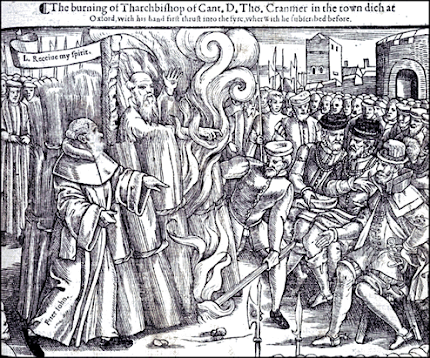
The burning of Tharchbishop of Cant. D. Tho. Cranmer in the town dich at Oxford, with his hand first thrust into the fyre, wherwith he subscribed before. [Click on the picture to see Cranmer's last words.]

Daily Bible Verse

Showing posts with label Pragmatism. Show all posts

Sunday, January 19, 2025

The Free Offer of the Gospel, Common Grace, and Pragmatic Church Growth: Part 5


“. . . The trouble with Arminianism is that it is illogical.  It retains parts of the Biblical message, but because of its unscriptural theory of free will rejects other parts.” 

Dr. Gordon H. Clark.  What Do Presbyterians Believe?  The Westminster Confession Yesterday and Today.  (Unicoi:  Trinity Foundation, 2001), p. 174.


For as the Father raises the dead and gives life to them, even so the Son gives life to whom He will. (Jn. 5:21 NKJV)


The Free Offer of the Gospel, Common Grace, and Pragmatic Church Growth:  Part 5


In a recent podcast, Tucker Carlson, a former news anchor at Fox News who is now an independent political pundit, made the point that in this technological era citizens of the United States of America are treated as commodities to be manipulated by government propaganda and leftist news organizations which work behind the scenes to manipulate the information given to the populace.  Another former reporter, Megan Basham, has exposed the fact that leftist news organizations are also working behind the scenes with Evangelical church denominations, Evangelical colleges and seminaries, and the church growth movement to change the Evangelical message from its commitment to biblical truth to an agenda of this worldly social justice called wokeism or Marxism.

The most prominent church growth advocate in Reformed circles was the late Dr. Tim Keller.  Keller’s views were openly in favor of theistic evolution, Biologos, LGBTQIA+ outreach, social justice, and other accommodations to the Marxist culture of the political left in our nation.  The argument given for doing this is that in order to reach the unchurched in our nation, we must reach them where they are.  The underlying basis for this argument was the unscriptural foundation of common grace, the free offer of the Gospel, the well meant offer, and pragmatic methods of evangelism.

As much as I do not like to appeal to my personal experience, I am old enough to remember a time before megachurches, the internet, artificial intelligence, and the church growth movement.  As a former Pentecostal of the 1980s era, I can recall that Pentecostals and Charismatics were somewhat conflicted over whether the Charismatic movement was a good thing or something bad.  But both sides boasted of the phenomenal growth of the Pentecostal/Charismatic movement worldwide.  The oft repeated appeal of the movement was the explosive growth of the Pentecostal/Charismatic movement in the global south, Africa, and Latin America.  Many of these countries were and are considered third world countries where many of the superstitions of the past continue in the popular culture.  So, the ground was ripe for the psychological manipulation of huge crowds at mass evangelistic campaigns organized by Charismatic preachers who taught the health and wealth gospel.  There was a huge response because the most of the people living in these countries were susceptible to being manipulated because of their extreme poverty and because of health and medical issues and the lack of access to modern healthcare facilities.

The supposed success of the church growth movement as it was adopted and promoted by Charismatics like C. Peter Wagner and Charles Kraft, was soon adopted by formerly holiness Pentecostal churches from the more classical background of the Wesley holiness and entire sanctification theology of the holiness movement of the 19th century.  In a previous post, I mentioned that I was converted at about age 8 or 9 at a Pentecostal Church of God, (which is headquartered in Cleveland, Tennessee), located in Weaver, Alabama.  That church was thoroughly old school and classical Pentecostal with a hard focus on Christian holiness and holy living.  The minister literally scared the hell out of me that day because he was preaching a fire and brimstone message.  In modern times this kind of preaching is few and far between among Church of God Pentecostal churches, Pentecostal holiness churches, or even Assemblies of God churches.  Most of the Pentecostal movement has moved on from the holiness movement and has adopted a more Charismatic approach to evangelistic preaching.

The popularity of the church growth principles spread to other denominations afterwards, but without the emphasis on the charismatic gifts of the Holy Spirit or the Pentecostal emphasis on entire sanctification and the empowerment for evangelistic and supernatural service.  (See Acts 1:8; Acts 2:1-4).  Southern Baptists like Rick Warren became widely popular and successful in building megachurches.  Joel Osteen de-emphasized his charismatic theology by transforming the Word of Faith doctrine into a positive thinking ministry much like the late Norman Vincent Peale’s ministry.  Osteen’s church in Houston is supposed the largest megachurch in the United States.

Methodists, Evangelical Free, Lutherans, and Presbyterians all happily jumped on the megachurch pragmatic growth bandwagon because results matter.  However, the end result was not discipleship and a growth in spiritual discipline as promised.  Instead, what ended up happening was a multitude of churches full of apparently baby Christians or blatantly unconverted sinners who just wanted to be part of the entertainment and who wanted their unfelt needs met.  The emphasis of church plants was to downplay theological differences by removing the denominational affiliation from the church sign, having superficial contemporary praise and worship songs, emulating the Charismatics who denigrated denominational divides as well.  The approach of the Charismatics was to attack denominationalism as Pharisaical and legalistic Christianity.

The same approach has been taken by the common grace Presbyterians.  They constantly attack classical Presbyterians and classical Calvinists of the Dutch Reformed variety as legalistic Pharisees, hyper-Calvinists, and navel gazers who are focused only on themselves.  Tim Keller employed this tactic many times in his videos.  Keller formulated his own catechism called the New City Catechism where he downplayed the Calvinist distinctives, the Reformed confessional standards, and the doctrines of sovereign grace like the effectual call, unconditional election and special providence.  Instead, Keller preached like an Arminian using the appeal of the doctrine of common grace, which said that God loves everyone, including the reprobate, but only gave special saving grace to the elect.  In his actual preaching, however, Keller never mentions the difference between special grace and common grace.  He only emphasized common grace while the doctrines of sovereign grace faded into the background.  I should also mention that Keller’s catechism is not part of any reformed doctrinal standard.  The Three Points of Common Grace of 1924 are not the official doctrine of any modern Reformed denomination except the Christian Reformed Church, although most of the Reformed churches act as if common grace is official doctrine.

Keller used common grace as well to justify moving his focus from personal conversion to a more group oriented theology of social justice, theistic evolution, and forging pragmatic Christian community over and above Gospel focused evangelism.  Another compromise made by Keller was to stop focusing on sanctification as a process and instead to preach only justification by faith alone.  The Westminster standards, in contrast, focused on a preaching of the three uses of the moral law of God and then preaching the Gospel.  The pedagogical use of the moral law was supposed to show the sinner that he or she was lost and without any hope of keeping God’s law perfectly or of meriting or earning any forgiveness for their sins.  Of course, Keller did mention this pedagogical use of the law at times in order to emphasize justification by faith alone.  But because sanctification was not emphasized, Keller’s view, much like the Escondido, California version of Westminster theology, was much more closely related to a once saved always saved Baptist version of the doctrine of the perseverance of the saints.

The Presbyterian denominations today by and large do not preach the holiness of God or that the assurance of salvation can be lost without any change in the habits of the converted believer.  The one exception would be the Ligonier Ministries, but even here the doctrines of the free offer of the Gospel and common grace prevails.  The free offer teaches that God desires to save everyone but has not decreed to save everyone head for head.  This is a blatantly contradictory proposition.  If God truly desired or wished to save everyone, then surely God would have decreed to save everyone head for head; He would have unconditionally elected everyone;  He would have given everyone special saving grace or the effectual call.  In other words, common grace and the doctrine of the well meant offer or free offer of the Gospel teaches that God’s will is twofold.  In one aspect, God is powerless to save anyone, just like the Arminians!  In the other aspect, God’s will is not frustrated, and He saves those whom He has predetermined in eternity to save.  This is violation of the law of contradiction.  In other words, just as I cannot both go to lunch and not got to lunch.  Obviously, if God is Almighty and can do whatever He pleases, then whatever God has decreed to come to pass is what God desires and wills to do.  God has only one will.  The command to repent and believe the Gospel is the prescriptive will of God, not an emotional appeal based on some fake offer of salvation to those who are predestined to reprobation.

When the Scriptures say that God does not desire that anyone should perish, those passages are always directed either to the Old Testament congregation or nation of Israel or to the New Testament church.  None of those passages are directed to the pagan nations or to anyone outside of the church.  (See: 2 Peter 3:21 NKJV, and Ezekiel 33:11).  Even then, God does desire that some of the Israelites would perish:

". . .indeed, therefore, I will stretch out My hand against you, and give you as plunder to the nations; I will cut you off from the peoples, and I will cause you to perish from the countries; I will destroy you, and you shall know that I am the LORD." (Ezekiel 25:7 NKJV).

The warning passages apply to everyone without exception, yet on the elect are preserved from apostasy by God.  (See Romans 11).  Those of us who oppose common grace and the free offer are not hyper-Calvinists.  Even the Prostestant Reformed Churches in America advocate for the promiscuous preaching of the general call of the Gospel to everyone without exception.  This is not hyper-Calvinism at all.  The difference is between what doctrines are taught and emphasized.  Classical Calvinism teaches that God hates the wicked and the reprobate, not that God loves everyone in general, but that He has a special love for the elect.  In fact, in providential time on earth, even the elect are under God’s wrath temporarily until they are effectually called, though God does love them from all eternity.  (See Romans 9:11-13).

The LORD has appeared of old to me, saying: "Yes, I have loved you with an everlasting love; Therefore with lovingkindness I have drawn you. (Jeremiah 31:3 NKJV).

In his commentary on Westminster Confession of Faith, Dr. Gordon H. Clark says:

Someone may be tempted to say that although God undoubtedly calls the elect, he does not call them only, as the Confession says.  Does not God call everybody?  The answer to this question is to be found by searching the Scriptures.  John 12:39, 40 says, “They could not believe, because Esaias said again, He hath blinded their eyes and hardened their heart, that they should not see with their eyes nor understand with their heart, and be converted, and I should heal them.”  In Romans 11:7 we read, “Israel hath not obtained that which he seeketh for; but the election hath obtained it, and the rest were blinded.”  Since God does all that he pleases (Psalm 135:6), and since his causative power is omnipotent, it follows that he has not called the lost, but the elect only.

Of course, ministers and evangelists call people too.  That is, they preach the Gospel publicly.  But the effective call, the call that actually produces the proper response, comes from God alone.

Clark.  What Do Presbyterians Believe?, p. 114.

Only by rejecting biblical logic, biblical and propositional revelation, can anyone preach Arminianism and the compromises of the neo-reformed churches.  Are some of these people truly converted and effectually called by God?  Certainly some of them can be.  I myself was converted under Pentecostal holiness preaching in the mid 1960s.  But should we be compromising with Arminianism or the church growth movement?  I don’t think so.  In fact, many of the megachurches today have little to no difference with outright theological liberalism and leftist immorality.  Tim Keller’s evangelism is a good example of that.  He openly promoted the idea that homosexuals cannot be changed by God and that we should just accept them as celibate Christians.  But the Bible says that celibacy is a gift of God, not a moral imperative given to immutable homosexuals.

I could go on.  However, I will take a break here and continue this series in Part 6. 

You can read my previous posts on The Free Offer of the Gospel, Common Grace, and Pragmatic Church Growth here:

Part 1, Part 2, Part 3, Part 4.  

See the conclusion here:  Conclusion.

Thursday, January 16, 2025

The Free Offer of the Gospel, Common Grace, and Pragmatic Church Growth: Part 4


Woe unto you, scribes and Pharisees, hypocrites! for ye compass sea and land to make one proselyte, and when he is made, ye make him twofold more the child of hell than yourselves. (Matthew 23:15 KJV)

Now the serpent was more subtil than any beast of the field which the LORD God had made. And he said unto the woman, Yea, hath God said, Ye shall not eat of every tree of the garden? (Genesis 3:1 KJV)

“The classical approach judges the validity of any experience on the basis of previously established theological principles. In contrast, Church Growth leans toward a phenomenological approach which holds theological conclusions somewhat more tentatively and is open to revising them when necessary in the light of what is learned through experience.”  C. Peter Wagner 


The Free Offer of the Gospel, Common Grace, and Pragmatic Church Growth:  Part 4


Drawing from my own personal history with the Pentecostal/Charismatic movement in the mid-1980s, I can tell you that the biggest concern for the Pentecostal/Charismatic movement was the growth and spread of the third wave or the Charismatic movement, not classical Pentecostalism.  As I have stated in previous posts, there was a huge split within the Assemblies of God denomination over precisely this distinction between classical Pentecostalism, which emphasized Wesleyan holiness and Christian perfection along with the baptism of the Holy Spirit and the spiritual gifts, and the Charismatic movement, which emphasized the gifts of the Spirit and church growth above all else.  C. Peter Wagner, Charles Kraft, and others associated with Fuller Theological Seminary pushed this sociological and business model of church growth using ecstatic experiences and emotional appeals to recruit naïve converts into the Pentecostal/Charismatic movement.

While I was a student at Asbury Theological Seminary, I was curious enough as a Pentecostal minister to study the church growth model as it was being taught at Asbury.  Although as a student at Southeastern College of the Assemblies of God, Lakeland, Florida--now known as Southeastern University--I was taught the penal substitutionary view of the atonement, the church growth class at Asbury advocated for the governmental theory of the atonement.  But instead of emphasizing the fact that Jesus satisfies the penalty for sin, the professor at that time emphasized the fact that Jesus died on the cross to demonstrate His love for lost persons.  The emphasis is that the atonement satisfies for the sins of all persons, not just the elect.  Thus, the Pentecostals and the Wesleyans will tell you that Jesus died for you because He loves you.  But is it true that Jesus died for everyone who has ever been born and will be born until the parousia or the return of Christ?  Does God really love everyone without exception, good and evil, elect and reprobate?  That seems to be the emphasis of the church growth movement.  I would contend that it is also the emphasis of the neo-Calvinist, neo-reformed movement as it has deviated from the classical Calvinism of the earliest Reformers and of the Westminster divines.  After all, common grace says that God loves the reprobate, although not savingly.  The Old Princeton theologian, Charles Hodge, said that Christ in some sense died for everyone without exception.  According to Hodge, Christ died to purchase common grace for the reprobate and all humanity.

Although tracing the roots of a movement can be open to the genetic fallacy, I think it is a legitimate endeavor to show how the church model began.  The so-called “father” of the church growth movement was missionary to India named Donald McGavran.  McGavran was associated with and supported by the Disciples of Christ, a mainline denomination which has been liberal since at least the modernist controversies of the 1920s.  The basic approach of the Disciples of Christ is no creed but Christ.  In fact, the denomination is even further away from the Churches of Christ and the Christian Church, all being descended from the Cane Ridge Revival of the Second Great Awakening.  At its beginning the movement emphasized the theology of no creed but the Bible.  So, it is a step away from the Bible to say that there is no creed but Christ.  (See:  History of the Disciples of Christ).

Rather than go into the details, of which there are many, I will focus on the basics of the church growth movement.  A critical evaluation of the movement by David J. Valleskey, a Lutheran professor of evangelism is available in PDF format here:  The Church Growth Movement: An Evaluation.  Although the article was written in 1990, it is still pertinent and applicable to today.

Following the principles of the church growth movement and its sociological approach, Tim Keller, a minister in the Presbyterian Church in America, a split from the Presbyterian Church in the United States of America, started a church in New York City.  Keller, allegedly a conservative Presbyterian with a commitment to the Westminster Confession of Faith, the Larger and Shorter Catechisms, did everything possible to distance himself from the biblical standards summarized by the Westminster standards.  In fact, Keller openly denied the doctrine of creation ex nihilo and asserted that God could have created the earth and humanity by way of theistic evolution.  Keller further advocated for the LGBTQIA+ view that sexual orientation is not inherently sinful, but only acting on the allegedly inborn sexual orientation is sinful.  This flies the face of the biblical view that humanity became sinful because of Adam’s original sin and that since the time of Adam’s fall every person on earth is totally corrupt through and through, also known as total depravity.

Keller adopted his own catechism by editing out the controversial doctrines of predestination, unconditional election, special providence, effectual call, and biblical inerrancy.  In fact, the inspiration and inerrancy of the Bible is not even mentioned in Keller’s New City Catechism.  Basically, following the principles of the Disciples of Christ and the Second Great Awakening, Keller decided that Calvinism and the Westminster standards are divisive doctrines that must be avoided in order to facilitate the growth of his church plant.  For Keller the correct way to preach is to appeal to pragmatic applications because secular society and much of Christianity today rejects truth.  People want to know how things “work”.  This is another twist on the church growth principle of appealing to felt needs.  What causes conversions is not biblical truth but how does this apply to me?

We live in a society in which people are skeptical of any kind of truth at all. In contrast to earlier eras, which accepted revealed truth or honored reason and scientific truth, many people today can’t simply receive a set of teachings without seeing how Christianity “works,” how it fleshes out in real life.

 This has implications for all of us. For Christians who are surrounded by today’s secular culture, it is important to hear the preacher dealing winsomely and intelligently with the problems of non-believers on a regular basis. This helps them address their own doubts and is also excellent “training” in sharing their faith. The evangelism programs of earlier eras do not always adequately prepare Christians for dealing with the wide range of intellectual and personal difficulties people have today with the Christian faith.

In a similar way, when the preacher speaks to believers, the non-Christians present come to see how Christianity works in real-life situations. For example, if you are preaching a sermon on the subject of materialism, and you directly apply the gospel to the materialism of Christians, you are doing something that both interests and profits non-Christians. Many listeners will tend to make faith decisions on more pragmatic grounds. Instead of examining the faith in a detached intellectual way, they are more likely to make a faith commitment through a long process of mini-decisions, by “trying it on” and by seeing how it addresses real problems.

Tim Keller.  Preaching in a Secular Culture.”  (See also:  The Gospel Coalition:  Preaching Christ in a Postmodern World).

According to Keller, the way to evangelize is preach the Gospel in a way that appeals to both Christians and non-Christians.  But the problem here is that Keller never defines what he means by the term “the Gospel”.  Does he mean the whole biblical revelation from Genesis to Revelation?  Does he mean the dialectical distinction between law and Gospel as advocated by the dialectical theologians of apparent contradictions and paradox?  Secondly, even granting that Keller means the Bible, why is he focused on what works rather than what is true?  One of the principles of the church growth movement as stated by the charismatic theologian and church growth expert, C. Peter Wagner, is that theology must be adapted to the audience.  That sounds a lot like relativism.  David J. Valleskey makes at least two insightful criticisms of the church growth approach:

We will keep on the right track if we remember two things. First, we need to remember that sociological research and principles do not build the Church. They serve a ministerial, supportive role, not a magisterial role.  Only the Holy Spirit, through the means of grace, builds the Church.

Sociological principles, therefore, must never assume a position of greater importance than the proclamation of the Word and administration of the Sacraments.  Nor dare they even be placed on the same level as Word and Sacrament.  The Church doesn’t grow when proper sociological conditions are met.  The Church doesn’t grow when proper sociological conditions are met and law and gospel are preached.  The Church grows when law and gospel are preached (Isaiah 55:10, 11).  The second thing we need to remember is that the Church Growth Movement tends to ignore the first thing we need to remember. C. Peter Wagner writes,

“Church growth...looks to social sciences as a cognate discipline,” . . . that is, a discipline which is allied with rather than subservient to theology. Wagner actually goes further than that. He says,

The classical approach judges the validity of any experience on the basis of previously established theological principles. In contrast, Church Growth leans toward a phenomenological approach which holds theological conclusions somewhat more tentatively and is open to revising them when necessary in the light of what is learned through experience.

Wagner’s thesis, it would appear, is that if your theology at present doesn’t have room for a factor that causes churches to grow, then it is time to revise your theology. Test by the results rather than by the Scriptures.  

Valleskey, “The Church Growth Movement: An Evaluation”, p. 19.

I am not saying that the classical Lutheran distinction between the moral law of God and the good news of the Gospel is dialectical theology.  However, in the postmodern era, this is often the approach of the neo-Calvinists and the neo-reformed who wish to distance themselves from the unpopular doctrines of double predestination and the distinction between general providence and special providence.  They wish to redesignate the doctrine of general providence as “common grace” and redefine the Gospel in terms of the semi-Calvinist compromise between Pelagianism and the doctrines of sovereign grace.  Tim Keller takes this even further by redefining the biblical standards according to what works.  Pragmatism is not a source for universal and absolute truth.  In fact, it is a compromise with utilitarianism on several levels.  It is basically saying that whatever works is best for the majority of the people affected by pragmatic decisions; in other words, the numerical growth of the confessional churches is profitable both for the congregation and for the denomination at large.  Who could argue that making converts is a bad thing?  The question is to which worldview are you making converts?  To a postmodernist Christianity or to a biblical worldview which is deduced from the infallible and inerrant Scriptures?

A further problem with Keller’s approach is that he presupposes that no one today makes any truth claims.  As the title of the course implies, in a postmodern world, truth changes from one person to the next so that we must accommodate to the relativism of today by appealing to what works rather than what is true.  This is an indirect attack on the Bible which says flatly that the written Word of God is true:  Sanctify them through thy truth: thy word is truth. (John 17:17 KJV).

Pragmatism, according to the late Dr. Gordon H. Clark, was devised by William James and John Dewey.  Dewey and James were also advocates for sociology and the utilitarian ethics which sought for the good of the most people.  In ethical terms, the end justifies the means.  So according to the church growth model, the congregations are growing, it works, and the end result justifies “retelling the Gospel” or relativizing the theology of the Bible to meet felt needs and to show non-Christians that Christianity is pragmatic and works for you in your situation.  This could also be applied to situational ethics.  (See:  Gordon H. Clark.  Pragmatism.”  Posted at the Gordon H. Clark Foundation.

Keller’s approach has no problem with ignoring the confessional standards or even re-interpreting the standards in ways that pragmatically work in the goal of making a congregation grow.  In other words, it is perfectly fine to not tell practicing homosexuals that their thoughts, words and deeds will condemn them on the day of the final judgment.  Instead, the church growth advocate should downplay the final judgment, the moral law of God and simply focus on some positive aspect of Christianity to drawn the homosexual into the body of Christ, even if that person is at first unrepentant.  After all, Presbyterianism acknowledges that the congregation is a mixture of truly regenerate believers and those who are unregenerate.

In times past I spent lots of time listening to The White Horse Inn, hosted at that time by Michael Horton and Rod Rosenblatt.  That podcast has since that time lost many of its listeners.  Horton, who pretended to be an outspoken opponent of the church growth movement, actually advocated for ignoring hypocrisy and unbelief in the congregation rather than arguing for true conversions and progressive sanctification.  For Horton, this evokes implications of the Anabaptist and pietist movements rather than communal covenant theology:

. . . Nevertheless, there was a general tendency among groups [of Anabaptists] . . . to (1) identify the true church exclusively with regenerate believers, (2) emphasize personal holiness (understood as complete separation from the world) rather than preaching and sacrament, as the mark of the church, and (3) display a marked spirit-matter dualism applied to outward forms and ministry of the church as well as the state.

Michael Horton.  The Christian Faith:  A Systematic Theology for Pilgrims On the Way.  (Grand Rapids:  Zondervan, 2011).  P. 748.

I do not object to the distinction between the visible church and the invisible church because this is a distinction taught in the Bible and affirmed by the Westminster Confession of Faith, 1647.   In particular the Larger Catechism says:

WLC 61  Are all they saved who hear the gospel, and live in the church? A. All that hear the gospel, and live in the visible church, are not saved; but they only who are true members of the church invisible.

WLC 62  What is the visible church? A. The visible church is a society made up of all such as in all ages and places of the world do profess the true religion, and of their children.

 (WLC 1:61-63 WCS)

But does this justify Horton’s implied suggestion that prayer, Bible study, catechism, and devotions are irrelevant to what goes on in the main worship services of the church?  Quoting Louis Berkhof, Horton comments:

. . . “The Pietists, on the other hand, manifested a tendency to disregard the visible church, seeking a Church of believers only, showing themselves indifferent to the institutional Church with its mixture of good and evil, and seeking edification in conventicles.”  . . . This is not quite fair.  After all, most pietists did not separate from the established churches, but created a church-within-a-church (ecclesiola in ecclesia).  Nevertheless, by treating the inner ring of the conventicle as the place where genuine discipleship occurs, in contrast to the official ministry of the church, pietism tended to marginalize the importance of that official ministry.  Neither reforming the church nor separating from it, pietism endured the outward forms while locating genuine Christian fellowship and nurture elsewhere.  By identifying the true church with the nucleus within the church that could be recognized as truly regenerate, pietism tended toward an overrealized eschatology, as if the invisible church could become fully visible before the consummation.  Ibid., p. 749.

Horton argues that the goal of the church is not toward true conversion, because that would be Anabaptist or pietist heresy!  Instead, the goal of the church should be to make as many members as possible by way of the outward ministries of preaching and the administration of the sacraments.  Make members and let God sort them out seems to be his theology of evangelism.  Horton downplays discipleship and catechism instruction because that would create an inner circle of pietistic elites.

Tim Keller took this approach to its logical conclusion, namely that truth does not matter.  What matters most is what works.  Ironically, Horton’s radical two kingdoms view of church and state is itself an overrealized eschatology since he does not believe that there will be a literal millennial reign of Christ on the earth.  Instead, he believes in the amillennial view of Christ’s return as indefinite and impending, not imminent.

Here ends part 4.  In part 5 I will continue my critique of the church growth movement and how Tim Keller relativized the doctrinal standards and the Bible to fit with the sociological and pragmatism model for church growth.

The next post is Part 5.

You can follow previous posts on this topic here:  Part 1, Part 2, Part 3.  


Wednesday, January 15, 2025

The Free Offer of the Gospel, Common Grace, and Pragmatic Church Growth: Part 3


2. And not for ours only. He added this for the sake of amplifying, in order that the faithful might be assured that the expiation made by Christ, extends to all who by faith embrace the gospel.

Here a question may be raised, how have the sins of the whole world been expiated? I pass by the dotages of the fanatics, who under this pretence extend salvation to all the reprobate, and therefore to Satan himself. Such a monstrous thing deserves no refutation.  John Calvin’s commentary on 1 John 2:2.


The Free Offer of the Gospel, Common Grace, and Pragmatic Church Growth:  Part 3


In this blog post I will now consider how the free offer of the Gospel and the 19th and 20th century doctrine of common grace is related.  In future posts I will then show how the free offer or well meant offer of the Gospel and common grace have influenced the pragmatic approach to church growth and evangelism.

The most controversial downgrade of Calvinistic Reformed theology since the Protestant Reformation happened in 1924 when the Christian Reformed Church decided that God loves the reprobate, that the reprobate can do civic good, and that there is some hope that those who appear to be reprobate can be persuaded to accept the effectual call of the Gospel.  Of course, modern day semi-Calvinists will tell you that this is only an apparent contradiction or paradox.  The controversy at Kalamazoo, Michigan began when certain moderate theologians in the Christian Reformed Church passed the Three Points of Common Grace at the 1924 General Synod and later excommunicated the conservative Dutch Reformed pastors and theologians who dissented from the compromising document.  The deposed ministers then formed the Protestant Reformed Churches in America.  (See:  The Three Points of Common Grace).

Early on in my theological education I learned that accommodation to the surrounding culture leads to compromise, to theological liberalism and even universalism.  Even the classical Pentecostals at the Assemblies of God Bible college where I did my undergraduate studies warned students about the dangers of theological liberalism.  However, today, semi-Calvinist reformed denominations or churches are telling its laity that there is nothing to see here and that they are actually Evangelicals and conservatives.  Just recently, Dr. Neil Stewart, the senior pastor of First Presbyterian Church, which is part of the Associate Reformed Presbyterian denomination, asserted that this is one of the most conservative denominations in America.  Either Dr. Stewart is ignorant of the controversies going on behind the scenes at the presbytery level and at the denominational seminary and college, i.e. Erskine Theological Seminary, and Erskine College, or Dr. Stewart is deliberately misleading the congregants.  (See:  Dissolution of the Catawba Presbytery;  see also, William B. Evans:  A Change in Ecclesial Affiliation).

If the doctrine of common grace is true, why is it that society is waxing worse and worse and not better and better?  The basic premise of the doctrine of common grace is that God loves the entire human race but has a special love for the elect.  Unfortunately, this leaves the semi-Calvinists open to the charge of elitism.  Calvinists are special, do you not know?  The Bible, on the other hand, says that the entire human race is fallen in Adam and under the wrath of God.  (Romans 1:18-21; Romans 5:12-14).  Such love!  The apparent contradiction or paradox here is that God supposedly loves and desires the salvation of the reprobate; but the reprobate have decided to damn themselves and frustrate God’s desire to save them.  Of course, this would imply that God only reprobates them because He foresaw that they would harden their hearts and refuse to be saved.  But is this not Arminianism?  Does God need to look into the future to learn what will happen in order to make His eternal and timeless decree?

Not only is the culture and society at large getting worse, but it seems to me that Evangelical churches, colleges, and seminaries are on a downward spiral as well.  Church splits and new seminaries and colleges are formed as liberalism arises; Yet, in time these same organizations and denominations tend to drift into liberalism themselves.  Even the terms Evangelical and reformed have been redefined in ways that are foreign to their original meaning.  Even Roman Catholics today claim to be “Evangelical” if they happen to trend toward a more conservative interpretation of Romanism. 

If common grace means that the reprobate can do civil and civic good, why is woke ideology, LGBTQIA+, secular humanism, social justice, and Marxism turning the national morality on its head?  What was once generally considered evil is not called good.  (Isaiah 5:20).  Children from kindergarten age are being nurtured by irrational parents and public school teachers into the ideology of transgenderism and homosexuality.  Criminals are now the victims of society rather than lawbreakers who victimize other citizens.  The progressive left is turning homelessness and crime into virtues of victimhood rather than an undermining of the virtues of individual responsibility and hard work.

Modernism was a dismal failure as a means of ushering in the utopian of a brave new world.  World War I put an end to that fantasy.  We live in a fallen world where moral evil causes crime, wars, and totalitarian regimes.  Yet, the so-called progressive “conservatives” who promote the theology of apparent contradiction tell us that common grace means that the world is getting better.  Some of them are postmillennalists and others are amillennialists.  The amillennialists tend toward a radical separation between the kingdom of God ruled in the ecclesiastical realm and the kingdom of secularism ruled by the civil government.  The postmillennialists tend toward a theonomic view where the civil realm is made better and better through the agency of natural law and the moral law of God.  Both views compromise with the culture in order to achieve the goals of their respective theological agendas.

The problem is that there is no common ground between the Christian worldview and the worldview of secularism and secular humanism.  The world views abortion, homosexuality, and surgical trans-sexuality as morally good.  The world views criminals as victims who have no responsibility for their crimes because of systemic racism, systemic homophobia/transphobia, etc., et. al.  However, the Bible condemns all of these things as violations of God’s moral law.  Natural law is supposed to be deduced from the cultures around the world.  But if this so, why so many different views of what is right and wrong in various nations and societies around the world.  C. S. Lewis used the existence of relativistic moralism as an argument for the existence of a moral God.  However, this, too, seems to be a dismal failure.  Why?  The human mind is corrupted by the noetic effects of sin and idolatry seems to replace the biblical God at every turn.

It would seem ironic, then, that the optimism of Kuyperian common grace would so soon replace modernism just after the first world war.  Common grace, like modernism, has failed miserably at making the world a better place to live for the reprobate and for elect and believing Christians alike. 

The pragmatic church growth is the attempt to use Pelagian and Arminian ways of preaching the Gospel in an attempt to persuade the reprobate which, biblically speaking, cannot be persuaded.  Using the corporate business model of selling the unchurched a felt need, these progressive Evangelicals pretend to preserve their conservative theology while in fact selling out to the culture of woke-ism, behaviorism, and Marxism.  They claim that after these persons are persuaded into joining their churches, that the new members will be transformed by the teaching of the church.  By this means, the progressives hope to reform and transform the culture at large.  The problem is that the teaching remains obscure, equivocal, and ambiguous by hiding behind the theology of paradox.  It fails to transform individuals or society.

Here ends this blog post.  I will explain the historical roots of the church growth movement, Tim Keller’s compromise of the Reformed theology, and how this is producing psychological conversions instead of actual conversions to Calvinist and reformed Christianity in my next post.

You can read my previous posts here:  Part 1, Part 2.

The next post is Part 4.

Tuesday, January 14, 2025

The Free Offer of the Gospel, Common Grace, and Pragmatic Church Growth: Part 2


“. . . By 1936 the signers of the Auburn Affirmation showed that they had captured the church by reorganizing Princeton Seminary and placing one of the signers on its governing board, by electing one of their number Moderator of the General Assembly [of the United Presbyterian Church in the United States of America], and, what was decisive, by excommunicating those ministers who had insisted on maintaining the Westminster standards in practice.  Thus, ministers who rejected the Scripture and all it contains were given authority, while men who believed the Bible and all it contains were rejected as disturbers of the peace.  Since that day the Westminster Confession has been a dead letter in that denomination, and now the process to drop it officially has begun.” 

Dr. Gordon H. Clark.  What Do Presbyterians Believe?  The Westminster Confession Yesterday and Today.  1st Ed.  1965.  (Unicoi:  Trinity Foundation, 2001).  P. viii.


The Free Offer of the Gospel, Common Grace, and Pragmatic Church Growth:  Part 2


I will now discuss the free offer of the Gospel or FOG.  This is closely related to another doctrine proposed by those who wish to water down the Bible and the best summary of the Bible ever produced, namely the Westminster Confession of Faith.  The other doctrine is called the well-meant offer of the Gospel.  The doctrine of the free offer of the Gospel presupposes that the reprobate wicked can be persuaded to believe the Gospel and thus moved from the category of reprobation to the category of unconditional election.  The justification for this is that we here on earth do not know what God’s eternal decree has foreordained to happen.  Since we have no knowledge of God’s hidden or secret decree, it is therefore justified to completely ignore the doctrines of predestination, special providence, regeneration/effectual calling and to preach the Gospel as any Arminian would preach it.  (Deuteronomy 29:29).

Those who promote the doctrines of the free offer of the gospel, common grace, and pragmatism in evangelism and mission will tell us that we should never mention predestination or special providence when preaching because those are doctrines that immediately irritate unbelievers and stand as roadblocks to our evangelistic mission.  Unfortunately, the downgrade begins with ignoring certain parts of Scripture and focusing on more favorable portions of Scripture instead.  These semi-Calvinists want to focus on the common ground that Calvinists and Arminians have instead of the differences and the distinctions.

In my Pentecostal days, it was often claimed that Pentecostals alone preached the full Gospel message.  Of course, what they meant by this was the supernatural gifts of the Holy Spirit, which they claim is normative for all times and places up until the parousia or the return of Christ.  The proposition comes from Acts 20:27  KJV.  “For I have not shunned to declare to you the whole counsel of God.” (Acts 20:27 NKJ)  Presupposing Pentecostal experiential theology, I suppose that could be one way to interpret that verse.  But Presbyterians focus on propositional revelation in the Scriptures, not experiential hermeneutics.  The Bible contains numerous propositions from which other propositions can be deduced.  These logical propositions can then be arranged into a system of propositional truths which is deduced from Scripture by good and necessary consequence:

WCF 1.6 The whole counsel of God, concerning all things necessary for His own glory, man's salvation, faith and life, is either expressly set down in Scripture, or by good and necessary consequence may be deduced from Scripture:  . . .  (Westminster Confession of Faith.  Of the Holy Scripture.)

The Presbyterian who truly believes that all Scripture is God-breathed, including ministers and the laity, has an obligation to believe all of the Scriptures.  As the late Dr. Gordon H. Clark once said, all Scripture is profitable for doctrine.  2 Timothy 3:16. This means that not only are the evangelistic verses appropriate for doctrinal teaching, but also the less significant portions of Scriptures like the genealogies and how many pots and pans were in the temple that Solomon built.  Since the Westminster Confession is arranged in a descending order of theological importance, the most important doctrine of Scripture is the doctrine of Sola Scriptura in chapter one.  Scripture alone is the written Word of God.  (2 Timothy 3:16; 2 Peter 1:19-21; John 10:35; Isaiah 8:20; Matthew 5:17-19).  The second most important doctrine of the Bible, according to the Westminster divines, is the doctrine of God as Triune.  The most important attributes of deity are dealt with in chapter 2, Of God, and the Holy Trinity.  However, the third most important doctrine of the Westminster Confession of Faith is the most controversial one, yet the most avoided doctrine.  It is the doctrine of predestination:  chapter 3, Of God’s Eternal Decree.

Dr. Gordon H. Clark lays out the issue that is most disturbing to unbelievers and Arminians:

The Protestant Reformation, the greatest religious awakening since the days of the Apostles, was characterized by a zeal to understand God’s Word.  Not only were its obvious teachings emphasized, e.g., the sufficiency of Christ’s work for our salvation and the uselessness of purgatory and penance, but also its deeper doctrines, e.g., predestination, were carefully examined.

However, two or three centuries later, after the love many had waxed cold, and when unbelief came in like a flood, the discouraged and fragmented faithful became Fundamentalists and were content to defend a few vital doctrines.  Sometimes they even said that Christians ought not to go too deeply into the Scriptures.  It is presumptuous, useless, and worst of all, divisive.

Such an attitude is not commended in the Scriptures themselves, nor was it the practice of the Reformers and the Westminster divines.  The Bible says that all Scripture is profitable for doctrine, not just some.  And the Reformers did not draw back from the difficult passages on predestination, foreordination, and God’s eternal decrees.  [Emphasis is mine.]  Really, these passages are not difficult to understand, though many people find them difficult to believe.  But if they are God’s words, then we should study, believe, and preach them.

The Westminster Confession, summarizing the Bible, asserts in Chapter III that God from all eternity did ordain whatsoever comes to pass.  Obviously, if God is omnipotent, if nothing can thwart his will, and if he decided to make a world, then all his creatures and all their actions must be according to his plan.

This is easy to understand; but many people find it difficult to believe that God planned to have sin in the world.  Does Chapter III of the Confession mean that God commits sin?  And even in the case of a man’s doing something good, does it mean that God makes the man do the good act while the man willed to do something evil?  These questions have perplexed many minds, but the first question is, What does the Bible say?  If the Bible talks about foreordination, we have no right to avoid it and keep silent.   [Emphasis is mine.]

Dr. Gordon H. Clark.  What Do Presbyterians Believe?, pp. 36-37.

On one side of the issue are those who oppose the doctrine of the free offer.  The objection is that it is impossible to persuade a person who has been unconditionally reprobated prior to the creation of the world by God’s eternal decree.  The opponents of FOG do not object to the promiscuous preaching of the Gospel everywhere on earth to all who will hear the message.  That is often a false misrepresentation used to label opponents as “hyper-Calvinists” who do not believe in evangelism or foreign missions. 

On the other hand, the proponents of the FOG will then argue two things.  First, they argue that we cannot know God’s secret will in His archetypal mind.  We can only have an analogical and ectypal knowledge of God’s will revealed in Holy Scripture.  From this they further infer that it would be confusing to the congregation to speak the truth emphatically that no one can come to Christ without first being born again.  This would upset those in the congregation who are not fully on board with what the Bible says about unconditional election and reprobation.  This objection is a telling indictment on those who refuse to teach all that the Bible says.

One proponent of the doctrine of the free offer is Dr. R. Scott Clark of Westminster Theological Seminary, Escondido, California.  He objects to David Engelsma’s contention that the Latin word for offer, namely offero, means only to present or exhibit:

Both Klaas Schilder (1890-1952) and Herman Hoeksema and more recently David Engelsma and Randy Blacketer have argued that when Dort and our theologians said, “offero” they only meant, “to present” or “to demand.” There is weighty evidence to the contrary however. For example, Caspar Olevianus (1536–87) used this term and its cognates frequently to mean “to offer with intention that the offer should be fulfilled if the recipients meet the condition of trust in Christ.” In his massive 1579 commentary on Romans and in his final commentary on the Apostles’ Creed, De substantia foederis gratuiti inter Deum et electos (1585) he used it frequently this way (e.g. “oblatum beneficium”) just as Dort later used it.


When our theologians wished to say “present” or “exhibit” or “demand” they had other verbs (e.g. “exhibeo” or “mando”) with which to do it. They did not need “offero” to perform the same function. Rather, when our theologians spoke of the “evangellium oblatum,” i.e., “gospel offered” in preaching, they believed that it entailed a well and sincerely meant revealed divine intention that whoever believes should be saved. As we shall see below, the semantic range of “offero,” as it was used by the orthodox is closer to “invitation,” than “demand.”

R. Scott Clark.  The Heidelblog, “The Reformed Tradition On The Free Or Well-Meant Offer Of The Gospel,” December 29, 2013.

Scott Clark then proceeds to argue in an equivocal manner that Christ is offered on the cross for the sins of the whole world.  I say that he is arguing equivocally because here he substitutes the Latin term oblatae or oblation for the word offero.  Any Calvinist worth his salt will instantly recognize that nowhere does Scott Clark even mention the fact that Christ died on the cross as a propitiation for the sins of all the elect in all times and places from the beginning of the world to the end of the world.  So, the offer of the Gospel is not effectual to all who hear it, as even Scott Clark must acknowledge.  Yet, the oblation that Christ was offered on the cross for the all the sins of those who are unconditionally elect is an effectual oblation or sacrifice which propitiates God’s wrath against the elect, who by original sin and total depravity are sinners.  Only the elect are provided for efficaciously by the cross of Jesus Christ.  This makes me wonder why Clark even brings it up?  Does Scott Clark think that there is a possibility that the person who is eternally decreed to reprobation can be persuaded?  In other words, Clark is deliberately conflating the atonement with the general call of the Gospel.  One is effectual and efficacious and the other is not.

Apparently, Scott Clark is offended that the general call of the Gospel is a command to repent and to believe the Gospel.  It is the Arminians who spend the most of their time trying to convince reprobate persons that the Gospel is true.  But this is because Arminians do not believe in total depravity or total inability.  Instead, Arminians believe that common grace makes depravity less than total.  Common grace, according to the Arminians lessens the effects of original sin so that libertarian free will is restored such that even the worst sinner has enough liberty to choose between two equal choices:  salvation and damnation.  But is that what the Bible says?  The so-called “reformed” doctrine of common grace is meant to be a compromise between the Westminster Confession of Faith and the doctrines of the Remonstrance.  The “reformed” insist that there are two kinds of grace:  1.  Special or efficacious grace, and, 2. Common grace that is not salvific.  So why does Scott Clark pivot to an Arminian presentation of the Gospel instead of preaching the biblical view of election, regeneration, and effectual call?  Is for pragmatic purposes?

John Wesley referred to the Arminian view of common grace as “prevenient grace.”  However, even here Wesley is misusing the term prevenient in a way that is opposed to the way the term in used in the Thirty-nine Articles of Religion in the 1662 Book of Common Prayer, which he as an Anglican clergyman would be obligated to believe.  But that is information to be discussed more fully in the next article.

The major problem with R. Scott Clark is that his view is to downplay the clear biblical doctrines of predestination, special providence, effectual calling, total depravity and to find a middle ground between free will and predestinaion:

In this regard, the approach of the Synod of Dort is in contrast to that of both the Remonstrants and the modern critics of the well meant-offer. Rather than making deductions from the revealed fact of God’s sovereign eternal decree, the Synod was committed to learning and obeying God’s revealed will, even if it seems paradoxical to us.  [Emphasis is mine.]

R. Scott Clark, Ibid.

In other words, R. Scott Clark rejects propositional revelation and instead proposes that we accept all Scripture as paradoxical--even when Scripture is crystal clear that God alone decides who will be saved and who will be lost.  For Scott Clark, the preaching of the general call of the Gospel must conform to the Arminian presentation of persuasion, begging the sinner to repent, and an outward appeal to libertarian free will.  Of course, Scott Clark denied all that by citing The Canons of Dort, Rejection of Errors 2:6.  But this debate has nothing to do with merits or congruent grace.  The problem is that Scott Clark talks out of both sides of his mouth.  Is election unconditional or is it conditioned on faith? 

That one is called by the preaching of the Gospel does not make one elect, because this call is common to elect and reprobates, on the condition of faith (sub conditione fidei).  R. Scott Clark.  Ibid.

Just above, Clark contradicts himself:

Having ordained the means of grace, God is free is to confer faith or not through the external Gospel call. [Emphasis is mine.]  The moral culpability for unbelief lies in those who “carelessly do not receive the Word of life” (verbum vitae non admittunt securi). “Therefore,” Dort says, justifying faith is the “Dei donum,” not because “it is offered by God to man’s free will,” (a Deo hominis arbitrio offeratur) but because faith is “conferred,” (conferatur), “inspired,” (inspiretur) and “infused,” (infundatur).  R. Scott Clark.  Ibid.

As you can clearly see, Scott Clark knows that his view is apparently contradictory or "paradoxical."  That's why he has to reject WCF 1:6 and propositional revelation in favor of a theology of paradox.  The Bible is not analogical revelation.  It is a logical and propositional revelation from God because God is Logic.  John 1:1. Man is responsible to obey God and the Gospel precisely because the moral law is written in man's heart in creation and because as God's image man is a rational creature.  (John 1:9; Genesis 1:27; Romans 2:14-15).  Mankind alone is created with rationality and holiness.  Animals, not being in God's image, cannot sin.

What is the apparent contradiction?  The apparent contradiction or paradox that Scott Clark favors is the idea that God "sincerely" desires or wills the salvation of the reprobate by giving them a well-meant offer of salvation.  But how could God both desire and will the salvation of those He has decreed to reprobation while withholding the grace of regeneration which He alone can bestow or confer?  We agree that God is the primary cause of their reprobation, and that the sinner is the secondary cause of his or her own unbelief, and, therefore, morally culpable for their own damnation.  The problem is that Scott Clark does not wish to acknowledge that sin is ultimately caused by God, and, by logical inference, so is the sin of unbelief.  We call that reprobation.  Scott Clark calls it paradox. 

Here ends Part 2 of my blog series on efficaciously the free offer, common grace, and pragmatic church growth.  I will post Part 3 in the near future.

You can read the previous post here:  Part 1.  You can read the next post here:  Part 3.


Friday, September 15, 2023

Is Assurance of Salvation a "Second Blessing"? A Short Response to R. Scott Clark


"Before regeneration a sinful human being does not think this way. He believes that God is too good to condemn anybody, and, besides, he himself is quite respectable. But the gift of faith changes his ideas. Jesus, whom he previously admitted to be an admirable ethical teacher, he now believes to be the Lord of Glory. The sins he has loved, he now hates, or at least begins to hate, for regeneration is not instantaneous perfection."  Dr. Gordon H. Clark


A. W. Pink quoted Walter Marshall, a British non-conformist in 1692:

We are to look upon holiness as a very necessary part of that salvation that is received by faith in Christ. Some are so drenched in a covenant of works that they accuse us of making good works needless to salvation, if we will not acknowledge them to be necessary, either as conditions to procure an interest in Christ, or as preparatives to fit us for receiving Him by faith. And others, when they are taught by the Scriptures that we are saved by faith, even by faith without works, do begin to disregard all obedience to the Law as not at all necessary to salvation, and do account themselves obliged to it only in point of gratitude—if it be wholly neglected, they doubt not but free grace will save them nevertheless. Yea, some are given up to such strong Antinomian[67] delusions, that they account it a part of the liberty from bondage of the Law purchased by the blood of Christ, to make no conscience of breaking the Law in their conduct.


Arthur W. Pink. The Doctrine of Sanctification (Kindle Locations 340-347). Chapel Library. Kindle Edition. 


I understand that R. Scott Clark is opposed to the Federal Vision error.  But the problem I have is that Scott Clark does not differentiate between misrepresentations of the Westminster Confession of Faith and the actual teaching of the Westminster Confession as it is deduced from the Scriptures.  Even worse, R. Scott Clark, who claims to be recovering the Reformed confessions, openly rejects the Westminster Confession on the issue of assurance of salvation.  Or maybe RSC made a typological error?  At any rate, he misquotes the WCF when he says:

Indeed, the divines insisted that believers do finally gain assurance “extraordinary revelation” through “the right use of ordinary means” (i.e., the preaching of the gospel, the use of the sacraments, and prayer). Contra Rome, this doctrine of assurance does not lead believers to lead immoral lives but to lead godly lives. The divines were concerned that people should not think that because they doubt and struggle that they are not or no longer believers. Rather, they were trying to encourage not discourage people.  R. Scott Clark, Heidelblog, "Does The Westminster Confession Contradict Calvin On Assurance And Faith?", October 20, 2016.

Unfortunately, the confession says just the opposite of what I have placed in italics in the quote.  The confession says, 

III. This infallible assurance doth not so belong to the essence of faith, but that a true believer may wait long, and conflict with many difficulties, before he be partaker of it:k yet, being enabled by the Spirit to know the things which are freely given him of God, he may, without extraordinary revelation, in the right use of ordinary means, attain there unto.l   WCF 18:3.

Westminster Assembly. The Westminster Confession of Faith: Edinburgh Edition. Philadelphia: William S. Young, 1851. Print.

It is often difficult to understand exactly what RSC is talking about.  Apparently, the Calvin versus the Calvinists school believed that assurance of salvation depended on an initial justification and a subsequent second blessing. Furthermore, I take it that the Calvin versus Calvinism school has something to do with the Federal Vision heresy where the FV proponents wish to make the Westminster Confessional Standards agree with their conflation of the visible church with the invisible church;  their conflation of the visible signs and seals of covenant with the invisible graces is one source of the problem.  Additionally, they misunderstand unconditional election, which God only grants to the elect. The adherents of the Federal Vision contend that election and regeneration are conveyed through baptism into membership in the visible church.  They also say that election and regeneration can be lost if the person commits apostasy or falls into grievous sins.  But this is not the position of the Bible or the Reformed confessions.


Oddly enough, RSC is making a similar error by misquoting both John Calvin and the Westminster divines out of context.  I say that because Calvin and the later Westminster divines were indeed dealing with their settings in life or cultural situations.  R. Scott Clark wants to conflate the cultural problems of the 16th and 17th centuries with the 20th and 21st centuries.  Calvin was dealing with the Roman Catholic undermining of the assurance of salvation.  The Westminster divines were dealing with both hypocrisy and the undermining of the assurance of salvation.

There is a dual problem today as well.  But the duality is that almost no one today actually fears God anymore.  So the problem is not so much the lack of assurance of salvation, but rather a lack of concern for their obedience.  Even the Romanists do not fear God anymore.  As Dr. Gordon H. Clark once remarked in relation to the doctrine of repentance, liberals think that God must be too good to damn anyone to hell:

The religious world of the present century has witnessed a tidal wave of anti-intellectualism. Inundated by the outright irrationalism of the Neo-orthodox and the existentialists, popular religion holds every intellectual decision – the acceptance of an intellectual doctrine – to be either insincere or trivial, and that only emotion is genuine and “authentic.” With the prevalence of such views, a further repetition of the Catechism seems called for. Repentance includes an “apprehension of the mercy of God in Christ.” Before regeneration a sinful human being does not think this way. He believes that God is too good to condemn anybody, and, besides, he himself is quite respectable. But the gift of faith changes his ideas. Jesus, whom he previously admitted to be an admirable ethical teacher, he now believes to be the Lord of Glory. The sins he has loved, he now hates, or at least begins to hate, for regeneration is not instantaneous perfection. By this change of mind he turns from sin to God; or, more accurately, this change of mind is his turning to God. Nor can this turning or conversion occur without a full purpose and endeavor to obey God’s law. There is nothing insincere in this. To use John Calvin’s remark, it is the pious assent of the mind.

Gordon H. Clark. What Is the Christian Life?  1990.  1992.  Third edition. (Unicoi:  Trinity Foundation, 2012).   Kindle Locations 270-279. Kindle Edition. 

I did my time in Bible college and seminary; but when I read the Heidelblog it is as if I am reading a foreign language.  I have read the classical systematic theologies.  I have read Charles Hodge, Louis Berkhof, Stephen Charnock, Lorraine Boettner, Gordon H. Clark, and even Van Til.  But when I listen to the podcasts from both the Westminster Seminary, Philadelphia, Pennsylvania and Westminster Seminary,  Escondido, California or read their posted literature, it is as if I am reading a foreign language.  Most of it has very little to do with the actual Scriptures or the Reformed confessions themselves.  One doctrine that you will never hear any of them mention, or at least only in brief, is the doctrine of predestination.  Almost everything these schools have to say is colored by their rose-colored glasses of common grace and their focus on christology and covenant theology as the alleged center of their system of analogical theology.

The main  problem I have with the Escondido school is the constant barrage of justification by faith alone as if that doctrine is all there is in the Reformed confessions.  The other problem is the constant appeal to modern and postmodern theologians as if their spin on church history is the interpretative grid which must be imposed on both the Scriptures and the Reformed confessions themselves.  These writers, including R. Scott Clark, wish to emphasize the total transcendence of God above all else so that the Scriptures become merely an ectypal condescension to the human level, not the very words of God univocally.  Of course, we are not omniscient and cannot see the total picture or think with super-intelligence as God does.  He knows everything intuitively and directly, while our knowledge as creatures is discursive and revealed to us through the innate image of God, natural revelation and special revelation; but that is another essay for another day.

The issue here is that R. Scott Clark overreacts to the Federal Vision error to the point that he has tendencies to misrepresent the actual warning passages in Scripture and how the Westminster Confession and the Canons of Dort address those issues.  The fact of the matter is that assurance of salvation does not always accompany conversion to Christ.  That's because many persons come from bad backgrounds, being former criminals.  Others come from a Romanist background and have no assurance.  But the vast majority of new converts--who may or may not be regenerate--have an attitude of easy believism.  That's because of the church growth movement and the influence it has on the denominations.  

Although the Escondido school pretends to reject the pragmatism of the church growth movement, they actually practice the same pragmatism.  Without new churches, new members and new ministers, seminaries tend to become irrelevant and die out.  So that means that there can be no real education in what Scripture actually says on the issues or even what the Reformed confessions say.  Instead the other graces of repentance, sanctification, and assurance must be either reinterpreted or downplayed.  John MacArthur, one of R. Scott Clark's most hated targets, at least emphasizes sanctification.  So RSC attacks pastors he does not like.  He continually attacks MacArthur as a legalist but most of the attacks are in fact straw man fallacies.  RSC also totally despises the late Dr. Gordon H. Clark on many levels.  GHC is a "hyper-Calvinist", a rejecter of the free offer and common grace.  He's one of those despised fundamentalists, according to RSC.

John MacArthur even preaches the doctrine of total depravity, which he calls the most hated doctrine in the world.  Although I somewhat agree, I think the most hated doctrine is the doctrine of predestination.  We are told to never talk about that one:  

There is also the case of the Bible professor in a so-called Christian college, who told me, "Even if you believe in predestination, don't let anyone know you do."  He constantly told his students never to study the subject nor mention it in their preaching.  One student who held his professor in high respect was shocked to find that the Bulgarian laborers with whom he worked in Chicago were extremely interested in the forbidden subject.  But if predestination is not to be mentioned, God must have made an embarrassing blunder in revealing it to us.  

Gordon H. Clark.  What Do Presbyterians Believe?  The Westminster Confession Yesterday and Today.  1965  Second edition.  (Unicoi:  Trinity Foundation, 2001).  P. 43. 

To get to my main point of this article, however, it seems to me that RSC and many other so-called Reformed theologians are hypocritical on so many levels that it would take a book length response to analyze them all.  RSC says that assurance cannot be lost but only diminished.  But the WCF says that assurance can be diminished and shaken to the point that it is almost completely lost.  (WCF 18:4).  Not only that, the Westminster divines were not as much concerned with assurance as with hypocrisy.  (WCF 18:1).  In fact, it is possible to have saving faith without having assurance of salvation at all.  (WCF 18:3, quoted above).  The doctrines of grace should not encourage looseness in morality but a growth in the grace and knowledge of our Lord and Savior, Jesus Christ.  (2 Peter 3:18).  

...And therefore it is the duty of every one to give all diligence to make his calling and election sure; that thereby his heart may be enlarged in peace and joy in the Holy Ghost, in love and thankfulness to God, and in strength and cheerfulness in the duties of obedience, the proper fruits of this assurance: so far is it from inclining men to looseness.  (WCF 18:3; 2 Peter 1:10)

Westminster Assembly. The Westminster Confession of Faith: Edinburgh Edition. Philadelphia: William S. Young, 1851. Print. .

R. Scott Clark and others focus on theology from below instead of the doctrines of sovereign grace taught in the Bible and summarized by the Westminster Standards.  I pray that God will grant them repentance.  The system of propositional truth deduced from the Bible and summarized by the Westminster Standards is what we are obligated to believe.   

I highly recommend this online edition of the Westminster Confession of Faith and the Larger and Shorter Catechisms:  The Westminster Standards.


Support Reasonable Christian Ministries with your generous donation.