>

Martyred for the Gospel

Martyred for the Gospel
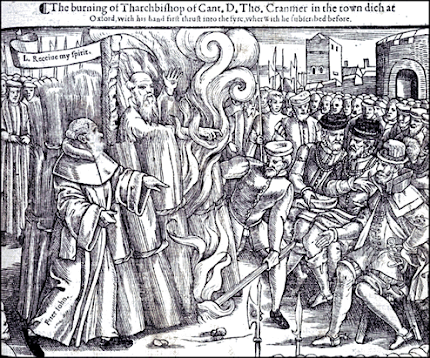
The burning of Tharchbishop of Cant. D. Tho. Cranmer in the town dich at Oxford, with his hand first thrust into the fyre, wherwith he subscribed before. [Click on the picture to see Cranmer's last words.]

Daily Bible Verse

Showing posts with label Bibleworks 9. Show all posts

Sunday, October 30, 2011

Nearly 1,500 Free Perseus Books for Logos 4 | Logos Talk: The Logos Bible Software Blog

Just when I thought Logos Bible was too expensive for the average person I received an e-mail offering the complete Perseus Project online classics library of Greek and Latin works. Did I mention this is free? What is even more amazing is that for those who are not proficient in Greek and Latin the words are still parsed and linked to the Logos lexicons which you have previously purchased and the works are linked to several Perseus lexicons available for free download as well. The abridged Liddell-Scott Intermediate Greek-English Lexicon works fine for the ancient Greek texts, although I would like to see the unabridged version made available even if I had to pay for it.

What makes this particularly useful is that when I'm doing a word study in the New Testament and a rare word pops up that only occurs a few times in the Koine Greek I can check the classical Greek usage if the word occurs in one of the classics available at Perseus. Logos has hyperlinked the notations in A Greek-English Lexicon of the New Testament and Other Early Christian Literature. Although I am not proficient enough to read classical Greek or classical Latin, with the tools available here I can do my own tedious translation to check the English translation available. It is also a great way to learn classical Greek or Latin. If you do not already own Logos Bible software you might be able to download the basic engine for free. Check out this frequently asked questions page and scroll down until you see the link to the minimal engine: http://www.logos.com/support/faq. To see the Logos blog article on this click here: Nearly 1,500 Free Perseus Books for Logos 4 | Logos Talk: The Logos Bible Software Blog

Don't get me wrong. I still prefer the speed and the cost effectiveness of BibleWorks 9. Since I already own Logos Bible, this welcome free offer makes my original investment well worth it. BibleWorks 9 is still the best way to go for those who want all the tools for exegesis at the most affordable price. Logos 4 still has a problem with lag on Windows 7 unless you have extra memory and/or the next level CPU processor. The minimal packages you get on a $400-$500 notebook computer does not give the response necessary for the floating cursor to bring up the defintions and parsings in the information window. For this reason in I normally use BibleWorks 9 for my every day studies. I only use Logos when accessing lexicons or commentaries I don't have in BibleWorks 9. Please try out the free classics for Logos if you already own Logos 4. If not, you can still download the minimal software and try out the Perseus classics for a sampling of what Bible software can do to enhance your knowledge of the Bible.


Saturday, August 27, 2011

See BibleWorks 9 in Action - YouTube

This video gives you a great idea of how useful Bibleworks 9 is. I love this software because it flies on my Windows 7 software while Logos drags. I hate waiting for windows to open. Bibleworks 9 has no memory hogging extra graphics. The focus is on the original languages and not bells and whistles and graphics.


Bibleworks is by far the best original languages software out there. Any student or teacher of the original languages will want this package. It's reasonably priced and there are even textual criticism apparatuses included in the same package at no additional cost. I particularly like the Reformed Confessions included and the search engines work great, although the search engine for the original languages is much better than the engine in the confessions because some of the confessions are only available in help file format and you need to search using quotation marks, etc. instead of the other search engine syntax. Watch the video below to see what is included in Bibleworks 9.


See BibleWorks 9 in Action - YouTube

Wednesday, August 24, 2011

Bibleworks 9: An Examination of John 3:3-8 Continued


Bibleworks 9: An Examination of John 3:3-8 Continued

[To read the Greek you can download the SBL Greek font here: SBL Greek.]

Jesus answered him, "Truly, truly, I say to you, unless one is born again he cannot see the kingdom of God." (John 3:3 ESV)

ἀπεκρίθη Ἰησοῦς καὶ εἶπεν αὐτῷ, Ἀμὴν ἀμὴν λέγω σοι, ἐὰν μή τις γεννηθῇ ἄνωθεν, οὐ δύναται ἰδεῖν τὴν βασιλείαν τοῦ θεοῦ. (John 3:3 GNT)

I want to continue the discussion of this passage of Scripture and show how Bible software like Bibleworks 9 can help you to study a passage, verse or word in Scripture with greater ease, comprehensibility, and depth than has been possible before. The above sentence spoken by Jesus is called a conditional sentence, which in syntactical terms is composed of a protasis and an apodosis. The protasis is the dependent clause indicating a condition which then results in consequence or apodosis. In English the protasis says, “unless one is born again . . .” The apodosis is “. . . he cannot see the kingdom of God.”

In Koine or New Testament Greek the protasis is “ἐὰν μή τις γεννηθῇ ἄνωθεν . . .” and the apodosis is “οὐ δύναται ἰδεῖν τὴν βασιλείαν τοῦ θεοῦ.” Most original languages Bible software does the parsing for you. Your Greek New Testament professor will tell that this is cheating. When I studied Greek in college we learned the paradigms in J. Gresham Machen's beginning grammar. (Example of a verb paradigm or chart). This was helpful in recognizing the most common forms of articles, nouns, and verbs. However, sometimes Greek is ambiguous since a one form of a verb could be deponent or it could be middle voice. This is how parsing guides and popups become extremely helpful. At one time I relied on hardcover parsing guides to clear up apparent ambiguities. Now I can see these issues instantly with the software parsing window. Of course, the student should not take the parsing guides as infallible or inerrant. Feel free to critically examine the parsings and compare your insights with critical commentaries to see if others have questioned the standard parsings as you have. There are guidelines for doing exegesis in an objective manner but I tend to study ad hoc unless I am doing an exegetical paper or formal exegesis. One should realize that there is no such thing as total or absolute objectivity when doing anything scientific, including exegesis and textual criticism. That does not mean that the exegete should not attempt to remain objective during the study. He or she should not draw final conclusions until the end of the study although preliminary conclusions can be drawn during various steps of the process.

What is particularly helpful about Bibleworks 9 is the Resource Summary tab in the Analysis Window. When pointing to a verse of Scripture in the Browse Window click on the Resource tab in the Analysis Window and a complete listing of the verse references comes up. Any word pointed to is brought up in the Analysis Window as a list of lexicons, grammars, dictionaries, and commentaries where this Greek, Hebrew or English translation of the word occurs. For example, A.T. Robertson's A Grammar of New Testament Greek in Light of Historical Research will show up wherever the highlighted or hovered over word or verse occurs in Robertson. So if I want to find out what Robertson has to say about conditional sentences I can open Robertson in a separate window and look for that section of the grammar dealing with conditional sentences or I can look at what comes up with the Resource tab in the Analysis Window.

So when I look at Robertson I find that there is no direct discussion of John 3:3 in regards to conditional sentences. I can only look at the entire discussion of conditional sentences and the four classes thereof on pages 1004-1027. This saves much time in looking through a hardcopy of Robertson. Now I can simply focus on the general discussion by studying the two types and four classes of conditional sentences and figuring out how that relates to my exegesis. The same time saving principle applies to the other grammars. The easiest way to get the feel for these basic principle of Greek grammar and syntax is to review a more basic grammar or an intermediate grammar. Robertson's discussions are not for the faint hearted.

Wallace is perhaps a more useful summmary of Robertson's four classes of conditional sentences. Class three is ἐάν + the subjunctive mood and it can be used in any verb tense with the negative particle μή. (See Greek Grammar Beyond the Basics, by Daniel B. Robertson. Included in Bibleworks 9). On page 682 Wallace says:

There is often a tacit assumption that the protasis of a condition indicates the cause and the apodosis tells the effect.

At any rate, when Jesus says that “unless a person is born again/from above” He is giving the condition for “seeing” the kingdom of God. This could be a metaphor for the kingdom of God as seen through the eyes of faith in the here and now but it might also have eschatological implications for what occurs after death in the final judgment. At any rate the cause of “seeing the kingdom of God” is having met the condition of being born again. Since the word for born again is in the passive voice it indicates that the person is being acted upon by an outside agent and not that the person is the cause of the action himself:

γεννηθῇ verb subjunctive aorist passive 3rd person singular from γεννάω

Notice the verb is in the subjunctive mood, aorist tense, and passive voice. We can tell all that because Greek is a formative language. That is we can tell the parts of speech from the formation of the words with prefixes and suffixes. I am being overly simplistic here but you get the point. The subjunctive indicates contingency or uncertainty from the human perspective. However, Wallace gives a necessary correction here:

The subjunctive is the most common of the oblique moods in the NT. In general, the subjunctive can be said to represent the verbal action (or state) as uncertain but probable. It is not correct to call this the mood of uncertainty because the optative also presents the verb as uncertain. Rather, it is better to call it the mood of proba­bility so as to distinguish it from the optative. Still, this is an overly simplistic defi­nition in light of its usage in the NT. (Ibid., 461).


Wallace's discussion of the passive voice bears this out as well:


III. Passive Voice
Definition
In general it can be said that in the passive voice the subject is acted upon or receives the action expressed by the verb. No volition–nor even necessarily awareness of the action–is implied on the part of the subject. That is, the subject may or may not be aware, its volition may or may not be involved. But these things are not stressed when the passive is used. (Ibid., 431).


That means that the word for “born” conveys the idea of the recipient being acted on from “above” or that he is born “again”. That's why Nicodemus asks how it is possible to be born a second time from his mother's womb? (John 3:4) Logically speaking such a thing could only be possible by the adult going back into his mother's womb and being born a second time. Therefore it is obvious that Jesus is speaking figuratively here and what He says is a spiritual reality that takes place by the means of faith or seeing through believing. This faith or seeing is impossible without a prior condition being fulfilled and the person himself cannot fulfill the condition. To do so would be as absurd as Nicodemus' proposed solution of re-entering the womb and being born a second time by natural birth. The text speaks for itself but the Arminian, the synergist and the semi-pelagian must read presuppositions into the text to make it say what it does not and cannot say, namely that the person's own faith causes God to regenerate the person who believes. But the text plainly gives the condition as preceding faith or seeing! Thus the Arminian must turn this verse upside down and backwards to make it fit with the theology of synergism and general grace. I will have more to say on this later.


As I said before this is not a formal exegetical paper so I will simply point out the highlights to show that the perspicuous reading of the text—even in English—clearly refutes the Arminian understanding of the new birth as subsequent to faith rather than the cause of faith (Ephesians 2:8-9).


Peace!


Charlie
P.S.  For the prior discussion  see:  Bibleworks 9:  Born Again

--
Reasonable Christian Blog Glory be to the Father, and to the Son : and to the Holy Ghost; Answer. As it was in the beginning, is now, and ever shall be : world without end. Amen. 1662 Book of Common Prayer

Sunday, August 21, 2011


Bibleworks 9: Original Languages Software for the Blogger and the Busy Pastor
Part One

[Note: The Greek and/or Hebrew language fonts are unicode SBL Greek or Hebrew. To view these you will need to download the Society for Biblical Literature fonts by clicking here: SBL Greek font and SBL Hebrew font. You can also download the SBL Greek New Testament for Bibleworks 9 here: SBL Greek New Testament with Textual Apparatus. You will need to follow the instructions carefully to get the Textual Apparatus to open properly in Windows. This does take some knowledge of how to navigate in the Windows Explorer windows and how to unblock blocked help files.]

If you are looking for a reasonably priced Bible software package, then Bibleworks 9 is for you. You will want to keep your hardcopy library of commentaries. However, doing exegetical work can be time consuming without computer software. Exploring the lexicons, Bible dictionaries, and grammars can be tedious when having to do the work via traditional hardcopy books. With the speed of the computer these studies are greatly expedited, especially if you are rusty with your parsing abilities for Greek and Hebrew.

Bibleworks 9's resources window conveniently lists all the resources with the verse reference you are exploring and any key words you may have highlighted in either Greek, Hebrew or English. The linked Strong's numbers and tense/voice/mood numbers in the KJV are helpful for comparison with the original language lexicons available there as well.

For example, suppose I want to study John 3:3. The exegetical information available is second to none. The way we read a passage makes all the difference. The way the pericope has been traditionally reinterpreted is telling. Most ministers explain away the context to fit preconceived ideas about what the text says plainly. Let's take verse 3 for example:

Jesus answered, "I assure you, unless someone is born anew, it's not possible to see God's kingdom." (John 3:3 CEB)

No translation of the Bible is perfect. The only version I could find that correctly translates the word δύναται is the Common English Bible, which correctly says “possible”. The definition of the Greek root word or lemma, δύναμαι, is to be able. Another way to understand this is ability or possibility. Those more familiar with Greek will recognize that “dunatai” is a verb indicative present middle 3rd person singular from “dunamai”.

The Greek New Testament verse for John 3:3 reads:

ἀπεκρίθη Ἰησοῦς καὶ εἶπεν αὐτῷ· ἀμὴν ἀμὴν λέγω σοι, ἐὰν μή τις γεννηθῇ ἄνωθεν, οὐ δύναται ἰδεῖν τὴν βασιλείαν τοῦ θεοῦ. (John 3:3 BNT)

Another way of translating the verse would be: . . . “[he] is unable to see God's kingdom.” This sounds a bit awkward in English, which is why most translations simply say “he cannot see God's kingdom” or something similar. But this is good English that does not necessarily convey the idea of inability. In English it sounds more like the person is not permitted to see or that he limits his own ability to see or something along that line. However, the inability to see is not based on the choices of the person but on an innate ability within the soul or the human nature. In other words, it is not a self limitation but a limitation caused by original sin and total inability.

This might sound as if I am drawing preliminary conclusions and perhaps that is true to some extent. However, Scripture interprets Scripture. Let's examine the Greek text more closely with some parsing and other information to help.

First of all, The New International Version and the New Living Translation mistranslates the first part of the verse from a literal perspective. The text does not say, “Jesus answered”. It says “Jesus answered and said to him . . .” I'm being nitpicky here but if every word is inspired by God in context then a translation should seek to be faithful to the text in every detail when translating.

The Basic Bible in English says, “He is not able to see . . .” This is a conditional statement that states something that grants the person an ability to see. Without something in addition to natural ability something else is absolutely essential. Exactly what is this additional something necessary for the ability to see the kingdom? John says that it is being “born from above” or “born anew”. Traditionally we call this being “born again”.

I realize I'm working backwards in the verse. But please bear with me. The diagramming tool comes in handy here as well. We can seen more clearly how the verse is laid out if we see it like this:


When Jesus says to Nicodemus, “Truly, truly . . .” or “Verily, verily . . .” he is using a form of Greek that emphasizes that what he is about to say is a formal claim to propositional truth or a logical and rational statement to be understood and comprehended well by the person listening. The Greek word here is ἀμὴν. It is the same word from which we get the English word, “amen”. When we say “amen” it means we agree with the truth being proclaimed or put forward by the speaker. It means we understand what the person is saying and we fully agree with it. That is also why we use the word “amen” at the end of prayers directed toward God. It means we have spoken truthfully and to the best of our knowledge and that we have submitted our petition to God fully expecting Him to answer our prayer either positively or negatively. When Jesus says, “Amen, amen . . .” He is asserting that what He is about to say is faithful and true.

And what does Jesus say to Nicodemus? Unless you have studied Greek it would be easy to miss the importance of grammar and syntax in understanding verses of Scripture. The reason for this is that not everything translates exactly into English. Even after years of study we sometimes have difficulty in putting the same Greek thoughts into a familiar English expression.

To be continued.....


Support Reasonable Christian Ministries with your generous donation.