>

Martyred for the Gospel

Martyred for the Gospel
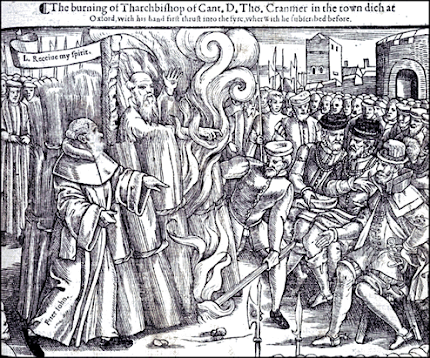
The burning of Tharchbishop of Cant. D. Tho. Cranmer in the town dich at Oxford, with his hand first thrust into the fyre, wherwith he subscribed before. [Click on the picture to see Cranmer's last words.]

Daily Bible Verse

Showing posts with label sovereignty of God. Show all posts

Tuesday, March 22, 2016

Does God Tempt Elect Believers or Reprobate Unbelievers?

"But notwithstanding this, God may when he sees fit deliver us to Satan, abandon us to a reprobate mind and lustful concupiscence, and in this manner ‘lead us into temptation’ by a righteous judgment as a punishment of our sinful self-indulgence . . ."  W. G. T. Shedd

"But though I should confess a hundred times that God is the author of it—which is very true—yet they do not promptly cleanse away the guilt that, engraved upon their consciences, repeatedly meets their eyes."  John Calvin

". . . so for curious and carnal persons, lacking the Spirit of Christ, to have continually before their eyes the sentence of God's Predestination is a most dangerous downfall, whereby the devil doth thrust them either into desperation or into wretchlessness of most unclean living no less perilous than desperation."  Archbishop Thomas Cranmer.  39 Articles of Religion:  Article 17:  Of Predestination and Election.


2 Thessalonians 2:11–12 (NKJV)
11 And for this reason God will send them strong delusion, that they should believe the lie, 12 that they all may be condemned who did not believe the truth but had pleasure in unrighteousness.


I am the first to admit that I have often erred in my past theological views and my understanding of the Bible.  I was an Arminian for many years.  On my blog I have tried not to delete past articles where I have erred or made erroneous statements.  Instead I have posted addendums with dates to show that I have corrected my errors.  Understanding the system of propositional revelation in the Bible can be difficult when we neglect to compare Scripture with Scripture and to think systematically.  It is to be noted that all the parts, all the verses of Scripture fit together into a system of theologically consistent truth.  None of the verses of Scripture can be isolated into stand alone aggregates or pebbles of truth.  All Scripture is inspired of God and all the Scriptures are profitable for doctrine (2 Timothy 3:16).  Furthermore, the Scriptures cannot be broken (John 10:35).

Having said that, it is often stated that God is not the author of man's sins.  This is in fact what the Westminster Confession of Faith clearly states:

Chapter V.  Of Providence

4.      The almighty power, unsearchable wisdom, and infinite goodness of God so far manifest themselves in His providence, that it extendeth itself even to the first fall, and all other sins of angels and men; (Rom. 11:32–34, 2 Sam. 24:1, 1 Chron. 21:1, 1 Kings 22:22–23, 1 Chron. 10:4, 13–14, 2 Sam. 16:10, Acts 2:23) and that not by a bare permission, (Acts 14:16) but such as hath joined with it a most wise and powerful bounding, (Ps. 76:10, 2 Kings 19:28) and otherwise ordering, and governing of them, in a manifold dispensation, to His own holy ends; (Gen. 50:20, Isa. 10:6–7, 12) yet so, as the sinfulness thereof proceedeth only from the creature, and not from God, who, being most holy and righteous, neither is nor can be the author or approver of sin. (James 1:13–14, 17, 1 John 2:16, Ps. 50:21)

The Westminster Confession of Faith (Oak Harbor, WA: Logos Research Systems, Inc., 1996).

But notice that not only does the WCF say that God is not the author or approver of sins but that "providence extendeth itself even to the first fall, and all other sins of angels and men."  In short, the idea that God loves the reprobate is absolutely refuted by the Westminster Confession.  The neo-Calvinist doctrines of common grace, the well meant offer of salvation, and the free offer of the Gospel are refuted by the system of truth revealed in Scripture and summarized in the Westminster Confession of Faith.  God so orders and governs all things such that all things work for the damnation of the reprobate.  This is clear because  providence works to the destruction of the reprobate.  We can deduce this from the fact that providence extendeth itself to all sins of men.    That would include the sin of unbelief and refusing to obey the Gospel, which inevitably results in eternal condemnation and eternal judgment (2 Thess. 1:8; 1 Pet. 4:17; 1 Peter 2:8; Romans 2:8; Isaiah 66:15; Matthew 25:41).

It should not be a strange thing to understand that it is our own depravity that causes us to sin.  Both the elect and the reprobate do sin.  Even after regeneration and conversion elect believers will sin, though not habitually.  Our habits are changed.  When we do sin, we are completely and entirely responsible and accountable to God for our sins and we are the direct cause of our own sins.  However, that does not mean that God is not the ultimate cause of all things, including all the sins of angels and men.  That's because God has only one eternally unchanging will.  His eternal decrees are secret to us until they are brought to pass in real time (Deuteronomy 29:29).  But we are not excused from obeying God's revealed precepts in the moral law and the Holy Scriptures simply because we do not know what God has purposed from all eternity in His divine decree.  God knows the end from the beginning and has ordained all things that come to pass (Isaiah 46:9-11; Ephesians 1:11).

Some will accuse me of hyper-Calvinism because of what I have said here.  But if so, then I am in good company with a host of Reformed theologians, including W. G. T. Shedd who said:

“The temptations of God are widely different from those of Satan. Satan tempts to overthrow, condemn, confound, and destroy. But God that, by proving his people, he may make a trial of their sincerity, to confirm their strength by exercising it, to mortify, purify, and refine their flesh, which without such restraints would run into the greatest excesses. [sic]. Besides, Satan attacks persons unarmed and unprepared, to overwhelm the unwary. ‘God, with the temptation, always makes a way to escape, that they may be able to bear’ whatever he brings upon them (1 Cor. 10:13). To some there appears a difficulty in our petition to God that he will not lead us into temptation, whereas, according to James, it is contrary to his nature for him to tempt us (James 1:13-14). But this objection has already been partly answered, because our own lust is properly the cause of all the temptations that seduce and overcome us. Nor does James intend any other than to assert the injustice of transferring to God the tempting concupiscence which we are bound to impute to ourselves because we are conscious of being guilty of it. But notwithstanding this, God may when he sees fit deliver us to Satan, abandon us to a reprobate mind and lustful concupiscence, and in this manner ‘lead us into temptation’ by a righteous judgment as a punishment of our sinful self-indulgence (Rom. 1:24,26, 28).”

Shedd, William G. (2011-07-19). Dogmatic Theology (Kindle Locations 21270-21279). P&R Publishing. Kindle Edition.

  Dr. Gordon H. Clark in his commentary on 1 Corinthians 10:13 says the following:

Some people wish to say that God does not "make" or send the temptation; He only "permits" it:  what He "makes" is the way to escape.  The motivation in distinguishing permission from making is to avoid compromising God's holiness.  Somehow the idea of God's permitting evil without decreeing it seems to absolve God from the charge that He is the "author" of sin, but one must be careful, both with respect to the logic of the argument and to the full scriptural data.  God "permitted" Satan to afllict Job; but since Satan could not have done so without God's approval, the idea of permission hardly exonerates God.  Is perfect holiness any more compatible with approving and permitting Satanic evil?  If God could have prevented, not only Job's trials, but all the other sins and temptations to which mankind is subject--is He less reprehensible than if He positively decreed them?  If a man could save a baby from a burning house, but decided to "permit" the baby to burn, who would dare say that he was morally perfect in so deciding?  Furthermore, the present verse says, "God will make with the temptation also the way of escape."  It is clear therefore that God makes both.  The term "permission" is nothing more than a literary device for describing God's use of created agents.  Otherwise, there is no difference between a permit and a decree. 

Gordon H. Clark,  First Corinthinans:  A Contemporary Commentary.  1975.  Second Edition.  (Jefferson:  Trinity Foundation, 1991).  Pp. 156-157.

God is not the direct author of sin just as He is not the author of what I am writing here in this blog.  I am its author and I am writing this.  But ultimately it is God who is the author of all things, including my existence, my thoughts, and my words.  I am not here claiming that what I write is divinely inspired or that I am infallible.  I am not a robot since I am not a biological machine or puppet.  I am a body and a spirit that together constitutes a soul.  And since God is the cause of all things, whatever I have said or done in my life is ultimately caused by God by His divine decree.  We are all capable of genuine choices because we have the natural ability through the intellect and the will to think and decide to do nor not do certain things.  God holds us accountable for our sins and for our obedience.  We do cooperate with God's grace in sanctification but even this is caused by God (Philippians 2:11-12).

Now, permission may distinguish an indirect causation from a direct causation, but permission as a substitute for decree does not solve the problem of maintaining God's holiness.  Calvin's Institutes III xxiii 8 is far more satisfactory.  Calvin preserves the idea of God's sovereignty.  He makes it clear that God is the Creator and therefore the first cause of all things that exist, that He governs all His creatures and all their actions.  Calvin repudiates the permissive theologians' idea of a finite deity.  Thus, if God is infinite, any decree He makes is holy for the simple reason that He, the sovereign, makes it. 

Gordon H. Clark, Ibid.  P. 158.

God is not a man.  He is the Creator.  Whatever God does is right for the simple reason that He is an infinitely holy God.  Therefore, even when God ordains the fall and all other sins that proceed from the fall, He remains a holy God.  To accuse God of wrong doing is blasphemy of the Holy Spirit.  To say that God could do nothing about the sins of angels and men is to make God a finite being and by definition not the God revealed in Holy Scripture.  [See also Calvin's Institutes III xxiii 3].

It is difficult to see how the purveyors of paradox and apparent contradictions can fail to understand that Calvin advocates a logically consistent system of theology and that the Westminster divines were equally consistent:

Calvin's Institutes:  Book III xxiii 8

8. No distinction between God’s will and God’s permission!

Here they have recourse to the distinction between will and permission. By this they would maintain that the wicked perish because God permits it, not because he so wills. But why shall we say “permission” unless it is because God so wills? Still, it is not in itself likely that man brought destruction upon himself through himself, by God’s mere permission and without any ordaining. As if God did not establish the condition in which he wills the chief of his creatures to be! I shall not hesitate, then, simply to confess with Augustine that “the will of God is the necessity of things,” and that what he has willed will of necessity come to pass, as those things which he has foreseen will truly come to pass. Now if either the Pelagians, or Manichees, or Anabaptists, or Epicureans (for on this issue we have to deal with these four sects) in excuse for themselves and for the wicked, raise by way of objection the necessity by which they are constrained because of divine predestination, they advance no argument applicable to the cause. For if predestination is nothing but the meting out of divine justice—secret, indeed, but blameless—because it is certain that they were not unworthy to be predestined to this condition, it is equally certain that the destruction they undergo by predestination is also most just. Besides, their perdition depends upon the predestination of God in such a way that the cause and occasion of it are found in themselves. For the first man fell because the Lord had judged it to be expedient; why he so judged is hidden from us. Yet it is certain that he so judged because he saw that thereby the glory of his name is duly revealed.


John Calvin, Institutes of the Christian Religion & 2, ed. John T. McNeill, trans. Ford Lewis Battles, vol. 1, The Library of Christian Classics (Louisville, KY: Westminster John Knox Press, 2011), 956–957.

It should be further noted that Calvin does say that God is the "author" of sin because God is the ultimate cause of the fall of angels and man and all sins that proceed from the fall:

Calvin's Institutes III xxiii 3

Let all the sons of Adam come forward; let them quarrel and argue with their Creator that they were by his eternal providence bound over before their begetting to everlasting calamity. What clamor can they raise against this defense when God, on the contrary, will call them to their account before him? If all are drawn from a corrupt mass, no wonder they are subject to condemnation! Let them not accuse God of injustice if they are destined by his eternal judgment to death, to which they feel—whether they will or not—that they are led by their own nature of itself. How perverse is their disposition to protest is apparent from the fact that they deliberately suppress the cause of condemnation, which they are compelled to recognize in themselves, in order to free themselves by blaming God. But though I should confess a hundred times that God is the author of it—which is very true—yet they do not promptly cleanse away the guilt that, engraved upon their consciences, repeatedly meets their eyes.

John Calvin, Institutes of the Christian Religion & 2, ed. John T. McNeill, trans. Ford Lewis Battles, vol. 1, The Library of Christian Classics (Louisville, KY: Westminster John Knox Press, 2011), 950–951.


Friday, March 14, 2014

John Calvin Admonishes Roger Olson's Attack on God's Goodness


You yourself, however, will one day find, to your sorrow, how abhorrent a crime it is to trifle and lie in this manner concerning the secret mysteries of God! And that you may clearly understand that you are not dealing with me in this your war against the truth, but with the supreme judge of heaven Himself, whose tribunal, you may be assured, you can never escape, ....  -- John Calvin


Roger Olson, the heresiarch Arminian and promoter of Open Theism, often calls the God of the Bible a monster when he is debating Calvinists.  Olson selectively reads Scripture and cuts out the hard verses against his position or uses massively revisionist exegetical presuppositions to explain away the plain meaning of the text.  Here the late John Calvin completely annihilates Olson's arguments:

"You yourself, however, will one day find, to your sorrow, how abhorrent a crime it is to trifle and lie in this manner concerning the secret mysteries of God! And that you may clearly understand that you are not dealing with me in this your war against the truth, but with the supreme judge of heaven Himself, whose tribunal, you may be assured, you can never escape, listen to that which Job testifies--and certainly under none other influence than the inspiration of the Holy Spirit--that the doings of Satan, and of the robbers who plundered him, were the works of God Himself. And yet Job never, in the extremest idea, charges God with sin. No such most distant intimation is found in the patriarch. On the contrary, he blesses God's holy name for what He had done by Satan and by these robbers (Job 1:21). So also when the brethren of the innocent Joseph sold him to the Ishmaelites, the deed was evidently a most wicked one. But when Joseph ascribes this to God as His work, so far is he from imputing sin to God, that he considers and lauds His infinite goodness, because that, by this very means, He had given nourishment to his father's whole family (Genesis 45:1-28.). "

-- John Calvin, The Secret Providence of God.

http://www.the-highway.com/Calvin2_sectionIII.html

Wednesday, October 24, 2012

Richard Mourdock: Under Attack by Atheists for Saying God Gives Life After a Rape

Is God sovereign over life and death or isn't He?  God is also in control of even evil acts of men.  He is not the direct cause of the acts of evil men since God is not the author of sin.  But God does have control over evil and immoral acts by secondary means.  (Isaiah 45:7; Amos 3:6; Romans 1:18-32; 1 Peter 2:8).  God gives life and God takes it away.  (Job 1:21-22).  Abortionists do not acknowledge God's sovereignty so it should not be surprising that the liberal left wishes to usurp God's authority over life and death and to violate the basic God given right to life.  

A Republican candidate is under attack by the godless leftists for daring to say that God is sovereign over the giving of the gift of life.  Why should we be surprised?

Click here to see Richard Mourdock's remarks on abortion:  GOP U.S. Senate Candidate Calls Rape Pregnancies A 'Gift From God' | ThinkProgress

Friday, April 20, 2012

God Knows the Future and Determines Every Detail Through His Providence


God knows every twist and turn in the road.  (Luke 9:57).


Who Knows What the Future Holds?
by Charlie J. Ray

As I listened to a lecture on predestination in the Old Testament given at Covenant College by the late Dr. Gordon H. Clark and recorded some years ago, I noted that one of the moderators joked about Dr. Clark's contention that all things that happen are predetermined right down to even our evil acts. I found it odd that a Presbyterian school would question that doctrine but the moderator made a remark that a football player thought that he and Dr. Clark had a divine appointment to meet in the parking lot after the lecture. The contention of some of the students was that God's sovereignty over everything down to the last detail would remove human responsibility. But Dr. Clark's answer was that knowledge makes human free agents accountable to God and responsible for their actions and choices—even if their actions were predetermined by God Himself. Romans 1:18-21 reveals that the Apostle Paul thought that general revelation or natural revelation did indeed give men enough knowledge about God to make them without excuse and fully accountable to God—even if salvation is impossible without special revelation (Romans 10:7-17; Acts 4:10, 12; John 5:24, 25; John 14:6; Matthew 1:21).

It seems silly to me for anyone to trust in themselves to persevere to the end. Why would I say that? Well, first of all anyone reflecting on their pre-conversion experience must acknowledge that although they had a general knowledge about God most folks think that they are just fine and good people go to heaven. So what does the Arminian have to offer in addition to that view? Pragmatically nothing at all. After all for the Arminian it is keeping God's laws—albeit a lowered standard that men can attain by their own “free will”--that ultimately decides who will go to heaven or hell. Basically a general offer of salvation and a general atonement only makes salvation a possibility for all. Since Jesus died for all then all must save themselves by believing the Arminian gospel of faith plus good works. Unfortunately even modern Lutherans are essentially Arminians since the vast majority of them no longer believe Luther's doctrine of the bondage of the will. Rather modern Lutherans believe there is a common grace given to all men without exception—this is nothing more than the semi-pelagianism of Rome masquerading as Lutheran or Reformed theology.

If God simply provides prevenient grace for all and the death of Christ for all, including those already in hell, then ultimately it is not faith in Christ that saves or even the justification of Christ that saves but it is the sinner who must save himself by working up a faith of his own. How this is possible when the Bible clearly says that sinners are spiritually dead in their trespasses and sins and are in fact slaves to sin and unable to choose Christ in the first place is indeed a mystery (Ephesians 2:1, 2, 3, 4, 5; Romans 5:8; Colossians 2:13; John 8:33, 34; Romans 6:17, 18).

Faith is itself a gift of God (Ephesians 2:8, 9). If we could give ourselves faith we would have something to boast about. But even our conversion and repentance are gifts of God, not something we do in and of ourselves (John 1:13; John 3:3-8; Acts 11:18). If common grace gave actual power to change then salvation would be universal and no one would be lost whatsoever. Salvation is not by “chance” but by God's divine degree (Proverbs 16:33). The truth is conversion is God's action upon His elect people chosen before the foundation of the world (Ephesians 1:4, 5, 11; Titus 3:5, 6, 7). If men had the ability to convert themselves who would want to go to hell? The reason they do not believe is because God has justly blinded them and rendered them unable to believe (John 12:40). A god who is unable to overcome sin and actually save anyone at all is a powerless and helpless god who is not God by any definition (Isaiah 45:20).

Trying to persuade dead men by mere reason is like trying to preach conversion and repentance in the graveyard. Dead men cannot and will not hear that the Law condemns them as unworthy sinners and justly damned to an eternity in hell. Dead men cannot and will not hear that God promises to save all who believe His Gospel and that Christ alone justifies. The catch here is that the “whosoever will” is limited to believers, not “potential” believers. Those who believe the Gospel do so because God opens their heart (Acts 16:14) and gives them repentance (Acts 11:18). Those who say that the doctrine of sovereign grace gives the reprobates an excuse that they are unable to believe have forgotten that Paul says they are without excuse (Romans 1:18, 19, 20, 21). Simply because they are commanded to believe (Mark 1:15; 16:16) but refuse to do so does not obligate God to grant them the ability to believe. Since they freely and willfully refuse and have enough knowledge from both general and special revelation they are accountable to God for their own unbelief (James 1:13, 14, 15). Only God can give good gifts to His elect and bring forth the fruit of faith and conversion (James 1:16, 17, 18; John 6:37, 44, 65).

The fact of the matter is that Scripture teaches that salvation is all of God (Exodus 14:13; 2 Chronicles 20:17; Lamentations 3:26). It is not our strength or our efforts that save us but literally God's sovereign will (Isaiah 31:1; Zechariah 4:6).

Furthermore, since God knows the future He determined it (Isaiah 46:9, 10; Deuteronomy 29:29). Nothing happens but by God's divine appointment (Hebrews 9:27). Even the crucifixion of Christ was predicted in the Old Testament (Psalm 22:1ff; Isaiah 53:1ff) and every single detail happened just as God had predetermined it, even down to Judas Iscariot and Pontius Pilate (Acts 2:22, 23; 4:27, 28). God knows His elect from before birth (Psalm 139:13, 16; Jeremiah 1:5; Galatians 1:15) and even every single thought they will think before they think it (Psalm 139:4). In fact, God knows all the days that His elect will live and the exact number of them and everything that will happen to them (Psalm 139:16).

God does not just have a general knowledge of the future or even a knowledge of many different possible outcomes. He knows exactly what will happen because in fact He determined it (1 Peter 2:8; Romans 9:11, 12, 13; Proverbs 16:33; Matthew 1:20, 21, 22, 23; John 1:47, 48). The idea that God provides a general grace that fails to save the vast majority of those it is supposed to provide salvation for is foreign to Scripture. Mere possibility is no guarantee that anyone at all will be saved. The doctrines of grace and the Scriptures, however, show that every single elect person God intended to save before creation will in fact be saved and all the sins of the elect were paid for on the tree by Jesus Himself (1 Peter 2:24; Revelation 13:8). All of the elect will be called from the four corners of the earth and it is not possible that even one of them will be deceived (Matthew 24:24, 31; Mark 13:22, 27).

It is not true that Calvinists need not evangelize because God's appointed instruments and means are the preaching of the Gospel and special revelation. Not one of the elect will be saved apart from God's normative means (Romans 10:7-17; Matthew 28:18-21). In fact famous missionaries like William Carey and Stanley Livingston were Calvinists.

The bottom line is that double predestination is a great comfort for believers because they know that the works of the law do not apply to them. All the promises of God in Christ are yes and amen! (2 Corinthians 1:20). Predestination is only discouraging for those who continually refuse to believe that they cannot earn or merit salvation and that salvation is completely a free gift of God. Those who refuse to accept that salvation is all of God thrust themselves into eternal insecurity and fear for their souls. The 39 Articles of Religion makes this doctrine clear in Article 17, which is itself drawn from the most certain warrant of Holy Scripture. (See Article 17).

God knows the obstacles ahead in the road. But nothing can separate God's elect from His love or His promises (Romans 8:28-33).


Tuesday, February 07, 2012

The Inspiration of the Bible Is a Sovereign Act of God

The Inspiration of the Bible Is a Sovereign Act of God

Is God Evil? Carl Beisner

The Reformed answer of Luther, Calvin, the Westminster Divines, and others also denies proposition 3, but on different grounds. They argue that although it would not have been logically impossible for God to create only moral creatures that would never sin, He in fact created a moral world with creatures whose evil He foreordained for His own good purposes—to display His justice in punishing some (Prov. 16:4) and His grace in redeeming and pardoning others (Eph. 1:5–6; 2:7).
Does this mean God justifies His means by His ends? Yes. Is that wicked? No. An end-justifies-the-means ethic is fallacious and therefore wicked for finite men (who can neither control nor know all the results of their choices), but it is perfectly fitting for the infinite God (who both controls and knows all the results of His choices)–and, after all, God being supreme need not justify His choices to anyone:
So then He has mercy on whom He desires, and He hardens whom He desires. You will say to me then, “Why does He still find fault? For who resists His will?” On the contrary, who are you, O man, who answers back to God? The thing molded will not say to the molder, “Why did you make me like this,” will it? Or does not the potter have a right over the clay, to make from the same lump one vessel for honorable use and another for common use? (Rom. 9:15–21).
Does the reality of evil make the existence of the Christian God impossible? No. For good reasons, God created a world that contained evil. For those same reasons, as we have seen, the Christian position does not self-contradict.

From:  How Christians Should Approach the Problem of Evil

--
Reasonable Christian Blog Glory be to the Father, and to the Son : and to the Holy Ghost; Answer. As it was in the beginning, is now, and ever shall be : world without end. Amen. 1662 Book of Common Prayer

Sunday, July 17, 2011

Why Arminianism and "Common Grace" Lead to Liberalism


Thursday, March 25, 2010

Wednesday, January 06, 2010

1552 Book of Common Prayer: Prayer for Rulers in Authority

ALMIGHTIE and everlastyng god, we be taughte by thy holy word, that the heartes of kinges are in thy rule and governaunce, and that thou dooeste dispose, and turne them as it semeth best to thy godly wysedome: we humbly beeseche thee, so to dispose and governe the heart of Edwarde the sixth, thy servaunt, our king and governoure that in al his thoughts, wordes, and workes, he may ever seke thy honor and glory, and study to preserve thy people committed to his charge, in wealth, peace, and godlynes. Graunt this, O mercifull father, for thy deare sonnes sake Jesus Christ our Lorde. Amen.


Notice from the above that Archbishop Thomas Cranmer upholds the doctrine of the sovereignty of God over even the heart, thoughts and mind of kings and rulers. The line reading, "we be taught by thy holy word, that the hearts of kings are in thy rule and governance, and that thou dost dispose, and turn them as it seemeth best to thy godly wisdom: we beseech thee, so to dispose and govern the heart of Edward the sixth, thy servant, our king and governor that in all his thoughts, words, and works, he may ever seek thy honor and glory...," is in fact a Calvinistic or Reformed prayer in that it says specifically that God is in control of everything the king says and does to accomplish God's will. The Scripture texts from which Cranmer draws the theology of this prayer are Proverbs 21:1; Psalm 33:13-15; Ezra 6:22; Hebrews 4:12.

There are many other references to the sovereignty of God in the Scriptures but we are often taught to overlook them as they are explained away by the Arminians. I would highly recommend Loraine Boettner's book, The Reformed Doctrine of Predestination. Boettner's book is available online at: The Reformed Doctrine of Predestination.

Support Reasonable Christian Ministries with your generous donation.