>

Martyred for the Gospel

Martyred for the Gospel
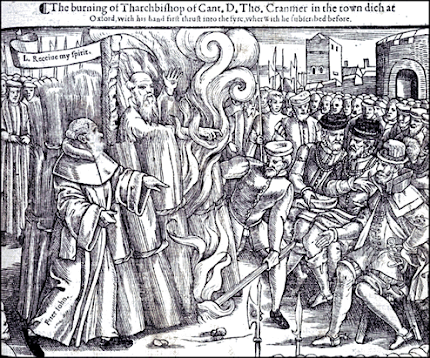
The burning of Tharchbishop of Cant. D. Tho. Cranmer in the town dich at Oxford, with his hand first thrust into the fyre, wherwith he subscribed before. [Click on the picture to see Cranmer's last words.]

Daily Bible Verse

Showing posts with label Monophysite error. Show all posts

Tuesday, January 03, 2017

Incarnation


-->
A Theological and Scripturalist Defense of Gordon H. Clark's Two Person View of the Incarnation
Part 1
By Charlie J. Ray, M. Div.
This blog article will be the first in a series of posts in which I will investigate the doctrine of the Incarnation of Jesus Christ in the view of the ecumenical creeds, the Reformed Confessions, the Holy Scriptures, and Dr. Gordon H. Clark's harmonization of the apparent paradox involved in defining the two natures of Jesus Christ and whether or not the two natures are personal or impersonal.  In beginning to do so, I would like to quote from an audio lecture given by Dr. R. C. Sproul where Dr. Sproul is teaching on the doctrine of biblical inerrancy.  In that lecture it inevitably came up that Jesus himself viewed the Old Testament as divinely inspired and as the infallible and inerrant word of God.  According to Jesus, the Scripture cannot be broken.  (John 10:35).  But this brings up the doctrine of the Incarnation of Jesus as well as the doctrine of God.  If Jesus is a real human being, how can he also be God?  Dr. Sproul's lecture deals with just one aspect of this question but he is dealing with it in relation to the issue of omniscience. 
According to Dr. Sproul, liberal scholars such as C. H. Dodd acknowledged that Jesus had a high view of Scripture but that Jesus erred in his assertions about Scripture because he was not omniscient in his human nature.  The title of the lecture is "Infallibility and Inerrancy" and the audio lecture is posted at Sermon Audio at Infallibility and Inerrancy.  Beginning at the 14:13 minute mark and ending at the 17:26 minute mark Dr. Sproul says:
. . . So what I am saying is there are few, very few, if any scholars who would challenge the view that Jesus of Nazareth taught what the church for 2,000 years has been teaching but at the same time these scholars who make that admission turn around and say that Jesus was wrong in his view of Scripture.  Now when you hear that at first blush you wonder about the arrogance of such statements from a Christian theologian.  To say, "Well, I have a view of Scripture which is a correct one and I am going to have to correct Jesus in his teaching to the church about the nature of Scripture."  But they hasten to add that not only was Jesus wrong about his view of Scripture but it is OK that he was wrong because he was influenced by the prevailing view of the primitive, pre-scientific Jewish community of his age and in his human nature he had no possible way of knowing that the current view of Scripture that was popular in his day was erroneous.  And they are also quick to point out that if you argue that Jesus was omniscient in his human nature and that he knew everything that that would be a Christological heresy because the Christology of the church historically teaches that omniscience belongs to the divine nature and not to the human nature; and touching his human nature there were things manifestly that Jesus did not know.  When pressed about the day and the hour of his return, for example, he says to his disciples that this day has not been revealed, that the angels don't know it and even the Son does not know it but only the Father knows it.  [Matthew 24:36].  So Jesus himself gave a limit to his own knowledge and so that he gave us a false view of Scripture is excusable.
In response to that, orthodox scholars say, "Wait a minute.  It's not necessary for Jesus to be omniscient to be our redeemer.  And we grant that touching his human nature that he did not have the attribute of omniscience."  Obviously, the divine nature did.  But the human nature didn't.  But the broader issue, the deeper issue here is the sinlessness of Christ--because if Christ committed one sin he would be disqualified as our Savior.  He couldn't make an atonement for his own sin let alone for ours.  And so then the question becomes would it be sinful for a teacher, who claims to teach nothing except that which he has received from God, to teach an error?
Dr. R. C. Sproul.  "Infallibility and Inerrancy".   Sermon Audio.
I am quoting Dr. Sproul for the simple reason that I am often accused of being unorthodox for simply stating that Jesus as a genuine human being was not omniscient, omnipresent, or omnipotent.  The doctrine of the incarnation of Christ can be extremely technical and detailed.  Moreover, even conservative theologians are often at odds as to how to properly exegete the Scriptural passages that teach us who Jesus Christ is and what attributes he possessed as both man and as God incarnate.  The Christological heresy of which Dr. Sproul is speaking is called the monophysite heresy.  That heresy teaches that in the incarnation the two natures of Christ are so intertwined as to be mixed together to form a new nature that is neither completely human nor completely divine.  In fact, that is one of the disputes between the Lutherans and the Calvinists in regards to the Lord's Supper.  Lutherans contend that after the resurrection the body and blood of Jesus Christ are ubiquitous or omnipresent and are thus present in, with and under the visible appearance of the communion elements of bread and wine.  The Calvinist view, however, is that the communion elements remain bread and wine but are only called by the names of what they represent.  To say that the body and blood of Christ is omnipresent is to attribute divinity to material objects; and worse, it confuses the human nature of Christ with his divine nature.  The traditional doctrine of the church is that the two natures of Christ are hypostatically united but not mixed together or confused.  This view is deduced from Scripture and is expounded in the Definition of Chalcedon, 451 A.D.
The Definition of the Council of Chalcedon (451 A.D)
Therefore, following the holy fathers, we all with one accord teach men to acknowledge one and the same Son, our Lord Jesus Christ, at once complete in Godhead and complete in manhood, truly God and truly man, consisting also of a reasonable soul and body; of one substance with the Father as regards his Godhead, and at the same time of one substance with us as regards his manhood; like us in all respects, apart from sin; as regards his Godhead, begotten of the Father before the ages, but yet as regards his manhood begotten, for us men and for our salvation, of Mary the Virgin, the God-bearer; one and the same Christ, Son, Lord, Only-begotten, recognized in two natures, without confusion, without change, without division, without separation; the distinction of natures being in no way annulled by the union, but rather the characteristics of each nature being preserved and coming together to form one person and subsistence, not as parted or separated into two persons, but one and the same Son and Only-begotten God the Word, Lord Jesus Christ; even as the prophets from earliest times spoke of him, and our Lord Jesus Christ himself taught us, and the creed of the fathers has handed down to us.
One question I would ask my readers to consider and to reflect upon is the question of how Jesus Christ could be both ignorant of the future and totally omniscient in regards to knowing the future?  If Jesus is not omniscient in his human nature but he is omniscient in his divine nature, how could he be one person?  Would that not be to confuse the two natures of Christ if we say that he is one person but is both ignorant and omniscient?  Or maybe Jesus was schizophrenic and had a lot of confusion in his mind as one person?
Considering these apparent contradictions, therefore, the purpose of this series of blog posts will be to defend Dr. Gordon H. Clark's view of the incarnation and his view that Jesus was two persons and not one person.  This seems to be a controversial issue because opponents of Dr. Clark's view have accused him of Nestorianism, a Christological error that says that Jesus Christ was two "separate" persons.  Since that is not Dr. Clark's view, I contend that Dr. Clark has not committed the Nestorian heresy and that his view, properly understood, is simply a more refined view of who Jesus was as a genuine human being who was also God incarnate.  It is very clear to anyone who has read the most of Dr. Clark's works that he had a very high view of Scripture, the Westminster Standards, and the orthodox view of the Trinity and of the Incarnation of Jesus Christ.  In particular, how Dr. Clark defines knowledge and how he defines what a person is has a substantial impact on the conclusions to be drawn later in this study.  For Dr. Clark, all knowledge is propositional and propositions must be organized into a logical system that stands in harmony with all the parts.  Knowledge, according to Dr. Clark, cannot be a series of isolated aggregates or nuggets that have no relation to the other parts.  Also, for Dr. Clark the law of contradiction is basic to how man thinks.  Since the Bible teaches that man is God's image, Dr. Clark concludes that God is not irrational or illogical.  In fact, Jesus Christ, as the incarnate second person of the Godhead, is the rational and intelligent mind of God or the Logos.  According to Dr. Clark, the Word means God is Logic.  That is what the Greek word means in John 1:1.
I will continue this discussion tomorrow with part two.  Tomorrow I want to discuss the doctrine of the Trinity and how that relates to the Incarnation.  Also, Dr. Clark's view of a person as the propositions that he thinks plays a critical part in understanding both the Trinity and the Incarnation.  I should also note here that my views have changed.  As most people initially are caught off guard by the proposition that Jesus is two persons, I too did not accept this at first.  But after reading Dr. Clark carefully over the past several years and after listening to his lectures over and over for several years now I have changed my opinion and it is my studied opinion that most of those who accuse Dr. Clark of the Christological heresy of Nestorianism have not understood Clark nor have they understood the original heresy correctly.
Also, I should note that the Westminster Confession of Faith follows the Definition of Chalcedon 451 A.D.
2.      The Son of God, the second person in the Trinity, being very and eternal God, of one substance and equal with the Father, did, when the fulness of time was come, take upon Him man's nature, (John 1:1, 14, 1 John 5:20, Phil. 2:6, Gal. 4:4) with all the essential properties, and common infirmities thereof, yet without sin; (Heb. 2:14, 16–17, Heb. 4:15) being conceived by the power of the Holy Ghost, in the womb of the virgin Mary, of her substance. (Luke 1:27, 31, 35, Gal. 4:4) So that two whole, perfect, and distinct natures, the Godhead and the manhood, were inseparably joined together in one person, without conversion, composition, or confusion. (Luke 1:35, Col. 2:9, Rom. 9:5, 1 Pet. 3:18, 1 Tim. 3:16) Which person is very God, and very man, yet one Christ, the only Mediator between God and man. (Rom. 1:3–4, 1 Tim. 2:5).


Index to posts on the Incarnation: Incarnation Part 1 Incarnation Part 2 Incarnation Part 3 Incarnation Part 4 Incarnation Part 5 Incarnation Part 6

Saturday, May 24, 2008

Anglo-Catholicism: Why The Reformed Episcopal Church, The Anglican Communion Network, and the American Anglican Council Are Wrong


Recently someone sent me the link to an article at Dan Sullivan's blog on the issue of Anglo-Catholicism. I found Sullivan's comments to be worthy of consideration, even though he is inconsistent in other ways; i.e. he is an Arminian and a member of an "Evangelical" denomination which implicitly and often overtly compromises with Roman Catholicism and Eastern Orthodoxy in the interest of co-belligerency against abortion and homosexuality.

Anyway, I particularly liked his comments about the 39 Articles of Religion. I will quote the relevant passage here:

"While many churches might not practice Eucharistic adoration, prayers to the saints, prayers for the dead, say the rosary, venerate icons or relics or think of the Eucharist as a propitiary [sic] sacrifice, I am finding many otherwise Evangelical and Biblical Christians see no need to stand against those things - they are graciously allowed as part of the broad tent of Anglicanism, owing to apparent practices from the early church and to the Great Tradition. So to speak against these things can be seen as narrow, divisive and, well, un-anglican. I'm new in these parts, I guess I didn't pick up on the local customs.


As much as I long for an end to divisive doctrinal wrangling, I am finding myself in a position of needing do [sic] draw a line - to state that I cannot go beyond a particular point. "Where is it written?" remains an essential factor in defining doctrine for me. It must remain so. If scripture cannot correct the Great Tradition, then scripture is not the final authority and that is a commitment I cannot relinquish. If the Great Tradition can force interpretations upon scripture that the context and grammar do not warrant, or add rituals, beliefs, doctrines to the faith that seem to have no basis in the text, then scripture is not the final authority in matters of faith. At that point, the only reasonable choice would be to become Roman-Catholic, not Anglo-Catholic, and it seems in some circles the line between the two is nearly imperceptible.


And I have to wonder. If Anglo-Catholics can find a way to "reinterpret" the articles of Religion, to sever them from their historical setting, to impose an interpretation on them that was fueled by 19th century concerns and Catholic theological interests, on what basis does an Anglo-Catholic honestly resist liberal reinterpretation of the same articles of Religion from the perspective of postmodern multicultural relativism? On what basis can revision and reinterpretation of the Biblical texts be repudiated?"


I realize I'm jumping to the end of the conversation but if you wish to read the entire article, you can go to http://back2center.blogspot.com/2008/03/three-faces-of-anglicanism-anglo.html. Moreover, the issue of where the center of authority for the Christian church lies is one that we must consider. If the priesthood of believers is true and biblical, then placing the authority of the church and of the clerical leadership above Holy Scripture and the people, who are also priests, is forbidden and incompatible the one with the other. How can one mix oil and water when the two will not mix. Any theology which places the Tradition of the church above Scripture is essentially placing man's authority above God's authority, which eventually leads to liberalism, as our friend above points out.

Being a radical, confessing Evangelical and hostile to liberalism and neo-orthodoxy, I have found myself often unwilling to read much liberal or neo-orthodox theology because I don't find it edifying. However, I'm finding that often neo-orthodoxy has legitimate and solid criticism of theological liberalism. I have been re-reading Emil Brunner's classic work on Christian ethics, The Divine Imperative. (Emil Brunner, The Divine Imperative. 1937, Lutterworth Press. Reprint. Philadelphia: Westminster, no date). I found it odd that, while modern "Evangelicals" seem to have bought into the lie that Roman Catholicism and Evangelicalism are somehow compatible, a neo-orthodox theologian has no objections to offending those who hold Anglo-Catholic or even Roman Catholic sentiments. I found Brunner's following remarks particularly enlightening:

"The fact that a false and a true ecclesiasticism exists, is due to two aspects of the nature of the Church, namely, that the Church is both human and divine. False ecclesiasticism, ecclesiastical 'Monophysitism,' clericalism, is based on the fact that the divine element has been confused with the human, and thus that it predicates of both elements that which really only applies to one. Anti-clericalism, on the other hand, is based upon the fact that the necessary union of the divine and human elements in the Church is denied, and both are separated. True ecclesiasticism, however, consists in the fact that the divine and the human are not separated, but also that they are not regarded as identical with one another. The more serious danger of these two is the first, because it exists within the Church. False ecclesiasticism is the peculiar curse of the Roman Catholic Church." The Divine Imperative, page 562.


Brunner's remarks are cutting by today's sensibilities and he was writing in a period just prior to World War II. It is indeed strange when a neo-orthodox theologian of just a few decades ago sounds more conservative than today's so-called "Evangelicals"!! Anglo-Catholicism claims to be a middle way between Protestantism and Roman Catholicism but it winds up being neither. Roman Catholics legitimately question the validity of any communion which claims to be both Protestant and "Catholic" in the sense that Roman Catholics understand that term. The problem with the common cause conservatives like the Anglican Communion Network and the American Anglican Council is that they try to mix Reformed Protestant Evangelicalism with conservative Anglo-Catholicism. However, the two do not mix as history has repeatedly shown. The most famous minister to note this was the Reformed Episcopal bishop, Charles Cheney.

However, even former Evangelicals who have converted to Roman Catholicism have noted the false pretenses of Anglo-Catholics. In his article, "The Trouble with Anglo-Catholicism," the Roman Catholic, Robert Ian Williams comments:

"Many Catholics and Protestants are confused when they encounter Anglicanism. Indeed, many Evangelicals troubled by the lack of historical continuity within their own faith communities have ended up in the Anglican church. Why suffer the stigma of becoming a Catholic when you can have bishops, a sense of continuity, and beautiful liturgy apart from Rome? After all, Anglicanism turns a blind eye to contraception, allows easy divorce, and has incorporated other "progressive" ideas.


Anglicanism presents its self [sic] as a reformed Catholicism striking a balance between the extremes of Rome and Geneva. However, the roots of Anglicanism are solidly Protestant, and the claim that Anglo-Catholicism is the genuine Anglican tradition does not stand up in the light of history.


Though the Church of England after the schism with Rome over Henry’s divorce still kept the Catholic sacramental system, radical Protestantism was introduced during the reign of Edward VI. Thomas Cranmer and Edward Seymour, appointed by Henry VIII to positions of power, upon Henry’s death worked openly to introduce the beliefs of the German Reformers. The holy sacrifice of the Mass was replaced by a vernacular communion service that denied transubstantiation and the eucharistic sacrifice. Cranmer’s Book of Common Prayer was written in beautiful English but contained subtle heresy behind its lovely facade.


The renowned Anglican liturgist Dom Gregory Dix (1901–1953) commented on the Cranmeriam [sic] rite: "As a piece of liturgical craftsmanship it is in the first rank. . . . It is not a disordered attempt at a Catholic rite but the only effective attempt ever made to give liturgical expression to the doctrine of justification by faith alone" (The Shape of the Liturgy [1946], 11).
http://www.catholic.com/thisrock/2001/0109fea5.asp

So here we have a broad Evangelical who is a former Roman Catholic, Dan Sullivan, saying that Anglo-Catholicism and Evangelicalism are incompatible and then we have a former Evangelical but now Roman Catholic, Robert Ian Williams, saying the same thing from the opposite side of the fence. And to top it all off, we have a neo-orthodox theologian saying practically the same thing from another perspective, albeit one we should not be too eager to adopt.

What is it that drives sinful human beings in one direction or another, never being satisfied? Historically, Anglo-Catholics tried to reintroduce Roman Catholicism as a way to return to their historical roots in the Roman Catholic past of the Anglican Church. However, they did this by dishonestly reinterpreting the 39 Articles of Religion to fit their Roman Catholic presuppositions.

Unfortunately, when the emphasis becomes the church, then human presumption takes charge over divine revelation and eventually the end result is theological liberalism. Williams goes on to point out in his article that Anglo-Catholics from the 19th century went on to ordain women, homosexuals and consecrate homosexual bishops. Furthermore, he remarks that such innovations appeal greatly to the liberals who leave the Roman Catholic Church, like Matthew Fox and others:

The nineteenth-century ritualists had attempted to change the face of Anglicanism. But the veneer was superficial, and the innate Protestantism of Anglicanism has emerged in its assimilation of rationalism, the women priesthood, and the blessing of homosexual unions. With the acceptance of women priests there is now a desire for lay people to be allowed to celebrate the eucharist in the more evangelical churches of the communion.


Indeed, many Anglo-Catholics have adopted this new, liberal theology and have grouped themselves in an organization called Affirming Catholicism. In the United States there are at least five hundred former Catholic priests serving in the Episcopal church (including the ex-Dominican Matthew Fox). Some Catholic nuns have joined so they can be "ordained." The Episcopalians have a well-financed outreach to Hispanics, and into its fold every year the Episcopal church receives thousands of former Catholics who refuse to accept the moral teaching of the Catholic Church." http://www.catholic.com/thisrock/2001/0109fea5.asp


One must confess that even Protestant and Evangelical churches and denominations go liberal. But this problem is not limited to Anglo-Catholicism or Protestantism. It is a also a problem within Roman Catholicism as Robert Ian Williams explicitly admits. One would also suspect the same problem exists within the other communion of the East, Eastern Orthodoxy, though it too claims to be the only pure church. Williams seems to think that Protestantism leads inevitably to liberalism but that is not always the case and the link is a red herring at best. In fact, by his own admission Anglo-Catholicism and even Roman Catholicism struggle with the same issue. My own contention is that any time that reason or human views take precedence over the divine you wind up with liberalism. However, when the divine and the human are confused into a monophysite view, as Emil Brunner points out, you wind up with the same thing: a completely human usurpation of the divine.

According to Brunner, Protestants have been plagued by the attempt to duplicate the grandeur and success of the Roman Catholic Church as an institution on earth. And the vacillation between the Roman Catholic view and the Protestant view has led to confusion:

The Reformation made a fundamental breach with this kind of ecclesiasticism; in principle the Reformation was a return to the original Christian conception of the Church. But the relics of that theory of the Church which identified the human element with the Divine, which still lingered on in the minds of the Reformers, produced a fresh growth of this malignant error within the Protestant Churches; But since it was also impossible to forget the objections to this theory Protestantism has wavered uncertainly ever since between a false churchmanship and a lack of churchmanship, and this is still its character at the present day. The thought--or more accurately the feeling--of the average 'Protestant' oscillates between a secret or at least half-concealed longing for the imposing splendor of the Roman Catholic Church, and an indifference to all that bears the name of "Church" (The Divine Imperative, page 563).


Brunner's insights from the neo-orthodox perspective are illuminating but do not necessarily stop the problem of confusing the divine with the human. Brunner denies Verbal Plenary Inspiration of the Bible and says that both liberalism and fundamentalism are wrong. However, the neo-orthodox critique that the creeds and the doctrines of Scripture are not to be identified with the living Word of God leaves us questioning where the objective and the subjective begin and end. Either way, existentialism and subjectivism wind up back in the liberalism that neo-orthodoxy was supposed to correct. Anglo-Catholicism seeks to counter subjectivism by appealing to the authority of the church to interpret Scripture, which Brunner rightly perceives as a confusion of the human and the Divine. However, Protestantism, wavers between no church discipline and too much church discipline. On the one hand, Protestantism wants to dispense with authority and the church degenerates into theological liberalism, exalting reason above revelation. On the other hand, the Catholics want to replace reason with Tradition and to stop dissent by heavy handed authority. But this too leads to human reason usurping God's Word.

Neo-orthodoxy rightly critiques both liberalism and fundamentalism but offers nothing different to replace either. It, like Anglo-Catholicism, claims to offer a middle way between the Enlightenment and a pre-critical fundamentalism but winds up with a stalemate that solves nothing. The problem with Anglo-Catholicism, even the so-called conservative Anglo-Catholics, is that eventually placing humans in control over the Word of God leads to corruption like that we see in the Episcopal Church today. Anglo-Catholicism winds up being something like a state church in which

the "tares" are mingled with the "wheat" to such an extent that the distinctive character of the Church is almost obliterated. Once a church has reached the point at which it is possible for her functions to be administered by open atheists and scoffers at religion, when perhaps the majority of her members are merely nominal, and do not care a jot for the Church, when the impression is widespread that it is as natural to belong to the Church as it is to be born, and that membership means nothing--then certainly the point has been reached where we may ask: Has not the Church become like salt "which has lost its savour" and is henceforth good for nothing? (The Divine Imperative, page 551).


The common cause movement will eventually lead down a slippery slope toward the same liberalism it is protesting against precisely because it is built on the sand of human tradition and human usurpation of the divine. Only the Protestant churches, as imperfect as they are, have a chance because the emphasis is on a constant reformation of the local and national church to conform to the Holy Scriptures. Brunner says the error of Roman Catholicism and by implication, Anglo-Catholicism is that

...there is only one thing which allows us still to believe in the high advantage even of the Protestant Churches of the present day; in principle they are capable of regeneration, whereas the Catholic Church has elevated error to the rank of a principle, and in this very fact regards itself as infallible. (The Divine Imperative, page 544).


Anglo-Catholicism is neither Protestant nor Roman Catholic but a heresy to both views. Inevitably, Anglo-Catholicism is a compromise which leads down the slippery slope to theological and moral liberalism and relativism. This is precisely why the Reformed Episcopal Church is wrong for merging with the Anglican Province of America and being a party to the common cause factions of the Anglican Communion Network and the American Anglican Council. Anglo-Catholicism is bankrupt and leads to apostasy as history will prove out. As Emil Brunner says, only a confessing and solidly committed Protestant Church can hope to endure the test of time and that is precisely because God is constantly and providentially superintending the true Church by His sovereign will. Those who trust in man wind up building replicas of the tower of Babel only to find it reaches nowhere and eventually brings more chaos and confusion than unity. Anglo-Catholicism is wrong precisely because it is simply another tower of Babel. It attempts to be a middle way between the Gospel and institutionalized error. Such a middle way is merely another way to an insured and guaranteed failure.

May God have mercy!!

Support Reasonable Christian Ministries with your generous donation.