>

Martyred for the Gospel

Martyred for the Gospel
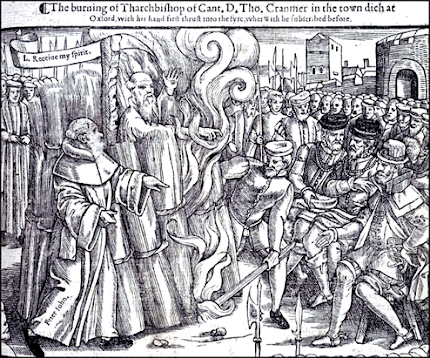
The burning of Tharchbishop of Cant. D. Tho. Cranmer in the town dich at Oxford, with his hand first thrust into the fyre, wherwith he subscribed before. [Click on the picture to see Cranmer's last words.]

Daily Bible Verse

Showing posts with label Gordon H. Clark. Show all posts

Monday, September 14, 2026

A Review of Paul King Jewett's Book: Emil Brunner's Concept of Revelation

 Book Review:  Emil Brunner’s Concept of Revelation, by Paul King Jewett


Paul King Jewett.  Emil Brunner’s Concept of Revelation.  (London:  James Clarke & Co. Ltd, 1954).  190 pages.

This book has been out of print for so many years that I cannot determine when it was no longer published.  It was written as publication of the Evangelical Theological Society, which Dr. Gordon H. Clark helped to found.  Paul King Jewett was a student of Gordon Clark when Clark taught at Wheaton College during the 1941 school year.[1]   Later Paul Jewett did a Ph.D. dissertation at Harvard Divinity School, and Dr. Clark used Jewett’s dissertation in his philosophy classes when was a professor at Butler University in Indiana.[2]  In 1954 the book was published by the Evangelical Theological Society at Dr. Clark’s request. 

I became interested in reading this book after reading about Fuller Seminary and Dr. Gordon H. Clark’s former students in Douglas Douma’s authorized biography of Dr. Gordon H. Clark.  It took some time to find a used copy online.   This book review is the result of that endeavor.  In the front of the book, Paul Jewett clearly dedicates the book to “Dr. Gordon H. Clark, Teacher and Friend.”  At the time of the publication Paul Jewett was teaching philosophy of religion classes at Gordon Divinity School, in South Hamilton, Massachusetts.  The school is now known as Gordon-Conwell Theological Seminary.

In the acknowledgements on page vii, Jewett says that he is indebted to Dr. Gordon H. Clark, Dr. Roger Nicole, and Dr. Edward John Carnell for feedback during the writing of the book, and presumably the dissertation.  While doing studies for his doctoral dissertation, Jewett took classes with Emil Brunner in Switzerland at the University of Zurich where Brunner taught systematic theology and practical theology in 1951. 

In the first four chapters of the book, Jewett explains in detail Brunner’s views on a host of theological topics, including time and eternity, the Bible, historiography, and existentialism.  In chapter five, Jewett begins to offer a critique of Brunner’s theology and neoorthodoxy.  Also discussed was the feud between Karl Barth and Emil Brunner over the issue of special revelation versus natural revelation and natural theology.  The problem with both men is that terms used by Evangelicals in theological discussions are completely redefined by the two neoorthodox theologians.  I suspect that this is one reason that Dr. Gordon H. Clark insisted on precise definitions of terms in his writings.  One indication of Clark’s influence on Jewett in the writing of this book is the precision with which Jewett discusses existentialism and the existentialist philosophers, especially Soren Kierkegaard.

In the interest of brevity, I will try to summarize the chapters of the book and the subsections of each chapter.  In the introduction Jewett says that Barth and Brunner wish to be known as theologians of the word:

Though the thought of Barth and Brunner has been nicknamed the Theology of Crisis, of Paradox, of Dialectic, sometimes even of Pessimism, the designation which undoubtedly best conforms to the intention of these theologians themselves is that of Kattenbusch, i.e., The Theology of the Word.[3]

In reviewing this book, perhaps the reader will indulge me a few digressions.  In the debates between the supporters of Cornelius Van Til and Dr. Gordon H. Clark, the question of the qualitative difference between God’s knowledge and human knowledge is often brought up in regards to the Creator/creature distinction and God’s archetypal knowledge versus humanity’s ectypal knowledge through divine revelation in the Scriptures.  The hard truth here is that Gordon Clark did not try to pry into God’s archetypal knowledge.  What he said was that the ectypal knowledge revealed to man, who thinks discursively, is univocally the very same propositions and thoughts that God has.  Clark did distinguish between God’s intuitive and direct knowledge of propositions and all other knowledge and man’s discursive and limited knowledge.  In other words, the qualitative difference between man’s knowledge and God’s knowledge is that God’s knowledge is omniscient and intuitive as an eternal Being, and man’s knowledge is limited to what man can intellectually absorb discursively given the limitations of time and history.  I bring this up in reference to Jewett’s quotation from Karl Barth at the top of page 1, opening the discussion of Revelation and History in chapter 1.

If I have a ‘system’, it consists in this, that I always keep in mind with the utmost vigour what Kierkegard has called the ‘infinite qualitative difference’ between time and eternity, and that in both its positive and negative implications.  ‘God is in heaven and thou upon earth.’”  --Karl Barth[4]

This book is heavy reading for anyone who is unacquainted with neoorthodoxy or existentialism.  The very first chapter raises the issue of relativism in regards to historiography.  The problem of relativism is not new to the 21st century.  It was already obvious in the early 20th century.  Both Brunner and Barth recognized that WWII raised the problem of Nietzschean relativism to a higher level that had caused the totalitarian regime of Hitler’s Nazi party to rise to power.  The problem is that the existentialist view did not return to the authority of an infallible and inerrant Bible as the basis for a civilized society.  According to Jewett, the neoorthodox theologians did not think that the Bible could withstand modern criticism:

The answer to Relativism, however, is not a return to the infallible Bible of Orthodoxy.  Brunner shares with the other leaders of the Neo-Supernaturalistic school, the conviction that in the light of Biblical criticism, such a procedure would be hopeless scientific obscurantism that could only widen the breach between the modern mind and the Christian faith.[5]

Brunner wanted to oppose relativism because of what he had observed when the Nazis took over Germany. 

Brunner styles Relativism in religion “Historicism”.  It marks the dissolution of all theology.  Revelation becomes “’the inner feeling and certainty of the whole of things and its being, which we call religious feeling or perception’ (Troeltsch)”.  This progeny of religious Liberalism, is the parent of modern Totalitarianism.  The Relativism into which we have been irresistibly drawn by the abandonment of Biblical faith is, so Brunner feels, a cause of that monster of wickedness, the totalitarian state.[6]

Jewett’s analysis of Brunner’s beginning point or axiom for his neoorthodox theology or new modernism sounds almost orthodox, except it is not.  According to Jewett, Brunner understood that “Christianity stands or falls with its claim to a transcendental revelation . . .” that cannot be part of the historical process of world events.[7]  Yet, Brunner does not want to throw out history because he recognizes that the Bible reveals a history of revelation in historical time.

The thrust of Jewett’s analysis of Brunner is that he wants to ignore history and instead replace it with an existential encounter with an eternal God.  Brunner’s theology is nothing like the Reformed view of propositional truth and a biblical system of theology.  Instead, Brunner returns to a man-centered or anthropocentric view where revelation is an existential experience of God’s revelation, not a written source of information in propositional form.  Like Barth, Brunner emphasizes God’s transcendence, not His immanence in His creation.  Jewett’s book has the advantage of tracing the theological and historical roots of the development of modernist theology and philosophy and their influence on Barth and Brunner.

The problem is that Barth and Brunner did not return to orthodoxy.  Instead, they redefined the orthodox terms to fit with their reaffirmation of theological liberalism in a different form.  In chapter one Jewett compares Brunner’s view of Hegel and Kierkegaard.  Hegel’s view of history was that of an evolution of religious thinking in the “consciousness of the race.”  Kierkegaard objected because this would just make Christianity a dot on the historical timeline, a blip on the radar screen of history.[8]

One of the reasons that Gordon Clark and Cornelius Van Til had differences is that Clark accused the supporters of Van Til of unknowingly crossing the line into neoorthodoxy at certain points of their arguments, which emphasized paradox.  On the other hand, supporters of Van Til's apologetics accused Clark of violating the Creator/creature distinction by his view that the Bible is univocally the very words of God in propositional revelation.

Jewett, although not mentioning the Clark/Van Til Controversy, brings out aspects of the dispute by highlighting Brunner’s belief in a totally transcendent God:

Brunner shares with Kierkegaard and Barth an unshakeable conviction in the absolute otherness of God, in the infinite qualitative difference between the Creator and the creature (eternity and time).[9]

The controversy rages on today.  John Frame, a student of Van Til, and professor emeritus of Reformed Theological Seminary in Oviedo, Florida, has proposed that God has two existences.  He was highly criticized for this view because it suggested a downgrade into ditheism.  Another professor at Westminster Theological Seminary, Scott Oliphint, proposed that God took on covenantal properties so that he could condescend to human level or become immanent in the world. [10] This was criticized by theologians who said that this would make God mutable instead of immutable.  The key feature of Van Til’s apologetic is the Creator/creature distinction.  To violate this distinction would be to make God mutable and immanent, not transcendent, according to Van Til.  The one thing that students of Van Til were supposed to avoid is mutualism or confusing the Creator with creation or with the creature.  Ironically, both Frame and Oliphint were students of Van Til as well.  

For those who want to understand Gordon H. Clark’s critique of neoorthodoxy better, I highly recommend buying a used copy of Paul King Jewett’s book.  It is in fact the first book that Jewett wrote and the most conservative one.  In later years, Jewett went down the road of limited inerrancy and joined the Presbyterian Church USA where he began to push for egalitarian views of male and female leadership.  Clark’s book on neoorthodoxy[11] is recommended as well as his book on historiography[12].  Both books are meant to respond to both Barth and Brunner.  Clark was critical of Arminianism because of its view of God as finite and subject to autonomous humanity.   You could say that he opposed making God mutable or immanent as well.  Furthermore, Clark affirmed the transcendence of God by recognizing that God knows all things by intuitive and eternal omniscience.  He recognized the limitations of humans as discursive and limited to the temporal realm of time and space.


Soli Deo Gloria. 


[1] Douglas Douma.  The Presbyterian Philosopher:  The Authorized Biography of Gordon H. Clark.  P. 307.                                                                                                                                               

[2] Ibid., pp. 309-310.

[3] Paul King Jewett.  Emil Brunner’s Concept of Revelation.  (London:  James Clarke & Co. Ltd., 1954).  P. 1.

[4] Ibid., p. 7.

[5] Ibid., p. 9.

[6] Ibid., pp. 8-9.

[7] Ibid., p. 10.

[8] Ibid., p. 12.

[9] Ibid., p. 13.

[10]  See my book review of Oliphint's retracted book:  God with Us:  Divine Condescension and the Attributes of God.  (Wheaton: Crossway, 2011).  After a controversy erupted over the book, Oliphint withdrew the publication.  The book was already published in ebook form on the Barnes and Noble Nook format, which I obtained to review.  I am not sure if the book is still available on Nook.  See also, Divine Simplicity Part 1, and Divine Simplicity Part 2.

[11] Gordon H. Clark.  Karl Barth’s Theological Method.  1963.  Second edition.  (Trinity Foundation, 1997).  277 pages.

[12] Clark.  Historiography:  Secular and Religious.  1971.  Second edition.  (Jefferson:  Trinity Foundation, 1994).  366 pages.

Thursday, May 08, 2025

Divine Simplicity: Part 2


“STILL TO BE DISCUSSED is God’s nature in relation to the panoply of divine attributes and to the persons of the Trinity. All God’s attributes known through his self-revelation are to be identified with what theologians properly designate as God’s being, essence, nature or substance, and identified with what the Scriptures call the deity or divinity of God who makes himself known. The divine essence is not to be differentiated from the divine attributes, but is constituted by them; the attributes define the essence more precisely. But are all attributes ultimately the same? Or do they differ, and if so, how? Are divine nature and divine personality identical conceptions? Only the self-revealed God of the Bible, to be sure, can authorize us to speak definitively of his existence, nature and personal life. But how are the three persons of the Godhead related to divine essence and attributes?”


Carl F. H. Henry.  God, Revelation and Authority (Set of 6) (Kindle Locations 59280-59286). Crossway. Kindle Edition.  1982.  2nd edition.  (Wheaton:  Crossway, 1999).  P. 127.


Book Review:  Divine Simplicity:  Part 2


James E. Dolezal.  God Without Parts:  Divine Simplicity and the Metaphysics of God’s Absoluteness.  (Eugene:  Pickwick, 2011).


This book is an excellent discussion of the issues of divine simplicity.  However, as a supporter of Gordon H. Clark's apologetics, I have to point out that the greatest weakness of the book is Dolezal's Thomistic two-fold view of truth as both God's archetypal truth and man's ectypal truth.  According to Cornelius Van Til, ultimately God is unknowable because man's truth and God's truth do not coincide at any single point, even in Scripture.  Dolezal also rejects propositional truth on this same basis and ends up advocating for analogical revelation instead of propositional revelation.  This opens the door wide for neo-orthodoxy and dialectical theology.  Most of the followers of Van Til over-emphasize the transcendence of God to the point that God is unknowable.  The obvious implication of that position is that all knowledge is relative, humanistic, and creaturely.  But even apologists like Arthur Holmes said that all truth is God's truth.  If man knows any truth at all, doesn't God know that same truth?  Does God know that 2 + 2 = 4?  Or is 2 + 2 = 5 for God?

Dolezal is a Reformed Baptist, not a Presbyterian.  That has little to do with his view of the doctrine of God, however.  It is ironic that Dolezal did his Ph.D. on the doctrine of divine simplicity under the guidance and supervision of Dr. Scott Oliphint, professor of apologetics and philosophy at Westminster Theological Seminary, Philadelphia, Pennsylvania.  Oliphint retired in December of 2024.  The irony is that shortly after Dolezal’s book came out, Oliphint released his own book in which he contended against divine simplicity by asserting that God’s being has “covenantal properties” which allows God to be immanent and to condescend to the creaturely level.  Oliphint did not anticipate the backlash over the controversy and was forced to withdraw his book from publication.

[You can read my review of Oliphint’s book, which I had obtained from Barnes and Noble in ebook format before it was withdrawn from the paperback publication and from the ebook publication.  Barnes and Noble no longer offers the book for purchase.  My brief review is posted here:  Covenantal Properties.  My extended review of the book is posted here:  A Critical Review of God With Us:  Divine Condescension and the Attributes of God.  You can also read a response by Dolezal to his doctoral supervisor here:  Objections to Scott Oliphint’s Covenantal Properties Thesis.  See also:  K. Scott Oliphint.  God With Us:  Divine Condescension and the Attributes of God.  (Wheaton:  Crossway, 2011).]

The Reformed Forum also strongly objected to Oliphint’s view, because in their view it violated Van Til’s Creator/creature distinction.  Oddly, enough, prior to this controversy, Oliphint appeared numerous times on the Reformed Forum podcast to critique Gordon H. Clark’s so-called “rationalism.”  Camden Bucey, Jeff Waddington, and Lane Tipton were all mutual friends with Oliphint.  Behind the scenes I wonder if there were some strong disagreements between Dolezal and his supervisor for his Ph.D. dissertation?  It would seem so, because both books came out in 2011 at around the same time.  It seems that Dolezal has prevailed, because his book is still available while Oliphint had to withdraw his book under the strong disagreements between supporters of Van Til’s apologetics and the supporters of Oliphint’s book.  (Jeff Waddington of the Reformed Forum also wrote a rebuttal of Oliphint’s book here:  “Something So Simple I Shouldn’t Have to Say It,” June 5, 2019). 

Camden Bucey’s critique focuses more on God’s knowledge, which Oliphint ironically says is subject to change and growth due to this third category of “covenantal properties.”  (See:  Bucey, “Addressing the Essential-Covenantal Model of Theology Proper”).  My own view is that Oliphint seems to have bought into Open Theism to some extent because Oliphint has attributed to God the ability to change, which is a contradiction of the Westminster Confession of Faith 2:1.  WCF 2:1 affirms that God is immutable.  I wonder if Oliphint is using ectypal knowledge or archetypal knowledge of God to come to these conclusions?

So far, I have digressed from the review of Dolezal because of the covenantal properties controversy.  However, it seems to me that the two cannot be divorced because of the implications of both books coming out at the same time.  

See also, Divine Simplicity Part 1, and Divine Simplicity Part 2.  God With Us.


Wednesday, April 30, 2025

Book Review: God Without Parts: Part 1


"In summary, knowledge of the divine attributes, no less than of the divine proper names, involves a knowledge of God's inmost essence.  Our knowledge is not exhaustive, to be sure, since God's incomprehensibility, which evangelicals affirm, means that we know no more concerning the divine nature than what God intends and enables us to know by revelation.  Although Luther and Calvin speak of the incomprehensibility of God's essence--it is unknowable by a priori speculation concerning divinity--they do not deny authentic knowledge of God's essential nature on the basis of scriptural revelation."  

Carl F. H. Henry.  God, Revelation, and Authority.  Vol. 5.  1982.  2nd edition.  (Wheaton:  Crossway, 1999).  P. 140.


Book Review:  God Without Parts:  Divine Simplicity and the Metaphysics of God’s Absoluteness

By James E. Dolezal


[James E. Dolezal.  God Without Parts:  Divine Simplicity and the Metaphysics of God’s Absoluteness.  (Eugene:  Pickwick, 2011).


I read this book some time ago.  I had intended to review it earlier but never seemed to find the time.  Honestly, I had never considered this doctrine before since it is only briefly mentioned in chapter 2 of the Westminster Confession of Faith.  I had assumed that it was simply a rejection of the patripassionism view that was made popular by Jürgen Moltmann.  That being said, I will be reviewing this book from the point of view of the apologetics and theology of the late Dr. Gordon H. Clark.

The first indication of trouble is a remark by Paul Helm in the foreward to the book: 

God the Creator is one God, and not creaturely. Because God is timeless he is changeless, immutable. Not simply in the sense that he has chosen to be so, or covenanted this, proposals which offer a rather unstable account of God’s changelessness and are probably incoherent. He is metaphysically changeless. Such changelessness in turn entails divine impassibility, an idea frequently misunderstood and derided. But impassibility is not to be confused, as it often is, with impassivity or with dispassion. Although it may seem paradoxical, the stress on impassibility is meant to safeguard the fullness of God’s character. He is eternally impassioned, unwaveringly good, not moody or fitful as he is buffeted by the changes of his life, some of them, perhaps, unexpected changes.

Dolezal, James E. God without Parts: Divine Simplicity and the Metaphysics of God's Absoluteness. Pickwick Publications, An Imprint of Wipf and Stock Publishers. Kindle Edition.

The late Dr. Gordon H. Clark held that the body has emotions and sensations, but the mind itself thinks in terms of propositions.  Since God has no body, God cannot literally have any emotions.  Emotions as defined by Dr. Clark were outbursts of bodily sensations.  Since God is a spirit, He has no bodily sensations or emotions or passions.  (John 4:24 KJV).  Dr. Clark referred to the emotions attributed to God in the Bible as anthropopathisms.  Just as God has no physical body parts such as a nose or mouth or hands or feet, God cannot and does not have emotions or passions of any kind whatsoever.  The idea that God has body parts attributed to Him metaphorically in Scripture is called anthropomorphism.  The problem with the comment of Helm above is that he contradicts the doctrine of God’s impassibility by using another word that is practically synonymous to affirm that God does indeed have passivity or emotions.  Oddly, Helm only holds that God has good feelings of love, not feelings of wrath or anger as Scripture clearly says.  The most obvious passage of Scripture that affirms that God has anthropopathic wrath or anger is Romans 1:18-21 KJV.  Evangelicals are too caught up in the idea of God’s benevolence and beneficence to face the reality that God cannot be manipulated by our tears, sufferings, or situational case studies. 

There is no partiality with God.  (Romans 2:11-14 KJV).  He does what He pleases in the heavens.  (Psalm 115:3).  The Lord God Almighty has no problem whatsoever with condemning the wicked to hell.  (Matthew 7:21-23; Psalm 6:8; 2 Timothy 2:19 KJV).  Apparently, Dolezal holds to this view, although it is not unusual.  Even the late Dr. Robert L. Reymond held to the idea that even though God is dispassionate, He must also have some kind of feelings for the elect.  However, Dr. Gordon H. Clark defined love, as seen from the human perspective, as obedience to God.  If you love me, obey my commandments.  (John 14:15 KJV).  On the other hand, God’s love for humanity is seen in His unconditional election to save some humans in His supralapsarian and logical order of the dual or double decree to election and reprobation.  This double decree is the first decree in the logical order according to the supralapsarian view.

A further problem with asserting that God has feelings or emotions of any kind, including feelings of love or beneficence, is that such emotions would violate God’s absolute immutability.  Although certain portions of Scripture seem to indicate this, the anthropopathism actually points toward God’s eternal volition to save His elect: 

The LORD hath appeared of old unto me, saying, Yea, I have loved thee with an everlasting love: therefore with lovingkindness have I drawn thee. (Jeremiah 31:3 KJV).

Even the term lovingkindness is a Hebrew word that indicates mercy or grace or favor rather than an emotion.  God never breaks His covenantal promises to save His elect people and elect persons within the congregation of Israel.

In the preface to the book, Dolezal presupposes an analogical view of Scripture rather than a propositional view of Scripture.  In a recent podcast, I prematurely advocated that my listeners read Dolezal’s book.  (See:  Reasonable Christian: Divine Simplicity, Logic, and the Foreknowledge of God).  It has been some time since I had read the book or listened to Dolezal’s YouTube videos on the topic.  Unfortunately, this goes directly back to the Clark/Van Til controversy of the 1940’s.  It seems to me that history is repeating itself.  Dolezal reveals his beginning axioms for his book in the preface:

The classical doctrine of simplicity, as espoused by both traditional Thomists and the Reformed scholastics, famously holds forth the maxim that there is nothing in God that is not God. If there were, that is, if God were not ontologically identical with all that is in him, then something other than God himself would be needed to account for his existence, essence, and attributes. But nothing that is not God can sufficiently account for God. He exists in all his perfection entirely in and through himself. At the heart of the classical DDS is the concern to uphold God’s absolute self-sufficiency as well as his ultimate sufficiency for the existence of the created universe.

The pages that follow set forth both metaphysical and theological arguments in favor of divine simplicity. Along the way I seek to answer some of the leading recent critics of the doctrine—most notably those objecting from within the modern school of analytic philosophy. The assumption that God and creatures are correlatives within a univocal order of being dominates this school of philosophy and is arguably the chief reason why their criticisms of the DDS fail to hit the mark. By appealing to God’s simplicity, I aim to show that God and the world are related analogically and that the world in no sense explains or accounts for God’s existence and essence. If God were yet another being in the world, even if the highest and most excellent, then the world itself would be the framework within which he must be ontologically explained.

Ibid., Dolezal. Kindle Edition.

The problem here is that Dolezal presupposes that reformed epistemology is essentially Thomistic and that God’s knowledge and man’s knowledge do not coincide at any single point.  This results in the parallel lines analogy where truth is seen to be twofold, and the creature’s knowledge and God’s knowledge do not meet anywhere.  The two parallel lines continue into infinity with no meeting anywhere at any single point whatsoever.  Logic must be curbed, and the Bible must never be explained, nor should any apparent contradiction or paradox be resolved.  A further problem with Dolezal’s remark is that he does not define what the “world” is.  Does he mean creation?  Or does he mean epistemology or truth?  Even the philosopher Arthur Holmes once remarked that all truth is God’s truth.  In other words, if humans know anything that is true, then surely God knows that same truth.  I have argued elsewhere that Gordon H. Clark did not confuse the creature with the Creator when he insisted that the Bible is the univocal word of God; that is because Clark distinguished between God’s omniscience as intutive and man’s knowledge as discursive or limited to thinking one thought after another. 

Van Til insisted that logic is created and that man’s knowledge of logic is merely human logic.  The implication of this is that God’s logic and man’s logic must be different and that logical contradictions do not require any resolutions; instead, the paradoxes should just be left standing and at any points of cognitive dissonance in preaching to congregations the minister should just appeal to mystery.  Van Til went so far as to say that all Scripture is apparently contradictory, or at least that is what John Frame said in one of his lectures on Van Til.  (See:  Gordon H. Clark lecture:  John Frame and Cornelius Van Til, page 4).  Clark says that Van Til took vows to uphold the system of doctrine in the Westminster Confession of Faith.  Unfortunately, the Van Tilians get around this by saying that the Westminster Confession is an analogical system of doctrine, not a propositional system of doctrine.  But this would seem to contradict the WCF in paragraph 1:6, which says: 

The whole counsel of God, concerning all things necessary for His own glory, man's salvation, faith and life, is either expressly set down in Scripture, or by good and necessary consequence may be deduced from Scripture: . . .  (WCF 1:6 WCS)

Another way of saying this is that logic is the science of necessary inference.  Plainly, the Westminster divines were not appealing to Thomist philosophy when they wrote section 1:6.  This is an appeal to propositional logic, not analogical philosophy.  In other words, Gordon H. Clark was correct to say that the WCF is a system of propositions which is logically deduced from the propositions in the Bible and that that system is deduced by necessary inference.

Dolezal’s argument that this is an issue of being or essence misses the mark because no one on the Clarkian side of the issue is saying that the human nature or essence is participating in the divine essence whatsoever.  This is an argument about Reformed epistemology, not an argument about divine simplicity per se.  Dolezal confuses categories by saying that this is an ontological issue or an issue of the divine being versus the limitation of the human being or nature.  The issue here is one that focuses on not only divine simplicity but also the issue of special revelation and the epistemological issue of how do we know God at all?  If God is totally transcendent, and there is no point at which we can know God, then the obvious conclusion is that even the Bible is merely human information, not special revelation from God.  A shadow of God’s truth is not the truth itself.  In other words, God’s truth and man’s truth as revealed “analogically” in the Bible are totally separated and do not coincide at any single point whatsoever.

As this will be an extended review of Dolezal’s book, I will end here and continue the review in subsequent posts.  I would like to close with a quote from one of Dr. Gordon H. Clark’s students, Dr. Carl F. H. Henry.  Both Clark and Henry did uphold the doctrine of divine simplicity and this is evidenced by the following:

Evangelical theology insists on the simplicity of God. By this it means that God is not compounded of parts; he is not a collection of perfections, but rather a living center of activity pervasively characterized by all his distinctive perfections. The divine attributes are neither additions to the divine essence nor qualities pieced together to make a compound. Peter Bertocci has well said that God “never was, nor will ever be, ontologically divisible” (The Person God Is, p. 219). God’s variety of attributes does not conflict with God’s simplicity because his simplicity is what comprises the fullness of divine life. Augustine wrote of God’s “simple multiplicity” or “multifold simplicity.” 

For this very reason the statement “God is”— if we know what we are saying— exhausts all that a course in theology can teach concerning him. If we give the subject “God” and the predicate “is” their true and full sense, we must speak of God’s essence, names, attributes, and triunity, and do so expressly on the basis of his revelatory self-disclosure addressed to his created and fallen creatures. If we say “God is” on any other basis than God’s self-revelation our predications have no sound epistemic ground. Augustine declares that “in God to be is the same as to be strong or to be just or to be wise.”


Henry, Carl F. H. God, Revelation and Authority (Set of 6) (Kindle Locations 59369-59380). Crossway. Kindle Edition. 

This is a quote from Vol. V.  I could not locate the exact page number, but it is from chapter 6, “God’s Divine Simplicity and Attributes.”  Pp. 127-140.  [The exact quote comes from page 131].

Part 2 will be posted in the next installment.

See also, Divine Simplicity Part 1, and Divine Simplicity Part 2.   God With Us. 


Monday, April 28, 2025

Divine Simplicity and Gordon H. Clark


In a recent podcast I did on the doctrine of divine simplicity, someone complained that I was confusing James Dolezal's doctrine of divine simplicity with that of the late Dr. Gordon H. Clark.  I have read both of Dolezal's books, and I did recommend the one based on his doctoral dissertation.  I have hesitated to review Dolezal's book because of the time it would take to critique his work.  I did have a few problems with Dolezal's remarks because at times it sounds as if he is making contradictory remarks such as love is the same thing as God's justice or wrath.  But I will save my critique for a later time.  (See:  Reasonable Christian: Divine Simplicity, Logic, and the Foreknowledge of God,  YouTube, April 23, 2025.)

However, someone commented on my podcast that Clark apparently did not believe in divine simplicity:

In outlining Dolezal's position, you said: "God is not composed of parts or composite parts."


Clark believed: "...we shall define person as a composite of truths. A bit more exactly, since all men make mistakes and believe some falsehoods, the definition must be a composite of propositions. As a man thinketh in his (figurative) heart, so is he. A man is what he thinks.


Since technical terms are used to avoid ambiguity, and since the Trinity consists of Three Persons, the definition will fail if it does not apply to God. That it does apply appears more or less clearly in verses that call God the Truth." (Gordon Clark, The Incarnation).


Clearly, Dolezal's position is different from that of [elder] Clark.

Although this is a complicated subject, my brief response shares a quote from pages 54 to 55 in the paperback edition of Clark's book, The Incarnation.  To be fair, Clark never finished his book because he died shortly after nearly completing it.  I'm not happy with John Robbins's adding the final chapter because he seems to have missed the whole argument.  That being said, here is my response to the comment on the Reasonable Christian podcast on YouTube:

I do not think the difference is as clear as you say.  First of all, Clark was referring to the three Persons, who are all equally God.  You took the quote out of context.  Since all three of the Persons of the Godhead are equally omniscient, and all three Persons are the same God, it logically follows that all three Persons know exactly the same propositions, and they know those propositions intuitively.  That is, they do not think one thought or one proposition after another.  They know the entire system of propositions as one complete and intuitive system, not in partial or discursive thoughts.  The only difference between the three Persons is when those three Persons think propositions that pertain only to their own identity within the Godhead.  The Father cannot think, "I am the Son," or "I am the Holy Spirit."  The Athanasian Creed makes this plain enough.  The Athanasian Creed is included in the 1662 Book of Common Prayer, by the way.


Dolezal did his doctoral work under the supervision of his advisor, Scott Oliphint.  Oliphint has had his own theological contradictions in recent years, including a book where he said that God changes according to "covenantal properties" in order to relate to humans.


The Bible says that God is Truth.  Since all three Persons are equally God, does it mean that the Father is Truth, but the Son and the Holy Spirit is not Truth?  Gordon H. Clark stated clearly that God thinks in propositions.  If not, how could God communicate special revelation to humanity in the written propositions in the Bible?  God is Logic.  John 1:1.  That is divine simplicity.


You quoted Clark's book out of context.  The entire quote says:


"Therefore, since God is Truth, we shall define person, not as a composite of sensory impressions, as Hume did, but, rejecting with him the meaningless term substance, we shall define person as a composite of truths. A bit more exactly, since all men make mistakes and believe some falsehoods, the definition must be a composite of propositions. As a man thinketh in his (figurative) heart, so is he. A man is what he thinks."


"Since technical terms are used to avoid ambiguity, and since the Trinity consists of Three Persons, the definition will fail if it does not apply to God. That it does apply appears more or less clearly in verses that call God the Truth." 


"Deuteronomy 32:4, 'a God of truth.' Psalm 25:5, 10, 'Lead me in Thy truth…. All the paths of the LORD are mercy and truth.' Psalm 31:5, 'O LORD God of truth.' Psalm 108:4, 'Thy truth reacheth unto the clouds.' Isaiah 25:1, 'Thy counsels of old are faithfulness and truth.' Isaiah 65:16, 'the God of truth…the God of truth.' John 1:14, 'the Word…full of grace and truth.' John 4:23-24, '…worship the Father in spirit and in truth…must worship him in spirit and in truth.' John 14:6, 'I am…the truth.' John 15:26, 'The Spirit of truth.' John 16:13, 'The Spirit of truth.' First John 5:6, 'The Spirit is truth.'''


"Aside from whatever objections will be immediately raised against this uncommon conclusion, theologians will complain that this reduces the Trinity to one Person because, being omniscient, they all have, or are, the same complex. This objection is based on a blindness toward certain definite Scriptural information. I am not at the moment referring only to the eternal generation of the Son and the eternal procession of the Spirit. I am referring to the complex of truths that form the Three Persons. Though they are equally omniscient, they do no[t] know all of the same truths. Neither the complex of truths we call the Father nor those we call the Spirit, has the proposition, “I was incarnated.” This proposition occurs only in the Son’s complex. Other examples are implied. The Father cannot say, “I walked from Jerusalem to Jericho.” Nor can the Spirit say, “I begot the Son.” Hence the Godhead consists of three Persons, each omniscient without having precisely the same content. If this be so, no difficulty can arise as to the distinctiveness of human persons. Each one is an individual complex. Each one is his mind or soul. Whether the propositions be true or false, a person is the propositions he thinks. I hope that some think substance to be a subterfuge."


Gordon H. Clark. The Incarnation (Kindle Locations 802-822). The Trinity Foundation. Kindle Edition.

Gordon H. Clark.  The Incarnation.  (Jefferson:  Trinity Foundation, 1988).  Pp. 54-55.


It seems clear enough that in the first sentence of the quotation Clark affirms the doctrine of divine simplicity by stating that God is truth.  Then Clark quotes several portions of Scripture to affirm that God is truth.  And, if you will recall, Clark affirms the creedal affirmation that God is one God, yet three Persons.  God is therefore one in one sense and three in another sense.  This is not a contradiction and even R. C. Sproul said so.  

Cornelius Van Til, on the other hand, said that God is both one Person and Three Persons.  His defenders try to second guess Van Til and excuse his error by saying that Van Til was only referring to the doctrine of perichoresis.  But I will save that discussion for another blog post and another podcast. 


Wednesday, February 05, 2025

Should Women Be Ordained to Ministry? Part 1


“The Protestant Reformation, for all its opposition to Romanism, never questioned the practice of ordaining men only.  Now, if this practice has continued from the time of Abraham down to 1960 or thereabouts, those who are innovators surely must bear the burden of proof.  The Westminster Confession indeed says, ‘All Synods . . may err, and many have erred.’  Therefore, it is theoretically possible that the Reformed Presbyterian Church is in error.  But when the agreement is worldwide over 4,000 years, it is, I repeat, extremely improbable.” 

Dr. Gordon H. Clark, “The Ordination of Women.”  PCA History.org.


Should Women Be Ordained to Ministry?  Deacons or Otherwise?  Part 1


The infallible and inerrant Word of God should be the basis for dogmatic doctrine and for the praxis or practice of the visible churches.  Although there is wiggle room for the form of church polity to be adopted by different denominations, is the same true in regards to the ordination of women?  What was God’s original plan in creation?  What do we observe in the Old Testament?  And how is that played out in the New Testament.  These questions are related not only to covenant theology, but also to the doctrine of the federal headship of Adam and the federal headship of our Lord and Savior, Jesus Christ.

This series of blog posts will examine the controversy and address the issue from a biblical and confession stand point.  The doctrine of Sola Scriptura, being the primary and first doctrine of the Westminster Confession of Faith, will be the guiding principle throughout.

The old debate between complementarian views and egalitarian views of women in the church and in the nuclear family rages on.  However, the Bible should be the guiding authority on all matters of faith and practice.  Either the Bible is the written and God-breathed word of God or it is just a book of advice or inspired stories.  The Christian worldview is that the Holy Scriptures are special revelation directly from God in written form.  Although it has a host of human writers or authors, every single word written in the Bible is the same word that God breathed out.  In short, God is the ultimate Author of the Bible.  (2 Timothy 3:16; 1 Peter 1:19-21; John 10:35; Isaiah 8:20; Proverbs 30:5 Psalm 12:6).

I left the Pentecostal/Charismatic movement around 1995 or 1996 because of the outright heresies which are rampant in the movement.  Even the more conservative Pentecostals have heterodox doctrines.  Moreover, the classical Pentecostal movement has been overshadowed and taken over by the third and fourth wave Charismatic movement because the measure of success of a movement is how fast the church grows.  Unfortunately, part of every Pentecostal/Charismatic doctrinal emphasis has been the ordination of women to the offices of pastor/teacher, evangelist and even apostle.  The five-fold ministry, according to Pentecostals is apostles, prophets, evangelists, pastors, and  teachers: 

And he gave some, apostles; and some, prophets; and some, evangelists; and some, pastors and teachers; (Eph. 4:11 KJV)

This is really not much different from Anabaptist emphasis on ongoing spiritual revelations to individuals.  I am now a cessationist.  However, during my time at Southeastern College of the Assemblies of God, Lakeland, Florida, (name changed to Southeastern University), I had a class in American history.  The professor at that time was David Alexander.  During one of his lectures, Alexander suggested that Pentecostalism had more in common with the Anabaptist movement than with the Wesleyan holiness movement.  This was an eye-opener for me because I was familiar with the special leadings of Anabaptists, especially Anne Hutchinson of colonial times.  Hutchinson claimed to have direct revelations from God.  Her downfall was trying to exercise authority over men in the church, and when she was called before a council at the Massachusetts Bay Colony she was condemned and exiled in 1637.  The council was led by governor John Winthrop and Rev. Cotton Mather, both Puritans.  In 1643, after homesteading at what is now New York City, Anne Hutchinson along with fifteen others was murdered by warriors of the Siwanoy tribe of Native Americans.

The other reason that Pentecostals tended to ordain women was the fact that John Wesley’s influence in the American colonies led to the ordination of women early on in the Methodist Episcopal Church and the later 19th century Wesleyan holiness movement.  Wesley himself licensed or authorized several women ministers in the 17th century, including Sarah Crosby.  (See:  Ordination of Women in Methodism).  Of course, this carried over into the Pentecostal movement of the 19th century.

Unfortunately, this is now carrying over into the Presbyterian denominations which claim to be conservative and Evangelical.  I am not surprised that liberal mainline or nominal Presbyterian denominations have crossed over into the ordination of women.  The Presbyterian Church USA left behind their doctrinal commitments long ago, and the Westminster Standards are just a distant memory for them.  However, it is surprising that what begins as a minor compromise often leads to a downgrade that leads to other compromises.  The initial compromise is most often the ordination of deaconesses to a non-official position rather than to an official church office.  The Reformed Episcopal Church did this some years ago, although it is not actually a Calvinist denomination or presbyterian in polity. 

The Associate Reformed Presbyterian Church officially ordains women as deacons on equal par with male deacons who are ordained as deacons according to the prescription of qualifications in 1 Timothy 3:8-13.  Verse 12 clearly says that the deacon is to be the husband of one wife, the same qualification given for the office of a teaching elder.  (1 Timothy 3:12; 1 Timothy 3:2).  There is a convoluted argument from obscure passages of Scripture used by moderates and liberals in the ARPC to justify this blatant disregard of at least two references upholding male leadership in church offices.

In my next post I will examine a few passages of the Old Testament to show how God viewed the roles of males and females in the family and the congregation of Israel, although this can be complicated.  There are influences from the Ancient Near Eastern semitic cultures of that time period as well as what happens under the Mosaic covenant. 

You can read part 2 of this series here:  Part 2.  Part 3.


Tuesday, December 10, 2024

My YouTube Channel: Reasonable Christian

The Bible and the Bible alone is the word of God.  2 Timothy 3:16


I'm not an expert in making and uploading videos.  However, this is my first video uploaded to the Reasonable Christian channel in YouTube:  Reasonable Christian Apologetics channel.

Thursday, July 25, 2024

Textual Criticism: The New Attack on the Inerrancy and the Infallibility of Scripture


"The fully developed liberal theologian could very well admit that Scripture itself asserts its own inerrancy. But then add that this is just another of the long list of Scriptural blunders. The theologian who has just begun to the edge away from the position of historic Protestantism and still wishes to be known as an evangelical, is more cautious. He is not willing to speak of a long list of Scriptural blunders. He has only two or three difficulties. Two or three insignificant places where the Bible has unfortunately missed the exact truth. But let me point out, with force, that the theological position is the same in both cases." 

"Whether the list of blunders is long or short., both these theologians contradict Christ who said, 'The Scripture cannot be broken.' The liberal and the pseudo­-evangelical both repudiate Christ as well as the Scripture."  Dr. Gordon H. Clark. 

[From a lecture given, "The Inerrancy of Scripture."] The Sermon Audio version is available here:  The Inerrancy of Scripture.]

Westminster Confession of Faith  1:8

The Old Testament in Hebrew, (which was the native language of the people of God of old,) and the New Testament in Greek, (which at the time of the writing of it was most generally known to the nations,) being immediately inspired by God, and by his singular care and providence kept pure in all ages, are therefore authentical . . .

Ever learning, and never able to come to the knowledge of the truth. (2 Tim. 3:7 KJV)

O Timothy, keep that which is committed to thy trust, avoiding profane and vain babblings, and oppositions of science falsely so called: 21 Which some professing have erred concerning the faith. Grace be with thee. Amen. (1 Tim. 6:20-21 KJV)

The Evangelicals who accept the "science" of textual criticism and who still affirm the doctrine of biblical inerrancy have a major problem.  The problem that should be apparent to everyone is that only the original autographs are the infallible, inerrant and absolutely inspired words of God.  No one is willing to take on this problem honestly.  Instead, what we get are clever dodges and evasive maneuvers.

Translations are not the exact inspired and inerrant words of God. Even the original Reformers and Puritans acknowledged that in all matters of doctrinal dispute we are to appeal to the original languages in the Greek and Hebrew manuscripts behind the text of cross-cultural translations, including English and the many other languages around the world.  A further problem is that we cannot reconstruct the original autographs using modern textual criticism.  I say this because obviously the presupposed axioms of the textual critical methods are unproven starting points which may or may not be accurate to the truth.  In short, textual criticism is a highly subjective and fallible process which is prone to errors of speculation and presumption.

Even the late Dr. Gordon H. Clark was not immune to this problem.  Anyone who has read his commentaries can see that he appealed to the textual critical apparatuses of the critical editions of the Greek New Testament.  But did he continue to follow that line of thought in his later years?  I would argue that he did not; because in his later years, he began to gravitate toward the Byzantine Majority Text as the basis for Scripture translations.  I would argue that he would have eventually come around to the confessional view advocated by the Reformation Bible Society.  Clark insisted that the Westminster Confession of Faith was the best summary of the Bible ever produced.  (See also:  WCF 1:6).

The confessional view basically says that the original autographs cannot be reconstructed, as even most of the modern textual critics, including Bart Ehrman acknowledge.  Evangelicals like James White and Daniel Wallace clearly lost their debates with Ehrman, both of which are posted on YouTube.  You can look them up for yourselves.

So where does that leave us?  James White insists that we can reconstruct the original autographs.  But he is duplicitous and equivocates on this point.  He also insists that only God in His archetypal knowledge knows what the actual canon of Scripture is and what the original autographs contained.  Yet, White loudly asserts that we have the original autographs in the many variants exant today.  This is obviously a contradiction.  Either we have the original autographs or we do not.  We do not.  So any reconstructed edition of the critical Greek New Testament is a matter of scholarly opinion, not an infallible and inerrant reconstruction of the original text of the New Testament.  The same can be said about the Old Testament Masoretic Text, which has problems of its own.

Also, White likes to disparage his opponents as King James Only.  That's basically the fallacy of the abusive ad hominem and gaslighting.  Dr. Jeff Riddle, the Reformed Baptist scholar who heads up the Reformation Bible Society, does prefer the King James Version for public preaching and teaching.  But Riddle is not King James Only because he publicly refutes the idea that any translation is the inspired Word of God.  Riddle affirms that only the original autographs are the inspired Word of God.

The confessional view as advocated by Riddle and the Reformation Bible Society is that the Westminster Confession of Faith and other Reformed Confessions affirm that the Textus Receptus is an accurate and providentially preserved reproduction of the original autographs, while simultaneously acknowledging that the TR is not the original autographs or absolutely an inerrant copy of the autographs.  The TR obviously has some minor variants.  But even the Puritans were aware of these, yet they asserted that all doctrinal disputes were to be resolved by appealing to these Greek manuscripts.  The same with the Hebrew Masoretic text--all doctrinal disputes were to be resolved by these Hebrew texts.

The doctrine of plenary verbal inspiration and the inerrancy of Scripture depends on having a providentially preserved Bible.  The Reformers were content with the Textus Receptus and the Masoretic Text.  We should likewise affirm what the Reformed confessions say, namely that God has providentially preserved the Bible:

VIII. The Old Testament in Hebrew, (which was the native language of the people of God of old,) and the New Testament in Greek, (which at the time of the writing of it was most generally known to the nations,) being immediately inspired by God, and by his singular care and providence kept pure in all ages, are therefore authentical;r so as in all controversies of religion, the Church is finally to appeal unto them.s But because these original tongues are not known to all the people of God, who have right unto and interest in the scriptures, and are commanded, in the fear of God, to read and search them,t therefore they are to be translated into the vulgar language of every nation unto which they come,u that the word of God dwelling plentifully in all, they may worship him in an acceptable manner,w and, through patience and comfort of the scriptures, may have hope.x


r Mat. 5:18. For verily I say unto you, Till heaven and earth pass, one jot or one tittle shall in no wise pass from the law, till all be fulfilled.


s Isa. 8:20. To the law, and to the testimony: if they speak not according to this word, it is because there is no light in them Acts 15:15. And to this agree the words of the prophets, as it is written. John 5:39. Search the scriptures; for in them ye think ye have eternal life: and they are they which testify of me: Ver. 46. For had ye believed Moses, ye would have believed me; for he wrote of me.


t John 5:39. Search the scriptures; for in them ye think ye have eternal life; and they are they which testify of me.


u 1 Cor. 14:6. Now, brethren, if I come unto you speaking with tongues, what shall I profit you, except I shall speak to you either by revelation, or by knowledge, or by prophesying, or by doctrine? Ver. 9. So likewise ye, except ye utter by the tongue words easy to be understood, how shall it be known what is spoken? for ye shall speak into the air. Ver. 11. Therefore, if I know not the meaning of the voice, I shall be unto him that speaketh a barbarian; and he that speaketh shall be a barbarian unto me. Ver. 12. Even so ye, forasmuch as ye are zealous of spiritual gifts, seek that ye may excel to the edifying of the church. Ver. 24. But if all prophesy, and there come in one that believeth not, or one unlearned, he is convinced of all, he is judged of all. Ver. 27. If any man speak in an unknown tongue, let it be by two, or at the most by three, and that by course; and let one interpret. Ver. 28. But if there be no interpreter, let him keep silence in the church; and let him speak to himself, and to God.


w Col. 3:16. Let the word of Christ dwell in you richly in all wisdom, teaching and admonishing one another in psalms, and hymns, and spiritual songs, singing with grace in your hearts to the Lord.


x Rom. 15:4. For whatsoever things were written aforetime, were written for our learning; that we through patience and comfort of the scriptures might have hope.


Westminster Assembly. The Westminster Confession of Faith: Edinburgh Edition. Philadelphia: William S. Young, 1851. Print.

Friday, November 10, 2023

A Brief Response to Scott Clark on Predestination and the Well Meant Offer


Indeed, in the next few lines Calvin says much the same thing: “It is unreasonable that man should scrutinize with impunity those things that the Lord has determined to be hidden in himself.… The secret of his will which he determined to reveal to us, he discovers [discloses] in his Word.”2 It is not only unreasonable to scrutinize the hidden will of God, as Calvin says; it is impossible. Knowledge of predestination is to be sought in God’s revealed will, in the Word, and in the Word alone. Let us not pry elsewhere with that curiosity that Calvin condemns, but let us not neglect to study carefully what God reveals to us and intends that we should study.


Gordon H. Clark. Predestination (Kindle Locations 97-102). The Trinity Foundation. Kindle Edition.


"But I do want to make it clear that while I am no universalist, my own inclination is to emphasize the "wideness in God's mercy" rather than the "small number of the elect" motif that has often dominated the Calvinist outlook."  Richard Mouw.


Further, if God’s will can only be spoken of in one sense, then we would become universalists! Nevertheless, we must deal honestly with God’s Word and recognize that, given the hiddenness of the divine decree, there is a genuine and true sense in which God must be said to will the salvation of all.   R. Scott Clark


A Brief Response to the Theologian of Paradox and Contradiction:  Is Denying Common Grace, the Free Offer and the Well Meant Offer Hyper-Calvinism?


I generally do not waste much time refuting an old strawman fallacy leveled at the apologetics of the late Dr. Gordon H. Clark, the Protestant Reformed Church in America, Dr. David Engelsma, and others who reject the liberal progressives in the mainstream Evangelical and Reformed movement.  Sadly, the most conservative Calvinists and Evangelicals are constantly vilified with abusive ad hominem fallacies, gaslighting, and unjustified polemics by the so-called “tolerant” and confessional Reformed academics.  I speak specifically of Dr. R. Scott Clark, a professor of theological history at Westminster Theological Seminary in Escondido, California.  R. S. Clark recently rehashed a litany of false accusations against those who refuse to accept the theology of paradox which is advocated by the students of the late Dr. Cornelius Van Til and which was advocated by Van Til himself.  You can read his article here:  Hyper-Calvinism, Rationalism, and Anti-Predestinarians.

Scott Clark is the perfect example of what happens when an earlier departure from the biblical and confessional Reformed theology begins to diverge into even greater departures from the system of propositional truth revealed in the Bible.  Dr. Gordon H. Clark traced this theology all the way back to the Romanist theologian, Thomas Aquinas, who proposed a two-fold view of truth, one for God and another humanity.  While it is true that there are differences between how an eternally omniscient, omnipotent, omnipresent, and immutable God knows everything intuitively, and how humans only know discursively and in time, it does not follow that truth changes from the Creator to the creature.  If so, then humans cannot know anything God knows.  But as Dr. Gordon H. Clark once said, does God know that 2 + 2 = 4?  Of course He does know this.  There must be a univocal connection between what God has revealed and what we know of that revelation.  This twofold view of truth, which is being advocated by the students of Cornelius Van Til, actually began with Abraham Kuyper and his influence on the Old Princeton Seminary in New Jersey and on Calvin Seminary in Grand Rapids, Michigan.  Along with that came the new liberalism of neo-orthodoxy and existentialism, which was promoted by Karl Barth, Gerhard Von Rad, Emil Brunner, and others.  These theologians wanted to curb logic and rationality because they did not believe that supernatural revelation could withstand the scrutiny of internal consistency.  Ironically, R. Scott Clark and most of the semi-Calvinists today agree more with the higher and lower liberal critics and the neo-orthodox theologians than with the twentieth century Fundamentalists and Evangelicals of Old Princeton.

Somehow, R. S. Clark believes that we must curb rationality because rationality questions supernatural revelation and attacks the Bible and the Christian worldview.  While it is certainly true that reason divorced from faith and supernaturalism results in natural religion and liberalism, it does not logically follow that philosophy cannot be subservient to Scripture.  Even Richard Muller argues for this magisterial and ministerial use of philosophy in his first volume on the what he calls Reformed dogmatics. 

(See:  Muller, Richard A. Post-Reformation Reformed Dogmatics: The Rise and Development of Reformed Orthodoxy;  Volume 1: Prolegomena to Theology. 2nd ed. Grand Rapids, MI: Baker Academic, 2003. Print.)

R. S. Clark wants to argue that he is not a rationalist because he affirms the theology of paradox as his default go to when confronted with apparent contradictions.  Instead of using the logical propositions in the Bible to solve the apparent antinomies and dilemmas, RSC wants to excuse his inability to reconcile the biblical texts to his cultural concerns and pastoral concerns as they relate to evangelism and pastoral care in the local congregation.  But this is not the approach taken by Jesus and the apostles.  Instead, they faced their opponents head on with Scripture.  However, RSC does not like Sola Scriptura that much either, and anyone who opposes his theology or exegesis of the biblical texts is gaslighted with abusive ad hominem attacks like hyper-Calvinist, biblicist, and rationalist.

Astonishingly, R. S. Clark says that the hyper-Calvinsts have more in common with universalists, presumably Arminian universalism, than with Calvinism:

Ironically, the “evangelical” universalists and the hyper-Calvinists (we should speak of “hyper-predestinarians”) deserve each other. The universalists cannot see how it is that God can freely and genuinely offer the gospel to all unless it is the case that Christ actually died for everyone who ever lived and unless it is that Christ’s death has made it possible for all to be saved if they will only do their part. Methodologically, in both cases, what their nets cannot catch are not butterflies. The limits of their intellect are the limits of what God can or cannot do.

Orthodox, confessional Calvinism does not limit God by the limits of our comprehension. We understand that God transcends our ability to comprehend Him. We may be wrong, but we really do believe that we are following God’s Word when we confess both that God has known his elect from all eternity, and that he reprobates some by passing them by, and that Christ died for those whom the Father gave to him from all eternity (pactum salutis), and that God has ordained that the gospel of free salvation through faith alone (sola fide), by grace alone (sola gratia), in Christ alone (solo Christo) should be preached and offered freely to all as a well-meant offer of the gospel.

But this is his position, not ours.  In fact, Clark openly admits that he cut his teeth in the Universalist and Unitarian church of his upbringing.  He cannot seem to divorce himself from his past and falsely projects his own universalist tendencies upon traditional and classical Calvinists who insist on a strict reading of the Reformed confessions and Calvin himself.  Common grace, which R. S. Clark promotes, is a universalist doctrine which comes amazingly close to the Arminian doctrine of common grace, with the exception that RSC admits that there are two kinds of grace; one kind of grace is special and particular to the elect and the other kind of grace is general and common to both the elect and the reprobate.   But what kind of grace is it that does not save anyone?  It’s not even the Arminian common grace because at least the Arminian common grace makes salvation a contingency.  Semi-Calvinist common grace says that God loves the reprobate, knowing that He will not save them.

Furthermore, Scott Clark conveniently fails to mention that the well meant offer means that God actually desires to save everyone while not decreeing to save everyone.  In the first case, the well meant offer is simply preaching a contingency to humans and telling them that God really does want to save everyone without exception--which is essentially lying to them, because the Bible clearly says that God will not save everyone.  If God is omnipotent, omniscient, and omnipresent, then God should be able to save everyone without exception, which is a universalism that goes well beyond what the Arminians argue for, namely libertarian free will and contingency.  If God is able to save everyone but does not do so, then it cannot be that God both desires or wills to save everyone and yet does not decree or will to save everyone.  And this is precisely the contradiction that RSC does not wish to discuss here.  Instead, he attacks his theological and apologetical opponents with polemics based on his self acknowledged ignorance of what God knows in His archetypal knowledge.

While Clark denies that he is a universalist, other promoters of the well meant offer, the free offer and common grace, such as Richard Mouw, have openly said that they hold out hope that everyone would be saved in the last day.  If this is not univeralism, I do not know what else to call it:

Throughout this discussion I have been rather free in employing the well-worn Calvinist categories of "elect" and "non-elect" or "reprobate." I make no apologies for doing so. The categories are biblical ones. Nevertheless, I do not mean to mean [sic] to imply that I actually have clear notions about how to divide the human race up into these classifications. Here too - even especially here, I am convinced - we mortals stand before a great mystery. But I do want to make it clear that while I am no universalist, my own inclination is to emphasize the "wideness in God's mercy" rather than the "small number of the elect" motif that has often dominated the Calvinist outlook. I take seriously the Bible's vision of the final gathering-in of the elect, of that "great multitude that no one could count, from every nation, from all tribes and peoples and languages," who shout the victory cry, "Salvation belongs to our God who is seated on the throne, and to the Lamb" (Revelation 7:9-10). For all I know - and for all any of us can know - much of what we now think of as common grace may in the end time be revealed to be saving grace.  . . .

Richard J. Mouw. He Shines in All That's Fair: Culture and Common Grace (Kindle Locations 1020-1027). Kindle Edition.

As we can see from the comments of Richard Mouw, the semi-Calvinists affirm Calvinism and then openly deny Calvinism because their theology requires that everything is a mystery and an apparent contradiction or paradox.  How this is different from neo-orthodoxy they are unwilling to explain, because that too would constitute “rationalism”.  Richard Mouw claims that he is not a univeralist, yet if common grace applies to the whole human race from the beginning to the end, then

much of what we now think of as common grace may in the end time be revealed to be saving grace.

Richard J. Mouw. He Shines in All That's Fair: Culture and Common Grace (Kindle Locations 1026-1027). Kindle Edition.

What Mouw is saying is based on a postmillennialist view of eschatology.  However, implicit in his remarks is that the wide road will lead to salvation and the narrow road to damnation, precisely the opposite of what Jesus said (Matthew 7:14).  It is my contention that this is deliberate on their part and a way of hiding what their true beliefs are.  Liberals do not wish to openly admit what they believe privately--much like progressives in the political sphere--so that by the time the churches realize what has happened, it is too late to turn back.  The frog in the kettle analogy comes to mind here.

If God says that not everyone will be saved and that some will go to hell by His predetermined foreknowledge and predestination, does that mean that God somehow wills to save those whom He has not decreed to election, regeneration and ultimate salvation?  Of course not.  But this is where the theology of paradox comes in to rescue the semi-Calvinists from their Arminian accusers.  The semi-Calvinists will agree with the Arminians and the universalists that both are true at the same time and in the same way.  God both desires to save the reprobates who were decreed to reprobation prior to the creation of the world, and God does not will to save them at the same time and in the same way.  This is an outright contradiction, not merely an apparent contradiction or paradox.  Any Arminian can understand that this is a contradiction. 

The Arminian solution to the problem is to make God unable to save and to make salvation merely a possibility left up to partially depraved sinners, who have had libertarian free will restored sufficiently so that the sinner can have enough common grace to make a genuine choice between salvation and damnation.  Of course, this is exactly the same view held by the semi-Calvinists, though they wish to deny it by appealing to a legitimate desire on God’s part to save those who frustrate His desire, even foreknowing that they will not accept the “free” offer.

The problem here is that God’s foreknowledge is perfect, otherwise God would not be omniscient, knowing the exact future as it will inevitably occur in historical time.  The Arminian says that God makes His election decisions based on peering into the future to learn how history will unfold once God set the creation in motion.  This smacks openly of deism whereby God creates and then has no providential control over nature, humanity, or anything else.  As the old saying goes, “Stuff happens.”  But the Arminian view entails that God must be ignorant of the future and therefore He must learn new information in order to decide who to save.  This also leads to the heresy of Open Theism.  Even Arminians once identified Open Theism as a heresy but now it has become popularized by the chief heresiarch of Arminianism, Roger Olson:

Open theism is, in my opinion, although mistaken, closer to the true heart of Arminianism than is Molinism (insofar as it uses middle knowledge to reconcile divine determinism with free will). It ought to be considered a variety of Arminianism just as, say, supralapsarianism is considered a legitimate variety of Calvinism. Calvinism is a diverse tradition.  (Is Open Theism a Type of Arminianism?).

These kinds of heresies and deviations are not just resident with the Arminians.  They exist with the post Reformation dogmatics of the semi-Calvinists as well.  In fact, there is much infighting amongst the followers of Van Til.  John Frame, for example, holds to two different existences of God to try to bridge the gap between God’s transcendence as the Creator and God’s immanence with His creation and His creatures.  Scott Oliphant has proposed using an anology of the incarnation and applying that to the Creator so that He now has this third category of covenantal properties or attributes, which allow for Him to interact with His creation.  And Richard Muller has suggested that the ectypal revelations of God in the form of the written Scriptures are actually derived from the archetypal knowledge of God, which is known only to Himself.  But if what Muller, Oliphant, and Frame says is true, it is yet another mystery or outright contradiction.  I say that because you cannot derive ectypal knowledge from an unknown archetypal knowledge which is accessible only to God Himself.  Even more telling, Muller himself acknowledges that he disagrees with Francis Turretin’s view of the ectypal and archetypal knowledge of God.  For Turretin, the distinction is not an outright contradiction or a paradox, much to the chagrin of the Van Tilians.  Turretin’s view, in fact, seems much more in tune with the late Dr. Gordon H. Clark’s view of univocity between God’s knowledge and man’s knowledge at certain points of convergence. For the irrationalists, as GHC pointed out, there is no contact between two parallel lines and therefore, creatures can know nothing whatsoever that God knows.  Muller, at least, acknowledges that ectypal knowledge is derived from God’s archetypal knowledge, implying that there are points of contact between God’s knowledge and our knowledge, not irrational parallel lines.  I am sure that Muller and the Van Tilians will disagree with my analysis but the implications are there for all to see if you read volume one of his Post-Reformation Dogmatics.

R. Scott Clark cannot understand the apparent contradiction between predestination and the general call of the Gospel, so his response is to contend for an actual contradiction which he calls a paradox.  First of all, a paradox is not an actual contradiction.  Paradoxes have logical solutions; actual contradictions have no solution.  So if God foreknows who will be saved, it is not a contradiction to say that God has never intended to save those whom He has decreed to reprobation prior to creation.  Whether the theologian opts for supralapsarianism or infralapsarianism, the decree is an eternal and timeless decree, not subject to what happens in time.  Therefore, an eternal God could not have an emotional desire to do what He has not predetermined in eternity.  God has no emotions or passions, precisely because God has no body or bodily sensations.  It is inescapable for Scott Clark that predestination ultimately determines who is saved and who is not saved, whether he likes it or not.  Predestination is a central doctrine to the doctrine of God and the trinity.  If God is sovereign, then predestination is an essential attribute of God’s eternal will, His eternal omniscience, and His eternal omnipresence.  

Dr. Gordon H. Clark solved the problem of predestination versus the general call of the Gospel.  However, he is not the first to do so.  There were many of the primary reformers who also solved this problem.  John Calvin’s distinction between remote and proximate causation is just one example.  Scott Clark claims to believe in predestination; but then he sweeps predestination under the rug because he does not want to actually discuss the doctrine or any solutions to the paradox.  This is why Dr. Gordon H. Clark referred to these men as semi-Calvinists.  

R. Scott Clark openly admits that he is neo-orthodox and universalist, in the Arminian sense at least, by his remarks at the end of his article.  He says that there is no point of contact between the written word of God and RS Clark's view of the well meant offer, which is always in the mysteries of God's hidden and archetypal knowledge:

To my hyper-Calvinist friends and correspondents, I was reminded by a post on Reformation Theology by John Samson, of this verse: “Who desires all people to be saved and to come to the knowledge of the truth” (1 Tim 2:4). The English verb “to desire” translates the Greek verb which is usually translated “to will” (θελειν). Against the free or well-meant offer, it has been argued that we cannot speak of God’s will in two aspects or in two ways, that we must speak univocally. Univocity, however, assumes an intersection between the divine and human intellect, and that is, of course, a form of rationalism. It is not Reformed theology, which is premised on the Creator-creature distinction.

Further, if God’s will can only be spoken of in one sense, then we would become universalists! Nevertheless, we must deal honestly with God’s Word and recognize that, given the hiddenness of the divine decree, there is a genuine and true sense in which God must be said to will the salvation of all. It is in light of this sort of biblical language that the Reformed faith has historically taught the substance of what has come to be called the “free” or “well-meant” offer of the gospel.

Ibid., R. Scott Clark. 

There is a reason that R. Scott Clark does not like the doctrine of predestination.  It is because he knows that the well meant offer and the free offer of the Gospel, as defined by RSC and other semi-Calvinists, directly contradicts what the Bible plainly says about predestination.  If God foreknows that particular individuals will not receive regeneration and believe, then obviously election cannot be conditional as the free offer of the Gospel entails.  Election is particular and foreknowledge of who is elect and reprobate is an immutable decree of God (Romans 9:11-13).  Simply because we do not know who is elect or reprobate does not entail that God both decrees particular individuals to election and reprobation, and that God does not decree particular individuals to election and reprobation.  Scott Clark wants there to be contingencies and possibilities in God's immutable mind so that he can preach an Arminian gospel of possibility.  Even the late R. C. Sproul recognized that he could not tell an unbelieving person that Jesus died for their sins.  There is no way to know that unless you're preaching contingencies.  Ironically and paradoxically, it is Scott Clark who is the universalist, and he openly admits that his view is not founded on the Scriptures but in his theology of paradox!

I will be making more remarks on the topic of predestination in the next series of posts.  I am currently reading Richard Muller’s first volume of Post-Reformation Dogmatics.  He apparently thinks that later departures from the earlier positions taken by the initial Protestant Reformers trumps what the first generation Reformers said.  Muller also tries to read his own views into the post-Reformation theologians rather than letting them speak in their own terms.  I have many examples of this, and there is more to follow.

[Postscript:  1 Timothy 2:4 means that God wants to save His elect from every class of mankind, high and low.  It does not literally mean universal salvation for all of mankind as the Arminians, the Unitarian Universalists, and the common grace Semi-Calvinists contend.  The general call of the Gospel does not prove that God literally desires to save everyone head for head, as the purveyors of paradox contend.  Rather, the general call of the Gospel is preached to all indiscriminately because we do not know whom God has individually elected.  He wants us to preach to all so that the elect may be gathered from all nations and classes of men.  The common grace people take this is as a contradiction with no solution.  See Calvin's Commentaries: 

4. Who wishes that all men may be saved. Here follows a confirmation of the second argument; and what is more reasonable than that all our prayers should be in conformity with this decree of God?

And may come to the acknowledgment of the truth. Lastly, he demonstrates that God has at heart the salvation of all, because he invites all to the acknowledgment of his truth. This belongs to that kind of argument in which the cause is proved from the effect; for, if “the gospel is the power of God for salvation to every one that believeth,” (Rom. 1:16,) it is certain that all those to whom the gospel is addressed are invited to the hope of eternal life. In short, as the calling is a proof of the secret election, so they whom God makes partakers of his gospel are admitted by him to possess salvation; because the gospel reveals to us the righteousness of God, which is a sure entrance into life.

Hence we see the childish folly of those who represent this passage to be opposed to predestination. “If God,” say they, “wishes all men indiscriminately to be saved, it is false that some are predestinated by his eternal purpose to salvation, and others to perdition.” They might have had some ground for saying this, if Paul were speaking here about individual men; although even then we should not have wanted the means of replying to their argument; for, although the will of God ought not to be judged from his secret decrees, when he reveals them to us by outward signs, yet it does not therefore follow that he has not determined with himself what he intends to do as to every individual man.

But I say nothing on that subject, because it has nothing to do with this passage; for the Apostle simply means, that there is no people and no rank in the world that is excluded from salvation; because God wishes that the gospel should be proclaimed to all without exception. Now the preaching of the gospel gives life; and hence he justly concludes that God invites all equally to partake salvation. But the present discourse relates to classes of men, and not to individual persons; for his sole object is, to include in this number princes and foreign nations. That God wishes the doctrine of salvation to be enjoyed by them as well as others, is evident from the passages already quoted, and from other passages of a similar nature. Not without good reason was it said, “Now, kings, understand,” and again, in the same Psalm, “I will give thee the Gentiles for an inheritance, and the ends of the earth for a possession.” (Ps. 2:8, 10.)

In a word, Paul intended to shew that it is our duty to consider, not what kind of persons the princes at that time were, but what God wished them to be. Now the duty arising out of that love which we owe to our neighbour is, to be solicitous and to do our endeavour for the salvation of all whom God includes in his calling, and to testify this by godly prayers.

Calvin's commentary on 1 Timothy 2:4.

Calvin, John, and William Pringle. Commentaries on the Epistles to Timothy, Titus, and Philemon. Bellingham, WA: Logos Bible Software, 2010. Print.]


Support Reasonable Christian Ministries with your generous donation.