>

Martyred for the Gospel

Martyred for the Gospel
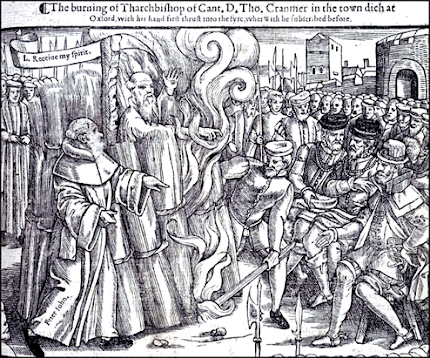
The burning of Tharchbishop of Cant. D. Tho. Cranmer in the town dich at Oxford, with his hand first thrust into the fyre, wherwith he subscribed before. [Click on the picture to see Cranmer's last words.]

Daily Bible Verse

Showing posts with label Unconditional Election. Show all posts

Friday, November 17, 2023

Semi-Calvinist Confusions: Common Grace and the Well Meant Offer


Who will have all men to be saved, and to come unto the knowledge of the truth. (1 Tim. 2:4 KJV)

3 By the decree of God, for the manifestation of His glory, some men and angels are predestinated unto everlasting life, and others foreordained to everlasting death. 4 These angels and men, thus predestinated and foreordained, are particularly and unchangeably designed; and their number so certain and definite, that it cannot be either increased or diminished. (WCF 3:3-4 WCS)


In my last post I pointed out that the purveyors of semi-Calvinist common grace propose that there are apparent contradictions, or paradoxes in the Bible, thereby agreeing with Cornelius Van Til's view that all Scripture is apparently contradictory.  The problem arises when no solutions to the apparent contradictions are offered, and the contradiction is allowed to stand with no further attempt at harmonization or rational solution.  According to their view, it would be prying into the secret counsel of God to give rational explanations for paradoxes in the Bible.

The Calvinista common grace disrupters contend that God both desires to save all individuals without exception and does not decree the salvation of all individuals without exception. This view fails to distinguish between God's revealed will to promiscuously give a general call of the Gospel to all who will hear the Gospel, (Matthew 22:14), and the effectual call of regeneration.  (Ezekiel 36:26-27; John 3:3-8).  This general presentation is a call of the Gospel on the part of humans who are limited in knowledge.  But does it mean that Calvinists should preach the Gospel as if we were all Arminians?  The answer is no.  But that is what Scott Clark wants us to do.  He wants us to tell all of the human race that Christ died for them, knowing full well that the Bible teaches particular atonement and particular redemption, not a universal atonement.  This is just one example of the contradictions in R. Scott Clark's theology.  God does not literally desire the salvation of every single individual.  Since we do not know who is elect and who is not, we must promiscuously preach to all.  The difference is in how we frame the Gospel call.  We must be faithful to the biblical confessions of faith, especially the Westminster Confession of Faith, if we are to claim to be Reformed.  I would contend that the common grace doctrine betrays this dedication to the truth of Scripture as summarized by the Westminster Confession of Faith.

Obviously, when the word "all" is used, it does not literally mean all in every context, so RSC's exegesis is duplicitous at best.  If all of Jerusalem came to hear Jesus preach, does it literally mean that every single person in the city came to hear Him preach?  I think not.  In the same way, when God declares that He wishes for all men to be saved, the deduced conclusion is that He wishes to save all of His elect from among the entire human race.  It is our duty to fulfill that general call because it is commanded in the great commission.  (Matthew 28:18-20).

Scott Clark thinks that there are actual contradictions in God's eternally unchanging mind.  Clark can say that because he thinks that the archetypal knowledge of God is absolutely unknowable, rendering the predestination question a merely theoretical doctrine that should never be defended or mentioned in any evangelistic context whatsoever.  But if God's secret will is unknowable in regards to individuals, does it mean that we should never preach on the terrible doctrine of predestination, especially when it has a dual outcome of election to salvation and reprobation to damnation?  According to Scott Clark, that will not preach, so we should just not say anything about it.  But what does John Calvin say about this?  Calvin actually puts RSC's view in the mouth of the opponents; it is to be refuted.

1 Timothy 2:4 means that God wants to save His elect from every class of mankind, high and low.  It does not literally mean universal salvation for all of mankind as the Arminians, the Unitarian Universalists, and the common grace Semi-Calvinists contend.  The general call of the Gospel does not prove that God literally desires to save everyone head for head, as the purveyors of paradox contend.  Rather, the general call of the Gospel is preached to all indiscriminately because we do not know whom God has individually elected.  He wants us to preach to all so that the elect may be gathered from all nations and classes of men.  The common grace people take this is as a contradiction with no solution.  See Calvin's Commentaries: 

4. Who wishes that all men may be saved. Here follows a confirmation of the second argument; and what is more reasonable than that all our prayers should be in conformity with this decree of God?

And may come to the acknowledgment of the truth. Lastly, he demonstrates that God has at heart the salvation of all, because he invites all to the acknowledgment of his truth. This belongs to that kind of argument in which the cause is proved from the effect; for, if “the gospel is the power of God for salvation to every one that believeth,” (Rom. 1:16,) it is certain that all those to whom the gospel is addressed are invited to the hope of eternal life. In short, as the calling is a proof of the secret election, so they whom God makes partakers of his gospel are admitted by him to possess salvation; because the gospel reveals to us the righteousness of God, which is a sure entrance into life.

Hence we see the childish folly of those who represent this passage to be opposed to predestination. “If God,” say they, “wishes all men indiscriminately to be saved, it is false that some are predestinated by his eternal purpose to salvation, and others to perdition.” They might have had some ground for saying this, if Paul were speaking here about individual men; although even then we should not have wanted the means of replying to their argument; for, although the will of God ought not to be judged from his secret decrees, when he reveals them to us by outward signs, yet it does not therefore follow that he has not determined with himself what he intends to do as to every individual man.

But I say nothing on that subject, because it has nothing to do with this passage; for the Apostle simply means, that there is no people and no rank in the world that is excluded from salvation; because God wishes that the gospel should be proclaimed to all without exception. Now the preaching of the gospel gives life; and hence he justly concludes that God invites all equally to partake salvation. But the present discourse relates to classes of men, and not to individual persons; for his sole object is, to include in this number princes and foreign nations. That God wishes the doctrine of salvation to be enjoyed by them as well as others, is evident from the passages already quoted, and from other passages of a similar nature. Not without good reason was it said, “Now, kings, understand,” and again, in the same Psalm, “I will give thee the Gentiles for an inheritance, and the ends of the earth for a possession.” (Ps. 2:8, 10.)

In a word, Paul intended to shew that it is our duty to consider, not what kind of persons the princes at that time were, but what God wished them to be. Now the duty arising out of that love which we owe to our neighbour is, to be solicitous and to do our endeavour for the salvation of all whom God includes in his calling, and to testify this by godly prayers.

Calvin's commentary on 1 Timothy 2:4.

Calvin, John, and William Pringle. Commentaries on the Epistles to Timothy, Titus, and Philemon. Bellingham, WA: Logos Bible Software, 2010. Print.]


Wednesday, August 09, 2023

William Lane Craig: A Molinist Argument for Salvation by Ignorance of the Gospel


“And he said unto them, Go ye into all the world, and preach the gospel to every creature. He that believeth and is baptized shall be saved; but he that believeth not shall be damned.” (Mark 16:15–16, KJV 1900)  

I generally do not have time to respond to every heresy on YouTube.  However, when an heretical view is expressed at an allegedly Presbyterian church, I am compelled to offer at least a brief response.  I recently came across this YouTube video of Dr. William Lane Craig, who was invited to speak on the historicity of the resurrection of Jesus Christ at Grace Presbyterian Church, Peoria, Illinois.  Grace Presbyterian Church is a member church of the Presbyterian Church in America.  While I have many misgivings about Craig's views on the resurrection as well, today I will restrict my comments to his remarks about the salvation of those who have never heard the gospel of Jesus Christ.  During the question and answer session, a lady with Indian ethnicity asked the question about what happens to those who have never heard the Gospel?  I am deducing that she has many relatives in India who have never heard of Jesus Christ and the Gospel; she obviously wants to know if they are automatically lost, since they have never heard of the saving grace of God in Christ.  (Mark 16:16).

As a side note, the Evangelicals who support New Testament textual criticism argue that removing texts which are included in the traditional Textus Receptus Greek New Testament does not affect doctrine whatsoever.  I disagree.  To remove the longer ending of Mark 16:8-20 does affect doctrinal concerns because Mark 16:16 clearly says that those who do not believe will be condemned.  The logical deduction from this proposition is not that those who have the light of nature will have another opportunity to be saved by the light they have or the information which they have; on the contrary, the text says that they are without excuse.  God does not owe anyone salvation, nor do they have a right to it.  If anyone is saved, it must be by the sheer grace and mercy of God.  (Romans 9:11-21).

In contrast, Craig says:

Okay, the question here is, how does God judge people who have never heard the Gospel?  And I think that the Bible indicates that God judges people on the basis of the information that they have.  He judges them on the light that they have.  Um, so that those who have never heard of Christ will not be judged on the basis of whether they have placed their faith in Christ--that would be manifestly unfair; they've never heard of Jesus.  How would they place their faith in Him?  Rather Paul says in Romans 1 and 2 that they will be judged on the basis of how they've responded to God's general revelation in nature and in conscience.  Paul says in nature all men at any time in history, any place in the world, can know that there is an eternal and powerful deity, who has created the world.  And in chapter 2 he says that God's moral law is written on the hearts of all people, even those who do not have the Old Testament law so that we do by nature what the law requires.  We have an instinctual grasp of right and wrong; and so those who have never heard the Gospel will be judged on the basis of their response to God's general revelation in nature and conscience.  Now that does not mean that someone can be saved apart from the work of Christ.  What it would mean is that the benefits of Christ's death could be applied to someone with his his conscious knowledge of Christ.  If he were to look out into the world and say, "I know there's a god has created all this," looking at his own heart and say, "I don't live up to the demands of God's moral law," and he flings himself on the mercy of this God, asking for forgiveness, and pleading for mercy and grace, uh, that person would be saved by grace through the blood of Christ, even if he had no knowledge of Christ.  He would be like people of the Old Testament who had no conscious knowledge of Christ at all, but they responded to the light that they had and were judged by their response to that light.  Now this raises all sorts of questions.  Are there any people like this? 

(Minute mark: 0:29-3:01).


This is one of the problems of inviting an Arminian or a Molinist to speak at a Reformed church on a different topic, namely the resurrection of Jesus.  It opens up an opportunity for the divisive person to spread other misinformation about the Bible in the congregation.  

However, there are several problems with Craig's interpretation of Romans 1-2.  There are problems with his understanding of how salvation is effected by God's grace during the history prior to the coming of Christ and the revelation of the Old Testament. 

My first response to his conjectures on Romans 1-2 is that Paul was writing to the churches in Rome;  it was a pastoral epistle meant to deal with theological questions raised by Jewish and Gentile converts.  Apparently, there was a debate between the two factions about matters of Jewish law and moral law as well as epistemological issues in regards to saving belief.  Paul clearly says that natural revelation is not sufficient for saving faith in Romans 1:

“For the wrath of God is revealed from heaven against all ungodliness and unrighteousness of men, who hold the truth in unrighteousness; Because that which may be known of God is manifest in them; for God hath shewed it unto them. For the invisible things of him from the creation of the world are clearly seen, being understood by the things that are made, even his eternal power and Godhead; so that they are without excuse: Because that, when they knew God, they glorified him not as God, neither were thankful; but became vain in their imaginations, and their foolish heart was darkened.” (Romans 1:18–21, KJV 1900)

The Bible does say that the wicked will be judged by the light or knowledge that they have.  But this is in regards to degrees of punishment, not about their possibility of being saved apart from the Gospel message: 

“And that servant, which knew his lord’s will, and prepared not himself, neither did according to his will, shall be beaten with many stripes. But he that knew not, and did commit things worthy of stripes, shall be beaten with few stripes. For unto whomsoever much is given, of him shall be much required: and to whom men have committed much, of him they will ask the more.” (Luke 12:47–48, KJV 1900)  

If it were possible for anyone to be saved apart from the Gospel message, why did Jesus send out the apostles to evangelize the whole region around them?  (Luke 10:1-17; Isaiah 52:10; Luke 24:47; Acts 2:39; Matthew 24:14.)  In short, it would not be necessary to send out missionaries to unreached nations and people groups on the earth today if it were possible for individuals to be saved apart from the saving knowledge revealed in the Scriptures through special revelation.  We know nothing of the Gospel message of Jesus Christ apart from the Scriptures.  There is no further revelation of Christ apart from the Scriptures, especially direct revelation:


Q. 60. Can they who have never heard the gospel, and so know not Jesus Christ, nor believe in him, be saved by their living according to the light of nature?

A. They who having never heard the gospel, know not Jesus Christ, and believe not in him, cannot be saved, be they ever so diligent to frame their lives according to the light of nature, or the laws of that religion which they profess; neither is there salvation in any other, but in Christ alone, who is the Saviour only of his body the church.

Rom. 10:14; 2 Thess. 1:8-9; Eph. 2:12; John 1:10-12; John 8:24; Mark 16:16; 1 Cor. 1:20-24; John 4:22; Rom. 9:31-32; Phil. 3:4-9; Acts 4:12; Eph. 5:23.  (Westminster Larger Catechism).

The Canons of Dort makes the same declaration in Canons III & IV, Rejection of Errors 5:


PARAGRAPH 5

  Who teach: That the corrupt and natural man can so well use the common grace (by which they understand the light of nature), or the gifts still left him after the fall, that he can gradually gain by their good use a greater, that is, the evangelical or saving grace, and salvation itself; and that in this way God on His part shows Himself ready to reveal Christ unto all men, since He applies to all sufficiently and efficiently the means necessary to conversion.

  For both the experience of all ages and the Scriptures testify that this is untrue. He showeth his word unto Jacob, his statutes and his ordinances unto Israel. He hath not dealt so with any nation; and as for his ordinances, they have not known them (Ps. 147:19, 20). Who in the generations gone by suffered all the nations to walk in their own way (Acts 14:16). And: And they (Paul and his companions) having been forbidden of the Holy Spirit to speak the word in Asia, when they were come over against Mysia, they assayed to go into Bithynia, and the Spirit of Jesus suffered them not (Acts 16:6, 7).

Canons of Dort, Mount Zion Chapel Library. 

As for Craig's accusation that God would be unfair if He did not grant everyone a "chance" to be saved, the obvious response is that the result would be universal salvation.  Why accuse God of being unrighteous in damning anyone at all?  After all, humans invent many excuses for the evil that they do.  God does not owe anyone grace or mercy.  If we have any rights at all, they must be rights granted to us by our Sovereign God, not rights that we could demand of Him. Secondly, since even faith is a gift of God, it is God who ultimately decides who will be saved or lost.  Libertarian free will does not exist.  Even the fall of Adam was foreordained by God, and the entire human race is fallen in Adam and accountable to God for their own sinful nature and their actual sins committed in thought, word and deed.  No one deserves anything other than eternal judment and everlasting torment in hell.  To suggest otherwise is to accuse God of unrighteousness, which is itself a rebellion against God.  There are no contingencies in God's unchanging and eternally immutable mind.  He foreknows the future because He decreed it to be so.  Yet, God is not the author of man's sin.  He is the remote cause of everything without being the direct cause of man's secondary choices.

Unfortunately, many Presbyterian denominations today, including the Presbyterian Church in America, and many local churches, do not believe the Bible has much to say about anything.  Instead of standing on the Bible and the most definitive confession of faith ever produced, namely the Westminster Confession of Faith, they have a very minimal doctrinal statement posted on their websites.  No need to get into too many details, they say.  But Dr. Gordon H. Clark criticized this sort of minimalizing of biblical teaching:

The Protestant Reformation, the greatest religious awakening since the days of the Apostles, was characterized by a zeal to understand God's Word.  Not only were its obvious teachings emphasized, e.g., the sufficiency of Christ's work for our salvation and the uselessness of purgatory and penance, but also its deeper doctrines, e.g., predestination, were carefully examined.

However, two or three centuries later, after the love of many had waxed cold, and when unbelief came in like a flood, the discouraged and fragmented faithful became Fundamentalists and were content to defend a few vital doctrines.  Sometimes they even said that Christians ought not to go too deeply into the Scriptures.  It is presumptious, [sic] useless, and worst of all, divisive.

Such an attitude is not recommended in the Scriptures themselves, nor was it the practice of the Reformers and Westminster divines.  The Bible says that all the Scripture is profitable for doctrine, not just some.  And the Reformers did not draw back from the difficult passages on predestination, foreordination, and God's eternal decrees.  Really, these passages are not difficult to understand, though many people find them difficult to believe.  But if they are God's words, then we should study, believe, and preach them.

The Westminster Confession, summarizing the Bible, asserts in Chapter III that God from all eternity did ordain whatsoever comes to pass.  Obviously, if God is omnipotent, if nothing can thwart his will, and if he decided to make a world, then all his creatures and all their actions must be according to his plan.  

This is easy to understand; but many people find it difficult to believe that God planned to have sin in the world.  . . .  What does the Bible say?  If the Bible talks about foreordination, we have no right to avoid it and keep silent.

Summarizing the Scriptures, the Confession says here that God is not the author of sin; that is, God does nothing sinful.  Even those Christians who are not Calvinists must admit that God in some sense is the cause of sin, for he is the ultimate cause of everything.  But God does not commit the sinful act, nor does he approve or reward it.

Dr. Gordon H. Clark.  What Do Presbyterians Believe?  The Westminster Confession Yesterday and Today.  1965.  (Trinity Foundation: Unicoi, 2001) pp. 36-37. 

The short response to Dr. William Lane Craig is that Jesus died on the cross only for the elect, that only the elect have all their sins paid for by the work of Christ, and only the elect have the wrath of God against them propitiated.  Only the Holy Spirit can regenerate a lost sinner and cause him or her to be born again.  (John 3:3-8).  It is only through the preaching of the Gospel that sinners are effectually called.  (Romans 10:10-21).  

In the Old Testament we learn that only those whom God had chosen were saved.  God chose Abel over Cain.  He chose Israel over the other nations; and only Israel was saved in the Old Testament.  The other nations were all judged.  (Deuteronomy 7:6-8; Exodus 19:5; Amos 3:2; 1 Peter 2:9).


Sunday, September 11, 2016

Gordon H. Clark: God's Elect: A Small Remnant in an Apostate Nation


Liberals who loudly assert that the Constitution erects a great wall of separation between church and state when Christians protest against abortion and homosexuality, never see a low fence when it comes to the State's curtailing of the practice of religion.  As one half drunk communist said to me as he was returning from Russia, "you can pray all you want."  Yes, but you can't put your religion into practice. 

. . . . .
the IRS and the Supreme Court do not know God.  They want to usurp his place as Father.  From all appearances this liberalism--which is not liberalism at all, but reactionary totalitarianism--will increase.   

--Dr. Gordon H. Clark


This has been one of the most hotly debated and inflammatory presidential election cycles in the history of the United States of America.  The difference is that this time around the media has no monopoly on the news cycle.  The media still has a lot of power to deceive the low information and low education masses with their propaganda.  However, they no longer can monopolize the information available.  The internet, like Gutenberg's printing press, has opened up the potential for social media and blogs to counter the propaganda of the liberal progressives and the inane pseudo-conservative pundits on the radio, satellite and cable television.

Interestingly enough, despite the information superhighway, the vast majority of the populace in our nation does not know how to think critically.  Few if any understand the difference between propositional logic and irrational antinomies.  Politicians can spout off blatantly contradictory statements and the people accept them as just "politics".  Sophistry seems to be acceptable because "everyone does it".  Yet Donald Trump, who lies more than the other politicians, claims to be a truth teller while contradicting himself every other day.

What should a Christian do in such circumstances?  First of all, the sovereign grace Christian knows that all things work for his or her good.  (Romans 8:28-39).  This means that suffering and persecution are not pleasant to go through but they nevertheless work for the good of God's elect.  The rich may prosper in this life but their end is eternal torment in hell unless they obey the Gospel.  (Jeremiah 12:1-3; Job 12:6, 21:7; Psalm 73:3; Luke 12:16-21; 2 Thessalonians 1:8; 1 Peter 4:17).

The late Dr. Gordon H. Clark was a consistent Puritan and did not call for a complete separation between church and state.  He supported the constitutional principle that the state should not establish any Christian church nor interfere in religious matters.  The state has no right to levy taxes against churches as a way of controlling the doctrines of the church.  Unfortunately, secular humanism has been the established religion of the secular state for many decades now.  Dr. Clark's remarks in his commentary on First John were made in 1980.  But his remarks are almost prophetic because the situation today is even worse than it was in 1980:

1 John 3:1

3:1 See what love the Father has given us in order that we may be called children of God.  And we are.  Therefore the world does not know us because it did not know him.

The text:  Why the Textus Receptus omitted the two words "and we are" is a mystery.  The manuscript evidence is very strong; several ancient versions, and some early church fathers as well, have it.

The love of God for his elect is variously described in the New Testament.  Here the purpose, or a purpose, of God in loving us is that we may be his children.  And so we are, for God's purposes never fail and Christ shall see the results of the travail of his soul and shall be satisfied that he accomplished his purpose.  [Isaiah 53:11].

This entails what to some may appear as a disadvantage, namely, the world does not recognize us, does not know us, approve of us.  Of course, in one sense the world knows us very well.  At this writing the Internal Revenue Service has instituted rules to harass and very likely to suppress Christian elementary and high schools.  Christian colleges have for some years suffered harassment.  The courts incline to regard children as wards of the state and to deny parents their rightful authority in the upbringing of their offspring.  Liberals who loudly assert that the Constitution erects a great wall of separation between church and state when Christians protest against abortion and homosexuality, never see a low fence when it comes to the State's curtailing of the practice of religion.  As one half drunk communist said to me as he was returning from Russia, "you can pray all you want."  Yes, but you can't put your religion into practice.

What is the reason for this?  John states it clearly:  the IRS and the Supreme Court do not know God.  They want to usurp his place as Father.  From all appearances this liberalism--which is not liberalism at all, but reactionary totalitarianism--will increase.  Hatred of Christ seemingly will wax worse and worse.  We pray that totalitarianism, terrorism, socialism, and all the antichrists may be overthrown; but we have no indication that God will do so in the near future.  Even the churches, the large liberal churches, contribute huge sums of money to support guerrilla warfare.

Dr. Gordon H. Clark.  First John.  1980.  Second Edition.  (Jefferson: Trinity Foundation, 1992).  P. 90.

What Dr. Clark said 37 years ago is even more pertinent today since the perverse lobby for homosexuality and sex change operations has given the government even more authority to silence Christians and the Bible.   For those who think that Donald Trump is a better choice than the liberal progressive and socialist, Hillary Clinton, I can only say dream on.  Trump is just as much an anti-Christ as Hillary Clinton.

 13 But evil men and seducers shall wax worse and worse, deceiving, and being deceived.
 14 But continue thou in the things which thou hast learned and hast been assured of, knowing of whom thou hast learned them;
 15 And that from a child thou hast known the holy scriptures, which are able to make thee wise unto salvation through faith which is in Christ Jesus.
 16 All scripture is given by inspiration of God, and is profitable for doctrine, for reproof, for correction, for instruction in righteousness:
 17 That the man of God may be perfect, throughly furnished unto all good works. (2 Timothy 3:13-17 KJV)

Sunday, October 12, 2014

Can Your Name Be Blotted Out of the Book of Life?


Professor Herman Hanko of the Protestant Reformed Church in America comments on this issue on the PRCA website:


The Arminians are fond of appealing to these passages and others like them to prove their terrifyng doctrine of the falling away of true saints. I remember talking to a lady once who was brought up in Arminian circles who told me that she had accepted Christ at least six times and had been baptized three times, because every time she had accepted Christ, though she was sincere, she had fallen away again.  -- Herman Hanko.

Click here to read the full article:  Blotted Out of the Book of Life.

Wednesday, October 16, 2013

My Comments at Triablogue


Scroll down after you read the article at Triablogue.  You will see my comments there.  The original article was written in regards to William Lane Craig's Molinist views.  Unfortunately, the so-called "Calvinist" actually endorses Craig's misuse of Romans 9:11-13!  Click here to see my comments.

Friday, October 04, 2013

John Calvin Quote of the Day: Free Election of God Versus Common Grace


Let those roar at us who will. We will ever brighten forth, with all our power of language, the doctrine which we hold concerning the free election of God; seeing that it is only by it, that the faithful can understand how great that goodness of God is, which effectually called them to salvation.  --  John Calvin

But how shall he be humble, who will not hear of the original sin and misery from which he has been delivered? And who, by extending the saving mercy of God to all, without difference, lessens, as much as in him lies, the glory of that mercy?

 EPG   PAGE 12

Those, most certainly, are the farthest from glorifying the grace of God, according to its greatness, who declare, that it is, indeed, common to all men; but that it rests effectually in them, because they have embraced it by faith. The cause of faith itself, however, they would keep buried, all the time, out of sight; which is this;   --that the children of God, who are chosen to be sons, are afterwards blessed with the spirit of adoption. Now, what kind of gratitude is that, in me, if, being endowed with so pre-eminent a benefit, I consider myself no greater a debtor than he, who hath not received one hundredth part of it.   Wherefore, if, to praise the goodness of God worthily, it is necessary to bear in mind, how much we are indebted to Him; those are malignant towards Him, and rob Him of His glory, who reject, and will not endure, the doctrine of eternal election:   which being buried out of sight, one-half of the grace of God must, of necessity, vanish with it. Let those roar at us who will. We will ever brighten forth, with all our power of language, the doctrine which we hold concerning the free election of God; seeing that it is only by it, that the faithful can understand how great that goodness of God is, which effectually called them to salvation.

Calvin, John (2011-11-24). Calvin's Calvinism:  A Treatise on the Eternal Predestination of God.  Translated by Henry Cole. (Kindle Locations 321-335).  . Kindle Edition.

Sunday, May 19, 2013

Gordon H. Clark: What Is the Christian Life? Sanctification and Perseverance


Perseverance does not mean uninterrupted progress at the same or an ever increasing rate. In ordinary affairs we speak of a man persevering who falls, blunders, receives set-backs, but who recovers and struggles on. This is why Calvinists use and prefer the term perseverance rather than the Arminian deceptive phrase “eternal security.” The latter in itself gives no hint of struggle; the former does.  -- Gordon H. Clark


The following is a comment I sent by e-mail to an online friend.  I highly recommend Gordon H. Clark's book, What Is the Christian Life?  In this book he discusses the reasons why there is a tendency for giving people false assurance based on walking an aisle or making a one time "decision."  He also discusses the eternal insecurity of the Arminian view, which really can give no assurance.  Clark also devastates the idea proposed by the late Louis Berkhof that someone can have a "temporary" faith that lasts a lifetime.  Clark further repudiates Berkhof's view in his book, What Is Saving Faith?

I particularly find Paul Washer's semi-Pentecostal style of preaching offensive to the Gospel, since Washer's chief approach is the Charles Finney, Billy Sunday style of emotionally manipulating crowds, rather than preaching the propositional truths revealed rationally and logically in the plenary-verbally inspired holy writings we call the Scriptures.  (See:  Paul Washer on YouTube).  The Lordship view of saving faith is essentially another way of undermining the doctrines of assurance and perseverance as they are outlined in Scripture and in the Westminster Confession.  (See:  Chapter XVII, Of the Perseverance of the Saints, and Chapter XVIII, Of Assurance of Grace and Salvation).

Here is the e-mail I sent to my friend:

I recommend that you read the e-book, What Is the Christian Life, by Gordon H. Clark.  I got my copy for $5.00.  Clark is not an advocate of "easy believism."  That's the idea that Baptists have about their view of eternal security where a person walks the aisle and shakes the minister's hand and makes a decision.  That one "work" makes that person eternally secure no matter what else they do?  I don't think so.  But on the other hand, Paul Washer and the Lordship people are really teaching eternal insecurity like the Arminians.  How do you know if you know enough of the Bible or obey the moral law enough to be saved?  That is the issue.  Clark definitely teaches that our assurance is grounded in justification by faith alone.  He does, however, advocate obedience as "contributing" to our assurance since that appears to be what 1 John is about.

Here's his view of the doctrine of perseverance:

Perseverance does not mean uninterrupted progress at the same or an ever increasing rate. In ordinary affairs we speak of a man persevering who falls, blunders, receives set-backs, but who recovers and struggles on. This is why Calvinists use and prefer the term perseverance rather than the Arminian deceptive phrase “eternal security.” The latter in itself gives no hint of struggle; the former does.

If the Old Testament is so clear on this matter, it is really not necessary to quote the New Testament also. But as such an omission would surely be misunderstood by the Arminians, and since in any case we wish to know what the New Testament says, here are some verses.

John 10:28, 29: “And I give unto them eternal life; and they shall never perish, neither shall any man pluck them out of my hand. My Father, which gave them me, is greater than all; and no man is able to pluck them out of my Father’s hand.”

It must be a most elementary student and immature Christian who is unfamiliar with John 10:28-29. And it must be a most confused mentality that cannot understand it correctly. “They shall never perish.” Could anything be easier or plainer? Who are the “they”? They are Christ’s sheep; Christ knows them all by name; he gives them eternal life, a life that is everlasting. Clearly a life that lasts only a year or two is not eternal. “They shall never perish” is written with a double negative, and double negatives in Greek do not make an affirmative, but an emphatic negative. As if that were not enough Christ adds, “Neither shall any man pluck them out of my hand.” Relative to this phrase I either read or heard an Arminian say that although no man can pluck a Christian out of God’s hand, the word man means “no other man;” but the man himself can pluck himself out of God’s hand. I have no documentation for this, and it may not be typical of all Wesleyans. But at any rate, the word in the New Testament is tis, anyone, including the man himself as well as Satan. Then to pile emphasis upon emphasis Jesus continues, “My Father is greater than all, and no one is able to pluck them out of my Father’s hand.”

To escape such utterly unambiguous verses the Arminians are forced to invent utterly ridiculous misinterpretations, for otherwise they would have to repudiate their beloved free will and become Calvinists – a disaster not to be contemplated.

Gordon H. Clark (2013-03-04T05:00:00+00:00). What Is The Christian Life? (Kindle Locations 818-838). The Trinity Foundation. Kindle Edition.

Paul Washer is closer to Arminianism and Pentecostalism than anything else.  Gordon H. Clark utterly rejected emotionalism as a way to persuade people to be saved.  Emotions have no logical or propositional content.  Without knowledge of the information recorded in the Bible there is no possibility of salvation.  Working the crowd into a lather means absolutely nothing.   The Bible makes it clear:

Then he called for a light, and sprang in, and came trembling, and fell down before Paul and Silas, 30 And brought them out, and said, Sirs, what must I do to be saved? 31 And they said, Believe on the Lord Jesus Christ, and thou shalt be saved, and thy house. 32 And they spake unto him the word of the Lord, and to all that were in his house. 33 And he took them the same hour of the night, and washed their stripes; and was baptized, he and all his, straightway. 34 And when he had brought them into his house, he set meat before them, and rejoiced, believing in God with all his house. (Acts 16:29-34 KJV)

Clark's book,   What Is the Christian Life? (E-Book), is well worth the $5.00 investment.  Believe me.  I'm posting an edited version of this on the blog, too. 

Sincerely in Christ,

Charlie


Addendum:  The Thirty-Nine Articles of Religion also teach the doctrines of unconditional election, perseverance of the saints, and assurance of salvation in Article XVII:


Article XVII


Of Predestination and Election

Predestination to life is the everlasting purpose of God, whereby, before the foundations of the world were laid, He hath constantly decreed by His counsel secret to us, to deliver from curse and damnation those whom He hath chosen in Christ out of mankind, and to bring them by Christ to everlasting salvation as vessels made to honour. Wherefore they which be endued with so excellent a benefit of God be called according to God's purpose by His Spirit working in due season; they through grace obey the calling; they be justified freely; they be made sons of God by adoption; they be made like the image of His only-begotten Son Jesus Christ; they walk religiously in good works; and at length by God's mercy they attain to everlasting felicity.

As the godly consideration of Predestination and our Election in Christ is full of sweet, pleasant, and unspeakable comfort to godly persons and such as feel in themselves the working of the Spirit of Christ, mortifying the works of the flesh and their earthly members and drawing up their mind to high and heavenly things, as well because it doth greatly establish and confirm their faith of eternal salvation to be enjoyed through Christ, as because it doth fervently kindle their love towards God: so for curious and carnal persons, lacking the Spirit of Christ, to have continually before their eyes the sentence of God's Predestination is a most dangerous downfall, whereby the devil doth thrust them either into desperation or into wretchlessness of most unclean living no less perilous than desperation.


Furthermore, we must receive God's promises in such wise as they be generally set forth in Holy Scripture; and in our doings that will of God is to be followed which we have expressly declared unto us in the word of God.


Wednesday, February 13, 2013

John Calvin on the Security of Election

For there is not a more effectual means of building up faith than the giving our open ears to the election of God, which the Holy Spirit seals upon our heart while we hear, shewing us that it stands in the eternal and immutable goodwill of God towards us; -- John Calvin
For there is not a more effectual means of building up faith than the giving our open ears to the election of God, which the Holy Spirit seals upon our heart while we hear, shewing us that it stands in the eternal and immutable goodwill of God towards us; and that, therefore, it cannot be moved or altered by any storms of the world, by any assaults of Satan, by any changes, or by any fluctuations or weaknesses of the flesh. For our salvation is then sure to us, when we find the cause of it in the breast of God. Thus, when we lay hold of life in Christ, made manifest to our faith, the same faith being still our leader and guide, our sight is permitted to penetrate much farther, and to see from what source that life proceeded. Our confidence of salvation is rooted in Christ, and rests on the promises of the Gospel. But it is no weak prop to our confidence, when we are brought to believe in Christ, to hear that all was originally given to us of God, and that we were as much ordained to faith in Christ before the foundation of the world, as we were chosen to the inheritance of eternal life in Christ.

Hence, therefore, arises the impregnable and insubvertible security of the saints. The Father, who gave us to the Son as His peculiar treasure, is stronger than all who oppose us; and He will not suffer us to be plucked out of His hand. What a cause for humility then in the saints of God when they see such a difference of condition made in those who are, by nature, all alike! Wherever the sons of God turn their eyes, they behold such wonderful instances of blindness, ignorance and insensibility, as fill them with horror; while they, in the midst of such darkness, have received Divine illumination, and know it, and feel it, to be so. How (say they) is it that some, under the clear light, continue in darkness and blindness? Who makes this difference? One thing they know by their own experience, that whereas their eyes were also once closed, they are now opened. Another thing is also certain, that those who willingly remain ignorant of any difference between them and others, have never yet learned to render unto God the glory due to Him for making that difference.  Calvin's Calvinism, Section I.
And amazingly, the Thirty-nine Articles of Religion also upholds that the doctrine of predestination and eternal election is a source of great security and comfort to the believer.  Odd that so-called "Calvinists" these days doubt the security of the believer and do not preach or teach the doctrine of unconditional election as a source of comfort and security:

Article XVII:  Of Predestination and Election

Predestination to life is the everlasting purpose of God, whereby, before the foundations of the world were laid, He hath constantly decreed by His counsel secret to us, to deliver from curse and damnation those whom He hath chosen in Christ out of mankind, and to bring them by Christ to everlasting salvation as vessels made to honour. Wherefore they which be endued with so excellent a benefit of God be called according to God's purpose by His Spirit working in due season; they through grace obey the calling; they be justified freely; they be made sons of God by adoption; they be made like the image of His only-begotten Son Jesus Christ; they walk religiously in good works; and at length by God's mercy they attain to everlasting felicity.

As the godly consideration of Predestination and our Election in Christ is full of sweet, pleasant, and unspeakable comfort to godly persons and such as feel in themselves the working of the Spirit of Christ, mortifying the works of the flesh and their earthly members and drawing up their mind to high and heavenly things, as well because it doth greatly establish and confirm their faith of eternal salvation to be enjoyed through Christ, as because it doth fervently kindle their love towards God: so for curious and carnal persons, lacking the Spirit of Christ, to have continually before their eyes the sentence of God's Predestination is a most dangerous downfall, whereby the devil doth thrust them either into desperation or into wretchlessness of most unclean living no less perilous than desperation.

Furthermore, we must receive God's promises in such wise as they be generally set forth in Holy Scripture; and in our doings that will of God is to be followed which we have expressly declared unto us in the word of God.  (Article 17).
Charlie

Sunday, June 03, 2012

The Standard Bearer: Not Willing That Any Should Perish

God is not willing that any should perish, but that all should come to repentance. What a truth this is! If God is not willing that any should perish, then we know that none shall perish. Otherwise God is not God. This shows that in no way can the longsuffering of God in 2 Peter 3:9 be made to apply to all men in general. Clearly this is written to the church of believers who find themselves in the midst of trial, and even suffering in the midst of this life. We are given the assurance that God's will is that none of us, none of the elect, shall perish.  --Reverend Richard Moore,

Volume 69, Issue 8,   The Standard Bearer, 1/15/1993.  Not Willing That Any Should Perish. 


 The Standard Bearer

Thursday, April 12, 2012

Pharisees, Tradition, and Ecstatic Enthusiasm

I was reminded recently why I am no longer a Pentecostal.  Have nothing to do with those who place their trust in their own ability to keep God's law, do their own miracles, or invent their own personal revelations.  Scripture alone is the final authority in all matters of faith, practice, and doctrine.  When the Pharisees look to their own experiences, revelations, and enthusiasm they contradict the plain teaching of God's written Word, the only revelation that matters.  All else is human opinion.  (2 Corinthians 4:6).

I had a Pentecostal minister friend from years back ask me to support a mission trip to South America.  I told him that I do not support Pentecostal ministries anymore because I regard the Arminian and Pentecostal traditions as false religions.  He was very surprised to learn that.  But I felt good that I had taken a stand that should have been taken years ago.  I have lost many friends over my faith in the absolute sovereignty of God and of a grace of salvation that is absolutely free.  But so be it.

I made the mistake of asking an elderly charismatic Baptist friend to do the memorial service for my nephew.  He conveniently had an excuse.  Thanks be to God!  God has a way of correcting us in moments of weakness.  In the end a preacher of sovereign grace officiated at the graveside memorial service for Neil Moreno Ray, Jr.  Bubba will be greatly missed.  But I have good reason to believe that I will see him again in heaven.  Why?  Because election is unconditional and God knows who belongs to Him.  (Ephesians 1:4, 5, 11; 2 Timothy 2:19).

Support Reasonable Christian Ministries with your generous donation.