>

Martyred for the Gospel

Martyred for the Gospel
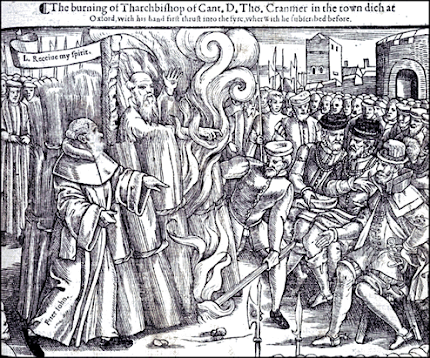
The burning of Tharchbishop of Cant. D. Tho. Cranmer in the town dich at Oxford, with his hand first thrust into the fyre, wherwith he subscribed before. [Click on the picture to see Cranmer's last words.]

Daily Bible Verse

Showing posts with label Arminianism. Show all posts

Wednesday, September 04, 2019

A Response to Phil Johnson's Article on Hyper-Calvinism


A Response to Phil Johnson’s Article on Hyper-Calvinism

Although the article by Phil Johnson is an old and dated one, I have decided to respond to it again because it is continually used to attack classical Calvinists who are not hyper-Calvinists at all.  Worse, the opening definition of hyper-Calvinism in the article is a quote from a high church Anglo-Catholic named Peter Toon, who is now deceased but was a priest in the Church of England and then transferred to the Anglican Church in North America.  Right from the get go Phil Johnson gives a wrong definition of hyper-Calvinism based on an equivocal definition.  I should also mention that Johnson himself is supposed to be a Baptist and a Calvinist but he is now working for John MacArthur.  Toon defines hyper-Calvinism this way:

1. [Hyper-Calvinism] is a system of theology framed to exalt the honour and glory of God and does so by acutely minimizing the moral and spiritual responsibility of sinners . . . It emphasizes irresistible grace to such an extent that there appears to be no real need to evangelize; furthermore, Christ may be offered only to the elect. . . .

    2. It is that school of supralapsarian 'five-point' Calvinism [n.b.—a school of supralapsarianism, not supralapsarianism in general] which so stresses the sovereignty of God by over-emphasizing the secret over the revealed will of God and eternity over time, that it minimizes the responsibility of sinners, notably with respect to the denial of the use of the word "offer" in relation to the preaching of the gospel; thus it undermines the universal duty of sinners to believe savingly in the Lord Jesus with the assurance that Christ actually died for them; and it encourages introspection in the search to know whether or not one is elect. [Peter Toon, "Hyper-Calvinism," New Dictionary of Theology (Leicester: IVP, 1988), 324.]
[From:  A Primer on Hyper-Calvinism, by Phil Johnson].

My first objection to this definition is that it sets up a straw man fallacy in the first sentence.  The Bible nowhere minimizes human responsibility and neither does the Westminster Confession or the Belgic Confession.  Both of these confessions teach that sanctification is a necessary response to justification by faith alone and even faith is a gift of God, not something that someone can conjure up by their own moral strength.  Secondly, it is false to assert that Evangelism is unnecessary.  The fact of the matter is that Calvinism makes evangelism essential for two reasons.  The first is that God commands it in Matthew 28:18-20; Mark 16:15-16; Colossians 1:23.  Secondly, the Bible teaches that natural theology and natural revelation provides insufficient information for saving faith.  (Romans 1:18-21; Romans 2:12-16).  And the last sentence in paragraph 1 is an outright deception when Toon asserts that “Christ may be offered only to the elect . . .”  It is impossible to tell an unbeliever that Christ died for them because it might not be true.  If Christ has died for them then the sin of unbelief will be overcome by the irresistible grace of God.  It is not that Calvinists do not preach repentance and the wrath of God to unbelievers.  They certainly do.  But it is also not true that only those who repent are offered Christ.  Even though the general call of the Gospel is preached to all indiscriminately, the fact is that only the elect can respond to the command to repent and believe the Gospel because they alone will be enabled by the monergistic work of God to repent and believe the Gospel.  (Matthew 22:14; John 3:3-8; 1 Peter 1:23; John 1:13; Romans 9:15-16; 1 John 5:1).

In paragraph 2 Toon repeats his accusation that the sovereignty of God makes man not responsible for his sins.  But worse Toon says that in order to “offer” the Gospel or preach the general call of the Gospel the minister must also tell his hearers that they have “the assurance that Christ actually died for them.”  [Ibid.].  This absolutely not what the Bible says at all.  Scripture teaches that Christ died only for the elect and that the atonement is particularly for the elect and the elect only.  To be sure the Westminster Confession of Faith does teach a distinction between the general call of the Gospel and the effectual call of God through the same message.  However, this is not the same thing as defining the free offer as God’s sincere desire to save those for whom Christ did not die and whom God did not unconditionally elect in eternity before creation.

Westminster Confession of Faith:  Chapter VIII.  Of Christ the Mediator.

6.      Although the work of redemption was not actually wrought by Christ till after His incarnation, yet the virtue, efficacy, and benefits thereof were communicated unto the elect, in all ages successively from the beginning of the world, in and by those promises, types, and sacrifices, wherein He was revealed, and signified to be the seed of the woman which should bruise the serpent’s head; and the Lamb slain from the beginning of the world; being yesterday and today the same, and for ever. (Gal. 4:4–5, Gen. 3:15, Rev. 13:8, Heb. 13:8)

The Westminster Confession of Faith. Oak Harbor, WA: Logos Research Systems, Inc., 1996. Print.

Another implication of Toon’s remarks in the dictionary definition of hyper-Calvinism is that men are not responsible to God if double predestination is true.  This could not be further from the truth.  Even the Muslim who is born in Saudi Arabia is without excuse and will be held responsible and accountable for his or her unbelief.  That’s because even if natural revelation is insufficient information for saving faith, it is enough information to leave the unbelieving pagan of foreign lands without excuse.  (Romans 1:18-21).  There are no rights that God owes to fallen humanity because Adam brought the curse on all mankind.  The whole lump is leavened with sin and guilt and we are all guilty of Adam’s first sin as well as our own inherent sinful hearts and our own actual sins.  On all these accounts we are responsible to God and He will judge us on the basis of the covenant of works unless we are born again of the Holy Spirit and effectually called to saving faith.  There are many other examples I could give from Scripture, including Phineas and Hophni but they were warned by their father Eli and still refused to believe because it was God’s purpose to kill them.  (1 Samuel 2:12-25).  The fact of the matter is that Calvinists are much more motivated to evangelize because we know that unless the unbeliever hears the general call of the Gospel he or she cannot receive the effectual call.  We know this because the apostle Paul says so in Romans 10:9-17.

Now as to Toon’s accusation that emphasizing God’s sovereignty encourages introspection to determine whether or not one is elect of God, I think Toon is again creating a straw man to demolish what the Bible and the Westminster Confession of Faith does not teach.  It is surely true that there are many hypocrites in the visible churches.  It is also true that many have a false assurance of salvation because they are living a life that is essentially slavery to sin and licentiousness.  But does this mean that no Christian can attain assurance of salvation?  Certainly not!  Even the apostle Peter says that assurance is attainable: 

Therefore, brethren, be even more diligent to make your call and election sure, for if you do these things you will never stumble; (2 Peter 1:10 NKJV). 

Now to Him who is able to keep you from stumbling, And to present you faultless Before the presence of His glory with exceeding joy, 25 To God our Savior, Who alone is wise, Be glory and majesty, Dominion and power, Both now and forever. Amen. (Jude 1:24-25 NKJV).

Moreover, the entire epistle of 1 John is about sanctification and how loving God means obeying His commandments.  And toward the end of the epistle in 1 John 5:13 we are told that assurance of salvation is the reason that John is writing to the readers:

These things I have written to you who believe in the name of the Son of God, that you may know that you have eternal life, and that you may continue to believe in the name of the Son of God. (1 Jn. 5:13 NKJV).

When I first read Johnson’s article years ago I did not realize all the implications of what he was saying.  But now that I am better informed it is shocking to go back and read his remarks.  He starts off by quoting a known Tractarian, namely Peter Toon.  In his opening paragraph he refers to John Piper and Thomas Schreiner.  Both of these men have been associated with the Federal Vision error and Piper went so far as to invite Doug Wilson to one of his theological conferences.  Typical of semi-Calvinists, Johnson appeals to the doctrine that there are two wills in God’s eternal mind.  These two wills appear to be in direct contradiction to the other because God’s eternal will is immutable and unchangeable while God’s permissive will is a well meant desire to save everyone without exception, including the reprobate.  But does the Bible or the Westminster Confession teach that there are two wills in God?  The answer has to be no.  (Ephesians 1:11; Isaiah 14:24-27; 46:9-11).  In fact, John Calvin did not teach this doctrine and neither did Martin Luther.  Luther makes it very plain that God’s foreknowledge is immutable and that the human will is in bondage to God’s sovereign will:

Sect. IX.—THIS, therefore, is also essentially necessary and wholesome for Christians to know: That God foreknows nothing by contingency, but that He foresees, purposes, and does all things according to His immutable, eternal, and infallible will. By this thunderbolt, “Free-will” is thrown prostrate, and utterly dashed to pieces. Those, therefore, who would assert “Free-will,” must either deny this thunderbolt, or pretend not to see it, or push it from them. But, however, before I establish this point by any arguments of my own, and by the authority of Scripture, I will first set it forth in your words.

Are you not then the person, friend Erasmus, who just now asserted, that God is by nature just, and by nature most merciful? If this be true, does it not follow that He is immutably just and merciful? That, as His nature is not changed to all eternity, so neither His justice nor His mercy? And what is said concerning His justice and His mercy, must be said also concerning His knowledge, His wisdom, His goodness, His will, and His other Attributes. If therefore these things are asserted religiously, piously, and wholesomely concerning God, as you say yourself, what has come to you, that, contrary to your own self, you now assert, that it is irreligious, curious, and vain, to say, that God foreknows of necessity? You openly declare that the immutable will of God is to be known, but you forbid the knowledge of His immutable prescience. Do you believe that He foreknows against His will, or that He wills in ignorance? If then, He foreknows, willing, His will is eternal and immovable, because His nature is so: and, if He wills, foreknowing, His knowledge is eternal and immovable, because His nature is so.

From which it follows unalterably, that all things which we do, although they may appear to us to be done mutably and contingently, and even may be done thus contingently by us, are yet, in reality, done necessarily and immutably, with respect to the will of God. For the will of God is effective and cannot be hindered; because the very power of God is natural to Him, and His wisdom is such that He cannot be deceived. And as His will cannot be hindered, the work itself cannot be hindered from being done in the place, at the time, in the measure, and by whom He foresees and wills.

And John Calvin is crystal clear as well that God has only one immutable and eternal will:

2. God’s will is the rule of righteousness*

To the pious and moderate and those who are mindful that they are men, these statements should be quite sufficient. Yet because these venomous dogs spew out more than one kind of venom against God, we shall answer each individually, as the matter requires.

Foolish men contend with God in many ways, as though they held him liable to their accusations. They first ask, therefore, by what right the Lord becomes angry at his creatures who have not provoked him by any previous offense; for to devote to destruction whomever he pleases is more like the caprice of a tyrant than the lawful sentence of a judge. It therefore seems to them that men have reason to expostulate with God if they are predestined to eternal death solely by his decision, apart from their own merit. If thoughts of this sort ever occur to pious men, they will be sufficiently armed to break their force even by the one consideration that it is very wicked merely to investigate the causes of God’s will. For his will is, and rightly ought to be, the cause of all things that are. For if it has any cause, something must precede it, to which it is, as it were, bound; this is unlawful to imagine. For God’s will is so much the highest rule of righteousness that whatever he wills, by the very fact that he wills it, must be considered righteous. When, therefore, one asks why God has so done, we must reply: because he has willed it.5 But if you proceed further to ask why he so willed, you are seeking something greater and higher than God’s will, which cannot be found. Let men’s rashness, then, restrain itself, and not seek what does not exist, lest perhaps it fail to find what does exist. This bridle, I say, will effectively restrain anyone who wants to ponder in reverence the secrets of his God. Against the boldness of the wicked who are not afraid to curse God openly, the Lord himself will sufficiently defend himself by his righteousness, without our help, when, by depriving their consciences of all evasion, he will convict them and condemn them.

And we do not advocate the fiction of “absolute might”; because this is profane, it ought rightly to be hateful to us. We fancy no lawless god who is a law unto himself. For, as Plato says, men who are troubled with lusts are in need of law; but the will of God is not only free of all fault but is the highest rule of perfection, and even the law of all laws.6 But we deny that he is liable to render an account; we also deny that we are competent judges to pronounce judgment in this cause according to our own understanding. Accordingly, if we attempt more than is permitted, let that threat of the psalm strike us with fear: God will be the victor whenever he is judged by mortal man [Ps. 51:4; cf. 50:6, Vg.].

Calvin, John. Institutes of the Christian Religion & 2. Ed. John T. McNeill. Trans. Ford Lewis Battles. Vol. 1. Louisville, KY: Westminster John Knox Press, 2011. Print. The Library of Christian Classics.

Dr. Gordon H. Clark agreed with Luther and Calvin that all things happen of necessity and that God has only one will.  Clark shocked his detractors by saying that if a man shoots his wife it was God’s will.  This is another reason that Clark was falsely accused of hyper-Calvinism.  But the fact of the matter is that Dr. Clark also recognized that a man is fully accountable to God for what that man does.  As Calvin says above, we must give an account to God and God does not give an account to any creature.  What God does is right because He is God and there is no one to hold God accountable.  Since the law of God is written in man’s heart by way of the image of God it logically follows that man is without excuse.  (Romans 1:18-21; Romans 2:11-16; Genesis 1:26-27, 5:1, 9:6; John 1:9; 1 Corinthians 11:7).  If a man shoots his wife not only will the civil and criminal courts convict him of murder and sentence him to prison or death, but he will also suffer the penalty of hell should he not repent.  Determinism means that the criminal penalties are also God’s will and criminal laws are meant to deter crime, not to excuse the perpetrator as a victim of an unjust social system.  (Genesis 9:6;  Romans 13:1-5).

Continuing with Johnson’s article he defines the word “offer” in a way that is not in agreement with the Westminster Confession of Faith or any other Reformed creed or confession:

Second, take note of the stress the above definition places on hyper-Calvinists' "denial of the use of the word 'offer' in relation to the preaching of the gospel." This is virtually the epitome of the hyper-Calvinist spirit: it is a denial that the gospel message includes any sincere proposal of divine mercy to sinners in general.  (Ibid.).

The first problem with Johnson’s definition is that he gives no scriptural support for his contention that the preaching of the Gospel includes the term “offer” or any reference to any Reformed confession that the term offer is used.  The second problem is that he makes the proposition that the Gospel “is a sincere proposal of divine mercy to sinners in general.”  Framing the issue this way ignores the fact that the Gospel message nowhere promises divine mercy to all sinners without exception.  Jesus certainly did not promise divine mercy to the Pharisees.  He said that they could not believe because they were not His sheep.  (John 10:26-27).  We are not Jesus, obviously.  But even Calvinists today do not tell unbelievers that Jesus died for them or that God sincerely desires to save everyone.  We preach that all who will repent will receive mercy.  But even here we are also not afraid to preach the distinction between the general call of the Gospel and the effectual call of the Gospel which only the elect receive.  (  Matthew 22:14; John 3:3-8; John 6:37-44, 65). 

When the Canons of Dort say that as many as are called are unfeignedly called, the paragraph is in reference to the effectual call, not the general call of the Gospel.  There is no contradiction between the general call and the effectual call because when God calls only the elect are enabled to actually answer the call.   (Canons of Dort, 3rd and 4th Heads of Doctrine, Articles 8-14).   Article 9 specifically denies that it is God’s fault if there are those who refuse to believe the general call of the Gospel.  And Article 12 specifically points out that the effectual call is monergistic and not synergistic so that the will does not cooperate in regeneration whatsoever.  Worse, Article 13 says that moral persuasion and the external call of the Gospel is not what causes the message to be effectual.  This makes one wonder why modern proponents of the free offer put so much emphasis on persuasion, emotional appeals, and equivocation in regards to the doctrines of unconditional election, particular atonement, and irresistible grace?  The bottom line here is that Article 14 makes it impossible to consistently profess to be a Calvinist while preaching a general grace:

ARTICLE 14

Faith is therefore to be considered as the gift of God, not on account of its being offered by God to man, to be accepted or rejected at his pleasure, but because it is in reality conferred upon him, breathed and infused into him; nor even because God bestows the power or ability to believe, and then expects that man should by the exercise of his own free will consent to the terms of salvation and actually believe in Christ, but because He who works in man both to will and to work, and indeed all things in all, produces both the will to believe and the act of believing also.  (Canons of Dort:  3rd and 4th Heads of Doctrine).

Historic Creeds and Confessions. electronic ed. Oak Harbor: Lexham Press, 1997. Print.

These articles alone ought to be enough to silence the critics of classical Calvinists who have been falsely accused of hyper-Calvinism.  The fact that the main definition was written by a semi-pelagian, namely Peter Toon, who falsely claimed to be a Calvinist should raise red flags.  I should also point out to the reader that Peter Toon was a member of the Anglican Church in North America, a decidedly Anglo-Catholic denomination which has little to no tolerance for actual Protestant Evangelicals who believe the five solas of the Protestant Reformation and hold to the 39 Articles of Religion as Protestant and Calvinist confession of faith.  (See also:  The Anglican Way, by Gerald Bray).  Toon is easily proved to be a Tractarian because of his support for the 1928 Book of Common Prayer here in the USA rather than the 1662 Book of Common Prayer which is used by the Church of England.  The 1928 BCP has prayers for the dead among other problems.  (See:  What’s Wrong with the 1928 Book of Common Prayer, by Robin Jordan).  To be sure Johnson should be faithful at least to the 1689 London Baptist Confession of Faith instead of quoting a known Anglo-Catholic.

Johnson only digs himself a deeper hole when he says:

Third, mark the fact that hyper-Calvinism "encourages introspection in the search to know whether or not one is elect." Assurance tends to be elusive for people under the influence of hyper-Calvinist teaching. Therefore, hyper-Calvinism soon degenerates into a cold, lifeless dogma. Hyper-Calvinist churches and denominations tend to become either barren and inert, or militant and elitist (or all of the above).  (Ibid.).

The first problem here is that the Westminster Confession of Faith does not teach that everyone who has saving faith also has assurance of salvation.  This is easy enough to see in chapter XVIII, Of Assurance of Grace and Salvation.  The first section says that there are many who have false assurance and are hypocrites.  I am taking this to mean that the doctrine of once saved always saved produces many hypocrites who are actually libertines or lawless antinomians rather than believers with a true and living faith who are sincerely endeavoring to walk in obedience to Christ as evidence of their love for Him.  Section 3 specifically says that new believers often do not immediately attain assurance of salvation:

3.      This infallible assurance doth not so belong to the essence of faith, but that a true believer may wait long, and conflict with many difficulties, before he be partaker of it: (1 John 5:13, Isa. 50:10, Mark 9:24, Ps. 88, Ps. 77:1–12) yet, being enabled by the Spirit to know the things which are freely given him of God, he may, without extraordinary revelation in the right use of ordinary means, attain thereunto. (1 Cor. 2:12, 1 John 4:13, Heb. 6:11–12, Eph. 3:17) And therefore it is the duty of every one to give all diligence to make his calling and election sure, (2 Pet. 1:10) that thereby his heart may be enlarged in peace and joy in the Holy Ghost, in love and thankfulness to God, and in strength and cheerfulness in the duties of obedience, (Rom. 5:1–2, 5, Rom. 14:17, Rom. 15:13, Eph. 1:3–4, Ps. 4:6–7, Ps. 119:32) the proper fruits of this assurance; so far is it from inclining men to looseness. (1 John 2:1–2, Rom. 6:1–2, Tit. 2:11–12, 14, 2 Cor. 7:1, Rom. 8:1, 12, 1 John 3:2–3, Ps. 130:4, 1 John 1:6–7).

The Westminster Confession of Faith. Oak Harbor, WA: Logos Research Systems, Inc., 1996. Print.

Section 4 says specifically that when a true believer falls into a grievous sin he or she may for a time lose the assurance of salvation.  But notice that this is not based on subjective or mystical introspection but rather on the objective revelation of God’s moral law and the Christian’s duty to keep the moral law as evidence before the visible church that he or she has a valid profession of faith.  (James 2:1-26; 1 John 2:3; 1 John 3:14,18–19,21,24; 1 John 5:13).   Presbyterians do not determine who is actually elect or regenerate as a basis for church membership.  Rather the new convert is interviewed by the pastor and the elders to determine if the person has an adequate understanding of the Gospel and whether or not the person has repented of their sins and believes the Gospel.  Baptists often presume to know that a new convert who has been baptized is actually a regenerate and elect believer.  Only God is omniscient and has absolute knowledge of who belongs to him.  (2 Timothy 2:19).  Church discipline is also a matter of deterrence since those who are in open disobedience and grievous sins are to be excommunicated.  (1 Corinthians 5:1-5).

I do not know what Johnson means by the derogatory remarks about Calvinism being a dead orthodoxy.  This is actually an old accusation that has been continually leveled at the Puritans by Arminians, Anabaptists, and Papists.  But since when is an emotional response necessary for saving faith?  Emotions are sensations of the body and completely unnecessary as confirmation of repentance or even faith.  Emotions are not necessarily a sign of holiness either.  I’m sure that fornicators and adulterers and homosexuals all have emotional attachments but does that make their sin holy?  Worse for Johnson the doctrine of total depravity means that every part of the human nature is corrupted by sin, including the human emotions and the physical body.  And what about militant?  Thinking logically and biblically hardly means a person necessarily becomes militant or polemical.  But were not Jesus and the apostles “militant”?  Jesus even said that we should take the kingdom of heaven by force.  (Matthew 11:12).  I find it even more strange that a professing Calvinist would accuse Calvinists of being “elitists”.  Anyone familiar with the Bible or the Reformed confessional standards knows that the doctrine of original sin means that the whole human race is fallen and no one deserves to be saved.  Salvation is by grace and grace alone.  (Ephesians 2:8-10).  Unbelievers often accuse Christians of all stripes of being holier-than-thou.  But does the accusation make the message a message of self-righteousness rather than a message of sovereign grace?  I do not believe it to be so.  Likewise, just because Arminians accuse Calvinists of elitism does not make the accusation true.  It is in fact just the opposite since Arminians can boast that they believed the Gospel while the next guy did not and both have libertarian free will.  The difference between the two according to Arminianism is that the believer did the right thing and the unbeliever did not do the right thing.   Therefore, the Arminian is an elitist who has something to boast about.  (Ephesians 2:8-9).

Johnson outlines his own definition of hyper-Calvinism in five points toward the end of the article.  A minister from the Protestant Reformed Church in America, Martyn McGeown, has already written an article addressing Johnson’s contentious five points.  Rather than addressing them again myself I refer the reader to McGeown’s remarks in this article:  An Answer to Phil Johnson’s “A Primer on Hyper-Calvinism”.

The reader is also referred to an article I did on my blog last summer:  Hyper-Calvinism, Common Grace, Libertarianism and the Simplicity of God (Part 1) and Part 2.


Saturday, June 06, 2015

Roger Olson Continues to Equivocate and Mislead


"It should be clearly understood that even faith itself is not the basis of justification."    -- Dr. Gordon H. Clark


"James Arminius was born in 1560, in Oudewater, the Netherlands. In 1582, he studied under Beza in Geneva, the successor to John Calvin. There he met Uitenbogaert, who would later become one of his staunchest allies and promoters of his heresy. When asked in 1591 to study and refute the views of Coornhert and some ministers of Delft who fiercely opposed Calvinism, Arminius was converted to their errant views instead. But Arminius tried to hide his defection from Calvinism. He delayed indefinitely the requested refutation, making many excuses."

- See more at: Five Points, by G.A. Chan


In a recent post over at the Society of Evangelical Arminians, Roger Olson said:


“I believe that sinners are accounted righteous solely by the obedience of Christ; and that the righteousness of Christ is the only meritorious cause on account of which God pardons the sins of believers and reckons them as righteous as if they had perfectly fulfilled the law. But since God imputes the righteousness of Christ to none except believers [italics added], I conclude that in this sense it may be well and properly said, To a man who believes Faith is imputed for righteousness through grace,–because God has set forth his Son Jesus Christ to be a propitiation, a throne of grace [or mercy-seat] through faith in his blood.” (p. 700)

What more or different could Reformed or any other critics want from Arminius on this subject? This statement blatantly contradicts the common Reformed calumny that Arminius did not believe in the imputation of Christ’s righteousness in justification. It even affirms, as Reformed critics want, that Christ’s active obedience is imputed to believers in justification.   (See: Roger Olson, “Arminius’s Reformed Doctrine of Justification”)

Of course, John Wesley also claimed to believe in justification by faith alone and imputed righteousness.   But the issue is not that Arminius and the later Arminianism of John Wesley did not "claim" to believe in imputed righteousness.  The issue is the theological system deduced by the Arminians.  And in the quote above we can see plainly that Olson avoids using the word "elect."  He says that Arminius said "believers" are the sole recipients of imputed righteousness.

But this is a petitio principii, or begging the question.  Arminius managed to conceal his true position through equivocations and misdirection.  So saying that Arminius believed in imputed righteousness seems correct until we look into the total system that Arminius was teaching.  The Canons of Dort rejected Arminianism for a reason.  But if we take Olson at his word, the Reformed divines at the Synod of Dort did not know what they were talking about.  Arminius and the Remonstrandts were Reformed and the Calvinists were not.  How ridiculous!  All the Protestant Reformers, including Martin Luther, believed in absolute predestination.

So the doctrine of imputed righteousness, if interpreted according to Arminianism, would reject the system of theological and propositional truth deduced from the Scriptures.  The doctrine of imputed righteousness according to the Arminians says that man has the power to choose capriciously and arbitrarily whether or not he or she will believe the Gospel of Jesus Christ.  There is nothing to determine anyone to believe or not believe the Gospel.  The Arminians say that original sin and total inability is canceled out by prevenient grace that restores every sinner to a place where he or she has libertarian free will.  This is a version of the ancient Pelagian heresy that says that no one is a sinner.  Arminians concede that people are born with a natural bent toward sinning but they are not really blinded by sin or enslaved by it.  What they have is libertarian free will.  So prevenient grace does not cause anyone to believe.  It frees them from God's irresistible grace so now they must decide for themselves apart from anything determining them to sin or to faith.  It's nothing more than Pelagianism. 

So the good work that folks must do, according to the Arminians, is the good work of causing themselves to believe.  They are neutral and can choose either way.  Faith is the one good work you must do in order to be imputed righteous.

In short, the cause of imputed righteousness in the Arminian scheme is not all of God's grace at all.  Instead it is a generic grace that restores the Pelagian view to prominence.  Can you say semi-pelagianism?  

In the Bible, however, we learn that men are all given over to original sin because of Adam's federal headship over the whole human race:


Romans 5:12 (KJV 1900)
12 Wherefore, as by one man sin entered into the world, and death by sin; and so death passed upon all men, for that all have sinned:
Worse, God cursed the souls of everyone born from Adam by causing that sin to be passed on from the souls of the parents to every child born to them.  Traducianism means that no one is born without a sinful soul:


Psalm 58:3 (KJV 1900)
3 The wicked are estranged from the womb: They go astray as soon as they be born, speaking lies.
Psalm 51:5 (KJV 1900)
5 Behold, I was shapen in iniquity; And in sin did my mother conceive me.

According to Scripture, no one is able to seek God:


Psalm 14:1–3 (KJV 1900)
1 The fool hath said in his heart, There is no God. They are corrupt, they have done abominable works, There is none that doeth good. 2 The Lord looked down from heaven upon the children of men, To see if there were any that did understand, and seek God. 3 They are all gone aside, they are all together become filthy: There is none that doeth good, no, not one.

 
Romans 8:7 (KJV 1900)
7 Because the carnal mind is enmity against God: for it is not subject to the law of God, neither indeed can be.
John 6:44 (KJV 1900)
44 No man can come to me, except the Father which hath sent me draw him: and I will raise him up at the last day.

So in regards to Olson's remarks above, it can be clearly seen that Olson conditions imputed righteousness upon the doctrine of libertarian free will:


I conclude that in this sense it may be well and properly said, To a man who believes Faith is imputed for righteousness through grace....  Ibid.
Olson's clever misdirection is a petitio principii because he thinks the Arminian system of theology teaches the doctrine of justification by faith alone.   But the real question is what is the propositional system of doctrinal truth taught in Scripture?  Scripture teaches the doctrine of unconditional election in eternity before time.  Olson is teaching that election is conditioned on God's looking forward in time to see who will believe.  This is a direct contradiction of the eternal being of God who never changes.  God is eternally immutable and so is God's omniscience or knowledge.  God never learns anything new.   To say that men elect themselves and cause God to impute righteousness to them is itself a form of works righteousness.  Worse, it is the same doctrine taught by the Roman Catholic Church!  Olson should do the right thing and stop being a schismatic and go back to Rome.

Imputed righteousness is not based on libertarian free will, according to the Scriptures.  Instead, the Bible teaches that God from all eternity elected individuals by name and that He will cause all of them to believe.  The goats cannot believe because they are not sheep who belong to Jesus, who were given to Jesus by the Father:


John 10:11 (KJV 1900)
11 I am the good shepherd: the good shepherd giveth his life for the sheep.
John 10:15 (KJV 1900)
15 As the Father knoweth me, even so know I the Father: and I lay down my life for the sheep.
John 10:25–30 (KJV 1900)
25 Jesus answered them, I told you, and ye believed not: the works that I do in my Father’s name, they bear witness of me. 26 But ye believe not, because ye are not of my sheep, as I said unto you. 27 My sheep hear my voice, and I know them, and they follow me: 28 And I give unto them eternal life; and they shall never perish, neither shall any man pluck them out of my hand. 29 My Father, which gave them me, is greater than all; and no man is able to pluck them out of my Father’s hand. 30 I and my Father are one.

The elect are elect from all eternity and their salvation was eternally decided in the covenant of redemption made before the foundation of the world.  (Revelation 13:8; 1 Peter 1:20).  Since faith is a gift of God, it follows that Olson's entire argument falls of its own weight.  (Ephesians 2:8-9).  Faith is not a work we do to save ourselves.  No, the Bible says that faith is the result of regeneration, a monergistic work of God in the hearts of believers and that effectual call is not cooperated with by way of a common or generic faith but is instead a monergistic work of God apart from any synergistic cooperation whatsoever.  (John 6:29; John 3:3-8; Matthew 22:14; Ezekiel 11:18-19; Ezekiel 36:26-27; Titus 3:5-7).

Salvation is all of God's grace, not partly your efforts and partly God's efforts to save you.  God saves apart from any conditional election or cooperation of the will:


John 1:13 (KJV 1900)
13 Which were born, not of blood, nor of the will of the flesh, nor of the will of man, but of God.
Romans 9:16 (KJV 1900)
16 So then it is not of him that willeth, nor of him that runneth, but of God that sheweth mercy.
The Bible stands as the whole counsel of God.  (Acts 20:26-27).  So for Arminians like Olson to pull a few verses out of context and then divorce those verses from the system of theological and propositional truths revealed in all the inspired Scriptures, which are all profitable for doctrine, is to promote a broken and contradictory theology that is self-refuting in light of the Scriptures.  As the late Dr. Gordon H. Clark once said:


What should be particularly noted in this section is how the doctrine of perseverance fits with all the other doctrines.  God is not irrational or insane.  What he says hangs together; it forms a logical system.  Election, total depravity, effectual calling, sovereign grace, and perseverance are mutually consistent.  God does not contradict himself.   [Gordon H. Clark. Philippians.  (Hobbs:  Trinity Foundation, 1996).  P. 16].

The doctrine of imputed righteousness must fit with the entire system of propositional truths taught in the Bible, not isolated as a stand alone aggregate out of context of the system.   What Olson does not say above is that he also believes that faith is defectible and that salvation can be lost.  So imputed righteousness does not, according to Olson's theology, ultimately save.  Election is conditional and therefore election itself can be lost tomorrow.  The Arminians can offer no true assurance of salvation because capricious sinners could change their mind, being indued with libertarian free will.  Salvation is all a matter of which way the capricious will of man falls.  After all, God cannot seal His own unto eternal salvation.  But is that what the Bible says?  (John 3:16).

Even in the light of the foregoing, if we take Olson at his word, Arminians do not hold the same view of justification that the Protestant Reformers held.  Arminians make justification contingent on the work of faith that they do for themselves.  Faith, according to Olson, is not the result of a monergistic regeneration, but a work done by free will that causes God to impute righteousness to the libertarian believer who operates independently of God.  Worse that than, the Arminians agree with Rome that God does not require perfect sinlessness or perfect obedience:


The Arminians, even though they were born Protestants, broke away from the Lutheran and Calvinistic teaching and took one or more steps backward toward Rome.  They held that the demands of the law were lowered to the level of "evangelical" obedience and on the basis of this quite human obedience, we are justified.  But in addition to running counter to the previous references which exclude works, this impinges on the holiness of God by picturing him as satisfied with less than perfection.  The Scripture does not teach that God lowers his requirements.  On the contrary, God requires and supplies complete sinlessness.  Christ not only bore our penalty on the cross, but in his life he perfectly obeyed his Father.  It is the personal righteousness of Christ's sinless obedience that is put to our account, on the basis of which we are declared not guilty.  Read the same references again. Cf. also Titus 3:5-7; Ephesians 1:7; 1 Corinthians 1:30; Philippians 3:9; and even Jeremiah 23:6, for, remember, the Gospel is in the Old Testament and with it justification by faith.  [Gordon H. Clark.  1965.  2nd edition. What Do Presbyterians Believe?  (Unicoi:  Trinity Foundation, 2001)  P. 124.]

As a final note, do not overlook that since Arminians place faith in the Pelagian ability to choose to believe or not to believe, their definition of imputed righteousness by faith makes faith itself the basis of imputation, not the cross:


. . . A judge acquits a man when he declares that the man is not guilty.  Justification then is a judicial act.  It is God's declaration that this sinner is not guilty, but righteous.

But how can this be so?  How can the sinner be righteous?  It should be clearly understood that even faith itself is not the basis of justification.  The ground or basis of justification is the object in which the faith rests;  that is, Christ and his righteousness.  God acquits a sinner, declares him not guilty, on the basis of Christ's righteousness having been imputed to him.

The Arminians then do not believe in the same doctrine of imputed righteousness that the original Reformers believed.  Their view is more in line with Rome's view that God does not expect perfect obedience after all.  Worse, the Arminians do not believe that salvation is a gift of God at its initial beginning by way of regeneration.  Instead, not only do Arminians make election conditioned on faith but they make--by implication--faith the basis or ground of justification.  Olson nor Arminius therefore do not believe in the doctrine of imputation by faith alone. A further error of the Arminians is making faith itself the basis of justification.  That could not be further from the truth.  I can confirm this by quoting Olson's own words:
"I conclude that in this sense it may be well and properly said, To a man who believes Faith is imputed for righteousness . . ."  Roger Olson, Ibid.

Therefore, by Olson's own admission his view is not Reformed.  The Reformed view is that faith is the instrumental means by which God applies the benefits of Christ's active and passive obedience to the elect believer.  Faith does not justify!  The cross justifies.  The benefits of the cross are the objective basis for justification.

CHAPTER XI—Of Justification

  1.      Those whom God effectually calleth, He also freely justifieth: (Rom. 8:30, Rom. 3:24) not by infusing righteousness into them, but by pardoning their sins, and by accounting and accepting their persons as righteous; not for any thing wrought in them, or done by them, but for Christ’s sake alone; nor by imputing faith itself, the act of believing, or any other evangelical obedience to them, as their righteousness; but by imputing the obedience and satisfaction of Christ unto them, (Rom. 4:5–8, 2 Cor. 5:19,21, Rom. 3:22,24–25,27–28, Tit. 3:5,7, Eph. 1:7, Jer. 23:6, 1 Cor. 1:30–31, Rom. 5:17–19) they receiving and resting on Him and His righteousness by faith; which faith they have not of themselves, it is the gift of God. (Acts 10:44, Gal. 2:16, Phil. 3:9, Acts 13:38–39, Eph. 2:7–8)
  2.      Faith, thus receiving and resting on Christ and His righteousness, is the alone instrument of justification: (John 1:12, Rom. 3:28, Rom. 5:1) . . .

The Westminster Confession of Faith (Oak Harbor, WA: Logos Research Systems, Inc., 1996).

Salvation is all of God!  Soli Deo Gloria!

Charlie J. Ray


Wednesday, December 17, 2014

Gordon H. Clark: Arminians and Justification by Faith Alone


The Arminians, even though they were born Protestants, broke away from the Lutheran and Calvinistic teaching and took one or more steps backward toward Rome.  They held that the demands of the law were lowered to the level of "evangelical obedience" and on the basis of this quite human obedience, we are justified.  But in addition to running counter to the previous references which exclude works, this impinges on the holiness of God by picturing him as satisfied with less than perfection.  -- Dr. Gordon H. Clark

The following quote is from the book, What Do Presbyterians Believe?

. . . A judge acquits a man when he declares that the man is not guilty.  Justification then is a judicial act.  It is God's declaration that this sinner is not guilty, but righteous.

But how can this be so?  How can a sinner be righteous?  It should be clearly understood that even faith is not the basis of justification.  The ground or basis of justification is the object in which faith rests; that is, Christ and his righteousness.  God acquits a sinner, declares him not guilty, on the basis of Christ's righteousness having been imputed to him.  Sometimes the expressions are shortened in Scripture, as in Romans 3:21-26.  Then again, the great passage in Romans 5:12-19 shows that as it was one act of one man that brought condemnation, so it was by the righteousness of one man alone that justification is possible.

The Arminians, even though they were born Protestants, broke away from the Lutheran and Calvinistic teaching and took one or more steps backward toward Rome.  They held that the demands of the law were lowered to the level of "evangelical obedience" and on the basis of this quite human obedience, we are justified.  But in addition to running counter to the previous references which exclude works, this impinges on the holiness of God by picturing him as satisfied with less than perfection.  The Scripture does not teach that God lowers his requirements.  On the contrary, God requires and supplies complete sinlessness.  Christ not only bore our penalty on the cross, but in his life he perfectly obeyed his Father.  It is the personal righteousness of Christ's sinless obedience that is put to our account, on the basis of which we are declared not guilty.  Read the same references again.  Cf. also Titus 3:5-7; Ephesians 1:7; 1 Corinthians 1:30; Philippians 3:9; and even Jeremiah 23:6, for, remember, the Gospel is in the Old Testament and with it justification by faith.

Gordon H. Clark.  What Do Presbyterians Believe?  (Unicoi:  Trinity Foundation, 2001).  Pages 123-124.
The first thing you will notice is that Dr. Clark says that the Arminians actually deny substitutionary atonement and justification by faith alone.  The very nature of Arminianism is that good works are necessary for saving faith and justification before God.  In fact, the initial act of faith is a work that the Arminian does and sanctification, rather than a gift of God, is a work that the Arminian does to keep himself saved.  Of course, the Arminian cannot have assurance because there is no guarantee that he can keep himself to the end or persevere to the end.  It is all up to him and his "libertarian free will."


This book is available in paperback at the Trinity Foundation website:  What Do Presbyterians Believe?  You can also listen to the audio of the book being read by someone other than the author by going to the mp3 section of the Trinity Foundations website.  (Scroll down.  The book can be downloaded in audio for free.  It has the whole book or individual chapters for download in audio).  You can listen to the chapter on justification by faith alone by clicking here:  Chapter XI:  Of Justification.

Saturday, May 03, 2014

The Arminians: Influenced by Melanchthonian Lutheranism and Semi-Pelagianism

While the later Lutherans – under Phillip Melanchthon’s compromising spirit, which went so far as to seek reunion with Rome – abandoned many of Luther’s doctrines, it must be remembered that these matters were not in dispute among Luther, Zwingli, and Calvin, nor among Ridley, Cranmer, Latimer, Bucer, Zanchius, and Knox.  --  Gordon H. Clark


According to Dr. Gordon H. Clark, predestination of both the elect and the reprobate, the bondage of the will, and the sovereignty of God were never in dispute among the Reformers, including Martin Luther:
 

Patrick Hamilton’s sentence of death read: “We, James, by the mercy of God, Archbishop of St. Andrews, primate of Scotland, have found Master Patrick Hamilton many ways inflamed with heresy…that man hath no free will.”[15]

 The struggles of these loyal exponents of the Gospel of free grace culminated in the Protestant Reformation. At the Council of Trent, the Roman Church officially repudiated the doctrines that put salvation into the hands of God only. Rome chose free will and human merit. Luther and Calvin continued the apostolic teaching. In our present century of ignorance, one must insist that Luther as well as Calvin rejected the Pelagian-Romish-Arminian view of man. It was Erasmus, the man who drew back from the Reformation and made his peace with Rome, who defended free will. The book that Luther wrote in reply to him is titled The Bondage of the Will. In its Conclusion there is this sentence: “For if we believe it to be true that God foreknows and foreordains all things, that he can neither be deceived nor hindered in his prescience and predestination, and that nothing can take place but according to his will…then there can be no free will in man, in angel, or in any creature.”

While the later Lutherans – under Phillip Melanchthon’s compromising spirit, which went so far as to seek reunion with Rome – abandoned many of Luther’s doctrines, it must be remembered that these matters were not in dispute among Luther, Zwingli, and Calvin, nor among Ridley, Cranmer, Latimer, Bucer, Zanchius, and Knox. The same is true of the victims of Bloody Mary. Richard Woodman, who was burned at the stake with nine other martyrs at Lewes in Sussex, answered his examiners: “If we have free will, then our salvation cometh of ourselves: which is a great blasphemy against God and his Word.” Richard Gibson, examined by the Bishop of London, was called upon to profess that “a man hath by God’s grace a free choice and will in his doing.” Gibson denied the proposition and was burned to death with two others in Smithfield. Thirty-four persons were persecuted and expelled from the towns of Winston and Mendelsham, because “they denied man’s free will and held that the Pope’s church did err.” If more evidence is desired for the Calvinism of the Reformation, there is an abundance of it in the history books and in the original writings of these faithful men.

In the non-Lutheran world the Reformation faith was first adulterated by Arminius, who, influenced by Melanchthonian Lutheranism, rejected the Reformed view of free grace and retreated to a more Romish or semi-Pelagian position. The Synod of Dordt in 1618 condemned Arminius as a corrupter of the faith, though it did not rise to the explicit heights of the Westminster Assembly thirty years later. It is the latter’s Confession that is the highwater mark of Protestantism. No other creed is so detailed and so true to the Scriptures. Therefore the present day reader is requested to give exact attention to a quotation from the Westminster Confession. Though some circumscribed souls may be astonished, this is what Christianity is.

Gordon H. Clark. Religion, Reason and Revelation (Kindle Locations 4749-4779). The Trinity Foundation.

Sunday, February 16, 2014

Van Til's Modalistic View of the Godhead

"You openly declare that the immutable will of God is to be known, but you forbid the knowledge of His immutable prescience. Do you believe that He foreknows against His will, or that He wills in ignorance? If then, He foreknows, willing, His will is eternal and immovable, because His nature is so: and, if He wills, foreknowing, His knowledge is eternal and immovable, because His nature is so."  --Martin Luther's logical response to Erasmus' semi-pelagianism.


Almost everything Scott Clark writes is in adherence to the now dead pope of Van Tilian "Reformed" theology:


As Remonstrant theology developed, however, its basic nature became clearer and that basic nature was rationalism. Arminius was a rationalist in at least one sense of the word inasmuch as he denied the fundamental Reformed distinction between the intellect of the Creator and the intellect of the creature. For Arminius (as for some rebellious and rationalist Reformed theologians in the 20th century) if we could not know what God knows, the way he knows it, we cannot ultimately know anything.
Why Did Arminianism Win?

Of course, Arminian theology is irrational, just like Van Til. After all, who needs to reconcile God's foreknowledge with God's absolute sovereignty, omnipotence, and omnipresence? How is it that God can be immutable in His Tri-personal nature and yet there could be an irrational ignorance of what He has decreed to come to pass in the future? The Van Tilian mantra is that everyone who disagrees with them is a "rationalist," be it the Arminians or classical Calvinists.  Of course, R. Scott Clark cannot decide if Calvinists are rationalists or hyper-Calvinists.  Anyone who disagrees with the Westminster Seminary California faculty just has to be either a rationalist or a hyper-Calvinist or both.  Even Martin Luther was a "rationalist" by Scott Clark's standards. That's because Luther solved the problem of God's immutability, sovereignty, and foreknowledge:


THIS, therefore, is also essentially necessary and wholesome for Christians to know: That God foreknows nothing by contingency, but that He foresees, purposes, and does all things according to His immutable, eternal, and infallible will. By this thunderbolt, "Free-will" is thrown prostrate, and utterly dashed to pieces. Those, therefore, who would assert "Free-will," must either deny this thunderbolt, or pretend not to see it, or push it from them. But, however, before I establish this point by any arguments of my own, and by the authority of Scripture, I will first set it forth in your words.

Are you not then the person, friend Erasmus, who just now asserted, that God is by nature just, and by nature most merciful? If this be true, does it not follow that He is immutably just and merciful? That, as His nature is not changed to all eternity, so neither His justice nor His mercy? And what is said concerning His justice and His mercy, must be said also concerning His knowledge, His wisdom, His goodness, His will, and His other Attributes. If therefore these things are asserted religiously, piously, and wholesomely concerning God, as you say yourself, what has come to you, that, contrary to your own self, you now assert, that it is irreligious, curious, and vain, to say, that God foreknows of necessity? You openly declare that the immutable will of God is to be known, but you forbid the knowledge of His immutable prescience. Do you believe that He foreknows against His will, or that He wills in ignorance? If then, He foreknows, willing, His will is eternal and immovable, because His nature is so: and, if He wills, foreknowing, His knowledge is eternal and immovable, because His nature is so.

The Sovereignty of God: The Bondage of the Will

I guess Luther was prying into the secret mind of God by using logic to deduce from the Scriptures that free will does not exist?  The fact of the matter is that Scott Clark's irrationalism has more in common with Arminianism and modern Lutheranism than with the classical Reformed view or with the logic employed by Luther. Without logic and the law of contradiction every epistemology ultimately leads to skepticism. R. Scott Clark's irrationalism is a tacit approval of Arminian irrationalism.   Moreover, Martin Luther's denunciation of semi-pelagianism by his use of the law of contradiction and logic is a prime example of why R. Scott Clark is an irrationalist.  Anyone who can logically refute Van Til's multiple contradictions and antinomies just has to be a "rationalist."  


A prime example of Van Til's irrationalism is when he confuses common language references to God by the singular pronoun "He" with the credal formulations based in Scripture that God is actually a tri-personal being who exists in one nature.  One Van Tilian accuses the traditional doctrine of the Trinity of making God's nature "impersonal."  Please note the comment made by Camden Bucey at the Reformed Forum:
Camden Bucey says:

Charlie, let me reiterate that within the Trinity are distinctions without separation. The Father, Son, and Spirit each indwell the Godhead (and hence eachother) fully. They share one divine essence – or nature as you prefer.
The language of “contain” has spatial connotations, and therefore I think the biblical language of “indwelling” is more appropriate. If you don’t find that helpful, another way to phrase the perichoretic relation is to say that there are full and exhaustive yet distinct manners of subsistence. Yet this indwelling, though exhaustive, does not obliterate the personal distinctions. The Father is unbegotten, the Son begotten, and the Spirit proceeds. These are real distinctions that belong to the persons.

I am not confusing the persons and the nature as you claim. Furthermore, this perichoretic formulation avoids the twin heresies of Sabellianism (modalism) and tritheism, which have also been thrown out there.

Let me ask you a question. Are you comfortable with positing an impersonal essence within the Godhead? 

As you can see, Bucey perpetuates the error of Van Til by asserting that the three persons of the one divine nature/ being of God interpenetrate each other.  Nothing could be further from the truth since the three persons of the Godhead are absolutely distinct from the other two persons at each and every point.  That is what the Scriptures teach and it is what the Athanasian Creed teaches as well.  Each of the three persons are fully God/Divine and therefore share that same essence.  God is one is one sense (being) and three in another (persons).  The personal subsistences do not interprenetrate each other, yet all three are united as One in one divine nature.  God is not impersonal since God is tri-personal.  God is not separated into three gods, nor is God one Person and three Persons.  That would be tri-theism in the first instance and modalism in the second instance.  It is true that in common language we often refer to God as "He."  However, in general we are referring to God the Father in that instance.   (2 Corinthians 13:14).

Furthermore, Van Til's insistence that "all Scripture is apparently paradoxical" is a tacit admission that Van Til thinks that Scripture does not adhere to logic or the law of contradiction.  If God does not reveal Scripture through logic, then Scripture itself is illogical and irrational by the standards of Van Til's theology.  Who could say that good is evil and evil is good except by the law of contradiction?  (Isaiah 5:20).  For Van Tilians, anyone who disagrees with them on the basis of logic is a "rationalist."  Thus, they have openly rejected the very foundation of the confessional Reformed theology:

The whole counsel of God, concerning all things necessary for His own glory, man's salvation, faith and life, is either expressly set down in Scripture, or by good and necessary consequence may be deduced from Scripture: unto which nothing at any time is to be added, whether by new revelations of the Spirit, or traditions of men.    WCF 1:6
Westminster Confession of Faith:  Chapter 1, Of the Holy Scriptures, Section 6.

Postscript:  I forgot to mention that Dr. Gordon H. Clark's definition of a person is the propositions that he thinks.  (Proverbs 23:7).  So if God is three persons, then it follows that each person of the Godhead thinks certain propositions in common with the other two persons since all three are fully divine and have all the attributes of deity.  But, as the Athanasian Creed points out, the three persons of the Godhead likewise think propositions unique to each person.  The Father cannot think that He is the Son or the Spirit, etc.

Support Reasonable Christian Ministries with your generous donation.