>

Martyred for the Gospel

Martyred for the Gospel
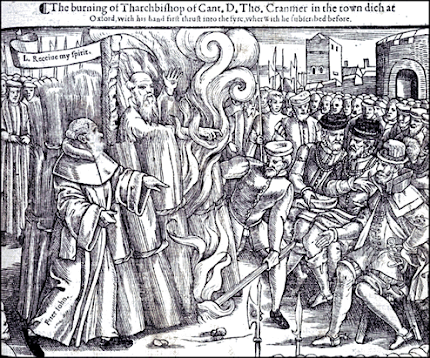
The burning of Tharchbishop of Cant. D. Tho. Cranmer in the town dich at Oxford, with his hand first thrust into the fyre, wherwith he subscribed before. [Click on the picture to see Cranmer's last words.]

Daily Bible Verse

Showing posts with label Pragmatic Church Growth. Show all posts

Saturday, June 06, 2026

The 2026 Edition of the PRCA Theological Journal: Common Grace


Recommended Article:  "John Bolt, Common Grace, the PRCA, and Theological Modernism"

 by David J. Engelsma

Protestant Reformed Theological Journal.  Vol. 59, No. 2., 2026.  Pp. 49-65.


Reviewed by Charlie J. Ray


In a time when supposedly Evangelical and Reformed denominations are compromised with the pragmatic church growth movement and other theological heresies, Dr. David J. Engelsma's article is a breath of fresh air.  The Presbyterian Church in America, the Associate Reformed Presbyterian Church, and the Orthodox Presbyterian Church are the Presbyterian denominations with which I am most familiar because I grew up in Florida, and now I live in South Carolina.  All of these denominations downplay their doctrinal standards because they wish to be evangelistic and mission minded.  While the PCA does not ordain women to the church offices of teaching elder or deacon, there is no vow taken for membership that even mentions the Westminster Standards.  The ARP ordains women deacons in violation of 1 Timothy 3:8-12 KJV.   (See:  Reasonable Christian:  Should Women Be Ordained to the Office of Deacon?)

The ARP First Presbyterian Church in Columbia, South Carolina has had three Reformed ministers from the supposedly conservative Ligonier Ministries movement of the late Dr. R.C. Sproul.  Yet, all three agreed with the session to ordain women to the male only office of deacon.  The present minister is Dr. Neil Stewart, who told me that if I objected to women deacons that I should probably not join as a member.  The other two pastors were Derek Thomas and Sinclaire Ferguson.

Moreover, the dangers of the pragmatic church growth movement are that the emphasis is on keeping the peace and unity at the cost of doctrinal purity and true Christian discipleship.  As Dr. Engelsma points out in this article, it all began with the adoption of the Three Points of Common Grace in 1924 by the Christian Reformed Church.  Practically all of the Presbyterian denominations quickly unofficially adopted the Three Points of Common Grace because the colleges and seminaries teach this doctrine as if it were an official doctrinal standard.  The doctrine then trickled down to the denominations and churches.  (See my open letter to the pastor of an ARP church plant in Lexington, South Carolina:  Lexington ARP.  The response I got from Jeff Tell by email was short and to the point:  I hope you can find a perfect church.)

Theological modernism shows up most clearly in the rejection of doctrinal standards and in the adoption of modern translations of the Bible that are based on the liberal biases of lower and higher biblical criticism.  Dr. Engelsma mentions that modernism began in the CRC before the ministers of the PRCA were expelled from the CRC.  At least one seminary professor at Calvin Theological Seminary, Ralph Janssen, who taught Old Testament, was expelled for teaching that the Pentateuch was not historical narrative.  Janssen taught what could be called a neo-orthodox view of Genesis 1-11, a view that is popular among fake Evangelicals today.

The failure of theological liberalism to see that humanity is not good was clearly visible during the first world war.  Apparently, the liberals doubled down.  The following quote from Engelsma's articles is pertinent to this point:

In 1924, the attack of modernism upon Christian orthodoxy was raging. The highly regarded and influential German heretic, von Harnack, published his popular attack on orthodox Christianity in 1900, Das Wesen des Christentums (What is Christianity?). In 1903, the Presbyterian Church (USA) revised the Westminster Confession of Faith to affirm a love of God for all humans. The unbelieving, modernistic Auburn Affirmation was published in 1924—in 1924! Harry Emerson Fosdick preached his popular sermon, “Shall the Fundamentalists Win?” in 1922. 

And the CRC itself wrestled with sheer modernism in the Janssen case, Calvin Seminary Professor Ralph Janssen being deposed in 1922. 

In the ecclesiastical atmosphere of this theological and spiritual struggle, the CRC adopted the doctrine of common grace, affirming a oneness of the church and the world in a common grace of God.  (Engelsma, pp. 62-63).

The current controversy over the issue of lower textual criticism and the reasoned eclecticism of the approach to textual variants and fragmentary apographs of the Greek New Testament is related to this compromise with common grace as well.  Unfortunately, the modern science of textual criticism is a dismal failure in regard to the stated goal of objectively reconstructing the precise wording of the original autographs.  (See:  Reformation Bible Society).

I highly recommend this article if you are at all concerned with the theological modernism and liberalism that is creeping into Evangelical churches today.  Even more concerning is the leftward drift of the Reformed churches due to the heresy of common grace:

From the Netherlands, the infection of modernism in the form of a common grace uniting church and world has spread to the CRC. It threatens all the supposedly “conservative” Reformed and Presbyterian churches that have been influenced by Kuyper and the CRC to embrace the doctrine of a common grace of God. They have the essence of modernism at their vitals. This is, in reality, the issue for the churches of NAPARC, not the issue of women in church office, which is merely a symptom of the real issue, and not the most important, but the issue of common grace, which obliterates the antithesis between church and world.  (Engelsma, p. 63).

You can read Dr. David Engelsma's article by clicking here:  Protestant Reformed Theological Journal, Vol. 59, 2026.  Then click the download button to download and read the PDF version of the journal.  Dr. Engelsma's article is on pages 49-65.

The peace of God be with you. 

Thursday, April 03, 2025

The Reasonable Christian YouTube Channel


There is none that understandeth, there is none that seeketh after God. (Rom. 3:11 KJV)

Then they that gladly received his word were baptized: and the same day there were added unto them about three thousand souls. (Acts 2:41 KJV)

Praising God, and having favour with all the people. And the Lord added to the church daily such as should be saved. (Acts 2:47 KJV)

For I have not shunned to declare unto you all the counsel of God. (Acts 20:27 KJV)


For those who are interested, I have taken the bold step of starting a YouTube podcast.  This is my latest post about the church growth movment:

Church Growth or God's Providence?

As you might have gathered, I am critical of the Associate Reformed Presbyterian Church because of the influence of moderates and liberals within the denomination.

Tuesday, April 01, 2025

Open Letter to Pastor Jeff Tell: Lexington ARPC Church Plant


I have been retired since October of last year.  Since my job required lots of travel, I was not a member of any local church in my area, namely Lexington, South Carolina.  In fact, the only church that was traditional and even remotedly resembled a truly Reformed Presbyterian church is First Presbyterian Church in Columbia.  The problem there is that the church is very large, and the other problem is that the ARPC allows for the ordination of women to the office of deacon.  FPC, being an Associate Reformed Presbyterian session or church, allows for the ordination of women, also.  That is the reason that I did not become a member there, despite the fact that the preaching generally sound and Reformed.  The current pastor is Dr. Neil Stewart.

The ARPC has a church planting program and a new church is being planted in Lexington and the pastor chosen to do the work is Jeff Tell.  Unfortunately, the church plant is being conducted along the lines of the pragmatic church growth movement, following the example of the Presbyterian Church in America or PCA.  The PCA is at best a mix of truly reformed churches and churches formed under the church growth model, which focuses on dumbing down doctrinal distinctives.  One of the largest PCA churches in my area is Lexington Presbyterian Church, which supported the Revoice heresy of accepting "celibate" homosexuals as members and as teaching elders.

There have been warning signs at the new ARPC church plant in Lexington.  I sent a couple of emails to the pastor to register my complaints.  He did answer me once or twice.  After that it became silence.  So my only option now is to publicly address the complaints.  I cannot and do not support any church that openly discourages new members from agreeing with the doctrinal standards, namely the Westminster Confession of Faith and the Larger and Shorter Catehisms.

I wrote the following letter to Pastor Jeff Tell by way of email:

Dear Jeff,

I am not sure that I know exactly what to say about this church plant.  So, I will just give my opinion so far.

First, I was troubled by your suggestion that new members need not concern themselves with what the ministers are required to subscribe to in regards to the doctrinal standards of the denomination.  I think you said that they could just flip through the Westminster Standards.  The other red flag is that this edition has no biblical proof texts given to support the doctrinal positions.


The first chapter of the Westminster Confession of Faith makes it clear that the most important doctrine of any presbyterian church is the doctrine of Sola Scriptura.  So your remark that the new members need not concern themselves with points iii through vii was disturbing.

The point that most bothers me is point vii.  I cannot and never will promise to obey any church or church official who contradicts what the Bible plainly and univocally says.  I say this because the ARPC has officially allowed local sessions to ordain women to the male only office of deacon as prescribed by 1 Timothy 3:12.  In fact, as I studied the history of the decision of the general synod of 1969, it came to my attention that the moderator of the 2005 synod was Rev. William B. Evans, a supporter of the doctrine of the ordination of women.  Evans recently retired from Erskine College and transferred his ordination to the liberal mainline denomination, the Presbyterian Church USA.


I have been following the denominational issues of several Presbyterian denominations for many years by reading the Aquila Report online.  So, I am well aware of the "moderates" and liberals within the ARPC.  One of Evans' complaints was the influence of Ligonier and Reformed Theological Seminary, Charlotte, NC, according to his blog:  A Change in Ecclesiastical Affiliation.

The other deal breaker for me is that the church pamphlet keeps putting quotes from Tim Keller, a self-avowed promoter of the woke view of social justice, also known as social Marxism.  Keller is passed on, but his views on the doctrinal standards were liberal to say the least.  He promoted a version of the Revoice homosexual celibacy view in the Presbyterian Church in America.  He also promoted the theistic evolution view of Biologos.

In this week's pamphlet, the quote from Keller was completely wrong.  First, off, the covenant of grace began with the protoevangelium in Genesis 3:16.  [The correct citation is Genesis 3:15, not 3:16.  Sorry for the error.]  Later God expanded on this covenant of grace with the covenant of Abram in Genesis 15.  So, when Keller makes the generalization that "ancient covenants were marked  by an oath-sign in which the curse of disobeying the covenant was made clear . . .," the statement is clearly casuistry and equivocation meant to mislead novices.  The covenant of works was initiated in the garden of Eden and is still in effect until the consummation, except for those who are unconditionally elected in eternity, effectually called by monergistic regeneration, and given the gift of saving faith.


[The following was not included in the letter to Pastor Tell.  It is the quote from Tim Keller in the church pamphlet  that I found to be misleading:

"The Lord's Supper was a covenant-making ceremony, in which Jesus created a new people and entered into covenant with them as their Lord.  Ancient covenants were marked by an oath-sign in which the curse of disobeying the covenant was made clear, but Jesus shows us that this time, he takes on the curse for breaking the covenant himself.  He will take the cup of God's wrath so we can have the cup of fellowship and blessing."]

In fact, the doctrinal standards specifically state that even the elect are not under the law as covenant of works.  However, the moral law does tell them how they are to live as Christians:

WCF 19.6  Although true believers be not under the law as a covenant of works, to be thereby justified or condemned; yet is it of great use to them, as well as to others; in that, as a rule of life, informing them of the will of God and their duty, it directs and binds them to walk accordingly; discovering also the sinful pollutions of their nature, hearts, and lives; so as, examining themselves thereby, they may come to further conviction of, humiliation for, and hatred against sin; together with a clearer sight of the need they have of Christ, and the perfection of His obedience. It is likewise of use to the regenerate, to restrain their corruptions, in that it forbids sin; and the threatenings of it serve to show what even their sins deserve, and what afflictions in this life they may expect for them, although freed from the curse thereof threatened in the law. The promises of it, in like manner, show them God's approbation of obedience, and what blessings they may expect upon the performance thereof, although not as due to them by the law as a covenant of works: so as a man's doing good, and refraining from evil because the law encourageth to the one, and deterreth from the other, is no evidence of his being under the law, and not under grace. (WCF 19:6 WCS)


As you can see, the Confession actually says that believers are still under the moral law as a rule for living out the Christian life.  Unregenerate persons are still under the moral law as a covenant of works:


WCF 19.5  The moral law doth for ever bind all, as well justified persons as others, to the obedience thereof; and that, not only in regard of the matter contained in it, but also in respect of the authority of God, the Creator, who gave it. Neither doth Christ, in the Gospel, any way dissolve, but much strengthen this obligation. (WCF 19:5 WCS)  See also: 19:1-2.


Finally, as far back as 1995 when I graduated from Asbury Seminary with the M. Div. I took a church growth class with George Hunter, III.  I am well aware of the church growth pragmatism approach to church planting.   In those days, I was still a classical Pentecostal.  I was appalled at the dumbing down of Wesleyan theological distinctives recommended by Hunter.  The end result of refusing to preach theological distinctives and the whole counsel of God in the inerrant, infallible, and God-breathed Scriptures is a church full of novices at best, and unconverted persons who have no understanding of the Bible whatsoever.


I became a Calvinist in 1992 or so precisely because of the Pentecostal emphasis on spiritual experiences and personal piety over against any intellectual understanding of the Bible or the Christian faith.  Donald McGavran's denomination has one creed:  No creed but the Bible.  The early Pentecostals after the 1906 Azusa Street Revival had no doctrinal confessions of faith until the Oneness Pentecostal controversy around 1914.


Moreover, over the past 6 or 7 years that I have resided in Lexington, SC, I have visited just about every church that has claimed to be "Reformed".  Most of them were either PCA or ARP, except for Saxe Gotha.  Lexington Presbyterian Church, last I visited there, was pushing the Revoice controversy.  The other PCA churches, though smaller, were also following the pragmatic church growth pattern that decidedly dumbed down doctrine.

It came down to attending First Presbyterian Church, Columbia because that church at least has traditional worship with conservative preaching and the right administration of the sacraments.  However, I could not in good conscience join FPC because the session ordains women to the church office of deacon.  Your church plant, otoh, does not follow the regulative principle of worship and instead replicates the charismatic and emotive style of worship meant to de-emphasize the Bible as the final authority.

Your church plant gave a glimmer of hope that there would be solid preaching by expository sermons, along with solid opportunities for Christian education by way of Sunday school classes with competent instructors.  I realize that it takes time to develop these programs.  However, it is not looking good.  

The other problem, as I see it, is that your new members class does not emphasize the doctrinal standards whatsoever.  Instead, you're following Tim Keller's re-interpretation of the doctrinal standards, the Navigators, etc.  The Navigators were Arminian in orientation as I recall.   In more conservative sessions of various Presbyterian denominations, children who were baptized as infants are required to go through the Shorter Catechism class prior to becoming communicant members who partake of the Lord's table.  There should be some basic understanding of the doctrinal standards required to join a local session, including the Larger Catechism.  Glossing over the catechism is not healthy, imo.


While fellowship is important, I do not think that church picnics and church fellowship is what makes for a healthy church.  Community and family can be found anywhere, including the local bar or another religion.  As you said in the sermon from the previous week, the temptation for church planters is to take shortcuts.  Well, the church growth movement itself is just a huge shortcut.  Healthy churches are based on solid biblical preaching, doctrinal preaching, and the right administration of the sacraments.  Without the preaching of the word the sacraments are meaningless.  

In short, anyone can nominally claim to be reformed or that their church is reformed.  However, the term reformed needs to have a definition.  Reformed In Name Only or RINO does not meet that requirement.

As it stands now, I will not be joining the church as a member.


For I have not shunned to declare unto you all the counsel of God. (Acts 20:27 KJV)

And that from a child thou hast known the holy scriptures, which are able to make thee wise unto salvation through faith which is in Christ Jesus. 16 All scripture is given by inspiration of God, and is profitable for doctrine, for reproof, for correction, for instruction in righteousness: 17 That the man of God may be perfect, throughly furnished unto all good works. (2 Tim. 3:15-17 KJV)


Sincerely yours in Christ,


Charlie J. Ray, M. Div.

P.S.  I do a blog at www.reasonablechristian.blogspot.com.  


Addendum:  I was unaware that Jesus created a new people when He established the sacrament of the Lord's supper.  1 Corinthians 11:23-32.  The new church is also administering the Lord's supper weekly and in at least one church pamphlet referred to is as a "eucharist."  The term eucharist is code for real presence, consubstantiation, and transubstantiation.  The Calvinist and Zwinglian view reached a consensus rejecting the eucharistic view of the sacrament.  The Consensus of Tigurinus was written by John Calvin himself.


There are 7 vows that a person must make in order to become a member of the new Lexington Associate Presbyterian Church according to the handouts given in the new member class:


i.  Do you profess that you are a sinner in the sight of God; that you deserve His punishment; that you are unable to save yourself; and that you are without hope of salvation except for God's love and mercy?

ii. Do you believe in the Lord Jesus Christ as the Son of God and the Savior of sinners; and do you receive and trust in Him alone for your salvation?


iii. Do you accept the Bible, comprised of the Old and New Testaments, as the written Word of God; and that it is the only perfect rule of faith and how to live?


iv.  Do you promise to trust in the guidance and strength of the Holy Spirit so that you can live all of life as a Christian, following the example set by Jesus Christ?


v.  Do you promise to exercise faithful stewardship of God's resources entrusted to you for the furtherance of God's Kingdom and purposes?


vi.  Do you accept that the doctrines and principles of the Standards of the Associate Reformed Presbyterian Church are founded upon the Scriptures?


vii.  In loving obedience, do you submit yourself to the government and discipline of this church, promising to seek the peace, purity, and prosperity of this congregation as long as you are a member of it? 


The doctrines of the Westminster Confession of Faith are not "founded upon the Scriptures.  The doctrines of Bible are summarized by the Westminster Confession of Faith, and the Westminster Confession of Faith is "deduced" from the Bible "by good and necessary consequence" or inference.  See WCF 1:6.


Friday, January 24, 2025

The Free Offer of the Gospel, Common Grace, and Pragmatic Church Growth: Conclusion


For I am not ashamed of the gospel of Christ: for it is the power of God unto salvation to every one that believeth; to the Jew first, and also to the Greek. 17 For therein is the righteousness of God revealed from faith to faith: as it is written, The just shall live by faith. (Romans 1:16-17 KJV)

“ . . . In classical Greek pornos frequently, even usually, refers to homosexuals.  Other passages, . . . very explicitly condemn homosexuals.  For many years, even centuries, the Church has had little cause to apply these prohibitions in cases of discipline, for there was little or no such sin within the Church, but now, in the end of the twentieth century, the apostate denominations are not only condoning unnatural vice, they even form homosexual congregations.”  Dr. Gordon H. Clark


The Free Offer of the Gospel, Common Grace, and Pragmatic Church Growth:  Conclusion


I grew up in a different time in the early 1960’s, 70’s and 80’s.  As a baby boomer, I lived through the time of the invention of the color television set, the personal computer, the internet, and the evolution of the modern cellphone.  The technological advances have been enormous.  The internet and computer Bible software have greatly enhanced the spread of information about theology, biblical studies, apologetics, and a host of other sources of information about the Christian worldview.  Unfortunately, the dark side of technological advancement is the applications of those technologies for disinformation, misinformation, and outright propaganda.  In my view, this undermines the doctrine of common grace because instead of advancing the kingdom of God on earth it has instead promoted compromise, shallowness, and misusing proselytization as a form of evangelism. 

Simply getting new members to join a church is not the same thing as the command given by Jesus in Matthew 28:18-20.  The imperative given there is to go into the world to all nations and to make disciples, baptizing them in the name of the Father, the Son, and the Holy Spirit.  But does the church growth movement do that?  I am not the first to answer that question in the negative.  Church has become more about appeasing sinners than speaking the truth.  Church has become more about pleasing seekers with good entertainment than about worshipping God or hearing the unadulterated word of God preached.  Instead of putting God first and the people of God first, the pragmatists have undermined solid biblical teaching and book by book expository preaching to replace it with meeting the emotional, psychological, and felt needs of the unbelievers. This approach has even descended to the level of giving homosexuals a special status.  All sin is sinful and there is nothing special about sexual immorality, especially a sexual immorality that violates basic biological nature.  God created humanity as male and female.  Genesis 1:27.  Furthermore, God made Adam head over his wife, Eve.  Patriarchy troubles modern egalitarians, but this is what the Bible says. 

God is not literally a man, yet the Bible always addresses God by masculine titles.  God is our Father, and His Son is our Lord and Savior, Jesus Christ.  The Holy Spirit is not presented by male titles, yet the pronouns used of the Holy Spirit are always masculine, not neuter.  (John 16:7; John 14:16; John 14:26.  See also:  Got Questions:  Is the Holy Spirit a “He,” “She,” or “It,” male, female, or neuter?).

The Apostle Paul makes it perfectly clear that Christians are to shun those who refuse to walk in faith and who are caught up in sexual immorality:

6 Your glorying is not good. Do you not know that a little leaven leavens the whole lump? 7 Therefore purge out the old leaven, that you may be a new lump, since you truly are unleavened. For indeed Christ, our Passover, was sacrificed for us. (1 Corinthians 5:6-7 NKJV).

I wrote to you in my epistle not to keep company with sexually immoral people. 10 Yet I certainly did not mean with the sexually immoral people of this world, or with the covetous, or extortioners, or idolaters, since then you would need to go out of the world. 11 But now I have written to you not to keep company with anyone named a brother, who is sexually immoral, or covetous, or an idolater, or a reviler, or a drunkard, or an extortioner-- not even to eat with such a person. (1 Corinthians 5:9-11 NKJV).

You ran well. Who hindered you from obeying the truth? 8 This persuasion does not come from Him who calls you. 9 A little leaven leavens the whole lump. 10 I have confidence in you, in the Lord, that you will have no other mind; but he who troubles you shall bear his judgment, whoever he is. (Galatians 5:7-10 NKJV).

Moreover, this includes both those outside the church and those who are members of the visible church.  Although it is true that the Presbyterians are not naïve about whether or not a person who makes a profession of faith is truly regenerate or not, they do require that the person makes a public profession of faith before being baptized and joining the church.  In regards to children who were baptized in infancy, they must be catechized using the Westminster Shorter Catechism, and they must make a valid profession of faith and be confirmed before partaking of the Lord’s table.  Some Presbyterians have taken this to the extreme by taking a Lutheran view of the sacraments of baptism and the Lord’s supper.  But anyone familiar with church history can see that John Calvin reached a consensus with the Zwinglians on the sacraments called the Consensus of Tigurinus.  Calvin and the Zwinglians were in agreement in rejecting any sacerdotal powers in the waters of baptism or any real presence in the sacramental elements of bread and wine.  Instead, the true power of the sacraments was in being truly regenerate, having a genuine faith, and resting in the Gospel message of the word preached along with the sacrament.  Thus, it was more than just becoming a member of the church and partaking of the sacraments as some sort of magical real presence of Christ in the bread and wine.  Archbishop Thomas Cranmer, the father of the English Reformation, also took a Zwinglian and Calvinist view of the sacraments.  His treatise on the Lord’s supper plainly says that the bread and wine are called by the names that they represent and that eating the tangible elements is a metaphorical and spiritual eating and drinking of the body and blood of Christ.  Only a true believer can partake of the body and blood of Christ because faith is the necessary element that makes a person worthy to partake of the consecrated bread and wine:

WCF 29.8  Although ignorant and wicked men receive the outward elements in this sacrament; yet, they receive not the thing signified thereby; but, by their unworthy coming thereunto, are guilty of the body and blood of the Lord, to their own damnation. Wherefore, all ignorant and ungodly persons, as they are unfit to enjoy communion with Him, so are they unworthy of the Lord's table and cannot, without great sin against Christ, while they remain such, partake of these holy mysteries, or be admitted thereunto. (Westminster Confession of Faith.  Westminster Standards.)

In the same way, in order to become a member of the visible church, one must be more than a seeker who is looking for something.  In fact, the Bible says that there is no such thing as a “seeker”.

As it is written: “There is none righteous, no, not one; 11 There is none who understands; There is none who seeks after God. 12 They have all turned aside; They have together become unprofitable; There is none who does good, no, not one.” 13 “Their throat is an open tomb; With their tongues they have practiced deceit”; “The poison of asps is under their lips”; 14 “Whose mouth is full of cursing and bitterness.” 15 “Their feet are swift to shed blood; 16 Destruction and misery are in their ways; 17 And the way of peace they have not known.” 18 “There is no fear of God before their eyes.” 19 Now we know that whatever the law says, it says to those who are under the law, that every mouth may be stopped, and all the world may become guilty before God. 20 Therefore by the deeds of the law no flesh will be justified in His sight, for by the law is the knowledge of sin. (Romans 3:10-20 NKJV)

 . . . for all have sinned and fall short of the glory of God, (Romans 3:23 NKJV)

The pragmatic church growth movement turns the moral law and the Gospel on its head.  Instead of calling for repentance and faith, the pragmatists seek to appease unbelievers and entertain them with hypnotic contemporary praise and worship music which they have adopted from the Pentecostal/Charismatic style of worship.  There is a watered-down liturgy where a weak confession of sin is read and then a very weak corporate pronouncement of absolution.  The absolution is supposed to be a Gospel absolution, not a sacerdotal pronouncement of forgiveness as a power given to a priest or presbyter.  Of course, the church does possess the keys to the kingdom, but those keys are the preaching of the Word or Gospel message of the Bible and the right administration of the two Gospel sacraments:

1 The Lord Jesus, as King and Head of His Church, hath therein appointed government, in the hand of Church officers, distinct from the civil magistrate. 2 To these officers the keys of the kingdom of heaven are committed, by virtue whereof, they have power, respectively, to retain, and remit sins; to shut that kingdom against the impenitent, both by the Word, and censures; and to open it unto penitent sinners, by the ministry of the Gospel; and by absolution from censures, as occasion shall require. 3 Church censures are necessary, for the reclaiming and gaining of offending brethren, for deterring of others from the like offences, for purging out of that leaven which might infect the whole lump, for vindicating the honour of Christ, and the holy profession of the Gospel, and for preventing the wrath of God, which might justly fall upon the Church, if they should suffer His covenant, and the seals thereof, to be profaned by notorious and obstinate offenders. 4 For the better attaining of these ends, the officers of the Church are to proceed by admonition; suspension from the sacrament of the Lord’s Supper for a season; and by excommunication from the Church; according to the nature of the crime, and demerit of the person. (WCF 30:1-4, Westminster Confessional Standards).

According to the modern church growth model, seekers should be the emphasis, not the edification of the church as a whole.  Anyone who questions the shallowness of the preaching or the ameliorated preaching of the moral law is seen as a troublemaker and a disturber of the peace of the church. 

The Revoice movement, following the church growth pragmatic principle, seeks to downplay homosexuality so that “celibate” homosexuals can join the church while still “identifying” as “gay” or “lesbian” Christians.  This is allowing wickedness and immorality into the church.  As I said in an earlier blog post, a minister preached a fairly good sermon against wokeness just prior to the November general elections.  Then in the middle of the sermon he invited homosexuals to the church and said that they are welcome there.  Would he make the same offer to current adulterers or fornicators?  “If you’re here and you’re a whoremonger or an adulterer, you’re welcome in this church.”  (See: Hebrews 13:4 KJV).  I think not.  I strongly object to the Tim Keller and Gospel Coalition approach to evangelism.  I would go so far as to say that Tim Keller was a reprobate, not a true believer.  Those who follow Tim Keller’s church growth pragmatics do not deserve the name of Christian or even Presbyterian.  They are enemies of Christ.  Any church or denomination following that model is not planting churches.  They are planting apostasy and unbelief by accommodating to the culture of homosexuality, compromise, and concession to the enemy.

The church growth movement recommends reaching out to select groups of people of one cultural group or class.  So, most church plants are directed toward suburban middle class white people.  The reason for this is obvious.  First, they have good jobs and financial security; they are able to contribute to the financial needs of the church.  This undermines the Gospel because it makes the end goal the successful planting of a financially self-sustaining church.  Furthermore, the end justifies the means.  The church planter is using utilitarian ethics to accomplish a goal.  As I said in an earlier post, parachurch ministries and even church plants were focused on homosexuals, the end result of which was disappointing.  Instead of producing a church of true converts, the result was a church full of outwardly repentant and celibate homosexuals who still identified as homosexuals instead of moving on, getting married to the opposite sex, and having a family.  Even the pastor whom I wrote said that he did not expect the homosexual to actually be attracted to the opposite sex or get married.  But the Apostle Paul expected young widows to remarry instead of being busy bodies and gossipers making trouble in the church.  Only those with the gift of celibacy should remain single, according to Paul.  (See 1 Corinthians 7:1-9; 1 Timothy 5:11-15).

One Arminian based parachurch ministry located in Orlando, Florida dissolved the ministry after its president and leadership, all former homosexuals, recanted their conversion to Christ and went back to living in their immoral and perverse homosexual lifestyle.  (See:  Exodus International:  Religion News: Ex-gay group Exodus International shuts down, president apologizes).  The efforts to cause reprobates to believe the Gospel and be converted using worldly psychology and conversion therapy does not work.  The Bible says that it is God who converts the sinner, not persuasion or secular science pretending to be “Christian”.  It is the power of the Gospel message as it is enabled by the Holy Spirit which brings about the effectual call and repentance.  Only God can bring an elect sinner to the point of conversion.  Even here, the sinner is passive in regeneration and in the perseverance of the faith which results from regeneration.   (John 3:3-8; Jude 1:24-25; 2 Timothy 1:12; 1 Corinthians 1:8). 

I therefore oppose all business and corporate models for church planting.  My approach, should I ever plant a church, would be to preach the Gospel without fear of man’s opinions.  We are to please God, not man.  If it be God’s will, then the church plant will succeed without compromising the moral law or the Gospel.  (See: Galatians 1:6-10 NKJV; Acts 5:34-39 NKJV). 

I will close here with the full quote from Dr. Gordon H. Clark’s commentary on 1 Corinthians 5:8-13:

Although the case under discussion was one of incest [1 Corinthians 5:1-5], Paul uses the term “fornicators” (pornois).  Of course, incest is a kind of fornication, since a biblical marriage cannot there exist.  However, in classical Greek pornos frequently, even unusally, refers to homosexuals.  Other passages, for example, Romans 1:24, 26-27, very explicitly condemn homosexuals.  For many years, even centuries, the Church has had little cause to apply these prohibitions in cases of discipline, for there was little or no such sin within the Church, but now, in the end of the twentieth century, the apostate denominations are not only condoning unnatural vice, they even form homosexual congregations.  If these denominations were not apostate, if they were Christian, they would preach hell fire and warn these dregs of depraved humanity that against them the wrath of God is revealed from heaven, and perhaps by God’s grace induce them to cleanse their filth by the blood of Christ.

. . . In one’s everyday business, it is impossible to avoid all such associations.  . . . The command in 1 Corinthians, on the contrary, forbids the Church to have fornicators, homosexuals, incestuous persons in its membership.  The command also covers other sinners:  thieves and idolators.  Hodge remarks that this is the earliest known instance of the use of the word eidololatres.  Liddell and Scott give no earlier instance.

Dr. Gordon H. Clark.  First Corinthians. 1975.  Second edition.  (Jefferson:  Trinity Foundation, 1991). P. 84.

What changed?  What has changed is that theological liberalism and apostasy has taken over many, if not most, of the supposedly Evangelical churches, denominations, colleges and seminaries.  If we do not take a bold stance against apostasy, there could be only a small remnant of true churches left.  May God have mercy on us.

See previous posts here:  Part 1, Part 2, Part 3, Part 4, Part 5.

Sunday, January 19, 2025

The Free Offer of the Gospel, Common Grace, and Pragmatic Church Growth: Part 5


“. . . The trouble with Arminianism is that it is illogical.  It retains parts of the Biblical message, but because of its unscriptural theory of free will rejects other parts.” 

Dr. Gordon H. Clark.  What Do Presbyterians Believe?  The Westminster Confession Yesterday and Today.  (Unicoi:  Trinity Foundation, 2001), p. 174.


For as the Father raises the dead and gives life to them, even so the Son gives life to whom He will. (Jn. 5:21 NKJV)


The Free Offer of the Gospel, Common Grace, and Pragmatic Church Growth:  Part 5


In a recent podcast, Tucker Carlson, a former news anchor at Fox News who is now an independent political pundit, made the point that in this technological era citizens of the United States of America are treated as commodities to be manipulated by government propaganda and leftist news organizations which work behind the scenes to manipulate the information given to the populace.  Another former reporter, Megan Basham, has exposed the fact that leftist news organizations are also working behind the scenes with Evangelical church denominations, Evangelical colleges and seminaries, and the church growth movement to change the Evangelical message from its commitment to biblical truth to an agenda of this worldly social justice called wokeism or Marxism.

The most prominent church growth advocate in Reformed circles was the late Dr. Tim Keller.  Keller’s views were openly in favor of theistic evolution, Biologos, LGBTQIA+ outreach, social justice, and other accommodations to the Marxist culture of the political left in our nation.  The argument given for doing this is that in order to reach the unchurched in our nation, we must reach them where they are.  The underlying basis for this argument was the unscriptural foundation of common grace, the free offer of the Gospel, the well meant offer, and pragmatic methods of evangelism.

As much as I do not like to appeal to my personal experience, I am old enough to remember a time before megachurches, the internet, artificial intelligence, and the church growth movement.  As a former Pentecostal of the 1980s era, I can recall that Pentecostals and Charismatics were somewhat conflicted over whether the Charismatic movement was a good thing or something bad.  But both sides boasted of the phenomenal growth of the Pentecostal/Charismatic movement worldwide.  The oft repeated appeal of the movement was the explosive growth of the Pentecostal/Charismatic movement in the global south, Africa, and Latin America.  Many of these countries were and are considered third world countries where many of the superstitions of the past continue in the popular culture.  So, the ground was ripe for the psychological manipulation of huge crowds at mass evangelistic campaigns organized by Charismatic preachers who taught the health and wealth gospel.  There was a huge response because the most of the people living in these countries were susceptible to being manipulated because of their extreme poverty and because of health and medical issues and the lack of access to modern healthcare facilities.

The supposed success of the church growth movement as it was adopted and promoted by Charismatics like C. Peter Wagner and Charles Kraft, was soon adopted by formerly holiness Pentecostal churches from the more classical background of the Wesley holiness and entire sanctification theology of the holiness movement of the 19th century.  In a previous post, I mentioned that I was converted at about age 8 or 9 at a Pentecostal Church of God, (which is headquartered in Cleveland, Tennessee), located in Weaver, Alabama.  That church was thoroughly old school and classical Pentecostal with a hard focus on Christian holiness and holy living.  The minister literally scared the hell out of me that day because he was preaching a fire and brimstone message.  In modern times this kind of preaching is few and far between among Church of God Pentecostal churches, Pentecostal holiness churches, or even Assemblies of God churches.  Most of the Pentecostal movement has moved on from the holiness movement and has adopted a more Charismatic approach to evangelistic preaching.

The popularity of the church growth principles spread to other denominations afterwards, but without the emphasis on the charismatic gifts of the Holy Spirit or the Pentecostal emphasis on entire sanctification and the empowerment for evangelistic and supernatural service.  (See Acts 1:8; Acts 2:1-4).  Southern Baptists like Rick Warren became widely popular and successful in building megachurches.  Joel Osteen de-emphasized his charismatic theology by transforming the Word of Faith doctrine into a positive thinking ministry much like the late Norman Vincent Peale’s ministry.  Osteen’s church in Houston is supposed the largest megachurch in the United States.

Methodists, Evangelical Free, Lutherans, and Presbyterians all happily jumped on the megachurch pragmatic growth bandwagon because results matter.  However, the end result was not discipleship and a growth in spiritual discipline as promised.  Instead, what ended up happening was a multitude of churches full of apparently baby Christians or blatantly unconverted sinners who just wanted to be part of the entertainment and who wanted their unfelt needs met.  The emphasis of church plants was to downplay theological differences by removing the denominational affiliation from the church sign, having superficial contemporary praise and worship songs, emulating the Charismatics who denigrated denominational divides as well.  The approach of the Charismatics was to attack denominationalism as Pharisaical and legalistic Christianity.

The same approach has been taken by the common grace Presbyterians.  They constantly attack classical Presbyterians and classical Calvinists of the Dutch Reformed variety as legalistic Pharisees, hyper-Calvinists, and navel gazers who are focused only on themselves.  Tim Keller employed this tactic many times in his videos.  Keller formulated his own catechism called the New City Catechism where he downplayed the Calvinist distinctives, the Reformed confessional standards, and the doctrines of sovereign grace like the effectual call, unconditional election and special providence.  Instead, Keller preached like an Arminian using the appeal of the doctrine of common grace, which said that God loves everyone, including the reprobate, but only gave special saving grace to the elect.  In his actual preaching, however, Keller never mentions the difference between special grace and common grace.  He only emphasized common grace while the doctrines of sovereign grace faded into the background.  I should also mention that Keller’s catechism is not part of any reformed doctrinal standard.  The Three Points of Common Grace of 1924 are not the official doctrine of any modern Reformed denomination except the Christian Reformed Church, although most of the Reformed churches act as if common grace is official doctrine.

Keller used common grace as well to justify moving his focus from personal conversion to a more group oriented theology of social justice, theistic evolution, and forging pragmatic Christian community over and above Gospel focused evangelism.  Another compromise made by Keller was to stop focusing on sanctification as a process and instead to preach only justification by faith alone.  The Westminster standards, in contrast, focused on a preaching of the three uses of the moral law of God and then preaching the Gospel.  The pedagogical use of the moral law was supposed to show the sinner that he or she was lost and without any hope of keeping God’s law perfectly or of meriting or earning any forgiveness for their sins.  Of course, Keller did mention this pedagogical use of the law at times in order to emphasize justification by faith alone.  But because sanctification was not emphasized, Keller’s view, much like the Escondido, California version of Westminster theology, was much more closely related to a once saved always saved Baptist version of the doctrine of the perseverance of the saints.

The Presbyterian denominations today by and large do not preach the holiness of God or that the assurance of salvation can be lost without any change in the habits of the converted believer.  The one exception would be the Ligonier Ministries, but even here the doctrines of the free offer of the Gospel and common grace prevails.  The free offer teaches that God desires to save everyone but has not decreed to save everyone head for head.  This is a blatantly contradictory proposition.  If God truly desired or wished to save everyone, then surely God would have decreed to save everyone head for head; He would have unconditionally elected everyone;  He would have given everyone special saving grace or the effectual call.  In other words, common grace and the doctrine of the well meant offer or free offer of the Gospel teaches that God’s will is twofold.  In one aspect, God is powerless to save anyone, just like the Arminians!  In the other aspect, God’s will is not frustrated, and He saves those whom He has predetermined in eternity to save.  This is violation of the law of contradiction.  In other words, just as I cannot both go to lunch and not got to lunch.  Obviously, if God is Almighty and can do whatever He pleases, then whatever God has decreed to come to pass is what God desires and wills to do.  God has only one will.  The command to repent and believe the Gospel is the prescriptive will of God, not an emotional appeal based on some fake offer of salvation to those who are predestined to reprobation.

When the Scriptures say that God does not desire that anyone should perish, those passages are always directed either to the Old Testament congregation or nation of Israel or to the New Testament church.  None of those passages are directed to the pagan nations or to anyone outside of the church.  (See: 2 Peter 3:21 NKJV, and Ezekiel 33:11).  Even then, God does desire that some of the Israelites would perish:

". . .indeed, therefore, I will stretch out My hand against you, and give you as plunder to the nations; I will cut you off from the peoples, and I will cause you to perish from the countries; I will destroy you, and you shall know that I am the LORD." (Ezekiel 25:7 NKJV).

The warning passages apply to everyone without exception, yet on the elect are preserved from apostasy by God.  (See Romans 11).  Those of us who oppose common grace and the free offer are not hyper-Calvinists.  Even the Prostestant Reformed Churches in America advocate for the promiscuous preaching of the general call of the Gospel to everyone without exception.  This is not hyper-Calvinism at all.  The difference is between what doctrines are taught and emphasized.  Classical Calvinism teaches that God hates the wicked and the reprobate, not that God loves everyone in general, but that He has a special love for the elect.  In fact, in providential time on earth, even the elect are under God’s wrath temporarily until they are effectually called, though God does love them from all eternity.  (See Romans 9:11-13).

The LORD has appeared of old to me, saying: "Yes, I have loved you with an everlasting love; Therefore with lovingkindness I have drawn you. (Jeremiah 31:3 NKJV).

In his commentary on Westminster Confession of Faith, Dr. Gordon H. Clark says:

Someone may be tempted to say that although God undoubtedly calls the elect, he does not call them only, as the Confession says.  Does not God call everybody?  The answer to this question is to be found by searching the Scriptures.  John 12:39, 40 says, “They could not believe, because Esaias said again, He hath blinded their eyes and hardened their heart, that they should not see with their eyes nor understand with their heart, and be converted, and I should heal them.”  In Romans 11:7 we read, “Israel hath not obtained that which he seeketh for; but the election hath obtained it, and the rest were blinded.”  Since God does all that he pleases (Psalm 135:6), and since his causative power is omnipotent, it follows that he has not called the lost, but the elect only.

Of course, ministers and evangelists call people too.  That is, they preach the Gospel publicly.  But the effective call, the call that actually produces the proper response, comes from God alone.

Clark.  What Do Presbyterians Believe?, p. 114.

Only by rejecting biblical logic, biblical and propositional revelation, can anyone preach Arminianism and the compromises of the neo-reformed churches.  Are some of these people truly converted and effectually called by God?  Certainly some of them can be.  I myself was converted under Pentecostal holiness preaching in the mid 1960s.  But should we be compromising with Arminianism or the church growth movement?  I don’t think so.  In fact, many of the megachurches today have little to no difference with outright theological liberalism and leftist immorality.  Tim Keller’s evangelism is a good example of that.  He openly promoted the idea that homosexuals cannot be changed by God and that we should just accept them as celibate Christians.  But the Bible says that celibacy is a gift of God, not a moral imperative given to immutable homosexuals.

I could go on.  However, I will take a break here and continue this series in Part 6. 

You can read my previous posts on The Free Offer of the Gospel, Common Grace, and Pragmatic Church Growth here:

Part 1, Part 2, Part 3, Part 4.  

See the conclusion here:  Conclusion.

Thursday, January 16, 2025

The Free Offer of the Gospel, Common Grace, and Pragmatic Church Growth: Part 4


Woe unto you, scribes and Pharisees, hypocrites! for ye compass sea and land to make one proselyte, and when he is made, ye make him twofold more the child of hell than yourselves. (Matthew 23:15 KJV)

Now the serpent was more subtil than any beast of the field which the LORD God had made. And he said unto the woman, Yea, hath God said, Ye shall not eat of every tree of the garden? (Genesis 3:1 KJV)

“The classical approach judges the validity of any experience on the basis of previously established theological principles. In contrast, Church Growth leans toward a phenomenological approach which holds theological conclusions somewhat more tentatively and is open to revising them when necessary in the light of what is learned through experience.”  C. Peter Wagner 


The Free Offer of the Gospel, Common Grace, and Pragmatic Church Growth:  Part 4


Drawing from my own personal history with the Pentecostal/Charismatic movement in the mid-1980s, I can tell you that the biggest concern for the Pentecostal/Charismatic movement was the growth and spread of the third wave or the Charismatic movement, not classical Pentecostalism.  As I have stated in previous posts, there was a huge split within the Assemblies of God denomination over precisely this distinction between classical Pentecostalism, which emphasized Wesleyan holiness and Christian perfection along with the baptism of the Holy Spirit and the spiritual gifts, and the Charismatic movement, which emphasized the gifts of the Spirit and church growth above all else.  C. Peter Wagner, Charles Kraft, and others associated with Fuller Theological Seminary pushed this sociological and business model of church growth using ecstatic experiences and emotional appeals to recruit naïve converts into the Pentecostal/Charismatic movement.

While I was a student at Asbury Theological Seminary, I was curious enough as a Pentecostal minister to study the church growth model as it was being taught at Asbury.  Although as a student at Southeastern College of the Assemblies of God, Lakeland, Florida--now known as Southeastern University--I was taught the penal substitutionary view of the atonement, the church growth class at Asbury advocated for the governmental theory of the atonement.  But instead of emphasizing the fact that Jesus satisfies the penalty for sin, the professor at that time emphasized the fact that Jesus died on the cross to demonstrate His love for lost persons.  The emphasis is that the atonement satisfies for the sins of all persons, not just the elect.  Thus, the Pentecostals and the Wesleyans will tell you that Jesus died for you because He loves you.  But is it true that Jesus died for everyone who has ever been born and will be born until the parousia or the return of Christ?  Does God really love everyone without exception, good and evil, elect and reprobate?  That seems to be the emphasis of the church growth movement.  I would contend that it is also the emphasis of the neo-Calvinist, neo-reformed movement as it has deviated from the classical Calvinism of the earliest Reformers and of the Westminster divines.  After all, common grace says that God loves the reprobate, although not savingly.  The Old Princeton theologian, Charles Hodge, said that Christ in some sense died for everyone without exception.  According to Hodge, Christ died to purchase common grace for the reprobate and all humanity.

Although tracing the roots of a movement can be open to the genetic fallacy, I think it is a legitimate endeavor to show how the church model began.  The so-called “father” of the church growth movement was missionary to India named Donald McGavran.  McGavran was associated with and supported by the Disciples of Christ, a mainline denomination which has been liberal since at least the modernist controversies of the 1920s.  The basic approach of the Disciples of Christ is no creed but Christ.  In fact, the denomination is even further away from the Churches of Christ and the Christian Church, all being descended from the Cane Ridge Revival of the Second Great Awakening.  At its beginning the movement emphasized the theology of no creed but the Bible.  So, it is a step away from the Bible to say that there is no creed but Christ.  (See:  History of the Disciples of Christ).

Rather than go into the details, of which there are many, I will focus on the basics of the church growth movement.  A critical evaluation of the movement by David J. Valleskey, a Lutheran professor of evangelism is available in PDF format here:  The Church Growth Movement: An Evaluation.  Although the article was written in 1990, it is still pertinent and applicable to today.

Following the principles of the church growth movement and its sociological approach, Tim Keller, a minister in the Presbyterian Church in America, a split from the Presbyterian Church in the United States of America, started a church in New York City.  Keller, allegedly a conservative Presbyterian with a commitment to the Westminster Confession of Faith, the Larger and Shorter Catechisms, did everything possible to distance himself from the biblical standards summarized by the Westminster standards.  In fact, Keller openly denied the doctrine of creation ex nihilo and asserted that God could have created the earth and humanity by way of theistic evolution.  Keller further advocated for the LGBTQIA+ view that sexual orientation is not inherently sinful, but only acting on the allegedly inborn sexual orientation is sinful.  This flies the face of the biblical view that humanity became sinful because of Adam’s original sin and that since the time of Adam’s fall every person on earth is totally corrupt through and through, also known as total depravity.

Keller adopted his own catechism by editing out the controversial doctrines of predestination, unconditional election, special providence, effectual call, and biblical inerrancy.  In fact, the inspiration and inerrancy of the Bible is not even mentioned in Keller’s New City Catechism.  Basically, following the principles of the Disciples of Christ and the Second Great Awakening, Keller decided that Calvinism and the Westminster standards are divisive doctrines that must be avoided in order to facilitate the growth of his church plant.  For Keller the correct way to preach is to appeal to pragmatic applications because secular society and much of Christianity today rejects truth.  People want to know how things “work”.  This is another twist on the church growth principle of appealing to felt needs.  What causes conversions is not biblical truth but how does this apply to me?

We live in a society in which people are skeptical of any kind of truth at all. In contrast to earlier eras, which accepted revealed truth or honored reason and scientific truth, many people today can’t simply receive a set of teachings without seeing how Christianity “works,” how it fleshes out in real life.

 This has implications for all of us. For Christians who are surrounded by today’s secular culture, it is important to hear the preacher dealing winsomely and intelligently with the problems of non-believers on a regular basis. This helps them address their own doubts and is also excellent “training” in sharing their faith. The evangelism programs of earlier eras do not always adequately prepare Christians for dealing with the wide range of intellectual and personal difficulties people have today with the Christian faith.

In a similar way, when the preacher speaks to believers, the non-Christians present come to see how Christianity works in real-life situations. For example, if you are preaching a sermon on the subject of materialism, and you directly apply the gospel to the materialism of Christians, you are doing something that both interests and profits non-Christians. Many listeners will tend to make faith decisions on more pragmatic grounds. Instead of examining the faith in a detached intellectual way, they are more likely to make a faith commitment through a long process of mini-decisions, by “trying it on” and by seeing how it addresses real problems.

Tim Keller.  Preaching in a Secular Culture.”  (See also:  The Gospel Coalition:  Preaching Christ in a Postmodern World).

According to Keller, the way to evangelize is preach the Gospel in a way that appeals to both Christians and non-Christians.  But the problem here is that Keller never defines what he means by the term “the Gospel”.  Does he mean the whole biblical revelation from Genesis to Revelation?  Does he mean the dialectical distinction between law and Gospel as advocated by the dialectical theologians of apparent contradictions and paradox?  Secondly, even granting that Keller means the Bible, why is he focused on what works rather than what is true?  One of the principles of the church growth movement as stated by the charismatic theologian and church growth expert, C. Peter Wagner, is that theology must be adapted to the audience.  That sounds a lot like relativism.  David J. Valleskey makes at least two insightful criticisms of the church growth approach:

We will keep on the right track if we remember two things. First, we need to remember that sociological research and principles do not build the Church. They serve a ministerial, supportive role, not a magisterial role.  Only the Holy Spirit, through the means of grace, builds the Church.

Sociological principles, therefore, must never assume a position of greater importance than the proclamation of the Word and administration of the Sacraments.  Nor dare they even be placed on the same level as Word and Sacrament.  The Church doesn’t grow when proper sociological conditions are met.  The Church doesn’t grow when proper sociological conditions are met and law and gospel are preached.  The Church grows when law and gospel are preached (Isaiah 55:10, 11).  The second thing we need to remember is that the Church Growth Movement tends to ignore the first thing we need to remember. C. Peter Wagner writes,

“Church growth...looks to social sciences as a cognate discipline,” . . . that is, a discipline which is allied with rather than subservient to theology. Wagner actually goes further than that. He says,

The classical approach judges the validity of any experience on the basis of previously established theological principles. In contrast, Church Growth leans toward a phenomenological approach which holds theological conclusions somewhat more tentatively and is open to revising them when necessary in the light of what is learned through experience.

Wagner’s thesis, it would appear, is that if your theology at present doesn’t have room for a factor that causes churches to grow, then it is time to revise your theology. Test by the results rather than by the Scriptures.  

Valleskey, “The Church Growth Movement: An Evaluation”, p. 19.

I am not saying that the classical Lutheran distinction between the moral law of God and the good news of the Gospel is dialectical theology.  However, in the postmodern era, this is often the approach of the neo-Calvinists and the neo-reformed who wish to distance themselves from the unpopular doctrines of double predestination and the distinction between general providence and special providence.  They wish to redesignate the doctrine of general providence as “common grace” and redefine the Gospel in terms of the semi-Calvinist compromise between Pelagianism and the doctrines of sovereign grace.  Tim Keller takes this even further by redefining the biblical standards according to what works.  Pragmatism is not a source for universal and absolute truth.  In fact, it is a compromise with utilitarianism on several levels.  It is basically saying that whatever works is best for the majority of the people affected by pragmatic decisions; in other words, the numerical growth of the confessional churches is profitable both for the congregation and for the denomination at large.  Who could argue that making converts is a bad thing?  The question is to which worldview are you making converts?  To a postmodernist Christianity or to a biblical worldview which is deduced from the infallible and inerrant Scriptures?

A further problem with Keller’s approach is that he presupposes that no one today makes any truth claims.  As the title of the course implies, in a postmodern world, truth changes from one person to the next so that we must accommodate to the relativism of today by appealing to what works rather than what is true.  This is an indirect attack on the Bible which says flatly that the written Word of God is true:  Sanctify them through thy truth: thy word is truth. (John 17:17 KJV).

Pragmatism, according to the late Dr. Gordon H. Clark, was devised by William James and John Dewey.  Dewey and James were also advocates for sociology and the utilitarian ethics which sought for the good of the most people.  In ethical terms, the end justifies the means.  So according to the church growth model, the congregations are growing, it works, and the end result justifies “retelling the Gospel” or relativizing the theology of the Bible to meet felt needs and to show non-Christians that Christianity is pragmatic and works for you in your situation.  This could also be applied to situational ethics.  (See:  Gordon H. Clark.  Pragmatism.”  Posted at the Gordon H. Clark Foundation.

Keller’s approach has no problem with ignoring the confessional standards or even re-interpreting the standards in ways that pragmatically work in the goal of making a congregation grow.  In other words, it is perfectly fine to not tell practicing homosexuals that their thoughts, words and deeds will condemn them on the day of the final judgment.  Instead, the church growth advocate should downplay the final judgment, the moral law of God and simply focus on some positive aspect of Christianity to drawn the homosexual into the body of Christ, even if that person is at first unrepentant.  After all, Presbyterianism acknowledges that the congregation is a mixture of truly regenerate believers and those who are unregenerate.

In times past I spent lots of time listening to The White Horse Inn, hosted at that time by Michael Horton and Rod Rosenblatt.  That podcast has since that time lost many of its listeners.  Horton, who pretended to be an outspoken opponent of the church growth movement, actually advocated for ignoring hypocrisy and unbelief in the congregation rather than arguing for true conversions and progressive sanctification.  For Horton, this evokes implications of the Anabaptist and pietist movements rather than communal covenant theology:

. . . Nevertheless, there was a general tendency among groups [of Anabaptists] . . . to (1) identify the true church exclusively with regenerate believers, (2) emphasize personal holiness (understood as complete separation from the world) rather than preaching and sacrament, as the mark of the church, and (3) display a marked spirit-matter dualism applied to outward forms and ministry of the church as well as the state.

Michael Horton.  The Christian Faith:  A Systematic Theology for Pilgrims On the Way.  (Grand Rapids:  Zondervan, 2011).  P. 748.

I do not object to the distinction between the visible church and the invisible church because this is a distinction taught in the Bible and affirmed by the Westminster Confession of Faith, 1647.   In particular the Larger Catechism says:

WLC 61  Are all they saved who hear the gospel, and live in the church? A. All that hear the gospel, and live in the visible church, are not saved; but they only who are true members of the church invisible.

WLC 62  What is the visible church? A. The visible church is a society made up of all such as in all ages and places of the world do profess the true religion, and of their children.

 (WLC 1:61-63 WCS)

But does this justify Horton’s implied suggestion that prayer, Bible study, catechism, and devotions are irrelevant to what goes on in the main worship services of the church?  Quoting Louis Berkhof, Horton comments:

. . . “The Pietists, on the other hand, manifested a tendency to disregard the visible church, seeking a Church of believers only, showing themselves indifferent to the institutional Church with its mixture of good and evil, and seeking edification in conventicles.”  . . . This is not quite fair.  After all, most pietists did not separate from the established churches, but created a church-within-a-church (ecclesiola in ecclesia).  Nevertheless, by treating the inner ring of the conventicle as the place where genuine discipleship occurs, in contrast to the official ministry of the church, pietism tended to marginalize the importance of that official ministry.  Neither reforming the church nor separating from it, pietism endured the outward forms while locating genuine Christian fellowship and nurture elsewhere.  By identifying the true church with the nucleus within the church that could be recognized as truly regenerate, pietism tended toward an overrealized eschatology, as if the invisible church could become fully visible before the consummation.  Ibid., p. 749.

Horton argues that the goal of the church is not toward true conversion, because that would be Anabaptist or pietist heresy!  Instead, the goal of the church should be to make as many members as possible by way of the outward ministries of preaching and the administration of the sacraments.  Make members and let God sort them out seems to be his theology of evangelism.  Horton downplays discipleship and catechism instruction because that would create an inner circle of pietistic elites.

Tim Keller took this approach to its logical conclusion, namely that truth does not matter.  What matters most is what works.  Ironically, Horton’s radical two kingdoms view of church and state is itself an overrealized eschatology since he does not believe that there will be a literal millennial reign of Christ on the earth.  Instead, he believes in the amillennial view of Christ’s return as indefinite and impending, not imminent.

Here ends part 4.  In part 5 I will continue my critique of the church growth movement and how Tim Keller relativized the doctrinal standards and the Bible to fit with the sociological and pragmatism model for church growth.

The next post is Part 5.

You can follow previous posts on this topic here:  Part 1, Part 2, Part 3.  


Support Reasonable Christian Ministries with your generous donation.