>

Martyred for the Gospel

Martyred for the Gospel
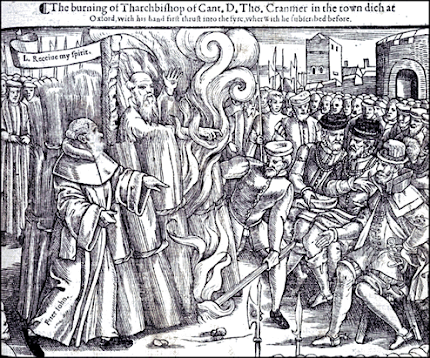
The burning of Tharchbishop of Cant. D. Tho. Cranmer in the town dich at Oxford, with his hand first thrust into the fyre, wherwith he subscribed before. [Click on the picture to see Cranmer's last words.]

Daily Bible Verse

Showing posts with label Westminster Shorter Catechism. Show all posts

Tuesday, April 15, 2025

Reasonable Christian YouTube Channel


This is a discussion of the doctrine of Sola Scriptura as it is outlined in the first chapter of the Westminster Confession of Faith:  Reasonable Christian:  Sola Scriptura and Predestination.
Tuesday, April 01, 2025

Open Letter to Pastor Jeff Tell: Lexington ARPC Church Plant


I have been retired since October of last year.  Since my job required lots of travel, I was not a member of any local church in my area, namely Lexington, South Carolina.  In fact, the only church that was traditional and even remotedly resembled a truly Reformed Presbyterian church is First Presbyterian Church in Columbia.  The problem there is that the church is very large, and the other problem is that the ARPC allows for the ordination of women to the office of deacon.  FPC, being an Associate Reformed Presbyterian session or church, allows for the ordination of women, also.  That is the reason that I did not become a member there, despite the fact that the preaching generally sound and Reformed.  The current pastor is Dr. Neil Stewart.

The ARPC has a church planting program and a new church is being planted in Lexington and the pastor chosen to do the work is Jeff Tell.  Unfortunately, the church plant is being conducted along the lines of the pragmatic church growth movement, following the example of the Presbyterian Church in America or PCA.  The PCA is at best a mix of truly reformed churches and churches formed under the church growth model, which focuses on dumbing down doctrinal distinctives.  One of the largest PCA churches in my area is Lexington Presbyterian Church, which supported the Revoice heresy of accepting "celibate" homosexuals as members and as teaching elders.

There have been warning signs at the new ARPC church plant in Lexington.  I sent a couple of emails to the pastor to register my complaints.  He did answer me once or twice.  After that it became silence.  So my only option now is to publicly address the complaints.  I cannot and do not support any church that openly discourages new members from agreeing with the doctrinal standards, namely the Westminster Confession of Faith and the Larger and Shorter Catehisms.

I wrote the following letter to Pastor Jeff Tell by way of email:

Dear Jeff,

I am not sure that I know exactly what to say about this church plant.  So, I will just give my opinion so far.

First, I was troubled by your suggestion that new members need not concern themselves with what the ministers are required to subscribe to in regards to the doctrinal standards of the denomination.  I think you said that they could just flip through the Westminster Standards.  The other red flag is that this edition has no biblical proof texts given to support the doctrinal positions.


The first chapter of the Westminster Confession of Faith makes it clear that the most important doctrine of any presbyterian church is the doctrine of Sola Scriptura.  So your remark that the new members need not concern themselves with points iii through vii was disturbing.

The point that most bothers me is point vii.  I cannot and never will promise to obey any church or church official who contradicts what the Bible plainly and univocally says.  I say this because the ARPC has officially allowed local sessions to ordain women to the male only office of deacon as prescribed by 1 Timothy 3:12.  In fact, as I studied the history of the decision of the general synod of 1969, it came to my attention that the moderator of the 2005 synod was Rev. William B. Evans, a supporter of the doctrine of the ordination of women.  Evans recently retired from Erskine College and transferred his ordination to the liberal mainline denomination, the Presbyterian Church USA.


I have been following the denominational issues of several Presbyterian denominations for many years by reading the Aquila Report online.  So, I am well aware of the "moderates" and liberals within the ARPC.  One of Evans' complaints was the influence of Ligonier and Reformed Theological Seminary, Charlotte, NC, according to his blog:  A Change in Ecclesiastical Affiliation.

The other deal breaker for me is that the church pamphlet keeps putting quotes from Tim Keller, a self-avowed promoter of the woke view of social justice, also known as social Marxism.  Keller is passed on, but his views on the doctrinal standards were liberal to say the least.  He promoted a version of the Revoice homosexual celibacy view in the Presbyterian Church in America.  He also promoted the theistic evolution view of Biologos.

In this week's pamphlet, the quote from Keller was completely wrong.  First, off, the covenant of grace began with the protoevangelium in Genesis 3:16.  [The correct citation is Genesis 3:15, not 3:16.  Sorry for the error.]  Later God expanded on this covenant of grace with the covenant of Abram in Genesis 15.  So, when Keller makes the generalization that "ancient covenants were marked  by an oath-sign in which the curse of disobeying the covenant was made clear . . .," the statement is clearly casuistry and equivocation meant to mislead novices.  The covenant of works was initiated in the garden of Eden and is still in effect until the consummation, except for those who are unconditionally elected in eternity, effectually called by monergistic regeneration, and given the gift of saving faith.


[The following was not included in the letter to Pastor Tell.  It is the quote from Tim Keller in the church pamphlet  that I found to be misleading:

"The Lord's Supper was a covenant-making ceremony, in which Jesus created a new people and entered into covenant with them as their Lord.  Ancient covenants were marked by an oath-sign in which the curse of disobeying the covenant was made clear, but Jesus shows us that this time, he takes on the curse for breaking the covenant himself.  He will take the cup of God's wrath so we can have the cup of fellowship and blessing."]

In fact, the doctrinal standards specifically state that even the elect are not under the law as covenant of works.  However, the moral law does tell them how they are to live as Christians:

WCF 19.6  Although true believers be not under the law as a covenant of works, to be thereby justified or condemned; yet is it of great use to them, as well as to others; in that, as a rule of life, informing them of the will of God and their duty, it directs and binds them to walk accordingly; discovering also the sinful pollutions of their nature, hearts, and lives; so as, examining themselves thereby, they may come to further conviction of, humiliation for, and hatred against sin; together with a clearer sight of the need they have of Christ, and the perfection of His obedience. It is likewise of use to the regenerate, to restrain their corruptions, in that it forbids sin; and the threatenings of it serve to show what even their sins deserve, and what afflictions in this life they may expect for them, although freed from the curse thereof threatened in the law. The promises of it, in like manner, show them God's approbation of obedience, and what blessings they may expect upon the performance thereof, although not as due to them by the law as a covenant of works: so as a man's doing good, and refraining from evil because the law encourageth to the one, and deterreth from the other, is no evidence of his being under the law, and not under grace. (WCF 19:6 WCS)


As you can see, the Confession actually says that believers are still under the moral law as a rule for living out the Christian life.  Unregenerate persons are still under the moral law as a covenant of works:


WCF 19.5  The moral law doth for ever bind all, as well justified persons as others, to the obedience thereof; and that, not only in regard of the matter contained in it, but also in respect of the authority of God, the Creator, who gave it. Neither doth Christ, in the Gospel, any way dissolve, but much strengthen this obligation. (WCF 19:5 WCS)  See also: 19:1-2.


Finally, as far back as 1995 when I graduated from Asbury Seminary with the M. Div. I took a church growth class with George Hunter, III.  I am well aware of the church growth pragmatism approach to church planting.   In those days, I was still a classical Pentecostal.  I was appalled at the dumbing down of Wesleyan theological distinctives recommended by Hunter.  The end result of refusing to preach theological distinctives and the whole counsel of God in the inerrant, infallible, and God-breathed Scriptures is a church full of novices at best, and unconverted persons who have no understanding of the Bible whatsoever.


I became a Calvinist in 1992 or so precisely because of the Pentecostal emphasis on spiritual experiences and personal piety over against any intellectual understanding of the Bible or the Christian faith.  Donald McGavran's denomination has one creed:  No creed but the Bible.  The early Pentecostals after the 1906 Azusa Street Revival had no doctrinal confessions of faith until the Oneness Pentecostal controversy around 1914.


Moreover, over the past 6 or 7 years that I have resided in Lexington, SC, I have visited just about every church that has claimed to be "Reformed".  Most of them were either PCA or ARP, except for Saxe Gotha.  Lexington Presbyterian Church, last I visited there, was pushing the Revoice controversy.  The other PCA churches, though smaller, were also following the pragmatic church growth pattern that decidedly dumbed down doctrine.

It came down to attending First Presbyterian Church, Columbia because that church at least has traditional worship with conservative preaching and the right administration of the sacraments.  However, I could not in good conscience join FPC because the session ordains women to the church office of deacon.  Your church plant, otoh, does not follow the regulative principle of worship and instead replicates the charismatic and emotive style of worship meant to de-emphasize the Bible as the final authority.

Your church plant gave a glimmer of hope that there would be solid preaching by expository sermons, along with solid opportunities for Christian education by way of Sunday school classes with competent instructors.  I realize that it takes time to develop these programs.  However, it is not looking good.  

The other problem, as I see it, is that your new members class does not emphasize the doctrinal standards whatsoever.  Instead, you're following Tim Keller's re-interpretation of the doctrinal standards, the Navigators, etc.  The Navigators were Arminian in orientation as I recall.   In more conservative sessions of various Presbyterian denominations, children who were baptized as infants are required to go through the Shorter Catechism class prior to becoming communicant members who partake of the Lord's table.  There should be some basic understanding of the doctrinal standards required to join a local session, including the Larger Catechism.  Glossing over the catechism is not healthy, imo.


While fellowship is important, I do not think that church picnics and church fellowship is what makes for a healthy church.  Community and family can be found anywhere, including the local bar or another religion.  As you said in the sermon from the previous week, the temptation for church planters is to take shortcuts.  Well, the church growth movement itself is just a huge shortcut.  Healthy churches are based on solid biblical preaching, doctrinal preaching, and the right administration of the sacraments.  Without the preaching of the word the sacraments are meaningless.  

In short, anyone can nominally claim to be reformed or that their church is reformed.  However, the term reformed needs to have a definition.  Reformed In Name Only or RINO does not meet that requirement.

As it stands now, I will not be joining the church as a member.


For I have not shunned to declare unto you all the counsel of God. (Acts 20:27 KJV)

And that from a child thou hast known the holy scriptures, which are able to make thee wise unto salvation through faith which is in Christ Jesus. 16 All scripture is given by inspiration of God, and is profitable for doctrine, for reproof, for correction, for instruction in righteousness: 17 That the man of God may be perfect, throughly furnished unto all good works. (2 Tim. 3:15-17 KJV)


Sincerely yours in Christ,


Charlie J. Ray, M. Div.

P.S.  I do a blog at www.reasonablechristian.blogspot.com.  


Addendum:  I was unaware that Jesus created a new people when He established the sacrament of the Lord's supper.  1 Corinthians 11:23-32.  The new church is also administering the Lord's supper weekly and in at least one church pamphlet referred to is as a "eucharist."  The term eucharist is code for real presence, consubstantiation, and transubstantiation.  The Calvinist and Zwinglian view reached a consensus rejecting the eucharistic view of the sacrament.  The Consensus of Tigurinus was written by John Calvin himself.


There are 7 vows that a person must make in order to become a member of the new Lexington Associate Presbyterian Church according to the handouts given in the new member class:


i.  Do you profess that you are a sinner in the sight of God; that you deserve His punishment; that you are unable to save yourself; and that you are without hope of salvation except for God's love and mercy?

ii. Do you believe in the Lord Jesus Christ as the Son of God and the Savior of sinners; and do you receive and trust in Him alone for your salvation?


iii. Do you accept the Bible, comprised of the Old and New Testaments, as the written Word of God; and that it is the only perfect rule of faith and how to live?


iv.  Do you promise to trust in the guidance and strength of the Holy Spirit so that you can live all of life as a Christian, following the example set by Jesus Christ?


v.  Do you promise to exercise faithful stewardship of God's resources entrusted to you for the furtherance of God's Kingdom and purposes?


vi.  Do you accept that the doctrines and principles of the Standards of the Associate Reformed Presbyterian Church are founded upon the Scriptures?


vii.  In loving obedience, do you submit yourself to the government and discipline of this church, promising to seek the peace, purity, and prosperity of this congregation as long as you are a member of it? 


The doctrines of the Westminster Confession of Faith are not "founded upon the Scriptures.  The doctrines of Bible are summarized by the Westminster Confession of Faith, and the Westminster Confession of Faith is "deduced" from the Bible "by good and necessary consequence" or inference.  See WCF 1:6.


Monday, May 30, 2016

Westminster Shorter Catechism


THE
SHORTER CATECHISM


Question 1

What is the chief end of man?
Man’ s chief end is to glorify God, (1 Cor. 10:31, Rom. 11:36) and to enjoy him for ever. (Ps. 73:25–28)


Question 2

What rule hath God given to direct us how we may glorify and enjoy him?
The Word of God, which is contained in the Scriptures of the Old and New Testaments, (2 Tim. 3:16, Eph. 2:20) is the only rule to direct us how we may glorify and enjoy him. (1 John 1:3–4)


Question 3

What do the scriptures principally teach?
The Scriptures principally teach what man is to believe concerning God, and what duty God requires of man. (2 Tim. 1:13, 2 Tim. 3:16)


Question 4

What is God?
God is a Spirit, (John 4:24) infinite, (Job 11:7–9) eternal, (Ps. 90:2) and unchangeable, (James 1:17) in his being, (Exod. 3:14)wisdom, (Ps. 147:5) power, (Rev. 4:8) holiness, (Rev. 15:4) justice, goodness, and truth. (Exod. 34:6–7)


Question 5

Are there more Gods than one?
There is but One only, the living and true God. (Deut. 6:4, Jer. 10:10)


Question 6

How many persons are there in the Godhead?
There are three persons in the Godhead; the Father, the Son, and the Holy Ghost; and these three are one God, the same in substance, equal in power and glory. (1 John 5:7, Matt. 28:19)


Question 7

What are the decrees of God?
The decrees of God are his eternal purpose, according to the counsel of his will, whereby, for his own glory, he hath foreordained whatsoever comes to pass. (Eph. 1:4,11, Rom. 9:22–23)


Question 8

How doth God execute his decrees?
God executeth his decrees in the works of creation and providence.


Question 9

What is the work of creation?
The work of creation is, God’ s making all things of nothing, by the word of his power, in the space of six days, and all very good. (Gen. 1, Heb. 11:3)


Question 10

How did God create man?
God created man male and female, after his own image, in knowledge, righteousness, and holiness, with dominion over the creatures. (Gen. 1:26–28, Col. 3:10, Eph. 4:24)


Question 11

What are God’ s works of providence?
God’ s works of providence are, his most holy, (Ps. 145:17) wise, (Ps. 104:24, Isa. 28:29) and powerful preserving, (Heb. 1:3) and governing all his creatures, and all their actions. (Ps. 103:19, Matt. 10:29–31)


Question 12

What special act of providence did God exercise toward man in the estate wherein he was created?
When God had created man, he entered into a covenant of life with him, upon condition of perfect obedience; forbidding him to eat of the tree of the knowledge of good and evil, upon the pain of death. (Gal. 3:12, Gen. 2:17)


Question 13

Did our first parents continue in the estate wherein they were created?
Our first parents, being left to the freedom of their own will, fell from the estate wherein they were created, by sinning against God. (Gen. 3:6–8,13, Eccl. 7:29)


Question 14

What is sin?
Sin is any want of conformity unto, or transgression of, the law of God. (1 John 3:4)


Question 15

What was the sin whereby our first parents fell from the estate wherein they were created?
The sin whereby our first parents fell from the estate wherein thy were created, was their eating the forbidden fruit. (Gen. 3:6)


Question 16

Did all mankind fall in Adam’ s first transgression?
The covenant being made with Adam, not only for himself, but for his posterity; all mankind, descending from him by ordinary generation, sinned in him, and fell with him, in his first transgression. (Gen. 2:16–17, Rom. 5:12, 1 Cor. 15:21–22)


Question 17

Into what estate did the fall bring mankind?
The fall brought mankind into an estate of sin and misery. (Rom. 5:12)


Question 18

Wherein consists the sinfulness of that estate whereinto man fell?
The sinfulness of that estate whereinto man fell, consists in the guilt of Adam’ s first sin, the want of original righteousness, and the corruption of his whole nature, which is commonly called Original Sin; together with all actual transgressions which proceed from it. (Rom. 5:12,19, Rom. 5:10–20, Eph. 2:1–3, James 1:14–15, Matt. 15:19)


Question 19

What is the misery of that estate whereinto man fell?
All mankind by their fall lost communion with God, (Gen. 3:8,10,24) are under his wrath and curse, (Eph. 2:2–3, Gal. 3:10) and so made liable to all miseries in this life, to death itself, and to the pains of hell for ever. (Lam. 3:39, Rom. 6:23, Matt. 25:41,46)


Question 20

Did God leave all mankind to perish in the estate of sin and misery?
God having, out of his mere good pleasure, from all eternity, elected some to everlasting life, (Eph. 1:4) did enter into a covenant of grace, to deliver them out of the estate of sin and misery, and to bring them into an estate of salvation by a Redeemer. (Rom. 3:20–22, Gal. 3:21–22)


Question 21

Who is the Redeemer of God’ s elect?
The only Redeemer of God’ s elect is the Lord Jesus Christ, (1 Tim. 2:5–6) who, being the eternal Son of God, became man, (John 1:14, Gal. 4:4) and so was, and continueth to be, God and man in two distinct natures, and one person, for ever. (Rom. 9:5, Luke 1:35, Col. 2:9, Heb. 7:24–25)


Question 22

How did Christ, being the Son of God, become man?
Christ, the Son of God, became man, by taking to himself a true body, (Heb. 2:14,16, Heb. 10:5) and a reasonable soul, (Matt. 26:38) being conceived by the power of the Holy Ghost, in the womb of the Virgin Mary, and born of her, (Luke 1:27,31,35,42, Gal. 4:4) yet without sin. (Heb. 4:15, Heb. 7:26)


Question 23

What offices doth Christ execute as our Redeemer?
Christ, as our Redeemer, executeth the offices of a prophet, of a priest, and of a king, both in his estate of humiliation and exaltation. (Acts 3:21–22, Heb. 12:25, 2 Cor. 13:3, Heb. 5:5–7, Heb. 7:25, Ps. 2:6, Isa. 9:6–7, Matt. 21:5, Ps. 2:8–11)


Question 24

How doth Christ execute the office of a prophet?
Christ executeth the office of a prophet, in revealing to us, by his word and Spirit, the will of God for our salvation. (John 1:18, 1 Pet. 1:10–12, John 15:15, John 20:31)


Question 25

How doth Christ execute the office of a priest?
Christ executeth the office of a priest, in his once offering up of himself a sacrifice to satisfy divine justice, (Heb. 9:14,28) and reconcile us to God; (Heb. 2:17) and in making continual intercession for us. (Heb. 7:24–25)


Question 26

How doth Christ execute the office of a king?
Christ executeth the office of a king, in subduing us to himself, (Acts 15:14–16) in ruling, (Isa. 32:22) and defending us, (Isa. 32:1–2) and in restraining and conquering all his and our enemies. (1 Cor. 15:25, Ps. 110)


Question 27

Wherein did Christ’ s humiliation consist?
Christ’ s humiliation consisted in his being born, and that in a low condition, (Luke 2:7) made under the law, (Gal. 4:4) undergoing the miseries of this life, (Heb. 12:2–3, Isa. 53:2–3) the wrath of God, (Luke 22:44, Matt. 27:46) and the cursed death of the cross:; (Phil. 2:8) in being buried, (1 Cor. 15:3–4) and continuing under the power of death for a time. (Acts 2:24–27,31)


Question 28

Wherein consisteth Christ’ s exaltation?
Christ’ s exaltation consisteth in his rising again from the dead on the third day, (1 Cor. 15:4) in ascending up into heaven, (Mark 16:19) in sitting at the right hand of God the Father, (Eph. 1:20) and in coming to judge the world at the last day. (Acts 1:11, Acts 17:31)


Question 29

How are we made partakers of the redemption purchased by Christ?
We are made partakers of the redemption purchased by Christ, by the effectual application of it to us, (John 1:11–12) by his Holy Spirit. (Titus 3:5–6)


Question 30

How doth the Spirit apply to us the redemption purchased by Christ?
The Spirit applieth to us the redemption purchased by Christ, by working faith in us, (Eph. 1:13–14, John 6:37–39, Eph. 2:8) and thereby uniting us to Christ in our effectual calling. (Eph. 3:17, 1 Cor. 1:9)


Question 31

What is effectual calling?
Effectual calling is the work of God’ s Spirit, (2 Tim. 1:9, 2 Thess. 2:13–14) whereby, convincing us of our sin and misery, (Acts 2:37) enlightening our minds in the knowledge of Christ, (Acts 26:18) and renewing our wills, (Ezek. 36:26–27) he doth persuade and enable us to embrace Jesus Christ, freely offered to us in the gospel. (John 6:44–45, Phil. 2:13)


Question 32

What benefits do they that are effectually called partake of in this life?
They that are effectually called do in this life partake of justification, (Rom. 8:30) adoption, (Eph. 1:5) and sanctification, and the several benefits which in this life do either accompany or flow from them. (1 Cor. 1:26,30)


Question 33

What is justification?
Justification is an act of God’ s free grace, wherein he pardoneth all our sins, (Rom. 3:24–25, Rom. 4:6–8) and accepteth us as righteous in his sight, (2 Cor. 5:19,21) only for the righteousness of Christ imputed to us, (Rom. 5:17–19) and received by faith alone. (Gal. 2:16, Phil. 3:9)


Question 34

What is adoption?
Adoption is an act of God’ s free grace, (1 John 3:1) whereby we are received into the number, and have a right to all the privileges of the sons of God. (John 1:12, Rom. 8:17)


Question 35

What is sanctification?
Sanctification is the work of God’ s free grace, (2 Thess. 2:13) whereby we are renewed in the whole man after the image of God, (Eph. 4:23–24) and are enabled more and more to die unto sin, and live unto righteousness. (Rom. 6:4,6, Rom. 8:1)


Question 36

What are the benefits which in this life do accompany or flow from justification, adoption, and sanctification?
The benefits which in this life do accompany or flow from justification, adoption, and sanctification, are, assurance of God’ s love, peace of conscience, (Rom. 5:1–2,5) joy in the Holy Ghost, (Rom. 14:17) increase of grace, (Prov. 4:18) and perseverance therein to the end. (1 John 5:13, 1 Pet. 1:5)


Question 37

What benefits do believers receive from Christ at death?
The souls of believers are at their death made perfect in holiness, (Heb. 12:23) and do immediately pass into glory; (2 Cor. 5:1,6,8, Phil. 1:23, Luke 23:43) and their bodies, being still united to Christ, (1 Thess. 4:14) do rest in their graves, (Isa. 57:2) till the resurrection. (Job 19:26–27)


Question 38

What benefits do believers receive from Christ at the resurrection?
At the resurrection, believers being raised up in glory, (1 Cor. 15:43) shall be openly acknowledged and acquitted in the day of judgment, (Matt. 25:23, Matt. 10:32) and made perfectly blessed in the full enjoying of God, (1 John 3:2, 1 Cor. 13:12) to all eternity. (1 Thess. 4:17–18)


Question 39

What is the duty which God requireth of man?
The duty which God requireth of man, is obedience to his revealed will. (Mic. 6:8, 1 Sam. 15:22)


Question 40

What did God at first reveal to man for the rule of his obedience?
The rule which God at first revealed to man for his obedience, was the moral law. (Rom. 2:14–15, Rom. 10:5)


Question 41

Where is the moral law summarily comprehended?
The moral law is summarily comprehended in the ten commandments. (Deut. 10:4, Matt. 19:17)


Question 42

 What is the sum of the ten commandments?
The sum of the ten commandments is, To love the Lord our God with all our heart, with all our soul, with all our strength, and with all our mind; and our neighbour as ourselves. (Matt. 22:37–40)


Question 43

What is the preface to the ten commandments?
The preface to the ten commandments is in these words, I am the Lord thy God, which have brought thee out of the land of Egypt, out of the house of bondage. (Exod. 20:2)


Question 44

What doth the preface to the ten commandments teach us?
The preface to the ten commandments teacheth us, That because God is the Lord, and our God, and Redeemer, therefore we are bound to keep all his commandments. (Luke 1:74–75, 1 Pet. 1:15–18)


Question 45

Which is the first commandment?
The first commandment is, Thou shalt have no other gods before me. (Exod. 20:3)


Question 46

What is required in the first commandment?
The first commandment requireth us to know and acknowledge God to be the holy true God, and our God; (1 Chron. 28:9, Deut. 26:17) and to worship and glorify him accordingly. (Matt. 4:10, Ps. 29:2)


Question 47

What is forbidden in the first commandment?
The first commandment forbiddeth the denying, (Ps. 14:1) or not worshipping and glorifying the true God as God, (Rom. 1:21) and our God; (Ps. 81:10–11) and the giving of that worship and glory to any other, which is due to him alone. (Rom. 1:25–26)


Question 48

What are we specially taught by these words [before me] in the first commandment?
These words [before me] in the first commandment teach us, That God, who seeth all things, taketh notice of, and is much displeased with, the sin of having any other God. (Ezek. 8:5–6, Ps. 44:20–21)


Question 49

Which is the second commandment?
The second commandment is, Thou shalt not make unto thee any graven image, or any likeness of any thing that is in heaven above, or that is in the earth beneath, or that is in the water under the earth: thou shalt not bow down thy self to them, nor serve them: for I the Lord thy God am a jealous God, visiting the iniquity of the fathers upon the children unto the third and fourth generation of them that hate me; and showing mercy unto thousands of them that love me, and keep my commandments. (Exod. 20:4–6)


Question 50

What is required in the second commandment?
The second commandment requireth the receiving, observing, and keeping pure and entire, all such religious worship and ordinances as God hath appointed in his Word. (Deut. 32:46, Matt. 28:20, Acts 2:42)


Question 51

What is forbidden in the second commandment?
The second commandment forbiddeth the worshipping of God by images, (Deut. 4:15–19, Exod. 32:5,8) or any other way not appointed in his Word. (Deut. 12:31–32)


Question 52

What are the reasons annexed to the second commandment?
The reasons annexed to the second commandment are, God’ s sovereignty over us, (Ps. 95:2–3) his propriety in us, (Ps. 45:11) and the zeal he hath to his own worship. (Exod. 34:13–14)


Question 53

Which is the third commandment?
The third commandment is, Thou shalt not take the name of the Lord thy God in vain; for the Lord will not hold him guiltless that taketh his name in vain. (Exod. 20:7)


Question 54

What is required in the third commandment?
The third commandment requireth the holy and reverent use of God’ s names, (Matt. 6:9, Deut. 28:58) titles, (Ps. 68:4) attributes, (Rev. 15:3–4) ordinances, (Mal. 1:11,14) Word, (Ps. 138:1–2) and works. (Job 36:24)


Question 55

What is forbidden in the third commandment?
The third commandment forbiddeth all profaning and abusing of any thing whereby God maketh himself known. (Mal. 1:6–7,12, Mal. 2:2, Mal. 3:14)


Question 56

What is the reason annexed to the third commandment?
The reason annexed to the third commandment is, That however the breakers of this commandment may escape punishment from men, yet the Lord our God will not suffer them to escape his righteous judgment. (1 Sam. 2:12,17,22,29, 1 Sam. 3:13, Deut. 28:58–59)


Question 57

Which is the fourth commandment?
The fourth commandment is, Remember the Sabbath-day, to keep it holy. Six days shalt thou labor, and do all thy work; but the seventh day is the Sabbath of the Lord thy God: in it thou shalt not do any work, thou, nor thy son, nor thy daughter, thy man-servant, nor thy maid-servant, nor thy cattle, nor thy stranger that is within thy gates. For in six days the Lord made heaven and earth, the sea, and all that in them is, and rested the seventh day: wherefore the Lord blessed the Sabbath-day, and hallowed it. (Exod. 20:8–11)


Question 58

What is required in the fourth commandment?
The fourth commandment requireth the keeping holy to God such set times as he hath appointed in his Word; expressly one whole day in seven, to be a holy Sabbath to himself. (Deut. 5:12–14)


Question 59

Which day of the seven hath God appointed to be the weekly Sabbath?
From the beginning of the world to the resurrection of Christ, God appointed the seventh day of the week to be the weekly Sabbath; and the first day of the week ever since, to continue to the end of the world, which is the Christian Sabbath. (Gen. 2:2–3, 1 Cor. 16:1–2, Acts 20:7)


Question 60

How is the Sabbath to be sanctified?
The Sabbath is to be sanctified by a holy resting all that day, (Exod. 20:8,10, Exod. 16:25–28) even from such worldly employments and recreations as are lawful on other days; (Neh. 13:15–19) and spending the whole time in the public and private exercises of God’ s worship, (Luke 4:16, Acts 20:7, Ps. 92, Isa. 66:23) except so much as is to be taken up in the works of necessity and mercy. (Matt. 12:1–31)


Question 61

What is forbidden in the fourth commandment?
The fourth commandment forbiddeth the omission or careless performance of the duties required, (Amos 8:5, Mal. 1:13) and the profaning the day by idleness, (Acts 20:7,9) or doing that which is in itself sinful, (Ezek. 23:38) or by unnecessary thoughts, words, or works, about our worldly employments or recreations. (Jer. 17:24–26, Isa. 58:13)


Question 62

What are the reasons annexed to the fourth commandment?
The reasons annexed to the fourth commandment are, God’ s allowing us six days of the week for our own employments, (Exod. 20:9) his challenging a special propriety in the seventh, his own example, and his blessing the sabbath-day. (Exod. 20:11)


Question 63

Which is the fifth commandment?
The fifth commandment is, Honour thy father and thy mother; that thy days may be long upon the land which the Lord thy God giveth thee. (Exod. 20:12)


Question 64

What is required in the fifth commandment?
The fifth commandment requireth the preserving the honor, and performing the duties, belonging to every one in their several places and relations, as superiors, (Eph. 5:21) inferiors, (1 Pet. 2:17) or equals. (Rom. 12:10)


Question 65

What is forbidden in the fifth commandment?
The fifth commandment forbiddeth the neglecting of, or doing any thing against, the honor and duty which belongeth to every one in their several places and relations. (Matt. 15:4–6, Ezek. 34:2–4, Rom. 13:8)


Question 66

What is the reason annexed to the fifth commandment?
The reason annexed to the fifth commandment, is a promise of long life and prosperity (as far as it shall serve for God’ s glory and their own good) to all such as keep this commandment. (Deut. 5:16, Eph. 6:2–3)


Question 67

Which is the sixth commandment?
The sixth commandment is, Thou shalt not kill. (Exod. 20:13)


Question 68

What is required in the sixth commandment?
The sixth commandment requireth all lawful endeavors to preserve our own life, (Eph. 5:28–29) and the life of others. (1 Kings 18:4)


Question 69

What is forbidden in the sixth commandment?
The sixth commandment forbiddeth the taking away of our own life, or the life of our neighbour unjustly, or whatsoever tendeth thereunto. (Acts 16:28, Gen. 9:6)


Question 70

Which is the seventh commandment?
The seventh commandment is, Thou shalt not commit adultery. (Exod. 20:14)


Question 71

What is required in the seventh commandment?
The seventh commandment requireth the preservation of our own and our neighbour’ s chastity, in heart, speech, and behavior. (1 Cor. 7:2–3,5,34,36, Col. 4:6, 1 Pet. 3:2)


Question 72

What is forbidden in the seventh commandment?
The seventh commandment forbiddeth all unchaste thoughts, words, and actions. (Matt. 15:19, Matt. 5:28, Eph. 5:3–4)


Question 73

Which is the eighth commandment?
The eighth commandment is, Thou shalt not steal. (Exod. 20:15)


Question 74

What is required in the eighth commandment?
The eighth commandment requireth the lawful procuring and furthering the wealth and outward estate of ourselves and others. (Gen. 30:30, 1 Tim. 5:8, Lev. 25:35, Deut. 22:1–5, Exod. 23:4–5, Gen. 47:14,20)


Question 75

What is forbidden in the eighth commandment?
The eighth commandment forbiddeth whatsoever doth or may unjustly hinder our own or our neighbour’ s wealth or outward estate. (Prov. 21:17, Prov. 23:20–21, Prov. 28:19, Eph. 4:28)


Question 76

Which is the ninth commandment?
The ninth commandment is, Thou shalt not bear false witness against thy neighbour. (Exod. 20:16)


Question 77

What is required in the ninth commandment?
The ninth commandment requireth the maintaining and promoting of truth between man and man, (Zech. 8:16) and of our own and our neighbour’ s good name, (3 John 12) especially in witness-bearing. (Prov. 14:5,25)


Question 78

What is forbidden in the ninth commandment?
The ninth commandment forbiddeth whatsoever is prejudicial to truth, or injurious to our own or our neighbour’ s good name. (1 Sam. 17:28, Lev. 19:16, Ps. 15:3)


Question 79

Which is the tenth commandment?
The tenth commandment is, Thou shalt not covet thy neighbour’ s house, thou shalt not covet thy neighbour’ s wife, nor his man-servant, nor his maid-servant, nor his ox, nor his ass, nor any thing that is thy neighbour’ s. (Exod. 20:17)


Question 80

What is required in the tenth commandment?
The tenth commandment requireth full contentment with our own condition, (Heb. 13:5, 1 Tim. 6:6) with a right and charitable frame of spirit toward our neighbour, and all that is his. (Job 31:29, Rom. 12:15, 1 Tim. 1:5, 1 Cor. 13:4–7)


Question 81

What is forbidden in the tenth commandment?
The tenth commandment forbiddeth all discontentment with our own estate, (1 Kings 21:4, Esther 5:13, 1 Cor. 10:10) envying or grieving at the good of our neighbour, (Gal. 5:26, James 3:14,16) and all inordinate motions and affections to any thing that is his. (Rom. 7:7–8, Rom. 13:9, Deut. 5:21)


Question 82

Is any man able perfectly to keep the commandments of God?
No mere man since the fall is able in this life perfectly to keep the commandments of God, (Eccles. 7:20, 1 John 1:8,10, Gal. 5:17) but doth daily break them in thought, word, and deed. (Gen. 6:5, Gen. 8:21, Rom. 3:9–21, James 3:2–13)


Question 83

Are all transgressions of the law equally heinous?
Some sins in themselves, and by reason of several aggravations, are more heinous in the sight of God than others. (Ezek. 8:6,13,15, 1 John 5:16, Ps. 78:17,32,56)


Question 84

What doth every sin deserve?
Every sin deserveth God’ s wrath and curse, both in this life, and that which is to come. (Eph. 5:6, Gal. 3:10, Lam. 3:39, Matt. 25:41)


Question 85

What doth God require of us, that we may escape his wrath and cursedue to us for sin?
To escape the wrath and curse of God due to us for sin, God requireth of us faith in Jesus Christ, repentance unto life, (Acts 20:21) with the diligent use of all the outward means whereby Christ communicateth to us the benefits of redemption. (Prov. 2:1–5, Prov. 8:33–36, Isa. 55:3)


Question 86

What is faith in Jesus Christ?
Faith in Jesus Christ is a saving grace, (Heb. 10:39) whereby we receive and rest upon him alone for salvation as he is offered to us in the gospel. (John 1:12, Isa. 26:3–4, Phil. 3:9, Gal. 2:16)


Question 87

What is repentance unto life?
Repentance unto life is a saving grace, (Acts 11:18) whereby a sinner, out of a true sense of his sin, (Acts 2:37–38) and apprehension of the mercy of God in Christ, (Joel 2:12, Jer. 3:22) doth, with grief and hatred of his sin, turn from it unto God, (Jer. 31:18–19, Ezek. 36:31) with full purpose of, and endeavour after, new obedience. (2 Cor. 7:11, Isa. 1:16–17)


Question 88

What are the outward means whereby Christ communicateth to usthe benefits of redemption?
The outward and ordinary means whereby Christ communicateth to us the benefits of redemption, are his ordinances, especially the Word, sacraments, and prayer; all which are made effectual to the elect for salvation. (Matt. 28:19–20, Acts 2:42,46–47)


Question 89

How is the Word made effectual to salvation?
The Spirit of God maketh the reading, but especially the preaching of the Word, an effectual means of convincing and converting sinners, and of building them up in holiness and comfort, through faith, unto salvation. (Neh. 8:8, 1 Cor. 14:24–25, Acts 26:18, Ps. 19:8, Acts 20:32, Rom. 15:4, 2 Tim. 3:15–17, Rom. 10:13–17, Rom. 1:16)


Question 90

How is the Word to be read and heard, that it may become effectual to salvation?
That the Word may become effectual to salvation, we must attend thereunto with diligence, (Prov. 8:34) preparation, (1 Pet. 2:1–2) and prayer; (Ps. 119:18) receive it with faith and love, (Heb. 4:2, 2 Thess. 2:10) lay it up in our hearts, (Ps. 119:11) and practice it in our lives. (Luke 8:15, James 1:25)


Question 91

How do the sacraments become effectual means of salvation?
The sacraments become effectual means of salvation, not from any virtue in them, or in him that doth administer them; but only by the blessing of Christ, (1 Pet. 3:21, Matt. 3:11, 1 Cor. 3:6–7) and the working of his Spirit in them that by faith receive them. (1 Cor. 12:13)


Question 92

What is a sacrament?
A sacrament is an holy ordinance instituted by Christ, wherein, by sensible signs, Christ, and the benefits of the new covenant, are represented, sealed, and applied to believers. (Gen. 17:7,10, Exod. 12, 1 Cor. 11:23,26)


Question 93

Which are the sacraments of the New Testament?
The sacraments of the New Testament are, Baptism, (Matt. 28:19) and the Lord’ s supper. (Matt. 26:26–28)


Question 94

What is baptism?
Baptism is a sacrament, wherein the washing with water in the name of the Father, and of the Son, and of the Holy Ghost, (Matt. 28:19) doth signify and seal our ingrafting into Christ, and partaking of the benefits of the covenant of grace, and our engagement to be the Lord’ s. (Rom. 6:4, Gal. 3:27)


Question 95

To whom is baptism to be administered?
Baptism is not to be administered to any that are out of the visible church, till they profess their faith in Christ, and obedience to him; (Acts 8:36–38, Acts 2:38) but the infants of such as are members of the visible church are to be baptized. (Acts 2:38–39, Gen. 17:10, Col. 2:11–12, 1 Cor. 7:14)


Question 96

What is the Lord’ s supper?
The Lord’ s supper is a sacrament, wherein, by giving and receiving bread and wine, according to Christ’ s appointment, his death is showed forth; and the worthy receivers are, not after a corporal and carnal manner, but by faith, made partakers of his body and blood, with all his benefits, to their spiritual nourishment, and growth in grace. (1 Cor. 11:23–26)


Question 97

What is required to the worthy receiving of the Lord’ s supper?
It is required of them that would worthily partake of the Lord’ s supper, that they examine themselves of their knowledge to discern the Lord’ s body, (1 Cor. 11:28–29) of their faith to feed upon him, (2 Cor. 13:5) of their repentance, (1 Cor. 11:31) love, (1 Cor. 10:16–17) and new obedience; (1 Cor. 5:7–8) lest, coming unworthily, they eat and drink judgment to themselves. (1 Cor. 11:28–29)


Question 98

What is prayer?
Prayer is an offering up of our desires unto God, (Ps. 62:8) for things agreeable to his will, (1 John 5:14) in the name of Christ, (John 16:23) with confession of our sins, (Ps. 32:5–6, Dan. 9:4) and thankful acknowledgement of his mercies. (Phil. 4:6)


Question 99

What rule hath God given for our direction in prayer?
The whole Word of God is of use to direct us in prayer; (1 John 5:14) but the special rule of direction is that form of prayer which Christ taught his disciples, commonly called The Lord’ s prayer. (Matt. 6:9–13, Luke 11:2–4)


Question 100

What doth the preface of the Lord’ s prayer teach us?
The preface of the Lord’ s prayer, (which is, Our Father which art in heaven, (Matt. 6:9)) teacheth us to draw near to God with all holy reverence and confidence, as children to a father, able and ready to help us; (Rom. 8:15, Luke 11:13) and that we should pray with and for others. (Acts 12:5, 1 Tim. 2:1–2)


Question 101

What do we pray for in the first petition?
In the first petition, (which is, Hallowed be thy name, (Matt. 6:9)) we pray, That God would enable us and others to glorify him in all that whereby he maketh himself known; (Ps. 67:2–3) and that he would dispose all things to his own glory. (Ps. 83)


Question 102

What do we pray for in the second petition?
In the second petition, (which is, Thy kingdom come, (Matt. 6:10)) we pray, That Satan’ s kingdom may be destroyed; (Ps. 68:1,18) and that the kingdom of grace may be advanced, (Rev. 12:10–11) ourselves and others brought into it, and kept in it; (2 Thess. 3:1, Rom. 10:1, John 17:9,20) and that the kingdom of glory may be hastened. (Rev. 22:20)


Question 103

What do we pray for in the third petition?
In the third petition, (which is, Thy will be done in earth, as it is in heaven, (Matt. 6:10)) we pray, That God, by his grace, would make us able and willing to know, obey, and submit to his will in all things, (Ps. 67, Ps. 119:36, Matt. 26:39, 2 Sam. 15:25, Job 1:21) as the angels do in heaven. (Ps. 103:20–21)


Question 104

What do we pray for in the fourth petition?
In the fourth petition, (which is, Give us this day our daily bread, (Matt. 6:11)) we pray, That of God’ s free gift we may receive a competent portion of the good things of this life, and enjoy his blessing with them. (Prov. 30:8–9, Gen. 28:20, 1 Tim. 4:4–5)


Question 105

What do we pray for in the fifth petition?
In the fifth petition, (which is, And forgive us our debts, as we forgive our debtors, (Matt. 6:12)) we pray, That God, for Christ’ s sake, would freely pardon all our sins; (Ps. 51:1–2,7,9, Dan. 9:17–19) which we are the rather encouraged to ask, because by his grace we are enabled from the heart to forgive others. (Luke 11:4, Matt. 18:35)


Question 106

What do we pray for in the sixth petition?
In the sixth petition, (which is, And lead us not into temptation, but deliver us from evil, (Matt. 6:13)) we pray, That god would either keep us from being tempted to sin, (Matt. 26:41) or support and deliver us when we are tempted. (2 Cor. 12:7–8)


Question 107

What doth the conclusion of the Lord’ s prayer teach us?
The conclusion of the Lord’ s prayer, (which is, For thine is the kingdom, and the power, and the glory, for ever, Amen. (Matt. 6:13)) teacheth us, to take our encouragement in prayer from God only, (Dan. 9:4,7–9,16–19) and in our prayers to praise him, ascribing kingdom, power, and glory to him. (1 Chron. 29:10–13) And, in testimony of our desire, and assurance to be heard, we say, Amen. (1 Cor. 14:16, Rev. 22:20–21)


The Westminster Shorter Catechism: With Scripture Proofs, 3rd edition. (Oak Harbor, WA: Logos Research Systems, Inc., 1996).

Thursday, April 15, 2010

What Is Baptism and To Whom Is It To Be Administered?

WSC 94 What is baptism? A. Baptism is a sacrament, wherein the washing with water in the name of the Father, and of the Son, and of the Holy Ghost, doth signify and seal our ingrafting into Christ, and partaking of the benefits of the covenant of grace, and our engagement to be the Lord's.

WSC 95 To whom is baptism to be administered? A. Baptism is not to be administered to any that are out of the visible church, till they profess their faith in Christ, and obedience to him; but the infants of such as are members of the visible church are to be baptized.

(Westminster Shorter Catechism 1:94-96 WCS)

Notice above that baptism is similar to an "engagement." In other words, it is a sign and seal of a vow we make to the Lord. A covenant is similar to the marriage covenant where there is a relationship and there are responsibilities and obligations on the part of both parties. The difference in the covenant of grace, however, is that the covenant of grace is made only with the elect who are truly born again by the Holy Spirit. For God's part He never breaks His promises to us as His children and God always keeps covenant with us, despite our failures and sins. He gives the elect His benefits unconditionally and will insure that we keep covenant with Him by putting into our hearts the desire to do what He commands us to do. The covenant of grace and membership in a visible congregation are not necessarily the same thing since the visible congregation might contain unregenerate members who eventually fall away into apostasy.

Regarding the administration of baptism we should be careful not to give a false security to unbelievers by baptizing their infants if they are not active members of a local and visible congregation where the Gospel is rightly preached and the two sacraments are rightly administered. It is a great temptation to try missionary baptisms and weddings to bring in new members or to gain financial income for a congregation. However, our focus should be on eternity and getting folks to understand that there is no salvation outside of Christ (John 14:6; Acts 4:11-13) and that a true and lively faith requires a covenant commitment to the Lord through a true and lively local church as defined in the Thirty-nine Articles of Religion:

Article XIX

Of the Church

The visible Church of Christ is a congregation of faithful men, in the which the pure word of God is preached and the sacraments be duly ministered according to Christ's ordinance in all those things that of necessity are requisite to the same. As the Church of Jerusalem, Alexandria, and Antioch have erred: so also the Church of Rome hath erred, not only in their living and manner of ceremonies, but also in matters of faith.

Glory be to the Father, and to the Son : and to the Holy Ghost;
Answer. As it was in the beginning, is now, and ever shall be : world without end. Amen.


Support Reasonable Christian Ministries with your generous donation.