>

Martyred for the Gospel

Martyred for the Gospel
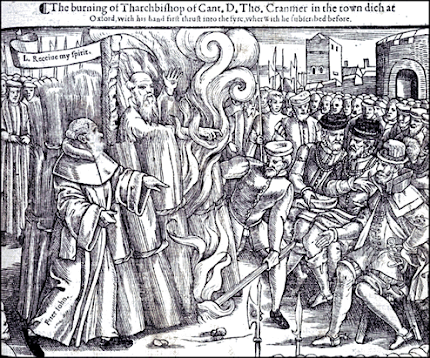
The burning of Tharchbishop of Cant. D. Tho. Cranmer in the town dich at Oxford, with his hand first thrust into the fyre, wherwith he subscribed before. [Click on the picture to see Cranmer's last words.]

Daily Bible Verse

Showing posts with label Associate Reformed Presbyterian Church. Show all posts

Saturday, June 06, 2026

The 2026 Edition of the PRCA Theological Journal: Common Grace


Recommended Article:  "John Bolt, Common Grace, the PRCA, and Theological Modernism"

 by David J. Engelsma

Protestant Reformed Theological Journal.  Vol. 59, No. 2., 2026.  Pp. 49-65.


Reviewed by Charlie J. Ray


In a time when supposedly Evangelical and Reformed denominations are compromised with the pragmatic church growth movement and other theological heresies, Dr. David J. Engelsma's article is a breath of fresh air.  The Presbyterian Church in America, the Associate Reformed Presbyterian Church, and the Orthodox Presbyterian Church are the Presbyterian denominations with which I am most familiar because I grew up in Florida, and now I live in South Carolina.  All of these denominations downplay their doctrinal standards because they wish to be evangelistic and mission minded.  While the PCA does not ordain women to the church offices of teaching elder or deacon, there is no vow taken for membership that even mentions the Westminster Standards.  The ARP ordains women deacons in violation of 1 Timothy 3:8-12 KJV.   (See:  Reasonable Christian:  Should Women Be Ordained to the Office of Deacon?)

The ARP First Presbyterian Church in Columbia, South Carolina has had three Reformed ministers from the supposedly conservative Ligonier Ministries movement of the late Dr. R.C. Sproul.  Yet, all three agreed with the session to ordain women to the male only office of deacon.  The present minister is Dr. Neil Stewart, who told me that if I objected to women deacons that I should probably not join as a member.  The other two pastors were Derek Thomas and Sinclaire Ferguson.

Moreover, the dangers of the pragmatic church growth movement are that the emphasis is on keeping the peace and unity at the cost of doctrinal purity and true Christian discipleship.  As Dr. Engelsma points out in this article, it all began with the adoption of the Three Points of Common Grace in 1924 by the Christian Reformed Church.  Practically all of the Presbyterian denominations quickly unofficially adopted the Three Points of Common Grace because the colleges and seminaries teach this doctrine as if it were an official doctrinal standard.  The doctrine then trickled down to the denominations and churches.  (See my open letter to the pastor of an ARP church plant in Lexington, South Carolina:  Lexington ARP.  The response I got from Jeff Tell by email was short and to the point:  I hope you can find a perfect church.)

Theological modernism shows up most clearly in the rejection of doctrinal standards and in the adoption of modern translations of the Bible that are based on the liberal biases of lower and higher biblical criticism.  Dr. Engelsma mentions that modernism began in the CRC before the ministers of the PRCA were expelled from the CRC.  At least one seminary professor at Calvin Theological Seminary, Ralph Janssen, who taught Old Testament, was expelled for teaching that the Pentateuch was not historical narrative.  Janssen taught what could be called a neo-orthodox view of Genesis 1-11, a view that is popular among fake Evangelicals today.

The failure of theological liberalism to see that humanity is not good was clearly visible during the first world war.  Apparently, the liberals doubled down.  The following quote from Engelsma's articles is pertinent to this point:

In 1924, the attack of modernism upon Christian orthodoxy was raging. The highly regarded and influential German heretic, von Harnack, published his popular attack on orthodox Christianity in 1900, Das Wesen des Christentums (What is Christianity?). In 1903, the Presbyterian Church (USA) revised the Westminster Confession of Faith to affirm a love of God for all humans. The unbelieving, modernistic Auburn Affirmation was published in 1924—in 1924! Harry Emerson Fosdick preached his popular sermon, “Shall the Fundamentalists Win?” in 1922. 

And the CRC itself wrestled with sheer modernism in the Janssen case, Calvin Seminary Professor Ralph Janssen being deposed in 1922. 

In the ecclesiastical atmosphere of this theological and spiritual struggle, the CRC adopted the doctrine of common grace, affirming a oneness of the church and the world in a common grace of God.  (Engelsma, pp. 62-63).

The current controversy over the issue of lower textual criticism and the reasoned eclecticism of the approach to textual variants and fragmentary apographs of the Greek New Testament is related to this compromise with common grace as well.  Unfortunately, the modern science of textual criticism is a dismal failure in regard to the stated goal of objectively reconstructing the precise wording of the original autographs.  (See:  Reformation Bible Society).

I highly recommend this article if you are at all concerned with the theological modernism and liberalism that is creeping into Evangelical churches today.  Even more concerning is the leftward drift of the Reformed churches due to the heresy of common grace:

From the Netherlands, the infection of modernism in the form of a common grace uniting church and world has spread to the CRC. It threatens all the supposedly “conservative” Reformed and Presbyterian churches that have been influenced by Kuyper and the CRC to embrace the doctrine of a common grace of God. They have the essence of modernism at their vitals. This is, in reality, the issue for the churches of NAPARC, not the issue of women in church office, which is merely a symptom of the real issue, and not the most important, but the issue of common grace, which obliterates the antithesis between church and world.  (Engelsma, p. 63).

You can read Dr. David Engelsma's article by clicking here:  Protestant Reformed Theological Journal, Vol. 59, 2026.  Then click the download button to download and read the PDF version of the journal.  Dr. Engelsma's article is on pages 49-65.

The peace of God be with you. 

Thursday, April 03, 2025

The Reasonable Christian YouTube Channel


There is none that understandeth, there is none that seeketh after God. (Rom. 3:11 KJV)

Then they that gladly received his word were baptized: and the same day there were added unto them about three thousand souls. (Acts 2:41 KJV)

Praising God, and having favour with all the people. And the Lord added to the church daily such as should be saved. (Acts 2:47 KJV)

For I have not shunned to declare unto you all the counsel of God. (Acts 20:27 KJV)


For those who are interested, I have taken the bold step of starting a YouTube podcast.  This is my latest post about the church growth movment:

Church Growth or God's Providence?

As you might have gathered, I am critical of the Associate Reformed Presbyterian Church because of the influence of moderates and liberals within the denomination.

Tuesday, April 01, 2025

Open Letter to Pastor Jeff Tell: Lexington ARPC Church Plant


I have been retired since October of last year.  Since my job required lots of travel, I was not a member of any local church in my area, namely Lexington, South Carolina.  In fact, the only church that was traditional and even remotedly resembled a truly Reformed Presbyterian church is First Presbyterian Church in Columbia.  The problem there is that the church is very large, and the other problem is that the ARPC allows for the ordination of women to the office of deacon.  FPC, being an Associate Reformed Presbyterian session or church, allows for the ordination of women, also.  That is the reason that I did not become a member there, despite the fact that the preaching generally sound and Reformed.  The current pastor is Dr. Neil Stewart.

The ARPC has a church planting program and a new church is being planted in Lexington and the pastor chosen to do the work is Jeff Tell.  Unfortunately, the church plant is being conducted along the lines of the pragmatic church growth movement, following the example of the Presbyterian Church in America or PCA.  The PCA is at best a mix of truly reformed churches and churches formed under the church growth model, which focuses on dumbing down doctrinal distinctives.  One of the largest PCA churches in my area is Lexington Presbyterian Church, which supported the Revoice heresy of accepting "celibate" homosexuals as members and as teaching elders.

There have been warning signs at the new ARPC church plant in Lexington.  I sent a couple of emails to the pastor to register my complaints.  He did answer me once or twice.  After that it became silence.  So my only option now is to publicly address the complaints.  I cannot and do not support any church that openly discourages new members from agreeing with the doctrinal standards, namely the Westminster Confession of Faith and the Larger and Shorter Catehisms.

I wrote the following letter to Pastor Jeff Tell by way of email:

Dear Jeff,

I am not sure that I know exactly what to say about this church plant.  So, I will just give my opinion so far.

First, I was troubled by your suggestion that new members need not concern themselves with what the ministers are required to subscribe to in regards to the doctrinal standards of the denomination.  I think you said that they could just flip through the Westminster Standards.  The other red flag is that this edition has no biblical proof texts given to support the doctrinal positions.


The first chapter of the Westminster Confession of Faith makes it clear that the most important doctrine of any presbyterian church is the doctrine of Sola Scriptura.  So your remark that the new members need not concern themselves with points iii through vii was disturbing.

The point that most bothers me is point vii.  I cannot and never will promise to obey any church or church official who contradicts what the Bible plainly and univocally says.  I say this because the ARPC has officially allowed local sessions to ordain women to the male only office of deacon as prescribed by 1 Timothy 3:12.  In fact, as I studied the history of the decision of the general synod of 1969, it came to my attention that the moderator of the 2005 synod was Rev. William B. Evans, a supporter of the doctrine of the ordination of women.  Evans recently retired from Erskine College and transferred his ordination to the liberal mainline denomination, the Presbyterian Church USA.


I have been following the denominational issues of several Presbyterian denominations for many years by reading the Aquila Report online.  So, I am well aware of the "moderates" and liberals within the ARPC.  One of Evans' complaints was the influence of Ligonier and Reformed Theological Seminary, Charlotte, NC, according to his blog:  A Change in Ecclesiastical Affiliation.

The other deal breaker for me is that the church pamphlet keeps putting quotes from Tim Keller, a self-avowed promoter of the woke view of social justice, also known as social Marxism.  Keller is passed on, but his views on the doctrinal standards were liberal to say the least.  He promoted a version of the Revoice homosexual celibacy view in the Presbyterian Church in America.  He also promoted the theistic evolution view of Biologos.

In this week's pamphlet, the quote from Keller was completely wrong.  First, off, the covenant of grace began with the protoevangelium in Genesis 3:16.  [The correct citation is Genesis 3:15, not 3:16.  Sorry for the error.]  Later God expanded on this covenant of grace with the covenant of Abram in Genesis 15.  So, when Keller makes the generalization that "ancient covenants were marked  by an oath-sign in which the curse of disobeying the covenant was made clear . . .," the statement is clearly casuistry and equivocation meant to mislead novices.  The covenant of works was initiated in the garden of Eden and is still in effect until the consummation, except for those who are unconditionally elected in eternity, effectually called by monergistic regeneration, and given the gift of saving faith.


[The following was not included in the letter to Pastor Tell.  It is the quote from Tim Keller in the church pamphlet  that I found to be misleading:

"The Lord's Supper was a covenant-making ceremony, in which Jesus created a new people and entered into covenant with them as their Lord.  Ancient covenants were marked by an oath-sign in which the curse of disobeying the covenant was made clear, but Jesus shows us that this time, he takes on the curse for breaking the covenant himself.  He will take the cup of God's wrath so we can have the cup of fellowship and blessing."]

In fact, the doctrinal standards specifically state that even the elect are not under the law as covenant of works.  However, the moral law does tell them how they are to live as Christians:

WCF 19.6  Although true believers be not under the law as a covenant of works, to be thereby justified or condemned; yet is it of great use to them, as well as to others; in that, as a rule of life, informing them of the will of God and their duty, it directs and binds them to walk accordingly; discovering also the sinful pollutions of their nature, hearts, and lives; so as, examining themselves thereby, they may come to further conviction of, humiliation for, and hatred against sin; together with a clearer sight of the need they have of Christ, and the perfection of His obedience. It is likewise of use to the regenerate, to restrain their corruptions, in that it forbids sin; and the threatenings of it serve to show what even their sins deserve, and what afflictions in this life they may expect for them, although freed from the curse thereof threatened in the law. The promises of it, in like manner, show them God's approbation of obedience, and what blessings they may expect upon the performance thereof, although not as due to them by the law as a covenant of works: so as a man's doing good, and refraining from evil because the law encourageth to the one, and deterreth from the other, is no evidence of his being under the law, and not under grace. (WCF 19:6 WCS)


As you can see, the Confession actually says that believers are still under the moral law as a rule for living out the Christian life.  Unregenerate persons are still under the moral law as a covenant of works:


WCF 19.5  The moral law doth for ever bind all, as well justified persons as others, to the obedience thereof; and that, not only in regard of the matter contained in it, but also in respect of the authority of God, the Creator, who gave it. Neither doth Christ, in the Gospel, any way dissolve, but much strengthen this obligation. (WCF 19:5 WCS)  See also: 19:1-2.


Finally, as far back as 1995 when I graduated from Asbury Seminary with the M. Div. I took a church growth class with George Hunter, III.  I am well aware of the church growth pragmatism approach to church planting.   In those days, I was still a classical Pentecostal.  I was appalled at the dumbing down of Wesleyan theological distinctives recommended by Hunter.  The end result of refusing to preach theological distinctives and the whole counsel of God in the inerrant, infallible, and God-breathed Scriptures is a church full of novices at best, and unconverted persons who have no understanding of the Bible whatsoever.


I became a Calvinist in 1992 or so precisely because of the Pentecostal emphasis on spiritual experiences and personal piety over against any intellectual understanding of the Bible or the Christian faith.  Donald McGavran's denomination has one creed:  No creed but the Bible.  The early Pentecostals after the 1906 Azusa Street Revival had no doctrinal confessions of faith until the Oneness Pentecostal controversy around 1914.


Moreover, over the past 6 or 7 years that I have resided in Lexington, SC, I have visited just about every church that has claimed to be "Reformed".  Most of them were either PCA or ARP, except for Saxe Gotha.  Lexington Presbyterian Church, last I visited there, was pushing the Revoice controversy.  The other PCA churches, though smaller, were also following the pragmatic church growth pattern that decidedly dumbed down doctrine.

It came down to attending First Presbyterian Church, Columbia because that church at least has traditional worship with conservative preaching and the right administration of the sacraments.  However, I could not in good conscience join FPC because the session ordains women to the church office of deacon.  Your church plant, otoh, does not follow the regulative principle of worship and instead replicates the charismatic and emotive style of worship meant to de-emphasize the Bible as the final authority.

Your church plant gave a glimmer of hope that there would be solid preaching by expository sermons, along with solid opportunities for Christian education by way of Sunday school classes with competent instructors.  I realize that it takes time to develop these programs.  However, it is not looking good.  

The other problem, as I see it, is that your new members class does not emphasize the doctrinal standards whatsoever.  Instead, you're following Tim Keller's re-interpretation of the doctrinal standards, the Navigators, etc.  The Navigators were Arminian in orientation as I recall.   In more conservative sessions of various Presbyterian denominations, children who were baptized as infants are required to go through the Shorter Catechism class prior to becoming communicant members who partake of the Lord's table.  There should be some basic understanding of the doctrinal standards required to join a local session, including the Larger Catechism.  Glossing over the catechism is not healthy, imo.


While fellowship is important, I do not think that church picnics and church fellowship is what makes for a healthy church.  Community and family can be found anywhere, including the local bar or another religion.  As you said in the sermon from the previous week, the temptation for church planters is to take shortcuts.  Well, the church growth movement itself is just a huge shortcut.  Healthy churches are based on solid biblical preaching, doctrinal preaching, and the right administration of the sacraments.  Without the preaching of the word the sacraments are meaningless.  

In short, anyone can nominally claim to be reformed or that their church is reformed.  However, the term reformed needs to have a definition.  Reformed In Name Only or RINO does not meet that requirement.

As it stands now, I will not be joining the church as a member.


For I have not shunned to declare unto you all the counsel of God. (Acts 20:27 KJV)

And that from a child thou hast known the holy scriptures, which are able to make thee wise unto salvation through faith which is in Christ Jesus. 16 All scripture is given by inspiration of God, and is profitable for doctrine, for reproof, for correction, for instruction in righteousness: 17 That the man of God may be perfect, throughly furnished unto all good works. (2 Tim. 3:15-17 KJV)


Sincerely yours in Christ,


Charlie J. Ray, M. Div.

P.S.  I do a blog at www.reasonablechristian.blogspot.com.  


Addendum:  I was unaware that Jesus created a new people when He established the sacrament of the Lord's supper.  1 Corinthians 11:23-32.  The new church is also administering the Lord's supper weekly and in at least one church pamphlet referred to is as a "eucharist."  The term eucharist is code for real presence, consubstantiation, and transubstantiation.  The Calvinist and Zwinglian view reached a consensus rejecting the eucharistic view of the sacrament.  The Consensus of Tigurinus was written by John Calvin himself.


There are 7 vows that a person must make in order to become a member of the new Lexington Associate Presbyterian Church according to the handouts given in the new member class:


i.  Do you profess that you are a sinner in the sight of God; that you deserve His punishment; that you are unable to save yourself; and that you are without hope of salvation except for God's love and mercy?

ii. Do you believe in the Lord Jesus Christ as the Son of God and the Savior of sinners; and do you receive and trust in Him alone for your salvation?


iii. Do you accept the Bible, comprised of the Old and New Testaments, as the written Word of God; and that it is the only perfect rule of faith and how to live?


iv.  Do you promise to trust in the guidance and strength of the Holy Spirit so that you can live all of life as a Christian, following the example set by Jesus Christ?


v.  Do you promise to exercise faithful stewardship of God's resources entrusted to you for the furtherance of God's Kingdom and purposes?


vi.  Do you accept that the doctrines and principles of the Standards of the Associate Reformed Presbyterian Church are founded upon the Scriptures?


vii.  In loving obedience, do you submit yourself to the government and discipline of this church, promising to seek the peace, purity, and prosperity of this congregation as long as you are a member of it? 


The doctrines of the Westminster Confession of Faith are not "founded upon the Scriptures.  The doctrines of Bible are summarized by the Westminster Confession of Faith, and the Westminster Confession of Faith is "deduced" from the Bible "by good and necessary consequence" or inference.  See WCF 1:6.


Tuesday, March 25, 2025

Should Women Be Ordained to Ministry? Deacons or Otherwise? Part 3


Should Women Be Ordained to Ministry? Deacons or Otherwise? Part 3


As the twentieth century has seen a great increase in the control that national governments exercise over their citizens, so too with ecclesiastical organizations there is a trend toward centralization, bureaucracy, and an indifference toward inalienable rights.  Well publicized gatherings of Protestant prelates parade in robes, and the press reports the colorful pageantry.  Impressive imitation of popery!  And the same eventual results are to be expected.

God alone is Lord of the conscience, and hath left it free from the doctrines and commandments of men, which are, in anything, contrary to His Word, or beside it, in matters of faith or worship. So that to believe such doctrines, or to obey such commands out of conscience, is to betray true liberty of conscience: and the requiring of an implicit faith, and an absolute and blind obedience, is to destroy liberty of conscience, and reason also.  . . . [WCF 20:2 WCS].

The changing majorities of a Council or General Assembly which push a conjectural translation of the Bible one year and another year issue Sunday School lessons whose conjectures are still worse, may boast that their theology is not static but dynamic.  A different doctrine every decade—while the orthodox fuddy-duddies keep on believing the same thing all the time!

But what moral chaos there is, when the law of God is abandoned for the latest style of unbelief.  It used to be [Albrecht] Ritschl’s value judgments; now it is paradox; next it will be—who can guess?

The law of God is stable because God is unchangeable.  Those who believe God do not need to change their moral principles with the passing years.  Nor will they change their worship, push the Bible to one side, put an altar in the center, pray to the saints and the Virgin, nor . . . engage a troupe of ballet dancers to fill an empty pulpit.

Dr. Gordon H. Clark.  Essays on Ethics and Politics.  John Robbins, ed.  (Jefferson:  Trinity Foundation, 1992).  Pp. 21-22.


I make the above point because it seems that the larger a denomination becomes, the more centralized its ecclesiastical polity becomes.  I am currently attending a new church plant in Lexington, South Carolina.  It is already becoming apparent that the pastor and the elders do not want any sort of dissent as that would cause a problem with “the peace, purity, and prosperity of this congregation as long as” I am “a member of it.”  I am referring to the Associate Reformed Presbyterian Church as a denomination.  The general synod in 1969 made the decision to allow the ordination of women as deacons; however, it was determined that each session or church within the denomination could decide whether or not to ordain women to the church office of the deaconate or deacon.  

This is a strong indication that there are liberals within the denomination who wish to have women ordained to every church office.  [See:  Women in the Life of the Church: A Position Paper Approved by the General Synod of the Associate Reformed Presbyterian Church:   June 2005”.]  I was shocked to see that one of the authors and signatories on this document was Rev. William B. Evans.  Evans recently announced that he was leaving the ARPC and joining the PCUSA.  His reason is detailed in a blog article he posted here:  A Change in Ecclesial Affiliation for the Ecclesial Calvinist!  Obviously, Mr. Evans is one of the liberals whom I mentioned.  He argues in 2005 that the reason for decline in the ARPC is holding true to the fundamentals.  In order for the denomination to grow, it must accommodate to the times and the culture:

By 2010 or so, however, I sensed that the ARP Church had lost its sense of identity and direction.  When I served as Moderator of the ARP General Synod in 2005 I warned the body that a dire situation awaited if the church did not recover a coherent identity and sense of mission.  Serving on the subsequent General Synod Vision and Strategic Planning Committees reinforced the sense that we were wandering in the weeds and on the edge of precipitous decline.  As a church historian I knew the story well—that ARP identity had historically been predicated on certain praxis distinctives (exclusive psalmody, non-instrumental worship, strict Sabbatarianism, and closed communion), and that by the mid-20th century all of that had dissolved and the church was searching for a new identity.  From 2004 until 2012 I had written/edited the ARP Adult Quarterly Sunday-school curriculum, but beginning in 2012 I began to pull back from my denominational involvements to concentrate on scholarly writing and research.

During this time, I also noticed that the ARPC was becoming more rigidly conservative (largely because of the decline of Erskine Theological Seminary and the rising influence of Reformed Theological Seminary in Charlotte, NC) even as I was growing older and a bit more flexible theologically.  A clarifying moment occurred in the last few years when I chaired a Synod committee to study the issue of women serving in the diaconate in the ARPC.  The Committee presented a sensible report noting that the current policy of allowing women in the ARPC to serve as deacons has worked well for decades, that Scripture can reasonably be read either way, and that no one’s conscience is bound by the current policy.  The floor debate on the report was disheartening, and it was evident that a large minority of the court wanted to do away with women on the diaconate completely.  Particularly clarifying for me was an obviously premeditated speech by a younger minister asserting that those in favor of women in the diaconate were capitulating to the feminist and transgender agenda!  No one called him to task, and I realized at that point that the Overton window had shifted to such a point that I was in the wrong church!

It is here that Evans’s theological compromise is revealed openly.  He straightforwardly admits that he has become “more flexible” with age.  Ironically, his views seem to be inflexible when it comes to acknowledging the plain teaching of Scripture, which he claims can be “read either way.”  I am speculating that the sections in the position paper of 2005 dealing with arguments from the other side were all written by Evans because he agrees with them.  The paper quotes Evans as saying:

While traditionalists have often been tolerant of progressive thinking, they themselves are often not tolerated once women’s ordination is instantiated in a denomination.  That has been the trend in the Church of Scotland, the PCUSA and elsewhere.  The pattern here is for conservatives to be grandfathered for a time, but sooner or later ordination requirements are rewritten to include support for women’s ordination.  This is due primarily, not to liberal meanspiritedness, but to the logic of Reformed polity.  The offices of minister and elder are the foundation of the polity, and everybody has to own the polity, to accept the ground rules of the game.   Reformed churches cannot tolerate the presence of those who would challenge, even implicitly, the legitimacy of a large group of officeholders.  (ARPC Position Paper, p. 14).

Ironically, Evans laments the fact that Ligonier Ministries has had a profound effect on the denomination because many of the ministers are coming from Reformed Theological Seminary, Charlotte, North Carolina instead of Erskine Theological Seminary in Due West, South Carolina or the campus in Columbia, South Carolina.

There are other issues with the denomination, including other liberal professors at Eskine University and Erskine Theological Seminary.  The church plants that I have observed in the greater Columbia, South Carolina area have mostly followed the pragmatic approach of the church growth movement rather than the biblical mandate to make disciples.  In short, the Westminster Standards are a mere afterthought, an option.  No need to instruct the congregation in the doctrines of the Bible as summarized by the Westminster Standards.

The late Dr. Gordon H. Clark brought up another issue in regards to the ordination of a young man to the ministry:

In addition to these elements of liberty, which particularly concern us in our individual lives, Christian liberty includes liberty of conscience in the face of tyrannical ecclesiastical organizations.  Some years ago a young man presented himself to a Presbytery for ordination.  As he was known to believe that the boards and agencies of that church were infiltrated with modernism, he was asked if he would support the boards regardless of what they did.  When the young man declined to make any such blind promise, the Presbytery refused to ordain him.  [Clark, p. 21]

The church plant that I am attending in Lexington, South Carolina has a new members class.  I am facing a similar decision.  The last vow of the seven vows requires me to promise “loving obedience” and to submit myself “to the government and discipline of this church, promising to seek the peace, purity, and prosperity of this congregation as long as” I am “a member of it.”  But can I do that?  The appointed pastor of the church plant is Jeff Tell.  He is apparently following the accommodation tactics of church growth pragmatism and the leftist theology of the late Tim Keller among others, including James K.A. Smith.

Moreover, the question of the ordination of women as deacons seems to have an obvious answer when considering that the Bible is the final authority in all matters of belief, doctrine, theology, ethics, morality, worship, and practice.  (2 Timothy 3:16-17; 1 Peter 1:24-25; 2 Peter 1:19-21).  As I mentioned already in the first post, the most plain and perspicuous Scriptures against the ordination of women should apply first.  Without going into extensive and detailed exegesis of the passages, I will now show that women should not be ordained to any church office whatsoever, as ordination in the church is restricted to men only.

First, the final authority must be the Bible, not church synods.  When the doctrinal standards of the Bible and the Westminster Confession of Faith are minimized due to either cultural relativism or ecclesiastical tyranny, it becomes necessary for the laity to stand against such accommodation to culture.  The Bible makes it very clear that the deaconate is restricted to men only, just as the offices of teaching and ruling elders are restricted to men only:

2 A bishop then must be blameless, the husband of one wife, . . . (1 Timothy 3:2 KJV).

12 Let the deacons be the husbands of one wife, . . . (1 Timothy 3:12 KJV)

I should point out that the Bible nowhere makes a distinction between ruling elders, who handle the administration of the church, and teaching elders who handle the preaching of the word and the administration of the two gospel sacraments.  If elders do not teach or preach, following the logic of the liberals, it would seem that the door is wide open for women to become ruling elders as well as deacons.  If any object that the deacons are only to serve tables and not to handle the preaching of the word, it should be pointed out that the deacons in the book of Acts were handpicked by the apostles.  (Acts  6:1-8).  Furthermore, the most prominent deacon mentioned in the pericope is Stephen.  He is said to perform miracles:

And Stephen, full of faith and power, did great wonders and miracles among the people. (Acts 6:8 KJV)

In other words, the office of deacon is more than just visiting widows, doing pastoral visits, or serving communion.  Even then, women should not be serving communion at the Lord’s table.  None of the men chosen by the apostles were women:

And the saying pleased the whole multitude: and they chose Stephen, a man full of faith and of the Holy Ghost, and Philip, and Prochorus, and Nicanor, and Timon, and Parmenas, and Nicolas a proselyte of Antioch: (Acts 6:5 KJV)

The clincher for this argument is that Stephen was stoned after he preached a sermon to the Jews who disagreed with the Gospel message of the apostles:

Then there arose certain of the synagogue, which is called the synagogue of the Libertines, and Cyrenians, and Alexandrians, and of them of Cilicia and of Asia, disputing with Stephen. 10 And they were not able to resist the wisdom and the spirit by which he spake. 11 Then they suborned men, which said, We have heard him speak blasphemous words against Moses, and against God. 12 And they stirred up the people, and the elders, and the scribes, and came upon him, and caught him, and brought him to the council, 13 And set up false witnesses, which said, This man ceaseth not to speak blasphemous words against this holy place, and the law: 14 For we have heard him say, that this Jesus of Nazareth shall destroy this place, and shall change the customs which Moses delivered us. 15 And all that sat in the council, looking stedfastly on him, saw his face as it had been the face of an angel. (Acts 6:9-15 KJV)

After Stephen preached the council condemned him to death by stoning.  (Acts 7:1-8:1).  Saul was there and participated in the council and the stoning of Stephen.  Does this sound like an office for women?  I think not.

As for the other passages of Scripture, most of the women mentioned are spoken of as being in the company of their husbands.  Priscilla and Aquila are emphasized by Pentecostals as a husband and wife team.  (Acts 18:2). But were they?  Pentecostals like to point out that Priscilla is mentioned first in the text.  (Acts 18:18; Romans 16:3).  But in the other occurrences, Aquila is mentioned first.  (Acts 18:2, 26; 1 Corinthians 16:19).  The Pentecostal argument that seems strongest is also weak:

And he began to speak boldly in the synagogue: whom when Aquila and Priscilla had heard, they took him unto them, and expounded unto him the way of God more perfectly. (Acts 18:26 KJV)

This is a one-time occurrence in the Bible.  As one commentator once said, a doctrine that is mentioned only once in the Bible and is contradicted by other verses is probably a weak doctrine.  Of course, how many times does God need to say something for it to be true?

Here ends this post.  In part 4 I will discuss the biblical evidence for Junia being among the apostles.  Also, I will discuss the four prophesying daughters of Philip.

Here are the links to Part 1 and Part 2 of this blog series.

Support Reasonable Christian Ministries with your generous donation.