>

Martyred for the Gospel

Martyred for the Gospel
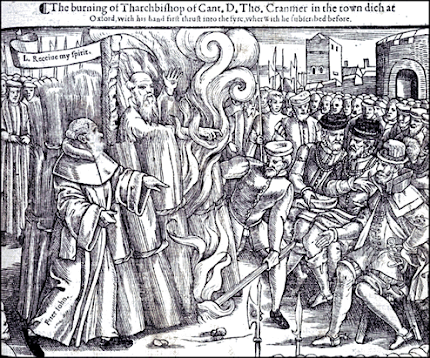
The burning of Tharchbishop of Cant. D. Tho. Cranmer in the town dich at Oxford, with his hand first thrust into the fyre, wherwith he subscribed before. [Click on the picture to see Cranmer's last words.]

Daily Bible Verse

Showing posts with label Masoretic Text. Show all posts

Thursday, October 08, 2026

Deuteronomy 32:43 in the ESV and the NRSV Has Two Emendations


A Textual Criticism Issue:  Should the Septuagint or the Dead Sea Scrolls Emend the Masoretic Text?

By Charlie J. Ray, M.Div.


Evangelical scholars today place a high priority on proving that the Bible is accurate according to the extant manuscript evidence that underlies the modern English translations today.  All parties in the disputes agree that only the original autographs are the actually inspired or God-breathed words of God.  There are numerous complications entailed by the Evangelical dogmatics which assert that modern textual criticism can reconstruct the original autographs of the Bible from the original language texts in Koine Greek and Masoretic Hebrew.

This paper will examine only one example of a textual criticism issue that compares a reading from the Hebrew Masoretic text of Deuteronomy 32:43 and Hebrews 1:6 of the Koine Greek New Testament.  Advocates of modern reasoned eclecticism claim that Hebrews 1:6 indicates that the Masoretic Text of Deuteronomy 32:43 shows that the Masoretes or the Jews edited out part of the verse during the transmission of the text or that it was somehow accidentally left out due to a scribal error.  The basis for this claim is that at least one manuscript tradition of the Septuagint has the exact phrasing of Hebrews 1:6 as it is recorded in the Greek New Testament.  A further assertion is that at least one Hebrew manuscript discovered at Qumran in the Dead Sea Scrolls has a version of Deuteronomy 32:43 that contains the missing phrase that is recorded in one edition of the Septuagint.  Allegedly, the Greek wording of the Septuagint verse in Deuteronomy 32:43 is an exact phrasing match to the wording in Hebrews 1:6.

It is my contention that this is not necessarily a proof that the Masoretic Text is in error and that the LXX and the DSS scrolls are a correction to the Hebrew of the MT.  I will approach this problem using logic as the basis for my critique of the reasoned eclecticism position.  The science of modern textual criticism is based on the fallacy of induction or the fallacy of asserting the consequent.  If there are allegedly errors in the Masoretic Text, there could be other explanations for the apparent discrepancies.  Presupposing that the apparent errors are actual errors, leads to asserting the consequent for the simple reason that it is just as possible that the LXX adds to the text of the Masoretic Hebrew text and that the Dead Sea Scrolls indicate that the text was altered to fit with the Septuagint reading.  There are, of course, other possible explanations for why the DSS manuscript has the alternate reading.  This paper will dig into the scholarship and offer an opinion at the end of this paper.

Since the English Standard Version of the Bible[1] is now the go to translation for many Reformed denominations and congregations, I want to first examine the translation of Deuteronomy 32:43 in the ESV and then talk about the footnotes in the 2002 edition and the 2025 edition.  There is at least one change in the footnotes for 2002 to 2025 in regard to Deuteronomy 32:43.

Apparently there was a matter of controversy over the footnotes in the ESV in earlier editions.  The 2002 edition reads as follows:

“Rejoice with him, O heavens; bow down to him, all gods,(4) for he avenges the blood of his children(5) and takes vengeance on his adversaries.  He repays those who hate him(6) and cleanses(7) his people’s land.”(8)[2]

The 2025 edition has the following text with footnotes:

“Rejoice with him, O heavens;(9) bow down to him, all gods,(10) for he avenges the blood of his children(11) and takes vengeance on his adversaries.  He repays those who hate him(12) and cleanses(13) his people’s land.”(14)[3]

The first thing to notice is that in the updated edition that there is an additional footnote following the word “heavens”.  The second thing to notice is that there is an additional phrase in the verse that is not included in other translations:

Rejoice, O ye nations, with his people: for he will avenge the blood of his servants, and will render vengeance to his adversaries, and will be merciful unto his land, and to his people. (Deut. 32:43 KJV)

The added phrase in the ESV is after footnotes 4 and 10 respectively in the above quote.  I will first examine those two footnotes and offer a critique before proceeding to the other footnotes.  Of the several translations that I checked, only the New Revised Standard Version adds the phrase “bow down to him, all gods.”  The only difference is that the NRSV translates “bow down” as “worship”.  The NASB 1995, the Legacy Standard Bible, the NIV, the NET, and even the RSV[4] all leave out the additional phrase.  Footnote #4 in the 2002 edition of the ESV reads: 

Dead Sea Scroll, Septuagint; Masoretic Text Rejoice his people, O nations[5]

            What is going on with this footnote?  Footnote 10 from the 2025 edition of the ESV reads as follows:

Masoretic Text lacks bow down to him, all gods,[6]

Notice that the comment from the 2002 edition has been changed to remove the acknowledgment that the sources of the phrase come from the reading in the Septuagint manuscripts and from a manuscript found at Qumran and the Dead Sea Scrolls.  Footnote #10 in the 2025 edition completely removes the information about the sources and simply says that the phrase is not included in the traditional Hebrew Masoretic Text.  Whether intentional or not, the footnote in the 2025 edition splits the verse in order to remove the information earlier admitted in the 2002 edition of the ESV.  I tend to think that this is intentional because Bible readers familiar with other translations, especially the KJV and the NKJV translations, will be quick to notice that the ESV emends the Masoretic Text by adding a verse found only in an obscure DSS manuscript discovered in Qumran sometime after 1947 in the original Hebrew.  Presumably, the fact that the DSS confirms a reading from one of the Greek manuscripts of the Septuagint tradition.  But the question is whether or not this proves that the Masoretic Text is wrong and somehow mistakenly dropped the phrase from the Hebrew text?

            To their credit, most of the modern translations do not emend Deuteronomy 32:43 using the DSS or the LXX.[7]  Next, I will examine the reasoning behind the decision of the ESV translation committee to emend the verse with the added phraseology and the theological implications that result from that conjectural emendation.  Also, why did the ESV change the translation of “nations” to “heavens”?   I will also examine that issue before moving on to the argument that Hebrews 1:6 is a direct quote from the LXX as stated by Greg Lanier.[8]

Hebrews 1: 5– 14 draws on multiple Old Testament passages to make exalted claims about Jesus’s divinity. Hebrews 1:6 is one of the most impressive, as the Father commands even angels to worship his “firstborn” son— a status no mere human could enjoy. But the quoted text is drawn from the longer Greek of Deuteronomy 32:43 and is not present in the Masoretic Text (recall table 5.3 in chap. 5). A portion is also attested in 4Q44 of the Dead Sea Scrolls. Thus, the Old Greek wording used in Hebrews may reflect an earlier and better text than the shorter Masoretic Text form (which is why some modern Bibles like the ESV present a composite form at Deut. 32:43). Whatever the case, this additional wording from Moses’s final song allows the author to drive home the huge difference between Jesus and angels.[9]

            Although Lanier and Ross were not part of the translation committee for the Old Testament of the ESV, the reasoning used is most likely the same.  For some reason moderate Evangelicals tend to repeat the arguments of theological liberals, baptizing them with their Evangelical views as if this justifies the liberal arguments.  So, exactly what is the LXX reading that is supposedly quoted in Hebrews 1:6 and how does that match up with the Hebrew reading from the DSS 4Q44?  The first thing to notice is that the LXX reads “sons of God,” not “angels”.  The other difference is that the Hebrew of DSS 4Q44 reads “gods”[10], not “sons of God”.  The Hebrew word is elohim, which is sometimes in reference to God and other times a reference to angels or false gods.

The discrepancies are numerous.  Furthermore, the emendation used to justify the reading in the ESV and the NRSV is based on a tiny fragment of a Hebrew parchment found at Qumran, which is dated to 50-1 B.C.  Instead of confirming Hebrews 1:6, the emendation that is lauded by Lanier and Ross in Deuteronomy 32:43 undermines the Masoretic Text as the standard and objective foundational text for the translation of the Old Testament from the Hebrew original.  A further discrepancy is that the LXX does not exactly match Hebrews 1:6 because in the New Testament the verse reads “angels” not “sons of God”.  In short, the supposed match between Hebrews 1:6, 4Q44, and the LXX is very loose and mostly based on conjecture and on an extremely small fragment of a Hebrew manuscript found in the DSS.  The only other evidence is the portion of the LXX found in Codex Vaticanus, which has both the Old Testament with apocrypha in Greek and the New Testament in Greek.[11]

A short rejoinder regarding the theological implications of the Lanier and Ross view is in order.  First, it does not logically follow that because the traditional Hebrew Masoretic Text is dated to the Leningrad Codex of about 1008 A.D. that it is therefore less trustworthy than the LXX or the DSS, including a fragment from 4Q44.  The Bomberg edition of the Hebrew Masoretic Text, which is preferred by the Trinitarian Bible Society and the Reformation Bible Society, is dated to the 15th century A.D.  Dr. Jeffrey Riddle argues that the tenacity of the text means that the readings that are preserved in the Bomberg edition of the Hebrew Masoretic Text were providentially kept pure in all ages because those were the readings that God caused the church to accept as canonical Scripture over the centuries.

Another question arises concerning Hebrews 1:6. Is it really necessary to make conjectures as to how the apostolic writer came to write this verse?  What we do know is that the text has been universally accepted as the God-breathed and written word of God from the beginning.  Just as the apostle Paul quoted pagan poets in the book of Acts without implying that the writings of the poets were inspired, so the writer of Hebrews could possibly be aware of the LXX without viewing it as replacing the Masoretic Text.  A further possibility is that the writer of Hebrews viewed the allusion to the LXX as theological support for the deity of Christ without regarding that translation as a correction of the extant Hebrew of his day.  In other words, it is a huge jump in logic to presuppose that the writer of Hebrews had access to an earlier Hebrew manuscript that agreed with the LXX.  This is an entirely subjective conjecture on the part of Lanier and Ross.

Furthermore, there are other emendations added to the text of Deuteronomy 32:43 which Lanier and Ross completely ignore.  The MT reads goyim or “nations”, not “heavens”.[12]  Another entire clause gets added from the LXX: 

6 Dead Sea Scroll, Septuagint; Masoretic Text lacks He repays those who hate him[13] 

None of the modern translations that translate from the MT add this clause to the verse.  Only the ESV and the NRSV add the verse as far as I can tell.  This is another reason that I do not recommend the ESV.  Not only is it based on the RSV, a liberal translation of the Bible, but it goes even further astray from the RSV by emending the Old Testament based on conjectural readings from the DSS and the LXX.  Even the RSV of 1952 did not go that far—at least in regard to Deuteronomy 32:43.  Finally, the phrase “bow down to Him all gods” is a bias towards henotheism, or the acknowledgment that other gods exist in reality rather than simply being either empty idols or demonic fallen angels.  The Bible in both the Old Testament and the New Testament rejects the ancient near eastern idea of henotheism.  There is only one God.  All of the others are either idols with no real god behind them or they are viewed as demons under God's control. 


[1] All Scripture references in this paper refer to the King James Version, 1900 edition, unless otherwise noted.  References from the English Standard Version are only pertaining to the topic of this paper, namely textual criticism, translation issues, and the footnotes from the 2002 and 2025 editions of the English Standard Version.

[2] English Standard Version.  2001. (Wheaton: Good News, 2002).  Thinline edition. 

[3] ESV, Ibid.  2025 edition.  The footnote numbering is different.

[4] The RSV was published in 1952 before the Dead Sea Scrolls became popularized.

[5] ESV, 2002 edition.

[6] Ibid., 2025 edition.

[7] Hereafter the Dead Sea Scrolls will be abbreviated to DSS, and the Septuagint will be referenced as LXX.

[8] “Hebrews 1:6 (Deuteronomy 32:43) Again, when he brings the firstborn into the world, he says, ‘Let all God’s angels worship him [Heb. omits phrase].’”  Lanier, Greg; Ross, William A.. The Septuagint (p. 157). Crossway. Kindle Edition.

[9] Ibid., pp. 157-158.

[10] See:  https://dssenglishbible.com/scroll4Q44.htm

[11] 0240  Dt 32:43–33:11: Image 1.  Brannan, Rick, ed. Manuscripts of the Septuagint. Bellingham, WA: Lexham Press, 2020. Print. Manuscripts of the Bible.

[12] ESV 2025, footnote 9.

[13] ESV 2002, footnote 6.

Wednesday, February 12, 2025

Update: Biblical Inerrancy


I recently posted an updated editor's note on an old post here:

[Editor's note:

Since I wrote this article, I came to a different conclusion.  Apparently, 1 John 5:7 does have several Byzantine texts supporting that reading.  See:  First John 5:7.  The article is written by a proponent of the reasoned ecleticism approach to textual criticism.  Notice that he deceptively mentions that only one Byzantine manuscript dating to 1352 A.D. contains the Comma Johanneum "in the text."  But then he acknowledges several other ancient mss where it is included in the margins of the page.  This could happen as a commentary on the text.  That's what the textual critics want you to believe.  But is this a common practice in those mss where it is written in the margins?  No one comments on that aspect of the evidence.  The other possibility is that the scribe accidentally left that part of the verse out and it was written in later in the margins.  Remember that there was no verse numbering at that time yet.  The bottom line here is that the Westminster Confession 1:8 referred to providential preservation of the Masoretic Text and the Textus Receptus as the original languages that were to settle all matters of faith and practice.  I recommend reading the Reformation Bible Society's position on providential preservation.  February 12, 2025.]

You can read the original article with the editor's note here:  


Biblical Inerrancy, Plenary Verbal Inspiration, and Textual Criticism: Is There an Apparent Contradiction?


Friday, October 18, 2024

Logical Problems with Textual Criticism as Related to Biblical Inerrancy


Logical Problems with Textual Criticism as Related to Biblical Inerrancy


The ongoing disputes between the reasoned eclecticism text critics and the Byzantine Majority text critics has led to something of a comeback of the defense of the traditional and confessional view that the Masoretic Text and the Textus Receptus is the best representation of what the original autographs contained.  Some in the modern textual criticism camp, also known as reasoned eclecticism, have accused the confessional view supporters of being part of the King James Only controversy.  However, the confessionalists uphold only that the Westminster Confession of Faith affirms that the original Hebrew and Greek texts are the authentically preserved copies of what the original autographs contained:


VIII. The Old Testament in Hebrew (which was the native language of the people of God of old), and the New Testament in Greek (which at the time of the writing of it was most generally known to the nations), being immediately inspired by God, and by his singular care and providence kept pure in all ages, are therefore authentical;(a) so as in all controversies of religion the Church is finally to appeal unto them.(b) But because these original tongues are not known to all the people of God who have right unto, and interest in the Scriptures, and are commanded, in the fear of God, to read and search them,(c) therefore they are to be translated into the vulgar language of every nation unto which they come,(d) that the Word of God dwelling plentifully in all, they may worship him in an acceptable manner,(e) and, through patience and comfort of the Scriptures, may have hope.(f) 

[Westminster Confession of Faith.  Chapter 1.  Of the Holy Scripture.  Paragraph VIII.]


The recently formed Reformation Bible Society is in agreement with the Trinitarian Bible Society on the doctrine of the preservation of the authentical text.  The apparent controversy also includes the fact that the Reformation Bible Society and the Trinitarian Bible Society both prefer the authorized King James translation of the biblical texts.  Furthermore, the RBS and the TBS both affirm the Bomberg edition of the Masoretic Hebrew text and the Scrivener’s edition of the Textus Receptus Greek New Testament as the authoritative biblical texts.  There are very few differences between the Stephanus edition of the Textus Receptus and the Scrivener’s edition.  There are also a few minor differences between the Biblia Hebraica Stuttgartensia edition of the Hebrew Old Testament and the Bomberg edition, which dates to the Reformation period.

However, I wish to discuss the more pressing issue of biblical inerrancy in regards to these disputes.  This problem also relates to the dispute about the archetypal knowledge of God, known only to Himself, and the ectypal knowledge of God as it is revealed to humanity.  Suffice it to say that biblical revelation or special revelation is in the ectypal realm of epistemology.  The dispute between the late Dr. Gordon H. Clark and the late Dr. Cornelius Van Til had to do with this issue, although Gordon Clark never directly addressed the archetypal/ectypal distinction.  Clark’s view was that the Bible is univocally the very words of God, while Van Til argued that the Bible is only analogically the inspired word of God.  I have written numerous articles on my blog on this topic, so I will not go into great detail here.  Clark’s major concern was that the theologians in the Van Til camp had unwittingly crossed over into the liberal views promoted by neo-orthodoxy and Barthianism.  Emil Brunner was also a controversial theologian of neo-orthodoxy, though he disagreed with Barth’s rejection of natural revelation.

A further bit of information about Dr. Gordon H. Clark is that he was one of the founders of the Evangelical Theological Society in 1949.  In more recent times some critics of the society have said that the requirement of a commitment to biblical inerrancy to join the ETS is not meaningful because there is no other doctrinal statement to affirm in order to become a member.  The official doctrinal basis is stated as,

“The Bible alone, and the Bible in its entirety, is the Word of God written and is therefore inerrant in the autographs. God is a Trinity, Father, Son, and Holy Spirit, each an uncreated person, one in essence, equal in power and glory.”

[The Evangelical Theological Society.]

In fairness to Dr. Clark and the other founders, at the time of the establishment of the ETS, there were far less doctrinal differences between supporters of biblical inerrancy than what exists today.  Unfortunately, some modern members of the ETS society are less than orthodox by some accounts.  Moreover, a weakness of the Reformation Bible Society is that there is no mention of any requirement to affirm biblical inerrancy, since none of the required confessional statements mention inerrancy specifically.  The perceived advantage of limiting the ETS statement to biblical inerrancy and the trinity was perhaps misplaced.  However, the knife cuts both ways; The Reformation Bible Society should have some requirement for adherence to the fundamentals of the Evangelical faith in addition to the confessional requirements.  This is true because at the time of the Westminster Confession of Faith and other confessional statements plenary verbal inspiration and biblical inerrancy were not the issues that they are today.  In short, the problem goes way beyond the dispute over the providential preservation of the original autographs in the extant apographs.  The inspiration and the infallibility and the inerrancy of Scripture are at stake as well.

The accusation of some opponents of the Trinitarian Bible Society and the Reformation Bible Society that the two societies are essentially KJV only advocates is misleading.  The reason is that the KJVO or King James Only movement affirms that the KJV is an inspired and inerrant translation of the Bible from the original Hebrew and Greek.  The RBS and the TBS societies do not make that assertion.  They affirm that the Masoretic Text and the Textus Receptus authentically preserve the original autographs.  But even this distinction avoids a problem of all three major Evangelical positions.  The three major positions are:  1)  reasoned eclecticism;  2)  reasoned majority text reconstruction; and 3) the providentially preserved and authentical Hebrew and Greek manuscripts.  The problem of all three positions is that if only the original autographs--which no one possesses today--are the inspired autographs, then it logically follows that nothing we have today is the exact reduplication of the original inspired and inerrant autographs, including the “authentical” text. 

Although the confession affirms that the authentical text has been kept pure in all ages, it does not show how that reduplicates the originally inspired autographs.  By all accounts, there are minor differences or variants even between the Bomberg Masoretic Text and the later editions based on the Leningrad Masoretic Text such as the Biblia Hebraica Stuttgartensia.  Critics of the Textus Receptus have pointed out that there are several different editions dating back to the Complutensian Polyglot of 1514 and at least 5 editions of Erasmus’ Textus Receptus.  (See: Editions of the Textus Receptus.)   Additionally, there are variants between the many editions of the Textus Receptus of the Greek New Testament.  (See:  Variants between the Textus Receptus and the KJV.  See also:  TR variants.)

The problem here is that if we are to affirm the plenary verbal inspiration of the Bible and the inerrancy of the Bible, there are obviously spelling differences at a bare minimum, not counting the variations in wording.  The Bible obviously implies that there are no spelling errors in the text:

For verily I say unto you, Till heaven and earth pass, one jot or one tittle shall in no wise pass from the law, till all be fulfilled. (Matthew 5:18 KJV)

There are fewer variants in the editions of the Hebrew Masoretic Text, but variants do exist.  I do not have access to a Bomberg edition of the Hebrew Masoretic Text.  However, in the textual apparatus of the Biblia Hebraica Stuttgartensia there is a textual variant that supports the King James translation of Psalm 22:16.  Liberal critics have often attacked the KJV as using the Septuagint translation of the verse to support the prophecy of the crucifixion.  However, the variant reads as a verb for pierced rather than the word for lion.  The difference is between a yod, which would make the word mean lion, and a waw, which would render the Hebrew word as a verb, meaning pierced or dug. 

(Ps. 22:17 WTT)  כִּ֥י סְבָב֗וּנִי כְּלָ֫בִ֥ים עֲדַ֣ת מְ֭רֵעִים  הִקִּיפ֑וּנִי כָּ֜אֲרִ֗י יָדַ֥י וְרַגְלָֽי׃

The apparatus for the BHS lists this variant from the second edition of Kennicott, which is from the Bomberg edition of the Hebrew Masoretic Text:  כארוּ

Most of this evidence points to the fact that no one today has any original copy of the autographs.  Therefore, there must be a decision made as to the standard text of the Hebrew and Greek Bibles used for translation.  The Westminster Confession of Faith 1647 seems to indicate that that would be the first editions of the Masoretic Text available in that time and the editions of the Textus Receptus available to the Westminster divines of that period.  The variants in these editions are much fewer in number than either the reasoned eclecticism view of the modern textual critics or the Byzantine Majority approach of Maurice Robinson and William Pierpont.  In short, the critics who say that the KJV utilized the Greek translation of the Old Testament called the Septuagint or LXX to translate Psalm 22:16 are wrong.  The Bomberg edition of the Masoretic Text shows clearly that the KJV translators used only the Masoretic Text for the translation of this verse.

Furthermore, I would conclude that everyone involved in all three major positions are evading the fact that they are starting with unproved starting points.  Dr. Gordon H. Clark called these axioms.  He once said that everyone is a fideist.  By that he meant that everyone has presuppositions or unproved starting points.  Some critics call this circular reasoning.  But if so, then everyone is guilty of circular reasoning at some point in their arguments.  Clark was simply being honest.  Also, Clark once asked the question that if the atheist or the liberal has unproved starting points, why criticize the Christian for starting with the Bible as the main axiom?

Most critics of the late Dr. Gordon H. Clark’s apologetics fail to make a crucial distinction between his theological arguments and his apologetical arguments.  In some instances, Clark, utilizing his training in philosophy, uses a socratic method of argument.  In such instances, Clark liked to use the reductio ad absurdum approach.  This approach reduces the opponent’s objections to absurdity.  While Clark did not always build his own case to a point of undeniable proof, he was often successful at showing how the other side was blatantly contradictory.  On the confessional and fundamental doctrines and theology of the Christian faith as a system of propositional truth, Dr. Clark was without doubt extremely orthodox.  Clark, however, admitted that he sometimes made mistakes in logic.  Apologetics can get extremely detailed.  Clark liked to point out that there are many battle fronts in a war.  Not every individual can fight every battle front; so, there are limitations on what one person can do in one lifetime.  This does not even touch on the fact that many persons change their views on particular issues over time.  This was true of the church father, Augustine of Hippo, as well; his Retractions are evidence of this.

The short answer to all of this is that the Scriptures are self-authenticating.  In other words, it is a matter of faith to believe that what you are reading is God’s inspired, inerrant and infallible word.  The Westminster Confession of Faith says as much:

V. We may be moved and induced by the testimony of the Church to an high and reverent esteem of the holy Scripture;(a) and the heavenliness of the matter, the efficacy of the doctrine, the majesty of the style, the consent of all the parts, the scope of the whole (which is to give all glory to God), the full discovery it makes of the only way of man’s salvation, the many other incomparable excellencies, and the entire perfection thereof, are arguments whereby it doth abundantly evidence itself to be the Word of God; yet, notwithstanding, our full persuasion and assurance of the infallible truth, and divine authority thereof, is from the inward work of the Holy Spirit, bearing witness by and with the Word in our hearts.(b)

Westminster Confession of Faith:  Chapter 1, paragraph 5.  Of the Holy Scripture.

Notice here that the testimony of the church moves us to this conclusion.  Also, we learn from reading the Bible that the doctrine is efficacious.  The style is majestic.  All of the parts of Scripture consent to a unity, a scope of the whole.  “Notwithstanding, our full persuasion and assurance of the infallible truth, and divine authority thereof, is from the inward work of the Holy Spirit, bearing witness by and with the Word in our hearts.” 

Dr. Clark was once asked how the Christian knows that the Bible is the Word of God and not the Koran?  His answer was that the Christian has been born again and the Muslim has not been born again.  Can we prove any of this using evidentialism, empiricism, or unregenerate reasoning?  The answer is obviously no.

Herein lies another problem for the reasoned eclecticism utilized by Dr. James White, Dr. Daniel Wallace, and others.  The problem is that they are placing another authority above Scripture, namely the alleged “science” of textual criticism.  Is the Christian supposed to suspend his or her faith commitments in order to prove or disprove the portions of the Bible that critics question?  If so, then the Bible itself is always subject to question.  If there are one or two errors in the Bible, then the entire Bible is in question.

This raises another question:  which Bible translation is self-authenticating?  I for one do not trust the reasoned eclectic approach to Scripture.  I read mostly the New King James Version or the King James Version of the Bible.  That’s because the authorized King James Version has stood the test of time, despite some translation issues here and there.  Why would I trust a translation that has to constantly be revised according to an ever-changing science of textual criticism which never arrives at the truth?  Why presuppose that there are errors in the Bible?  A believer should instead presuppose that the Bible is God-breathed, without error, and infallible in every doctrinal point, especially the doctrine that God is the ultimate author of every single word of it.  Does the plowboy or the housewife need to read Greek and Hebrew or study textual criticism?  I doubt it.  Instead of questioning everything as James White and Dan Wallace does, why can’t we just presuppose that the confessional view established in Westminster Confession chapter 1 is true?  In that case, we need not consult modern translations to find out what the NKJV or the KJV and other translations based on the confessional view got wrong.  Presuppositionalism does not need to prove that the Bible is true.  Although technically speaking no translation is totally without error, we can trust that insofar as the KJV is faithful to the authentical texts in the Masoretic Text and the Textus Receptus it is the inspired and inerrant word of God for the reader.  The KJV is an acceptable translation for public preaching and teaching.

At some point the Christian must move on from evidentialism to a position of being convinced that the Bible is the inspired Word of God.  Without the Bible there is no Christianity at all.


The words of the LORD are pure words: as silver tried in a furnace of earth, purified seven times. 7 Thou shalt keep them, O LORD, thou shalt preserve them from this generation for ever. (Ps. 12:6-7 KJV)

In a future post I will examine the Chicago Statement on Biblical Inerrancy and point out what I think are weaknesses or errors in that document.  There needs to be more clarification on the doctrines of preservation, inspiration, and the infallibility and inerrancy of Scripture.


Support Reasonable Christian Ministries with your generous donation.