>

Martyred for the Gospel

Martyred for the Gospel
The burning of Tharchbishop of Cant. D. Tho. Cranmer in the town dich at Oxford, with his hand first thrust into the fyre, wherwith he subscribed before. [Click on the picture to see Cranmer's last words.]

Daily Bible Verse

Showing posts with label Textual Criticism. Show all posts

Wednesday, February 12, 2025

Update: Biblical Inerrancy


I recently posted an updated editor's note on an old post here:

[Editor's note:

Since I wrote this article, I came to a different conclusion.  Apparently, 1 John 5:7 does have several Byzantine texts supporting that reading.  See:  First John 5:7.  The article is written by a proponent of the reasoned ecleticism approach to textual criticism.  Notice that he deceptively mentions that only one Byzantine manuscript dating to 1352 A.D. contains the Comma Johanneum "in the text."  But then he acknowledges several other ancient mss where it is included in the margins of the page.  This could happen as a commentary on the text.  That's what the textual critics want you to believe.  But is this a common practice in those mss where it is written in the margins?  No one comments on that aspect of the evidence.  The other possibility is that the scribe accidentally left that part of the verse out and it was written in later in the margins.  Remember that there was no verse numbering at that time yet.  The bottom line here is that the Westminster Confession 1:8 referred to providential preservation of the Masoretic Text and the Textus Receptus as the original languages that were to settle all matters of faith and practice.  I recommend reading the Reformation Bible Society's position on providential preservation.  February 12, 2025.]

You can read the original article with the editor's note here:  


Biblical Inerrancy, Plenary Verbal Inspiration, and Textual Criticism: Is There an Apparent Contradiction?


Monday, December 02, 2024

Is the Doctrine of Common Grace Biblical or Confessional?


Is the Doctrine of Common Grace Biblical or Confessional?


“To the reprobate the preaching of the gospel is no favor because as it increases their knowledge, it increases their responsibility and condemnation. Better if they had never heard the gospel. One can reply, nonetheless, that in some cases the preaching of the gospel may restrain an evil man from some of his evil ways. Since therefore sins are not all equal, and since some are punished with many stripes, but others with few, the preaching of the gospel results in the lessening of the punishment. Thus preaching would be a small favor, a modicum of grace. We note it and pass on.”  Dr. Gordon H. Clark  (See:  A Place for Thoughts:  Gordon Clark on “Common Grace,” by Doug Douma).


To discuss the issue of the reputedly “reformed” doctrine of common grace is a convoluted and complicated matter.  Often it is hard for the layperson to understand exactly what the controversy is about.  Basically, it comes down to a controversial doctrinal statement issued by the Christian Reformed Church in 1924 at Kalamazoo, Michigan.  That document outlined what is identified as the Three Points of Common Grace.  You can access a direct quote of the three points and subsequent critique of the three points at the Protestant Reformed Churches in America website here:  The Three Points of Common Grace.

The first thing I would like to point out is that common grace often is used to justify accommodation with Arminianism, and worse, liberal theology.  The point of compromise here is that even theological liberals and other reprobate persons allegedly can do civil good by practicing the discipline of liberal scholarship.  But, this is hard to understand because the agenda of theological liberals and other ungodly scholars is to undermine the Bible, not to support it as special revelation from God.  A good example of this is the apostasy of Bart Ehrman, who attended Princeton Theological Seminary in order to study textual criticism.  Ehrman was once an Evangelical Christian who attended Moody Bible Institute in Chicago, Illinois.  Being weak in his faith, he decided that the Bible could not be trusted because of the many errors in the extant Greek manuscripts of the New Testament.  The Evangelical position is that God has providentially preserved what was contained in the original autographs, even though the originals are no longer extant.

This is a significant issue because if we no longer have the original autographs, then logically speaking none of the extant manuscripts are without error or infallible.  Using the axioms or principles of reasoned eclecticism, the Bible is alleged to be a reconstruction of the original autographs and only in that sense can any modern translation of the Bible be considered infallible or inerrant.  Any apparent errors are to be attributed to the translation from the original languages or to errors in transmission of the original Greek or Hebrew manuscripts which are only preserved in copies of the copies passed down through hundreds and thousands of years.  The debate then degenerates into which manuscripts are best and who has the logical upper hand in making those determinations?  In short, the science of textual criticism is alleged to be a part of the common grace of God since many of the men who invented the basic principles of the science were either part of the Renaissance or the Enlightenment.  From there we get the 19th century scholars of Westcott and Hort, who then influenced subsequent schools of textual criticism that went in other directions.

One of the opponents of the reasoned eclecticism approach to textual criticism used to be part of the reasoned eclecticism approach.  His name is Maurice Robinson.  His main objection to that approach is that the reasoned eclecticism approach often creates verses by splicing together fragments and variants to create verses that do not exist in any extant manuscripts whatsoever. 

Another issue with common grace is the third point mentioned above that the reprobate can do civic good.  Theological liberals prior to the first world war were optimistic that the entire world could be harmonized into a peaceful global community.  Where have we heard that one before?  After WWI, that optimism changed to pessimism.  Now, apparently, the pendulum has swung in the opposite direction.  Part of the blame for this would be the theology of Abraham Kuyper, the Dutch Reformed theologian turned politician.  Kuyper gave his Stone Lectures at Princeton Theological Seminary in 1898.  The vast majority of modern Reformed denominations support the compromised theology of the Three Points of Common Grace.  This compromise can be traced all the way back to the Stone Lectures.  It could even be argued that the Stone Lectures were the genetic cause of the eventual fall of the Presbyterian Church in the United States into apostasy.  The Old Princeton stalwarts became infatuated with creating a Calvinist cultural reformation worldwide such that eventually the emphasis on solid biblical and systematic theology fell to the wayside in order to facilitate missions and evangelism at the cost of special revelation and biblical truth.  

Even otherwise solid theologians like Benjamin B. Warfield and Charles Hodge were caught up in theological compromise.  Warfield advocated for reasoned eclecticism and the Westcott and Hort approach to New Testament textual criticism, while Hodge fell to the compromise that Christ in some sense died not only for the elect, but also for the reprobate.  Hodge’s reasoning was that common grace was somehow purchased on the cross for the entire world, not just for the irresistible grace and the efficacious atonement which propitiated the wrath of God against the elect.

A postmillennialist view of reforming the culture seems to lead inevitably towards an overly optimistic agenda to transform the culture.  I would contend that this naivete has led to accommodation to culture instead of a prophetic calling out of the culture, which is in manifold rebellion against the moral law of God as summarized in the Decalogue or Ten Commandments.  A further problem with this is that this postmillennialism is combined with a theonomic view of evangelization and mission, which leads to a co-belligerent cooperation with papists, Arminians, Lutherans and various other opponents of a Reformed worldview.  As the saying goes, a little leaven leaveneth the whole lump. 

While it is true that Old Princeton was for a time a bastion of conservative and reformed theology, a small compromise leads to later generations which compromise a little more, and so on until three or four generations later there is a major compromise that leads to apostasy.  It was only a period of forty years or so until the 1940s when the foreign mission board of the Presbyterian Church of the United States went in a completely liberal direction, and J. Gresham Machen and his followers were forced out of the PCUS for refusing to support the foreign mission board.  Machen, along with Gordon H. Clark, Cornelius Van Til and others helped to found Westminster Theological Seminary in Philadelphia, Pennsylvania.  Unfortunately, Van Til, Ned Stonehouse, and John Murray decided to oppose Dr. Gordon H. Clark’s ordination with the newly formed Orthodox Presbyterian Church because of Clark’s disagreement with common grace, the free offer of the Gospel, and the well meant offer of the Gospel. Van Til, Stonehouse, and Murray rejected propositional revelation as the basis for systematic theology.  They redefined Francis Turretin’s doctrine of archetypal and ectypal knowledge so that they unwittingly affirmed some aspects of neo-orthodoxy.  Their emphasis on an analogical system of theology in the Westminster Standards went well beyond the traditional view of Scripture as the analogy of faith, meaning that Scripture interprets Scripture.  Van Til said that all Scripture is apparently contradictory.  Gordon Clark’s response to this in an audio lecture cuts to the heart of the issue:

What are we to make of his statement that “all teaching of Scripture is apparently contradictory?” Now, Van Til said omnipotence is not self-contradictory, but creation and responsibility are contradictory. And, also, he said all teaching of scripture is apparently contradictory. Which would of course include the idea of omnipotence. 

I might say that the statement “David was King of Israel” is not apparently contradictory to me. 

[Audio Transcript:  (From the Gordon Conwell Lectures on Apologetics, 1981.)  “John Frame and Cornelius Van Til.”  P. 11.  Posted at:  The Gordon H. Clark Foundation.]

I would contend that the doctrine of common grace is a contradiction of the biblical doctrine of divine sovereignty by implication.  The implication of the doctrine is that God gives a non-salvific grace to those whom He has decreed to reprobation before the foundation of the world.  This is a mere charade if it is intended to solve the problem of evil.  For billions of human beings of all ages suffer the effects of the fall of Adam, yet God does not relieve their suffering.  So, this would contradict the proponents of common grace who misuse the doctrine of providence to show that God loves the reprobate.  (Matthew 5:43-48 KJV).  But, David, says that we should hate those who blaspheme God:

Surely thou wilt slay the wicked, O God: depart from me therefore, ye bloody men. 20 For they speak against thee wickedly, and thine enemies take thy name in vain. 21 Do not I hate them, O LORD, that hate thee? and am not I grieved with those that rise up against thee? 22 I hate them with perfect hatred: I count them mine enemies. 23 Search me, O God, and know my heart: try me, and know my thoughts: 24 And see if there be any wicked way in me, and lead me in the way everlasting. (Ps. 139:19-24 KJV)

I would contend that it is extremely naïve to promote common grace as any kind of good whatsoever.  The Protestant Reformed Churches in America have rightly pointed out that this doctrine leads to Arminianism and Pelagianism.  It looks the other way when the Bible specifically says that the wicked are the enemies of God:

The foolish shall not stand in thy sight: thou hatest all workers of iniquity. 6 Thou shalt destroy them that speak leasing: the LORD will abhor the bloody and deceitful man. (Ps. 5:5-6 KJV)

The LORD trieth the righteous: but the wicked and him that loveth violence his soul hateth. (Ps. 11:5 KJV)

 As it is written, Jacob have I loved, but Esau have I hated. (Rom. 9:13 KJV)


Tuesday, October 22, 2024

The Judgment Seat of Christ or God? A Brief Study of Romans 14:10


The Judgment Seat of Christ or the Judgment Seat of God?  A Brief Study of Romans 14:10


Although I am not a textual critic, I do have some tools at my disposal.  Without doubt the internet’s availability of online resources is a huge help.  One of the  most difficult issues for anyone who wants to study a textual critical issue in the Bible is deciphering the textual critical symbols and notes in the footnote apparatus of critical editions of the Greek New Testament.

I became interested in studying this verse after sitting in church on October 13th, 2024 and hearing the reading of the text for a sermon given.  I have a habit of following along in my King James Version just to see of any textual variants popup during the reading of the English Standard Version, which is the preferred translation at the church I have been attending.  The verse that stood out on this Lord’s Day was Romans 14:10.  A further problem with the ESV is that the 2002 edition does not even have a footnote to indicate that the text has been changed.  I will quote it here in both translations for your reading:

“But why dost thou judge thy brother? or why dost thou set at nought thy brother? for we shall all stand before the judgment seat of Christ.” (Romans 14:10, KJV 1900)

“Why do you pass judgment on your brother? Or you, why do you despise your brother? For we will all stand before the judgment seat of God;” (Romans 14:10, ESV)

The Greek readings are as follows:

“σὺ δὲ τί κρίνεις τὸν ἀδελφόν σου; ἢ καὶ σὺ τί ἐξουθενεῖς τὸν ἀδελφόν σου; πάντες γὰρ παραστησόμεθα τῷ βήματι τοῦ Χριστοῦ.” (Romans 14:10, Scrivener 1881)

“συ δε τι κρινεις τον αδελφον σου η και συ τι εξουθενεις τον αδελφον σου παντες γαρ παραστησομεθα τω βηματι του χριστου” (Romans 14:10, Stephens 1550) 

“συ δε τι κρινεις τον αδελφον σου η και συ τι εξουθενεις τον αδελφον σου παντες γαρ παραστησομεθα τω βηματι του χριστου” (Romans 14:10, BYZ)


“Σὺ δὲ τί κρίνεις τὸν ἀδελφόν σου; ἢ καὶ σὺ τί ἐξουθενεῖς τὸν ἀδελφόν σου; πάντες γὰρ παραστησόμεθα τῷ βήματι τοῦ θεοῦ,” (Romans 14:10, NA28)

The textual evidence supporting the readings in the critical editions of the Greek New Testament is not as well attested as they pretend, because the critics are using the reasoned eclecticism approach to textual criticism.  That method involves numerous presupposed principles or axioms of interpretation and reconstruction.  The chosen reading of God rather than Christ has fewer manuscripts, though the critics prefer so-called “earlier” evidences.  In fact, Sinaiticus has the Christ reading, not God.  But the critics say that Sinaiticus has an earlier reading of God which has been corrected by a later reading of Sinaiticus.  Metzger indicates that Sinaiticus was written on parchment.  Apparently, this means that the parchment was erased and written over so that the Greek word for God was replaced by the word for Christ.

It took some time for me to figure this out because the apparatus symbols can be hard to understand without researching the introductions to the various critical editions of the Greek New Testament.  For example, the United Bible Societies, 4th edition, which I have in hardcopy, lists the evidences for their preferred reading of God first, and then the list of evidences for the reading of Christ second.  The hardcopy I have of the 26th edition of the Nestle-Aland Greek New Testament lists the readings for Christ first and the readings for God second, although the preferred reading in the 26th edition is also God, not Christ.  However, the symbols determine how the apparatus is to be interpreted. 

To save time, I will show you the textual note in the 28th edition of the Nestle-Aland Greek New Testament, and then explain how I concluded that the critics believe that Sinaiticus was altered by a later redactor:


Χριστου א2 C2 L P Ψ 048. 0209. 33. 81. 104. 365. 1175. 1241. 1505. 1881 [Majority Text symbol] r vgcl sy; Polyc McionT Ambst

¦ txt א* A B C* D F G 630. 1506. 1739 lat co

Beginning at the far left of the quote, you can see the symbol.  This indicates that the Greek word immediately following is indicated in other manuscripts with variants.  Immediately after that we see the Hebrew letter for aleph with a superscript number 2:  א2.  The aleph is the symbol for Codex Sinaiticus.  The subscript number 2 indicates that this is a second corrector, meaning that the critics think that the word for God was erased and replaced by the word for Christ.  Now if you look at the line underneath you will see the aleph symbol with an asterisk: א*.  The abbreviation "txt" indicates that this is the reading chosen for the main body of the eclectic Greek New Testament.  The asterisk is supposed to indicate that this is the original reading in the autographs using the principles or axioms of the science of textual criticism:


The original reading of a manuscript (when the reading of a manuscript has been corrected); correlative with c or 1,2,3.  (Footnote from the UBS 5th edition).


The other symbols in both lines are other manuscript evidences.  As you can see, the list of evidences supporting the reading of Christ is much longer, while the bottom line shows only a few manuscripts that support the critical edition of the Greek New Testament rather than the Textus Receptus or the Byzantine reading.

But why is this the case?  I’m glad you asked.  According to Metzger, this is because the older and better manuscripts support the God reading rather than the Christ reading:


14:10     θεοῦ {B}

At an early date (Marcion Polycarp Tertullian Origen) the reading θεοῦ, which is supported by the best witnesses (א* A B C* D G 1739 al), was supplanted by Χριστοῦ, probably because of influence from 2 Cor 5:10 (ἔμπροσθεν τοῦ βήματος τοῦ Χριστοῦ).

Metzger, Bruce Manning, United Bible Societies. A Textual Commentary on the Greek New Testament, Second Edition a Companion Volume to the United Bible Societies’ Greek New Testament (4th Rev. Ed.). London; New York: United Bible Societies, 1994. Print.

I am using the Logos edition here.  However, I do have the 2nd edition of the same work in hardcopy, and the quote is identical.  You will note that Metzger does not do anything other than assert that his witnesses are the best witnesses.  And even the reading of theou or θεοῦ is at best rated only with a B, meaning that only three out of the four committee members voted that God is the original word there.  It’s also interesting that Metzger admits that other passages in the New Testament support the reading of Christ.  Another problem with Metzger’s comment is that the 28th edition of the NA Greek New Testament says that Polycarp, Marcion and Tertullian all support the reading of Christ, not God.  So Metzger deliberately equivocates by placing in parentheses the church fathers as if they support the critical reading, which they do not.  Ambrosiaster, another church father, also supports the reading of Christ.  Marcion was reported by Tertullian as reading this verse with the word Christ.  Although the church fathers are not the final authority, the fact that 2nd and 3rd century church fathers support the received text reading is important.

Notice that the context of 2 Corinthians 5:10 and Romans 14:10 both deal with Christians who are members of the visible church.  The great white throne judgment in Revelation 20:11-15  deals with the general judgment of the wicked to execute their just punishments.  The vast majority of Evangelicals have interpreted the judgment seat of Christ to mean that elect Christians who belong to the invisible church will be judged according to their rewards in heaven.

Even the great Princeton theologian, Charles Hodge, although studied in textual criticism, judged that the original autographs read “Christ” and not “God”:


Instead of χριστοῦ, at the close verse, the MSS. A. D. E. F. G. read θεοῦ, which is adopted by Mill, Lachmann, and Tischendorf. The common reading is supported by the great majority of the MSS., most of the ancient versions, and almost all the Fathers. It is therefore retained by most critical editors.

Hodge, Charles. A Commentary on the Epistle to the Romans. New Edition. Grand Rapids, MI: Louis Kregel, 1882. Print.  [Footnote on Romans 14:10].


In view of the fact that the various editions of the Textus Receptus read Christ, and the fact that the Byzantine Majority Text reads the same, I judge that by God’s providence the Reformers were led to accept the received text as the original.  The reasoned eclecticism of the “science” of textual criticism cannot use reason to reconstruct the originals without using presupposed principles or axioms imposed on the process.  How do we know that the shorter and more rough reading is the original? 

As I pointed out in an earlier blog post, textual criticism is an external authority imposed on the text.  Scripture itself is self-authenticating.  This means that the plowboy and the housewife can trust what God has in His providence given us in the Textus Receptus of the Greek New Testament and the Masoretic Text of the Hebrew Old Testament.  Furthermore, the King James translation, although not itself inspired, is faithful to the original languages and is therefore superior to modern translations which alter the readings of the Bible to fit with liberal presuppositions and specuations such as the one offered by Bruce Metzger above.  The King James authorized version has been the most read and most used translation of the Bible for over 400 years.  While it is sometimes helpful to laypersons to read more modern translations, they should do so with the awareness of where those translations came from and what the biases of the translators are.  I recommend the New King James Version as the best comparison Bible.

A further advantage of reading the King James Version or the perhaps the Geneva Bible, is that the proof texts in the Reformed confessions, like the 1647 Edinburgh edition of the Westminster Confession of Faith, are more in sync with what the Westminster divines were reading in their English translations.  This is also true of the 1647 editions of the Larger and Shorter Catechisms.

May the peace of God be with you all.


Friday, October 18, 2024

Logical Problems with Textual Criticism as Related to Biblical Inerrancy


Logical Problems with Textual Criticism as Related to Biblical Inerrancy


The ongoing disputes between the reasoned eclecticism text critics and the Byzantine Majority text critics has led to something of a comeback of the defense of the traditional and confessional view that the Masoretic Text and the Textus Receptus is the best representation of what the original autographs contained.  Some in the modern textual criticism camp, also known as reasoned eclecticism, have accused the confessional view supporters of being part of the King James Only controversy.  However, the confessionalists uphold only that the Westminster Confession of Faith affirms that the original Hebrew and Greek texts are the authentically preserved copies of what the original autographs contained:


VIII. The Old Testament in Hebrew (which was the native language of the people of God of old), and the New Testament in Greek (which at the time of the writing of it was most generally known to the nations), being immediately inspired by God, and by his singular care and providence kept pure in all ages, are therefore authentical;(a) so as in all controversies of religion the Church is finally to appeal unto them.(b) But because these original tongues are not known to all the people of God who have right unto, and interest in the Scriptures, and are commanded, in the fear of God, to read and search them,(c) therefore they are to be translated into the vulgar language of every nation unto which they come,(d) that the Word of God dwelling plentifully in all, they may worship him in an acceptable manner,(e) and, through patience and comfort of the Scriptures, may have hope.(f) 

[Westminster Confession of Faith.  Chapter 1.  Of the Holy Scripture.  Paragraph VIII.]


The recently formed Reformation Bible Society is in agreement with the Trinitarian Bible Society on the doctrine of the preservation of the authentical text.  The apparent controversy also includes the fact that the Reformation Bible Society and the Trinitarian Bible Society both prefer the authorized King James translation of the biblical texts.  Furthermore, the RBS and the TBS both affirm the Bomberg edition of the Masoretic Hebrew text and the Scrivener’s edition of the Textus Receptus Greek New Testament as the authoritative biblical texts.  There are very few differences between the Stephanus edition of the Textus Receptus and the Scrivener’s edition.  There are also a few minor differences between the Biblia Hebraica Stuttgartensia edition of the Hebrew Old Testament and the Bomberg edition, which dates to the Reformation period.

However, I wish to discuss the more pressing issue of biblical inerrancy in regards to these disputes.  This problem also relates to the dispute about the archetypal knowledge of God, known only to Himself, and the ectypal knowledge of God as it is revealed to humanity.  Suffice it to say that biblical revelation or special revelation is in the ectypal realm of epistemology.  The dispute between the late Dr. Gordon H. Clark and the late Dr. Cornelius Van Til had to do with this issue, although Gordon Clark never directly addressed the archetypal/ectypal distinction.  Clark’s view was that the Bible is univocally the very words of God, while Van Til argued that the Bible is only analogically the inspired word of God.  I have written numerous articles on my blog on this topic, so I will not go into great detail here.  Clark’s major concern was that the theologians in the Van Til camp had unwittingly crossed over into the liberal views promoted by neo-orthodoxy and Barthianism.  Emil Brunner was also a controversial theologian of neo-orthodoxy, though he disagreed with Barth’s rejection of natural revelation.

A further bit of information about Dr. Gordon H. Clark is that he was one of the founders of the Evangelical Theological Society in 1949.  In more recent times some critics of the society have said that the requirement of a commitment to biblical inerrancy to join the ETS is not meaningful because there is no other doctrinal statement to affirm in order to become a member.  The official doctrinal basis is stated as,

“The Bible alone, and the Bible in its entirety, is the Word of God written and is therefore inerrant in the autographs. God is a Trinity, Father, Son, and Holy Spirit, each an uncreated person, one in essence, equal in power and glory.”

[The Evangelical Theological Society.]

In fairness to Dr. Clark and the other founders, at the time of the establishment of the ETS, there were far less doctrinal differences between supporters of biblical inerrancy than what exists today.  Unfortunately, some modern members of the ETS society are less than orthodox by some accounts.  Moreover, a weakness of the Reformation Bible Society is that there is no mention of any requirement to affirm biblical inerrancy, since none of the required confessional statements mention inerrancy specifically.  The perceived advantage of limiting the ETS statement to biblical inerrancy and the trinity was perhaps misplaced.  However, the knife cuts both ways; The Reformation Bible Society should have some requirement for adherence to the fundamentals of the Evangelical faith in addition to the confessional requirements.  This is true because at the time of the Westminster Confession of Faith and other confessional statements plenary verbal inspiration and biblical inerrancy were not the issues that they are today.  In short, the problem goes way beyond the dispute over the providential preservation of the original autographs in the extant apographs.  The inspiration and the infallibility and the inerrancy of Scripture are at stake as well.

The accusation of some opponents of the Trinitarian Bible Society and the Reformation Bible Society that the two societies are essentially KJV only advocates is misleading.  The reason is that the KJVO or King James Only movement affirms that the KJV is an inspired and inerrant translation of the Bible from the original Hebrew and Greek.  The RBS and the TBS societies do not make that assertion.  They affirm that the Masoretic Text and the Textus Receptus authentically preserve the original autographs.  But even this distinction avoids a problem of all three major Evangelical positions.  The three major positions are:  1)  reasoned eclecticism;  2)  reasoned majority text reconstruction; and 3) the providentially preserved and authentical Hebrew and Greek manuscripts.  The problem of all three positions is that if only the original autographs--which no one possesses today--are the inspired autographs, then it logically follows that nothing we have today is the exact reduplication of the original inspired and inerrant autographs, including the “authentical” text. 

Although the confession affirms that the authentical text has been kept pure in all ages, it does not show how that reduplicates the originally inspired autographs.  By all accounts, there are minor differences or variants even between the Bomberg Masoretic Text and the later editions based on the Leningrad Masoretic Text such as the Biblia Hebraica Stuttgartensia.  Critics of the Textus Receptus have pointed out that there are several different editions dating back to the Complutensian Polyglot of 1514 and at least 5 editions of Erasmus’ Textus Receptus.  (See: Editions of the Textus Receptus.)   Additionally, there are variants between the many editions of the Textus Receptus of the Greek New Testament.  (See:  Variants between the Textus Receptus and the KJV.  See also:  TR variants.)

The problem here is that if we are to affirm the plenary verbal inspiration of the Bible and the inerrancy of the Bible, there are obviously spelling differences at a bare minimum, not counting the variations in wording.  The Bible obviously implies that there are no spelling errors in the text:

For verily I say unto you, Till heaven and earth pass, one jot or one tittle shall in no wise pass from the law, till all be fulfilled. (Matthew 5:18 KJV)

There are fewer variants in the editions of the Hebrew Masoretic Text, but variants do exist.  I do not have access to a Bomberg edition of the Hebrew Masoretic Text.  However, in the textual apparatus of the Biblia Hebraica Stuttgartensia there is a textual variant that supports the King James translation of Psalm 22:16.  Liberal critics have often attacked the KJV as using the Septuagint translation of the verse to support the prophecy of the crucifixion.  However, the variant reads as a verb for pierced rather than the word for lion.  The difference is between a yod, which would make the word mean lion, and a waw, which would render the Hebrew word as a verb, meaning pierced or dug. 

(Ps. 22:17 WTT)  כִּ֥י סְבָב֗וּנִי כְּלָ֫בִ֥ים עֲדַ֣ת מְ֭רֵעִים  הִקִּיפ֑וּנִי כָּ֜אֲרִ֗י יָדַ֥י וְרַגְלָֽי׃

The apparatus for the BHS lists this variant from the second edition of Kennicott, which is from the Bomberg edition of the Hebrew Masoretic Text:  כארוּ

Most of this evidence points to the fact that no one today has any original copy of the autographs.  Therefore, there must be a decision made as to the standard text of the Hebrew and Greek Bibles used for translation.  The Westminster Confession of Faith 1647 seems to indicate that that would be the first editions of the Masoretic Text available in that time and the editions of the Textus Receptus available to the Westminster divines of that period.  The variants in these editions are much fewer in number than either the reasoned eclecticism view of the modern textual critics or the Byzantine Majority approach of Maurice Robinson and William Pierpont.  In short, the critics who say that the KJV utilized the Greek translation of the Old Testament called the Septuagint or LXX to translate Psalm 22:16 are wrong.  The Bomberg edition of the Masoretic Text shows clearly that the KJV translators used only the Masoretic Text for the translation of this verse.

Furthermore, I would conclude that everyone involved in all three major positions are evading the fact that they are starting with unproved starting points.  Dr. Gordon H. Clark called these axioms.  He once said that everyone is a fideist.  By that he meant that everyone has presuppositions or unproved starting points.  Some critics call this circular reasoning.  But if so, then everyone is guilty of circular reasoning at some point in their arguments.  Clark was simply being honest.  Also, Clark once asked the question that if the atheist or the liberal has unproved starting points, why criticize the Christian for starting with the Bible as the main axiom?

Most critics of the late Dr. Gordon H. Clark’s apologetics fail to make a crucial distinction between his theological arguments and his apologetical arguments.  In some instances, Clark, utilizing his training in philosophy, uses a socratic method of argument.  In such instances, Clark liked to use the reductio ad absurdum approach.  This approach reduces the opponent’s objections to absurdity.  While Clark did not always build his own case to a point of undeniable proof, he was often successful at showing how the other side was blatantly contradictory.  On the confessional and fundamental doctrines and theology of the Christian faith as a system of propositional truth, Dr. Clark was without doubt extremely orthodox.  Clark, however, admitted that he sometimes made mistakes in logic.  Apologetics can get extremely detailed.  Clark liked to point out that there are many battle fronts in a war.  Not every individual can fight every battle front; so, there are limitations on what one person can do in one lifetime.  This does not even touch on the fact that many persons change their views on particular issues over time.  This was true of the church father, Augustine of Hippo, as well; his Retractions are evidence of this.

The short answer to all of this is that the Scriptures are self-authenticating.  In other words, it is a matter of faith to believe that what you are reading is God’s inspired, inerrant and infallible word.  The Westminster Confession of Faith says as much:

V. We may be moved and induced by the testimony of the Church to an high and reverent esteem of the holy Scripture;(a) and the heavenliness of the matter, the efficacy of the doctrine, the majesty of the style, the consent of all the parts, the scope of the whole (which is to give all glory to God), the full discovery it makes of the only way of man’s salvation, the many other incomparable excellencies, and the entire perfection thereof, are arguments whereby it doth abundantly evidence itself to be the Word of God; yet, notwithstanding, our full persuasion and assurance of the infallible truth, and divine authority thereof, is from the inward work of the Holy Spirit, bearing witness by and with the Word in our hearts.(b)

Westminster Confession of Faith:  Chapter 1, paragraph 5.  Of the Holy Scripture.

Notice here that the testimony of the church moves us to this conclusion.  Also, we learn from reading the Bible that the doctrine is efficacious.  The style is majestic.  All of the parts of Scripture consent to a unity, a scope of the whole.  “Notwithstanding, our full persuasion and assurance of the infallible truth, and divine authority thereof, is from the inward work of the Holy Spirit, bearing witness by and with the Word in our hearts.” 

Dr. Clark was once asked how the Christian knows that the Bible is the Word of God and not the Koran?  His answer was that the Christian has been born again and the Muslim has not been born again.  Can we prove any of this using evidentialism, empiricism, or unregenerate reasoning?  The answer is obviously no.

Herein lies another problem for the reasoned eclecticism utilized by Dr. James White, Dr. Daniel Wallace, and others.  The problem is that they are placing another authority above Scripture, namely the alleged “science” of textual criticism.  Is the Christian supposed to suspend his or her faith commitments in order to prove or disprove the portions of the Bible that critics question?  If so, then the Bible itself is always subject to question.  If there are one or two errors in the Bible, then the entire Bible is in question.

This raises another question:  which Bible translation is self-authenticating?  I for one do not trust the reasoned eclectic approach to Scripture.  I read mostly the New King James Version or the King James Version of the Bible.  That’s because the authorized King James Version has stood the test of time, despite some translation issues here and there.  Why would I trust a translation that has to constantly be revised according to an ever-changing science of textual criticism which never arrives at the truth?  Why presuppose that there are errors in the Bible?  A believer should instead presuppose that the Bible is God-breathed, without error, and infallible in every doctrinal point, especially the doctrine that God is the ultimate author of every single word of it.  Does the plowboy or the housewife need to read Greek and Hebrew or study textual criticism?  I doubt it.  Instead of questioning everything as James White and Dan Wallace does, why can’t we just presuppose that the confessional view established in Westminster Confession chapter 1 is true?  In that case, we need not consult modern translations to find out what the NKJV or the KJV and other translations based on the confessional view got wrong.  Presuppositionalism does not need to prove that the Bible is true.  Although technically speaking no translation is totally without error, we can trust that insofar as the KJV is faithful to the authentical texts in the Masoretic Text and the Textus Receptus it is the inspired and inerrant word of God for the reader.  The KJV is an acceptable translation for public preaching and teaching.

At some point the Christian must move on from evidentialism to a position of being convinced that the Bible is the inspired Word of God.  Without the Bible there is no Christianity at all.


The words of the LORD are pure words: as silver tried in a furnace of earth, purified seven times. 7 Thou shalt keep them, O LORD, thou shalt preserve them from this generation for ever. (Ps. 12:6-7 KJV)

In a future post I will examine the Chicago Statement on Biblical Inerrancy and point out what I think are weaknesses or errors in that document.  There needs to be more clarification on the doctrines of preservation, inspiration, and the infallibility and inerrancy of Scripture.


Thursday, October 03, 2024

Divine Simplicity, Incomprehensibility, Thomistic Dualism and Biblical Inerrancy

". . . 'The supreme Judge by which all controversies of religion are to be determined . . . can be no other but the Holy Spirit speaking in the Scripture.'  

"Unfortunately the visible churches that have descended from the Protestant Reformation, especially the larger and wealthier denominations, have to a considerable degree repudiated the Bible."

Gordon H. Clark.  What Do Presbyterians Believe?  pp. 24-25.

All scripture is given by inspiration of God, and is profitable for doctrine, for reproof, for correction, for instruction in righteousness: (2 Tim. 3:16 KJV)

Recently, I was listening to several YouTube videos on the issue of divine simplicity.  It became apparent to me that the Thomistic doctrine has a problem that Dr. Gordon H. Clark called a dual view of truth.  Most of the advocates of the modernized doctrine of divine simplicity have over-emphasized the transcendance of God to the point that nothing can be known of God's archetypal knowledge whatsoever.  Divine simplicity's most basic assertion is that all that is in God's archetypal being is God himself.  The attributes of God are therefore only identifiable from below or from an ectypal understanding of God. 

The Westminster Confession of Faith does indeed insist that God is not a collection of parts or a composite of parts.  The problem, however, is when these same theologians say that God's mercy and God's wrath are the same thing.  God is love.  (1 John 4:7-8).  Is God's love really the same thing as God's justice and God's wrath?  I don't think so.  But does the doctrine of divine simplicity entail that distinctions cannot be made in God's being without His being a composite of parts?  Dr. Gordon H. Clark defined God as the system of propositions that God thinks.  Within the Godhead or divine essence there are three distinct Persons: Father, Son, and Holy Spirit.  All three Persons are the same God.  If we take the divine simplicity model too far, that would imply that Cornelius Van Til's view of God as both one Person and Three Persons would not matter.  All that is God is God.  This would entail direct contradictions in the Godhead.

Although God is a simple Being, who cannot be divided into composite parts, does this mean that God cannot be defined?  If so, then we have a problem with Scripture, because it is from the propositions in the Bible that we know anything about God at all.  This raises another question.  Is God incomprehensible?  Before we can answer the question, the word "incomprehensible" must be defined.  Dr. Clark defined the word as immeasurable, not unknowable.  Typically, the neo-orthodox view has it that God is so totally transcendent that He cannot be known except through an existential encounter, not through a rational understanding of information in the Bible:

". . . Schleiermacher, Ritschl, and modernism substituted religious experience for the Word of God.  The neo-orthodox also deny the truth of the Bible and substitute something called an existential encounter.  They fail to tell us how this experience determines the number of the sacraments, the mode of baptism, the principles of church government, or even the doctrine of the Atonement. Without such information controversies of religion can be settled only by majority vote, that is, by the whims or ambitions of ecclesiatical politicians.  No wonder there is talk of church union with Rome.  Without information from God, men are left to their own devices."  

Dr. Gordon H. Clark.  What Do Presbyterians Believe?  The Westminster Confession Yesterday and Today.  1965.  (Trinity Foundation:  Unicoi, 2001).  P. 25. 

Frances Turretin did articulate a distinction between the archetypal and ectypal knowledge of God.  I cannot remember exactly what Gordon Clark said about this distinction, so that will have to wait for another blog post.  However, Clark and Cornelius Van Til had a serious disagreement over whether or not God's knowledge and our knowledge coincide at any single point.  Van Til said no, and Clark said yes.  In fact, Clark went further than that and insisted that the Bible is univocally the very words of God in a logical and propositional form.  Van Til, on the other hand, following Turretin and Aquinas, insisted that God's archetypal knowledge and our ectypal knowledge do not coincide at any single point.  Clark, utilizing the illustration of geometry, insisted that parallel lines continue into infinity and into eternity in both directions without ever intersecting at any single point.  Following this logic then, there could be no coincidence at any single point between God's knowledge and our knowledge whatsoever.  The implications of a Thomistic dualism, then, would be that the Bible is not really God-breathed or even the Word of God.  It could only be a human book based on human logic and a human existential encounter with God.  In other words, it would mean that only God knows any divine information, and this information is known only to God in His archetypal knowledge.

I have even heard Dr. James White say that only God knows what the original autographs say, and God knows this in His archetypal knowledge.  The problem here involves the doctrines of both divine inspiration and biblical inerrancy/infallibility.  If the Bible is merely a human book on the ectypal level, then it logically follows that it could contain errors.  The problem is even worse when we consider the issue of reasoned eclecticism in regards to the textual criticism of both the Old Testament and the New Testament.

Even Dr. Richard Mueller has not taken such a strong stance against any interaction between God's archetypal and God's ectypal knowledge:

The issue, here, is a direct reflection of the language of the Reformed prolegomena: the ultimate and therefore perfect archetypal theology is identical with the divine mind—all other theology is, at best, a reflection of this archetype, a form of ectypal theology. Ectypal theology in the human subject (in all systems of theology!) is not only finite and reflective but also limited by human sinfulness and by the mental capacities of the theologian.165 The human author of theology, thus, has little intrinsic authority. If theology is to be authoritative, its source (other than the mind of the theologian) must carry authority with it. That source cannot be the divine archetype, but it must stand in a more direct relation to that archetype than any utterly human effort: the doctrine of inspiration leads, therefore, in many of the orthodox systems, directly to the doctrine of the authority of Scripture.

Muller, Richard A. Post-Reformation Reformed Dogmatics: The Rise and Development of Reformed Orthodoxy;  Volume 2: The Cognitive Foundation of Theology. 2nd ed. Grand Rapids, MI: Baker Academic, 2003. Print.  Page 261.  [Emphasis is mine.]


The point here is that if the archetypal knowledge of God is known only to Him, how could ectypal knowledge be a reflection of what is totally unknowable?  Gordon H. Clark distinguished between God's intuitive knowledge and human discursive knowledge.  He also agreed with the proposition that the noetic effects of sin causes errors in logic and, most likely, in theology as well.  But is it really true that 2 + 2 = 4 is the same thing as God's love in God's archetypal knowledge?  How do you know? 

Now, as this relates to the issue of biblical inspiration and biblical inerrancy/infallibility, I would like to raise the problem of textual criticism, reasoned eclecticism, and presuppositional apologetics.  I will delve more into this issue in future posts.  However, for now I would like to ask a few questions.  If the original autographs are only a reflection of the archetypal knowledge of God and can only be known through ectypal reflection and condescension to the human level, and if we do not have the original autographs, does it not follow that there are at least two problems with the doctrine of biblical inspiration and biblical inerrancy?  First of  all, if we do not have the original autographs, we are left with either a reasoned eclectical reconstruction of the autographs by way of a fallible "science" of textual criticism, or we are left with an equally reasoned reconstruction of the autographs from the extant Byzantine majority texts.  Thus, both the critical eclecticism and the reasoned Byzantine text reconstruction are based on some form of textual criticism.  Both positions argue that the Masoretic Text of the Old Testament and the Textus Receptus of the New Testament are flawed.  

So, that logically means that no manuscripts extant today are without error.  How then can a theoretical biblical inerrancy exist at all?  Logically, it must be as unknowable as God's archetypal knowledge.  In that case, Bart Ehrman's argument that the autographs cannot be reconstructed must be true.  James White has argued that the autographs are available in the critical apparatus of the eclectic editions of the Greek New Testament.  But does this not lead to a form of relativism where the informed reader of the critical editions of the Greek New Testament picks and chooses which variant is the original?  Absolute truth is unchanging, yet we have a constantly changing series of translations based on an ever-changing eclectic Greek New Testament.   And, as Maurice Robinson has noted, the reasoned eclectic approach often stitches together disparate fragments to produce a text that does not exist in any extant manuscript of any kind.  The options keep changing from one variant to the next in a constant flux of possibilities, which leads to relativism, not certainty.

But is there another option?  Gordon H. Clark proposed that Scripture is the axiom of Christianity.  Without the Bible there is no basis for Christianity at all.  But more about this in a future post.


Wednesday, December 25, 2019

Plenary Verbal Inspiration, Inerrancy and Textual Criticism: Dr. Gordon H. Clark's Change of Mind?


“It is not the word God versus the word who that determines the sense; it is the phrase, ‘was manifested in the flesh.'"  Both texts identify Jesus with God.”   1 Timothy 3:16.  Dr. Gordon H. Clark

“Our only knowledge of redemption, regeneration, heaven and hell comes from the Bible. Give up the Bible and no Christianity remains, none at all. I hope my voice carries about 2000 miles.”  Dr. Gordon H. Clark. 

Plenary Verbal Inspiration, Inerrancy and Textual Criticism:  Dr. Gordon H. Clark’s Change of Mind?

I have been thinking much about the doctrine of plenary verbal inspiration lately and it has much to do with the debates over the inerrancy of Scripture, the infallibility of Scripture and the doctrine of plenary verbal inspiration of the Scriptures.  Almost no Evangelical would deny that the Bible is the God-breathed words of God.  But how that proposition is understood and defined varies among Evangelicals.  This also brings to mind the issue of defining the term Evangelical.  Evangelicalism is supposed to be composed of conservative Protestant churches and individuals in the visible churches all around the world, particularly here in the United States of America.  

An even more difficult term to define is the term Reformed.  Many of the followers of the apologetics of the late Dr. Cornelius Van Til claim to own the term Reformed, and there is even an internet page and a YouTube channel dedicated to the so-called Reformed Center.  I wonder if there is a moderating center to Reformed theology?  Or perhaps a more realistic definition of Reformed theology is one that is dedicated to the Holy Scriptures as the beginning axiom of theological truth?  But even here there is a problem if truth is not defined in terms of logic and a system of propositional truth which is exegeted from the Scripture.  Either Scripture is a logical and propositional revelation from God, or it is merely a human document.  If the Creator/creature distinction is taken too far it would mean that there can be no revelation from God in actual words.  The neo-orthodox and existential encounter theologians have argued since the time of Kierkegaard is that only God knows the truth, and what we know is only a creaturely reflection of the truth.  For existentialists like Karl Barth and Emil Brunner revelation is a personal encounter or existential encounter with God, not the very words of Holy Scripture.  For the them the Bible only contains the Word of God but is not the Word of God itself.

The problem of textual criticism can be summarized in a few statements.  The main problem is the same whether you take the reasoned eclectic and critical text point of view as espoused by James White and Daniel Wallace and others or the majority text point of view as espoused by Gary Crampton, Maurice Robinson, Zane Hodge, Gordon H. Clark and others.  We do not have the original autographs.  If only the original autographs were the inspired, infallible, inerrant and plenary words of God in every jot and tittle (Matthew 5:18), then it logically and necessarily follows that none of the translations we have are inerrant.  The problem of translations being imperfect is not overwhelming because no one except the King James Only camp has said that translations are inerrant, not even the translators of the King James Version which was based on the Textus Receptus.  The real problem is that none of the 6,000 Greek manuscripts and fragments we have of the New Testament are inerrant, since all of them at best have spelling errors, missing or transposed words, and other problems.  The evidence for the Old Testament  is even worse since the only copies we have of the Old Testament are the Masoretic texts that date to the 7th century after Christ and the Dead Sea Scrolls that date to a couple of hundred years before Christ.  It is a tendency of Evangelical scholars and pastors to gloss over these glaring discrepancies between their doctrinal axioms and the actual situation we face as Bible believing Christians. 

Do we or do we not have the autographs preserved in the extant manuscript evidence?  If we do, that is still a problem because in doing translations of the original text we must have a standardized text of the New Testament Greek and the Old Testament Hebrew.  Since we do not have the original autographs, the establishing of a standard text of the original languages is itself a rational process and a controversial one at best.  There is a range of opinions on the reliability of the Greek New Testament manuscripts we have today.  Bart Ehrman became a skeptic after studying textual criticism at Princeton Theological Seminary under the guidance of Bruce Metzger.  Ehrman lost his faith and became a agnostic after studying Mark 2:26 where he claims that Jesus made a mistake.  [Ehrman has now progressed to atheism if you can call that atheism.  6/22/2026].  

You can judge for yourself whether or not Jesus made an error from a suggested solution here:  Bart Ehrman and the Problem of Mark 2:26.  Of course this is not an issue of textual criticism per se but rather a problem of whether or not there are errors in the Bible.  Another reason Ehrman gives for leaving the faith and becoming an agnostic is the problem of evil and human suffering:  Leaving the Faith.  Although Ehrman considers himself merely an agnostic and not an atheist, another well known philosopher who was raised in the Evangelical Lutheran church in Germany became an atheist after losing his father to illness and studying textual criticism.  His name was Friedrich Nietzsche.  (See:  Why Did Nietzsche Lose His Faith in God?)

Even Dr. Gordon H. Clark was inconsistent on the issue of textual criticism or else he changed his views after thinking through the issues more thoroughly.  Dr. Clark never claimed to be an expert in textual criticism, yet his knowledge of the topic was greater than most laypersons or pastors.  As he himself said, textual criticism of the New Testament is a very complex and complicated field of study:

Unfortunately for the communicant members, even for the pastor, and for most of those who have recently graduated from seminary, something far more difficult and complicated hides beneath the English versions. Not only should a translation be accurate, as many are not, but even more important, the Greek text to be translated should be accurate, or as accurate as possible. Toward the end of the last century, Westcott and Hort substituted a different Greek text, and this development has carried over to the present date. Nearly all the modern versions are based on a text that differs in a thousand ways from the Greek underlying the King James. This new development must be carefully considered.

Because of the vexations and innumerable complexities of the problem--did I say 1000 discrepancies? make it 3000 in the Gospels alone--textual criticism is a very difficult and delicate procedure, quite unsuited to the purposes of the present study and admittedly beyond the competence of the present writer. The scholar’s material includes five thousand New Testament manuscripts, several ancient versions, and hundreds of quotations in the early church fathers. Such a mass of complications, requiring knowledge of a half dozen or more ancient languages, is no playground for the ordinary church member--nor for the pastors, who are supposed to know both Greek and Hebrew. But even the church member, since the text of the Bible is so important, ought to know at least a little bit about the sources of the many Bibles now being published.


Dr. Clark made remarks concerning textual critical issues in several of the commentaries that he produced.  One notable place where he comments on textual issues is whether 1 Timothy 3:16 says "God" was manifested in the flesh or whether the text says "who" was manifested in the flesh:

3:16b

Who appeared in the flesh, was justified by the Spirit, was seen by angels, was preached among the nations, was believed by the world, was received up into glory.

The first word of the phase  is “who.”  Some manuscripts have the word “God.”  In the manuscripts the two words, especially when God is abbreviated, look very much alike.  The modern critical texts are presumably correct in deciding for the relative pronoun.  Alford defends it with both enthusiasm and in detail.  However, the change in the sense is much less than some interpreters think.  These seem to say that who refers to Christ, while God would not.  But who cannot refer to Christ in any grammatical sense because the previous mention of Christ Jesus is too far back.  Who must refer to God, mentioned twice in the previous verse.  The sense, however, is the same, for if God was manifested in the flesh, this still refers to Jesus.  It must, because only Jesus, not the Father, came in the flesh.  Since who as a relative refers to God, once again God is Jesus for the same reason.  It is not the word God versus the word who that determines the sense; it is the phrase, “was manifested in the flesh.”  Both texts identify Jesus with God.  Incidentally, who cannot refer to mystery because mustērion is neuter, and who is masculine.


Dr. Gordon H. Clark.  The Pastoral Epistles: The Works of Gordon Haddon Clark. Volume 15.  1 Timothy.  1983.  (Trinity Foundation, 1998).  Pp. 46-47.

The problem is that Dr. Clark later wrote an article defending the Majority Text rather than the eclectic reasoned approach to textual criticism.  [See: Clark, "Logical Criticisms of Textual Criticism,"  Trinity Review January/August 1984].  B. B. Warfield, due to his exposure to the doctrine of common grace, opted for the evidentialist rather than the presuppositionalist approach to apologetics.  Because of that axiom of evidentialism, Warfield sought to prove by external and internal evidences what was in the original autographs.  Warfield adopted the Westcott and Hort theory of textual criticism which remains in place with few changes today even among many conservative scholars.  Dr. Clark seems to have earlier on accepted the approach of Warfield and then changed his mind.  The article on the logical problems with the principles of textual criticism was written presumably in 1984, a year after his remarks in the commentary on the pastoral epistles.

I personally do not believe it is possible to hold to plenary verbal inspiration while rejecting the doctrine of the providential preservation of the text of the Scriptures throughout the ages as the Westminster Confession of Faith asserts.  It is equally impossible to believe in plenary verbal inspiration and hold to the doctrine of a reasoned eclecticism.  To hold to reasoned eclecticism would mean that no Protestant had an inerrant Bible until recent times when the modern liberal and Evangelical scholars discovered new manuscripts and fragments of manuscripts and then reconstructed the puzzle pieces together.  The problem is that science is ever changing and never arrives at the truth.  Every few years the critical editions of the Greek New Testament change the critical apparatuses in the Nestle Aland edition and the United Bible Societies edition of the Greek New Testament.  There is a strong push even among Evangelical textual critics to remove the longer ending to Mark 16 and the pericope adulterae in John 7:53-8:11.  The King James Version of the Bible may not be an inspired translation, but it was and still is the most popular and the most read translation of the Bible for over 400 years, not to mention that the Geneva Bible of 1599 is based on the same Textus Receptus as the KJV.  I am not a KJV only person, but I think it is hypocritical of James White and Daniel Wallace to accuse those who still read and use the KJV--and those who agree more with the Majority Text--of being KJV only just because they happen to disagree with the eclectic critical approach.

I think it matters very much if 1 Timothy 3:16 says God or who.  Who is not specific and God is very specific.  Most inerrantists and those who hold to plenary verbal inspiration point to the word "seed" in Galatians as a defense.  In that text it makes a huge difference whether the word is seed or seeds:  

Now to Abraham and his Seed were the promises made. He does not say, "And to seeds," as of many, but as of one, "And to your Seed," who is Christ. (Galatians 3:16 NKJV).

Even if we can defend the incarnation from other passages in the Scripture or from the immediate context, as Dr. Clark showed above, textual criticism still undermines the inerrancy of the Scriptures and plenary verbal inspiration because often even one little word can change the whole meaning of that passage and of the Bible as a whole.  Reasoned eclecticism undermines the doctrine of plenary verbal inspiration because it says that we can never reach any final conclusions about what the text says.  The Byzantine platform, on the other hand, says that aside from spelling errors and such we do have an established Greek textual platform and that platform is the Byzantine Majority Text.  [Except that there are minority readings in the Textus Receptus that are original.  6/22/2026]

Also, it is a bit hypocritical of James White and Daniel Wallace to criticize the Majority Text while at the same time bragging about the embarrassment of riches regarding the manuscript evidence since the majority of that evidence is from the Byzantine Majority Text, not the Alexandrian text-type.  Sometimes I think these Evangelicals should go all the way and emasculate their faith the way Bart Ehrman did.  As a youth most of the preachers I heard on television and radio used the King James Version.  I grew up reading the KJV, although at the time I knew little about Greek or Hebrew or textual criticism.  I still remember most of the verses I memorized from the KJV.  As a child in school we said the Lord’s prayer every morning.  The Gideons gave out pocket New Testaments with the Psalms in the KJV edition at the beginning of every school year from first grade to about the fourth grade.  That is no longer the case because the atheists and the secular humanists are on the aggressive and militant move to erase every vestige of biblical Christianity from the public realm.  As I see it the Evangelical movement is aiding and abetting the enemy by promoting modern translations based on the eclectic text platform.  That approach in fact undermines a history of over 400 years of reading and studying the translations based on the Textus Receptus and, by implication, the Byzantine Majority Text.  When James White, D. A. Carson, Daniel Wallace and others attack the Majority Text approach instead of admitting that their approach undermines plenary verbal inspiration they are in fact helping the left to weaken and undermine Evangelicalism as a whole and the Reformed churches in particular.  The English Standard Version is probably the worst modern translation out there.  The New American Standard Bible is much better, yet the so-called Evangelical Reformed movement has adopted the ESV, a translation that is at best a revision of the liberal Revised Standard Version.

It is my opinion that unless we adopt the axiom of Scripture as our beginning point or axiom there is no Christianity left.  In fact, Dr. Gordon H. Clark argued that very point in his lecture on biblical inerrancy where he said:

It would be possible also to quote the Belgic Confession of 1561, the Second Helvetic Confession, and numerous other documents. You may look them up yourselves. They all say the same thing. Therefore my final point is that verbal and plenary inspiration, that is the infallibility or inerrancy of the whole Bible, is an essential part and in fact the formal principle of Protestantism. One is not a Protestant or evangelical simply because he is not a Romanist. Obviously Hindus are not Protestants. Neither are Unitarians. A Protestant or evangelical is one who believes evangelical doctrine. Therefore no one who rejects the verbal and plenary inspiration of Scripture can properly and historically call himself a Protestant. Such a one may not assign all authority to the Pope. Such a one may belong to a non­-Roman church, but such a one locating the ultimate religious authority elsewhere than in the Scripture is not an evangelical Christian.

Dr. Gordon H. Clark, “The Inerrancy of the Bible,”  The Gordon H. Clark Foundation.  P. 10.   Audio transcript.

Earlier in the same lecture, Dr. Clark said with emphasis:

The fully developed liberal theologian could very well admit that Scripture itself asserts its own inerrancy. But then add that this is just another of the long list of Scriptural blunders. The theologian who has just begun to the edge away from the position of historic Protestantism and still wishes to be known as an evangelical, is more cautious. He is not willing to speak of a long list of Scriptural blunders. He has only two or three difficulties, two or three insignificant places where the Bible has unfortunately missed the exact truth. But let me point out, with force, that the theological position is the same in both cases. Whether the list of blunders is long or short, both these theologians contradict Christ who said, “The Scripture cannot be broken.” The liberal and the pseudo-­evangelical both repudiate Christ as well as the Scripture. To answer the liberal would require a long treatise on archaeology covering each point in this list, in his list. Archaeology has done remarkably well in this regard. And I have no time now to recount the numerous instances in which archaeological discoveries have forced the liberals to retract their accusations. But to the pseudo­-evangelical who has just left the historic position of Protestantism, I wish to say this: If the Bible is in error in the hundreds of places where it speaks of its own inspiration, if the Bible is a hundred times mistaken about its own nature, what confidence can we have that it is not mistaken about the nature of God? If we cannot accept its view of itself, why should we accept its view on the atonement, the resurrection, justification, or anything else? Our only knowledge of redemption, regeneration, heaven and hell comes from the Bible. Give up the Bible and no Christianity remains, none at all. I hope my voice carries about 2000 miles. 

Ibid., p. 5-6.

If the Bible is our axiom, then we must also adopt an axiomatic view of textual criticism.  Either we can adopt the axioms of the liberal textual critics who did not believe the Bible is God’s inspired word—as many pseudo-Evangelicals have done today—or we can adopt the view that God has indeed inspired every single word of the Bible and that He has likewise providentially preserved the autographs in the Majority text platform or the Byzantine text-type.  There really is no room for error.  One of these two approaches is wrong and the other is right or both are wrong.  The eclectic approach submits the Bible to rationalism and modernist attacks through both higher and lower biblical criticism.  The reasoned eclectic approach rejects supernaturalism and even attacks the resurrection accounts in regard to the longer ending to Mark’s Gospel.  But my question is how do these critics know they are right unless they are claiming that they are infallible and that the axioms of textual criticism are infallibly correct?  Are these men omniscient?

Just as we do not have the ark of the covenant or relics of the cross or even the location of Noah’s ark, we do not need the original autographs to know what the autographs contained because the Majority Text—even with its shortcomings—is the most reliable basis for our modern translations available.  It is time for Evangelicals to wake up to the subversion by the eclectic textual criticism movement and the secular ownership of many Christian Bible publishers and see the deception that has crept into the Evangelical and Reformed movement.  To place our confidence anywhere other than the Bible is dangerous, even if that confidence is placed in Bible translation committees and Evangelical scholars who have been influenced by liberal approaches to Scripture.

As an anecdotal illustration of my point, when I was a Bible college graduate I wanted to continue on to earn my master of divinity.  I was Pentecostal at the time but wanted to go to an Evangelical and Wesleyan school which still believed in biblical inerrancy.  I chose Asbury Theological Seminary in Wilmore, Kentucky because the school catalog said that the seminary upheld the doctrine of biblical inerrancy.  To my chagrin I soon learned that this did not mean that the seminary believed in verbal plenary inspiration and inerrancy.  The official statement of faith of the seminary is deliberately misleading:

Scripture

In the divine inspiration, truthfulness and authority of both the Old and New Testaments, the only written Word of God, without error in all it affirms. The Scriptures are the only infallible rule of faith and practice. The Holy Spirit preserves God’s Word in the church today and by it speaks God’s truth to peoples of every age;  . . .


I was astonished to learn from several of my professors that the Bible does not affirm everything in the Bible.   Only the theological concepts of the Bible are without error and inspired, not every word in the Bible I was told by Dr. John Walters, professor of New Testament.  Another professor, Dr. Lawson Stone of the Old Testament department with a post graduate degree from Princeton, said that Genesis 1-11 is inspired saga, myth and legend.  His class utilized extensive photocopied articles from Gerhard Von Rad’s  Old Testament Theology, which advocated the neo-orthodox view of the Old Testament as well as the documentary theory of the Hexateuch and other higher critical views of the Old Testament.  Professor Robert Mulholland taught a class in which the students presented a paper that said that the sacraments were adopted from the Roman mystery religions including Mithraism.  In another class I had Dr. Jerry Walls for Christian philosophy.  After hearing Wolfhart Pannenberg lecture on the historical resurrection at the Asbury chapel, I approached Dr. Walls in his office to complain that Pannenberg did not really believe in the resurrection.  Dr. Walls assured me that Pannenberg did believe in the resurrection.  I was confused because in the lecture all Pannenberg talked about was the empty tomb as an historical event, and he openly said that the apostle Paul did not see Jesus himself but only had a vision of Christ.  For Pannenberg the other Gospel accounts of a physical and bodily resurrection of Christ did not count.  Only the spiritual resurrection of Christ mattered and that resurrection was only witnessed by way of a vision, not a literal and physical resurrection.  I was still in doubt, so I bought Pannenberg’s book, Jesus—God and Man and read it.  Sure enough, Pannenberg did not believe in the physical and bodily resurrection, so his claim to believe in the historicity of the empty tomb and the resurrection was based on Paul’s vision, not a belief in the plenary verbal inspiration of Scripture:

The conclusion that one must reckon with appearances of the resurrected Jesus actually experienced by the apostles does not yet permit us to say anything about what sort of experiences these may have been.  At this point the greatest difficulties begin to arise.

First, the question about the content of the appearances must be posed.  Also, here one must begin with Paul, for, on the one hand, the reports of the Gospels with their tendency to underscore the corporeality of the encounters offer no firm basis for historical considerations, especially since in this tendency they stand in contrast to Paul.  On the other hand, Paul himself apparently presupposed in I Cor., ch. 15, that the appearance that happened to him had been of the same kind as those imparted to the other apostles.

For the question about the probable nature of the appearance of the resurrected Lord to Paul, the accounts in Acts (footnote #86) are usable only insofar as they are in agreement with Paul’s own statements in Gal. 1:12 and 16 f.  Here five elements can be set forth. First, the relation of the appearance to the man Jesus has been clear to Paul.  God has revealed his Son to him (Gal. 1:16); Paul has seen the Lord Jesus Christ ( I Cor. 9:1).  Second, we have already established that Paul must have seen a spiritual body, a sōma pneumatikon, on the road to Damascus, not a person with an earthly body. 

Wolfhart Pannenberg.  Jesus—God and Man.  1968. Second Edition.  Translated by Lewis L. Wilkins and Duane A. Priebe.  (Philadelphia:  Westminster Press, 1977).  P. 92.

I for one do not like being misled whether the misleading is being done by snake oil salesmen in the Pentecostal and Charismatic movement or by fake Evangelicals in a fake Evangelical seminary.  To say the least, it was a bit disappointing to learn that Asbury did not believe what it said it believed in the catalog.   I matriculated at Asbury in 1992 and graduated in 1995.

As a further indication of the compromises being made by Asbury I offer the following dispute between the proponent of reasoned eclectic textual criticism, Dr. D. A. Carson of Trinity Evangelical Divinity School, and Dr. Ben Witherington of Asbury Seminary during a meeting of the Evangelical Theological Society in 2013:

In a panel discussion with Witherington, Donald Carson of Trinity Evangelical Divinity School challenged some of Witherington’s discomfort with the term inerrancy, advocating a “rigorous and sophisticated understanding” of it, rooted in church fathers such as Jerome and Augustine. He noted that some who don’t like the term are still “supernaturalists” and “de facto they are functioning on the inerrancy side.”

Witherington responded that too often he doesn’t hear inerrancy presented with Carson’s sophistication. “I don’t object to the term of inerrancy,” Witherington stressed, saying he “happily” had signed faith statements at Asbury and Gordon Conwell Seminaries stipulating to it. “I prefer truth. This book tells us the truth.”

In a postmodern and “biblically illiterate age,” Witherington said there is widespread misunderstanding about the definition of “error,” which requires explanation and possible death by a “1000 qualifications.” So he prefers to speak of the Bible’s “truthfulness and trustworthiness.”

Wary of post modernity’s “radical subjectivity” and “denial of the importance of history,” Witherington said, “If Jesus did not rise from the dead on Easter Sunday morning then we should all go home.” Witherington emphasized that Scripture teaches theology, ethics and history, “interwoven” together, and readers “can’t parse them out.”

Preferring to speak of “defending the faith,” rather than defending the Bible, Witherington still affirmed the need for upholding the “truth claims of Scripture,” such as the “virginal birth” of Jesus’ mother. Understanding the historical context strengthens the truth claims, he said, pointing out that the Apostles knew their story was potentially problematic because it provoked “claims of illegitimacy” by skeptics, yet still they proclaimed its truth.

I seriously doubt Dr. Witherington’s commitment to the plenary verbal inspiration of Scripture due to the anecdotal evidence I cite above during my seminary training at Asbury.  His hedging remarks on inerrancy are fairly obvious, since he could legitimately reject the Gospel accounts of a physical and bodily resurrection of the Lord Jesus Christ, while at the same time accepting the neo-orthodox account of Pannenberg’s theory that the resurrection is an inspired saga and that the apostle Paul and the other witnesses merely experienced a visionary encounter with a “spiritual body” -- although Pannenberg also says that Paul also had auditory experiences.  Dr. Gordon H. Clark gives a serious critique of neo-orthodoxy in his book, Karl Barth’s Theological Method, which I highly recommend.  I could give numerous other anecdotal accounts of things I heard at Asbury Seminary that made me doubt the seminary’s legitimate claim to be Evangelical so I will move on.  

The irony, however, is that Dr. Gordon H. Clark helped found the Evangelical Theological Society on the basis of biblical inerrancy, and yet we have apparently neo-orthodox “Evangelicals”—an oxymoron—speaking there.  By the standards of the Evangelical Theological Society neither Ben Witherington nor Asbury Theological Seminary meets the doctrinal requirement for membership in the Evangelical Theological Society, which requires commitment to the following:

"The Bible alone and the Bible in its entirety is the word of God written, and therefore inerrant in the autographs."    
Quoted from:  Dr. Gordon H. Clark, "Hamilton's Theory of Language and Inspiration,"  Journal of the Evangelical Theological Society 15.  1 (Winter 1972): 39-51

I said all this to lead up to my last point.  Does James White and Daniel Wallace believe in plenary verbal inspiration of the Bible or are they hedging?  That is a legitimate question to ask.   James White at least does profess to believe in the plenary verbal inspiration of Scripture when commenting on the Chicago Statement of Biblical Inerrancy:

. . . we need not abandon our belief in the inspiration of the very words of Scripture. The same God who created all things, who upholds all things by the word of His power, who made the mind and tongue of man, and who works all things after the counsel of His will, is able to decree both the ends (the final form of Scripture, to its very text) and the means (the experiences and contexts and languages of the men He used). Can we record this divine process on film, chart it, demonstrate it through some kind of electronic instrument? Surely not, but a God who by speaking can create light itself is not beyond using His creation in such a fashion.

James R. White.  Scripture Alone (Kindle Locations 1097-1101). Baker Publishing Group. Kindle Edition.

I will not go any further here; however, I will confess that James White is light years better than Ben Witherington.  Logically speaking, though, I think it is an outright contradiction to affirm that the autographs are inspired and plenarily and verbally inerrant while at the same time advocating for a reasoned eclecticism that is constantly changing with the shifting sands of higher and lower biblical criticism.  The reasoned eclecticism view of the Bible undermines the doctrine of plenary verbal inspiration and inerrancy whether its advocates acknowledge it to be so or not.  An ever-changing science of textual criticism that is based on irrational axiomatic presuppositions undermines the authority and inspiration of Holy Scripture.  

Ever learning, and never able to come to the knowledge of the truth. (2 Tim. 3:7 KJV)

Charlie J. Ray, M. Div.


[Postscript note:  See also:  The Genius of Friedrich Nietzsche, YouTube documentary originally published on Netflix.  Added on January 21, 2026. 

The relevant section of the documentary is around the 4:00 minute mark to about the 10:00 minute mark where Nietzshe struggles with the problem of suffering and evil after the death of his father, who was a Lutheran pastor.  After studying textual criticism, Nietzshe lost his Christian faith and became an atheist. Ironically, Nietzshe ended up dying of syphilis as a result of his rejection of Christianity and presumably cavorting with prostitutes.]


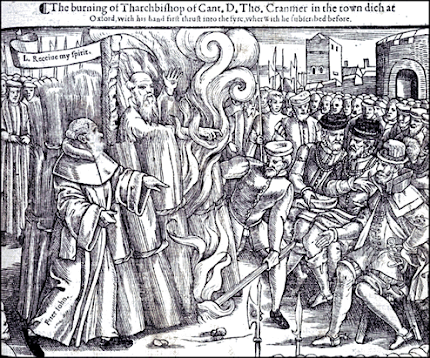


Support Reasonable Christian Ministries with your generous donation.