>

Martyred for the Gospel

Martyred for the Gospel
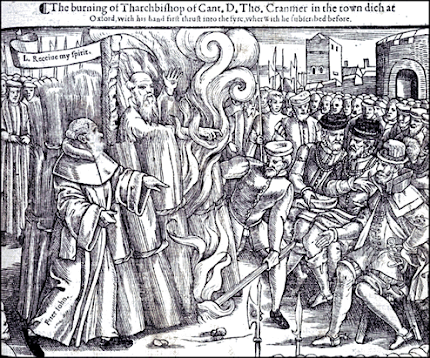
The burning of Tharchbishop of Cant. D. Tho. Cranmer in the town dich at Oxford, with his hand first thrust into the fyre, wherwith he subscribed before. [Click on the picture to see Cranmer's last words.]

Daily Bible Verse

Showing posts with label Verbal plenary inspiration. Show all posts

Friday, October 18, 2024

Logical Problems with Textual Criticism as Related to Biblical Inerrancy


Logical Problems with Textual Criticism as Related to Biblical Inerrancy


The ongoing disputes between the reasoned eclecticism text critics and the Byzantine Majority text critics has led to something of a comeback of the defense of the traditional and confessional view that the Masoretic Text and the Textus Receptus is the best representation of what the original autographs contained.  Some in the modern textual criticism camp, also known as reasoned eclecticism, have accused the confessional view supporters of being part of the King James Only controversy.  However, the confessionalists uphold only that the Westminster Confession of Faith affirms that the original Hebrew and Greek texts are the authentically preserved copies of what the original autographs contained:


VIII. The Old Testament in Hebrew (which was the native language of the people of God of old), and the New Testament in Greek (which at the time of the writing of it was most generally known to the nations), being immediately inspired by God, and by his singular care and providence kept pure in all ages, are therefore authentical;(a) so as in all controversies of religion the Church is finally to appeal unto them.(b) But because these original tongues are not known to all the people of God who have right unto, and interest in the Scriptures, and are commanded, in the fear of God, to read and search them,(c) therefore they are to be translated into the vulgar language of every nation unto which they come,(d) that the Word of God dwelling plentifully in all, they may worship him in an acceptable manner,(e) and, through patience and comfort of the Scriptures, may have hope.(f) 

[Westminster Confession of Faith.  Chapter 1.  Of the Holy Scripture.  Paragraph VIII.]


The recently formed Reformation Bible Society is in agreement with the Trinitarian Bible Society on the doctrine of the preservation of the authentical text.  The apparent controversy also includes the fact that the Reformation Bible Society and the Trinitarian Bible Society both prefer the authorized King James translation of the biblical texts.  Furthermore, the RBS and the TBS both affirm the Bomberg edition of the Masoretic Hebrew text and the Scrivener’s edition of the Textus Receptus Greek New Testament as the authoritative biblical texts.  There are very few differences between the Stephanus edition of the Textus Receptus and the Scrivener’s edition.  There are also a few minor differences between the Biblia Hebraica Stuttgartensia edition of the Hebrew Old Testament and the Bomberg edition, which dates to the Reformation period.

However, I wish to discuss the more pressing issue of biblical inerrancy in regards to these disputes.  This problem also relates to the dispute about the archetypal knowledge of God, known only to Himself, and the ectypal knowledge of God as it is revealed to humanity.  Suffice it to say that biblical revelation or special revelation is in the ectypal realm of epistemology.  The dispute between the late Dr. Gordon H. Clark and the late Dr. Cornelius Van Til had to do with this issue, although Gordon Clark never directly addressed the archetypal/ectypal distinction.  Clark’s view was that the Bible is univocally the very words of God, while Van Til argued that the Bible is only analogically the inspired word of God.  I have written numerous articles on my blog on this topic, so I will not go into great detail here.  Clark’s major concern was that the theologians in the Van Til camp had unwittingly crossed over into the liberal views promoted by neo-orthodoxy and Barthianism.  Emil Brunner was also a controversial theologian of neo-orthodoxy, though he disagreed with Barth’s rejection of natural revelation.

A further bit of information about Dr. Gordon H. Clark is that he was one of the founders of the Evangelical Theological Society in 1949.  In more recent times some critics of the society have said that the requirement of a commitment to biblical inerrancy to join the ETS is not meaningful because there is no other doctrinal statement to affirm in order to become a member.  The official doctrinal basis is stated as,

“The Bible alone, and the Bible in its entirety, is the Word of God written and is therefore inerrant in the autographs. God is a Trinity, Father, Son, and Holy Spirit, each an uncreated person, one in essence, equal in power and glory.”

[The Evangelical Theological Society.]

In fairness to Dr. Clark and the other founders, at the time of the establishment of the ETS, there were far less doctrinal differences between supporters of biblical inerrancy than what exists today.  Unfortunately, some modern members of the ETS society are less than orthodox by some accounts.  Moreover, a weakness of the Reformation Bible Society is that there is no mention of any requirement to affirm biblical inerrancy, since none of the required confessional statements mention inerrancy specifically.  The perceived advantage of limiting the ETS statement to biblical inerrancy and the trinity was perhaps misplaced.  However, the knife cuts both ways; The Reformation Bible Society should have some requirement for adherence to the fundamentals of the Evangelical faith in addition to the confessional requirements.  This is true because at the time of the Westminster Confession of Faith and other confessional statements plenary verbal inspiration and biblical inerrancy were not the issues that they are today.  In short, the problem goes way beyond the dispute over the providential preservation of the original autographs in the extant apographs.  The inspiration and the infallibility and the inerrancy of Scripture are at stake as well.

The accusation of some opponents of the Trinitarian Bible Society and the Reformation Bible Society that the two societies are essentially KJV only advocates is misleading.  The reason is that the KJVO or King James Only movement affirms that the KJV is an inspired and inerrant translation of the Bible from the original Hebrew and Greek.  The RBS and the TBS societies do not make that assertion.  They affirm that the Masoretic Text and the Textus Receptus authentically preserve the original autographs.  But even this distinction avoids a problem of all three major Evangelical positions.  The three major positions are:  1)  reasoned eclecticism;  2)  reasoned majority text reconstruction; and 3) the providentially preserved and authentical Hebrew and Greek manuscripts.  The problem of all three positions is that if only the original autographs--which no one possesses today--are the inspired autographs, then it logically follows that nothing we have today is the exact reduplication of the original inspired and inerrant autographs, including the “authentical” text. 

Although the confession affirms that the authentical text has been kept pure in all ages, it does not show how that reduplicates the originally inspired autographs.  By all accounts, there are minor differences or variants even between the Bomberg Masoretic Text and the later editions based on the Leningrad Masoretic Text such as the Biblia Hebraica Stuttgartensia.  Critics of the Textus Receptus have pointed out that there are several different editions dating back to the Complutensian Polyglot of 1514 and at least 5 editions of Erasmus’ Textus Receptus.  (See: Editions of the Textus Receptus.)   Additionally, there are variants between the many editions of the Textus Receptus of the Greek New Testament.  (See:  Variants between the Textus Receptus and the KJV.  See also:  TR variants.)

The problem here is that if we are to affirm the plenary verbal inspiration of the Bible and the inerrancy of the Bible, there are obviously spelling differences at a bare minimum, not counting the variations in wording.  The Bible obviously implies that there are no spelling errors in the text:

For verily I say unto you, Till heaven and earth pass, one jot or one tittle shall in no wise pass from the law, till all be fulfilled. (Matthew 5:18 KJV)

There are fewer variants in the editions of the Hebrew Masoretic Text, but variants do exist.  I do not have access to a Bomberg edition of the Hebrew Masoretic Text.  However, in the textual apparatus of the Biblia Hebraica Stuttgartensia there is a textual variant that supports the King James translation of Psalm 22:16.  Liberal critics have often attacked the KJV as using the Septuagint translation of the verse to support the prophecy of the crucifixion.  However, the variant reads as a verb for pierced rather than the word for lion.  The difference is between a yod, which would make the word mean lion, and a waw, which would render the Hebrew word as a verb, meaning pierced or dug. 

(Ps. 22:17 WTT)  כִּ֥י סְבָב֗וּנִי כְּלָ֫בִ֥ים עֲדַ֣ת מְ֭רֵעִים  הִקִּיפ֑וּנִי כָּ֜אֲרִ֗י יָדַ֥י וְרַגְלָֽי׃

The apparatus for the BHS lists this variant from the second edition of Kennicott, which is from the Bomberg edition of the Hebrew Masoretic Text:  כארוּ

Most of this evidence points to the fact that no one today has any original copy of the autographs.  Therefore, there must be a decision made as to the standard text of the Hebrew and Greek Bibles used for translation.  The Westminster Confession of Faith 1647 seems to indicate that that would be the first editions of the Masoretic Text available in that time and the editions of the Textus Receptus available to the Westminster divines of that period.  The variants in these editions are much fewer in number than either the reasoned eclecticism view of the modern textual critics or the Byzantine Majority approach of Maurice Robinson and William Pierpont.  In short, the critics who say that the KJV utilized the Greek translation of the Old Testament called the Septuagint or LXX to translate Psalm 22:16 are wrong.  The Bomberg edition of the Masoretic Text shows clearly that the KJV translators used only the Masoretic Text for the translation of this verse.

Furthermore, I would conclude that everyone involved in all three major positions are evading the fact that they are starting with unproved starting points.  Dr. Gordon H. Clark called these axioms.  He once said that everyone is a fideist.  By that he meant that everyone has presuppositions or unproved starting points.  Some critics call this circular reasoning.  But if so, then everyone is guilty of circular reasoning at some point in their arguments.  Clark was simply being honest.  Also, Clark once asked the question that if the atheist or the liberal has unproved starting points, why criticize the Christian for starting with the Bible as the main axiom?

Most critics of the late Dr. Gordon H. Clark’s apologetics fail to make a crucial distinction between his theological arguments and his apologetical arguments.  In some instances, Clark, utilizing his training in philosophy, uses a socratic method of argument.  In such instances, Clark liked to use the reductio ad absurdum approach.  This approach reduces the opponent’s objections to absurdity.  While Clark did not always build his own case to a point of undeniable proof, he was often successful at showing how the other side was blatantly contradictory.  On the confessional and fundamental doctrines and theology of the Christian faith as a system of propositional truth, Dr. Clark was without doubt extremely orthodox.  Clark, however, admitted that he sometimes made mistakes in logic.  Apologetics can get extremely detailed.  Clark liked to point out that there are many battle fronts in a war.  Not every individual can fight every battle front; so, there are limitations on what one person can do in one lifetime.  This does not even touch on the fact that many persons change their views on particular issues over time.  This was true of the church father, Augustine of Hippo, as well; his Retractions are evidence of this.

The short answer to all of this is that the Scriptures are self-authenticating.  In other words, it is a matter of faith to believe that what you are reading is God’s inspired, inerrant and infallible word.  The Westminster Confession of Faith says as much:

V. We may be moved and induced by the testimony of the Church to an high and reverent esteem of the holy Scripture;(a) and the heavenliness of the matter, the efficacy of the doctrine, the majesty of the style, the consent of all the parts, the scope of the whole (which is to give all glory to God), the full discovery it makes of the only way of man’s salvation, the many other incomparable excellencies, and the entire perfection thereof, are arguments whereby it doth abundantly evidence itself to be the Word of God; yet, notwithstanding, our full persuasion and assurance of the infallible truth, and divine authority thereof, is from the inward work of the Holy Spirit, bearing witness by and with the Word in our hearts.(b)

Westminster Confession of Faith:  Chapter 1, paragraph 5.  Of the Holy Scripture.

Notice here that the testimony of the church moves us to this conclusion.  Also, we learn from reading the Bible that the doctrine is efficacious.  The style is majestic.  All of the parts of Scripture consent to a unity, a scope of the whole.  “Notwithstanding, our full persuasion and assurance of the infallible truth, and divine authority thereof, is from the inward work of the Holy Spirit, bearing witness by and with the Word in our hearts.” 

Dr. Clark was once asked how the Christian knows that the Bible is the Word of God and not the Koran?  His answer was that the Christian has been born again and the Muslim has not been born again.  Can we prove any of this using evidentialism, empiricism, or unregenerate reasoning?  The answer is obviously no.

Herein lies another problem for the reasoned eclecticism utilized by Dr. James White, Dr. Daniel Wallace, and others.  The problem is that they are placing another authority above Scripture, namely the alleged “science” of textual criticism.  Is the Christian supposed to suspend his or her faith commitments in order to prove or disprove the portions of the Bible that critics question?  If so, then the Bible itself is always subject to question.  If there are one or two errors in the Bible, then the entire Bible is in question.

This raises another question:  which Bible translation is self-authenticating?  I for one do not trust the reasoned eclectic approach to Scripture.  I read mostly the New King James Version or the King James Version of the Bible.  That’s because the authorized King James Version has stood the test of time, despite some translation issues here and there.  Why would I trust a translation that has to constantly be revised according to an ever-changing science of textual criticism which never arrives at the truth?  Why presuppose that there are errors in the Bible?  A believer should instead presuppose that the Bible is God-breathed, without error, and infallible in every doctrinal point, especially the doctrine that God is the ultimate author of every single word of it.  Does the plowboy or the housewife need to read Greek and Hebrew or study textual criticism?  I doubt it.  Instead of questioning everything as James White and Dan Wallace does, why can’t we just presuppose that the confessional view established in Westminster Confession chapter 1 is true?  In that case, we need not consult modern translations to find out what the NKJV or the KJV and other translations based on the confessional view got wrong.  Presuppositionalism does not need to prove that the Bible is true.  Although technically speaking no translation is totally without error, we can trust that insofar as the KJV is faithful to the authentical texts in the Masoretic Text and the Textus Receptus it is the inspired and inerrant word of God for the reader.  The KJV is an acceptable translation for public preaching and teaching.

At some point the Christian must move on from evidentialism to a position of being convinced that the Bible is the inspired Word of God.  Without the Bible there is no Christianity at all.


The words of the LORD are pure words: as silver tried in a furnace of earth, purified seven times. 7 Thou shalt keep them, O LORD, thou shalt preserve them from this generation for ever. (Ps. 12:6-7 KJV)

In a future post I will examine the Chicago Statement on Biblical Inerrancy and point out what I think are weaknesses or errors in that document.  There needs to be more clarification on the doctrines of preservation, inspiration, and the infallibility and inerrancy of Scripture.


Thursday, July 25, 2024

Textual Criticism: The New Attack on the Inerrancy and the Infallibility of Scripture


"The fully developed liberal theologian could very well admit that Scripture itself asserts its own inerrancy. But then add that this is just another of the long list of Scriptural blunders. The theologian who has just begun to the edge away from the position of historic Protestantism and still wishes to be known as an evangelical, is more cautious. He is not willing to speak of a long list of Scriptural blunders. He has only two or three difficulties. Two or three insignificant places where the Bible has unfortunately missed the exact truth. But let me point out, with force, that the theological position is the same in both cases." 

"Whether the list of blunders is long or short., both these theologians contradict Christ who said, 'The Scripture cannot be broken.' The liberal and the pseudo­-evangelical both repudiate Christ as well as the Scripture."  Dr. Gordon H. Clark. 

[From a lecture given, "The Inerrancy of Scripture."] The Sermon Audio version is available here:  The Inerrancy of Scripture.]

Westminster Confession of Faith  1:8

The Old Testament in Hebrew, (which was the native language of the people of God of old,) and the New Testament in Greek, (which at the time of the writing of it was most generally known to the nations,) being immediately inspired by God, and by his singular care and providence kept pure in all ages, are therefore authentical . . .

Ever learning, and never able to come to the knowledge of the truth. (2 Tim. 3:7 KJV)

O Timothy, keep that which is committed to thy trust, avoiding profane and vain babblings, and oppositions of science falsely so called: 21 Which some professing have erred concerning the faith. Grace be with thee. Amen. (1 Tim. 6:20-21 KJV)

The Evangelicals who accept the "science" of textual criticism and who still affirm the doctrine of biblical inerrancy have a major problem.  The problem that should be apparent to everyone is that only the original autographs are the infallible, inerrant and absolutely inspired words of God.  No one is willing to take on this problem honestly.  Instead, what we get are clever dodges and evasive maneuvers.

Translations are not the exact inspired and inerrant words of God. Even the original Reformers and Puritans acknowledged that in all matters of doctrinal dispute we are to appeal to the original languages in the Greek and Hebrew manuscripts behind the text of cross-cultural translations, including English and the many other languages around the world.  A further problem is that we cannot reconstruct the original autographs using modern textual criticism.  I say this because obviously the presupposed axioms of the textual critical methods are unproven starting points which may or may not be accurate to the truth.  In short, textual criticism is a highly subjective and fallible process which is prone to errors of speculation and presumption.

Even the late Dr. Gordon H. Clark was not immune to this problem.  Anyone who has read his commentaries can see that he appealed to the textual critical apparatuses of the critical editions of the Greek New Testament.  But did he continue to follow that line of thought in his later years?  I would argue that he did not; because in his later years, he began to gravitate toward the Byzantine Majority Text as the basis for Scripture translations.  I would argue that he would have eventually come around to the confessional view advocated by the Reformation Bible Society.  Clark insisted that the Westminster Confession of Faith was the best summary of the Bible ever produced.  (See also:  WCF 1:6).

The confessional view basically says that the original autographs cannot be reconstructed, as even most of the modern textual critics, including Bart Ehrman acknowledge.  Evangelicals like James White and Daniel Wallace clearly lost their debates with Ehrman, both of which are posted on YouTube.  You can look them up for yourselves.

So where does that leave us?  James White insists that we can reconstruct the original autographs.  But he is duplicitous and equivocates on this point.  He also insists that only God in His archetypal knowledge knows what the actual canon of Scripture is and what the original autographs contained.  Yet, White loudly asserts that we have the original autographs in the many variants exant today.  This is obviously a contradiction.  Either we have the original autographs or we do not.  We do not.  So any reconstructed edition of the critical Greek New Testament is a matter of scholarly opinion, not an infallible and inerrant reconstruction of the original text of the New Testament.  The same can be said about the Old Testament Masoretic Text, which has problems of its own.

Also, White likes to disparage his opponents as King James Only.  That's basically the fallacy of the abusive ad hominem and gaslighting.  Dr. Jeff Riddle, the Reformed Baptist scholar who heads up the Reformation Bible Society, does prefer the King James Version for public preaching and teaching.  But Riddle is not King James Only because he publicly refutes the idea that any translation is the inspired Word of God.  Riddle affirms that only the original autographs are the inspired Word of God.

The confessional view as advocated by Riddle and the Reformation Bible Society is that the Westminster Confession of Faith and other Reformed Confessions affirm that the Textus Receptus is an accurate and providentially preserved reproduction of the original autographs, while simultaneously acknowledging that the TR is not the original autographs or absolutely an inerrant copy of the autographs.  The TR obviously has some minor variants.  But even the Puritans were aware of these, yet they asserted that all doctrinal disputes were to be resolved by appealing to these Greek manuscripts.  The same with the Hebrew Masoretic text--all doctrinal disputes were to be resolved by these Hebrew texts.

The doctrine of plenary verbal inspiration and the inerrancy of Scripture depends on having a providentially preserved Bible.  The Reformers were content with the Textus Receptus and the Masoretic Text.  We should likewise affirm what the Reformed confessions say, namely that God has providentially preserved the Bible:

VIII. The Old Testament in Hebrew, (which was the native language of the people of God of old,) and the New Testament in Greek, (which at the time of the writing of it was most generally known to the nations,) being immediately inspired by God, and by his singular care and providence kept pure in all ages, are therefore authentical;r so as in all controversies of religion, the Church is finally to appeal unto them.s But because these original tongues are not known to all the people of God, who have right unto and interest in the scriptures, and are commanded, in the fear of God, to read and search them,t therefore they are to be translated into the vulgar language of every nation unto which they come,u that the word of God dwelling plentifully in all, they may worship him in an acceptable manner,w and, through patience and comfort of the scriptures, may have hope.x


r Mat. 5:18. For verily I say unto you, Till heaven and earth pass, one jot or one tittle shall in no wise pass from the law, till all be fulfilled.


s Isa. 8:20. To the law, and to the testimony: if they speak not according to this word, it is because there is no light in them Acts 15:15. And to this agree the words of the prophets, as it is written. John 5:39. Search the scriptures; for in them ye think ye have eternal life: and they are they which testify of me: Ver. 46. For had ye believed Moses, ye would have believed me; for he wrote of me.


t John 5:39. Search the scriptures; for in them ye think ye have eternal life; and they are they which testify of me.


u 1 Cor. 14:6. Now, brethren, if I come unto you speaking with tongues, what shall I profit you, except I shall speak to you either by revelation, or by knowledge, or by prophesying, or by doctrine? Ver. 9. So likewise ye, except ye utter by the tongue words easy to be understood, how shall it be known what is spoken? for ye shall speak into the air. Ver. 11. Therefore, if I know not the meaning of the voice, I shall be unto him that speaketh a barbarian; and he that speaketh shall be a barbarian unto me. Ver. 12. Even so ye, forasmuch as ye are zealous of spiritual gifts, seek that ye may excel to the edifying of the church. Ver. 24. But if all prophesy, and there come in one that believeth not, or one unlearned, he is convinced of all, he is judged of all. Ver. 27. If any man speak in an unknown tongue, let it be by two, or at the most by three, and that by course; and let one interpret. Ver. 28. But if there be no interpreter, let him keep silence in the church; and let him speak to himself, and to God.


w Col. 3:16. Let the word of Christ dwell in you richly in all wisdom, teaching and admonishing one another in psalms, and hymns, and spiritual songs, singing with grace in your hearts to the Lord.


x Rom. 15:4. For whatsoever things were written aforetime, were written for our learning; that we through patience and comfort of the scriptures might have hope.


Westminster Assembly. The Westminster Confession of Faith: Edinburgh Edition. Philadelphia: William S. Young, 1851. Print.

Saturday, May 04, 2013

Benjamin B. Warfield: Presupposing the Axiom of Inerrancy

But if we answer it in the negative, we may possess our souls in patience and be assured that the Scriptures are as trustworthy witnesses to truth when they declare a doctrine of Inspiration as when they declare a doctrine of Incarnation or of Redemption, even though in the one case as in the other difficulties may remain, the full explanation of which is not yet clear to us. The real question, in a word, is not a new question but the perennial old question, whether the basis of our doctrine is to be what the Bible teaches, or what men teach. --  B. B. Warfield


The following is a quote from Benjamin B. Warfield's book concerning the doctrine of inspiration and inerrancy:

The real problem brought before the Churches by the present debate ought now to be sufficiently plain. In its deepest essence it is whether we can still trust the Bible as a guide in doctrine, as a teacher of truth. It is not simply whether we can explain away the Biblical doctrine of inspiration so as to allow us to take a different view from what has been common of the structure and characteristics of the Bible. Nor, on the other hand, is it simply whether we may easily explain the facts, established as facts, embedded in Scripture, consistently with the teaching of Scripture as to the nature, extent and effects of inspiration. It is specifically whether the results proclaimed by a special school of Biblical criticism—which are of such a character, as is now admitted by all, as to necessitate, if adopted, a new view of the Bible and of its inspiration—rest on a basis of evidence strong enough to meet and overcome the weight of evidence, whatever that may be in kind and amount, which goes to show that the Biblical writers are trustworthy as teachers of doctrine. If we answer this question in the affirmative, then no doubt we shall have not only a new view of the Bible and of its inspiration but also a whole new theology, because we must seek a new basis for doctrine. But if we answer it in the negative, we may possess our souls in patience and be assured that the Scriptures are as trustworthy witnesses to truth when they declare a doctrine of Inspiration as when they declare a doctrine of Incarnation or of Redemption, even though in the one case as in the other difficulties may remain, the full explanation of which is not yet clear to us. The real question, in a word, is not a new question but the perennial old question, whether the basis of our doctrine is to be what the Bible teaches, or what men teach. And this is a question which is to be settled on the old method, viz., on our estimate of the weight and value of the evidence which places the Bible in our hands as a teacher of doctrine.

Benjamin B. Warfield, The Works of Benjamin B. Warfield, Volume 1: Revelation and Inspiration (Bellingham, WA: Logos Bible Software, 2008), 225-26.

Wednesday, April 17, 2013

God's Hammer: What Is Verbal-Plenary Inspiration?

Neither Martin Luther nor John Calvin, nor more recent orthodox theologians like Benjamin Warfield, ever held a theory of mechanical dictation. It is a caricature invented by unbelievers. -- Gordon H. Clark


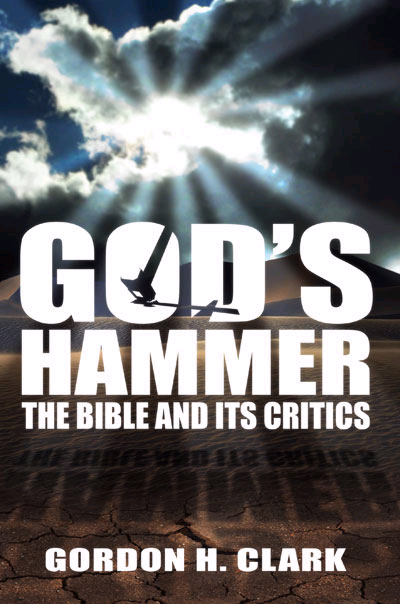
[The following is an excerpt from Gordon H. Clark's book, God's Hammer:  The Bible and Its Critics.  The bold and italics are mine and placed for emphasis.]

Unfortunately, verbal inspiration has been caricatured by its enemies, and the teaching of historic Protestantism has been misrepresented. Since therefore we wish to be clear in our own minds, as well as to expose the blunders of unbelievers, a digression is called for.

The opponents falsely claim that verbal inspiration is a theory of mechanical dictation. They suppose that when God in Deuteronomy 18:18 says, “I…will put my words in his mouth,” the prophet is to be regarded as a sort of dictaphone, or at best as a stenographer whose personality is only minimally engaged in the transaction. This is obviously not true, because Jeremiah’s style is not Isaiah’s, and Paul does not write like John. Neither Martin Luther nor John Calvin, nor more recent orthodox theologians like Benjamin Warfield, ever held a theory of mechanical dictation. It is a caricature invented by unbelievers. 

At the same time, it is incumbent on the believer to explain how God could put his own words into the mouth of a prophet without reducing him to the level of a disinterested stenographer. This is not at all difficult. The slightest understanding of the relation between God and a prophet leads one quickly away from the idea of modern office procedure. 

When God wished to make a revelation (at the time of the exodus or of the captivity) he did not suddenly look around as if caught unprepared, and wonder what man he could use. We cannot suppose that he advertised for a stenographer, and, when Moses and Jeremiah applied for the position, that God dictated his message. The relation between God and a prophet was not like that at all. A boss must take what he can get; he depends on the high school or business college to have taught the applicant shorthand and typing. But if we consider the omnipotence and wisdom of God, a very different picture emerges. God is the Creator. He made Moses. And when God wanted Moses to speak for him, he said, “Who has made man’s mouth? … Have not I, the Lord?” 

Put it this way: God, who works all things according to his will and who has done whatsoever he pleased, for no one can stay his hand or say, what doest Thou, from all eternity decreed to lead the Jews out of slavery by the hand of Moses. To this end he so controlled events that Moses was born at a given date, placed in the water to save him from an early death, found by Pharaoh’s daughter, given the best Egyptian education possible, driven into the wilderness to learn patience, and in every detail so prepared by heredity and environment that when the time came Moses’ mentality and literary style were instruments precisely fitted to speak God’s words. Between Moses and God there was an inner union, an identity of purpose, a cooperation of will, such that the words Moses wrote were God’s own words and Moses’ own words at the same time.

Gordon Clark (2011-07-02T18:48:21+00:00). God's Hammer: The Bible and Its Critics (Gordon Clark) (Kindle Locations 306-328). The Trinity Foundation. Kindle Edition.

Monday, November 05, 2012

Benjamin B. Warfield Against Van Til's Theology of Scripture as Analogy

Mike Horton's new systematic theology is strangely silent on the issue of verbal plenary inspiration and the infallibility and inerrancy of the Bible.  He spends his entire effort in the book to refute propositional truth claims in the Bible and relegates propositional truth to the "fundamentalists" who try to "pry into the secret being of God."  Horton's eclectic approach to systematic theology incorporates neo-orthodox views and relegates the verbal plenary view of inspiration to a side note.  In short, de-emphasizing this doctrine as Horton does reveals much about his true views on inspiration, inerrancy, and propositional truth claims.  As Gordon H. Clark once said, an Evangelical man who does not wish to reveal his liberalism will only depart from one or two of the essentials of the Christian faith while a liberal man departs from them all. -- Charlie

The Church, then, has held from the beginning that the Bible is the Word of God in such a sense that its words, though written by men and bearing indelibly impressed upon them the marks of their human origin, were written, nevertheless, under such an influence of the Holy Ghost as to be also the words of God, the adequate expression of His mind and will. It has always recognized that this conception of co-authorship implies that the Spirit’s superintendence extends to the choice of the words by the human authors (verbal inspiration9), and preserves its product from everything inconsistent with a divine authorship—thus securing, among other things, that entire truthfulness which is everywhere presupposed in and asserted for Scripture by the Biblical writers (inerrancy). Whatever minor variations may now and again have entered into the mode of statement, this has always been the core of the Church doctrine of inspiration. And along with many other modes of commending and defending it, the primary ground on which it has been held by the Church as the true doctrine is that it is the doctrine of the Biblical writers themselves, and has therefore the whole mass of evidence for it which goes to show that the Biblical writers are trustworthy as doctrinal guides. It is the testimony of the Bible itself to its own origin and character as the Oracles of the Most High, that has led the Church to her acceptance of it as such, and to her dependence on it not only for her doctrine of Scripture, but for the whole body of her doctrinal teaching, which is looked upon by her as divine because drawn from this divinely given fountain of truth.

Now if this doctrine is to be assailed on critical grounds, it is very clear that, first of all, criticism must be required to proceed against the evidence on which it is based. This evidence, it is obvious, is twofold. First, there is the exegetical evidence that the doctrine held and taught by the Church is the doctrine held and taught by the Biblical writers themselves. And secondly, there is the whole mass of evidence—internal and external, objective and subjective, historical and philosophical, human and divine—which goes to show that the Biblical writers are trustworthy as doctrinal guides. If they are trustworthy teachers of doctrine and if they held and taught this doctrine, then this doctrine is true, and is to be accepted and acted upon as true by us all. In that case, any objections brought against the doctrine from other spheres of inquiry are inoperative; it being a settled logical principle that so long as the proper evidence by which a proposition is established remains unrefuted, all so-called objections brought against it pass out of the category of objections to its truth into the category of difficulties to be adjusted to it. If criticism is to assail this doctrine, therefore, it must proceed against and fairly overcome one or the other element of its proper proof. It must either show that this doctrine is not the doctrine of the Biblical writers, or else it must show that the Biblical writers are not trustworthy as doctrinal guides.


Warfield, B. B. (2008). The Works of Benjamin B. Warfield, Volume 1: Revelation and Inspiration (173–174). Bellingham, WA: Logos Bible Software.

Wednesday, September 26, 2012

Genesis 1-11: Myth or History by Prof. David J. Engelsma

Well, you know David Engelsma is just a foolish fundamentalist and a "hyper-Calvinist".  Nothing he says is to be taken seriously just on that basis alone.  Do not bother reading his remarks.   As if using the ad hominem fallacy justifies dismissing the legitimate arguments of a Reformed scholar out of hand?

The compromisers would instead have us listen to the false popes and false teachers who lead people into "cunningly devised fables". (Cf. 1 Tim. 1:4; 1 Tim. 4:7; 2 Tim. 4:4; Tit. 1:14; 2 Peter 1:16).  Mike Horton recently published a systematic theology called, The Christian Faith.  (See my review here:  A Critical Review).  In that book he applauded the neo-orthodox view of C. S. Lewis that Scripture is an "inspired story" or "inspired myth" but tries to soften the implications of such compromise by saying that it is also "fact".  But calling the inspired and infallible Scriptures an inspired "myth" or "story" is a falsehood no matter how a theologian tries to spin it. 

Click here to read Dr. Engelsma's article refuting the neo-orthodox view:  Genesis 1-11: Myth or History by Prof. David J. Engelsma

Sunday, March 25, 2012

Charles Hodge Rebukes Mike Horton On Inspiration


[See also review of The Christian Faith, Part One].

Although Mike Horton exalts the "metanarrative" above the propositional truth claims of Holy Scripture and rejects the doctrine of plenary verbal inspiration indirectly, [Horton says that those who interpret Scripture as basically systematic expositions of propositional truth and that those who do so advocate both univocal knowledge and inspiration as mechanical dictation] the fact is that the classical reformed view is that what the Bible says God says:

On this subject the common doctrine of the Church is, and ever has been, that inspiration was an influence of the Holy Spirit on the minds of certain select men, which rendered them the organs of God for the infallible communication of his mind and will. They were in such a sense the organs of God, that what they said God said. 
Hodge, Charles (2011-10-20). Systematic Theology (With Active Table of Contents) (Kindle Locations 3449-3454). Kindle Edition.
According to this definition Horton must accuse Hodge of advocating the mechanical dictation view along with Gordon H. Clark and Carl F. H. Henry, those darned "fundamentalists!"

Furthermore, Hodge says that "knowledge" is what is communicated in revelation--NOT metanarratives, stories, dramatic recounting of salvation history, sagas, or "factual" myths!


    C. Distinction between Revelation and Inspiration.    Second. The above definition assumes a difference between revelation and inspiration. They differ, first, as to their object. The object of revelation is the communication of knowledge. The object or design of inspiration is to secure infallibility in teaching. Consequently they differ, secondly, in their effects. The effect of revelation was to render its recipient wiser. The effect of inspiration was to preserve him from error in teaching. These two gifts were often enjoyed by the same person at the same time. That is, the Spirit often imparted knowledge, and controlled [it] in its communication orally or in writing to others. This was no doubt the case with the Psalmists, and often with the Prophets and Apostles. Often, however, the revelations were made at one time, and were subsequently, under the guidance of the Spirit, committed to writing. Thus the Apostle Paul tells us that he received his knowledge of the gospel not from man, but by revelation from Jesus Christ; and this knowledge he communicated from time to time in his discourses and epistles.

Hodge, Charles (2011-10-20). Systematic Theology (With Active Table of Contents) (Kindle Locations 3468-3477). Kindle Edition.
Unfortunately, Hodge opens a door that should not be opened when he distinguishes between direct revelation from God and the inspired historical narratives which were also recorded in Scripture.  Although  Hodge is correct to make this distinction, he is wrong not to identify the whole body of the Scriptures as divine revelation.  He implies by this distinction that the Bible is inspired but only parts of the Bible are divine revelation.  The whole Bible is a revelation from God and is completely inspired or "breathed out by God."  

Moreover, everything we know about the history of Israel that is binding  upon us in regards to Christian doctrine and propositional truth is recorded in the inspired and inerrant Bible.  Hodge's view implies that some sections of Scripture are more important than others because one part conveys direct revelation from God in the form of knowledge and another merely conveys historical facts.  What Hodge overlooks is that historical facts are knowledge as well and this knowledge has profound impact on the doctrines of grace.  Hodge does, however, acknowledge that inspiration is for "teaching."

Futhermore, the proposition that "David was the king of Israel" is a propositional truth claim and it is an historical fact as well.  These historical events are given propositional meaning even when they are not given by direct revelation and are incorporated into the text from uninspired sources by the inspired writer.  Even quotes from pagan poets, philosophers and apocryphal books take on the nature of revelation as they are quoted for specific propositional and theological points by the inspired writers.  That would include places where Paul quotes pagan poets for a particular theological point (Acts 17:28) and where Jude quotes an apocryphal book, namely Enoch, in support of his theological point in the inspired text (Jude 1:14, 15).

To suggest, as Horton does, that these quotes are not inspired even when propositionally interpreted by the human authors and therefore not God's divine revelation is to create a canon within the canon:

Ascribing inspiration to Luke's acccount of Paul's speech in Athens in no way entails that the writings of pagan philosopher Epimenides or poet Aratus (the latter, in a hymn to Zeus) were inspired, even though Paul quoted them in Acts 17:28.  Nor does it mean that their words were inspired, but only that Paul's interpretation--his use of their words--shared in this inspired speech.  Whatever these speakers intended, God's intention was to use these lines in the script of his unfolding drama, although these pagan sources are not treated as normative.  Therefore, it is impossible to treat every word as normative, much less as the direct utterance of God.  Yet the Bible as a whole is God's inspired script for the drama of redemption.  Michael Horton.  The Christian Faith.  (Grand Rapids:  Zondervon, 2011), p. 162.

Any idea that some parts of Scripture are more inspired than other parts or that some conceptual knowledge in the Bible is more revelatory than other parts is to create a false distinction and an unnecessary one since Scripture interprets Scripture.  God's written words are logically consistent and God never contradicts Himself.  The axiom of the Apostle Paul stands firm here:  "All Scripture is inspired of God."  (2 Timothy 3:16).  No one denies that the sources, from which these quotes are drawn, are not inspired.  The issue here is that the quotes occur within the inspired Scriptures and therefore, even though the words are drawn from extrabiblical sources, the inspired record is infallible; therefore, in that sense every word in Scripture is an infallible record of what God intended for us to know.  Even natural revelation given to pagan poets is inspired of God when it is included in the verbally and plenarily inspired Scriptures and when such quotes are given propositional interpretation.  As Paul said, "All Scripture is inspired of God."  The proposition that "we live and move and have our being" because of God's sovereignty is certainly a true proposition, even when it is said by someone who is not an apostle or prophet (Acts 17:28).

Of considerable concern is Horton's animosity to Scripturalism and propositional truth, especially in regards to Gordon H. Clark. Alarmingly, Horton's biases cause him to endorse Donald Bloesch's neo-evangelical barthian theology.  In fairness to Horton, he does occasionally contradict himself and his emphasis on story and drama at certain points.  Although he fails to see the relative affinity between his own view and that of Bloesch, Horton does seem to uphold propositional truth when it suits his purposes:

There have been valiant attempts to reconcile Barth's doctrine of Scripture with the church's traditional view, among which that of Donald Bloesh is especially notable.  (104)  He allows that Barth's formulation too sharply separated the Word from the words, yet argues that "in his emphasis on the revealing work of the Spirit [Barth] is closer to the intention of the Reformers than is modern fundamentalism in this regard." (105)  Bloesch realizes that Protestant orthodoxy "sought to maintain a tendency to deny its human aspect.  (106)  He correctly observes the correlation between fundamentalism's mechanical view and belief in "the univocal language of Scripture concerning God, which contravenes the position of most theological luminaries of the past who held that human knowledge concerning God is either metaphorical or at the most analogical." (107)
Nevertheless, Bloesch repeats the prevalent caricature of Warfield's position when he suggests that the latter "is reluctant and often unwilling to affirm" the humanity of Scripture, including its "marks of historical conditioning." (108)  More problematic is Bloesch's own attempt at reconciliation.  On one hand, he writes, "Revelation includes both the events of divine self-disclosure in biblical history and their prophetic and apostolic interpretation."  On the other hand, he adds, "At the same time we must not infer that the propositional statements in the Bible are themselves revealed, since this makes the Bible the same kind of book as the Koran, which purports to be exclusively divine." (109)  It is unclear to me how the inclusion of propositions among other speech acts as part of revelation necessarily entails an "exclusively divine" dictation, as Islam considers the Qur'an to be.  How can we maintain coherently that Scripture is inspired--including "prophetic and apostolic interpretation" of divine acts--if we exclude propositional statements?  If Scripture cannot be reduced to propositions, it is just as arbitrary to exclude such statements.  (Horton, pp. 183-184).

Unfortunately, Horton cannot resist the temptation to throw in that last self-contradictory slam that propositional truths are not the focus of Scripture because that would "reduce" Scripture to propositions.  What is arbitrary is Horton's vacillation between propositional truth and the metanarratives of postmodernism.  Horton has clearly been influenced by neo-orthodoxy and by higher critical views of Scripture.

Charlie

Support Reasonable Christian Ministries with your generous donation.