>

Martyred for the Gospel

Martyred for the Gospel
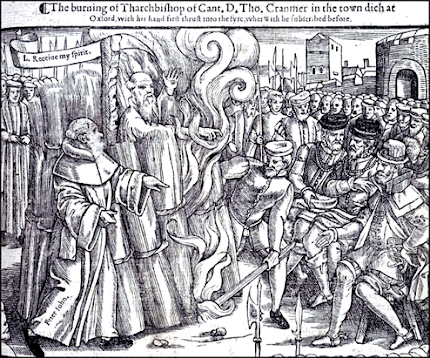
The burning of Tharchbishop of Cant. D. Tho. Cranmer in the town dich at Oxford, with his hand first thrust into the fyre, wherwith he subscribed before. [Click on the picture to see Cranmer's last words.]

Daily Bible Verse

Showing posts with label neo-orthodoxy. Show all posts

Monday, September 14, 2026

A Review of Paul King Jewett's Book: Emil Brunner's Concept of Revelation

 Book Review:  Emil Brunner’s Concept of Revelation, by Paul King Jewett


Paul King Jewett.  Emil Brunner’s Concept of Revelation.  (London:  James Clarke & Co. Ltd, 1954).  190 pages.

This book has been out of print for so many years that I cannot determine when it was no longer published.  It was written as publication of the Evangelical Theological Society, which Dr. Gordon H. Clark helped to found.  Paul King Jewett was a student of Gordon Clark when Clark taught at Wheaton College during the 1941 school year.[1]   Later Paul Jewett did a Ph.D. dissertation at Harvard Divinity School, and Dr. Clark used Jewett’s dissertation in his philosophy classes when was a professor at Butler University in Indiana.[2]  In 1954 the book was published by the Evangelical Theological Society at Dr. Clark’s request. 

I became interested in reading this book after reading about Fuller Seminary and Dr. Gordon H. Clark’s former students in Douglas Douma’s authorized biography of Dr. Gordon H. Clark.  It took some time to find a used copy online.   This book review is the result of that endeavor.  In the front of the book, Paul Jewett clearly dedicates the book to “Dr. Gordon H. Clark, Teacher and Friend.”  At the time of the publication Paul Jewett was teaching philosophy of religion classes at Gordon Divinity School, in South Hamilton, Massachusetts.  The school is now known as Gordon-Conwell Theological Seminary.

In the acknowledgements on page vii, Jewett says that he is indebted to Dr. Gordon H. Clark, Dr. Roger Nicole, and Dr. Edward John Carnell for feedback during the writing of the book, and presumably the dissertation.  While doing studies for his doctoral dissertation, Jewett took classes with Emil Brunner in Switzerland at the University of Zurich where Brunner taught systematic theology and practical theology in 1951. 

In the first four chapters of the book, Jewett explains in detail Brunner’s views on a host of theological topics, including time and eternity, the Bible, historiography, and existentialism.  In chapter five, Jewett begins to offer a critique of Brunner’s theology and neoorthodoxy.  Also discussed was the feud between Karl Barth and Emil Brunner over the issue of special revelation versus natural revelation and natural theology.  The problem with both men is that terms used by Evangelicals in theological discussions are completely redefined by the two neoorthodox theologians.  I suspect that this is one reason that Dr. Gordon H. Clark insisted on precise definitions of terms in his writings.  One indication of Clark’s influence on Jewett in the writing of this book is the precision with which Jewett discusses existentialism and the existentialist philosophers, especially Soren Kierkegaard.

In the interest of brevity, I will try to summarize the chapters of the book and the subsections of each chapter.  In the introduction Jewett says that Barth and Brunner wish to be known as theologians of the word:

Though the thought of Barth and Brunner has been nicknamed the Theology of Crisis, of Paradox, of Dialectic, sometimes even of Pessimism, the designation which undoubtedly best conforms to the intention of these theologians themselves is that of Kattenbusch, i.e., The Theology of the Word.[3]

In reviewing this book, perhaps the reader will indulge me a few digressions.  In the debates between the supporters of Cornelius Van Til and Dr. Gordon H. Clark, the question of the qualitative difference between God’s knowledge and human knowledge is often brought up in regards to the Creator/creature distinction and God’s archetypal knowledge versus humanity’s ectypal knowledge through divine revelation in the Scriptures.  The hard truth here is that Gordon Clark did not try to pry into God’s archetypal knowledge.  What he said was that the ectypal knowledge revealed to man, who thinks discursively, is univocally the very same propositions and thoughts that God has.  Clark did distinguish between God’s intuitive and direct knowledge of propositions and all other knowledge and man’s discursive and limited knowledge.  In other words, the qualitative difference between man’s knowledge and God’s knowledge is that God’s knowledge is omniscient and intuitive as an eternal Being, and man’s knowledge is limited to what man can intellectually absorb discursively given the limitations of time and history.  I bring this up in reference to Jewett’s quotation from Karl Barth at the top of page 1, opening the discussion of Revelation and History in chapter 1.

If I have a ‘system’, it consists in this, that I always keep in mind with the utmost vigour what Kierkegard has called the ‘infinite qualitative difference’ between time and eternity, and that in both its positive and negative implications.  ‘God is in heaven and thou upon earth.’”  --Karl Barth[4]

This book is heavy reading for anyone who is unacquainted with neoorthodoxy or existentialism.  The very first chapter raises the issue of relativism in regards to historiography.  The problem of relativism is not new to the 21st century.  It was already obvious in the early 20th century.  Both Brunner and Barth recognized that WWII raised the problem of Nietzschean relativism to a higher level that had caused the totalitarian regime of Hitler’s Nazi party to rise to power.  The problem is that the existentialist view did not return to the authority of an infallible and inerrant Bible as the basis for a civilized society.  According to Jewett, the neoorthodox theologians did not think that the Bible could withstand modern criticism:

The answer to Relativism, however, is not a return to the infallible Bible of Orthodoxy.  Brunner shares with the other leaders of the Neo-Supernaturalistic school, the conviction that in the light of Biblical criticism, such a procedure would be hopeless scientific obscurantism that could only widen the breach between the modern mind and the Christian faith.[5]

Brunner wanted to oppose relativism because of what he had observed when the Nazis took over Germany. 

Brunner styles Relativism in religion “Historicism”.  It marks the dissolution of all theology.  Revelation becomes “’the inner feeling and certainty of the whole of things and its being, which we call religious feeling or perception’ (Troeltsch)”.  This progeny of religious Liberalism, is the parent of modern Totalitarianism.  The Relativism into which we have been irresistibly drawn by the abandonment of Biblical faith is, so Brunner feels, a cause of that monster of wickedness, the totalitarian state.[6]

Jewett’s analysis of Brunner’s beginning point or axiom for his neoorthodox theology or new modernism sounds almost orthodox, except it is not.  According to Jewett, Brunner understood that “Christianity stands or falls with its claim to a transcendental revelation . . .” that cannot be part of the historical process of world events.[7]  Yet, Brunner does not want to throw out history because he recognizes that the Bible reveals a history of revelation in historical time.

The thrust of Jewett’s analysis of Brunner is that he wants to ignore history and instead replace it with an existential encounter with an eternal God.  Brunner’s theology is nothing like the Reformed view of propositional truth and a biblical system of theology.  Instead, Brunner returns to a man-centered or anthropocentric view where revelation is an existential experience of God’s revelation, not a written source of information in propositional form.  Like Barth, Brunner emphasizes God’s transcendence, not His immanence in His creation.  Jewett’s book has the advantage of tracing the theological and historical roots of the development of modernist theology and philosophy and their influence on Barth and Brunner.

The problem is that Barth and Brunner did not return to orthodoxy.  Instead, they redefined the orthodox terms to fit with their reaffirmation of theological liberalism in a different form.  In chapter one Jewett compares Brunner’s view of Hegel and Kierkegaard.  Hegel’s view of history was that of an evolution of religious thinking in the “consciousness of the race.”  Kierkegaard objected because this would just make Christianity a dot on the historical timeline, a blip on the radar screen of history.[8]

One of the reasons that Gordon Clark and Cornelius Van Til had differences is that Clark accused the supporters of Van Til of unknowingly crossing the line into neoorthodoxy at certain points of their arguments, which emphasized paradox.  On the other hand, supporters of Van Til's apologetics accused Clark of violating the Creator/creature distinction by his view that the Bible is univocally the very words of God in propositional revelation.

Jewett, although not mentioning the Clark/Van Til Controversy, brings out aspects of the dispute by highlighting Brunner’s belief in a totally transcendent God:

Brunner shares with Kierkegaard and Barth an unshakeable conviction in the absolute otherness of God, in the infinite qualitative difference between the Creator and the creature (eternity and time).[9]

The controversy rages on today.  John Frame, a student of Van Til, and professor emeritus of Reformed Theological Seminary in Oviedo, Florida, has proposed that God has two existences.  He was highly criticized for this view because it suggested a downgrade into ditheism.  Another professor at Westminster Theological Seminary, Scott Oliphint, proposed that God took on covenantal properties so that he could condescend to human level or become immanent in the world. [10] This was criticized by theologians who said that this would make God mutable instead of immutable.  The key feature of Van Til’s apologetic is the Creator/creature distinction.  To violate this distinction would be to make God mutable and immanent, not transcendent, according to Van Til.  The one thing that students of Van Til were supposed to avoid is mutualism or confusing the Creator with creation or with the creature.  Ironically, both Frame and Oliphint were students of Van Til as well.  

For those who want to understand Gordon H. Clark’s critique of neoorthodoxy better, I highly recommend buying a used copy of Paul King Jewett’s book.  It is in fact the first book that Jewett wrote and the most conservative one.  In later years, Jewett went down the road of limited inerrancy and joined the Presbyterian Church USA where he began to push for egalitarian views of male and female leadership.  Clark’s book on neoorthodoxy[11] is recommended as well as his book on historiography[12].  Both books are meant to respond to both Barth and Brunner.  Clark was critical of Arminianism because of its view of God as finite and subject to autonomous humanity.   You could say that he opposed making God mutable or immanent as well.  Furthermore, Clark affirmed the transcendence of God by recognizing that God knows all things by intuitive and eternal omniscience.  He recognized the limitations of humans as discursive and limited to the temporal realm of time and space.


Soli Deo Gloria. 


[1] Douglas Douma.  The Presbyterian Philosopher:  The Authorized Biography of Gordon H. Clark.  P. 307.                                                                                                                                               

[2] Ibid., pp. 309-310.

[3] Paul King Jewett.  Emil Brunner’s Concept of Revelation.  (London:  James Clarke & Co. Ltd., 1954).  P. 1.

[4] Ibid., p. 7.

[5] Ibid., p. 9.

[6] Ibid., pp. 8-9.

[7] Ibid., p. 10.

[8] Ibid., p. 12.

[9] Ibid., p. 13.

[10]  See my book review of Oliphint's retracted book:  God with Us:  Divine Condescension and the Attributes of God.  (Wheaton: Crossway, 2011).  After a controversy erupted over the book, Oliphint withdrew the publication.  The book was already published in ebook form on the Barnes and Noble Nook format, which I obtained to review.  I am not sure if the book is still available on Nook.  See also, Divine Simplicity Part 1, and Divine Simplicity Part 2.

[11] Gordon H. Clark.  Karl Barth’s Theological Method.  1963.  Second edition.  (Trinity Foundation, 1997).  277 pages.

[12] Clark.  Historiography:  Secular and Religious.  1971.  Second edition.  (Jefferson:  Trinity Foundation, 1994).  366 pages.

Monday, May 02, 2016

Lordship Salvation, John MacArthur, and Zane Hodges


Galatians 2:16–17
(NKJV)

16 knowing that a man is not justified by the works of the law but by faith in Jesus Christ, even we have believed in Christ Jesus, that we might be justified by faith in Christ and not by the works of the law; for by the works of the law no flesh shall be justified. 17 “But if, while we seek to be justified by Christ, we ourselves also are found sinners, is Christ therefore a minister of sin? Certainly not!


Someone asked me a question in regards to a comment posted by David Bishop on Facebook.  The question has to do with what is wrong with the Lordship Salvation view of John MacArthur and the Once Saved Always Saved view of Zane Hodges.  This is David Bishop's comment below:
Via David Bishop

Lordship Salvation was an overreaction to Zane Hodges' Antinomian false gospel. The problem with Lordship Salvation is that it swung too far over into the opposite direction and became a false gospel for all the opposite reasons Zane Hodges' gospel was false. Lordship Salvation so far to the right of Hodges that it became an attempt to redefine faith, repentance and salvation, with the result that it denies the gospel of God's sovereign grace. Zane Hodges was an Arminian theologian and textual critic who defined salvation as coming to believe for one instance in time the singular proposition that "Jesus promised eternal life to all believe in Him." And when I say singular proposition, I literally mean singular proposition. For example, Hodges once gave an illustration in which a man marooned on an island comes across a tiny portion of John 5 in which the only part of the text still legible to him are the words, "Jesus promised eternal life to all who believe in Him." Hodges insisted that if this marooned man believed this one single statement AND NOTHING MORE, then he would be saved. Furthermore, if the marooned man later stopped believing this and started to believe there is no God, or even that Muhammed was God, then he would still saved. Why? Because he had believed for one instance in time. This is why I call Hodges' false gospel, "tattoo Christianity", because Hodges believed that once you got your "tattoo" then that was it, you were going to Heaven. You could go off and become an Atheist, a Buddhist, whatever, and you would still be saved because you had gotten your tattoo. Now, John MacArthur attempted to answer Hodges, but what he answered him with was a Neonomian false gospel every bit as false as Hodges. JMac argued that faith was not just intellectually agreeing with God that all the Biblical propositions about Christ and His crosswork are true, but rather faith is also striving to become less sinful as proof that you have submitted to Christ's Lordship. The basis for his argument was the entirely irrational and self refuting idea that the words "heart" and "mind" as used in the Bible represent two entirely different ways of knowledge and belief. In other words, just like the Danish philosopher who inspired Karl Barth, JMac insisted that a composite of head knowledge plus heart knowledge equals truth knowledge. Neither he, nor Kierkegaard understood that the word "heart" is a polysemy. In other words, it is a word that can be used in many different ways - the heart of the galaxy, the heart of the matter, the heart is an organ, you broke my heart, etc. Imagine, if you will, that we did indeed have a second organ inside our body besides the one in our skull that was capable of knowledge. How would we ever know whether we were only head knowing rather than also head [heart?] knowing? We would need a third organ that could tell the difference. JMac and the Lordship folks today never consider this fact. Instead, they just keep repeating their nonsense and insist anyone who disagrees with them must agree with Hodges. Faith in Scripture simply means to agree with God about what He has said concerning His only begotten Son and His Son's crosswork. Now, lots of people can know what God has said, but only those who have been imputed righteous and have been born of the Spirit will agree with God that what He has said is true. Lordship Salvation flatly rejects this, and this is why I reject Lordship Salvation.

From a Clarkian Scripturalist perspective there are several major problems with Bishop's response, the main one being his view that "head" knowledge and "heart" knowledge are two different ways of knowing.  But the problem here is that the typical definition of "head" knowledge as defined by modern Evangelicals in general is that they mean intellectual knowledge by the term "head knowledge."  They define heart knowledge as a deep felt conviction or an emotional intuition or some other ineffable sensation that cannot be intellectually formulated.  But the Bible never makes such a distinction between the intellect and the heart.  In fact, emotions produce no knowledge.  Emotions are nothing more than bodily sensations, and, therefore, cannot know anything.  The Bible, on the other hand, says that the heart thinks.  (Genesis 6:5; 1 Chronicles 28:9, 29:18; Job 17:11; Proverbs 23:7; Jeremiah 23:20; Daniel 2:30, 7:28; Hebrews 4:12).  In other works, the head, heart, and soul are very much identified as the intellectual seat of consciousness according to the Bible.  This is not to say that the soul has no emotional sensations but overall the Bible represents the heart as the inner soul of man that thinks.  (Proverbs 23:7).  There are exceptions where the Bible says that the heart experiences emotions but Jesus himself said that out of the heart proceeds evil thoughts.  (Matthew 15:19; Mark 7:21).

In regards to the MacArthur and Hodges dispute, I agree somewhat with Bishop's assessment.  But Hodges was not just an Arminian in regards to conversion.  He was also a dispensationalist in his theology, which is another theological system altogether from what the propositions in the Bible would indicate.  MacArthur, although he now identifies as a Calvinist, was at one time also a dispensationalist.  Unfortunately, MacArthur adheres to no detailed Reformed confession of faith such as the London Baptist Confession of Faith, 1689.  For that reason MacArthur has often made serious errors, including confusing justification and sanctification in the first edition of his book, The Gospel According to Jesus.  MacArthur contended in that book that final justification depends on the obedience of the believer and not justification by faith alone.  (See:  The Gospel According to John MacArthur, Trinity Review.  See also:  Justification and Judgment, Trinity Review).  The problem with MacArthur is his continual confusion of justification and sanctification and MacArthur's view of Lordship Salvation is essentially the same thing as the Federal Visionist view that the believer's final justification or vindication depends not just on imputed righteousness but also the works of the believer.  This is the view espoused by John Piper as well in his doctrine of final "vindication" by works.  (See:  John Piper Invites Doug Wilson).

Where I differ with David Bishop above is that he seems to be denying the Reformed confessional view that sanctification is a necessary result of regeneration and saving faith.  The Westminster Confession of Faith 1:6 advocates a system of theology that is logically deduced from the propositions in the Bible.  (See:  The Westminster Confession of Faith and Logic, Trinity Review).

Saving faith is indeed mere intellectual assent.  (See:  Saving Faith:  Trinity Review).  That is, the first thing that happens is an intellectual understanding of the Bible and the Gospel message.  But saving faith is only possible after regeneration or the effectual call.  (John 3:3-8; 6:44, 65).  Understanding what the Bible says and believing what it says are two different things, as most any unbeliever can understand that the Bible says that Christ died on the cross for our sins.  But he refuses to believe what he understands the Bible says because it is foolishness to him.  (1 Corinthians 1:18).

Furthermore, it must not be forgotten that the Westminster Confession has chapters that are numbered in descending order of importance.  The three most important doctrines in the WCF are 1)  Scripture, 2) the Trinity, and 3) Predestination or Of God's Divine Decree.  Saving faith is chapter 14 while regeneration is in chapter 10, justification is in chapter 11, adoption is chapter 12, sanctification is chapter 13, repentance is chapter 15, good works is chapter 16, chapter 17 is perseverance and assurance is chapter 18.  It is good to understand that the Puritan divines at Westminster wanted to emphasize these doctrines as they relate to one another in the system of propositional truth they deduced in summary form from the Scriptures.  Of course all Scripture is God's written word and there could be much more deduced from the Scriptures than what the WCF says (2 Timothy 3:16).  The Reformed confessions, though more thorough than any other confessions of faith today, are only a summary of Scripture in brief.  Christians are obligated to learn as much Scripture as possible and to understand the Scriptures in relationship to all the other Scriptures.  (2 Timothy 2:15; 3:15-17; John 10:35; John 5:39; Acts 17:11).  In short, to isolate saving faith as intellectual assent from everything else the Bible says is wrong.

Moreover, sanctification is a lifelong process of repentance and struggle against sin.  Assurance of salvation comes from God's promises to save His elect, from the eternal predestination of the elect, from eternal justification, and from conversion, justification and sanctification.  (See WCF chapter 18).  True conversion always has the goal of producing justifying faith and a progressive sanctification.  According to Dr. Clark, the effectual call and perseverance of the saints are both monergistic acts of God.  The WCF says the same thing.  (See WCF chapters 10 and 17).  But sanctification and repentance have to do with our will cooperating with God's commands.  Of course, even our synergistic cooperation with God's commands is also caused by God working in us. (Philippians 2:12-13).

I am not sure what Bishop means here:

Now, John MacArthur attempted to answer Hodges, but what he answered him with was a Neonomian false gospel every bit as false as Hodges. JMac argued that faith was not just intellectually agreeing with God that all the Biblical propositions about Christ and His crosswork are true, but rather faith is also striving to become less sinful as proof that you have submitted to Christ's Lordship.

A true and living faith does produce a progress in Christian maturity and a striving to live more and more like Christ:

XII. Of Good Works.
ALBEIT that good works, which are the fruits of faith and follow after justification, cannot put away our sins and endure the severity of God's judgement, yet are they pleasing and acceptable to God in Christ, and do spring out necessarily of a true and lively faith, insomuch that by them a lively faith may be as evidently known as a tree discerned by the fruit.

Thirty-nine Articles of Religion, Article XII.

Bishop's view seems to ignore that sanctification is also a part of the system of theology deduced from Scripture.  The Westminster Confession of Faith makes it clear that the result of saving faith is indeed repentance and sanctification as a matter of cooperation of man's will with God's revealed commands in Scripture.  (Deuteronomy 29:29; Romans 6:1-2; Philippians 2:12-13, 3:10-15).  Only faith can make our good works acceptable to God.  (Hebrews 11:6; Romans 1:17; Habakkuk 2:4).  But this does not mean that we have a license to sin.  (Jude 1:3-5).  The problem with MacArthur is that he confuses justification with sanctification, not that sanctification itself is not a necessary evidence of a valid profession of faith.

Additionally, the neo-orthodox view of Scripture is that Scripture is not literally the words of God but only an analogy or framework of God's revelation since nothing God knows can be known by man and nothing man knows is what God knows.  But does God know that 2 +2 = 4 or that David was the king of Israel?  There are no contradictions in the Bible so there is therefore no contradiction between imputed righteousness and a progressive sanctification.  (Hebrews 6:1-6; Romans 4:1-5; Romans 6:1-2, 12:1-2; Galatians 2:16-17).  I'm not sure how Bishop equates MacArthur's confusion of the head with the heart as some third way of knowing the Scriptures.   However, Dr. Gordon H. Clark clearly says that adding trust to faith or assent is a tautological and circular argument.  Faith, trust and assent are all the same thing and all are an intellectual belief of what is known from the Scriptures.  If the Scriptures are not univocally the words of God, how could anyone believe what God has said?  In other words, if revelation is not communicable from God to man, then the Bible is not God's literal Word.  A reflection or analogy of revelation is not revelation and if the two never meet then the result is the neo-orthodox view of Scripture, which is essentially the view espoused by Westminster Seminary, California and Westminster Seminary, Philadelphia, Pennsylvania.  It is also the view taught by Dr. Michael Horton and Dr. R.  Scott Clark of Westminster Seminary, California.


Saving faith is wrought in the heart and therefore faith itself is not the basis of justification.  Instead, justification is objective and outside of us.  It is the cross work of Christ and his active obedience.  What Christ did in the place of the elect is that He lived a perfectly sinless life by actively obeying God's moral law in every detail and never sinning by omission, commission, or ignorance whatsoever.  Additionally, Christ passively obeyed God by dying for all the sins of all the elect to pay the eternal penalty of God.  The substitutionary atonement of Christ is the basis of our justification, not our faith.

It is therefore imperative that Christians study the Bible in detail and learn as much of Scripture as possible.  A good place to start is with the Westminster Larger Catechism with the proof texts:


Question 68
Are the elect only effectually called?

All the elect, and they only, are effectually called: (Acts 13:48) although others may be, and often are, outwardly called by the ministry of the word, (Matt. 22:14) and have some common operations of the Spirit; (Matt. 7:22, Matt. 13:20–21, Heb. 6:4–6) who, for their willful neglect and contempt of the grace offered to them, being justly left in their unbelief, do never truly come to Jesus Christ. (John 12:38–40, Acts 28:25–27, John 6:64–65, Ps. 81:11–12)


Question 70
What is justification?

Justification is an act of God’ s free grace unto sinners, (Rom. 3:22,24–25, Rom. 4:5) in which he pardoneth all their sins, accepteth and accounteth their persons righteous in his sight; (2 Cor. 5:19,21, Rom. 3:22,24,25,27,28) not for any thing wrought in them, or done by them, (Tit. 3:5,7, Eph. 1:7) but only for the perfect obedience and full satisfaction of Christ, by God imputed to them, (Rom. 5:17–19, Rom. 4:6–8) and received by faith alone. (Acts 10:43, Gal. 2:16, Phil. 3:9)


Question 72
What is justifying faith?

Justifying faith is a saving grace, (Heb. 10:39) wrought in the heart of a sinner by the Spirit (2 Cor. 4:13, Eph. 1:17–19) and word of God, (Rom. 10:14–17) whereby he, being convinced of his sin and misery, and of the disability in himself and all other creatures to recover him out of his lost condition, (Acts 2:37, Acts 16:30, John 16:8–9, Rom. 5:6, Eph. 2:1, Acts 4:12) not only assenteth to the truth of the promise of the gospel, (Eph. 1:13) but received and rested upon Christ and his righteousness, therein held forth, for pardon of sin, (John 1:12, Acts 16:31, Acts 10:43) and for the accepting and accounting of his person righteous in the sight of God for salvation. (Phil. 3:9, Acts 15:11)


Question 73
How doth faith justify a sinner in the sight of God?

Faith justifies a sinner in the sight of God, not because of those other graces which do always accompany it, or of good works that are the fruits of it, (Gal. 3:11, Rom. 3:28) nor as if the grace of faith, or any act thereof, were imputed to him for his justification; (Rom. 4:5, Rom. 10:10) but only as it is an instrument by which he receiveth and applieth Christ and his righteousness. (John 1:12, Phil. 3:9, Gal. 2:16)


Question 75
What is sanctification?

Sanctification is a work of God’ s grace, whereby they whom God hath, before the foundation of the world, chosen to be holy, are in time, through the powerful operation of his Spirit (Eph. 1:4, 1 Cor. 6:11, 2 Thess. 2:13) applying the death and resurrection of Christ unto them, (Rom. 6:4–6) renewed in their whole man after the image of God; (Eph. 4:23–24) having the seeds of repentance unto life, and all other saving graces, put into their hearts, (Acts 11:18, 1 John 3:9) and those graces so stirred up, increased, and strengthened, (Jude 20, Heb. 6:11–12, Eph. 3:16–19, Col. 1:10–11) as that they more and more die unto sin, and rise unto newness of life. (Rom. 6:4,6,14, Gal. 5:24)


Question 77
Wherein do justification and sanctification differ?

Although sanctification be inseparably joined with justification, (1 Cor. 6:11, 1 Cor. 1:30) yet they differ, in that God in justification imputeth the righteousness of Christ; (Rom. 4:6 ,8) in sanctification of his Spirit infuseth grace, and enableth to the exercise thereof; (Ezek. 36:27) in the former, sin is pardoned; (Rom. 3:24–25) in the other, it is subdued: (Rom. 6:6,14) the one doth equally free all believers from the revenging wrath of God, and that perfectly in this life, that they never fall into condemnation (Rom. 8:33–34) the other is neither equal in all, (1 John 2:12–14, Heb. 5:12–14) nor in this life perfect in any, (1 John 1:8,10) but growing up to perfection. (2 Cor. 7:1, Phil. 3:12–14)


The Westminster Larger Catechism: With Scripture Proofs. (Oak Harbor, WA: Logos Research Systems, Inc., 1996).

There could be much more said, but this is my off the cuff response to David Bishop's remarks, which I think were unclear and ambiguous at several points.  Sovereign grace does not mean once saved always saved, as he said.  Bishop is also correct that sovereign grace is not merited or earned by our obedience.  But saving faith does result in a process of growing in knowledge of Scripture, spiritual maturity, and struggling against sin.  (Hebrews 5:12-13; 1 Peter 2:2).   Even the plowing of the wicked is sinful.  (Proverbs 21:4).  But the good works of the elect are acceptable on the basis of their faith and not on the basis of merits.  (Hebrews 11:6).  The perseverance of the saints means they may and often do fall into sin but they are never totally forsaken and God always preserves them in faith and brings them to repentance.  (Jude 1:24-25 KJV; 2 Timothy 1:12 KJV).


[MacArthur was a pastor.  He often spoke ex tempore, so he could have said things that are ambiguous at times about the final judgment.]


Wednesday, November 26, 2014

Is There a Distinction Between Church Doctrine and Kerygma?


Dr. Gordon H. Clark was asked a question following his lecture on Predestination in the Old Testament.  If you click on the link and then go to the 1:3:43 to 1:5:15 mark or so you can hear Dr. Clark's response to a question about how many propositions do we need to know from the Scriptures?  I will try to transcribe the question and answer here and you can also  click on the link to verify that this is what Dr. Clark said:

Dr. Clark:  Now then here are two questions.  Yes, oh, here comes some more.  Uh, what propositions do you try to get across when you present or preach the Gospel?  Well, first of all, I would say that the whole Bible is the Gospel, not just a little part of it.  And, uh, I do not like to reduce its scope and center only on, uh, some pet subject.  I do, however, recognize that there are things that must be emphasized more than others and that's what I said just a moment ago--that the, uh, the doctrine of the propitiatory sacrifice or the satisfaction view of the atonement is one thing I most certainly try to get across.  But, uh, I also try to follow Paul's, uh, advice to preach the whole counsel of God in order not to be guilty of the blood of men.  I think we must preach the whole counsel and this distinction between kerygma and, uh, church doctrine--as the neo-orthodox put it--I have no sympathy for that.

You can see the entire list of available mp3 sermons and lectures of Dr. Clark at the Trinity Foundation site.  Click here.

Sunday, February 16, 2014

Van Til's Modalistic View of the Godhead

"You openly declare that the immutable will of God is to be known, but you forbid the knowledge of His immutable prescience. Do you believe that He foreknows against His will, or that He wills in ignorance? If then, He foreknows, willing, His will is eternal and immovable, because His nature is so: and, if He wills, foreknowing, His knowledge is eternal and immovable, because His nature is so."  --Martin Luther's logical response to Erasmus' semi-pelagianism.


Almost everything Scott Clark writes is in adherence to the now dead pope of Van Tilian "Reformed" theology:


As Remonstrant theology developed, however, its basic nature became clearer and that basic nature was rationalism. Arminius was a rationalist in at least one sense of the word inasmuch as he denied the fundamental Reformed distinction between the intellect of the Creator and the intellect of the creature. For Arminius (as for some rebellious and rationalist Reformed theologians in the 20th century) if we could not know what God knows, the way he knows it, we cannot ultimately know anything.
Why Did Arminianism Win?

Of course, Arminian theology is irrational, just like Van Til. After all, who needs to reconcile God's foreknowledge with God's absolute sovereignty, omnipotence, and omnipresence? How is it that God can be immutable in His Tri-personal nature and yet there could be an irrational ignorance of what He has decreed to come to pass in the future? The Van Tilian mantra is that everyone who disagrees with them is a "rationalist," be it the Arminians or classical Calvinists.  Of course, R. Scott Clark cannot decide if Calvinists are rationalists or hyper-Calvinists.  Anyone who disagrees with the Westminster Seminary California faculty just has to be either a rationalist or a hyper-Calvinist or both.  Even Martin Luther was a "rationalist" by Scott Clark's standards. That's because Luther solved the problem of God's immutability, sovereignty, and foreknowledge:


THIS, therefore, is also essentially necessary and wholesome for Christians to know: That God foreknows nothing by contingency, but that He foresees, purposes, and does all things according to His immutable, eternal, and infallible will. By this thunderbolt, "Free-will" is thrown prostrate, and utterly dashed to pieces. Those, therefore, who would assert "Free-will," must either deny this thunderbolt, or pretend not to see it, or push it from them. But, however, before I establish this point by any arguments of my own, and by the authority of Scripture, I will first set it forth in your words.

Are you not then the person, friend Erasmus, who just now asserted, that God is by nature just, and by nature most merciful? If this be true, does it not follow that He is immutably just and merciful? That, as His nature is not changed to all eternity, so neither His justice nor His mercy? And what is said concerning His justice and His mercy, must be said also concerning His knowledge, His wisdom, His goodness, His will, and His other Attributes. If therefore these things are asserted religiously, piously, and wholesomely concerning God, as you say yourself, what has come to you, that, contrary to your own self, you now assert, that it is irreligious, curious, and vain, to say, that God foreknows of necessity? You openly declare that the immutable will of God is to be known, but you forbid the knowledge of His immutable prescience. Do you believe that He foreknows against His will, or that He wills in ignorance? If then, He foreknows, willing, His will is eternal and immovable, because His nature is so: and, if He wills, foreknowing, His knowledge is eternal and immovable, because His nature is so.

The Sovereignty of God: The Bondage of the Will

I guess Luther was prying into the secret mind of God by using logic to deduce from the Scriptures that free will does not exist?  The fact of the matter is that Scott Clark's irrationalism has more in common with Arminianism and modern Lutheranism than with the classical Reformed view or with the logic employed by Luther. Without logic and the law of contradiction every epistemology ultimately leads to skepticism. R. Scott Clark's irrationalism is a tacit approval of Arminian irrationalism.   Moreover, Martin Luther's denunciation of semi-pelagianism by his use of the law of contradiction and logic is a prime example of why R. Scott Clark is an irrationalist.  Anyone who can logically refute Van Til's multiple contradictions and antinomies just has to be a "rationalist."  


A prime example of Van Til's irrationalism is when he confuses common language references to God by the singular pronoun "He" with the credal formulations based in Scripture that God is actually a tri-personal being who exists in one nature.  One Van Tilian accuses the traditional doctrine of the Trinity of making God's nature "impersonal."  Please note the comment made by Camden Bucey at the Reformed Forum:
Camden Bucey says:

Charlie, let me reiterate that within the Trinity are distinctions without separation. The Father, Son, and Spirit each indwell the Godhead (and hence eachother) fully. They share one divine essence – or nature as you prefer.
The language of “contain” has spatial connotations, and therefore I think the biblical language of “indwelling” is more appropriate. If you don’t find that helpful, another way to phrase the perichoretic relation is to say that there are full and exhaustive yet distinct manners of subsistence. Yet this indwelling, though exhaustive, does not obliterate the personal distinctions. The Father is unbegotten, the Son begotten, and the Spirit proceeds. These are real distinctions that belong to the persons.

I am not confusing the persons and the nature as you claim. Furthermore, this perichoretic formulation avoids the twin heresies of Sabellianism (modalism) and tritheism, which have also been thrown out there.

Let me ask you a question. Are you comfortable with positing an impersonal essence within the Godhead? 

As you can see, Bucey perpetuates the error of Van Til by asserting that the three persons of the one divine nature/ being of God interpenetrate each other.  Nothing could be further from the truth since the three persons of the Godhead are absolutely distinct from the other two persons at each and every point.  That is what the Scriptures teach and it is what the Athanasian Creed teaches as well.  Each of the three persons are fully God/Divine and therefore share that same essence.  God is one is one sense (being) and three in another (persons).  The personal subsistences do not interprenetrate each other, yet all three are united as One in one divine nature.  God is not impersonal since God is tri-personal.  God is not separated into three gods, nor is God one Person and three Persons.  That would be tri-theism in the first instance and modalism in the second instance.  It is true that in common language we often refer to God as "He."  However, in general we are referring to God the Father in that instance.   (2 Corinthians 13:14).

Furthermore, Van Til's insistence that "all Scripture is apparently paradoxical" is a tacit admission that Van Til thinks that Scripture does not adhere to logic or the law of contradiction.  If God does not reveal Scripture through logic, then Scripture itself is illogical and irrational by the standards of Van Til's theology.  Who could say that good is evil and evil is good except by the law of contradiction?  (Isaiah 5:20).  For Van Tilians, anyone who disagrees with them on the basis of logic is a "rationalist."  Thus, they have openly rejected the very foundation of the confessional Reformed theology:

The whole counsel of God, concerning all things necessary for His own glory, man's salvation, faith and life, is either expressly set down in Scripture, or by good and necessary consequence may be deduced from Scripture: unto which nothing at any time is to be added, whether by new revelations of the Spirit, or traditions of men.    WCF 1:6
Westminster Confession of Faith:  Chapter 1, Of the Holy Scriptures, Section 6.

Postscript:  I forgot to mention that Dr. Gordon H. Clark's definition of a person is the propositions that he thinks.  (Proverbs 23:7).  So if God is three persons, then it follows that each person of the Godhead thinks certain propositions in common with the other two persons since all three are fully divine and have all the attributes of deity.  But, as the Athanasian Creed points out, the three persons of the Godhead likewise think propositions unique to each person.  The Father cannot think that He is the Son or the Spirit, etc.

Wednesday, January 29, 2014

Neo-Calvinist Irrationalism: John Robbins' Quote of the Day


John Robbins


This hubris, amazingly enough, is presented to the reader as pious humility. Somehow-the reader is asked to believe-it is humble and meek to say that there are irreconcilable truths in the Bible, that George Marston is the most intelligent creature ever made, that logic must be curbed, and that God cannot express himself coherently. Marston’s claim must be recognized for what it actually is: an attack on revelation; on the unity, in errancy, and perspicuity of Scripture; and on the omnipotence of God. God is so hamstrung by Marston’s “qualitative difference” that he is unable to reveal many truths to man in a coherent, non contradictory way. It is no wonder that Reformed churches are virtually impotent in the twentieth century. Their theology is neo-orthodox. They have no sure word from God. They have two words, one contradicting the other. They speak logical nonsense, and deservedly are ignored by the world. Until this anti-theology is repudiated, the impotence of the Reformed churches will continue. - - John Robbins

Saturday, October 05, 2013

John Robbins Quote of the Day: Utilitarianism Leads to Totalitarianism


A logically competent defense of a free society requires divinely revealed information; all other defenses fail. Sennholz, almost alone among eminent free enterprise economists, rests his defense of a free society on revelation. --  Dr. John Robbins


By Charlie J. Ray, M. Div.


Utilitarianism. 

Since economics is a descriptive science, those interested in defending a free society must find their means of defense elsewhere. Ludwig von Mises chose Utilitarianism. It was an odd choice for a refugee from totalitarianism, for if Utilitarianism could justify any political regime, it would surely be totalitarianism. The “greatest good of the greatest number” is a slogan that has been used to justify all sorts of (at the time) politically correct murders and depredations in the twentieth century. But Utilitarianism, though it purports to offer ethical guidance, is an ethical failure. It can provide no ethical guidance, for the calculations of pains and pleasures that it requires are simply impossible.(1) Utilitarianism commits the naturalistic fallacy as well, for the fact that men are motivated to act by pain and pleasure does not imply that they ought to be.   --  Dr. John Robbins

What most people do not get is that all this emphasis by the far left on helping the poor is not to help the poor.  It is to get their way whatever the cost.  The end justifies the means taken to get there.  According to the late Dr. Gordon H. Clark, progressives are always moving the goal posts.  In other words, they are never satisfied and really do not know what the end is which they have in mind.  If they were ever to arrive at an end progressivism would cease to be progressive.

The gay/lesbian/transgender movement and atheistic socialism has made huge advances under the Obama administration, while conservative and fundamentalist religion has been openly attacked through blantantly obvious propaganda and even federal laws thinly disguised as "health care."  An example of that was the attempt to make religious institutions, which inherently oppose both homosexuality and abortion, subsidize those very immoralities and ethical violations of God's moral law through forced insurance policies covering these deviations.

The agenda of the Democratic Party was made obvious in the last Democratic convention when for a brief time the party withdrew all affirmation of faith in God as part of their platform.  In short, they openly admitted their socialist and atheistic agenda.  The Declaration of Independence, however, contains an unproven axiom that is drawn from Holy Scripture.  That axiom reads,  "We hold these truths to be self-evident, that all men are created equal . . ."  When we throw out God's moral law and reject the Holy Scriptures as the basis for our democratic principles, totalitarianism, despotism, and communism are not far behind.  

The political tactic of the far left is to demonize the Christian worldview and portray political conservative philosophy as "McCarthyism."  Nothing could be further from the truth.  The Stalinists of the left are brilliant at their propaganda.  But logic seems to be lacking.  The very basis of communism is the dialectical philosophy of Hegel adopted by Marx as "dialectical materialism."  The Hegelian theory tries to synthesize polar contradictions into a new synthesis.  Such is the approach of all who despise the law of contradiction. 

What the majority of people in this nation do not realize is that the atheistic left will stop at nothing to silence the voices of conservative and fundamentalist Christians.  They will openly lie, steal, corrupt and do whatever it takes to achieve their agenda.  If you do not believe me, take a hard look at the advances they have made toward abortion, euthanasia, gay rights, trans-sexual rights, and socialistic atheism.  Of course, religion is just an opiate of the people to be suppressed.  The way to achieve this is to deny supernatural revelation and stress the "social sciences" as "general revelation" from God.  Their view is that the Bible is not really special revelation or the plenary verbal, infallible and inspired Word of God.  It is to them merely a human book with good advice.  Religion to them is a human myth that expresses itself in multi-variant forms.  You can see this through Bill Moyers and  the PBS television program based on Joseph Campbell's book, The Power of Myth.

Dr. Gordon H. Clark tackled this question in his book, Religion, Reason, and Revelation:

Is Christianity a Religion? 

Is there such a thing as religion of which Christianity is one manifestation? This question is important for two reasons: Its answer will influence and reveal what a person believes Christianity to be; and on a broader scale it will determine the method that ought to be used in formulating a philosophy of religion. Therefore let us ask the question a second time in a slightly different form. Is Christianity a species of a genus? Whether this is answered affirmatively or negatively, certain further problems are introduced. If Christianity is a species of the genus religion, how is religion to be defined and what are Christianity’s differentiating characteristics? If it is not, what sort of philosophy of religion can there be, and what sort of philosophy of Christianity can there be? Apparently the first step in examining these questions must be the definition of religion. What is religion?

Gordon H. Clark. Religion, Reason and Revelation (Kindle Locations 262-271). The Trinity Foundation.
[See also the three lectures posted at The Trinity Foundation:  Is Christianity a Religion Part 1, Part 2, Part 3].

Since Christianity is not defined by the social sciences or philosophy, a better answer must be found.  Christianity is defined by special revelation in Scripture, the only infallible rule for faith and practice.  The Bible is without error in any part of the whole.   (Acts 20:27).  The best systematic summary of the propositional truths of Scripture is to be found in the Westminster Confession of Faith.

Moreover, the Bible claims that it is not myth, but that it is the very words of God in inscripturated form:
For we did not follow cunningly devised fables when we made known to you the power and coming of our Lord Jesus Christ, but were eyewitnesses of His majesty. (2 Peter 1:16 NKJ)

All Scripture is given by inspiration of God, and is profitable for doctrine, for reproof, for correction, for instruction in righteousness, 17 that the man of God may be complete, thoroughly equipped for every good work. (2 Timothy 3:16-17 NKJ)
Of course, Christianity cannot prove that the Bible is God's Word.  Since all philosophies and worldviews begin with unproven axioms, the beginning axiom for the Christian worldview is that the Bible is God's written Word (2 Timothy 3:16).  I am forever indebted to the late Dr. Gordon H. Clark for bringing this point home.  

Even more to the point, the founding fathers knew their logic well.  They understood that even democracy is founded on an axiom drawn from Scripture:  "We hold these truths to be self-evident, that all men are created equal."  In other words, democractic principles cannot be proved from so-called "science" or the "social sciences."  Democracy itself is founded on God's Word, an axiom that is called "self-evident" by the founders of our nation.  It is a supreme irony that President Obama quoted these words with the thinly disguised agenda of rejecting the very Bible upon which that axiom is based.  Obama quoted it to endorse his godless and atheistic view that homosexuality is acceptable.  (Cf. Leviticus 18:22; Romans 1:24-28; 1 Corinthians 6:9-11)  Since he believes, in line with Joseph Campbell, that religion is a myth, his words that homosexuals are "created" equal rings hollow.  It is merely a propaganda device used by the president to undermine God's moral law and to promote his secularism and his atheistic agenda.

We should never forget that before God humankind has no rights.  There is only one King who can command absolute obedience.  The Tri-Personal God revealed in Scripture owes no one anything other than eternal punishment in hell.  That God grants mercy to the undeserving sinner is called "grace."  True liberty can only come to a nation when that nation truly does submit to God.  The irony is that such submission cannot come by any other means than by accepting the special revelation of God's Holy Scriptures.  Homosexuals do not have the "right" to violate God's moral law.  Any inalienable rights  we have as humans can be and must be based solely on God's Word.  Antinomianism leads only to totalitarianism.  I am not a theonomist or a reconstructionist, but I do recognize that it is impossible to be free unless freedom is defined.  The only freedom that is truly free is the freedom we have in Jesus Christ:

"The Spirit of the LORD is upon Me, Because He has anointed Me To preach the gospel to the poor; He has sent Me to heal the brokenhearted, To proclaim liberty to the captives And recovery of sight to the blind, To set at liberty those who are oppressed; 19 To proclaim the acceptable year of the LORD." 20 Then He closed the book, and gave it back to the attendant and sat down. And the eyes of all who were in the synagogue were fixed on Him. 21 And He began to say to them, "Today this Scripture is fulfilled in your hearing." (Luke 4:18-21 NKJ)

A logically competent defense of a free society requires divinely revealed information; all other defenses fail. Sennholz, almost alone among eminent free enterprise economists, rests his defense of a free society on revelation. --  Dr. John Robbins

- See more at: The Sine Qua Non of Enduring Freedom


Sunday, February 17, 2013

Reasonable Christian: A Critical Review of The Christian Faith: A Systematic Theology for Pilgrims On the Way, Part One

I wrote this review some time ago.  Although I have been accused of not being fair to Horton, I think I've been more than generous.   I will concede, however, that his sections of the book dealing with justification by faith alone are good and worthy of your attention.  The problem with Van Tilians, however, is that their view of revelation as two-fold truth presents problems in that the view of analogy they espouse has more in common with neo-orthodoxy than with the traditional Protestant and Reformed understanding of Scripture as the very words of God.  If at no single point anything in Scripture coincides with what God knows then there is no revelation of what God has said. 

However, if anything we know is true and God knows that same truth, it logically follows that on those single points of truth our knowledge and God's knowledge coincide.  Our knowledge of the propositions God knows is limited to what has been revealed in special revelation in Scripture.  Even here we do not always properly understand the systematic whole and how individual propositions fit within the confessional system of theology we call the Reformed standards.  The fault does not lie with the Scriptures but with our failure to think clearly and logically.

Reasonable Christian: A Critical Review of The Christian Faith: A Systematic Theology for Pilgrims On the Way, Part One

Wednesday, September 26, 2012

Genesis 1-11: Myth or History by Prof. David J. Engelsma

Well, you know David Engelsma is just a foolish fundamentalist and a "hyper-Calvinist".  Nothing he says is to be taken seriously just on that basis alone.  Do not bother reading his remarks.   As if using the ad hominem fallacy justifies dismissing the legitimate arguments of a Reformed scholar out of hand?

The compromisers would instead have us listen to the false popes and false teachers who lead people into "cunningly devised fables". (Cf. 1 Tim. 1:4; 1 Tim. 4:7; 2 Tim. 4:4; Tit. 1:14; 2 Peter 1:16).  Mike Horton recently published a systematic theology called, The Christian Faith.  (See my review here:  A Critical Review).  In that book he applauded the neo-orthodox view of C. S. Lewis that Scripture is an "inspired story" or "inspired myth" but tries to soften the implications of such compromise by saying that it is also "fact".  But calling the inspired and infallible Scriptures an inspired "myth" or "story" is a falsehood no matter how a theologian tries to spin it. 

Click here to read Dr. Engelsma's article refuting the neo-orthodox view:  Genesis 1-11: Myth or History by Prof. David J. Engelsma

Tuesday, September 25, 2012

Mike Horton on the "Myth" of the Inspired Bible

The following is a quote that shows how far the Van Tilian theology of the neo-Calvinists is willing to go in compromising with postmodernism and rejecting the special revelation of the plenary verbal inspiration of Scripture.  Mike Horton states plainly that he does not believe the Bible is literally true but is instead "inspired myth", which is nothing more than neo-orthodoxy restated:

We do not have to say that Christianity is a metanarrative to affirm that it is true.  C. S. Lewis pointed out that Christianity is the true myth--the myth that actually became fact.  "It happens--at a particular, in a particular place, followed by definable historical consequences.  We pass from a Balder or an Osiris, dying nobody knows when or where, to a historical Person crucified (it is all in order) under Pontius Pilate.  By becoming fact it does not cease to be myth." 7  In other words, it is still a story, even though it is true.  Not even the resurrection is a metanarrative; its meaning cannot be read off of the surface of historical events but is defined by its intratextual context as part of an unfolding plot.  Mike Horton.  The Christian Faith:  A Systematic Theology for Pilgrims on the Way.  (Grand Rapids:  Zondervan, 2011).  Page 18.
In other words, for Horton the Bible is not necessarily narrative history.  It is an inspired myth that happens to be "true", whatever that means.  Since for Horton the Scriptures are at no single point the same knowledge God and man knows on man's level, then it follows that Scripture is not really God's revelation since God cannot possibly reveal anything to man on his level "at any single point."  The Bible is not really God's words after all, according to Horton.  This is the legacy of Cornelius Van Til:  skepticism pretending to believe.  And inspired "myth" is still a "myth" or a "story" and not the literal truth in the very inspired words of God Himself--words spoken through the prophets and the apostles.

Addendum:  It looks like Mike Horton is now promoting evolution as a viable option for Christians on The White Horse Inn.  Why am I not surprised?  See: Out of the Horse's Mouth: Myths about Christianity:  Anglicans Ablaze

Friday, September 21, 2012

Was Tozer A Calvinist?


[This article was written some time ago.  Since this time my views have been modified slightly.  In agreement with the late Dr. Gordon H. Clark I can no longer say that all Arminians are unconverted.  But they are most certainly mistaken.  Secondly, the Bible does contain a few paradoxes.  But properly understood a paradox is merely an apparent contradiction, not an actual contradiction.  These paradoxes can be solved through either logical and propositional thinking or through further discoveries in archeology or textual criticism.  But a theology based totally on mystery or a theology that "all Scripture is apparently contradictory" amounts to something very similar to Neo-Orthodoxy.  The Scriptures are the Word of God and without error in all they affirm as recorded in the original autographs.  Charlie J. Ray.  5/12/2022.]

John,

In regards to your post, Was Tozer a Calvinist, I say no.  You admitted as much when you said:


"After I read the comment about Tozer not being a Calvinist I thought to myself, “Yes, that is true in one sense. But in a more important sense it is not quite true.” Why? Well, because Calvinism does not consist in affirming the five points of the Synod of Dordt."

By definition all Arminians were officially condemned as non-Calvinists at the Synod of Dort.  Any so-called "Calvinist" who thinks Arminians are by some magical incantation believers in the sovereignty of God is simply redefining terms or plain out dissimulating and equivocating.  The Canons of Dort are hardly optional.  In fact, I would go so far as to say that the Canons of Dort anathematize Arminians as unconverted and as a papist leaning movement back to Rome.   Your deliberate equivocation above and quoting a few proof texts where Tozer "seemed" to agree with Calvinism does not negate the many more quotes where he upholds free will and other such nonsense.


No, Tozer was not a Calvinist.  He was heterodox since he said things that contradicted Calvinism many times over.  I appreciate your quotes but they do not and cannot prove a man to be Calvinist who had no commitment whatsoever to any Reformed standard or confession.  In particular, the Arminian doctrine of free will negates any claim to Calvinism:


Now this twofold predestination, of some to life and of others to death (if it may be called twofold, both being constituent parts of the same decree), cannot be denied without likewise denying (1) most express and frequent declarations of Scripture, and (2) the very existence of God, for, since God is a Being perfectly simple, free from all accident and composition, and yet a will to save some and punish others is very often predicated of Him in Scripture, and an immovable decree to do this, in consequence of His will, is likewise ascribed to Him, and a perfect foreknowledge of the sure and certain accomplishment of what He has thus willed and decreed is also attributed to Him, it follows that whoever denies this will, decree and foreknowledge of God, does implicitly and virtually deny God Himself, since His will, decree and foreknowledge are no other than God Himself willing and decreeing and foreknowing.   Jerome Zanchius: ABSOLUTE PREDESTINATION: CHAPTER II WHEREIN THE DOCTRINE OF PREDESTINATION IS EXPLAINED AS IT RELATES IN GENERAL TO ALL MEN.

The idea that some Calvinists think that we have no choice in our conversion is just untrue.  The Calvinist view is that we cannot do anything to save ourselves whatsoever.  But the choice we make is itself a gift of God!  Even our conviction of sin and being effectually called to saving faith is ALL of God.  Your contention here is just ridiculous:

Calvinists have the tendency to preach divine election as if humans make no real choice. In fact, a well known theologian once preached a sermon in my own pulpit and said, “Since you are dead in your sins you can do nothing at all. The best you can do it [sic] put yourself in the place where God might save you!”

Bad news.  Dead men cannot put themselves anywhere!  Until God effectually calls a person to Christ they will not and cannot believe anything whatsoever.  While preaching is an instrumental cause of conversion which God uses (Romans 10:14-17), it cannot persuade a reprobate person of the truth.  God ONLY grants the elect the ability to believe.  That's Calvinism.  You reveal yourself to be in fact a closet Arminian.  You probably think those who believe the false doctrines of Rome and of the Remonstrance to be genuinely converted.  But how can that be when all of their logical propositions directly contradict the doctrines of free grace? 

You reveal yourself to be an Arminian when you suggest that the reprobate have "free choice" to accept Christ as if they have the "ability" to do so:


Simply put, the doctrine of total depravity is never presented in the Scripture as a doctrine that hinders any unbeliever from coming to Christ whenever they desire to come. Free grace and human responsibility, and thus real choice, are doctrines of the Bible.

If you had said, "The doctrine of total depravity is never presented in the Scripture as a doctrine that hinders any "elect" unbeliever from coming to Christ," you would have been correct.  But you conflate reprobation with election as if all men without exception are able to "desire to come".  The reprobate are clearly unable to come to Christ for if they were they would.  It's that simple.  Although the doctrine of predestination is no excuse for the reprobate's rejection of the Gospel, it is not a doctrine that should never be preached as you imply.  In fact, it should be preached with vigor because it gives assurance to believers and warns those who reject the Gospel of their impending doom:


PREDESTINATION to life is the everlasting purpose of God, whereby, before the foundations of the world were laid, He hath constantly decreed by His counsel secret to us, to deliver from curse and damnation those whom He hath chosen in Christ out of mankind, and to bring them by Christ to everlasting salvation as vessels made to honour. Wherefore they which be endued with so excellent a benefit of God be called according to God's purpose by His Spirit working in due season; they through grace obey the calling; they be justified freely; they be made sons of God by adoption; they be made like the image of His only-begotten Son Jesus Christ; they walk religiously in good works; and at length by God's mercy they attain to everlasting felicity.

As the godly consideration of Predestination and our Election in Christ is full of sweet, pleasant, and unspeakable comfort to godly persons and such as feeling in themselves the working of the Spirit of Christ, mortifying the works of the flesh and their earthly members and drawing up their mind to high and heavenly things, as well because it doth greatly establish and confirm their faith of eternal salvation to be enjoyed through Christ, as because it doth fervently kindle their love towards God: so for curious and carnal persons, lacking the Spirit of Christ, to have continually before their eyes the sentence of God's Predestination is a most dangerous downfall, whereby the devil doth thrust them either into desperation or into wretchlessness of most unclean living no less perilous than desperation.

Furthermore, we must receive God's promises in such wise as they be generally set forth in Holy Scripture; and in our doings that will of God is to be followed which we have expressly declared unto us in the word of God.

Your deliberate equivocation is exemplified in your admiration for the confused theology of A.W. Tozer.  The Word of God has no contradictions, mysteries, or paradoxes therein.  What God reveals in propositional truth claims is a rational revelation.  Your view renders any hope of understanding God's Word utterly impossible since for you it is merely a mystery.  If the Scriptures are nothing more than analogy and mystery, why would God bother revealing Himself to us in special revelation in the first place?

Ironically, all Calvinists are supposed to believe the Canons of Dort.  You do not.  What a mystery that is!


Sincerely yours,


Charlie J. Ray, M. Div.

--
Glory be to the Father, and to the Son : and to the Holy Ghost; As it was in the beginning, is now, and ever shall be : world without end. Amen. Visit 1662 Book of Common Prayer: Daily Prayer and Reasonable Christian Blog

Support Reasonable Christian Ministries with your generous donation.